San Diego Zoo Safari Park San Diego Zoo Safari Park 2020

Currently visitor capacity is capped at 5000 at the San Diego Zoo and 3000 at the San Diego Zoo Safari Park. I was told by a volunteer at the Safari Park yesterday that the capacity limits were calculated based on the square footage of visitor pathways/areas as opposed to the size of the facility which explains why the much larger Safari Park has a lower visitor capacity than the Zoo. As far as I've heard there are no limits on how many people are allowed to enter per hour, but once the designated capacity limit is reached no one else will be allowed to enter until some visitors exit. I was able to enter the Safari Park without any issues when they opened yesterday, but I did hear that they reached their capacity at some point during the day.

The female cheetah cub was on exhibit in the larger nursery area. The smaller nursery area (next to Robert the Zebra, for those familiar with the Safari Park) had two African crested porcupines born on May 29.
 
Hatching of Echinda puggle:

For the first time, San Diego Zoo Safari Park sees echidna 'puggle' hatch

For the first time in San Diego Zoo history, an echidna baby, commonly referred to as a puggle, has hatched at the San Diego Zoo Safari Park.

Zoo officials say the tiny animal is estimated to have hatched on Feb. 14, 2020.

The puggle's mother, named Orange, and father, Shaw, also reside at the Safari Park.
 
Echidna birth a major event!

Can we assume the puggle must have been born and bred before or after import to San Diego?
 
Echidna birth a major event!

Can we assume the puggle must have been born and bred before or after import to San Diego?

It was conceived and born after import. I have found references to the sire (Shaw) being in San Diego’s collection as far back as 2015. The Short-beaked echinda is pregnant for just under three weeks (approximately 18 days).

While this is the first echinda puggle born in San Diego Zoo history, their association with the species goes back to the import of an echinda by San Diego Zoo in 1924. This individual lived for 24 years.

A further two males arrived in 1956. One (named Victor) was the oldest mammal in the zoo when he died in 2012.

The new Short-beaked echinda puggle and it’s parents live at the San Diego Zoo Safari Park; while 2.2 Short-beaked echinda live at San Diego Zoo.
 
How many echidna have ever been born in captivity within and outside Australia?

I cannot answer this but I do know the reason for why captive births are so rare. To my understanding, echidna breeding is more readily induced when a female has multiple potential mates to choose from. In captivity, most zoos keep echidnas in single pairs, which drastically lowers the chances of any breeding. Similar issues can be seen in the international Giant Panda population and even in babirusas which require harems, though obviously the latter species still breeds well enough regardless.

~Thylo
 
Also, does anyone know if Etosha the lion has any surviving cubs? I know she had a male cub named Koza who died.
 
Also, does anyone know if Etosha the lion has any surviving cubs? I know she had a male cub named Koza who died.
Etosha's first litter consisted of two males born on November 11, 2005. The first cub was in a breech position and eventually stillborn, then veterinarians performed a C-section on Etosha to save the second cub-Koza. Koza was hand-raised with a Cane Corso Mastiff. After being introduced to another lioness at the park, Koza was mauled and later euthanized. Etosha gave birth to three more males on December 7, 2007, two of them were either stillborn or they just did not survive, the third, Nyack, was hand-raised and later introduced to the Safari Parks two other litters. After this Etosha was spayed. Nyack eventually moved to the Indianapolis Zoo where he sired three cubs, Enzi, Mashaka, and Zuri. In October of 2018, Nyack was mauled and killed by his long-time mate, Sukari. So short answer, no, but she does have three 'grand cubs'.
 
Etosha's first litter consisted of two males born on November 11, 2005. The first cub was in a breech position and eventually stillborn, then veterinarians performed a C-section on Etosha to save the second cub-Koza. Koza was hand-raised with a Cane Corso Mastiff. After being introduced to another lioness at the park, Koza was mauled and later euthanized. Etosha gave birth to three more males on December 7, 2007, two of them were either stillborn or they just did not survive, the third, Nyack, was hand-raised and later introduced to the Safari Parks two other litters. After this Etosha was spayed. Nyack eventually moved to the Indianapolis Zoo where he sired three cubs, Enzi, Mashaka, and Zuri. In October of 2018, Nyack was mauled and killed by his long-time mate, Sukari. So short answer, no, but she does have three 'grand cubs'.
Thanks for the info! :) I'm guessing the father of Nyack was M'bari?
 
One of Nyack's sons, Mashaka, is now at the Santa Barbara Zoo as of May 2020. He's paired with their new female, so hopefully soon Etosha will be a great grandma.
 
In Europe echidna births are rare in recent years. I know of Rostock, Plzen and Protivin all having births in recent years (but not all successful).

Rostock was successful, but the puggle had to be hand-reared, bcause the mother died-of course. There was a Birth at Berlin Zoo in 1908- not sucessful, at Basle in 1955 and 1967, Frankfurt in 2004 and Saarbrücken in 1996-the european first successful breeding of Tachyglossus aculeatus. The animals was send to Frankfurt, and should be still alive.
 
Had a bit of a surprise today when I saw a tweet from the safari park saying they have a new baby albino wallaby. Anybody know the story behind this?
https://twitter.com/sdzsafaripark/status/1281374827119509504
I was looking forward to going this coming week and ask about it but am currently undergoing dental work for a broken tooth :( I was so thrilled when I saw them post about it on Twitter, Walkabout Australia has been killing it since late last year :D
 
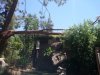
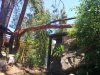
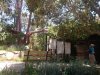
A tree just fell on the platypus habitat. Looks like nothing is broken but the exhibit is temporarily closed
 

Attachments

  • DSC_0189.JPG
    DSC_0189.JPG
    203.1 KB · Views: 7
  • DSC_0188.JPG
    DSC_0188.JPG
    270.3 KB · Views: 9
  • DSC_0187.JPG
    DSC_0187.JPG
    265.7 KB · Views: 8
A tree just fell on the platypus habitat. Looks like nothing is broken but the exhibit is temporarily closed

Doesn't appear to be a very big tree thankfully. A crushed platypus exhibit would have been extremely upsetting to those who haven't been able to go visit them yet!
 
Back
Top