ZSL London Zoo Animals kept at london zoo in the past

In his book "Animals as Friends: a Head Keeper Remembers London Zoo" (1973) the author, James Aldis, records that he was working in the North Mammal House when London's last thylacine died. Although describes a number of the animals in detail, sady he provides little information about the thylacine. He wrongly claims that he must have been the last person to have ever seen a living thylacine.

I'll see if I can find anything online about that book , it certainly sounds interesting.

Here's a thought , wouldn't it be interesting to conduct and record interviews with former / retired keepers about their experiences and memories of different zoos and perhaps rare animals that may have passed through them ?

All that would be needed is a dictaphone and the interviewee's permission and you would soon build up an archive of very interesting zoo history and annecdotes about animals in captivity that would be relevant to anyone with an interest in this field.
 
Last edited:
What I'd give for a time-machine to view that zoo again.Shortly afterwards the building was demolished to make way for the Snowdon Aviary
I agree with you; I'd love to visit the London Zoo of my childhood again, back in the days when it had one of the world's greatest collection of animals.

I'm sorry, I must correct you though; the North Mammal House was not demolished until several years after the Snowdon Aviary was built.
 
Out of curiosity has anyone ever gone to the ZSL library to browse the books and archives ?
Yes, I am a regular visitor to the ZSL Library; it is one of the world's finest zoological libraries and a visit is thoroughly recommended.

As a ZSL Fellow I can borrow books from the library but, as explained in the link you supplied, anybody can use the library for reference purposes.
 
Yes, I am a regular visitor to the ZSL Library; it is one of the world's finest zoological libraries and a visit is thoroughly recommended.

As a ZSL Fellow I can borrow books from the library but, as explained in the link you supplied, anybody can use the library for reference purposes.

Well when I am next in London ( not likely to be for a few years though) I will most definitely pay a visit.

Actually , I'm quite frustrated with myself that I didn't look it up / know it existed before as I would have liked to have had a look through it when I was last in the city.
 
A species not mentioned before:
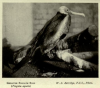
Ascesion frigatebird - Fregata aquila
In 1871 2 birds were recieved and also during 1876, 1879 and 1880 specimens were added to the collection. Have no information about how long the birds lived at London but found a nice photo ( no copyrights anymore on it ) in a book from 1907 called Birds at the Zoo :

Fregat vogel London Zoo.png

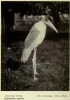
Other intresting birds in this book are for example Greater adjutant :

adjudant london zoo.png

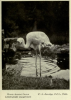
and Siberian crane :

sneeuw kraanvogel london zoo.png
 

Attachments

  • Fregat vogel London Zoo.png
    Fregat vogel London Zoo.png
    153.6 KB · Views: 27
  • adjudant london zoo.png
    adjudant london zoo.png
    242.1 KB · Views: 28
  • sneeuw kraanvogel london zoo.png
    sneeuw kraanvogel london zoo.png
    239.1 KB · Views: 29
king penguin 1914

King penguins were kept at London already much earlier and ZTL mention 1865 as being the first year of the species at London. Then the species was kept several times more and after WWII the species was kept ( with breaks ? ) from 1947 till at least 1972.
The species has also been bred at London and the first chick hatched 1949 but this chick was not raised.
Then ZTL mentions a breeding-result in 1951 but with a questionmark behind it.
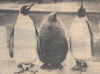
The species was for sure bred in 1955 because from that year I found a photo made Dec. 1955 from 2 parent-birds with a 4-month old young :

London zoo kingpenguins with 4 month old chick Dec 1955.png
King penguin-pair with 4 month old young ( no copyrights anymore )
 

Attachments

  • London zoo kingpenguins with 4 month old chick Dec 1955.png
    London zoo kingpenguins with 4 month old chick Dec 1955.png
    607.6 KB · Views: 22
King penguins were kept at London already much earlier and ZTL mention 1865 as being the first year of the species at London....
Indeed the Proceedings of the Zoological Society of London for 1865 confirm that a king penguin was acquired on 27th March 1865. This publication states this bird "was believed to be the only penguin ever brought alive to Europe".
The species has also been bred at London and the first chick hatched 1949 but this chick was not raised.
Then ZTL mentions a breeding-result in 1951 but with a questionmark behind it.
The species was for sure bred in 1955.....
The ZSL Annual Report for both 1949 and 1951 list a king penguin hatching at London Zoo but the offspring hatched in both those years failed to survive.

However the ZSL Annual Report for both 1952 and 1953 record the successful hatching of a king penguin at London Zoo.
 
Indeed the Proceedings of the Zoological Society of London for 1865 confirm that a king penguin was acquired on 27th March 1865. This publication states this bird "was believed to be the only penguin ever brought alive to Europe".

The ZSL Annual Report for both 1949 and 1951 list a king penguin hatching at London Zoo but the offspring hatched in both those years failed to survive.

However the ZSL Annual Report for both 1952 and 1953 record the successful hatching of a king penguin at London Zoo.

Just out of interest do you know when the last King Penguin(s) were kept/died at London or Whipsnade?
 
Just out of interest do you know when the last King Penguin(s) were kept/died at London or Whipsnade?

ZTL states that London Zoo had king penguins until 1972 and Whipsnade Zoo until some time in the 1990s.
The ZTL date for Whipsnade's king penguins is wrong; there were definitely still king penguins there at the end of 2002; Whipsnade's last king penguins left the collection about 2003/4; I believe the remaining animals were sent to Rotterdam Zoo.

I haven't been able to determine exactly when London last exhibited king penguins but they feature in the 1971 guidebook; the 1972 date given by ZTL seems about right.
 
Were there not Babirusa in the old Rhino enclosure after the black rhinos (Rosie) left, before the Bearded Pigs arrived?
 
I haven't been able to determine exactly when London last exhibited king penguins but they feature in the 1971 guidebook; the 1972 date given by ZTL seems about right.

I was at Birdland at Bourton the other week- seeing their King Penguins reminded me how long it was since I last saw them in any UK zoos and how they were once common in most mainstream zoos, but no more.
 
Were there not Babirusa in the old Rhino enclosure after the black rhinos (Rosie) left, before the Bearded Pigs arrived?
No
I've never seen babirusa at London Zoo before. ZTL says that London Zoo had Moluccan babirusas from 1931-42. It had Moluccan babirusas from 1841 to ?, 1860-71, 1883-7
1897-1908 and 1926-?
 
I believe they had a Sumatran rhino that lived for 17 years its front horn looked quite large also for this species!
London Zoo had nine Sumatran rhinos in total.

The two long-lived specimens "Begum" and "Jackson" were both of the hairy-eared sub-species lasiotis and "Begum" was the type specimen.

The one you're referring to, with a very large front horn, was "Jackson"; this animal is on show in the Bristol Museum & Art Gallery.

"Begum" was at the zoo from 15th February 1872 until 31st August 1900.

"Jackson" was at the zoo from 27th April 1886 until 22nd November 1910.
 
They had two that lived a long time, Jackson and Begum. I’ll see if I can find the reference.
I saw one pic of one coming out of a pool in its enclosure, its amazing really they lived that long back in the day when in resent times many were lost in zoos after only a short amount of time!
 
The two long-lived specimens "Begum" and "Jackson" were both of the hairy-eared sub-species lasiotis and "Begum" was the type specimen.

Interestingly, none of the nominate animals kept at the time lived for more than a few months. Clinton Keeling once suggested that lasiotis was (relative to other subspecies) more of a grazer and so better suited to captive diets (i.e. hay). Given the small numbers of animals of both subspecies kept, though, I'm not sure whether this discrepancy was ever anything more than a coincidence.
 
Last edited:
Clinton Keeling once suggested that lasiotis was (relative to other subspecies) more of a grazer and so better suited to captive diets (i.e. hay). Given the small numbers of animals of both subspecies kept, though, I'm not sure whether this discrepancy was ever anything more than a coincidence.
Yes, I've heard Clin make a similar comment too; however, I tend to agree with you and suspect it may just be a coincidence. I guess we'll never know for sure.

It might also be relevant that both "Jackson" and "Begum" were in captivity for a couple of years before being sent to London. Consequently they had more time to adjust and probably found the long sea voyage less stressful than the recently captured wild rhinos did.
 
Back
Top