Into the unknown: zoos of western France

Thanks for these great reviews @lintworm and your analysis of CERZA is interesting. Did you miss having a themed set of exhibits? Maybe a little mock-rock could have enhanced the experience! It appears that you and others seem to be slightly bored with the square enclosures that are all extremely basic in design at this French zoo. The photos in this thread make CERZA look a little like Whipsnade, being a country zoo with a great deal of grassy space, although you weren't tremendously impressed.

How long did it take you to go around CERZA? Also, I look forward to some kind of 'best zoos ranking list' when you are done your written tour of French zoos. It will be interesting to contrast your experience with the many Dutch, German and other zoos that you've toured across Europe. I'm intrigued to see which French zoos can compete with the very best that the continent has to offer, apart from Beauval, Doue and a few others.
 
@snowleopard Why always put mock-rock ? Mock-rock is false and false is never better than real. Moreover, mock-rock is not require when you create good landscape and bring good real trees, rocks...

Cerza is note a nice zoo but the nature surrounded is just beautil. You just have to do the good choice to use it.

I think mock-rock is always the easy maner to do. Oh, we don't have nature, landscape... let's do mock-rock ! Get enough space, a lot's of real trees and plants. In five years, it will be beautiful.

There are a lot of natural zoos in France and some are real fine and beautiful. I am quote sure (and he has ever saud it) that Lintworm was impressed by Branfere, maybe Zoodyssee, Sigean, la Haute Touche. Let's see the suite !
 
Thanks for these great reviews @lintworm and your analysis of CERZA is interesting. Did you miss having a themed set of exhibits? Maybe a little mock-rock could have enhanced the experience! It appears that you and others seem to be slightly bored with the square enclosures that are all extremely basic in design at this French zoo. The photos in this thread make CERZA look a little like Whipsnade, being a country zoo with a great deal of grassy space, although you weren't tremendously impressed.

I did not necessarily miss a themed set of exhibits and I certainly did not miss any mock rock, which is thankfully rare in France. What was missing was any sort of imagination. I have seen some very pretty African savannahs that create a great effect by effective landscaping. That means no fences clearly visible, but a gently sloping enclosure which together with copious vegetation disguises the exhibit borders. That would easily be possible in CERZA as well. Overall I am very happy mock rock is so rare in France, as it is rarely applied correctly and often seems the lazy option to make enclosures more "naturalistic". There are only few pieces of mock rock that are more than lazyness in zoos that really, but are in fact realistic representations of nature. These are present in several Kopjes exhibits (such as Zurich, Burgers'), in desert enclosures (like Burgers' Desert), and ones that successfully replicate a riverbank (Basel and others). In most cases the use of real rocks works a lot better (Doué, Nürnberg, Branféré and in a way also Berlin). The French building style is in many ways the complete opposite of one that is prevalent accross the US.

How long did it take you to go around CERZA?

I used about 4,5 hours and could see everything comfortably in that time.

Also, I look forward to some kind of 'best zoos ranking list' when you are done your written tour of French zoos. It will be interesting to contrast your experience with the many Dutch, German and other zoos that you've toured across Europe. I'm intrigued to see which French zoos can compete with the very best that the continent has to offer, apart from Beauval, Doue and a few others.

French zoos are mostly still in full development, with new enclosures added on an almost yearly basis, whereas most other zoo countries have zoos that have matured already, so in terms of comprehensive collections French zoos lag significantly behind, with the exception of Beauval. When it comes to innovative and naturalistic enclosure design there are a lot of French zoos that can compete with the best in Europe. Where France excels in Europe is that it has a larger number of very good aquaria, a rarity in Europe. With the exception of Nausicaa there are no mega-tanks, but what these aquaria do, is mostly done very well. Within 10 years French zoos will have developed further and there are several zoos whose developments will be extremely interesting to follow....
 
In a way the next zoo fits well into the discussion above, as it is the stereotypical extreme of the private French zoo.


Zoo de Jurques

With great weather on the first days, it was somewhat disappointing to have a very wet morning to visit this zoo tycoon zoo. The idea in Jurques is very simple: (1) all available space should either be an animal enclosure or a pathway (2) use fences and glass viewing windows everywhere and (3) make as much use of the woodland, so that no additional landscaping is necessary. The collection is focused on big cats with Lions (white and brown), Tigers (white and normal), Snow Leopard, Puma and Cheetah. Additionally Serval and Lynx are also kept, as are “Arctic” and European Wolves, as well as Polar Foxes. Carnivores are thus well represented, but there is also a variety of smaller primates, some with the only water moats in the zoo, and surprisingly two species of Agouti (the Azara’s Agouti were randomly mixed with Meerkats). There also is a square African savanna, off-course with Kordofan Giraffes and a large walkthrough macaw aviary. Most enclosures are spacious or even very large and the woodland is used optimally, so most enclosures are well-structured. Unfortunately this is another French zoo that has non-flying vultures, who share an enclosure with pinioned Waldrapp (really?!).

full

General view

full

A small part of the White Tiger enclosure

full

Snow Leopard enclosure from the 1st viewpoint

full

Snow Leopard enclosure from the 2nd viewpoint

full

Macaw & Scarlet Ibis walkthrough

full

African savanna with Kordofan Giraffe, Grevy's Zebra, Scimitar-horned Oryx, Blesbok & Ostrich

At least all macaws could fly here, which is not the case in other French zoos. Like most of these zoos the collection really is mammal-focused, with parrots, penguins and some birds of prey the exception. An aviary with Turaco, Egyptian Rousette and Superb Starling was thus a weird surprise.

full

Egyptian Rousette & bird aviary


The main surprise of this zoo was a pair of enclosures on a side-path. In the middle of the zoo there is a huge natural steep pit of at least 15 meters deep that hosts a group of Barbary Macaques (rescues from AAP) and Barbary Sheep. The enclosure is huge, with loads of climbing opportunities and just opposite is a large piece of woodland which houses Mandrill. It was a great spectacle to see the younger Mandrill climbing to the top of a tree and playing on the branches, with the older animals on the ground. Such a natural enclosure is incredibly effective, it is great for the animals and the visitors alike and very cheap, as no fake rocks or waterfalls or artificial climbing materials are involved. It was off-course the best Mandrill enclosure I had seen until then. Jurques is maybe the archetype of the French private zoo. It is clear they operate on a small budget and invest heavily in popular ABC animals, which means birds and ectotherms are mostly missing, though Jurques at least had some more birds than average. Sometimes I would go days without seeing a single passerine displayed in a zoo... Enclosure design it simple, but in many cases the outdoor enclosures are great for the animals, but from a visitor perspective sometimes leave a bit to be desired.

full

Barbary Macaque & Barbary sheep enclosure

full

Mandrill enclosure
 
Thank you Lintworm for this detailed reviews. It is always very interesting to discover foreign visitor's opinion about some zoos of your country (even more when a third of the country is covered !). I think it reveals a lot about the local culture. Until recently French zoo directors mainly knew about their neighbours and had a tendency to copy the same good and bad ideas, thus leading to some kind of uniformization.
The picture you depicted about the French zoo industry looks fair and precise with some strengths like rather large and natural outdoor enclosures and few horrible remainings of the past, but also obvious weaknesses such as heavy focus on big mammals, lack of separation facilities and unsufficient indoor housing.
I'm really looking forward to read next reviews.
 
I never visited Jurques as it looked not really interesting for me.
However the zoo has some great new enclosures since a few years. They opened an extension of 2/3 hectares for white tigers, snow leopards, artic wolves... with nice natural exhibits and the transfer of theses species (from the older part of the zoo) make more space for the remaining animals (such as the lynx).
Moreover, the zoo purchase a large piece of land (5 or 10 hectares) and is thinking about its future developments.
So we can expect better in the next years if the covid crisis does not put it down.

@lintworm I really wait for your Champrepus and Tregomeur reviews (which I suppose will come closer !).
 
Lisieux, CERZA


This is one of the more famous French zoos, not in the least due to it’s unique name, which stands for Centre d’Étude et de Reproduction Zoologique Augeron (Zoological Centre for Studies and Reproduction of the Auge region). It is a collection that focuses heavily on larger mammals, especially hoofstock and carnivores. I had quite high expectations from this zoo and thought it would be one of the best zoos on the trip, but I was disappointed.

Part of the disappointment will have to do with the extreme crowding of the zoo, it was packed. The number of visitors on the ground was completely irresponsible and the lay-out with often relatively narrow paths on two one-way circuits made it impossible to avoid crowds at all. Only after 6 pm did it become somewhat more quiet, but zoos like CERZA should not complain if they will have to close again if infections soar again, as they are complicit in the spread of the virus.

full

How not to social distance

As mentioned CERZA consists of two loops, a red and a yellow one. The red circuit focuses mostly on African animals, but also includes a small tropical house with terraria, a nice walkthrough aviary with birds from around the world and the burrowing animals house, which off-course holds tamarins, as well as 6-banded Armadillo. The first enclosure one encounters is the large savannah. This is basically a huge square plot of grass with Giraffe, White Rhino, Gemsbok, Nile Lechwe, Watusi and Ostrich. It would become a theme throughout the zoo, but things like landscaping, planting and immersion are not part of the CERZA vocabulary. The circuit continues with large wooded enclosures for African Wild Dog, Spotted & Striped Hyena, a lemur walkthrough and a smaller savanna with Greater Kudu and Scimitar-horned Oryx, but unfortunately no White-tailed Gnu anymore. Two highlights are the pair of Pygmy Hippo enclosures, which are large, well wooded and with a large pool. Easily the best pair of outdoor enclosures I had seen for that species until then. The Leopard enclosure (I believe for Sri Lankan Leopard) is also nice, it is spacious and the leopards can use most of the trees in the enclosure. Open-topped Leopard enclosures are rare in the rest of Europe, but were common in France. The indoor stables for the Pygmy Hippo were however extremely basic, as was all other indoor accommodation. The Leopards also only had one enclosure, so if they have to be separated, there is only a tiny separation cage or indoor housing. That makes 0 sense to me as there is plenty of space to create a sizeable second enclosure….

full

Main savannah

full

Pygmy Hippo indoors

full

Pygmy Hippo outdoors, shared with Roloway Monkey. There is a second large enclosure for the other hippo too.

full

Scimitar-horned Oryx & Greater Kudu enclosure

The yellow loop features from animals from around the world. The highlight is at the start with a huge enclosure for Lion-tailed Macaque, Binturong and Reeves’s Muntjac (falsely signed as Indian Muntjac on one side, but not the other….). To see Binturong 15 meter up in a tree from a raised walkway was a real treat. The nearby Malayan Tapir enclosures were also great, simple but spacious and effective, with lots of shade and a pool. What follows are simple but large and effective enclosures for Spectacled Bear and “Arctic” Wolves. The Polar Bear enclosure is next and it is almost the only enclosure where there is some cultural theming around, with some huts. The enclosures were smaller than I thought, but still larger than all the German ones and very open. I would have expected more shade, but at least the pools were large. New in this loop is also a small Indonesian village with a large enclosure for a pair of Babirusa, already with a piglet and a large Sulawesi Crested Macaque & Small-clawed Otter enclosure. Overall there is a large number of other hoofstock and carnivore species (6 White Tigers on a big lawn….) in this area. Whereas all enclosures are spacious and individually fine, it is shocking how little use is made of the varied landscape on which the zoo is built. It is often little more than fencing a plot (and in the case of the Australian walkthrough, randomly drop a plane). With that style it certainly smells of a missed opportunity and it makes the whole zoo look very cheap and lacking charisma. France has several zoos that are oozing with charisma and a key characteristic of them is that they use their history and terrain to their advantage, something CERZA hardly does. I was also surprised at how basic indoor accommodation and separation possibilities are throughout the zoo. With so much space available, a little more attention to that shouldn’t be difficult.

full

Gelada Baboon enclosure

full

Lion-tailed Macaque, Reeves' Muntjac & Binturong enclosure.

full

Malayan Tapir enclosure

full

One of the two Polar Bear enclosures

full

Obligatory plane crash in the kangaroo walkthrough

full

Babirusa enclosure

full

Sulawesi Crested Macaque & Small-clawed otter enclosure

full

Indian Rhino valley

Some parts of the collection can only be seen through the Safari Train, though this train mostly shows you enclosures you can also see from the walking loops. The queue was absolutely ridiculous and social distancing was not enforced in the slightest. The queue also blocked the road to the entrance/exit, so even less space available. The tour has a pre-recorded audio tune (like in the Singapore Night Safari and others) and surprisingly it is both in French and English. Though the English hardly passes as English, as it is spoken by a French guy with an extremely over the top French accent, which is so bad it must be done on purpose. It is really quite annoying to listen to this guy. The only animals you cannot see by walking are American Bison, Reindeer, Eland, Grant’s Zebra, Blue Wildebeest and Red Forest Buffalo, so skipping this can definitely be worth it….

full

African Savannah on the safari train.

Overall this was a somewhat disappointing visit, CERZA certainly has shortcomings, but visiting on a more quiet day would probably have enhanced the experience, though it is certainly not a great zoo. It is mostly a fine zoo though, but entering with the reputation of it being one of France’s finest zoos, it was disappointing. It is still one of France largest zoos and the large mammal collection is impressive and well worth a look overall.

You call the pymyhippo stable basic, I call it a disease. With regard to the fact that the animals have to spend most of the year here, such quarters can be described as cruelty to animals. The EAZA should withdraw the zoo's license to keep pygmy hippopotamuses and all other species that are kept in this way in winter. Once again this shows the complete failure of EAZA, which, despite controls, evidently evades its responsibility to stamp out such attitudes once and for all. We live in the 21st century. Boating in Gondwanland, but no outdoor facilities for the animals, great outdoor facilities for pygmy hippos in France, but winter accommodations that are shameful - do zoos understand that by modern animal husbandry? Apparently yes.

I bet the winter quarters for pygmy hippos in Doue and hippos in Amneville look the same or similar. No wonder that visitors are neither allowed to look in nor from the outside. Strange that Cerza does it - without being ashamed of it. I am not surprised that the anti-zoo league in France was formed like this.
 
You call the pymyhippo stable basic, I call it a disease. With regard to the fact that the animals have to spend most of the year here, such quarters can be described as cruelty to animals. The EAZA should withdraw the zoo's license to keep pygmy hippopotamuses and all other species that are kept in this way in winter. Once again this shows the complete failure of EAZA, which, despite controls, evidently evades its responsibility to stamp out such attitudes once and for all. We live in the 21st century. Boating in Gondwanland, but no outdoor facilities for the animals, great outdoor facilities for pygmy hippos in France, but winter accommodations that are shameful - do zoos understand that by modern animal husbandry? Apparently yes.

I bet the winter quarters for pygmy hippos in Doue and hippos in Amneville look the same or similar. No wonder that visitors are neither allowed to look in nor from the outside. Strange that Cerza does it - without being ashamed of it. I am not surprised that the anti-zoo league in France was formed like this.

If you quote me, quote me correctly. I called it "extremely basic" and that is far from a compliment. To be fair there is more room than appears on the picture, but it remains too small by far. Weather in Normandy is rather mild, so I assume that the hippos have outdoor access even on most winter days for some of the time (unlike the poor hippos in Tallinn). Small indoor enclosures is something that happens in basically every EAZA zoo for most species and will be a challenge for the coming years/decades...


Zoo de Champrepus


Not far from Jurques lies another small zoo, which funnily has almost exactly the same line-up for its African savanna (Kordofan Giraffe, Ostrich, Blesbok, Scimitar-horned Oryx, only a different species of zebra, Grant’s not Grevy). But that is where the similarities between Jurques and Champrepus end. Where Jurques was mostly practical but good for the animals, Champrepus places a lot of weight to gardening and aesthetics to the extent that the animals sometimes suffer. The zoo is small and follows a continental lay-out. But one section is a random mix of small popular animals, which is just dubbed Penguins & co (or something along those lines)… There are still some parrots on sticks here, but a large walkthrough with macaws and smaller parrots shows that that is a story with the end in sight. The S-American section also features some small primates and Chilean Flamingo in a small enclosure with more planting than flamingos… The Asian section nearby has even more plants and even less animals. The landscaping of the Red Panda enclosure is great and the Golden-cheeked Gibbon island is also nice. The Sumatran Tiger enclosure does however look like a golf course with bamboo on the sides, great visuals, no privacy for the tiger. The newest enclosure is a cage for Persian Leopards, which feels just empty and has no options for the animals to retreat from each other or the public… It is quite incomprehensible what was created there...

full

African Penguin enclosure

full

Coati enclosure

full

Scarlet Ibis aviary

full

Macaw walkthrough aviary

full

Red Panda enclosure

full

Persian Leopard enclosure

full

Sumatran Tiger enclosure

full

Part of the Golden-cheeked Gibbon island


The African section has some great lemur islands with trees and also a lemur island which lacks structure and climbing opportunities. It is strange that the Red Ruffed Lemurs have it great and the B&w Ruffed Lemurs are left behind. A set of cages holds Debrazza Guenons and L’Hoest Guenons (who recently replaced Diana Guenons). Many French zoos sell popcorn that you are allowed to feed to some animals. But off-course this means that a lot of animals who shouldn’t be fed, including guenons and otters are also begging for popcorn all the time. I was shocked at how common this practice is and how little zoos do to actually enforce rules against feeding the wrong animals… The rest of the African area is also more about plants than about animals, with apart from the savanna only Lions, Cheetahs, Asian Small-clawed Otters, a small aviary with Waldrapp and a lawn with porcupine and White Storks. Where Champrepus definitely looked better than nearby Jurques, I don't think I would rather live here as an animal compared to their neighbours. But for such a small zoo, it was again a pleasant visit, but with some very weird priorities...

full

African savanna

full

Small-clawed Otter enclosure

full

L'Hoest Guenon cage

full

Tukan signage is a staple of small German zoos, but apparently made it to France.
 
Interesting review of Cleres . I visited there many years ago, circa late 1970's, but cannot remember too much about it now. I collect zoo postcards and there are very many of Cleres, both in older b/w and more modern colour formats. The Blackbuck feature in many of them so the herd has been there continuously for a number of decades, it would be interesting to know approximately when they first got them- 1940-50's is a guess, or perhaps later?
 
Last edited:
If you quote me, quote me correctly. I called it "extremely basic" and that is far from a compliment. To be fair there is more room than appears on the picture, but it remains too small by far. Weather in Normandy is rather mild, so I assume that the hippos have outdoor access even on most winter days for some of the time (unlike the poor hippos in Tallinn). Small indoor enclosures is something that happens in basically every EAZA zoo for most species and will be a challenge for the coming years/decades...

I already know that your term extremly basic was not a compliment. But regardless of the fact that the winters in Normandy may be a little milder than in the rest of Central Europe, this should not be an excuse for such winter quarters - I hardly believe that the Pygmy Hippos in Cerza can often be outside in winter. Either I keep the animals in a zoo that is not even 40 years old correctly, even in winter, or I do without the species. Well, I don't know the attitude in Tallinn - I happily do without a visit there. But I know the welfare of Pymy hippos in Opole - great in summer, cruel in winter. And so continues in countless examples around the world. But it doesn't take decades to quickly make changes and improvements in animal husbandry. Funny how quickly the zoos were able to rebuild for elephants. That it is different and quick is shown e.g. Vienna. And I don't think much of this political, incompetent association EAZA, which forbids a tiger-show in a zoo, but not the breeding of white tigers, which in any case complies with animal cruelty. Just one example, there are lot of more. The self-set standards of a zoo association, which also allows the pure indoor keeping of even river hippos cannot be that high. But this is another story.
 
...And I don't think much of this political, incompetent association EAZA, which forbids a tiger-show in a zoo, but not the breeding of white tigers, which in any case complies with animal cruelty. Just one example, there are lot of more. The self-set standards of a zoo association, which also allows the pure indoor keeping of even river hippos cannot be that high. But this is another story.

The thing is, just about every branche-organisation has self-set standards. It’s basically the definition of a branche-organisation. How high the standards should be, is decided by it’s members. They deterimine what the lowest level is that a member has to follow. Set the bar too high and no-one will or can join. Too low and you’re not taking yourself seriously. For every such organization it’s a struggle.

I can imagine that the standards might not be high enough for your taste. Then again, what you might feel is good enough, will be totally rediculous for someone else. I’m just happy someone is trying to lift the level of zoos in Europe and stimulate some kind of cooperation. It has to start somewhere.

In the meantime kudo’s to Lintworm for these excellent reports :) lapping them up, like many others I presume!
 
Really enjoying these reviews of zoos, all of which I know, some of which I love.

Pygmy Hippo-gate: I’d be interested in the response of Cerza to the characteristically enthusiastic shoeing given to the Hippo stable by @Bib Fortuna. I suspect their response would be that the animals have access to their outdoor enclosure throughout the year - this is an area of mild winters. Certainly, visiting in autumn I have seen the Pygmy Hippos out and about.

Cerza in general is a zoo I am drawn to defend, even if it is certainly not my favourite in the region. The criticism is that the architecture there is pretty basic, which it is. But, in a very British style, CERZA just isn’t about architecture: a sort of agricultural aesthetic reigns, and to criticise it for this is to condemn a table for being inedible: in the words of Mr Trump, it is what it is. And there are some very large enclosures providing great views of great animals. I prefer a beautiful zoo, with beautiful design, but that is not CERZA. For what it is, it’s pretty good!
 
Beauvoir, Alligator Bay


On the access road to the picture perfect Ile Mont Saint Michel lies on one of the largest reptile parks in France. Whereas the island with its citadel is absolutely stunning and deservedly an UNESCO world heritage site, there are less positive things to be said about Alligator Bay. On arrival I noticed there was an extremely long queue to enter the reptile park, so I decided to pay the island a visit. Here it was also crowded, but the stunning scenery made up for a lot. I arrived then at Alligator Bay again, 1,5 hours before it closed. By then the crowds had disappeared and it was easy to follow distancing guidelines.

The park is made up of three different sections, two indoor and one outdoor. Outdoors is a variety of large tortoises and some sliders in simple but spacious enclosures. This is easily the best part of the park, but there is nothing spectacular. The first building you enter is the dragon’s labyrinth, which is a large reptile house, with a chaotic lay-out. Here a large variety of snakes and lizards is maintained. The park seems to specialize in boas, pythons, iguanas and indigenous reptiles. There are also a few venomous species present, most notably an Ethiopian Puff Adder. The terraria are mostly disappointing, the majority is too small (sometimes shockingly) for their inhabitants, they are often overcrowded and mostly lack structure. I guess the concrete floors are easy to clean and the park seems to breed a large number of species, but the majority seems to be kept in unsuitable conditions. Especially the large snakes live in tanks shorter than their body and often with quite a number of individuals.

full

One of the tortoise lawns

full

General view in Dragon's Labyrinth (though more themed than usual)

full


full


full


full


full


full

Examples of terrariums

full

Yellow Anaconda "walkthrough"

The second building is what gives the zoo its name, a large building full of crocodiles and alligators. The lay-out is simple, with two large enclosures in the middle, one for Nile Crocodiles and one for Mississippi Alligators, with smaller enclosures on the outer sides of the building which contain a number of smaller crocodile and caiman species. The two centre enclosures are huge, but they are also full of crocodiles / alligators. I have never been in a zoo building with such a foul smell and I was glad I was wearing a face mask, as it blocked the smell a bit. It smelled a bit like a filthy pig sty. I don’t know too much about crocodiles, but I got the impression both enclosures were seriously overcrowded, but I think the general public does enjoy seeing large numbers of crocodilians, including some very impressive individuals. One of the last enclosures does hold some albino Mississippi Alligators, these are somehow obligatory to keep…

full

Crocodillian building from outside

full

Nile Crocodile enclosure

full


full


If you are in the area, I would wholeheartedly urge you to visit the Ile Mont Saint Michel. But unless you have a serious interest in seeing reptiles or if you have a tick that forces you to visit each zoo you encounter, skip the Alligator Bay…. There are better ways to spend 14 euros in France.
 
The following aquarium is not (yet) represented in the galleries, so I will add pictures later, once a gallery has been created.

Grand Aquarium de Saint-Malo


This was supposed to be the day that I would visit the island of Jersey, which is very close to France and is the location of Durrell, which is a zoo that is very high on my wish list. Unfortunately due to COVID, visiting Jersey is more difficult these days and I fully understand why the island has such strict entry rules. Now that Jersey was out of the question, I filled the day with three smaller establishments in Bretagne.

The first is the aquarium of Saint Malo and I am not sure why it is the big aquarium, as it isn’t that big at all. Because it was not a sunny day (or at least not predicted), one was supposed to only be able to enter with a dated ticket on a specified time slot. On arrival it quickly became clear that that is not the case and that there aren’t really any measures in place so that people can actually observe the 1.5 meter distance which is supposed to be enforced. The aquarium itself is a bit of the standard variety. It starts with a number of tanks focusing on Bretagne, the Atlantic and the Mediterranean. Nothing is wrong with the tanks, but there is nothing really special here either, apart maybe from some fun invertebrates. The largest tank in the aquarium is a ring, somewhat like the shark tank in Leipzig. It houses a few Sand Tiger Sharks, sea turtles, Zebra Sharks, Nurse Shark, a huge grouper and some smaller fish. The tank really is not that large, but at least the design allows the animals to swim continuously. What follows is a room with about 10 coral reef tanks, another shark tank (too small for the inhabitants) and the standard mangrove display with a tropical freshwater tank afterwards. Outdoors is a series of touch pools, which looked nice, but were closed due to COVID.

It really gets weird when you got to the “rides” section, which I almost “missed”. The first ride is an elevator with screens on all sides showing you in a submarine going into the deep. (spoiler alert: you end being crushed by a Giant Squid). The second is the weirdest thing I have seen in any aquarium. It is a ride on a lighthouse like boat. You access your boat and go down the stairs. There you sit in front of a window and you are taken through a large freshwater tank. The tank is quite big and is themed excessively in places as something saltwater, but the fish themselves are just standard French freshwater fish and sturgeons. You are also taken past 3 saltwater tanks which you view through a small window through the main tank (so you sit on a chair looking at sturgeons floating past, with on the side tropical fish swimming in seemingly the same view). Overall it is quite a funny idea and I guess kids like it, but from a nerd perspective it is just a bit weird... In non COVID times this aquarium would be a fun short stop on the way to something more interesting, or as part of a visit to Saint Malo, which I am told is a pretty seaside city. But as I was here just to see zoo, I drove half an hour to the south.
 
Pleugueneuc, Zoo de la Bourbansais


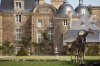
This was to be another zoo that was located next to a castle. The signs next to the highway promised a picture-perfect view of Giraffes with the pretty castle as backdrop. In theory this is possible, but this part of the Giraffe paddock was blocked part of my visit and the Giraffes did never really provide the perfect composition.

DSC_7205.JPG
DSC_7218.JPG
Castle of Bourbansais, with sometimes giraffes in the front.

Overall this is a really pleasing zoo. The last few zoos did either provide pretty gardens, but not really optimal conditions for the animals, or they were ugly, but with on average good conditions for the animals. This zoo mostly managed to combine the two and though some parts are a bit crowded with enclosures, the setting is normally very laid back and pleasant. What helps is that although this is an ABC, mammal-heavy, zoo, is that they have thought about zoonerds. With Smooth-coated Otters, White-breasted Cormorant, Bat-eared Fox, Keel-billed Toucan, Pileated Gibbon (single animal together with a White-handed Gibbon), Gelada and Clouded Leopard, the animal collection is interesting.

Enclosures are a mix of designs, with large islands for e.g. Peruvian Squirrel Monkeys, Diana Monkeys and Colobus, but also more functional cages for parrots, Silvery Marmosets and the Clouded Leopards. Some species like Cheetah, Gemsbok and Europen Forest Reindeer have large, but somewhat simple enclosures and only the Giraffe and Lynx can complain that their enclosures should be bigger. A lemur walkthrough (Ring-tailed, Red-bellied, Crowned & Ruffed) is off-course also present and this one is large with multiple mature trees. Unfortunately feeding by visitors is a problem here as well. In many French zoos you can buy popcorn to feed part of the animals. The result, apart from begging otters, is that also animals that are not supposed to be fed, get it…. My personal highlight was a large S-American walkthrough aviary, which apart from the obligatory Scarlet Ibis & Roseate Spoonbills, also held a pair of highly active Two-toed Sloths, Boat-billed Herons and a Keel-billed Toucan. While there were no parrots on sticks here, this was another zoo with pinioned Sacred Ibises. I really don’t know what this species has done wrong in France, as their Scarlet cousins are basically always in large free-flight aviaries…. There is also a bird show, another common feature in French zoos and while this is not Beauval, there is an interesting selection of species shown and it was fun to see a group of free-flying Waldrapp as well at the end. The castle gardens here are partly accessible and follow the geometrical French design, so are less pretty imo than Cleres or others. There is also a show with horses and dogs, I did not go there, as I had another zoo appointment, but it sounded interesting and shows some special breeds.

DSC_7180.JPG
Peruvian Squirrel Monkey island

DSC_7183.JPGGibbon & Smooth-coated Otter enclosure

DSC_7192.JPG
S-American walkthrough aviary

This zoo also doesn't have a gallery yet. I will add more pictures, once one is created.
 

Attachments

  • DSC_7180.JPG
    DSC_7180.JPG
    179.8 KB · Views: 145
  • DSC_7183.JPG
    DSC_7183.JPG
    221.3 KB · Views: 150
  • DSC_7192.JPG
    DSC_7192.JPG
    200.1 KB · Views: 146
  • DSC_7205.JPG
    DSC_7205.JPG
    134.5 KB · Views: 146
  • DSC_7218.JPG
    DSC_7218.JPG
    169 KB · Views: 148
Zooparc Trégomeur


From the same owners as the Zoo de la Bourbansais is the Zooparc Trégomeur, which lies 1,5 hours away. This zoo has only one theme and that is Asia. The collection, like most others is mammal-focused, but there are a few aviaries around and the collection is indeed almost completely Asian. There must however be a law in France that stipulates that one should keep lemurs, as there were five pleasant lemur islands in the middle of the zoo (Ring-tailed, Brown, Black, Red-bellied, B&W Ruffed).

full

Lemur islands

The Zooparc pretends to also have a strong horticultural component, but in the beginning this is shown mostly by an overabundance of bamboo (it is so easy to recreate Asia…), but there are some pleasant places in other parts of the zoo. The parc is located on a steep hillside and the valley bottom, which means a lot of zigzags to accommodate the elderly and the infirm. New Zealanders could take note here that such things exist and make inclines a lot easier, as they are totally absent on the mountain paths on those islands (though I am sure they will claim that if you play enough Rugby there is no need for such things).

full

Bamboo pathway


The collection of Tregomeur is not particularly big and it is off-course mammal-focused, but there are quite some interesting bits and pieces. There are off-course multiple gibbon species, but the rest of the primate collections consists of Hanuman Langurs, Javan Langurs and Pygmy Slow Lorises (in a tiny nocturnal house with Cloud Rats). Naturally white Tigers cannot be absent, but at least their genetics are explained here. Asian Lions, Snowleopards, Fishing Cats, Binturong, Dhole, Yellow-throated Marten and Malayan Sun Bear complement the predator collection. With Banteng, Malayan Tapir (now also with Indian Muntjac), Vietnamese Sika Deer, Pere-David’s Deer and others the ungulate collection is also interesting. There are even two walkthrough aviaries and some other birds present throughout the site, which is also a nice change. I could have seen my first passerine (Azure-winged Magpie) in a few days, but it was not to be. The bird collection of most French zoos is shamefully limited. I understand ownership is private and ends need to be met, but the interest seems to be lacking as well.

full

Snow Leopard enclosure

full

Malayan Tapir, Indian Muntjac and Dalmatian pelican enclosure

full

One of the two walkthrough aviaries

full

Sun Bear enclosure

full

Yellow-throated Marten enclosure

full

Signage on White Tiger genetics

Enclosure-wise there is nothing unique here, but enclosures are generally pleasant, spacious and well-furnished. A few huge Eucalyptus trees are fully climbable for the Siamang for example. I am a bit sceptical of the fence that is supposed to rein in the Banteng, but I have since seen a similar fence for Gaur, so I am sure they have thought it through somehow…. The Asian focus of this zoo is a nice change and they have taken the effort to bring in some really interesting species that one might not expect for a small zoo in the middle of nowhere. It is a pity this zoo is in the current location, otherwise it would be a very pleasant 2-3 hour visit for loads of zoo enthusiasts. This is certainly not a world class zoo, but one that does very well within its limits and provides at least adequate homes for all its inhabitants.

full

Siamang enclosure

full

Banteng, Blackbuck and Pere-David Deer enclosure

Pictures of the majority of the other enclosures can be found here:
ZooParc de Trégomeur - ZooChat

Zootierliste is up-to-date again for the complete collection of this charming little zoo
 
@lintworm Many thanks for these new reviews. I am quite surprised by your opinion on la Bourbansais. I was there five/six years ago and there was few to save with some real horror and a lot of quite simple enclosures. Well, maybe I will come back to make my own opinion !

Regarding Tregomeur I have to say that it's not the same owner than for la Bourbansais. Tregomeur is the local county's property. At the beginning it was a private zoo and was closed during the 2000's. The local county decided to refurbish all the zoo and the exploitation was given to la Bourbansais' owner.
The lemur islands are an heritage of the previous zoo and the lemurs remain in the park during closure and the building works.
 
Back
Top