
Ah ok. I thought you meant a species named after a person in general was frowned upon. I got really confused.It's one of the rules of binomial nomenclature, or at least it's an unwritten one.
~Thylo
Ah ok. I thought you meant a species named after a person in general was frowned upon. I got really confused.It's one of the rules of binomial nomenclature, or at least it's an unwritten one.
~Thylo


I also think Carsten Niemitz is incredibly lucky to have both described a new species and to have it named after him (I think it is infinitely cooler to have a tarsier named after you than a beetle, fly or parasite).
The tarsier wasn't described by Niemitz.Isn't it highly frowned upon to name a species after yourself?
The tarsier wasn't described by Niemitz.
The citation of the paper is Shekelle, M., Groves, C. P., Maryanto, I., Mittermeier, R. A., Salim, A., & Springer, M. S. (2019). A new tarsier species from the Togean Islands of Central Sulawesi, Indonesia, with references to Wallacea and conservation on Sulawesi. Primate Conservation, 33.
Yeah thats what usually happens amongst the zoological world.I'll take a look at that, thank you for sharing.
So it seems that someone else named it after him I suppose.

Yeah thats what usually happens amongst the zoological world.
Yes thank you, @Chlidonias. I always thought it was an honor to have a species named after yourself, now I know unless if you named it.Indeed, that's perfectly fine. The initial post did say he described it himself, though. Thank you @Chlidonias for double-checking.
~Thylo
Yes thank you, @Chlidonias. I always thought it was an honor to have a species named after yourself, now I know unless if you named it.
Anderson's salamanders are really pretty! I can't remember if I've seen one though. Are they kept in captivity?I think the honor is greater still if your colleagues name the species after you, for example the Anderson's salamander (Ambystoma andersoni) of Mexico (most beautiful of the Mexican mole salamanders in my opinion) was named after the American herpetologist James Anderson by his colleagues.
Unfortunately Anderson never got to learn of this as the species was scientifically described and was given this name by his colleagues 8 years after he had died.
Anderson's salamanders are really pretty! I can't remember if I've seen one though. Are they kept in captivity?

Interesting. I have always wanted to see a Angwantibo in the wild or in a zoo, and I have to admit I am a little jealous that you got to see one!To get back to the original question - I'm sorry that it's horribly difficult to answer it.
Like @Tim May I saw tarsiers at Frankfurt and Bristol (although I didn't see them at RSCC) and I would be delighted to see one again. But I would be equally delighted to see an angwantibo again - I'm sure Tim remembers them in the Moonlight World at the Clore, together with the potto, slow and slender lorises (a full house in the early 1970s before the lorises were split into different species and the pygmy slow loris was kept in captivity). The diversity and distribution of the loris species makes that group interesting; while my impression, which may be incorrect, is that the differences between the tarsier species are relatively smaller. On the other hand, tarsiers are so cute and so interesting, that I can't vote against them.
So I'll have to cheat and my only reply to the question tarsier or loris is "Yes please"
 . What was the last place that held angwantibos? They aren't in captivity anymore right?
No angwantibos in Europe now: last ones at London until 1978 and Rotterdam until 1984 (if ZTL is accurate).Interesting. I have always wanted to see a Angwantibo in the wild or in a zoo, and I have to admit I am a little jealous that you got to see one!
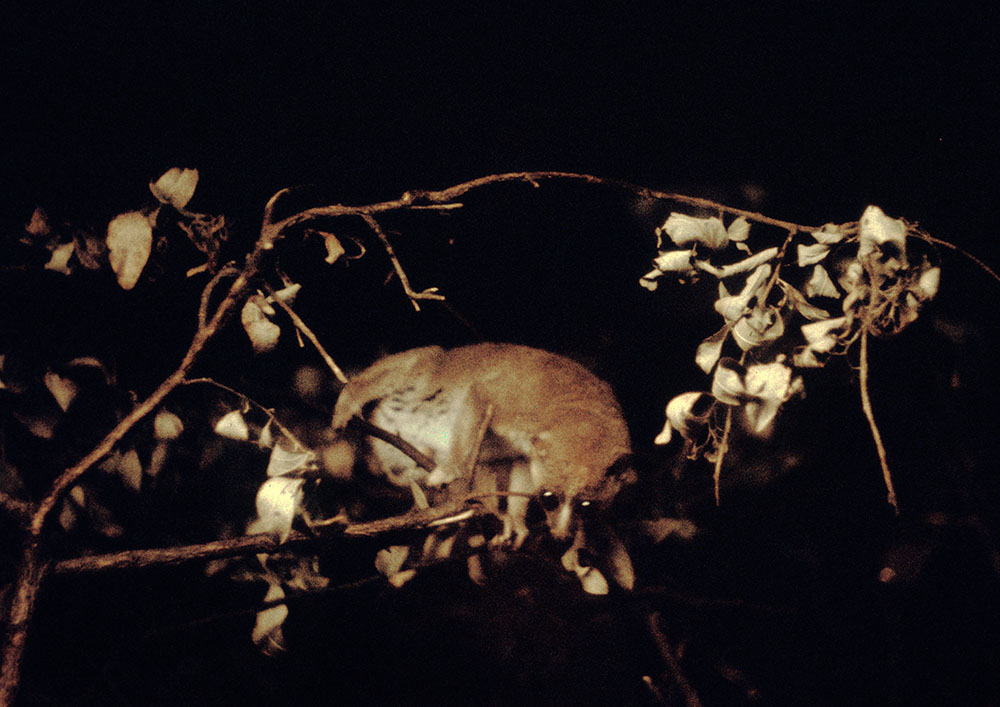

Cool photos! The tarsier one especially is a really nice shot!No angantibos in Europe now: last ones at London until 1978 and Rotterdam until 1984 (if ZTL is accurate).
I have poor photos of an angwantibo at London and a tarsier at Frankfurt in our Gallery.
I have seen Anderson's Salamanders for sale in the pet trade before, too.
~Thylo
I am going to vote for the lorises, I find both groups very fascinating and have enjoyed the more recent discoveries of species. Both groups are so distinct, the lorises, some of the few venomous mammals, and the tarsiers, the only primarily carnivorous primates. However, I hold a bit of a grudge on the tarsiers because at Ouwehands Zoo their enclosure was closed every time I tried to visit. When it was finally open when I was there, the animals had passed away.

To get back to the original question - I'm sorry that it's horribly difficult to answer it.
Like @Tim May I saw tarsiers at Frankfurt and Bristol (although I didn't see them at RSCC) and I would be delighted to see one again. But I would be equally delighted to see an angwantibo again - I'm sure Tim remembers them in the Moonlight World at the Clore, together with the potto, slow and slender lorises (a full house in the early 1970s before the lorises were split into different species and the pygmy slow loris was kept in captivity). The diversity and distribution of the loris species makes that group interesting; while my impression, which may be incorrect, is that the differences between the tarsier species are relatively smaller. On the other hand, tarsiers are so cute and so interesting, that I can't vote against them.
So I'll have to cheat and my only reply to the question tarsier or loris is "Yes please"
 . Even I have struggled to answer it decisively as I too find both the loris and the tarsier to be amazing animals.

Like @Tim May I saw tarsiers at Frankfurt and Bristol (although I didn't see them at RSCC) ....I would be equally delighted to see an angwantibo again - I'm sure Tim remembers them in the Moonlight World at the Clore, together with the potto, slow and slender lorises...
Indeed I do remember when the Clore Pavilion housed angwantibo, potto, slender loris and slow loris. And I believe London Zoo holds the longevity record of thirteen years for a captive angwantibo.No angwantibos in Europe now: last ones at London until 1978 and Rotterdam until 1984 (if ZTL is accurate).