Eastern Spinebill is a great bird, but I think Western trumps it for beauty.
You are using an out of date browser. It may not display this or other websites correctly.
You should upgrade or use an alternative browser.
You should upgrade or use an alternative browser.
The top 10 most beautiful Passerine birds in your opinion.
- Thread starter Onychorhynchus coronatus
- Start date

Onychorhynchus coronatus
Well-Known Member
Eastern Spinebill is a great bird, but I think Western trumps it for beauty.
Why does the Western seem more beautiful to you ?
Compare the pictures; it is simply a subjective judgement.
Onychorhynchus coronatus
Well-Known Member
Compare the pictures; it is simply a subjective judgement.
I think I'd personally stick with the Eastern spinebill but the Western is beautiful too.

Impossible to make a top 10, not even a top 50 but for the story, I was in Vienna for one morning 2 years ago and really wanted to see the Blue-backed manakins. Their house was closed because they were breeding.
I talked to 3/4 keepers before one accepted to introduce me to the curator of the bird house.
The lady was very friendly, let me in the house where an intern had to stay all day to make sure the baby manakins were ok as it was the time for them to learn how to fly, and they crashed a lot.
The male was strikingly beautiful, quite shy. The female wasn’t as colorful but just as charismatic, it was being very agressive, scarring off even the Amazon parrots in the house, to protect her babies.
I talked to 3/4 keepers before one accepted to introduce me to the curator of the bird house.
The lady was very friendly, let me in the house where an intern had to stay all day to make sure the baby manakins were ok as it was the time for them to learn how to fly, and they crashed a lot.
The male was strikingly beautiful, quite shy. The female wasn’t as colorful but just as charismatic, it was being very agressive, scarring off even the Amazon parrots in the house, to protect her babies.
Onychorhynchus coronatus
Well-Known Member
Impossible to make a top 10, not even a top 50 but for the story, I was in Vienna for one morning 2 years ago and really wanted to see the Blue-backed manakins. Their house was closed because they were breeding.
I talked to 3/4 keepers before one accepted to introduce me to the curator of the bird house.
The lady was very friendly, let me in the house where an intern had to stay all day to make sure the baby manakins were ok as it was the time for them to learn how to fly, and they crashed a lot.
The male was strikingly beautiful, quite shy. The female wasn’t as colorful but just as charismatic, it was being very agressive, scarring off even the Amazon parrots in the house, to protect her babies.
Don't worry
 a story is definitely acceptable in place of a list.
Blue backed manakins are beautiful birds indeed, unfortunately I have never seen one in the wild and I don't think in captivity either.
That is brilliant luck you had ! and really made me laugh about the little female manakin getting pugnacious with the Amazons which are like 3 times larger ! small in size but not spirit evidently !

Last edited:
Eastern spinebills I saw in suburban Australia, they are rather common. I did not expect them to be so stunning. This blue dot on the yellow-orange breast is crazy, like European bluethroat taken to the next level.
Fire-tailed sunbird is extremely bright, like burning red. It is one bird which looks differently in real life than on a photo because the colors are so intensive iridescent that appear to glow.
The paradise flycatcher - best is a fully adult male which is white with black head.
Khalid Sharif Wildlife Photography
https://www.evolveback.com/lifescapes/wp-content/uploads/2011/12/asian-paradise-flycatcher.jpg
Most these birds are relatively easy to see once you travel to their home ranges. Some can be seen on budget backpacking trips. BoPs are expensive to see, but with money it is straightforward to get to New Guinea lodges and they are rather common there. I hope it will still remain so after the covid epidemics.
Fire-tailed sunbird is extremely bright, like burning red. It is one bird which looks differently in real life than on a photo because the colors are so intensive iridescent that appear to glow.
The paradise flycatcher - best is a fully adult male which is white with black head.
Khalid Sharif Wildlife Photography
https://www.evolveback.com/lifescapes/wp-content/uploads/2011/12/asian-paradise-flycatcher.jpg
Most these birds are relatively easy to see once you travel to their home ranges. Some can be seen on budget backpacking trips. BoPs are expensive to see, but with money it is straightforward to get to New Guinea lodges and they are rather common there. I hope it will still remain so after the covid epidemics.

Top 10 seen in the wild, in random order:
* European Goldfinch
* Southern Double-collared Sunbird
* African Paradise Flycatcher
* Superb Fairy-Wren
* Vermilion Flycatcher
* Long-tailed Manakin
* Mangrove Warbler
* Montezuma Oropendola
* Tit-like Dacnis
* Red-legged Honeycreeper
* European Goldfinch
* Southern Double-collared Sunbird
* African Paradise Flycatcher
* Superb Fairy-Wren
* Vermilion Flycatcher
* Long-tailed Manakin
* Mangrove Warbler
* Montezuma Oropendola
* Tit-like Dacnis
* Red-legged Honeycreeper
Top 10 seen in captivity, also in random order:
* Rainbow Pitta
* Greater Bird-of-Paradise
* King Bird-of Paradise
* Paradise Tanager
* Thick-billed Euphonia
* Spangled Cotinga
* Andean Cock-of-the-Rock
* Swallow-tailed Manakin
* Inca Jay
* Scarlet-chested Sunbird
* Rainbow Pitta
* Greater Bird-of-Paradise
* King Bird-of Paradise
* Paradise Tanager
* Thick-billed Euphonia
* Spangled Cotinga
* Andean Cock-of-the-Rock
* Swallow-tailed Manakin
* Inca Jay
* Scarlet-chested Sunbird
Onychorhynchus coronatus
Well-Known Member
Top 10 seen in the wild, in random order:
* European Goldfinch
* Southern Double-collared Sunbird
* African Paradise Flycatcher
* Superb Fairy-Wren
* Vermilion Flycatcher
* Long-tailed Manakin
* Mangrove Warbler
* Montezuma Oropendola
* Tit-like Dacnis
* Red-legged Honeycreeper
So quite a few of these from your list I have seen in the wild and captivity like the Montezuma Oropendola (I find it rather weird than beautiful , like a bird from out of space), European goldfinch, vermillion flycatcher (have vivid memories of watching these in Mexico) , long tailed manakin, mangrove warbler and red legged honey creeper (gorgeous bird!).
Others I haven't seen yet like the tit-like Dacnis (stunning colour !), the superb fair wren (I can see why this makes so many peoples list as it is gorgeous) and the spangled cotinga (hopefully will see these beautiful birds one day).
Onychorhynchus coronatus
Well-Known Member
Top 10 seen in captivity, also in random order:
* Rainbow Pitta
* Greater Bird-of-Paradise
* King Bird-of Paradise
* Paradise Tanager
* Thick-billed Euphonia
* Spangled Cotinga
* Andean Cock-of-the-Rock
* Swallow-tailed Manakin
* Inca Jay
* Scarlet-chested Sunbird
Great list!
Some of these birds are beautiful but have been covered in other lists and featured in my replies to these so shall focus on the ones that haven't been mentioned so far.
The Inca jay is an incredible looking bird indeed and can certainly see why it made your list as the green plumage is beautiful. It reminds me somewhat of another green coloured jay that I've seen often in Mexico, the green jay which I have fond memories of watching.
The thick billed Euphonia is another species with the males being particularly attractive little birds. I haven't seen this species yet but have seen closely related euphonia species here in Brazil in one of my favourite places to spot wild birds. They often feed alongside other striking birds withbeautifully coloured tanagers like the green headed tanager and the saffron toucanet (it is like an avian carnival with all of those colours).
The rainbow pitta I have definitely not seen in either the wild (never been to Australia) or in captivity but from the pictures I'm looking at it is a handsome looking bird indeed (most pitta species seem to be). Love the colours, they are not breathtakingly bright but they are very attractive with those olive greens and scarlet reds.
Last edited:

I may have a bit of an usual taste for passerines, often preferring species with abundant patterns over those with bright colours. My list consists only of species seen in the wild (might make another one for species seen in captivity). For "beautiful", I used a broad definition by including song, which for me is a very important part of enjoying passerines. In no particular order:
- Woodlark
A handsome bird with a plethora of patterns and textures that make up for the lack of colour, with a bold cream-coloured eye-stripe that stands out on the more mottled background. But it's the warm, almost melancholic song that made me put this bird on the list. Often the first species to burst out in song in februari, this bird is a bringer of spring in my local birding patch.
- Brambling - male breeding and non-breeding
A bird with two very different looks. The male's breeding plumage has this gorgeous colour combination of a deep, almost glossy black head, with a bright orange neck and breast and a clean white belly. But the abundant wing-bars are a give-away that this bird is also more of a pattern-based beauty. In winter, the wing-bars turn orange with a slight shade of yellow, the head becomes mottled black, grey and brown and the back has a beautiful warm brown scale pattern.
- Eurasian Jay
Again not a bird with a lot of colour on it's body, but it is exactly this lack of colour that makes the dash of the brightest blue on it's wings stand out. With bold facial markings and black and white wing patterns, I'm always surprised at how handsome they are up close. While it is mostly known for its screeching, this bird is a surprisingly talented singer with a varied, almost tropical sounding song.
- Yellow-browed Warbler
Another slightly unusual choice, but my fellow western European birders will acknowledge that this initially drab-looking warbler is in fact a little gem. Mossy green with a whitish-yellow eye-stripe and two wing-bars, this species stands out as one of the most stunning leaf warblers. Other birders have told me the Pallas's leaf warbler is even better, but I've never seen one.
- Woodchat Shrike - adult male
I cannot really put my finger on why I like this species so much. Perhaps it is the gorgeous chestnut-red crown, the bold black eye-stripe and the bright white throat that appeal to me. But perhaps it is the weird combination of a bird that looks both powerful and cute at the same time. Regardless, a bird that definately belongs on this list.
- Long-tailed Tit - subspecies caudatus
The so-called "white-headed long-tailed tit" must surely be the cutest thing in existence right? The entirely bird is basically a head with huge adorable eyes and a teeny tiny bill. The small, dark-coloured wings and long tail contrast with its bright white head. The little dash of warm brown on it's back simply completes the bird.
- Bluethroat - adult male
A bird that combines patterns with colour, the bluethroat must be one of the most gorgeous birds in Europe. Bright blue throat (hence the name!), underlined with a black, a white and a ruddy stripe (in that order). A bold eye-stripe and ruddy tail give the bird even more character, and the inside of it's mouth is yellow, which brings even more colour when it's singing. It's song not bad either, varied but always accelerating. It's probably my favorite bird song in spring marshes.
- Yellowhammer - male breeding
Another bird that combines patterns with colour, but this time it is a striking yellow head and belly. This beauty is heavily streaked, with a warm brown back and a rufous rump. The song, that some people say sounds a bit like the fifths symphony of Beethoven, is stunning too. I'm really glad this species is common in my local patch, so I can enjoy it's beauty as often as I want.
- Bohemian Waxwing
Captivating because of the bold facial pattern and the unique buff-grey plumage. The dashes of yellow, white and red in the wing pattern make this bird stand out even more. Do I need to say more? An obvious must-see for everyone who likes birds, with a lovely call that goes along with the striking plumage.
- Common Firecrest
Oh dear, only one more? I could have chosen so many but I went with the firecrest. A striking colour combination of mossy green, multiple shades of yellow and bright orange, accentuated with black and white eye-stripes and wing bars. Again a handsome combination of colours and patters that elevate one another - a common feature in most species on this list!
This list could be totally different if you ask me tomorrow! Honorable mentions include European Stonechat, Common Reed Bunting, Golden Oriole (I do like bright colour sometimes!), Grey Wagtail, Hawfinch, Subalpine Warbler, Bearded Reedling, Redwing, Crested Tit, Pied Flycatcher and Eurasian Blue Tit.
- Woodlark
A handsome bird with a plethora of patterns and textures that make up for the lack of colour, with a bold cream-coloured eye-stripe that stands out on the more mottled background. But it's the warm, almost melancholic song that made me put this bird on the list. Often the first species to burst out in song in februari, this bird is a bringer of spring in my local birding patch.
- Brambling - male breeding and non-breeding
A bird with two very different looks. The male's breeding plumage has this gorgeous colour combination of a deep, almost glossy black head, with a bright orange neck and breast and a clean white belly. But the abundant wing-bars are a give-away that this bird is also more of a pattern-based beauty. In winter, the wing-bars turn orange with a slight shade of yellow, the head becomes mottled black, grey and brown and the back has a beautiful warm brown scale pattern.
- Eurasian Jay
Again not a bird with a lot of colour on it's body, but it is exactly this lack of colour that makes the dash of the brightest blue on it's wings stand out. With bold facial markings and black and white wing patterns, I'm always surprised at how handsome they are up close. While it is mostly known for its screeching, this bird is a surprisingly talented singer with a varied, almost tropical sounding song.
- Yellow-browed Warbler
Another slightly unusual choice, but my fellow western European birders will acknowledge that this initially drab-looking warbler is in fact a little gem. Mossy green with a whitish-yellow eye-stripe and two wing-bars, this species stands out as one of the most stunning leaf warblers. Other birders have told me the Pallas's leaf warbler is even better, but I've never seen one.
- Woodchat Shrike - adult male
I cannot really put my finger on why I like this species so much. Perhaps it is the gorgeous chestnut-red crown, the bold black eye-stripe and the bright white throat that appeal to me. But perhaps it is the weird combination of a bird that looks both powerful and cute at the same time. Regardless, a bird that definately belongs on this list.
- Long-tailed Tit - subspecies caudatus
The so-called "white-headed long-tailed tit" must surely be the cutest thing in existence right? The entirely bird is basically a head with huge adorable eyes and a teeny tiny bill. The small, dark-coloured wings and long tail contrast with its bright white head. The little dash of warm brown on it's back simply completes the bird.
- Bluethroat - adult male
A bird that combines patterns with colour, the bluethroat must be one of the most gorgeous birds in Europe. Bright blue throat (hence the name!), underlined with a black, a white and a ruddy stripe (in that order). A bold eye-stripe and ruddy tail give the bird even more character, and the inside of it's mouth is yellow, which brings even more colour when it's singing. It's song not bad either, varied but always accelerating. It's probably my favorite bird song in spring marshes.
- Yellowhammer - male breeding
Another bird that combines patterns with colour, but this time it is a striking yellow head and belly. This beauty is heavily streaked, with a warm brown back and a rufous rump. The song, that some people say sounds a bit like the fifths symphony of Beethoven, is stunning too. I'm really glad this species is common in my local patch, so I can enjoy it's beauty as often as I want.
- Bohemian Waxwing
Captivating because of the bold facial pattern and the unique buff-grey plumage. The dashes of yellow, white and red in the wing pattern make this bird stand out even more. Do I need to say more? An obvious must-see for everyone who likes birds, with a lovely call that goes along with the striking plumage.
- Common Firecrest
Oh dear, only one more? I could have chosen so many but I went with the firecrest. A striking colour combination of mossy green, multiple shades of yellow and bright orange, accentuated with black and white eye-stripes and wing bars. Again a handsome combination of colours and patters that elevate one another - a common feature in most species on this list!
This list could be totally different if you ask me tomorrow! Honorable mentions include European Stonechat, Common Reed Bunting, Golden Oriole (I do like bright colour sometimes!), Grey Wagtail, Hawfinch, Subalpine Warbler, Bearded Reedling, Redwing, Crested Tit, Pied Flycatcher and Eurasian Blue Tit.
Onychorhynchus coronatus
Well-Known Member
I may have a bit of an usual taste for passerines, often preferring species with abundant patterns over those with bright colours. My list consists only of species seen in the wild (might make another one for species seen in captivity). For "beautiful", I used a broad definition by including song, which for me is a very important part of enjoying passerines. In no particular order:
- Woodlark
A handsome bird with a plethora of patterns and textures that make up for the lack of colour, with a bold cream-coloured eye-stripe that stands out on the more mottled background. But it's the warm, almost melancholic song that made me put this bird on the list. Often the first species to burst out in song in februari, this bird is a bringer of spring in my local birding patch.
- Brambling - male breeding and non-breeding
A bird with two very different looks. The male's breeding plumage has this gorgeous colour combination of a deep, almost glossy black head, with a bright orange neck and breast and a clean white belly. But the abundant wing-bars are a give-away that this bird is also more of a pattern-based beauty. In winter, the wing-bars turn orange with a slight shade of yellow, the head becomes mottled black, grey and brown and the back has a beautiful warm brown scale pattern.
- Eurasian Jay
Again not a bird with a lot of colour on it's body, but it is exactly this lack of colour that makes the dash of the brightest blue on it's wings stand out. With bold facial markings and black and white wing patterns, I'm always surprised at how handsome they are up close. While it is mostly known for its screeching, this bird is a surprisingly talented singer with a varied, almost tropical sounding song.
- Yellow-browed Warbler
Another slightly unusual choice, but my fellow western European birders will acknowledge that this initially drab-looking warbler is in fact a little gem. Mossy green with a whitish-yellow eye-stripe and two wing-bars, this species stands out as one of the most stunning leaf warblers. Other birders have told me the Pallas's leaf warbler is even better, but I've never seen one.
- Woodchat Shrike - adult male
I cannot really put my finger on why I like this species so much. Perhaps it is the gorgeous chestnut-red crown, the bold black eye-stripe and the bright white throat that appeal to me. But perhaps it is the weird combination of a bird that looks both powerful and cute at the same time. Regardless, a bird that definately belongs on this list.
- Long-tailed Tit - subspecies caudatus
The so-called "white-headed long-tailed tit" must surely be the cutest thing in existence right? The entirely bird is basically a head with huge adorable eyes and a teeny tiny bill. The small, dark-coloured wings and long tail contrast with its bright white head. The little dash of warm brown on it's back simply completes the bird.
- Bluethroat - adult male
A bird that combines patterns with colour, the bluethroat must be one of the most gorgeous birds in Europe. Bright blue throat (hence the name!), underlined with a black, a white and a ruddy stripe (in that order). A bold eye-stripe and ruddy tail give the bird even more character, and the inside of it's mouth is yellow, which brings even more colour when it's singing. It's song not bad either, varied but always accelerating. It's probably my favorite bird song in spring marshes.
- Yellowhammer - male breeding
Another bird that combines patterns with colour, but this time it is a striking yellow head and belly. This beauty is heavily streaked, with a warm brown back and a rufous rump. The song, that some people say sounds a bit like the fifths symphony of Beethoven, is stunning too. I'm really glad this species is common in my local patch, so I can enjoy it's beauty as often as I want.
- Bohemian Waxwing
Captivating because of the bold facial pattern and the unique buff-grey plumage. The dashes of yellow, white and red in the wing pattern make this bird stand out even more. Do I need to say more? An obvious must-see for everyone who likes birds, with a lovely call that goes along with the striking plumage.
- Common Firecrest
Oh dear, only one more? I could have chosen so many but I went with the firecrest. A striking colour combination of mossy green, multiple shades of yellow and bright orange, accentuated with black and white eye-stripes and wing bars. Again a handsome combination of colours and patters that elevate one another - a common feature in most species on this list!
This list could be totally different if you ask me tomorrow! Honorable mentions include European Stonechat, Common Reed Bunting, Golden Oriole (I do like bright colour sometimes!), Grey Wagtail, Hawfinch, Subalpine Warbler, Bearded Reedling, Redwing, Crested Tit, Pied Flycatcher and Eurasian Blue Tit.
Thank you for your comment @Mr. Zootycoon !
I like the way you have described your aesthetic preferences when it comes to birds and I should say that I share them. My own list of favourite passerines contains a couple of species which are not really the most colourful and that many would consider drab or unexciting (chestnut-backed thrush, magpie tanager and white throated water dipper).
These are all very beautiful Eurasian birds that you have listed and most of these I have seen in the wild (firecrest, yellowhammer, woodlark , jay, brambling, shrike and the warbler) with the exception of the waxwing and the blue-throat.
The bird on your list that stands out to me as the most beautiful is the long tailed tit and I have seen these in the wild and enjoyed watching them. I really love the peachy gray coloured plumage and the large tails and having seen their behaviour I like how much character these little birds have.
Last edited:
I agree with all of these, and can also confirm Pallas’s Warbler is even better than Yellow-browned. Waxwing, Jay and Long-tailed Tit made my long list.I may have a bit of an usual taste for passerines, often preferring species with abundant patterns over those with bright colours. My list consists only of species seen in the wild (might make another one for species seen in captivity). For "beautiful", I used a broad definition by including song, which for me is a very important part of enjoying passerines. In no particular order:
- Woodlark
A handsome bird with a plethora of patterns and textures that make up for the lack of colour, with a bold cream-coloured eye-stripe that stands out on the more mottled background. But it's the warm, almost melancholic song that made me put this bird on the list. Often the first species to burst out in song in februari, this bird is a bringer of spring in my local birding patch.
- Brambling - male breeding and non-breeding
A bird with two very different looks. The male's breeding plumage has this gorgeous colour combination of a deep, almost glossy black head, with a bright orange neck and breast and a clean white belly. But the abundant wing-bars are a give-away that this bird is also more of a pattern-based beauty. In winter, the wing-bars turn orange with a slight shade of yellow, the head becomes mottled black, grey and brown and the back has a beautiful warm brown scale pattern.
- Eurasian Jay
Again not a bird with a lot of colour on it's body, but it is exactly this lack of colour that makes the dash of the brightest blue on it's wings stand out. With bold facial markings and black and white wing patterns, I'm always surprised at how handsome they are up close. While it is mostly known for its screeching, this bird is a surprisingly talented singer with a varied, almost tropical sounding song.
- Yellow-browed Warbler
Another slightly unusual choice, but my fellow western European birders will acknowledge that this initially drab-looking warbler is in fact a little gem. Mossy green with a whitish-yellow eye-stripe and two wing-bars, this species stands out as one of the most stunning leaf warblers. Other birders have told me the Pallas's leaf warbler is even better, but I've never seen one.
- Woodchat Shrike - adult male
I cannot really put my finger on why I like this species so much. Perhaps it is the gorgeous chestnut-red crown, the bold black eye-stripe and the bright white throat that appeal to me. But perhaps it is the weird combination of a bird that looks both powerful and cute at the same time. Regardless, a bird that definately belongs on this list.
- Long-tailed Tit - subspecies caudatus
The so-called "white-headed long-tailed tit" must surely be the cutest thing in existence right? The entirely bird is basically a head with huge adorable eyes and a teeny tiny bill. The small, dark-coloured wings and long tail contrast with its bright white head. The little dash of warm brown on it's back simply completes the bird.
- Bluethroat - adult male
A bird that combines patterns with colour, the bluethroat must be one of the most gorgeous birds in Europe. Bright blue throat (hence the name!), underlined with a black, a white and a ruddy stripe (in that order). A bold eye-stripe and ruddy tail give the bird even more character, and the inside of it's mouth is yellow, which brings even more colour when it's singing. It's song not bad either, varied but always accelerating. It's probably my favorite bird song in spring marshes.
- Yellowhammer - male breeding
Another bird that combines patterns with colour, but this time it is a striking yellow head and belly. This beauty is heavily streaked, with a warm brown back and a rufous rump. The song, that some people say sounds a bit like the fifths symphony of Beethoven, is stunning too. I'm really glad this species is common in my local patch, so I can enjoy it's beauty as often as I want.
- Bohemian Waxwing
Captivating because of the bold facial pattern and the unique buff-grey plumage. The dashes of yellow, white and red in the wing pattern make this bird stand out even more. Do I need to say more? An obvious must-see for everyone who likes birds, with a lovely call that goes along with the striking plumage.
- Common Firecrest
Oh dear, only one more? I could have chosen so many but I went with the firecrest. A striking colour combination of mossy green, multiple shades of yellow and bright orange, accentuated with black and white eye-stripes and wing bars. Again a handsome combination of colours and patters that elevate one another - a common feature in most species on this list!
This list could be totally different if you ask me tomorrow! Honorable mentions include European Stonechat, Common Reed Bunting, Golden Oriole (I do like bright colour sometimes!), Grey Wagtail, Hawfinch, Subalpine Warbler, Bearded Reedling, Redwing, Crested Tit, Pied Flycatcher and Eurasian Blue Tit.
Onychorhynchus coronatus
Well-Known Member
I'm going to have to do an honorable mentions list too I think.
There are more birds that didn't quite make my top 10 but that I find very striking too.
There are more birds that didn't quite make my top 10 but that I find very striking too.
Last edited:
I like the way you have described your aesthetic preferences when it comes to birds and I should say that I share them. My own list of favourite passerines contains a couple of species which are not really the most colourful and that many would consider drab or unexciting (chestnut-backed thrush, magpie tanager and white throated water dipper).
These are all very beautiful Eurasian birds that you have listed and most of these I have seen in the wild (firecrest, yellowhammer, woodlark , jay, brambling, shrike and the warbler) with the exception of the waxwing and the blue-throat.
The bird on your list that stands out to me as the most beautiful is the long tailed tit and I have seen these in the wild and enjoyed watching them. I really love the peachy gray coloured plumage and the large tails and having seen their behaviour I like how much character these little birds have.
Thank you! The dipper and tanager (which I wasn't familiar with, to be honest, before I read your list) can only be described as unexciting if colour is the only thing you look for in a bird - which I think doesn't do justice to most species. The thrush is an absolute gem, I love the vertical eye-stripe!
Long-tailed tits are interesting in every way. They're lively and active and social. Sometimes the whole forest is seemingly buzzing with their calls which is a great experience.
I agree with all of these, and can also confirm Pallas’s Warbler is even better than Yellow-browned. Waxwing, Jay and Long-tailed Tit made my long list.
I would love to see a Pallas's leaf warbler. Unfortunately they're very rare in my neck of the woods. Yellow-browed is not exactly common either but much more frequent that Pallas's.
Onychorhynchus coronatus
Well-Known Member
Long-tailed tits are interesting in every way. They're lively and active and social. Sometimes the whole forest is seemingly buzzing with their calls which is a great experience.
The other thing about this species that I remember I loved to watch was just how acrobating they could be in their movements on branches and bird feeders using their long tails to balance.
Onychorhynchus coronatus
Well-Known Member
@Mr. Zootycoon By the way to give you an idea of what this bird is like I would say that it has more in common with its namesake the magpie than just its appearance.
The magpie tanager can be quite a bully in terms of their temperament when it comes to them visiting bird feeders or fruit trees in Atlantic rainforest areas in Brazil.
These are the largest tanager species so when they arrive and other tanager species are feeding they tend to muscle in and push others right out of the way.
The magpie tanager can be quite a bully in terms of their temperament when it comes to them visiting bird feeders or fruit trees in Atlantic rainforest areas in Brazil.
These are the largest tanager species so when they arrive and other tanager species are feeding they tend to muscle in and push others right out of the way.
Last edited:

Such an enormous group with so many beautifull species so I decided to make 4 instead of 1 list of favorite species :
- Species taken care for myself
- Species seen in captivity but not taken care for myself
- Species seen in the wild
- Species not seen so far either in captivity nor in the wild.
I'll start with species seen in captivity but I didn't take care for myself :
- Superb fairy wren - Malurus cyaneus. 1985 I visited the London Zoo and among the highlights for me the Superb fairy wren was one of the most impresive. Had never seen a Fairy wren before and the one at London was in perfect condition and very active !
- Wilson's bird of paradise - Cicinurus respublica. Birds of paradise are in general of course already beautifull and the one I am most impressed by is the Wilson's bird of paradise. In the 1980s Blijdorp - Rotterdam Zoo had several of them and I loved to observe the displaying males of this species !

- White-necked picathartes - Picathartes gymnocephalus. A very intresting and a very rare species. I was so lucky to have 3 zoos "nearby" in which the species was kept. I've seen it at Antwerp, at Artis Amsterdam ( were it even was bred succesfully ! ) and at Rotterdam Zoo.
For Rotterdam Zoo ZTL only list a single specimen but I know that in 1979 8 specimens were kept. Loved to observe these birds in the large aviary in the Rivierra Hall of Rotterdam Zoo !
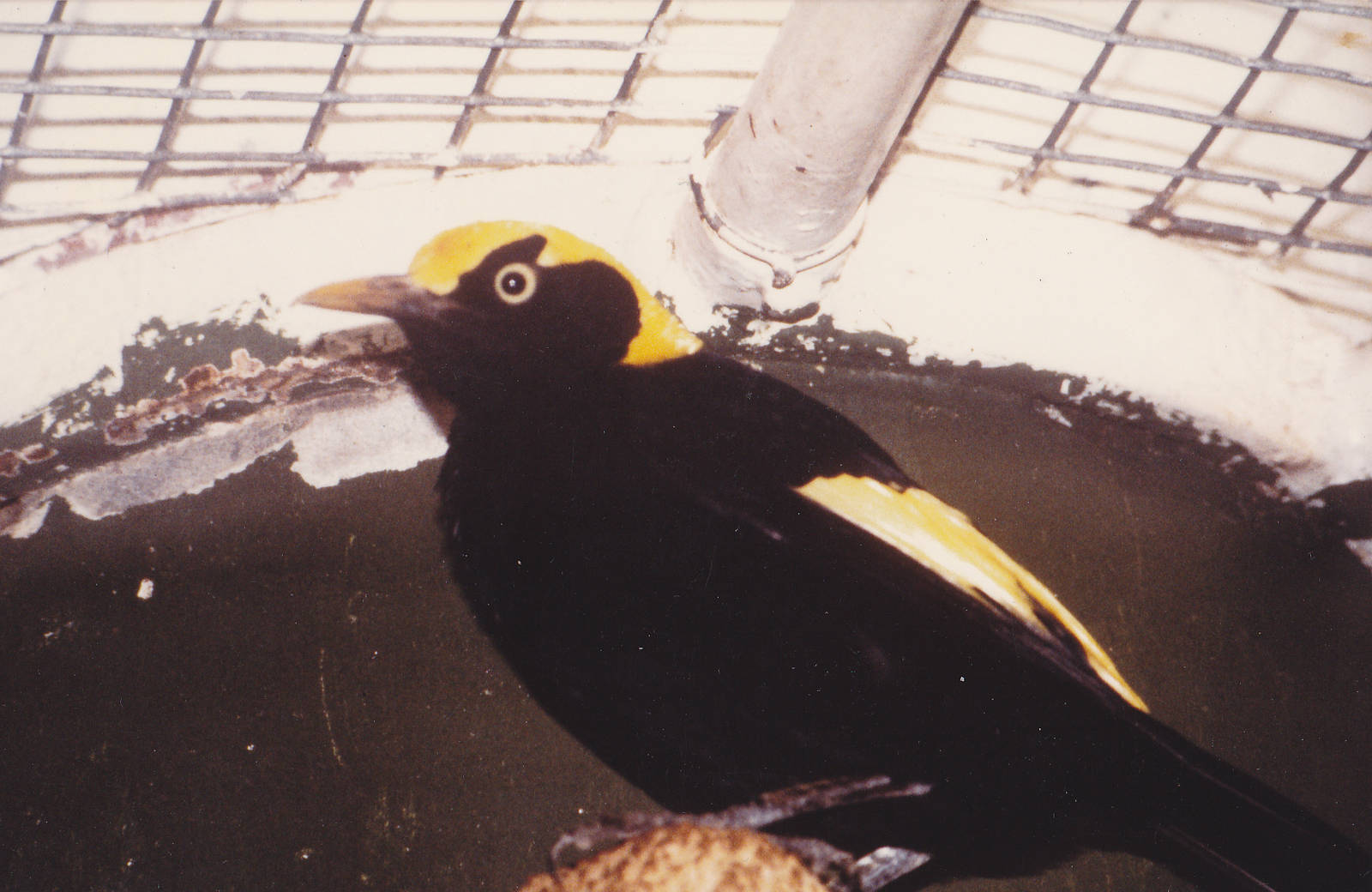
- Regent bowerbird - Sericulus chrysocephalus. Closely releated with the birds of paradise and also only very rarely seen in western zoos are the bowerbirds and one of the most beautiful species I've seen is the Regent bowerbird, from which Rotterdam Zoo had a single male in the 1980s ( the Satin bowerbird is maybe even more beautiful but doesn't fit in this list because I took care for it ) :
- Taiwan blue magpie - Urocissa caerulea. Next to a number of black and black and white species the crow-family also has a lot of species which are realy very beautiful and the Taiwan ( or Formosian ) blue magpie is IMO one of the most beautiful of the family. Never seen it in any public collection but during the mid-1980 small numbers were imported from Taiwan into western Europe and I was so lucky to see the species at at least 2 different dealers.
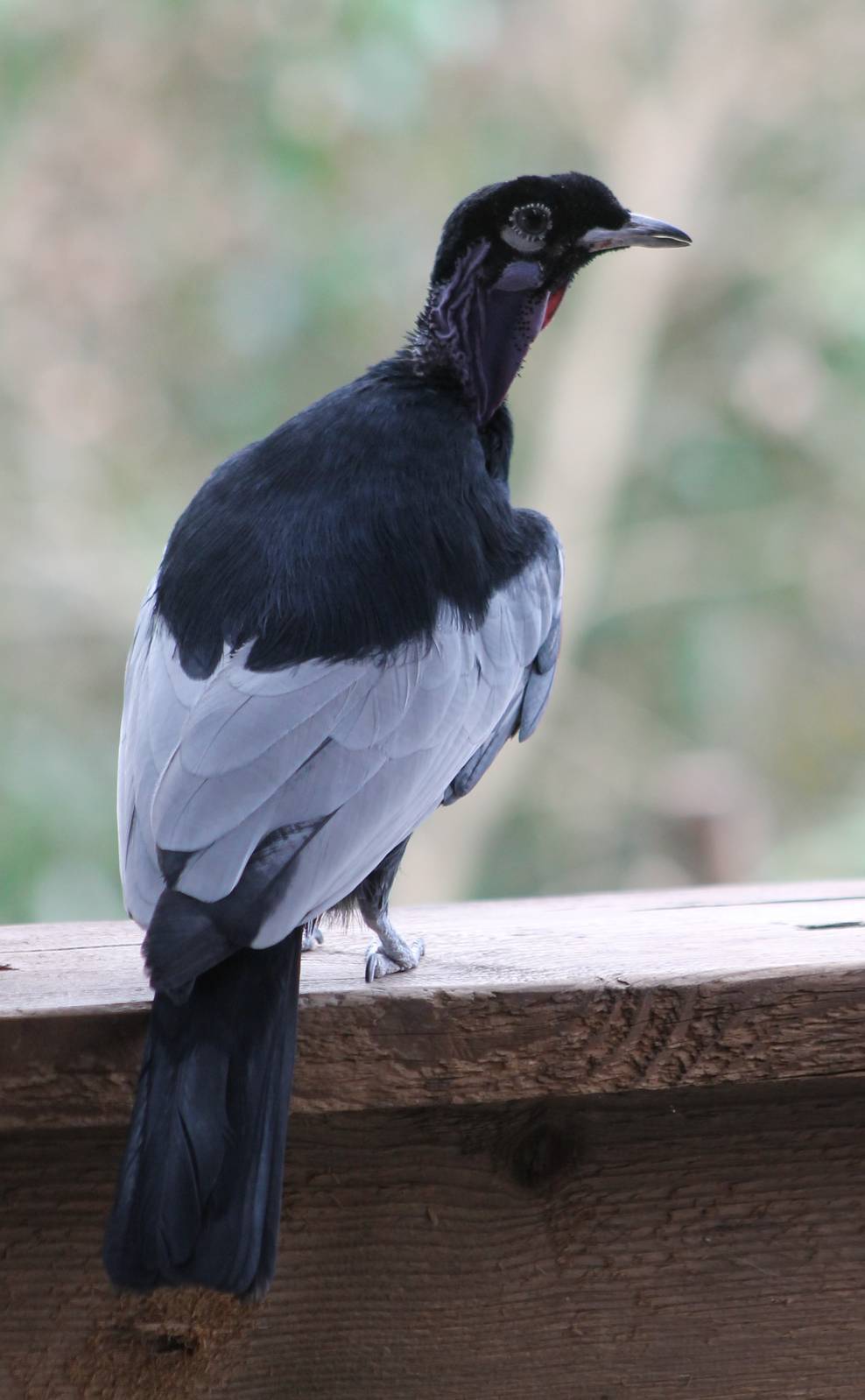
- Bare-necked fruitcrow - Gymnoderus foetidus. Not a crow but a cotinga, another family with a load of beautiful and a load of strange members from which I've taken care for a good number of species. Not so for this Fruitcrow from which I've only seen one pair kept at Zoo Veldhoven - the Netherlands :
- Scarlet-bellied mountain tanager - Anisognathus igniventris. Tanagers in general are beautiful species and among the mountain tanagers some real gems can be found. I've taken care for a few species but the Scarlet-bellied I've seen only in one public collection in the 1990s : Artis Amsterdam. I've seen it also at several dealer-places in the mid-1980s.
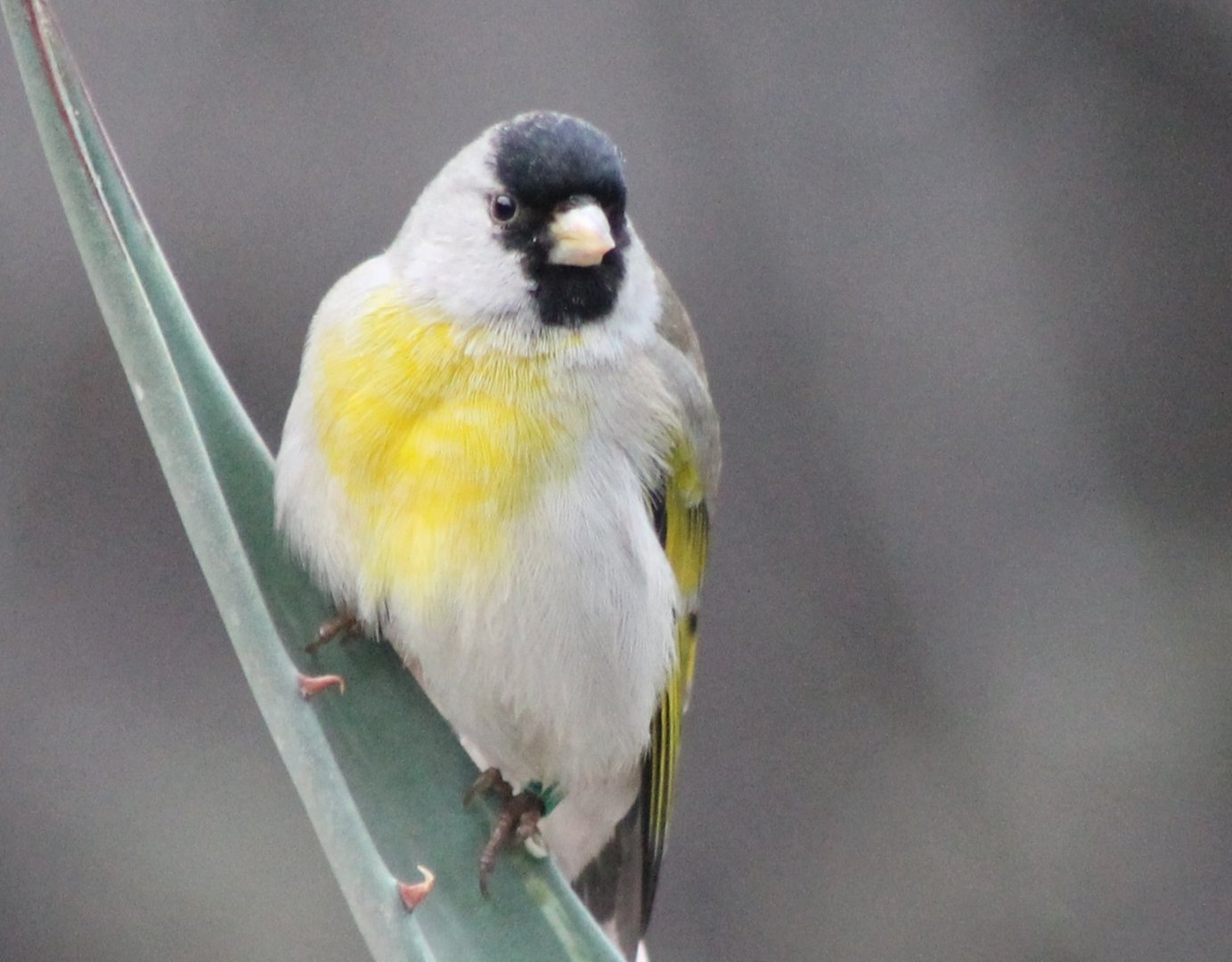
- Lawrence goldfinch - Carduelis lawrencei. A beautiful species which is kept only at one European collection, Burgers Zoo - Arnhem - the Netherlands. Here in the Desert a small group of only males is kept and by watching these little beauties taking a bath in a small stream they became one of my favorite seed-eating songbirds !
- Maroon oriole - Oriolus traillii. A real beaty but it was more the fact that I was convinced that Old World orioles have to be yellow and by discovering this species in a small aviary at a bird-dealers place in the Netherlands I learned there is also a red and black species. After this one 'meeting' I've never seen the species again...unfortunately !
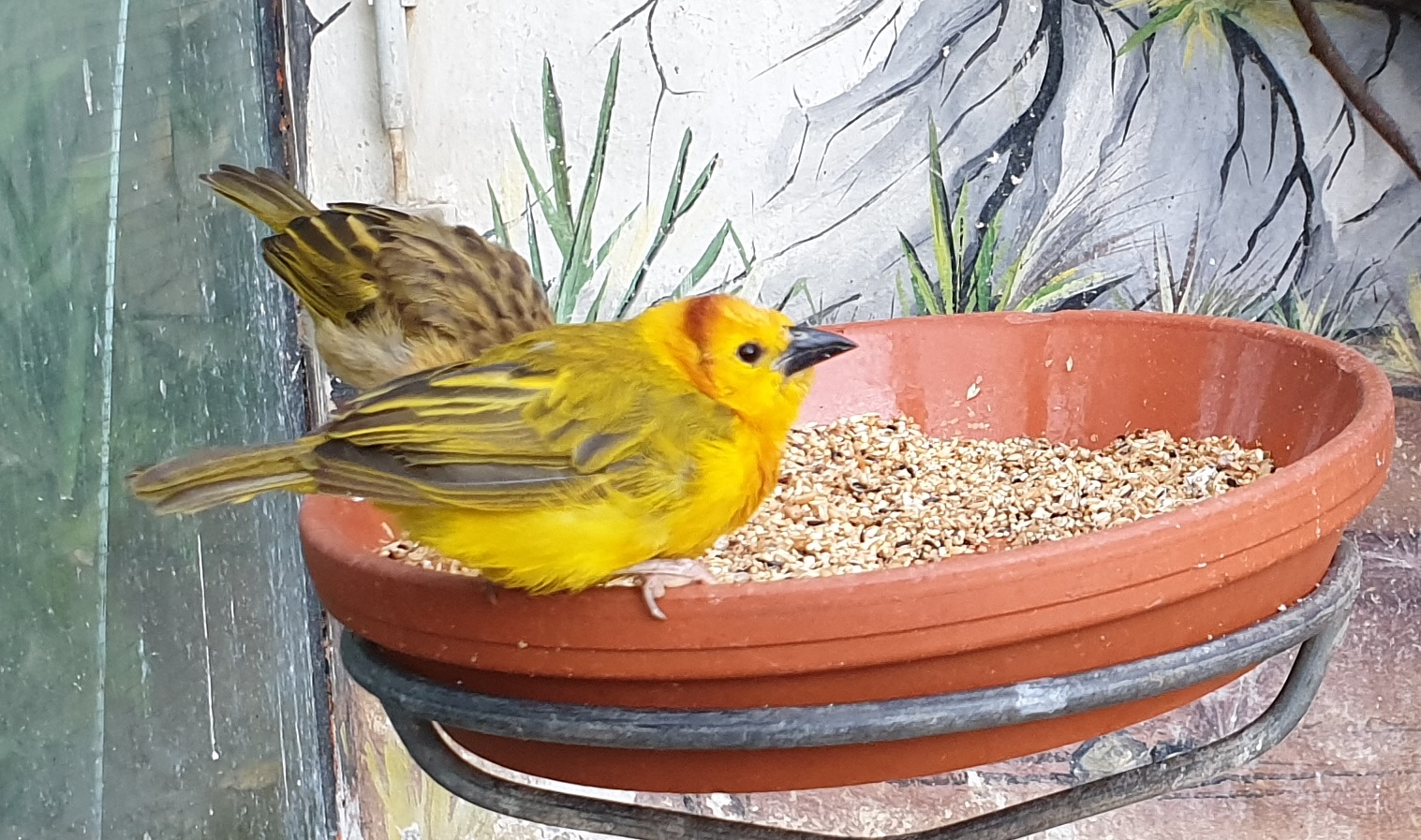
- Taveta golden weaver - Ploceus castaneiceps. In the weaver-family also a large number of very nice species and for a number of them I've taken care myself but not for this species. I realy enjoyed the nice colony at the old Bird-house at Hagenbecks Tierpark in Hamburg :
The other 3 lists of "Top 10 songbirds"will be posted later....
- Species taken care for myself
- Species seen in captivity but not taken care for myself
- Species seen in the wild
- Species not seen so far either in captivity nor in the wild.
I'll start with species seen in captivity but I didn't take care for myself :
- Superb fairy wren - Malurus cyaneus. 1985 I visited the London Zoo and among the highlights for me the Superb fairy wren was one of the most impresive. Had never seen a Fairy wren before and the one at London was in perfect condition and very active !
- Wilson's bird of paradise - Cicinurus respublica. Birds of paradise are in general of course already beautifull and the one I am most impressed by is the Wilson's bird of paradise. In the 1980s Blijdorp - Rotterdam Zoo had several of them and I loved to observe the displaying males of this species !
- White-necked picathartes - Picathartes gymnocephalus. A very intresting and a very rare species. I was so lucky to have 3 zoos "nearby" in which the species was kept. I've seen it at Antwerp, at Artis Amsterdam ( were it even was bred succesfully ! ) and at Rotterdam Zoo.
For Rotterdam Zoo ZTL only list a single specimen but I know that in 1979 8 specimens were kept. Loved to observe these birds in the large aviary in the Rivierra Hall of Rotterdam Zoo !
- Regent bowerbird - Sericulus chrysocephalus. Closely releated with the birds of paradise and also only very rarely seen in western zoos are the bowerbirds and one of the most beautiful species I've seen is the Regent bowerbird, from which Rotterdam Zoo had a single male in the 1980s ( the Satin bowerbird is maybe even more beautiful but doesn't fit in this list because I took care for it ) :
Yellow-naped bowerbird
Photo taken somewhere in the 1980-ties.
Sericulus chrysocephalus
Sericulus chrysocephalus
- Taiwan blue magpie - Urocissa caerulea. Next to a number of black and black and white species the crow-family also has a lot of species which are realy very beautiful and the Taiwan ( or Formosian ) blue magpie is IMO one of the most beautiful of the family. Never seen it in any public collection but during the mid-1980 small numbers were imported from Taiwan into western Europe and I was so lucky to see the species at at least 2 different dealers.
- Bare-necked fruitcrow - Gymnoderus foetidus. Not a crow but a cotinga, another family with a load of beautiful and a load of strange members from which I've taken care for a good number of species. Not so for this Fruitcrow from which I've only seen one pair kept at Zoo Veldhoven - the Netherlands :
Bare-necked fruitcrow male
August 2 2014. For a review see :http://www.zoochat.com/158/bamboe-jungle-zoo-veldhoven-382702/
- Scarlet-bellied mountain tanager - Anisognathus igniventris. Tanagers in general are beautiful species and among the mountain tanagers some real gems can be found. I've taken care for a few species but the Scarlet-bellied I've seen only in one public collection in the 1990s : Artis Amsterdam. I've seen it also at several dealer-places in the mid-1980s.
- Lawrence goldfinch - Carduelis lawrencei. A beautiful species which is kept only at one European collection, Burgers Zoo - Arnhem - the Netherlands. Here in the Desert a small group of only males is kept and by watching these little beauties taking a bath in a small stream they became one of my favorite seed-eating songbirds !
- Maroon oriole - Oriolus traillii. A real beaty but it was more the fact that I was convinced that Old World orioles have to be yellow and by discovering this species in a small aviary at a bird-dealers place in the Netherlands I learned there is also a red and black species. After this one 'meeting' I've never seen the species again...unfortunately !
- Taveta golden weaver - Ploceus castaneiceps. In the weaver-family also a large number of very nice species and for a number of them I've taken care myself but not for this species. I realy enjoyed the nice colony at the old Bird-house at Hagenbecks Tierpark in Hamburg :
The other 3 lists of "Top 10 songbirds"will be posted later....
Attachments
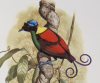
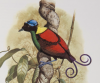
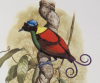
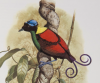

Sri lanka blue magpie,
Green-throated sunbird,
Fire-tailed sunbird
Twelve-wired bird-of-paradise
Green-headed tanager
Paradise tanager
Blue-winged mountain tanager
Goulidan finch,
Red-bellied leiothrix
Pin-tailed whydah
Green-throated sunbird,
Fire-tailed sunbird
Twelve-wired bird-of-paradise
Green-headed tanager
Paradise tanager
Blue-winged mountain tanager
Goulidan finch,
Red-bellied leiothrix
Pin-tailed whydah