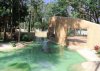
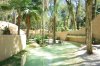
The complete renovation of the zoo seems to be going pretty well; although the works stopped for a time, they're slowly recovering the activities. Exhibits such as the big brazilian walkthrough aviary, some reptile ponds and the place destinated for the hippos are already complete, and animals are already in. (although some final touches are still missing in most of them.) The "Aventura selvagem" area, wich is the river safari, is also about to be completed, for what I know.
65 million Brazilian Real seems very little money for what they hope to achieve.
I initially thought it was indeed a small amount of money, but the exhibit renovations in Brasil are usually made with a relatively low cost, but with a nice structure. It's not very common to find mock rock exhibits around here, for example, as well as concrete trees/artificial structures inside them. Most zoos have low budgets here, so the crews had to learn how to do their best with the available resources. Besides that, it's very rare to see a zoo here completely destroying it's previous exhibit to build another one, but usually "recycling" some walls, moats, or even fencing, and improving mostly foliage, terrain levels and size when it's possible. The works at Rio zoo is probably the biggest and most radical renovation a brazilian zoo has ever passed through, but they still are making use of some structures, wich saves a lot of money if we think well.
Their budget seems to be enough for now, and I hope they finish their projects as soon as they can. I'm gonna be sharing here some pictures of what has been done so far. All of them are divulgations from the Bioparque do Rio institution.

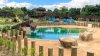
Hippo exhibit (not showing the entire space) with the river tour and elevated paths in the background. (National museum building being renovated can also be seen in the far background.)

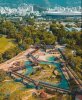
River tour overview. Not done, but looking great in my opinion.


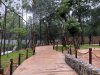
Brazilian bird aviary, 1300m2 (13993sq ft)


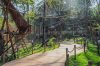
Reptile ponds. Broad snouted caimans and giant south american turtle.
Important to remember again that all the images shared here were published by the Bioparque do Rio institution, that belongs to the Cataratas organization:
BioParque do Rio