Other particular highlights (part 1):
L'Hoest's Guenon (Edinburgh)
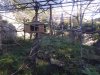
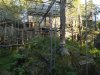
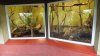
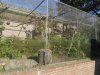
This rather large and spacious exhibit - formerly a Steller's Sea Eagle aviary, and more recently an enclosure for Barbary Macaque - holds a fairly decent-sized breeding group of this attractive and threatened species - another of those which occurs within the area of the Budongo Reserve. As can be seen, it provides plenty of climbing opportunities and - as a result of the fact it was once an aviary - it is open to the air albeit sheltered.
View attachment 470662
View attachment 470663
Golden-cheeked Gibbon (Edinburgh)
This exhibit is one of the best enclosures I have seen anywhere in Europe for gibbons, providing them with a vast amount of vertical and horizontal space, and plenty of climbing and brachiating opportunities:
White-cheeked Saki and Goeldi's Monkey Walkthrough (Edinburgh)
View attachment 470672
Magic Forest -Callitrichid and Douroucouli exhibits (Edinburgh)
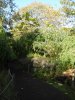
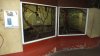
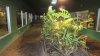
Similarly to the interior of the Budongo Trail exhibit complex, these enclosures are quite dimly lit and there are precious few photographs of their indoor exhibits, and none at all of the semi-offshow outdoor exhibits which the animals have access to via overhead tunnels. However, they are all quite pleasant and the outdoor exhibits are extremely thickly-vegetated and somewhat masked from public view by green webbing and mesh. The outdoor area can be somewhat seen in the reflection on glass within these photographs. There are, I believe, about five or six such exhibits within the Magic Forest.
View attachment 470678
View attachment 470679
Giant Anteater (Edinburgh)
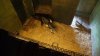
This very large and pleasant exhibit at the top of the zoo - once comprising a mixed exhibit with Maned Wolf - contains a number of indoor sleeping areas for the anteaters (both on and offshow) along with a large outdoor enclosure which mostly comprises a combination of grassland and scrubby vegetation. The complex as a whole covers around 1,900 m².
View attachment 470688
The largest indoor exhibit is viewed from above with the use of mirrors, and is very dimly lit, allowing a greater level of privacy. The inhabitants breed very regularly - I think nowhere else in the UK has such a good breeding record with the species.
View attachment 470683
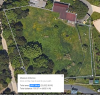
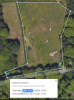
A very nice exhibit indeed, but your size estimate goes past the barrier. In addition aren't the buildings included viewing buildings?
This is another "best exhibit for the species in Europe" example - this massive enclosure (over 4,000 m²) contains a large and regularly breeding troop of Gelada; the steep hillside location and additional rockwork (both genuine and imitation) makes this a pretty good replication of their natural habitat.
Again, an excellent exhibit for short, although not in my opinion near the title of best for the species in Europe. I would put Zurich, perhaps even Besancon before it.
However, I would tend to suggest that several of the category-relevant exhibits at Cotswold Wildlife Park are just as poor or uninspiring - especially those for Siamang, the penguin pool and a number of the bird aviaries. Moreover, nothing at CWP comes close to approaching the excellence of the best that the two RZSS collections can offer in terms of exhibit quality and design, and involvement with conservation work..... particularly when one considers that whilst all of the conservation/research programmes which Cotswold is involved with are undertaken by outside organisations, two of the key conservation/research programmes I have discussed at RZSS are spearheaded BY RZSS.
I would not call the penguin exhibit poor - it holds many fewer penguins than, for example, the Edinburgh or London exhibits, and is adequate for its inhabitants in my opinion. The Siamang exhibit is small, but offers lots of climbing opportunities, and the bird aviaries are certainly on par with the few aviaries offered by Edinburgh. I would suggest that making poor exhibits for monkeys is also logically less acceptable than having poor exhibits for birds due to their greater intelligence and needs.
Even so, RZSS do not seem to have any reply to, for example, the piping guan or Turkey vulture exhibits, only having 5 species of South American birds, all on relatively mediocre exhibits. Meanwhile, Cotswold have a huge variety of birds from all different sides and habitats of the continent, displayed in an almost entirely consistent manner, with some exhibits equaling the excellence at RZSS for some of their species as you say.
The primate lineup for Cotswold WP is undeniably more impressive and interesting, with Crowned sifakas as you said yourself being 'the treasures of the collection', as well as two species of endangered bamboo lemur (with one of the conservation programmes to protect the Greater bamboo lemur in particular standing out), bushbabies and mouse lemurs. And while Living Links and the Budongo Trail are mightily impressive, Cotswolds clearly do not lose on primates as starkly as you would suggest - in fact I would question if they do at all.
In terms of South American exhibits, Cotswolds in my opinion clearly wins it. They have 3 times more species, a much greater variety of species, more than 1 species of herp from the continent and some fantastic exhibits to house them all. While HWP's Vicuna exhibit is undoubtedly of high quality, it is, when stripped down to its essence, is just a field. Cotswold make do with what they have - and, despite having much less space, are able to cater to appropriately house far more species than RZSS in this category.
In terms of conservation, the efforts that RZSS have undeniably gone to to save some of the most charismatic species on the planet (chimpanzees, armadillos, anteaters) are admirable and clear-cut. However, Cotswold has an income of £115,000 every year - contrast that with RZSS's income of over £16 million. That is over a hundredfold the revenue of Cotswold - yet they have a comparable conservation output?
IN my opinion, the focus that Cotswold offers on these two categories and their obvious commitment to funding conservation efforts worldwide should garner them credit, and while it is clear that RZSS cares very much about the animals in their care and those they work with in situ, Cotswold WP, is, in relative terms, doing more.








 you're comparing 1960s exhibits with a early 2000s one which has correspondingly less excuse.

