You are using an out of date browser. It may not display this or other websites correctly.
You should upgrade or use an alternative browser.
You should upgrade or use an alternative browser.
What are your top five favourite parrot species ?
- Thread starter Onychorhynchus coronatus
- Start date
-
- Tags
- birds favourites parrots zoos


Onychorhynchus coronatus
Well-Known Member
1. My nickname, of course
2. Spix's macaw
3. Ultramarine lorikeet
4. Ground parrot
5. Yellow-eared parrot (substitute it by Carolina parakeet if we allow extinct species)
Thanks for your comment @Kakapo !
So again I'll focus on the species that haven't yet appeared on other lists.
The ultramarine loikeet, this is another little lorikeet species that I have to admit I don't know much about but it is gorgeous indeed and with a very apt name considering that beautiful blue plumage.
The stunning colours of this lorikeet almost makes it look as if it might have been painted by Picasso during his "blue period".
Ground parrot is an interesting choice, a beautiful bird yes but also a very endangered one so it is great to see it on someones list.
Yellow-eared parrot, this is another interesting one, a very beautiful Colombian species for sure but like the ground parrot it is also very endangered and so similarly I think it is awesome to see that it made someones list.

In fact - like with the passerine birds - almost impossible to make choises here but I'll give it a try and again I will make several lists : Species I've taken care for myself, species I've seen and a list of species I wish to see. A list of species seen in the wild doesn't make sence in this case because I've only seen very few species and a few of them even without knowing which species I saw exactly.
This time the list of species I've seen but sofar not taken care for :
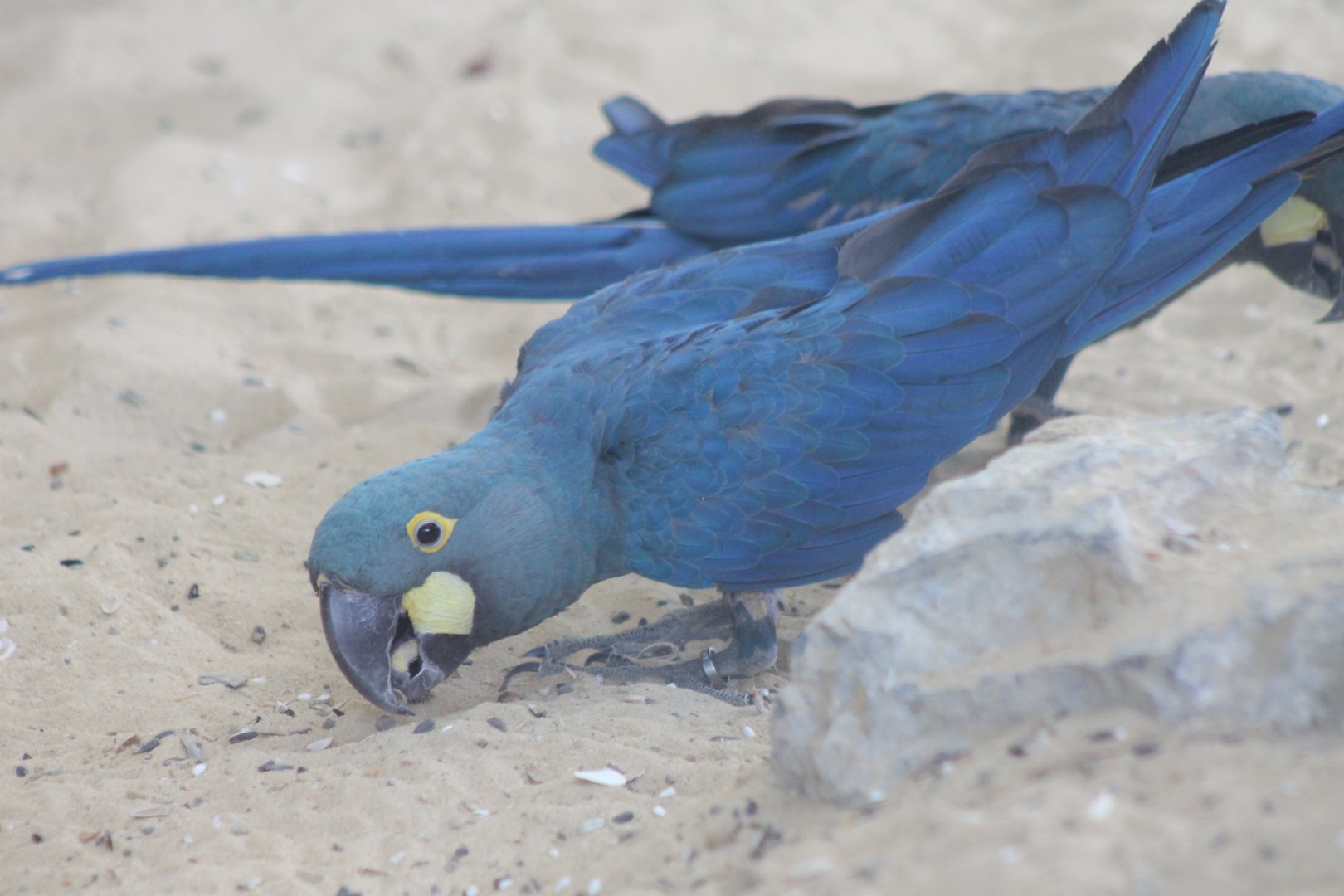
- Lear's macaw : seen at Antwerp Zoo in the 1970s and 1980s and more recent at Pairi Daiza. Also possible I saw it at Dierenpark Amersfoort because they should have had it in the time I visited this zoo several times.
- Glossy black cockatoo : a species realy rarely kept in European collections but I've seen it several times at Avifauna Birdpark - the Netherlands at the end of the 1990s / beginning 2000s.
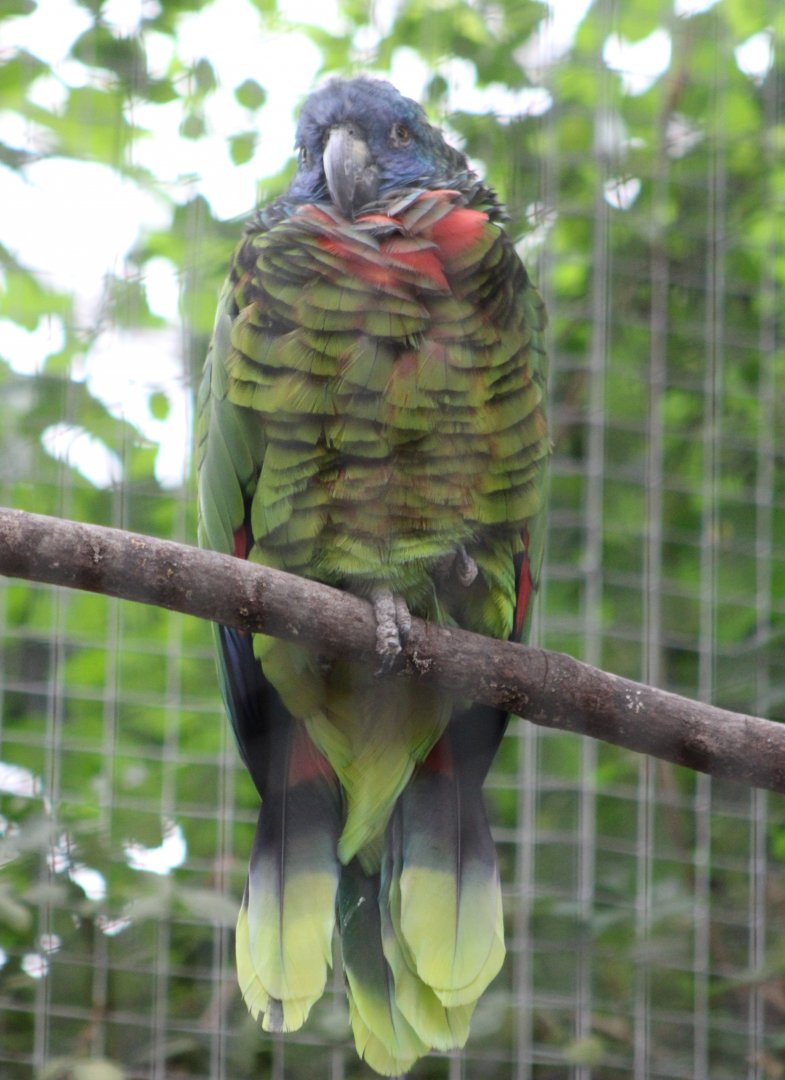
- St. Lucia amazone : one of the very few Amazon-species I didn't take care for myself and I was very happy to see it at Pairi Daiza in 2019 !
!
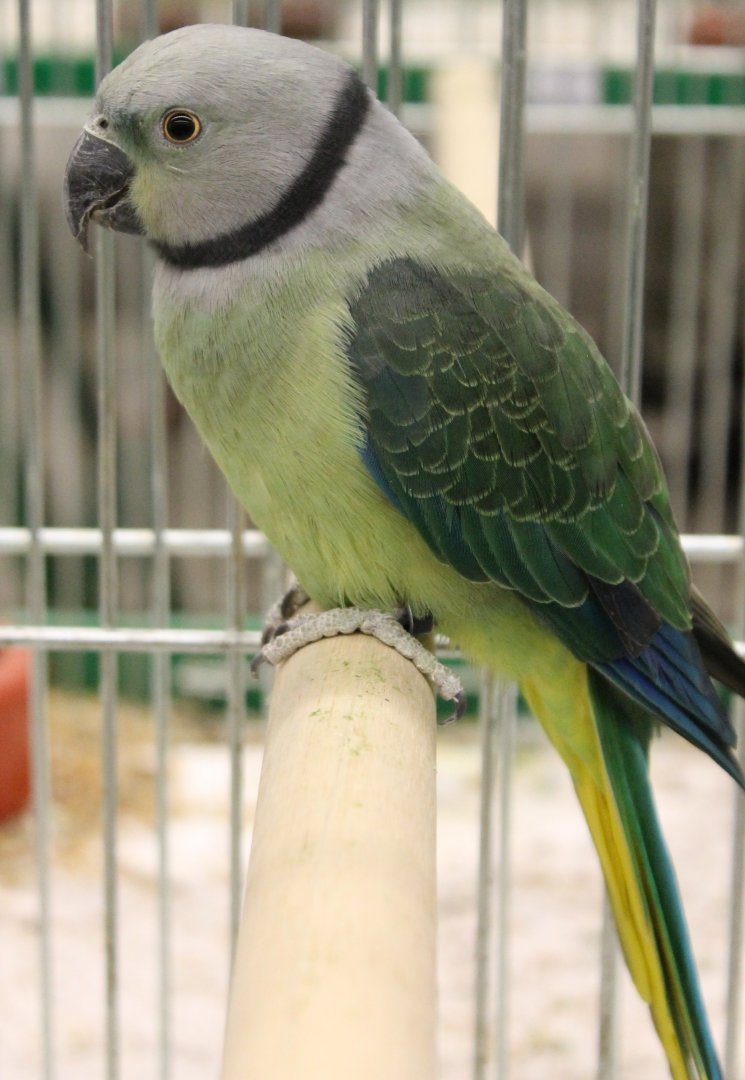
- Malabar parakeet : very rare in public collections but in small numbers kept by private breeders. I've seen the species on several bird-shows.
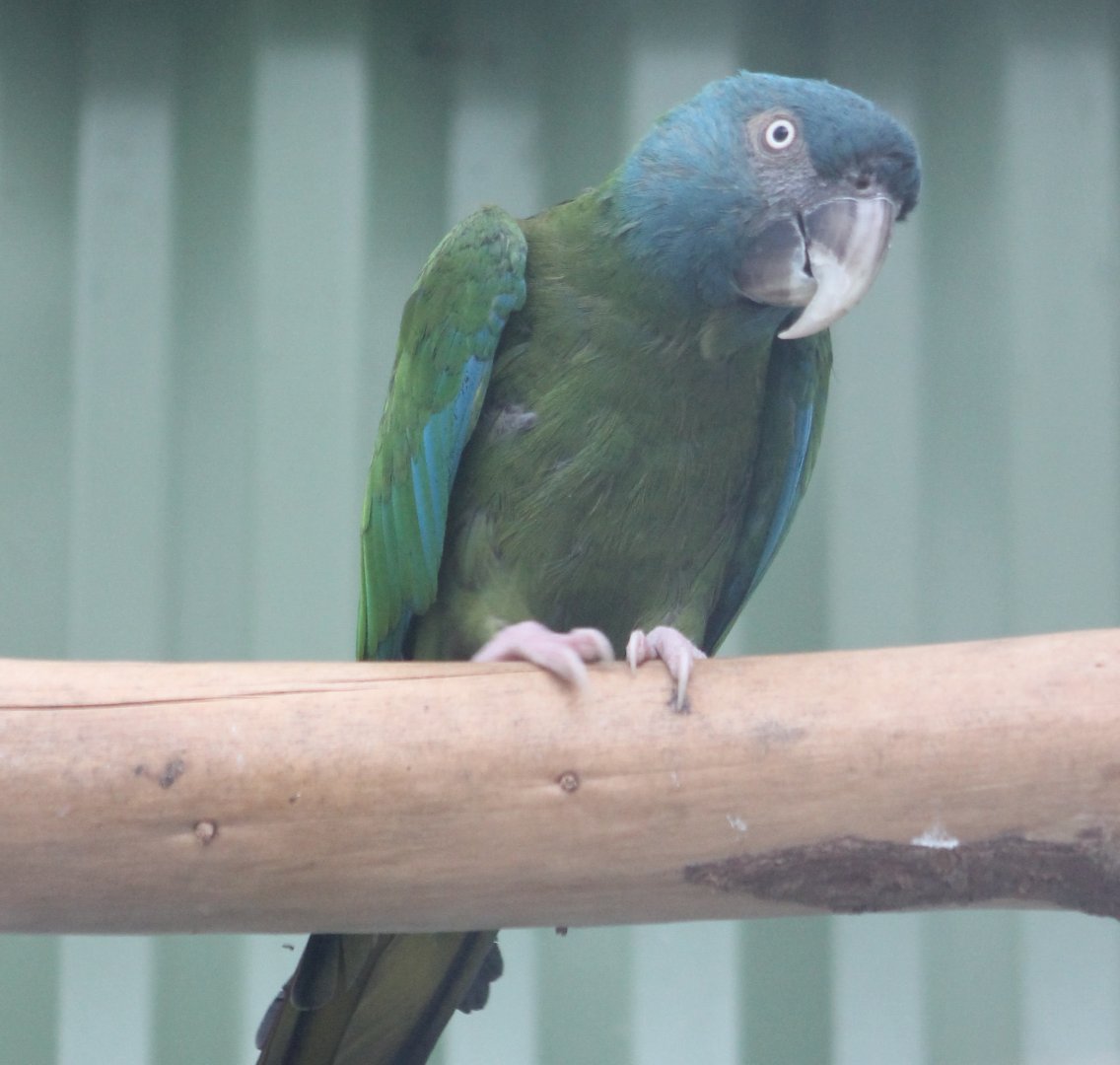
- Blue-headed macaw / Mountain macaw : for a long time this species was almost completely unknown in captivity but the suddenly number appeared on the bird-market. Now-a-days its kept and bred in good numbers and I've seen them in a number of zoos, birdparks and private collections.
The other 2 lists ( taken care for and wish to see species ) will be posted later...
This time the list of species I've seen but sofar not taken care for :
- Lear's macaw : seen at Antwerp Zoo in the 1970s and 1980s and more recent at Pairi Daiza. Also possible I saw it at Dierenpark Amersfoort because they should have had it in the time I visited this zoo several times.
- Glossy black cockatoo : a species realy rarely kept in European collections but I've seen it several times at Avifauna Birdpark - the Netherlands at the end of the 1990s / beginning 2000s.
- St. Lucia amazone : one of the very few Amazon-species I didn't take care for myself and I was very happy to see it at Pairi Daiza in 2019
!
- Malabar parakeet : very rare in public collections but in small numbers kept by private breeders. I've seen the species on several bird-shows.
- Blue-headed macaw / Mountain macaw : for a long time this species was almost completely unknown in captivity but the suddenly number appeared on the bird-market. Now-a-days its kept and bred in good numbers and I've seen them in a number of zoos, birdparks and private collections.
The other 2 lists ( taken care for and wish to see species ) will be posted later...
Onychorhynchus coronatus
Well-Known Member
In fact - like with the passerine birds - almost impossible to make choises here but I'll give it a try and again I will make several lists : Species I've taken care for myself, species I've seen and a list of species I wish to see. A list of species seen in the wild doesn't make sence in this case because I've only seen very few species and a few of them even without knowing which species I saw exactly.
This time the list of species I've seen but sofar not taken care for :
- Lear's macaw : seen at Antwerp Zoo in the 1970s and 1980s and more recent at Pairi Daiza. Also possible I saw it at Dierenpark Amersfoort because they should have had it in the time I visited this zoo several times.
- Glossy black cockatoo : a species realy rarely kept in European collections but I've seen it several times at Avifauna Birdpark - the Netherlands at the end of the 1990s / beginning 2000s.
- St. Lucia amazone : one of the very few Amazon-species I didn't take care for myself and I was very happy to see it at Pairi Daiza in 2019
- Malabar parakeet : very rare in public collections but in small numbers kept by private breeders. I've seen the species on several bird-shows.
- Blue-headed macaw / Mountain macaw : for a long time this species was almost completely unknown in captivity but the suddenly number appeared on the bird-market. Now-a-days its kept and bred in good numbers and I've seen them in a number of zoos, birdparks and private collections.
The other 2 lists ( taken care for and wish to see species ) will be posted later...
Excellent post @vogelcommando !
I very much look forward to the other two lists of yours too.
So I'll focus on the species on this particular list that haven't yet been covered on other lists.
The Saint Lucia amazon is a very beautiful bird indeed (one of the most striking of the Amazona IMO) really interests me personally in large part because of its conservation status, the history at Jersey zoo / the Durrell trust and because I find the topic of the biogeography and natural history of the Caribbean islands to be really interesting.
The blue headed macaw is another gorgeous species and of course far lesser known / appreciated than the larger and more colourful macaws. The appearance of these birds always reminds me somewhat superficially of a different coloured spix macaw.
The blue headed macaw is another gorgeous species and of course far lesser known / appreciated than the larger and more colourful macaws. The appearance of these birds always reminds me somewhat superficially of a different coloured spix macaw.
Yes, there is a similarity with Spix- particularly the extent of facial skin and eye colour. I saw this species (as well as the Spix) at Paira Daiza. Also known as Coulon's Macaw I don't think I had ever seen one before, so it was another new species on the same visit. I checked Zooteirliste and there seems only one place in the UK (at least a public collection anyway) that has them, but they seem more common in European zoos.
Last edited:
Onychorhynchus coronatus
Well-Known Member
Yes, there is a similarity with Spix- particularly the extent of facial skin and eye colour. I saw this species (as well as the Spix) at Paira Daiza. Also known as Coulon's Macaw I don't think I had ever seen one before, so it was another new species on the same visit. I checked Zooteirliste and there seems only one place in the UK (at least a public collection anyway) that has them, but they seem more common in European zoos.
Yes, I definitely think there is a superficial resemblance to the Spix with this species.
I wonder why they are so uncommon within UK collections but common on the continent.

Yes, I definitely think there is a superficial resemblance to the Spix with this species
From memory, the Spix is regarded as basal to all other true macaws (barring Red-shouldered, which is actually a conure, and the three large blue macaws, which are basal to all macaws and conures) - so resemblance between Coulon and Spix may be due to a lesser degree of divergence from the basal appearance.
Onychorhynchus coronatus
Well-Known Member
From memory, the Spix is regarded as basal to all other true macaws (barring Red-shouldered, which is actually a conure, and the three large blue macaws, which are basal to all macaws and conures) - so resemblance between Coulon and Spix may be due to a lesser degree of divergence from the basal appearance.
Thank you for your comment @TeaLovingDave ! Much appreciated !
That is a really interesting one indeed and I haven't considered that before.
I'm actually going to have to do some reading up on the evolution of the macaws and the cladistics as I don't know enough about this.
I do think you are right about the resemblance between these two species being due to a lesser degree of divergence.
Part 2 of my list of 5 favourite parrots, this time species I've taken care for myself :
- the Spix macaw : when I started to work at Walsrode there was still one specimen of this species and althrough I knew about the rarety of this species, I never made a single photo of it. Later this specimen was send to Brazil to become part of the breeding-programm and I wasn't able anymore to take photos of it. It took untill 2018 when I was able again to see the species and take some photos of it ( at Pairi Daiza ) :

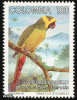
- the second species is also a very rare species and at the moment not kept at all in captivity. Like the Spix macaw the single Yellow-eared parrot at Walsode was kept in one of the smaller aviaries in the Parrot-house and also from this species I never made any photos and I will prob. never get the change to do so .
.

( stamp of this beautifull species )
- Imperial amazon : another species from which only one specimen was kept at Walsrode and also this one was kept in one of the smaller aviaries of the Parrot-house. From this species I made some photos !
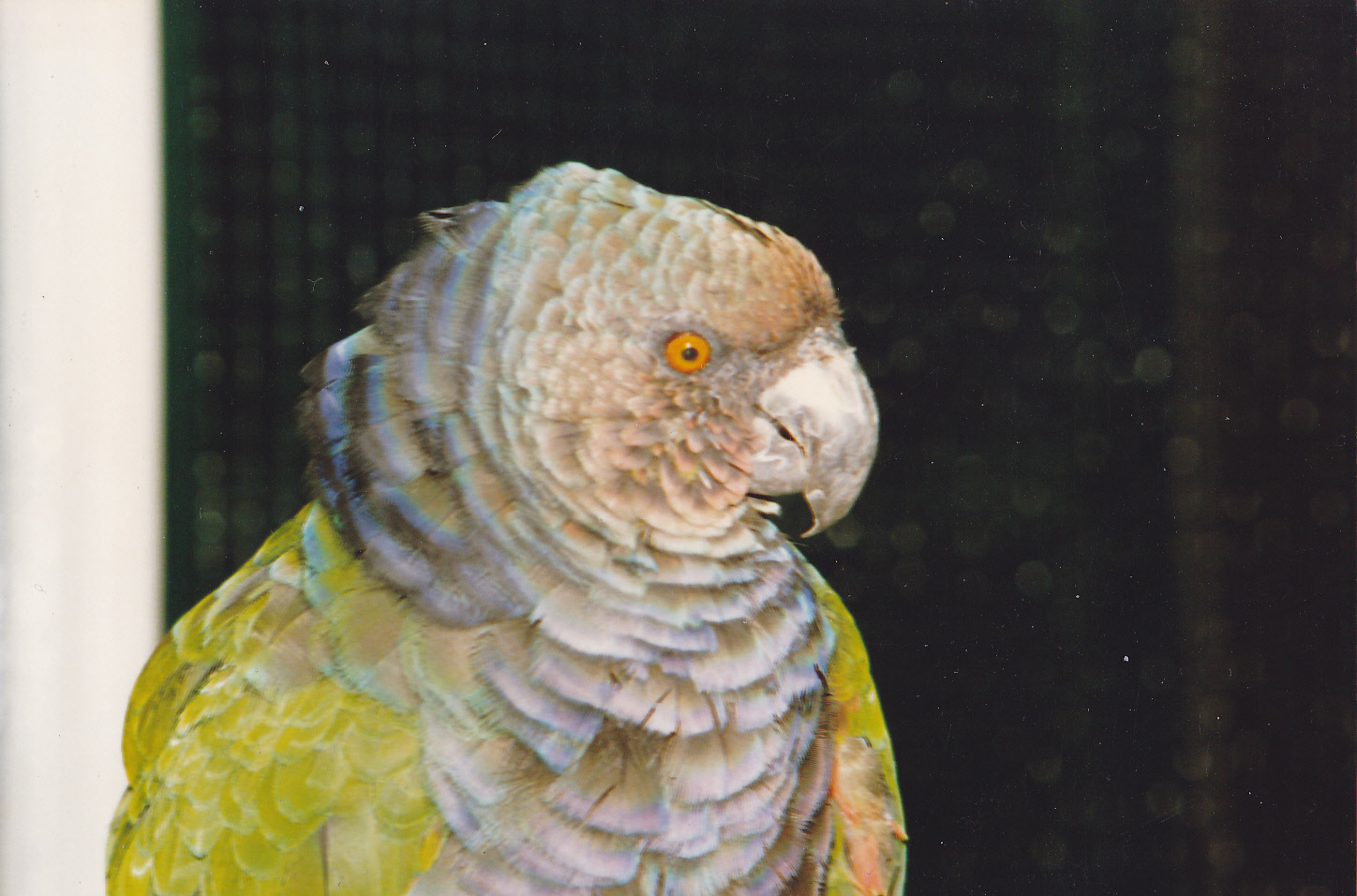
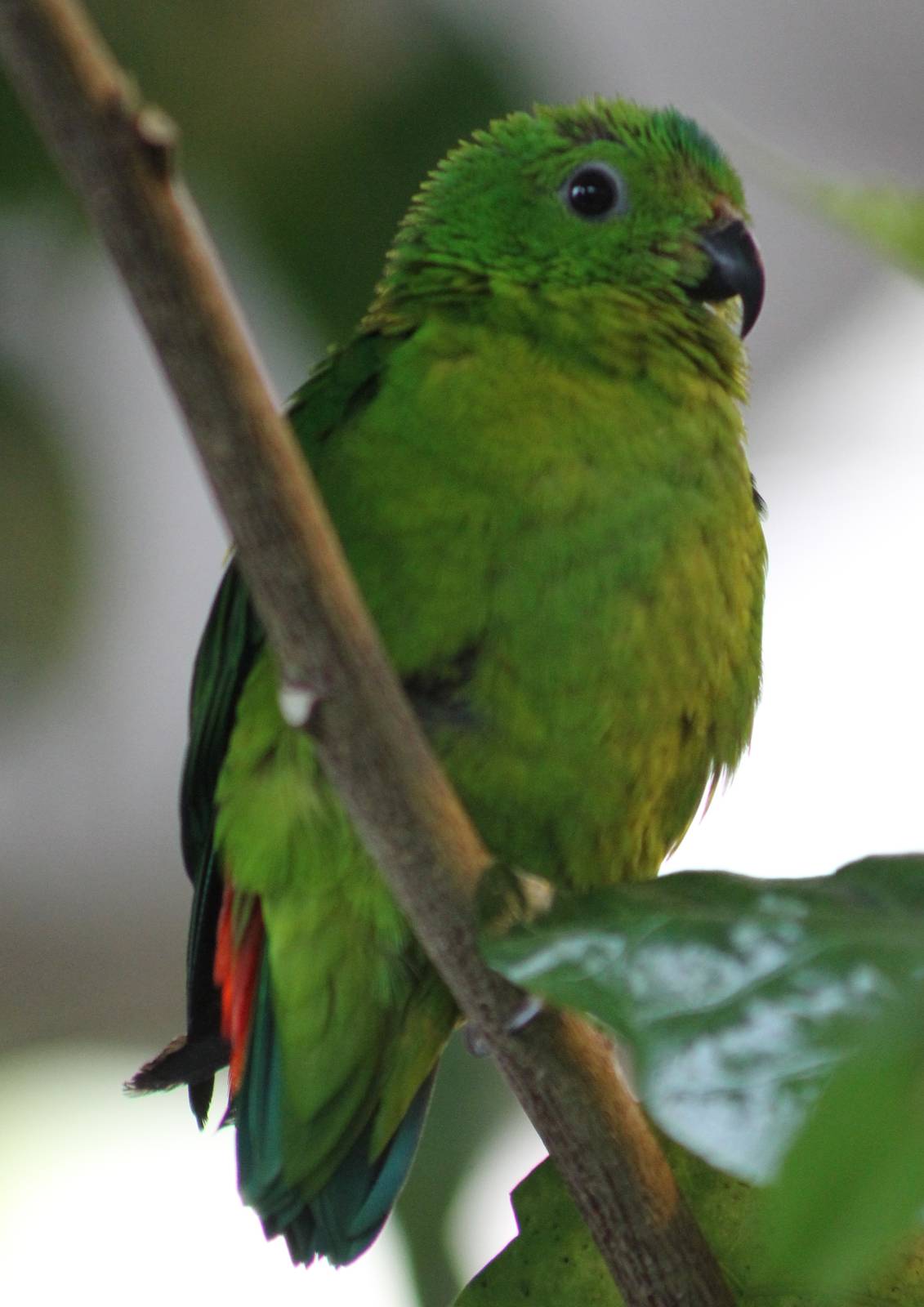
- From the lories the Brown lory is one of my all-time favorites. Took care for a pair in a private collection for a longer time and also at Walsrode we had the species in the middle and end of the 1980s. The photo below is from a pair I saw at Prague Zoo :
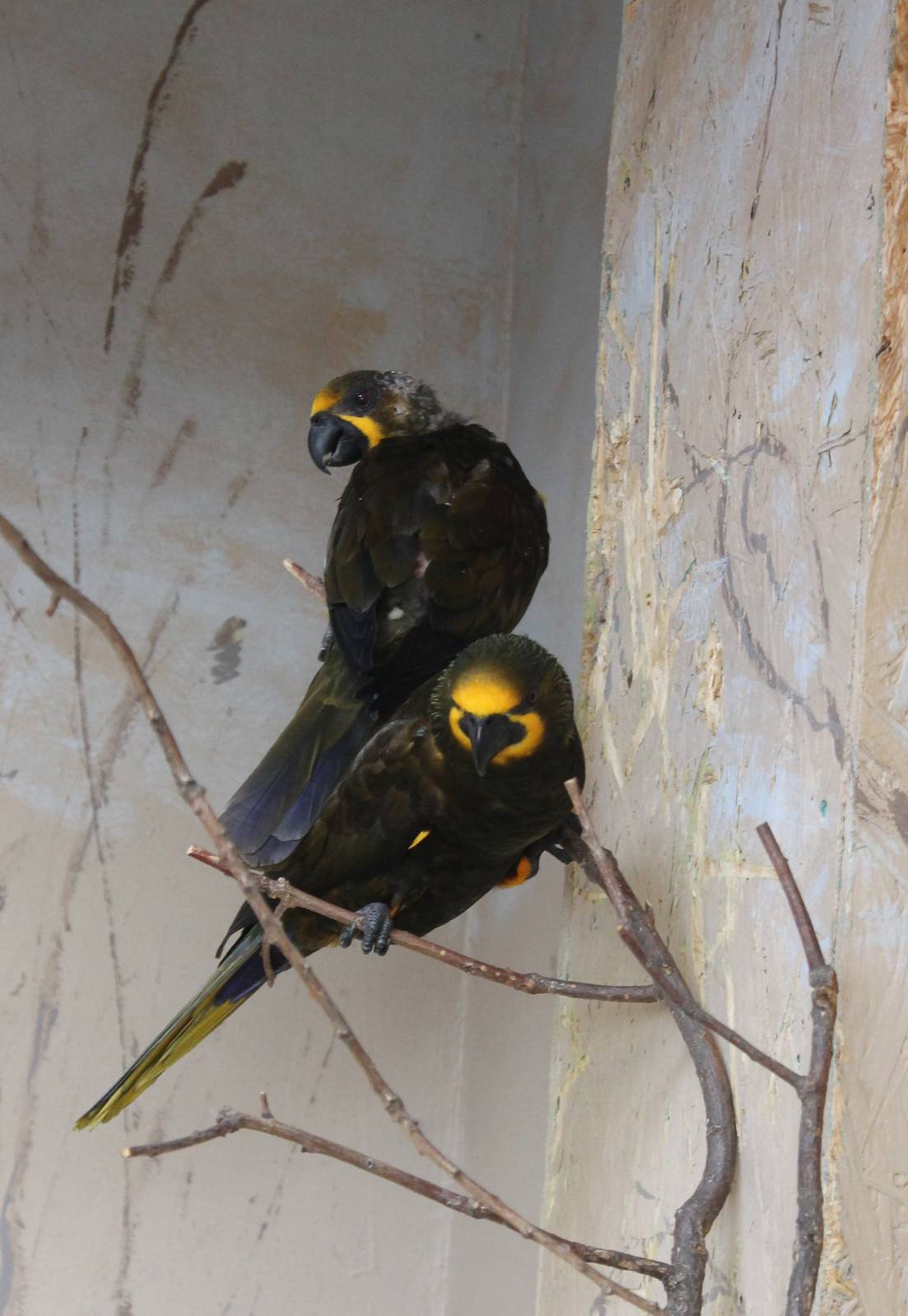
- The last species from the list will be the Blue-crowned hanging parrot. Took care for them in my own collection, in a privat collection and at Walsrode and they are just lovely birds !
Making this list was not easy because I've taken care for more the 200 species / subspecies and many many of them had something special / intresting / beautifuls about them and next to the 5 species mentioned above most other species would also decerve to be on the list !
- the Spix macaw : when I started to work at Walsrode there was still one specimen of this species and althrough I knew about the rarety of this species, I never made a single photo of it. Later this specimen was send to Brazil to become part of the breeding-programm and I wasn't able anymore to take photos of it. It took untill 2018 when I was able again to see the species and take some photos of it ( at Pairi Daiza ) :
- the second species is also a very rare species and at the moment not kept at all in captivity. Like the Spix macaw the single Yellow-eared parrot at Walsode was kept in one of the smaller aviaries in the Parrot-house and also from this species I never made any photos and I will prob. never get the change to do so
. ( stamp of this beautifull species )
- Imperial amazon : another species from which only one specimen was kept at Walsrode and also this one was kept in one of the smaller aviaries of the Parrot-house. From this species I made some photos
!
- From the lories the Brown lory is one of my all-time favorites. Took care for a pair in a private collection for a longer time and also at Walsrode we had the species in the middle and end of the 1980s. The photo below is from a pair I saw at Prague Zoo :
- The last species from the list will be the Blue-crowned hanging parrot. Took care for them in my own collection, in a privat collection and at Walsrode and they are just lovely birds !
Making this list was not easy because I've taken care for more the 200 species / subspecies and many many of them had something special / intresting / beautifuls about them and next to the 5 species mentioned above most other species would also decerve to be on the list
!Attachments
Onychorhynchus coronatus
Well-Known Member
Part 2 of my list of 5 favourite parrots, this time species I've taken care for myself :
- the Spix macaw : when I started to work at Walsrode there was still one specimen of this species and althrough I knew about the rarety of this species, I never made a single photo of it. Later this specimen was send to Brazil to become part of the breeding-programm and I wasn't able anymore to take photos of it. It took untill 2018 when I was able again to see the species and take some photos of it ( at Pairi Daiza ) :
View attachment 472212
- the second species is also a very rare species and at the moment not kept at all in captivity. Like the Spix macaw the single Yellow-eared parrot at Walsode was kept in one of the smaller aviaries in the Parrot-house and also from this species I never made any photos and I will prob. never get the change to do so
View attachment 472213
( stamp of this beautifull species )
- Imperial amazon : another species from which only one specimen was kept at Walsrode and also this one was kept in one of the smaller aviaries of the Parrot-house. From this species I made some photos
- From the lories the Brown lory is one of my all-time favorites. Took care for a pair in a private collection for a longer time and also at Walsrode we had the species in the middle and end of the 1980s. The photo below is from a pair I saw at Prague Zoo :
- The last species from the list will be the Blue-crowned hanging parrot. Took care for them in my own collection, in a privat collection and at Walsrode and they are just lovely birds !
Making this list was not easy because I've taken care for more the 200 species / subspecies and many many of them had something special / intresting / beautifuls about them and next to the 5 species mentioned above most other species would also decerve to be on the list
Thank you for your post @vogelcommando ! Much appreciated!
Wow ! you worked with a spix macaw ?! That is incredible !
What was it like to work with an individual of this species and could you tell about some of your memories about this time?
The yellow eared parrot is another very intriguing one, the situation with their ongoing conservation in Colombia is really of interest and concern to me.
The imperial amazon is a gorgeous species and again of great interest to me because of its critically endangered status. I've heard that the species has declined greatly ex-situ which is really quite concerning.
Althrough I was in that time more a "softbill-freak" I was of course well aware of the rarety of the birds like the Spix macaw, the Imperial amazone, the Yellow-eared parrot, the Quetzalts and many of the other birds under mine care !
It was a pitty that we had from the named species ( Spix, Imperial and Yellow-eared ) only single birds and althrough they were kept together with other species, few species-relevant observations could be made.
It was a pitty that we had from the named species ( Spix, Imperial and Yellow-eared ) only single birds and althrough they were kept together with other species, few species-relevant observations could be made.
Onychorhynchus coronatus
Well-Known Member
Althrough I was in that time more a "softbill-freak" I was of course well aware of the rarety of the birds like the Spix macaw, the Imperial amazone, the Yellow-eared parrot, the Quetzalts and many of the other birds under mine care !
It was a pitty that we had from the named species ( Spix, Imperial and Yellow-eared ) only single birds and althrough they were kept together with other species, few species-relevant observations could be made.
Thank you for your reply @vogelcommando !
Very interesting to hear your memories of working with these species indeed.
I do think it was a great shame that these three species were all kept as single birds.
Why was this ? was it something to do with how difficult it was to obtain mates for them ?
- the Spix macaw : when I started to work at Walsrode there was still one specimen of this species and althrough I knew about the rarety of this species, I never made a single photo of it. Later this specimen was send to Brazil to become part of the breeding-programm and I wasn't able anymore to take photos of it. I
I have a postcard of a pair of Spix at Walsrode. I believe one of them was the mysterious 'hidden' male(?) bird that after various travels, was in the hands of a private keeper from Yorkshire in the UK for some years, and was later sent over to Walsrode to make up a pair. I believe it suffered from some impairment such as being unable to fly.
Last edited:
I do think it was a great shame that these three species were all kept as single birds.
Why was this ? was it something to do with how difficult it was to obtain mates for them ?
see above re Spix. The single bird was presumably the survivor. Naples Zoo in Italy apparently had a single one for a long time too- but not necessarily during the same period. Imperial Amazon would be very difficult to find a mate for too. Afaik there are only three in captivity even now- two in Germany at the ACTP and one in Florida (?) (a handraised bird hatched in Dominica, with one of its parents being in the german pair, before it left Dominica..)
Last edited:
Thank you for your reply @vogelcommando !
Very interesting to hear your memories of working with these species indeed.
I do think it was a great shame that these three species were all kept as single birds.
Why was this ? was it something to do with how difficult it was to obtain mates for them ?
As @Pertinax say, only very few birds of these species were kept and at that time there was still a number of zoos / birdparks / private collections which found having a single specimen of a rare species more important then giving / loaning it to another collection to make breeding possible. Walsrode gave a good example by sending the last male to Brazil
!
Onychorhynchus coronatus
Well-Known Member
see above re Spix. The single bird was presumably the survivor. Naples Zoo in Italy apparently had a single one for a long time too- but not necessarily during the same period. Imperial Amazon would be very difficult to find a mate for too. Afaik there are only three in captivity even now- two in Germany at the ACTP and one in Florida (?) (a handraised bird hatched in Dominica, with one of its parents being in the german pair, before it left Dominica..)
As @Pertinax say, only very few birds of these species were kept and at that time there was still a number of zoos / birdparks / private collections which found having a single specimen of a rare species more important then giving / loaning it to another collection to make breeding possible. Walsrode gave a good example by sending the last male to Brazil
Yes, not too sure but I think I remember reading something about this bird in Tony Juniper's excellent book "Spix's Macaw: The Race to Save the World's Rarest Bird".
Third and last list from me of the top five favourite parrot-species, this time the species I haved seen sofar alive ( and from some species I'm quite sure this unfortunatly will never happen ) ;
- El Oro parakeet - a very rare and only discovered 1980 and discribed 1988. Because other Pyrrhura-species are doing very well in captivity, it would maybe wise to bring in a small population into captivity.
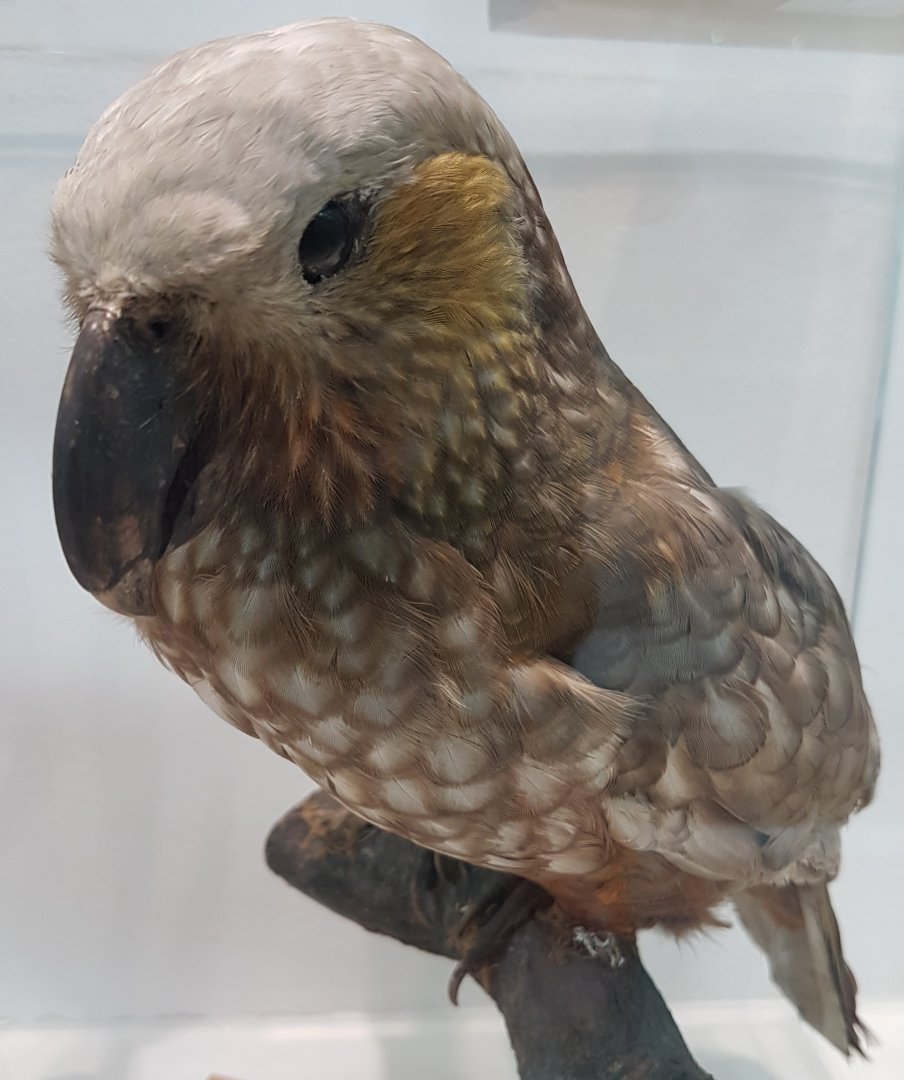
- Kaka - Native to New Zealand and almost unknown in Western zoos. At the moment the Wilhelma - Stuttgart in Germany is the only zoo keeping this species outside of New Zealand and because I haven't been to Stuttgart and to New Zealand I've sofar not seen the species alive..
I have however seen stuffed ones like this one at Kiel - Germany :
- Ultramarine lorikeet - another beautiful species which is very rare and threatened and from which the changes to see it one day alive are very small ( at least for me... ).
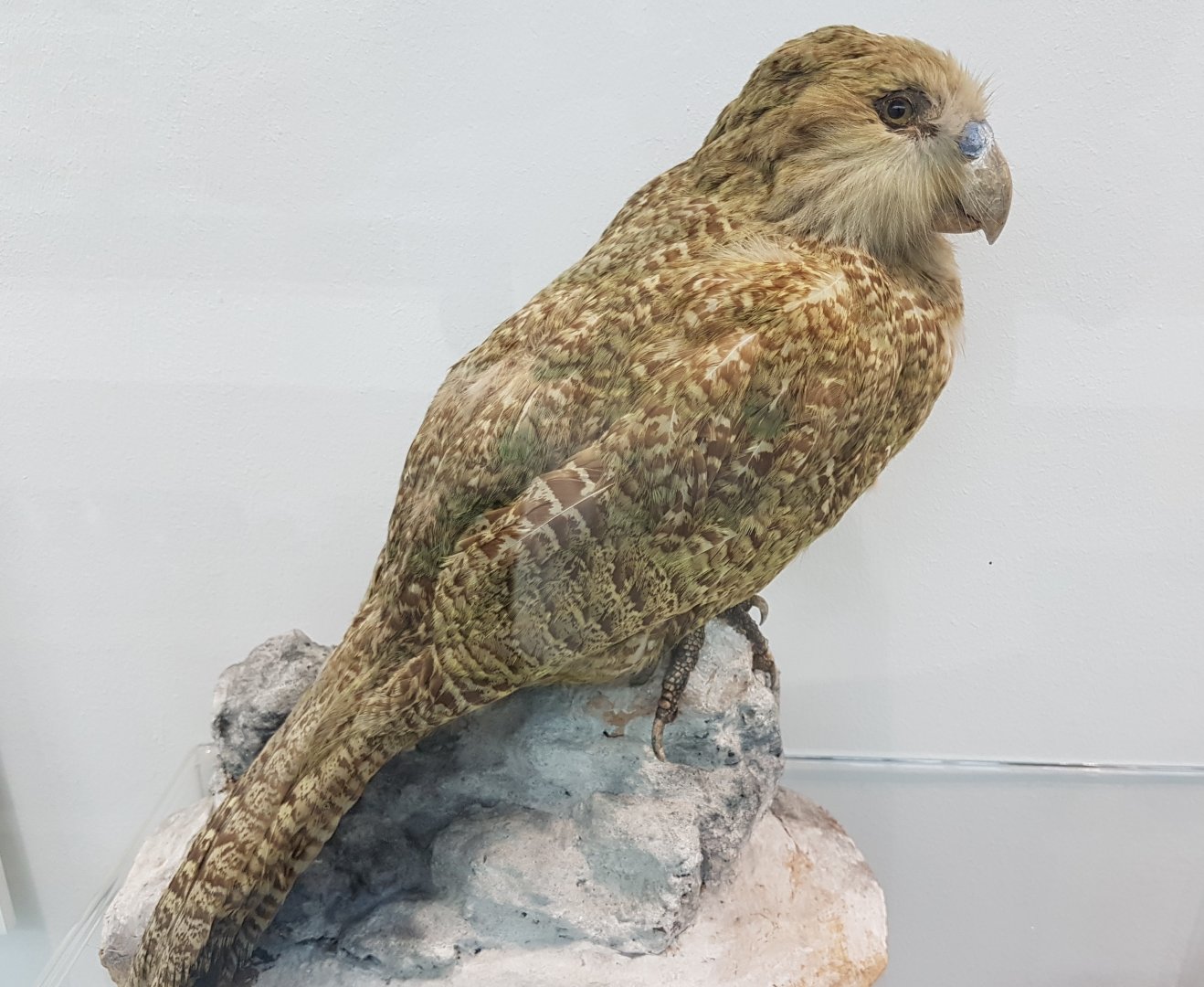
- Kakapo - Well-known and seen lots of photos and films of it but sofar the only living Kakapo I've seen is our well-known fellow ZooChatter @Kakapo. Stuffed ones ( I mean of course the bird ! )
I've seen at several museums like this one at Kiel - Germany :
- Black-collared lovebird - Lovebirds are kept in captivity in the millions but this species is the exeption and it has never been kept at any European zoo. It has quite a large distribution-area and maybe one day I can visit one of these countries and start to search for this species !
Like most of the other lists of favorite animals, this is just a small section and there are of course a lot of other intresting species which I would love to see !
) ;- El Oro parakeet - a very rare and only discovered 1980 and discribed 1988. Because other Pyrrhura-species are doing very well in captivity, it would maybe wise to bring in a small population into captivity.
- Kaka - Native to New Zealand and almost unknown in Western zoos. At the moment the Wilhelma - Stuttgart in Germany is the only zoo keeping this species outside of New Zealand and because I haven't been to Stuttgart and to New Zealand I've sofar not seen the species alive..
I have however seen stuffed ones like this one at Kiel - Germany :
- Ultramarine lorikeet - another beautiful species which is very rare and threatened and from which the changes to see it one day alive are very small ( at least for me...
).- Kakapo - Well-known and seen lots of photos and films of it but sofar the only living Kakapo I've seen is our well-known fellow ZooChatter @Kakapo. Stuffed ones ( I mean of course the bird
! )I've seen at several museums like this one at Kiel - Germany :
- Black-collared lovebird - Lovebirds are kept in captivity in the millions but this species is the exeption and it has never been kept at any European zoo. It has quite a large distribution-area and maybe one day I can visit one of these countries and start to search for this species !
Like most of the other lists of favorite animals, this is just a small section and there are of course a lot of other intresting species which I would love to see !

Onychorhynchus coronatus
Well-Known Member
Third and last list from me of the top five favourite parrot-species, this time the species I haved seen sofar alive ( and from some species I'm quite sure this unfortunatly will never happen
- El Oro parakeet - a very rare and only discovered 1980 and discribed 1988. Because other Pyrrhura-species are doing very well in captivity, it would maybe wise to bring in a small population into captivity.
- Kaka - Native to New Zealand and almost unknown in Western zoos. At the moment the Wilhelma - Stuttgart in Germany is the only zoo keeping this species outside of New Zealand and because I haven't been to Stuttgart and to New Zealand I've sofar not seen the species alive..
I have however seen stuffed ones like this one at Kiel - Germany :
- Ultramarine lorikeet - another beautiful species which is very rare and threatened and from which the changes to see it one day alive are very small ( at least for me...
- Kakapo - Well-known and seen lots of photos and films of it but sofar the only living Kakapo I've seen is our well-known fellow ZooChatter @Kakapo. Stuffed ones ( I mean of course the bird
I've seen at several museums like this one at Kiel - Germany :
- Black-collared lovebird - Lovebirds are kept in captivity in the millions but this species is the exeption and it has never been kept at any European zoo. It has quite a large distribution-area and maybe one day I can visit one of these countries and start to search for this species !
Like most of the other lists of favorite animals, this is just a small section and there are of course a lot of other intresting species which I would love to see !
Thank you for this comment @vogelcommando ! Very interesting!
I wouldn't give up on trying to see this species as there could be a possibility to see some of these someday thought it may entail travelling to NZ or South America.
The kakapo is a beautiful species and very challenging to see indeed. I've seen several taxidermy specimen of the kakapo but I also wonder whether I will ever see this parrot species alive in my lifetime.
The kaka is another very intriguing and beautiful bird, again, challenging to see but given its presence in several mainland NZ zoos nowhere near as difficult as the kakapo.
Agree with you about the El oro parakeet. Given the anthropogenic pressures it is subject to in the wild in Ecuador it could in the future benefit from an ex-situ presence and captive breeding programe though undoubtedly continuing efforts to mitigate the deforestation of Buenaventura reserve is the most important thing going forward.
The black collared lovebird comes as really quite a suprise as I've always assumed that the Agapornis were commonly kept as pets all over the world.
Last edited: