Hamilton Zoo Hamilton Zoo News 2021

Zoofan15

Well-Known Member
10+ year member
Hamilton Zoo have built a house for their female Cape porcupine which has been placed within the Slender-tailed meerkat exhibit. Previously her den was off display, meaning visitors would rarely get a view of this nocturnal animal in the exhibit. The video on Facebook showed her foraging for almonds inside the house, with it mentioned they’re also being used to encourage her out into the exhibit.

0.1 Ingozi (01/05/2017)
 
An update on the planned revamp of the zoo. Council have now approved the development of an improved entry area for Hamilton Zoo. It will be a shared entrance with the nearby Waiwhakareke Natural Heritage Park.

Full article: Plan for enhanced entry at Hamilton Zoo and Waiwhakareke to be delivered sooner - Australasian Leisure Management
Hamilton’s Mayor and Councillors have unanimously backed a plan to enhance the experience of visitors to Hamilton Zoo and Waiwhakareke Natural Heritage Park, while also improving the safety of road users and residents in the area. Three high-profile projects have been combined to improve access to two of the city’s major visitor destinations, reduce disruption and identify potential cost savings. Work was already scheduled within the next five years to upgrade a section of Brymer Road, between Baverstock Road and the northern entrance of Hamilton Zoo. Work is already underway to develop the first stage of a shared entry for the Zoo and Waiwhakareke. The second stage of the shared entry project is planned, but not yet funded in the current long-term plan. Before Christmas the Council considered a proposal to combine all three projects, aligning the timing and confirming additional funding for the second stage of the Zoo/Waiwhakareke entrance. The combined project will get underway next year. The decision means initial works scheduled for February can now include other aspects of the wider project. Advising that she was delighted Elected Members unanimously endorsed the staff proposal, Hamilton Mayor, Paula Southgate stated “our zoo is a wonderful asset for our community and the many thousands of visitors who enjoy it every year. Just across the road is Waiwhakareke, our flagship and world-class project for biodiversity in our city.” The shared entry precinct and a safe crossing point for visitors between the two facilities supports sharing Hamilton’s natural heritage with its community. Combining this work with an urban upgrade of this section of Baverstock Road also benefits local residents through lower speeds, safer roads and a better urban environment.
 
Last edited:
An update on the planned revamp of the zoo. Council have now approved the development of an improved entry area for Hamilton Zoo. It will be a shared entrance with the nearby Waiwhakareke Natural Heritage Park.

Full article: Plan for enhanced entry at Hamilton Zoo and Waiwhakareke to be delivered sooner - Australasian Leisure Management

It’s nice to see them finally cracking on with the masterplan, which has been delayed by several years.

The masterplan was designed in 2014 and changes will be inevitable. The chimpanzee exhibit has been reduced to a third of what’s shown on this plan; and a cheetah exhibit has since been constructed on the site of what was designated as an African lion exhibit. In the case of the latter, they move later down the track as the Savannah phase is later in the masterplan.

View media item 515447
 
It’s nice to see them finally cracking on with the masterplan, which has been delayed by several years.

The masterplan was designed in 2014 and changes will be inevitable. The chimpanzee exhibit has been reduced to a third of what’s shown on this plan; and a cheetah exhibit has since been constructed on the site of what was designated as an African lion exhibit. In the case of the latter, they move later down the track as the Savannah phase is later in the masterplan.

View media item 515447
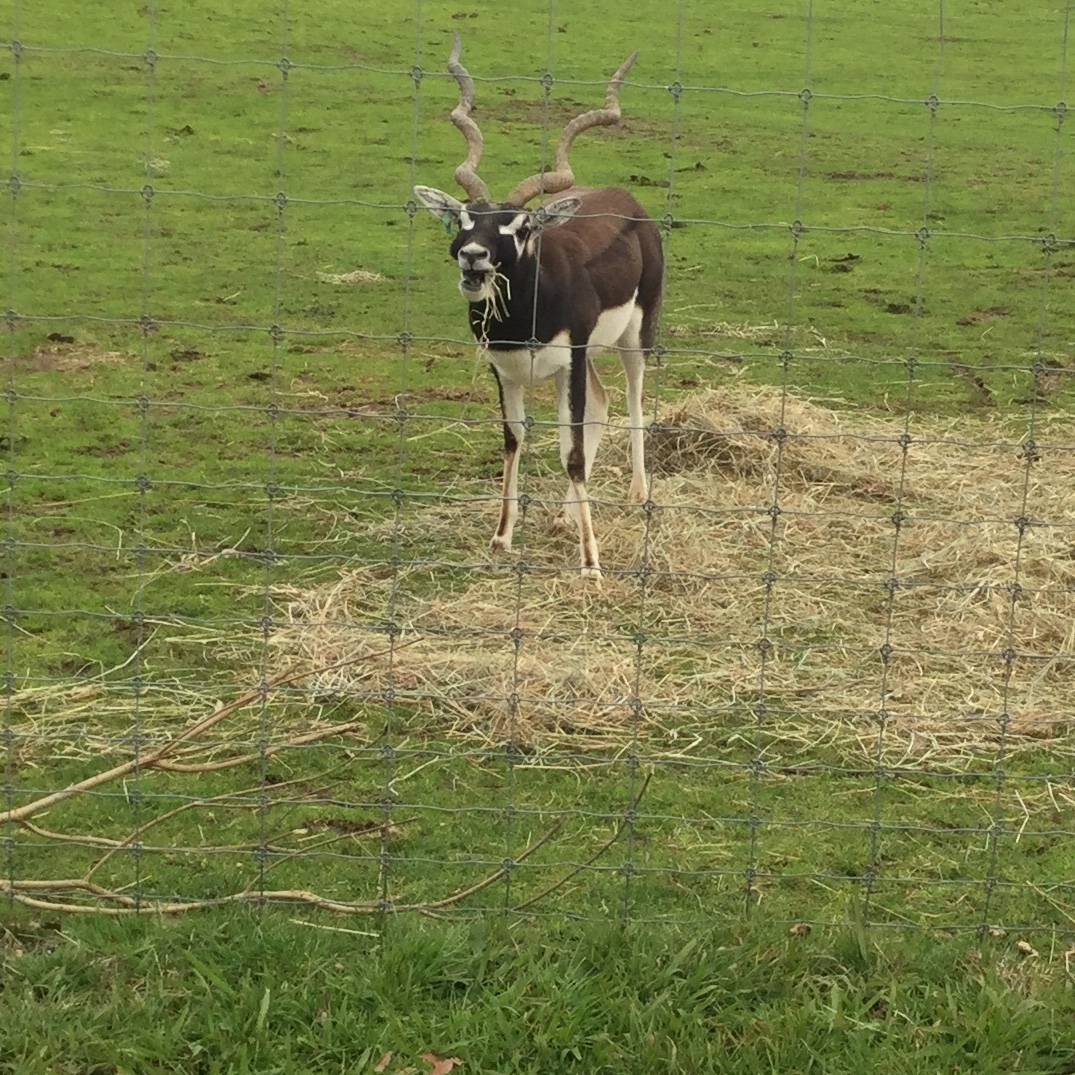
Cant say that I am a fan of having the Blackbuck on the African Savannah! ;) lol
 
Last edited:
Cant say that I am a fan of having the Blackbuck on the African Savannah! lol

A workmate of mine visited the zoo with his son, who kept insisting to him that they were antelope. He asked me if he was right. I told him not only was his son right, but that they’re Indian antelope. His next question? Why are Indian antelope in the African Savannah? :p

 
A workmate of mine visited the zoo with his son, who kept insisting to him that they were antelope. He asked me if he was right. I told him not only was his son right, but that they’re Indian antelope. His next question? Why are Indian antelope in the African Savannah? :p

Thats funny :D. with the amount of Nyala in NZ perhaps they would be a better fit than Indian antelope! ;)
 
Thats funny :D. with the amount of Nyala in NZ perhaps they would be a better fit than Indian antelope! ;)

Hamilton Zoo should still have the bachelor group of Nyala they received from Auckland Zoo in 2019.

Perhaps they put those in the Asian plains exhibit ;)

The Lowland nyala are still alive and well in the Savannah.

The zoo used to have a pair of Scimitar-horned oryx/Gemsbok hybrids (sisters) from Auckland Zoo. The zoo could have been forgiven for adding these to the Savannah (right continent; wrong biome); but instead exhibited them opposite the Dromedary camel, which I think was cool. It was like a mini desert trail.

The Sitatunga meanwhile was housed in the New Zealand wetlands (wrong continent; perfect biome). I’ve since seen a Cape Barren goose in this area.
 
Ndoki the Giraffe has died at the age of 22. This leaves Hamilton Zoo with only three ageing males:
It is with heavy hearts that we announce the death of much-loved giraffe, Ndoki.

22-year-old Ndoki, one of four giraffes in our bachelor herd at Hamilton Zoo, was found passed away in his night yards by his dedicated team of keepers while performing their morning checks. Cause of death is suspected cardiac arrest.

Passings like this are never easy and the Ungulate (hoof stock) team who cared for Ndoki, along with the whole Zoo whanau, are grieving the loss.

Ndoki (part of the Reticulated Giraffe species) was born at Wellington Zoo in May 1998 and arrived at Hamilton Zoo in 1999.

Giraffe cared for in captivity typically have a lifespan of about 20 years. At 22yrs of age, Ndoki was our oldest male and recognisable to guests, staff and hosts alike for his adorably droopy ears and the heart-shaped mark on his bottom.

Lovingly named “Dokes” or “Doki” by his keepers, he was a firm favourite of our staff. Renowned for his gentle and docile personality, Ndoki steered clear of any drama or group politics between the other boys.

This is a deeply sad time for Ndoki’s keepers and he will be dearly missed by all the zoo team. We thank guests for their understanding and kindness at this hugely difficult time.

Conservation status
The Reticulated Giraffe has a limited distribution across northern and north-eastern Kenya, and small restricted populations in southern Somalia and southern Ethiopia. An estimate of 15,780 individuals remain in the wild – a decline of over 50% from the approximate 36,000 three decades ago. Because of this decline, Reticulated Giraffe were added to the IUCN Red List and listed as Endangered in 2018. The combined impacts of habitat loss, habitat fragmentation, habitat degradation, human population growth, poaching, disease, war and civil unrest threaten the remaining giraffe numbers and their distribution throughout Africa. Many threats arise from direct, indirect, or perceived competition for resources with humans and their livestock.

Public can help giraffe conservation efforts by visiting the GCF website and donating to this worthy
cause: Donate to Giraffe Conservation Foundation - Giraffe Conservation Foundation
Log into Facebook | Facebook
 
Ndoki the Giraffe has died at the age of 22. This leaves Hamilton Zoo with only three ageing males:

Log into Facebook | Facebook

Hamilton Zoo should be proud to hold the record for the longest lived male giraffe in New Zealand. Interestingly, the previous male record holder was Ndoki’s sire, Ricky at 20 years; while his dam, Tisa, holds the overall record for longevity at 26 years. Must be some good genes there!

Speaking of genes, I’d dispute the article’s claim Ndoki was Reticulated (or even part Reticulated). This is his genealogy:

Ricky (sire):

Jan Smuts (M43) x Betty (F48) > Hazel (F53) > Faye (F75) > Ricky (M87)

Jan Smuts (M43) x Clara (F50) > Sydney (F58) > Finnie (M75) > Ricky (M87)

Tisa (dam):

Jan Smuts (M43) x Clara (F50) > Anna (F63) > Tisa (F90)

Jan Smuts (M43) x Clara (F50) > Sydney (F58) > Finnie (M75) > Tisa (F90)

Jan Smuts (born 1943 at Johannesburg Zoo) was a purebred South African (Giraffe G. c. giraffe).

Clara (born 1950 at the Smithsonian National Zoo) was a purebred Nubian Giraffe (G. c. camelopardalis).

Mighty (born 1933 in Tanzania) was a purebred Masai Giraffe (G. c. tippelskirchi). She bred with Jan Smuts to produce Betty (generic).
 
The chimps will be back on display from this weekend following the completion of the renovations:
It’s the news you’ve all been waiting for… the chimpanzees will be BACK on display this weekend. From Saturday 6 February the path and new visitor viewer will be OPEN, so when you visit you’ll be able to see the chimpanzee troop, including the new baby, in their upgraded outdoor enclosure. We know you’ve all been hanging out to see them, so now that they have had the opportunity to get used to their new space and are feeling happy, healthy, safe, we can welcome you back. To celebrate there will be two Keeper Talks at the main chimp viewer throughout Waitangi Weekend (6-8 Feb) at 12.30pm and 2.30pm. Plus there’s chimp activity books and masks for the kids (while stocks last). It’s a house warming party, but instead of bringing gifts check out the Jane Goodall Institute stand in reception and treat yourself to handcrafted Ugandan Beads. Jane Goodall Institute is a global non-profit organization which includes programmes that aim to reduce the illegal commercial bushmeat trade in Central Africa.
Log into Facebook | Facebook
 
Hamilton Zoo’s female chimp infant has been named Kendi: Log into Facebook | Facebook

I have to say I preferred the other two names, and not just because I associate ‘Kendi’ with the hippo at Dubbo.

‘Femi’ would have been a tribute to her grandmother, Fimi, who lived at Hamilton Zoo and was a founder within the region; while ‘Safiyya’ is a link to her mother, Sanda (who also has an S name).

Nonetheless, it’d great to see Sanda successfully rearing her third infant:

0.1 Mosi (26/10/1993) Died 09/12/1993
0.1 Chiku (15/02/2016)
0.1 Kendi (18/12/2020)
 
The Black-handed Spider Monkey born last year is currently being handraised. Keepers have tried introducing her back to mother Bodie but have been unsuccessful so far:
Late last year we introduced you to spider monkey baby Belize who was born in September. She’s had a rough ride so we thought it was time for an update.

Little Belize is now being hand raised by the primate team after she was found away from mum Bodie - weak, lethargic and close to death. The vet team swung into action caring for Belize and when she was ready, her keepers attempted to reunite her with first-time mum Bodie. But, unfortunately, this wasn’t successful and Belize’s health declined again.

So the team stepped in. The keepers and vet staff developed a roster and worked tirelessly around the clock to make this wee girl happy, health and safe. Thanks to their dedicated care, Belize has a fighting chance and is steadily improving. She still has some milestones to reach but the hope is, once she has reached these we will be able to reintroduce her to her group. In the meantime, Belize is spending time during the day in her own supervised off display enclosure working on her mobility and getting lots of exercise and play. She is one cruisy baby.

Black-handed spider monkeys are native to Central America (Mexico, Belize, Costa Rica, El Salvador, Guatemala, Honduras, Nicaragua, and Panama). They are classified as endangered by the International Union of Conservation of Nature (IUCN, 2020) with habitat loss through deforestation the biggest threat to the survival, along with being hunted for food and captured for the pet trade. As a result, the species has become locally extinct in most areas that are accessible to humans. As an arboreal species of primate (who live in the tree canopy’s), they require untouched primary forest to survive. This is why it is important to check for the FSC logo when purchasing paper.
Log into Facebook | Facebook
 
Zebra Update

A Plains zebra foal was born 10/01/2021. While it hasn’t been mentioned in the media, I noticed on my November visit that one of the mares was pregnant and Hamilton Zoo have since updated their page on their zebra to include mention of this birth.

I was told on my last visit that the two foals born December 2019 were a colt and a filly; however the website now lists them both as colts, so I guess an error was made in sexing them.

The zoo now has nine zebra in two herds:

Herd One:

1.0 Malawi (12/03/2012)
0.1 Marble (06/10/2003)
0.1 Zalika (30/11/2011)
1.0 Okavango (27/12/2019) Malawi x Marble
1.0 Zambia (30/12/2019) Malawi x Zalika
0.0.1 Unnamed (10/01/2021) Malawi x Unknown

Herd Two:

0.1 Kiva (03/10/2017) Malawi x Zalika
0.1 Imivimbo (08/12/2017) Malawi x Marble
0.1 Imka (31/10/2018) Malawi x Zalika
 
A Plains zebra foal was born 10/01/2021. While it hasn’t been mentioned in the media, I noticed on my November visit that one of the mares was pregnant and Hamilton Zoo have since updated their page on their zebra to include mention of this birth.
That'd be the one which can be seen in this photo (next to the right-hand zebra):

full
 
Zebra Update

A Plains zebra foal was born 10/01/2021. While it hasn’t been mentioned in the media, I noticed on my November visit that one of the mares was pregnant and Hamilton Zoo have since updated their page on their zebra to include mention of this birth.

I was told on my last visit that the two foals born December 2019 were a colt and a filly; however the website now lists them both as colts, so I guess an error was made in sexing them.

The zoo now has nine zebra in two herds:

Herd One:

1.0 Malawi (12/03/2012)
0.1 Marble (06/10/2003)
0.1 Zalika (30/11/2011)
1.0 Okavango (27/12/2019) Malawi x Marble
1.0 Zambia (30/12/2019) Malawi x Zalika
0.0.1 Unnamed (10/01/2021) Malawi x Unknown

Herd Two:

0.1 Kiva (03/10/2017) Malawi x Zalika
0.1 Imivimbo (08/12/2017) Malawi x Marble
0.1 Imka (31/10/2018) Malawi x Zalika

Do you know if they will they be getting a second Stallion to create a second breeding herd? Or will the Mares in Herd 2 be moving elsewhere?
 
Back
Top