Interesting/Little Known introduced populations

Some of New Zealand's "native" bird species might actually be introduced.

The Black Swan may be the best-known example. It was intentionally introduced in the 1860s, but because of how quickly the population increased after that, it is believed that some additional black swans flew from Australia to New Zealand not long after the imported black swans were released into the wild in New Zealand, thus apparently making the black swan a native species in New Zealand. Even so, there is no real evidence of black swans flying from Australia to New Zealand and it is quite possible that New Zealand's black swan population is entirely derived from introduced birds.

The Rufous Night-Heron has a small "native" population in New Zealand that resides along the Whanganui River. The first confirmed record of breeding there was in 1995, which is not that long after Wellington Zoo attempted to create an introduced population of rufous night-herons in New Zealand by releasing three birds into the wild in 1982. The species still existed in captivity elsewhere in New Zealand in 1995, too.

The Barn Owl was first recorded breeding in New Zealand in 2008, when a pair bred near Kaitaia in Northland. The population has increased and spread since then. The barn owl is widely regarded as being native to New Zealand, but the origin of its New Zealand population is very suspicious. Barn owls definitely still existed in captivity in New Zealand, both in zoos and in private hands, until 2007, and there was even at least one person who deliberately released barn owls into the wild in Auckland (the region south of Northland) in the 1990s. In addition, there are records of barn owls that reached New Zealand via aircraft and ships. The New Zealand population could have originated from any of these non-natural means.

The Maned Duck was first recorded breeding in New Zealand in the Tasman District of the northern South Island when at least two pairs bred there over the period of late 2015 to early 2016, but all of the ducklings from at least one of the clutches disappeared. The maned duck has since formed a population in the Tasman District. The population is probably at least partially derived from a small group of maned ducks (3.1) that were first seen in the Tasman District in December 2014. The time of this first sighting does not correlate with the period of post-breeding dispersal of maned ducks in Australia, which is when maned duck sightings are expected in New Zealand, so the New Zealand population of maned ducks may be of captive origin.
 
Some of New Zealand's "native" bird species might actually be introduced.

The Black Swan may be the best-known example. It was intentionally introduced in the 1860s, but because of how quickly the population increased after that, it is believed that some additional black swans flew from Australia to New Zealand not long after the imported black swans were released into the wild in New Zealand, thus apparently making the black swan a native species in New Zealand. Even so, there is no real evidence of black swans flying from Australia to New Zealand and it is quite possible that New Zealand's black swan population is entirely derived from introduced birds.

The Rufous Night-Heron has a small "native" population in New Zealand that resides along the Whanganui River. The first confirmed record of breeding there was in 1995, which is not that long after Wellington Zoo attempted to create an introduced population of rufous night-herons in New Zealand by releasing three birds into the wild in 1982. The species still existed in captivity elsewhere in New Zealand in 1995, too.

The Barn Owl was first recorded breeding in New Zealand in 2008, when a pair bred near Kaitaia in Northland. The population has increased and spread since then. The barn owl is widely regarded as being native to New Zealand, but the origin of its New Zealand population is very suspicious. Barn owls definitely still existed in captivity in New Zealand, both in zoos and in private hands, until 2007, and there was even at least one person who deliberately released barn owls into the wild in Auckland (the region south of Northland) in the 1990s. In addition, there are records of barn owls that reached New Zealand via aircraft and ships. The New Zealand population could have originated from any of these non-natural means.

The Maned Duck was first recorded breeding in New Zealand in the Tasman District of the northern South Island when at least two pairs bred there over the period of late 2015 to early 2016, but all of the ducklings from at least one of the clutches disappeared. The maned duck has since formed a population in the Tasman District. The population is probably at least partially derived from a small group of maned ducks (3.1) that were first seen in the Tasman District in December 2014. The time of this first sighting does not correlate with the period of post-breeding dispersal of maned ducks in Australia, which is when maned duck sightings are expected in New Zealand, so the New Zealand population of maned ducks may be of captive origin.

That people were privately keeping barn owls (why?) and that Wellington zoo deliberately released night herons both intrigue me greatly. Love to hear?
 
That people were privately keeping barn owls (why?) and that Wellington zoo deliberately released night herons both intrigue me greatly. Love to hear?
The information on the Barn Owls comes from this thread on BirdingNZ: Barn Owl, Palmerston North - Page 3 - BirdingNZ.net

In 2009 I contacted and received from the Wellington Zoo Registrar/Librarian, a copy of their Taxon Report for Tyto alba. This contained all their records for barn owls and their transfers, going back to a pair they first introduced from Melbourne Zoo in 1978. As far as is known, the entire NZ captive population stemmed from this pair, except one wild bird from Waverley, which also went to Wellington Zoo.
They breed readily in captivity and most zoos and wildlife parks around the country eventually had them, they were also given to interested, private holders.
Wingspan has a copy of correspondence and photographs confirming the following.
A couple breeding them in Whangarei in 1992, gave a pair to an employee of Auckland zoo. He bred them at his parents house in Silverdale.
We don't know how many he released, but our photos show the released owlets on this property. (It would be interesting to know whether reports of barn owls in the Auckland area are related to these releases).


I think it is highly likely that the wild Barn Owl population in NZ is derived from released birds.


Regarding the Nankeen Night Herons, the current wild population in NZ has nothing to do with the Wellington Zoo birds. They released three birds in 1982, which I think was influenced by the Black-crowned Night Heron colony at Edinburgh Zoo. The three birds soon flew away from the zoo, individually, with one ending up at Golden Bay (in the South Island, in 1983), one in Lower Hutt (near Wellington, in 1984), and one way up at Warkworth (north of Auckland, in 1984).


Regarding the Australian Wood Ducks, there are none in captivity in NZ and haven't been for decades, so Cassidy Casuar's supposition that the wild ones recently established are escaped birds is without any foundation.
 
Regarding the Australian Wood Ducks, there are none in captivity in NZ and haven't been for decades, so Cassidy Casuar's supposition that the wild ones recently established are escaped birds is without any foundation.
Okay, but why do you have the maned duck included in your list under a category that has the following description?
There may still be some of the following around but I haven't seen any of them for a long time and it is unlikely any still exist in New Zealand collections (private or public).
Is that the same as saying outright that the maned duck no longer exists in captivity in New Zealand?
 
Short article about removing red-eared sliders from ponds at Cooks Beach on the Coromandel Peninsula in New Zealand. It has been reported that the turtles have probably been breeding at the ponds:
Pet turtles were allowed for sale in New Zealand because it was thought the climate was too cold for their eggs to incubate and hatch. However, turtle eggs and hatchlings have been sighted at Cook's Beach.
Turtle traps set up at Coromandel beach to capture abandoned pets
 
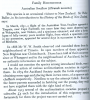
The Welcome Swallow is now a common bird species in New Zealand; it started breeding here in 1958 and appears to have reached New Zealand naturally, though some believe that it was ship-assisted. But before then, there was a bizarre and extremely ineffectual attempt at deliberately introducing welcome swallows to New Zealand. Source is Thomson's The Naturalisation of Animals and Plants in New Zealand (2011 reprint).
neoxena.png
 

Attachments

  • neoxena.png
    neoxena.png
    931.1 KB · Views: 42
I just learned recently that the Great-tailed Grackle population in the US and Mexico is introduced. Who knew?

Seems highly debated, I found the original paper on it. Apparently the species was already native to Mexico, and then transported farther north. And then spread both north and south to form the current known range. Having witnessed the arrival and subsequent invasion of the species to my area, I feel they are quite capable of managing the expansion themselves.
 
Back
Top