Monarto Safari Park Monarto Safari Park News 2021

WhistlingKite24

Well-Known Member
10+ year member
Conservation Goals for 2021:

Zoos SA have released five key goals they aim to achieve for 2021; these include reintroduction projects for four main species - Tasmanian Devils, Orange-bellied Parrots, Brush-tailed Bettongs and Greater Stick Nest Rats. The final goal involves supporting and locating wild populations of the Kangaroo Island Dunnart. I've placed this in the Monarto news thread as several of the species and projects (Tasmanian devils, stick-nest rats, bettongs) are mainly based at Monarto.

Full article: Zoos SA shares five conservation wishes for 2021 - Australasian Leisure Management
To mark the New Year, conservation charity - Zoos SA, operator of Adelaide Zoo and Monarto Safari Park - has shared its five conservation wishes for 2021 which include the continuation of work on Kangaroo Island; the release of near-threatened Greater Stick-nest Rats; and the continued breeding of the critically endangered Orange-bellied Parrot and Tasmanian Devil.

Zoos SA Conservation Manager, Dr Liberty Olds notes “as a conservation charity we have a number of conservation wishes for 2021. Despite everything 2020 has thrown at us, we continued to work tirelessly and will continue to do so. It’s the reason our organisation exists.”

One such conservation wish is the continuation of work on Kangaroo Island. A year on from the disastrous bushfires that rampaged through South Australia, Zoos SA continues to work alongside other conservation organisations on Kangaroo Island to assess and to safeguard species such as the Kangaroo Island Dunnart.

Dr Olds advises “continuing our breeding programs for the critically endangered Orange-bellied Parrots and endangered Tasmanian Devil and the release of near-threatened Greater Stick-nest Rats and critically endangered Brush-tailed Bettong are just some of the conservation programs we are currently working on. We support many other conservation projects directly or indirectly in both Australia and beyond.

“If wishes really can come true, then granting further success with these five conservation programs in 2021 will greatly help us to save species from extinction.”

Zoos SA started sending veterinary and conservation teams over to Kangaroo Island after the bushfires of late 2019 to attend to sick animals and to assess habitat damage. Work came to a standstill for the charity in March as the COVID-19 pandemic was in full swing.

Since resuming work on the island, Zoos SA has partnered with organisations such as Kangaroo Island Land for Wildlife, landholders and stakeholders to set up fauna traps and monitor species numbers.

“We dug pitfall traps in an area of unburnt land to assess wildlife numbers after the bushfires. The team has gone over to Kangaroo Island a number of times and we’ve found a number of species,” said keeper Gemma Asser, one of the Zoos SA staff members who has worked on the island.

“Unfortunately, we are yet to catch any Kangaroo Island Dunnarts, but they have been seen on camera traps so we know they are in the area.

Asser adds “our wish for 2021 would be to find the critically endangered Kangaroo Island Dunnart and start work to help re-establish numbers which were already decimated prior to the bushfires.”

Other programs that Zoos SA has pinned their wishes on are the continued breeding of the critically endangered Orange-bellied Parrots. This year, a record number of Orange-bellied Parrots returned to Melaleuca - one of Zoos SA's wishes would be for even more to return and breed in 2021.

Zoos SA also works with many partner organisations across Australia to breed a tumour-free population of Tasmanian Devils including The Save the Tasmanian Devil Program to assist with the captive breeding and release recovery program.

This partnership has already seen some of Monarto Safari Park’s joeys released into the wild, disease-free populations on Maria Island, just east of Tasmania.

When it comes to Greater Stick-nest Rats, no less than 40 have been released into the wild after being bred at Adelaide Zoo and Monarto Safari Park as part of a vital conservation program. Recently, a collaborative translocation plan in conjunction with the NSW National Parks and Wildlife Service and independent not-for-profit organisation Australian Wildlife Conservancy saw the rats released into Mallee Cliffs National Park. A Zoos SA wish for 2021 would be to see more Stick-nest Rats released into the wild in 2021.

Finally, Zoos SA is part of a conservation program to bring locally extinct species back to Yorke Peninsula working with their partners through Marna Bangaara.

A team of Zoos SA staff will be involved in the reintroduction of Brush-tailed Bettongs in the coming year. Zoos SA’s wish is to see the successes of the program continue with the next species to be brought back from extinction.

Zoos SA’s five conservation wishes for 2021

1. To continue to assess and to find the Kangaroo Island Dunnart

2. To breed and reintroduce more Orange-bellied Parrots

3. To contribute more Tasmanian Devils to the disease-free mainland population

4. To see more Stick-nest Rats released into the wild in 2021

5. To reintroduce Brush-tailed Bettongs into the Yorke Peninsula

As a conservation charity, Zoos SA operates Adelaide Zoo and Monarto Safari Park. Both sites are open every day of the year.
 
Wild Africa Update:

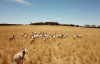
A new species has now moved into the future Wild Africa area; a herd of 38 Scimitar-horned Oryx are now living in their new exhibit. This first stage of the development has been called Etosha so it seems like the zoo are approaching this by having species that represent different national parks:

"A total of 38 Scimitar-horned Oryx were released into stage one of the park’s $40m safari and accommodation expansion. The expansion will boast a range of new safari experiences as well as a luxury resort thanks to funding from Australian businessman and private investor Gerry Ryan OAM. Scimitar-horned Oryx are a striking antelope species from North Africa, characterised by their large, curved horns that resemble a scimitar sword. Monarto Safari Park’s Director Peter Clark says the release of 38 oryx individuals is not only special because it’s a first for the park, but even more so because, sadly, large herds of this species don’t exist in the wild. “The Scimitar-horned Oryx is listed as extinct in the wild by the International Union for the Conservation of Nature, and has been for many years,” says Peter. “To see these animals roaming in grasslands as they would in the wild is a magnificent sight and stark reminder of how vital conservation work is, not just for the oryx, but for species all over the world.”

Source: Monarto Safari Park's Facebook page
upload_2021-1-29_11-14-11.png
Log into Facebook | Facebook

Monarto Safari Park have also released a list of the free-ranging species they plan to introduce into Wild Africa: Scimitar-horned Oryx, Giraffe, Waterbuck, Bongo, Nyala, Eland, Plains Zebra, Hippo (their plans to bring in hippos seem to be continuing which is great to see) and Southern White Rhino.
 

Attachments

  • upload_2021-1-29_11-14-11.png
    upload_2021-1-29_11-14-11.png
    1.1 MB · Views: 67
Wild Africa Update:

A new species has now moved into the future Wild Africa area; a herd of 38 Scimitar-horned Oryx are now living in their new exhibit. This first stage of the development has been called Etosha so it seems like the zoo are approaching this by having species that represent different national parks:

"A total of 38 Scimitar-horned Oryx were released into stage one of the park’s $40m safari and accommodation expansion. The expansion will boast a range of new safari experiences as well as a luxury resort thanks to funding from Australian businessman and private investor Gerry Ryan OAM. Scimitar-horned Oryx are a striking antelope species from North Africa, characterised by their large, curved horns that resemble a scimitar sword. Monarto Safari Park’s Director Peter Clark says the release of 38 oryx individuals is not only special because it’s a first for the park, but even more so because, sadly, large herds of this species don’t exist in the wild. “The Scimitar-horned Oryx is listed as extinct in the wild by the International Union for the Conservation of Nature, and has been for many years,” says Peter. “To see these animals roaming in grasslands as they would in the wild is a magnificent sight and stark reminder of how vital conservation work is, not just for the oryx, but for species all over the world.”

Source: Monarto Safari Park's Facebook page
View attachment 473906
Log into Facebook | Facebook

Monarto Safari Park have also released a list of the free-ranging species they plan to introduce into Wild Africa: Scimitar-horned Oryx, Giraffe, Waterbuck, Bongo, Nyala, Eland, Plains Zebra, Hippo (their plans to bring in hippos seem to be continuing which is great to see) and Southern White Rhino.

That looks incredible. Monarto Safari Park is well on track to becoming one of the most impressive safari parks in the world.

It’s sad a flock of Greater flamingo can’t be imported. Etosha National Park is one of only two national parks where this species regularly breeds and they would be the perfect addition. There’d be space to establish a huge flock.

I’m glad to see them steaming ahead with establishing a hippopotamus herd. Assuming no imports are forthcoming, the logical way to proceed appears to be transferring one of the two female pods (0.2 or 0.3) from Werribee; combined with the young bull from Dubbo (Kani). Werribee could then replace them with the two young sisters from Dubbo (Kibibi and Kendi), who could then continue breeding their pair (Mana and Cuddles).
 
Monarto Safari Park have also released a list of the free-ranging species they plan to introduce into Wild Africa: Scimitar-horned Oryx, Giraffe, Waterbuck, Bongo, Nyala, Eland, Plains Zebra, Hippo (their plans to bring in hippos seem to be continuing which is great to see) and Southern White Rhino.

No addax......?
 
No addax......?
They are mentioned in the 2015 masterplan for Wild Africa so I am sure it's highly likely they will also make their way to this new area:

"The safari experience will take small groups of visitors off-road through herds of animals that may include giraffe, eland, bongo, nyala, white rhino, oryx, addax, Barbary Sheep, zebra, ostrich..."
 
Wild Africa Update:

A new species has now moved into the future Wild Africa area; a herd of 38 Scimitar-horned Oryx are now living in their new exhibit. This first stage of the development has been called Etosha so it seems like the zoo are approaching this by having species that represent different national parks:

"A total of 38 Scimitar-horned Oryx were released into stage one of the park’s $40m safari and accommodation expansion. The expansion will boast a range of new safari experiences as well as a luxury resort thanks to funding from Australian businessman and private investor Gerry Ryan OAM. Scimitar-horned Oryx are a striking antelope species from North Africa, characterised by their large, curved horns that resemble a scimitar sword. Monarto Safari Park’s Director Peter Clark says the release of 38 oryx individuals is not only special because it’s a first for the park, but even more so because, sadly, large herds of this species don’t exist in the wild. “The Scimitar-horned Oryx is listed as extinct in the wild by the International Union for the Conservation of Nature, and has been for many years,” says Peter. “To see these animals roaming in grasslands as they would in the wild is a magnificent sight and stark reminder of how vital conservation work is, not just for the oryx, but for species all over the world.”

Source: Monarto Safari Park's Facebook page
View attachment 473906
Log into Facebook | Facebook

Monarto Safari Park have also released a list of the free-ranging species they plan to introduce into Wild Africa: Scimitar-horned Oryx, Giraffe, Waterbuck, Bongo, Nyala, Eland, Plains Zebra, Hippo (their plans to bring in hippos seem to be continuing which is great to see) and Southern White Rhino.
This is the way that open range zoos should be I believe Zoos SA has now raised the bar to another level. I am more then excited over this development than any other major zoo project with the regions zoos in a long time! :)

Also glad to see at least one major zoo that has not lost interest in Bongos, perhaps they plan to import at some stage in the future. I would not be surprised if Zoos SA did import River Hippos for this project with this amount of space holding a fair sized herd could be a main breeding centre for the future,I believe they are not going to cut any corners on this huge project. Working with Werribee and the Western Plains zoo could put Hippos back on the map for the whole region :cool:
 
@Zoofan15

I tend to agree with its size and climate should put them in the top level of open range zoos world wide, I hope in time they can build a nice selection of antelope species to fit in such a wonderful project.

Your quite right a large flock of Greater Flamingos in such a setting would of been the icing on the cake, perhaps one day it may happen we can hope so!

My guess would be possible imports in the future I feel stretching out what little we have in the country could be a little thin. :D
 
Is the scimitar horned oryx also foreboding for a prospective release / reintroduction project across the globe in Sahelian Africa. Plenty of candidates for new stock or new project areas!

Encouraging signs from Monarto on the big safari project!
 
Is the scimitar horned oryx also foreboding for a prospective release / reintroduction project across the globe in Sahelian Africa. Plenty of candidates for new stock or new project areas!

Encouraging signs from Monarto on the big safari project!
While 38 oryx is a large herd I bet the herd/s up at the Mary river station are way much more than this, This could be a good source for any reintroduction project if anyone ever go to the bottom of what is actually still living there?.
 
While 38 oryx is a large herd I bet the herd/s up at the Mary river station are way much more than this, This could be a good source for any reintroduction project if anyone ever go to the bottom of what is actually still living there?.
I think the ZAA should seriously think about adopting a reintroduction project and program in one of the Sahelian countries. Whereas Chad is pretty much nailed, and Niger is covered mostly by French national development coffers, there are other countries Mali, Burkina Faso, Senegal that receive less support and in order to recreate the big herds of the past and regenerate the Sahel and Sahara as a sustainable development project would be neat.
 
While 38 oryx is a large herd I bet the herd/s up at the Mary river station are way much more than this, This could be a good source for any reintroduction project if anyone ever go to the bottom of what is actually still living there?.

The Mary River herds number in the hundreds. They’ve been a valuable source of new genetics for the region in recent years, with many joining the breeding programme.

Sadly, New Zealand is on the verge of phasing them out. Orana Wildlife has allowed their herd to dwindle to a couple of aging males. Founded decades ago with imports from Marwell, they once had a large, thriving breeding herd.
 
The Mary River herds number in the hundreds. They’ve been a valuable source of new genetics for the region in recent years, with many joining the breeding programme.

Sadly, New Zealand is on the verge of phasing them out. Orana Wildlife has allowed their herd to dwindle to a couple of aging males. Founded decades ago with imports from Marwell, they once had a large, thriving breeding herd.
Just wondering if you know of any zoos in resent times that have obtained any new stock from the Mary river station?, From what I hear few here appear to know what is going on there or what they have there these days?.
Its a shame Orana have let go of their oryx since as you say they were obtained from the Marwell stock decades ago and now just to let them disappear! :(
 
I think the ZAA should seriously think about adopting a reintroduction project and program in one of the Sahelian countries. Whereas Chad is pretty much nailed, and Niger is covered mostly by French national development coffers, there are other countries Mali, Burkina Faso, Senegal that receive less support and in order to recreate the big herds of the past and regenerate the Sahel and Sahara as a sustainable development project would be neat.

How does this make sense for ZAA though? It’s a nice thought, but the regulatory requirements for getting hoof stock into the country are so burdensome that it’s hardly a logical place for *any* real (as opposed to PR-based) conservation project for them, let alone in West Africa, which is almost literally as far from Australia and New Zealand as it is possible to go.
 
Last edited:
  • Like
Reactions: MRJ
Just wondering if you know of any zoos in resent times that have obtained any new stock from the Mary river station?, From what I hear few here appear to know what is going on there or what they have there these days?.
Its a shame Orana have let go of their oryx since as you say they were obtained from the Marwell stock decades ago and now just to let them disappear! :(

Looking over the fifteenth edition of the Scimitar-horned oryx studbook, four zoos held Mary River Station stock as of 31/12/2019:

Taronga Western Plains Zoo = 1.7
Altina Wildlife Park = 3.4
Monarto Safari Park= 1.2
Werribee Open Range Zoo = 2.3

In each case, these animals were born around 2009-2010 and are amongst the oldest stock at each respective facility. Many offspring have subsequently been bred from them. There’s currently enough founders to sustain the population over the next few decades, but it never hurts to bring in more.

That said, the Mary River Station herd was likely founded with around 10-50 animals and may be quite inbred by now.
 
Looking over the fifteenth edition of the Scimitar-horned oryx studbook, four zoos held Mary River Station stock as of 31/12/2019:

Taronga Western Plains Zoo = 1.7
Altina Wildlife Park = 3.4
Monarto Safari Park= 1.2
Werribee Open Range Zoo = 2.3

In each case, these animals were born around 2009-2010 and are amongst the oldest stock at each respective facility. Many offspring have subsequently been bred from them. There’s currently enough founders to sustain the population over the next few decades, but it never hurts to bring in more.

That said, the Mary River Station herd was likely founded with around 10-50 animals and may be quite inbred by now.
Then it appears no resent stock has made its way out of there in resent times. Since then I believe it has been sold.
 
Then it appears no resent stock has made its way out of there in resent times. Since then I believe it has been sold.

I'm not sure I'd be drawn to that conclusion. Just because they were born at Mary River around 10 years ago does not mean all animals where transported at birth.

Also, not sure if I share your cause for concern. If the population at Mary River has a low level of genetic diversity, then its rather pointless continually topping up your zoo population with animals from here.

And even If not, then I think 7.16 making their way into the zoo program in the over the few years is a great start. Certainly a lot more than I expected. I knew Altina had gotten some a few years back, but thats all.
 
I'm not sure I'd be drawn to that conclusion. Just because they were born at Mary River around 10 years ago does not mean all animals where transported at birth.

Also, not sure if I share your cause for concern. If the population at Mary River has a low level of genetic diversity, then its rather pointless continually topping up your zoo population with animals from here.

And even If not, then I think 7.16 making their way into the zoo program in the over the few years is a great start. Certainly a lot more than I expected. I knew Altina had gotten some a few years back, but thats all.
I have no idea of the genetic diversity of the Mary river population would be my main interest was in what zoos had obtained animals from there. My other point of interest was what other species they might still have living there!
 
This article raises a couple of interesting points:

Mary River Station is unique as it has the only private herd of Banteng in Australia and is one of only two destinations that Banteng may be legally hunted in the world,” real estate agent Ruralco said.

Mr Gleeson attracted attention in 2004 when he purchased a herd of 300 Scimitar Horned Oryx — which are extinct in the wild — from nearby Tipperary Station.


No cookies | NT News

They also have Addax and Indian antelope.
 
@Zorro I was just pointing out that taking it all into context, I'd describe these acquisitions as "recent" and as a side note, likely sufficient.
I seem to remember that there was an importation of addax (and possible Oryx) back in the 1980s?? from the San Deigo wild animal park of which I believe some were split between Werribee park zoo and group held in the NT.
 
Back
Top