ZooChat Big Year 2021

Day 6 we drove to Yungaburra. After lunch and booking into our motel we did the circuit around Lake Eacham, a flooded volcanic crater.

Mammals
14. Platypus Ornithorhynchus anatinus

Birds
116. Yellow-spotted honeyeater Meliphaga notata
117. Bassian thrush Zoothera lunulata
118. Victoria's riflebird Lophorina victoriae (new Family)
119. Bower's shrikethrush Colluricincla boweri
120. Grey-headed robin Heteromyias cinereifrons
121. Grey whistler Pachycephala simplex

Reptiles
4. Australian water dragon Intellagama lesueurii
5. Elegant rainbow skink Carlia decora

Fish
1. Barred gunter Amniataba percoides (new Family)
plus one more we will be able to identify later.

We had engaged a well-known local guide, Alan Gillanders, to take us around mammal sites in the evening. I'm not a fan of organised group tours over a period of days or weeks, although I enjoyed watching a series of "virtual tours" during COVID. However I am all in favour of using local guides who have special insights into their areas. In this case we were taken to see yellow-bellied and feathertail gliders, and got wonderful views with a yellowbelly feeding at eye leval only a metre or two away, feathertails gliding and interacting with the yellowbellies etc. A great experience we could not have achieved alone. Of course for me a tour is a business expence.

Mammals
15. Broad-toed feathertail glider Acrobates frontalis (new Family)
16. Yellow-bellied glider Petaurus australis
17. Coppery brushtail possum Trichosurus johnstonii
18. Lemuroid ringtail possum Hemibelideus lemuroides
19. Green ringtail possum Pseudochirops archeri
20. Herbert River ringtail possum Pseudochirulus herbertensis
21. Rufous bettong Aepyprymnus rufescens

Birds
122. Eastern barn owl Tyto delicatula
123. Lesser sooty owl Tyto multipunctata

Amphibians
2. Rain whistling frog Austrochaperina pluvialis (new Family)
3. Northern barred frog Mixophyes schevilli
 
Last edited:
Day 7 started with early morning birding around the Eacham area, after which we drove back to Mission Beach for a "long lunch". Very Baccian.

Mammals
22, Eastern long-eared bat Nyctophilus bifax

Birds
124. Pacific emerald dove Chalcophaps longirostris
125. Chowchilla Orthonyx spaldingii
126. Macleay's honeyeater Xanthotis macleayanus
127. Large-billed scrubwren Sericornis magnirostra
128. Yellow-breasted boatbill Machaerirhynchus flaviventer (new Family)
129. Fan-tailed cuckoo Cacomantis flabelliformis
130. Olive-backed sunbird Cinnyris jugularis
131. Spectacled monarch Symposiachrus trivirgatus
132. Pied monarch Arses kaupi

Reptiles
6. Four-fingered shade skink Saproscincus tetradactylus
 
Addition to Eacham night tour

Amphibians
4, Green-eyed tree frog Ranoidea serrata
 
Birds
88. Chestnut-rumped Thornbill
89. Yellow Thornbill
90. Hardhead
91. Red Wattlebird
92. Superb Fairy Wren
93. Great Cormorant
94. Crested Tern
95. Caspian Tern
96. Little Tern
97. Red-necked Stint
98. Sharp-tailed Sandpiper
99. Bar-tailed Godwit
100. Eastern Curlew
101. Red-capped Plover
102. Australian Pied Oystercatcher
103. Red-necked Avocet
104. Pacific Koel
105. Chestnut Teal
106. Black Swan
107. Australian Hobby
108. Australian Shelduck
109. Ruddy Turnstone
110. Lesser Sand Plover
111. Little Egret
112. Beautiful Firetail
113. Eastern Yellow Robin
114. White-browed Scrubwren
115. Grey Fantail
116. Golden Whistler
117. Eastern Whipbird
118. New Holland Honeyeater
119. Yellow-faced Honeyeater
120. Eastern Spinebill
121. Variegated Fairy Wren
122. Satin Bowerbird
123. Fairy Martin
124. Bell Miner
125. Musk Lorikeet
126. Red-browed Finch
127. Silvereye
128. Red-whiskered Bulbul
129. Lewin's Honeyeater
130. Long-billed Corella
131. Dollarbird

Mammals
5. Swamp Wallaby

Reptiles
1. Eastern Water Dragon

Inverts
1. Double Drummer Cicada
2. Monarch Butterfly
3. Cabbage White Butterfly
4. Australian Garden Orb Weaver

:p

Hix

Birds
132. European Goldfinch
133. Chestnut-breasted Manikin
134. Double-barred Finch
135. Golden-headed Cisticola
136. Rufous Whistler
137. Brown Goshawk

Mammals
6. Grey-headed Flying Fox

Inverts
5. Black Prince Cicada

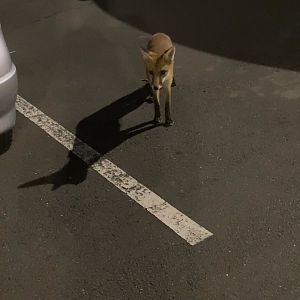
I've already seen Red Foxes this year (in the wee small hours while driving out to Lake Cargelligo I could just glimpse them disappearing into the undergrowth at the side of the road), but this morning there was one in a commuter carpark before dawn running up to people looking for food. It was quite unafraid and came quite close allowing me to try and get some photos with my phone. Unfortunately, it rarely stayed still long enough for me to get a good shot. It came right up to me, sniffed my boot - and then gave a quick nip to the toe before running off to someone else to see if they had food. Glad I was wearing steel caps!

full


:p

Hix
 
Day 8 was a late start and we drove to the Mt Lewis area for another spotlighting expedition to be followed by birdwatching the next morning. On the way up we stopped at the Neranda Tea Centre in a final attempt to see Lumholtz tree kangaroo in the wild. It was closed, however we poked around however sadly did not see any tree kangaroos but did see the pied butcherbird.

Driving up the road to our accommodation, Feathers and Friends, we saw lots of buff-breasted paradise kingfishers, which turned out to be the 800th bird species I have observed and recorded on my list. These 800 birds come from 25 Orders and 127 Families.

Birds
133. White-bellied sea eagle Haliaeetus leucogaster
134. Brahminy kite Haliastur indus
135. Pied butcherbird Cracticus nigrogularis
136. Magpie goose Anseranas semipalmata
137. Black kite Milvus migrans
138. Buff-breasted paradise kingfisher Tanysiptera sylvia
139. Bar-shouldered dove Geopelia humeralis

We had engaged another guide for Mt. Lewis, Patrick de Geeste. Once again Patrick was excellent and highly recommended. Mt Lewis was great for rodents and the highlight was the tree mouse, also known as the prehensile tailed rat. Patrick said it was only the fifth time he had seen this species.

Mammals
23. Rusty antechinus Antechinus stuartii
24. Northern long-nosed bandicoot Perameles pallescens
25. Daintree River ringtail possum Pseudochirulus cinereus
26. Fawn-footed melomys Melomys cervinipes
27. Australian tree mouse Pogonomys mollipilosus
28. Bush rat Rattus fuscipes
29. Giant white-tailed rat Uromys caudimaculatus

Amphibians
5. Mottled barred frog Mixophyes coggeri
Also the green-eyed frog mentioned above actually belongs here.

Invertebrates
29. Gloworm Arachnocampa flava
There were also fireflies but I have not been able to identify the species yet.
 
Last edited:
Day 8 was a late start and we drove to the Mt Lewis area for another spotlighting expedition to be followed by birdwatching the next morning. On the way up we stopped at the Neranda Tea Centre in a final attempt to see Lumholtz tree kangaroo in the wild. It was closed, however we poked around however sadly did not see any tree kangaroos but did see the pied butcherbird.

Driving up the road to our accommodation, Feathers and Friends, we saw lots of buff-breasted paradise kingfishers, which turned out to be the 800th bird species I have observed and recorded on my list. These 800 birds come from 25 Orders and 127 Families.

Birds
133. White-bellied sea eagle Haliaeetus leucogaster
134. Brahminy kite Haliastur indus
135. Pied butcherbird Cracticus nigrogularis
136. Magpie goose Anseranas semipalmata
137. Black kite Milvus migrans
138. Buff-breasted paradise kingfisher Tanysiptera sylvia
139. Bar-shouldered dove Geopelia humeralis

We had engaged another guide for Mt. Lewis, Patrick de Geeste. Once again Patrick was excellent and highly recommended. Mt Lewis was great for rodents and the highlight was the tree mouse, also known as the prehensile tailed rat. Patrick said it was only the fifth time he had seen this species.

Mammals
23. Rusty antechinus Antechinus stuartii
24. Northern long-nosed bandicoot Perameles pallescens
25. Daintree River ringtail possum Pseudochirulus cinereus
26. Fawn-footed melomys Melomys cervinipes
27. Australian tree mouse Pogonomys mollipilosus
28. Bush rat Rattus fuscipes
29. Giant white-tailed rat Uromys caudimaculatus

Amphibians
5. Mottled barred frog Mixophyes coggeri
Also the green-eyed frog mentioned above actually belongs here.

Invertebrates
29. Gloworm Arachnocampa flava
There were also fireflies but I have not been able to identify the species yet.
Isn’t A. stuartii Brown Antechinus?
Where did you see it?


If you still have time and you wanna look for Tks again I’d highly recommend Possum Valley Rainforest Cottages.
 
  • Like
Reactions: MRJ
Isn’t A. stuartii Brown Antechinus?
Where did you see it?


If you still have time and you wanna look for Tks again I’d highly recommend Possum Valley Rainforest Cottages.
Sorry you are right. It should be Antechinus adustus, They were conspecific with the brown antechinus so that is where I mixed them up. Heading back now but thinking I may come back in the winter and will pick up tree kangaroos then.
 
BIRDS:
04/02/21 (Helmond, Noord-Brabant)
110) Grey wagtail, Motacilla cinerea

08/02/21 (Eindhoven, Noord-Brabant)
111) Brambling, Fringilla montifringilla

11/02/21 (Helmond, Noord-Brabant)
112) Grey patridge, Perdix perdix
 
22. Yellowhammer (Emberiza citrinella)
23. Great crested grebe (Podiceps cristatus)
24. White stork (Ciconia ciconia)
25. Common blackbird (Turdus merula)
26. Canada goose (Branta canadensis)
27. Eurasian collared dove (Streptopelia decaocto)
28. Common starling (Sturnus vulgaris)
29. Muscovy duck (Cairina moschata)
I have not been birding a lot recently, but I saw two more species in the snow today;
30. Common chaffinch (Fringilla coelebs)
31. Common linnet (Linaria cannabina)
 
Since my last update, I have seen another three bird species. All were observed as flyovers from my bedroom window. Particularly pleased with the red kite, as this is a species that is still not a reliable annual visitor to my area.

41. Mute swan Cygnus olor
42. Red kite Milvus milvus
43. Egyptian goose Alopochen aegyptiaca

I have also seen both the stock dove and song thrush in my garden; that means of my 43 total birds so far, only 3 (the lapwing, golden plover and meadow pipit) have not been seen from the house.

Finally, I have added a second invertebrate - over the past week or so, I have found two of these in the house.

2. Ichneumon wasp Ophion obscuratus

The heavy snow over the past couple of days has brought another two bird species to my garden:

44. European greenfinch Chloris chloris
45. Fieldfare Turdus pilaris

Also spotted a lapwing flying around over the garden yesterday, which means that now 43 of the 45 birds on my year list have been seen from the house.
 
The morning of day 9 was taken up with birding the Mount Lewis area, not only the mountain but also the surrounds as far as Abattoir Swamp. Probably the best birding experience of the trip. After lunch we returned to Mission Beach wanting to look for crimson finch around Yorkies Knob on the way, however torrential rain for the rest of the day made this impossible and made for a slow trip back.

We stayed at Feathers and Friends which is a cottage on a 20 hectare property. There is even access to a pool (not that we used it). Even better there is an abandoned house with it's own bat colony.

Mammals
30. Northern broad-nosed bat Scotorepens sanborni

Birds
140. Pacific swift Apus pacificus
141. Azure kingfisher Ceyx azureus
141. Forest kingfisher Todiramphus macleayii
142. Scaly-breasted lorikeet Trichoglossus chlorolepidotus
143. Tooth-billed bowerbird Scenopoeetes dentirostris
144, Bridled honeyeater Bolemoreus frenatus
145. Black-throated honeyeater Melithreptus gularis
146. Dusky honeyeater Myzomela obscura
147. White-cheeked honeyeater Phylidonyris niger
148. Brown-backed honeyeater Ramsayornis modestus
149. Yellow honeyeater Stomiopera aligator
150. Mountain thornbill Acanthiza katherina
151. Fairy gerygone Gerygone palpebrosa
152. Yellow-throated scrubwren Sericornis citreogularis
153. Grey shrikethrush Colluricincla harmonica
154. Rufous shrikethrush Colluricincla rufogaster
155. Rufous fantail Rhipidura rufifrons
156. Northern fantail Rhipidura rufiventris
157. Blue-faced parrot-finch Erythrura trichroa
158. Chestnut-breasted mannikin Lonchura castaneothorax
159. Red-backed fairywren Malurus elegans

Amphibians
6. Eastern sedge frog Litoria fallax
 
Last edited:
The morning of day 9 was taken up with birding the Mount Lewis area, not only the mountain but also the surrounds as far as Abattoir Swamp. Probably the best birding experience of the trip. After lunch we returned to Mission Beach wanting to look for crimson finch around Yorkies Knob on the way, however torrential rain for the rest of the day made this impossible and made for a slow trip back.

We stayed at Feathers and Friends which is a cottage on a 20 hectare property. There is even access to a pool (not that we used it). Even better there is an abandoned house with it's own bat colony.

Mammals
30. Northern broad-nosed bat Scotorepens sanborni

Birds
140. Pacific swift Apus pacificus
141. Azure kingfisher Ceyx azureus
141. Forest kingfisher Todiramphus macleayii
142. Scaly-breasted lorikeet Trichoglossus chlorolepidotus
143. Tooth-billed bowerbird Scenopoeetes dentirostris
144, Bridled honeyeater Bolemoreus frenatus
145. Black-throated honeyeater Melithreptus gularis
146. Dusky honeyeater Myzomela obscura
147. White-cheeked honeyeater Phylidonyris niger
148. Brown-backed honeyeater Ramsayornis modestus
149. Yellow honeyeater Stomiopera aligator
150. Mountain thornbill Acanthiza katherina
151. Fairy gerygone Gerygone palpebrosa
152. Yellow-throated scrubwren Sericornis citreogularis
153. Grey shrikethrush Colluricincla harmonica
154. Rufous shrikethrush Colluricincla rufogaster
155. Rufous fantail Rhipidura rufifrons
156. Northern fantail Rhipidura rufiventris
157. Blue-faced parrot-finch Erythrura trichroa
158. Chestnut-breasted mannikin Lonchura castaneothorax
159. Red-backed fairywren Malurus elegans

Amphibians
6. Eastern sedge frog Litoria fallax
Yellow honeyeater should be S. flava. Somebody has been playing funny bu..ers with Wikipedia.
 
Saw a few birds in the last few days:

33. Great Cormorant (Phalacrocorax carbo)
34. Eurasian sparrowhawk (Accipiter nisus)

The sparrowhawk would be a lifer but for a faraway individual in the Alps and a surprising sighting in a local patch, but this sighting was in my backyard so all the more pleasant.

First is from a previous outing, Long-tailed tit is only my third ever sighting of the species, which aren't terribly common in London and the Dunnock was a pleasant lifer out of my window as well.

35. Red-crested pochard
36. Long-tailed tit
37. Dunnock

Lockdown birding is pretty hard going in London :D.
 
Birds

19. Silvereye (Zosterops lateralis)
20. Barbary dove (Streptopelia risoria)

Hit 20 birds :^D, I'll hopefully try and get 60 birds for this year.

Reptiles

1. Rainbow Skink (Lampropholis delicata)

Invertebrates
6. Gisborne Cockroach (Drymaplaneta semivitta)
7. Black Beetle (Heteronychus arator)
8. Passionvine Hopper (Scolypopa australis)

Also does anyone know what species of Apis bees inhabit NZ around Auckland?
 
Back
Top