Rewilding

Short answer: no. Not seriously at least.

Longer answer: as @Onychorhynchus coronatus said lions are historically native to Europe, but so far there are no plans to bring them back. Even if it would be ecologically feasible (which it may not be) the social context would make it (near?) impossible to do so. However, lions do serve an important role in the rewilding narrative, as it questions people's perceptions about what is natural, and what Europe is and what it could be in the future. The presence of lions within the European rewilding debate is more about sparking discussions instead of actual reintroduction of the species. That being said, it is good to keep an open mind about every species that historically inhabited western Eurasia, as well as being realistic about the options in the current situation.


If lions would be reintroduced in northern Africa I would personally choose a group of genetically diverse lions to start it, instead of trying to use whatever is left of the barbary lion lineage in zoomix individuals.

Regarding the genetic diversity of lions point taken but I do feel that this just undermines the claim of bringing back the "Barbary" lion and highlights it to be a very disingenous one.

The Barbary lion simply cannot be brought back to the Atlas mountains / the Mahgreb region because it is extinct.

The rewilding of a lion population even if these individuals hypothetically had distant Barbary ancestry would merely be an "analogue" population and actually rather a poor substitute IMO for the actual Barbary lion.
 
Last edited:
No , I mean Marina the conservation biologist / coordinator of the ex-situ programe for the Mexican wolf at Chapultepec zoo.

Hmmmm......you know how I feel about exotic species in Latin American zoos like gorillas and rhino and the level of prioritization that they should receive but yes I do somewhat agree there could be a greater level of communication / cooperation across the board.

I think what is important though is that there are long term connections between the US and Mexico for conservation and with the will to do so these can be strengthened for the benefit of conservation of biodiversity.

I actually think there should be a far greater connection between Mexico and her Southern neighbours in Latin America and hopefully in a small way I can facilitate an improved communication or at least I hope to do this for Brazil - Mexico in the future.
Brasil is more in ALPZA and Mexico and Meso-America not so sure. I thought there was a Mexican zoo association. Examples of cooperation regionally are Baird's tapir and croccdiles.
 
Brasil is more in ALPZA and Mexico and Meso-America not so sure. I thought there was a Mexican zoo association. Examples of cooperation regionally are Baird's tapir and croccdiles.

Yes but several Mexican institutions and Brazilian are members of ALPZA and there is inter-Latin American cooperation and sporadic collaboration on projects and exchange of information / contacts / networking.

The network is a bit frayed and certainly there are a number of zoos in Mexico and Brazil which IMO would really truly benefit from being put in touch with one another.
 
Regarding the genetic diversity of lions point taken but I do feel that this just undermines the claim of bringing back the "Barbary" lion and highlights it to be a very disingenous one.

The Barbary lion simply cannot be brought back to the Atlas mountains / the Mahgreb region because it is extinct.

The rewilding of a lion population even if these individuals hypothetically had distant Barbary ancestry would merely be an "analogue" population and actually rather a poor substitute IMO for the actual Barbary lion.

True, the Barbary lion is extinct and replacing it with other lions will not bring it back, and anyone who claims otherwise is probably mistaken at best and disingenuous at worst.

Bringing lions back to the Atlas would would in no way count as conservation of the Barbary lion, but can bring the lion back as an ecological force and a vector for trophic interactions (as well as, perhaps, contribute to the continued existence of lions as a species). A fitting comparison I think is using ancient cattle and horse breeds to replace aurochs and tarpan on the European continent - we will never get the "original" wild (sub)species back, but analogues are thought to provide a similar effect on the ecosystems as their relatives once did. Just like with the lions, they are not a perfect replacement, but they're the best we've got. Similarly, a genetically diverse population of lions is probably our best shot at having a thriving population in the Atlas again and bringing back a lost force in the ecosystem (of course, only if both ecological and social environments are suitable).
 
True, the Barbary lion is extinct and replacing it with other lions will not bring it back, and anyone who claims otherwise is probably mistaken at best and disingenuous at worst.

Bringing lions back to the Atlas would would in no way count as conservation of the Barbary lion, but can bring the lion back as an ecological force and a vector for trophic interactions (as well as, perhaps, contribute to the continued existence of lions as a species). A fitting comparison I think is using ancient cattle and horse breeds to replace aurochs and tarpan on the European continent - we will never get the "original" wild (sub)species back, but analogues are thought to provide a similar effect on the ecosystems as their relatives once did. Just like with the lions, they are not a perfect replacement, but they're the best we've got. Similarly, a genetically diverse population of lions is probably our best shot at having a thriving population in the Atlas again and bringing back a lost force in the ecosystem (of course, only if both ecological and social environments are suitable).

Yes of course, I agree with you that both the Barbary lion is as dead as the dodo and the rewilding of lions in the Atlas / Mahgreb could go a long way to ecological restoration and the reinvigoration of trophic interactions.

Nevertheless, I'm going to be devils advocate here and suggest that there are endless human dimensions to the equation that would have to be addressed / computed.

Granted the return of the lion may be greeted in Morocco for example because of the cultural significance of this animal, however, can the same be said in Algeria ? in Tunisia ?

What about the rural and pastoralist communities that would have to live alongside these potentially dangerous animals ?

What about the diverse ethnic / indigenous groups that inhabit the rural regions of the Mahgreb and that often practice pastoral lifestyles (which would mean loss of livestock, impact on livelihood and human wildlife conflict) like the Tuareg, the Kabyle, the Berbers and do they do have a say in the reintroduction of this animal to their surroundings?

What about the regional political instability of the region and the fact that many of the areas where lions would be reintroduced are also in the midst of longstanding insurgencies ?
 
Last edited:
True, the Barbary lion is extinct and replacing it with other lions will not bring it back, and anyone who claims otherwise is probably mistaken at best and disingenuous at worst.

Bringing lions back to the Atlas would would in no way count as conservation of the Barbary lion, but can bring the lion back as an ecological force and a vector for trophic interactions (as well as, perhaps, contribute to the continued existence of lions as a species). A fitting comparison I think is using ancient cattle and horse breeds to replace aurochs and tarpan on the European continent - we will never get the "original" wild (sub)species back, but analogues are thought to provide a similar effect on the ecosystems as their relatives once did. Just like with the lions, they are not a perfect replacement, but they're the best we've got. Similarly, a genetically diverse population of lions is probably our best shot at having a thriving population in the Atlas again and bringing back a lost force in the ecosystem (of course, only if both ecological and social environments are suitable).

Furthermore, does it not make it sense to think pragmatically of the plight of the Asiatic lion or the declining and fragmented population of the lion in Ethiopia which is both genetically distinct and ridiculously close to extinction ?
 
Yes of course, I agree with you that both the Barbary lion is as dead as the dodo and the rewilding of lions in the Atlas / Mahgreb could go a long way to ecological restoration and the reinvigoration of trophic interactions.

Nevertheless, I'm going to be devils advocate here and suggest that there are endless human dimensions to the equation that would have to be addressed / computed.

Granted the return of the lion may be greeted in Morocco for example because of the cultural significance of this animal, however, can the same be said in Algeria ? in Tunisia ?

What about the rural and pastoralist communities that would have to live alongside these potentially dangerous animals ?

What about the diverse ethnic / indigenous groups that inhabit the rural regions of the Mahgreb and that often practice pastoral lifestyles (which would mean loss of livestock, impact on livelihood and human wildlife conflict) like the Tuareg, the Kabyle, the Berbers and do they do have a say in the reintroduction of this animal to their surroundings?

What about the regional political instability of the region and the fact that many of the areas where lions would be reintroduced are also in the midst of longstanding insurgencies ?

Frankly I know next to nothing about the situation in the Atlas and its peoples, so I'm in no position to comment on how feasible the reintroduction of lions is there. My reaction was purely from a population genetics perspective.
 
Regarding the genetic diversity of lions point taken but I do feel that this just undermines the claim of bringing back the "Barbary" lion and highlights it to be a very disingenous one.

The Barbary lion simply cannot be brought back to the Atlas mountains / the Mahgreb region because it is extinct.

Of course, if one trusts the taxonomic opinion of the IUCN in this matter - which I decidedly do not - the Barbary Lion and the Euro-Asiatic Lion are one and the same anyhow, along with several other lion taxa, and the Barbary is therefore not extinct :p
 
Unfortunately, populations of wild ungulates (Barbary deer, antelope etc) in North Africa were hunted out to very low level. There would be nothing for these lions to eat.
 
Of course, if one trusts the taxonomic opinion of the IUCN in this matter - which I decidedly do not - the Barbary Lion and the Euro-Asiatic Lion are one and the same anyhow, along with several other lion taxa, and the Barbary is therefore not extinct :p

Yes, true, I don't trust the IUCN on that either and particularly when the IUCN specialist groups are very very political and more than ever when it comes to large charismatics.

I think the Barbary is definitely long gone and it does kind of irritate me when zoos and academics suggest otherwise.
 
Unfortunately, populations of wild ungulates (Barbary deer, antelope etc) in North Africa were hunted out to very low level. There would be nothing for these lions to eat.

That simply isn't true, what about the indigenous pastoralists livestock ?

I'm sure that not only could the lions chow down on the Beber and Kabyle peoples goats and Bedouin and Tuareg peoples camels :rolleyes: but also that these peoples would tolerate that kind of predation on their only source of income with saintly benevolence :p
 
Last edited:
Frankly I know next to nothing about the situation in the Atlas and its peoples, so I'm in no position to comment on how feasible the reintroduction of lions is there. My reaction was purely from a population genetics perspective.

Sure, I do understand where you are coming from, but I'm just suggesting that there are wider realities to consider.
 
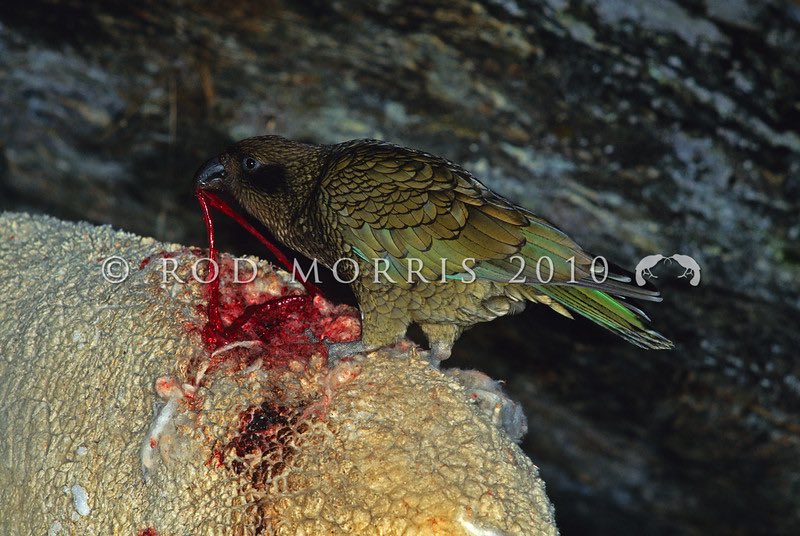
New Zealand has its own potential case of rewilding that should happen but probably never will: Reintroducing Kea to the North Island. The infamous sheep-killing habit that some Kea develop will almost certainly get in the way of this reintroduction being seriously considered.
 
New Zealand has its own potential case of rewilding that should happen but probably never will: Reintroducing Kea to the North Island. The infamous sheep-killing habit that some Kea develop will almost certainly get in the way of this reintroduction being seriously considered.

I thought that the kea sheep killing / mutilation was just a myth.
 
I thought that the kea sheep killing / mutilation was just a myth.
Nope, it’s real! There are photos of them attacking sheep:
C7qEieaVwAEesE7.jpg

tumblr_inline_okur8kFRTA1slunu2_1280.jpg
 
Nope, it’s real! There are photos of them attacking sheep:
C7qEieaVwAEesE7.jpg

tumblr_inline_okur8kFRTA1slunu2_1280.jpg

Ok , very interesting, thank you for sharing!

Personally it just makes me think that the kea is even more awesome but then I am obviously not an Antipodean sheep farmer.

I definitely agree with Cassidy that this habit of these birds will make the prospect of reintroduction to North Island unlikely.
 
Ok , very interesting, thank you for sharing!

Personally it just makes me think that the kea is even more awesome but then I am obviously not an Antipodean sheep farmer.

I definitely agree with Cassidy that this habit of these birds will make the prospect of reintroduction to North Island unlikely.
Come on do not overexaggerate their predation impact ever (it is another wolf in sheep's clothing literally). I am not saying one should not engage the farming community before initiating any reintrroduction of keas to North Islands, I just feel that it is big industry coupled with legend to make the kea into the dragon it is not. By all accounts, it is a small parrot bird versus a small medium size mammal and a big global industry within New Zealand. Please give the kea its break (it is almost as "sexy" as the kakapo).

I am sure none of us need reminding that the major part of New Zealand fauna has been impacted specifically by humankind and development interests over the last few centuries and given the plight a good number remain on the tenuous to endangered list we have as yet some work to do.

BTW: I am not saying nothing is being done, I am more than applauded the Kiwi / New Zealand staffers working in conservation and more generally in administration and society are doing a far better job at conserving native species and biodiversity conservation than almost any other nation or country on this globe. I would say the country is leading by example and has done much for small islands' effective conservation work.
 
Come on do not overexaggerate their predation impact ever (it is another wolf in sheep's clothing literally). I am not saying one should not engage the farming community before initiating any reintrroduction of keas to North Islands, I just feel that it is big industry coupled with legend to make the kea into the dragon it is not. By all accounts, it is a small parrot bird versus a small medium size mammal and a big global industry within New Zealand. Please give the kea its break (it is almost as "sexy" as the kakapo).

I am sure none of us need reminding that the major part of New Zealand fauna has been impacted specifically by humankind and development interests over the last few centuries and given the plight a good number remain on the tenuous to endangered list we have as yet some work to do.

BTW: I am not saying nothing is being done, I am more than applauded the Kiwi / New Zealand staffers working in conservation and more generally in administration and society are doing a far better job at conserving native species and biodiversity conservation than almost any other nation or country on this globe. I would say the country is leading by example and has done much for small islands' effective conservation work.

Yes, I agree that just like with most human-wildlife conflict these sorts of behaviours of the kea are probably not as common as they are believed to be in New Zealand and are probably widely exagerated.

However, I don't think that the size of the sheep farming industry in New Zealand or the amount of livestock really makes a difference here. Quite the opposite actually as unfortunately any owner of livestock will rarely have a forgiving attitude to even the loss of a single animal even if it is an economically negligible loss.

What I meant with my comment was that I find this habit of keas both fascinating and honestly a bit of poetic justice with an indigenous / native bird species feeding in an ingenious way from one of the worst introduced species in NZ (and the one that no one is willing to cull for obvious reasons).

Nevertheless, I am not a sheep farmer in NZ nor am I from that country so whatever opinion I have is ultimately redundant as what matters here is whether the rural people of North Island are receptive / supportive of the idea of the reintroduction of this bird species which presumably they are not.

Totally agree with you about NZ and its conservation efforts and in fact I think they are an example and inspiration for efforts all around the world.
 
Last edited:
However, I don't think that the size of the sheep farming industry in New Zealand or the amount of livestock really makes a difference here. Quite the opposite actually as unfortunately any owner of livestock will rarely have a forgiving attitude to even the loss of a single animal even if it is an economically negligible loss.
Yes, you are absolutely right. Also, New Zealand's many conservation success stories could lead one to think otherwise, but New Zealand actually has an extremely poor record of dealing meaningful punishments to people who kill protected species, even when there is plenty of evidence to link the culprits to the victims. A Kea reintroduction attempt in the North Island could be quickly ended by a few farmers who are unswayed by conservation education and even official warnings, and the same thing could happen just as easily to any subsequent reintroduction attempts. Chances are that anything short of actual video footage of farmers illegally killing Kea would not be sufficient for meaningful prosecutions.
 
Yes, you are absolutely right. Also, New Zealand's many conservation success stories could lead one to think otherwise, but New Zealand actually has an extremely poor record of dealing meaningful punishments to people who kill protected species, even when there is plenty of evidence to link the culprits to the victims. A Kea reintroduction attempt in the North Island could be quickly ended by a few farmers who are unswayed by conservation education and even official warnings, and the same thing could happen just as easily to any subsequent reintroduction attempts. Chances are that anything short of actual video footage of farmers illegally killing Kea would not be sufficient for meaningful prosecutions.

I never knew about that and it comes as quite a suprise to me as I do admire what is done in conservation terms in NZ with native species and have always seen it as a positive example but perhaps through rose tinted glasses.

Could you give some examples where the law has fall short in punishing people who have killed protected species ?

Yes, I think sadly that is always a big problem when it comes to protecting species which prey on livestock.

Preemptive measures like having financial compensation schemes for farmers affected can go at least some of the way to reducing conflict from escalating but it is often insufficient to prevent widespread persecution.
 
Last edited:
Back
Top