ZooChat Big Year 2021

I saw the vulture this afternoon while at school, and two rabbits this evening while taking my dog outside.


Mammals:

5. Eastern Cottontail


Birds:

18. Turkey Vulture
The vultures are migrating north, I saw a wake of vultures this evening as well
 
At Moonlit

Invertebrates
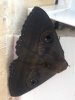
50. Southern moon moth Dasypodia selenophora (New family)
granny moth.jpg
 

Attachments

  • granny moth.jpg
    granny moth.jpg
    46.4 KB · Views: 2
Finally a new update!

76. Mourning Dove (Zenaida macroura)

4-76-4-2-0-8

Despite today's weather being cold and stormy I braved it for a little while after spotting a Say's Phoebe out my front window. Proved worth it with two more additions for the year, besides hunting Red-shouldered Hawks and large numbers of sparrows. The current cold front has stalled spring migrants for now, as well as the insects.

Birds:

77. Say's Phoebe (Sayornis saya)
78. Lincoln's Sparrow (Melospiza lincolnii)
79. Wood Duck (Aix sponsa)

Invertebrates:

9. Long-bodied Cellar Spider (Pholcus phalangioides)

4-79-4-2-0-9
 
The Belgian wintering wallcreeper really really dislikes me. Fifth trip for it this winter (luckily not all involving the long drive from home to there), still nothing! :p

BIRDS:
150) Black redstart, Phoenicurus ochruros
151) White wagtail, Motacilla alba
152) Black woodpecker, Dryocopus martius

(+8 heard only)
It's been a fairly slow month since my last post, but I did twitch two vagrants (hooded crow and baikal teal) and two regional rarities (red-necked grebe and penduline tit). Especially the Baikal teal was exciting - the one I saw last year ended up staying for a few months but nobody ever photographed the legs and wings well enough so it's doubtful that that one will get accepted. This one's looking really good though - very shy (a lot shier than surrounding ducks), good photographs of the wings (intact, some moult but symmetrically which is good), and no bands or signs of cage damage on the naked parts... And a female, which is nice because I can't even recall seeing females in captivity, so it felt even more like a lifer.

Been a while since my last post, because I've been procrastinating working through the mess that is listkeeping with different rules in different places! Would be a lot simpler if we could just count heard-onlies, like most birders do... :p

BIRDS:
153) Common sandpiper, Actitis hypoleucos
154) Hooded crow, Corvus cornix
155) Coal tit, Periparus ater
156) Red-necked grebe, Podiceps grisegena
157) Water rail, Rallus aquaticus
158) Baikal teal, Sibirionetta formosa
159) European crested tit, Lophophanes cristatus

(+8 heard only)

Heard only:
0) Eurasian penduline tit, Remiz pendulinus
0) Bluethroat, Luscinia svecica
 
Last edited:
Would be a lot simpler if we could just count heard-onlies, like most birders do... :p

Then again, just because everyone cheats doesn't mean we should too, right? ;)

Would be good for my list though! I lost track of how many water rails I've heard so far this year without seeing any and I suspect the same will happen for common quail.
 
Then again, just because everyone cheats doesn't mean we should too, right? ;)

Would be good for my list though! I lost track of how many water rails I've heard so far this year without seeing any and I suspect the same will happen for common quail.
You say cheating, I say birding efficiently. :p

Thanks for mentioning water rail by the way, that's actually one I did see recently after hearing a bunch, but forgot to count now... Exhibit A, haha!
 
If I could count heard-only species then there would be no fun or challenge in adding rails to your list. Last year I heard a Yellow Rail for the first time and I am determined to actually see one this year - wish me luck!
 
If I could count heard-only species then there would be no fun or challenge in adding rails to your list.
Does there have to be a challenge? There's a lot of species that are much easier to see than rails are to hear, should we discount all of those? The other way around, there's also plenty of birds that are easy to see but very hard to hear... :p

Good luck on the Yellow rail though, I've heard those are expecially hard to see!

The way I see it, counting heard-only means less disruption of the birds (because you can be happy with a call, instead of being inclined to flush or draw out the bird using pish/playback), more efficient use of your own time, and perhaps most importantly it teaches people to bird by ear, which is an invaluable lesson and step in everyone's birding career. Also, in my opinion sound observations can be just as fun (or even more fun!) than visual observations... But maybe that makes me crazy!

Ah well, I don't feel like discussing it further. :p Just putting my opinion out there, because I don't know if it's actually something we've ever questioned or talked about in these threads - would be interested in others' input, but I also don't mind the current ruleset. :)
 
perhaps most importantly it teaches people to bird by ear, which is an invaluable lesson and step in everyone's birding career

But, on the other hand, only including actual sightings means people who can't bird by ear don't feel excluded from the thread - and for most species it is a much more advanced skill (I'm slightly biased as I'm incredibly poor at it - my audio memory just doesn't work well with abstract sounds unless they are very obvious!).

This discussion does come up about once a year in these threads and the general consensus has always been that most prefer just to list sightings - though people (even myself :D ) of course often note 'heard' species as they go. For humans in general vision is usually the sense we are most consciously using so it just feels natural that that is the default requirement I think.

I suppose an interesting question would arise if there were a blind or partially-sighted member wanting to take part via sound.

That said, I share your concerns about disturbance, and would hope people would take the 'sit and wait quietly for the bird to show itself voluntarily' approach rather than playback or too intrusive flushing (most times you see a flushed bird it's an unintentional one as you walk down the path, of course!). A stakeout from a comfortable distance of a calm bird is far more rewarding than a brief sight of a bird making a bee-line out of there because it got flushed in any case. I tend to think that the line from birding into simply listing for listing's stake is crossed when you're happy to through choice flush something just to see it fly quickly away and probably see nothing really of the bird other than a blur rather than wait, and maybe see it or not, but see it much better if you do*.


*As an aside, I do a lot of birding with my dad, who is a butterfly and beetle man by first preference, a world where tramping undergrowth around causing things to fly up is very much A Thing - and where the animals in question will just fly a metre or two and land again as if nothing happened. I've often had to almost physically hold him back from barging straight in to a cluster of bushes a bird is in because that's where his instinct goes..! Talk about culture wars...
 
Last edited:
But, on the other hand, only including actual sightings means people who can't bird by ear don't feel excluded from the thread
Fair, but birding by ear can also make things more inclusive as well... You already mention blind people, but also consider people that can't afford binoculars and/or cameras - I'd have no clue how to ever visually identify reed warblers or pipits if not for optics (because they're never really close enough), but hearing them and identifying them that way is technically possible for everyone with an internet connection and the willingness to learn...

I like the idea behind the exclusivity argument apart from that, but at the same time throughout the years these threads have kind of shown the exact opposite of that message - many people seeing great rarities and going to distant international birding destinations (something I'm definitely very guilty of!) doesn't create the most relatable or approachable view of birding to begin with, and I doubt those 5 or 10 extra birds we'd get a year by hearing them would really effect that in a significant way...

Yes.

;) :p

~Thylo
Oh that was a trick question, I was already crazy well before that. :p
 
Haha wet season mate - hard to get around and birds are dispersed far and wide. Had a couple fleeting glimpses of possible juv Gouldians flying past but not enough to be happy with it. They apparently start to show up here in good numbers around the start of April. You'll notice also no Torresian Crows yet...

BIRDS
279 - Red-backed Kingfisher (Todiramphus pyrrhopygius)
280 - White-winged Triller (Lalage tricolor)

REPTILES
16 - Children's Python (Antaresia childrensi)
17 - Long-nosed Water Dragon (Gowidon longirostris)
18 - Merten's Water Monitor (Varanus mertensi)

AMPHIBIANS
9 - Roth's Tree Frog (Litoria rothii)
I was one off on my numbers because I accidentally counted ringneck parrot twice :p Now on 287 birds + 3 heard only.

BIRDS
280 - Olive-backed Oriole (Oriolus sagittatus)
281 - Pacific Koel (Eudynamys orientalis)
282 - Bush Stone-Curlew (Burhinus grallarius)
283 - Torresian Crow (Corvus orru)
284 - Brown Quail (Coturnix ypsilophora)
285 - Pacific Swift (Apus pacificus)
286 - Gouldian Finch (Erythrura gouldiae)
287 - Bar-breasted Honeyeater (Ramsayornis fasciatus)


MAMMALS
21 - Dingo (Canis lupus)

REPTILES
19 - Moon Snake (Furina ornata)
20 - Brown Tree Snake (Boiga irregularis)
21 - Olive Python (Liasis olivaceus)
22 - Mitchell's Water Monitor (Varanus mitchelli)

AMPHIBIANS
10 - Watjulum Frog (Litoria watjulumensi)
11 - Desert Tree Frog (Litoria rubella)
12 - Long-footed Frog (Cyclorana longipes)
 
At Moonlit

Invertebrates
51. Inchman ant Muyrmecia forficata
 
Back
Top