They were also kept in Rio de Janeiro (a pair was kept in the 1950s) and São Paulo (possibly only a male which was kept there in the 1990s).These were once in Sorocaba I believe but now no longer.
They were also kept in Rio de Janeiro (a pair was kept in the 1950s) and São Paulo (possibly only a male which was kept there in the 1990s).These were once in Sorocaba I believe but now no longer.

They were also kept in Rio de Janeiro (a pair was kept in the 1950s) and São Paulo (possibly only a male which was kept there in the 1990s).

Curitiba probably no longer keeps them, but I'm not sure... I wanna visit the major zoos in the south as soon as I can. Much to see in those, as I would like to know much more about them. (specially Sapucaia, wich is in a complicated situation).Next on the list is the nilgai, whose status in the country is unknown. There is a chance we have some being kept in Curitiba and Santa Inês (Gilrassic Park), but I'm not sure if they're still there.
CITES has no register of nilgai coming to Brazil... I also have no idea how they came to our zoos...I wonder where the Sorocaba nilgai originally came from
CITES has no register of nilgai coming to Brazil... I also have no idea how they came to our zoos...

I bet they came before CITES year range (before 1975) and bred a few times since then. If there's any nilgai alive in the country nowadays, it's either an offspring of some of them who probably passed away, or it's a non registred importation...Very odd
Many shipments of animals coming to our country aren't registered on CITES, so I agree with your hypothesis.I bet they came before CITES year range (before 1975) and bred a few times since then. If there's any nilgai alive in the country nowadays, it's either an offspring of some of them who probably passed away, or it's a non registred importation...
Indeed, I've already realized that some imports that I know that happened haven't been registred, so yeah, that's true...Many shipments of animals coming to our country aren't registered on CITES, so I agree with your hypothesis.

The CITES Trade Database only covers species which are included in the CITES Appendices - if the species isn't protected by CITES then international movements won't be recorded on the database because the species doesn't need CITES documentation.CITES has no register of nilgai coming to Brazil... I also have no idea how they came to our zoos...
Oh yes, I admit I didn't know about all that. Thanks for the explanation! Many other cases of animals I couldn't find there must be due to the same motive than...The CITES Trade Database only covers species which are included in the CITES Appendices - if the species isn't protected by CITES then international movements won't be recorded on the database because the species doesn't need CITES documentation.
In the case of the Nilgai, it is only Appendix III and it was only added to the Appendix in 2014, so no country in the database will be recorded as importing or exporting the species before 2015.
It turns out that there is a female Guinea baboon at the Bauru zoo; she has lived there for over 32 years. Therefore, they're out of the list.Other than the geladas previously mentioned (kept in Piracicaba and Belo Horizonte), I'd like to point out the southern pig-tailed macaques and Guinea baboons. The macaques have been kept at a fair amount of institutions: the Rio de Janeiro zoo, the now closed Niterói zoo (the macaques were moved to Rio de Janeiro after the zoo's closure, in 2011), the Piracicaba zoo and the Complexo Ambiental Cyro Gevaerd (Balneário Camboriú). The Guinea baboons, however, were probably only kept in Rio de Janeiro and Piracicaba (if they have been kept in the country at all).
BH also kept a yak in the 60's. It was taxidermized and is nowadays at the PUC Minas museum. Some sources say he died due to an eletric discharge formed by a lighting that fell in the zoo at the time, but some people say this fact is just an urban legend.Next on our list is the domestic yak; this one has probably been kept at the Vila Isabel zoo, which offered an individual to the National Museum.
I knew there was a yak at the PUC Minas museum but wasn't sure about where it came from. Is that Joca behind you in the picture?BH also kept a yak in the 60's. It was taxidermized and is nowadays at the PUC Minas museum. Some sources say he died due to an eletric discharge formed by a lighting that fell in the zoo at the time, but some people say this fact is just an urban legend.
Yes, PUC Minas museum taxidermies are almost entirely from animals that once lived at BH zoo, and I was told about the history of this yak in one of my first visits to the place. According to the guide, this yak used to be kept in one of the exhibits of the hoofstock corridor when he lived in the zoo.I knew there was a yak at the PUC Minas museum but wasn't sure about where it came from. Is that Joca behind you in the picture?
The elephant is Margarete, isn't it? Also, what about the antelope? Were these animals kept at the zoo?Yes, PUC Minas museum taxidermies are almost entirely from animals that once lived at BH zoo, and I was told about the history of this yak in one of my first visits to the place. According to the guide, this yak used to be kept in one of the exhibits of the hoofstock corridor when he lived in the zoo.
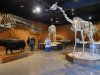
And yes, you guessed it right, that one is "Joca" behind me, and the giraffe beside me is "Cupim", the first giraffe that ever lived at BH zoo. Behind "Cupim", you can see another elephant skeleton, that belongs to the only asian elephant to ever live at the zoo.
Yes, exactly, it's "Margarete". The museum's crew told me these particular pieces (antelope and baboon mounts, as well as the zebra taxidermy) are extremely old, and they are not sure about the origin, but they say the highest probability is that they came from the zoo, but from the times that it was not yet located in the Pampulha lake neighborhood.The elephant is Margarete, isn't it? Also, what about the antelope? Were these animals kept at the zoo?
So there's a probability we've had bongos, blesbok, and blue wildebeest in BH? Good to know.Yes, exactly, it's "Margarete". The museum's crew told me these particular pieces (antelope and baboon mounts, as well as the zebra taxidermy) are extremely old, and they are not sure about the origin, but they say the highest probability is that they came from the zoo, but from the times that it was not yet located in the Pampulha lake neighborhood.
There is at least a single bongo skeleton at the USP's Museum of Veterinary Anatomy, so I think we've had those at the São Paulo zoo as well.So there's a probability we've had bongos, blesbok, and blue wildebeest in BH? Good to know.