Auckland Zoo Auckland Zoo News 2021

Iniko wasn’t his own mother. :p

Iniko isn’t a boy. :p

Iniko is a boy’s name however (I looked up the meaning); so I went back to check I hadn’t recorded her as 1.0, but somehow missed the parentage error :oops::

0.1 Iniko (2020) Yafeu x Mali :cool:
Oh I got you. Afar and Wasaro are rather old. Though they could easily live at least another five to ten years.

Was the breeding of Yafeu with his sister, Mali intentional?

Yep, the natural progression is for Afar and Wasaro to live out their retirement years on the periphery - similar to how adolescent/young adult males do.

Nope, it wasn’t intentional (Mali was supposed to be on contraception). She began last year in Wasaro’s harem, but it wouldn’t have been ideal for him to have sired her infant either as he’s her sire.

In an ideal world, Auckland would have had the opportunity to export their four males and bring in a couple of unrelated males to breed with the females. Sadly males are hard to place, as we saw with the Wellington troop.
 
Auckland zoo has announced the death of their elderly male lions Zulu and Malik.

From their Facebook page

This morning we made the extremely tough but kindest call to euthanise our elderly male lions Zulu and Malik – a decision based on their age-related health.
Closely bonded, these half-brothers were born at Auckland Zoo in 2004 and have spent their entire lives together, with us and at Wellington Zoo. Average life expectancy for lions in zoos is 17 years, and over the past year, both lions had been intensively monitored by our animal care and vet teams.
“Degenerative diseases of the bones and joints are very common in elderly big cats…we first noticed Zulu experiencing stiffness and reduced mobility in his hind legs last November and began treating him with anti-inflammatory and pain relief medication, then in December carried out a full health check”, says our Head of Veterinary Services, Dr James Chatterton.
“Recently, Malik also began showing signs of this disease and we started him on medications. While at an earlier stage of this degenerative disease - that will only worsen, having spent his entire life with half-brother Zulu, with whom he’s so closely bonded, being left on his own would be unacceptably stressful and compromise his welfare.
“For their own survival, big cats are hard-wired to disguise any injury or pain, so once they start showing abnormal signs, we know there is significant disease present. As professionals who care deeply for our animal patients, being able to make the call to euthanase at the right time is very important, as it enables us to prevent any untreatable pain and ensure animals like Zulu and Malik can pass away peacefully and with dignity.”
Read more – www.aucklandzoo.co.nz/news/zoo-makes-kindest-call-for-elderly-lions. Help us to celebrate the long full lives of Zulu and Malik by sharing your love for them in the comments below.
 
Sumatran Tigers will officially make a return to Auckland this summer. Auckland Zoo to welcome back tigers this summer after two-year absence

When I asked on my last visit, I was told a young breeding pair will be arriving this year “Probably from the USA.”

Their exhibit is coming along nicely and will be amazing when completed.

 
Auckland's elephants will be moving to Australia. Anjalee will be moving to Taronga Western Plains Zoo to join the breeding herd and Burma with join the Sumatran herd at Australia Zoo here in Queensland:

Elephant update: We’ve confirmed excellent new homes for our Asian elephants – Anjalee and Burma, who’ll be moving later this year.
As many of you will know, last year we announced our difficult decision to transition our elephant girls to new homes, when it became clear that our ambition to build a sustainable family herd for them in Auckland could no longer be realised.
Since then, we’ve been working hard with our Australian colleagues to ensure the different needs of both our elephants are met. We’re pleased to share that our elephant specialists and vets have chosen incredible homes for Anjalee and Burma based on their individual needs. Anjalee will join the breeding herd at Taronga Western Plains Zoo, and Burma will head to Australia Zoo to join their all-female herd.
Some people may wonder why Anjalee and Burma are not going to live together. Our elephant team leader Andrew Coers explains that, although they have a friendship and enjoy each other’s company, they don’t share a maternal bond like a mother and daughter would, and often like their own space as well. Anjalee was born at Pinnawala Elephant Orphanage in Sri Lanka and because of her upbringing she is very independent. We know this will put her in great stead to join the herd at Taronga Western Plains Zoo where she will be integrated into a family herd of two cows and a calf, a breeding bull and two young bulls – giving her the very best opportunity to breed, which is important to her long-term reproductive health and wellbeing.
Burma has had a very different upbringing and has lived at Auckland Zoo for 30 years. Our elephant team has always played an important role in her health and wellbeing. The programme at Australia Zoo is very similar to ours, and some of the staff there have worked with Burma in the past, so that familiarity will greatly benefit her. She’ll join the herd of four females at Australia Zoo, where she will have the opportunity to play her natural role of ‘aunty’ to the herd’s younger females.
Learn more about this decision here - http://www.aucklandzoo.co.nz/.../auckland-zoo-confirms...

=AZW43RCJGSUlO8hNUPGo85oGjJdqrlnWnW693bbRJ6uFOioMvZVSjmmqIcZ7or5J8zCy-8B7CCeTXUZ891f2hIHsip2jognOO8E8MUfaNvPgqLNuZognmAjVin2lLmbYRv2BNEMQIvxrPbTo8Wy_NqEGWL2xFXdKKY9RK6NnPKs1qL_Zv2tmOl6BtXBNGfKvf6Q&__tn__=*bH-R']=AZW43RCJGSUlO8hNUPGo85oGjJdqrlnWnW693bbRJ6uFOioMvZVSjmmqIcZ7or5J8zCy-8B7CCeTXUZ891f2hIHsip2jognOO8E8MUfaNvPgqLNuZognmAjVin2lLmbYRv2BNEMQIvxrPbTo8Wy_NqEGWL2xFXdKKY9RK6NnPKs1qL_Zv2tmOl6BtXBNGfKvf6Q&__tn__=*bH-R']


=AZW43RCJGSUlO8hNUPGo85oGjJdqrlnWnW693bbRJ6uFOioMvZVSjmmqIcZ7or5J8zCy-8B7CCeTXUZ891f2hIHsip2jognOO8E8MUfaNvPgqLNuZognmAjVin2lLmbYRv2BNEMQIvxrPbTo8Wy_NqEGWL2xFXdKKY9RK6NnPKs1qL_Zv2tmOl6BtXBNGfKvf6Q&__tn__=*bH-R']=AZW43RCJGSUlO8hNUPGo85oGjJdqrlnWnW693bbRJ6uFOioMvZVSjmmqIcZ7or5J8zCy-8B7CCeTXUZ891f2hIHsip2jognOO8E8MUfaNvPgqLNuZognmAjVin2lLmbYRv2BNEMQIvxrPbTo8Wy_NqEGWL2xFXdKKY9RK6NnPKs1qL_Zv2tmOl6BtXBNGfKvf6Q&__tn__=*bH-R']


=AZW43RCJGSUlO8hNUPGo85oGjJdqrlnWnW693bbRJ6uFOioMvZVSjmmqIcZ7or5J8zCy-8B7CCeTXUZ891f2hIHsip2jognOO8E8MUfaNvPgqLNuZognmAjVin2lLmbYRv2BNEMQIvxrPbTo8Wy_NqEGWL2xFXdKKY9RK6NnPKs1qL_Zv2tmOl6BtXBNGfKvf6Q&__tn__=*bH-R']=AZW43RCJGSUlO8hNUPGo85oGjJdqrlnWnW693bbRJ6uFOioMvZVSjmmqIcZ7or5J8zCy-8B7CCeTXUZ891f2hIHsip2jognOO8E8MUfaNvPgqLNuZognmAjVin2lLmbYRv2BNEMQIvxrPbTo8Wy_NqEGWL2xFXdKKY9RK6NnPKs1qL_Zv2tmOl6BtXBNGfKvf6Q&__tn__=*bH-R']


=AZW43RCJGSUlO8hNUPGo85oGjJdqrlnWnW693bbRJ6uFOioMvZVSjmmqIcZ7or5J8zCy-8B7CCeTXUZ891f2hIHsip2jognOO8E8MUfaNvPgqLNuZognmAjVin2lLmbYRv2BNEMQIvxrPbTo8Wy_NqEGWL2xFXdKKY9RK6NnPKs1qL_Zv2tmOl6BtXBNGfKvf6Q&__tn__=*bH-R']=AZW43RCJGSUlO8hNUPGo85oGjJdqrlnWnW693bbRJ6uFOioMvZVSjmmqIcZ7or5J8zCy-8B7CCeTXUZ891f2hIHsip2jognOO8E8MUfaNvPgqLNuZognmAjVin2lLmbYRv2BNEMQIvxrPbTo8Wy_NqEGWL2xFXdKKY9RK6NnPKs1qL_Zv2tmOl6BtXBNGfKvf6Q&__tn__=*bH-R']


Like


Comment

Share
 
It has been announced on their Instagram, that Anjalee & Burma will be rhomed to Australia. Burma is moving to Australia Zoo to live alongside 4 sumatran Elephants & Anjalee is going to join the breeding herd at Taronga Western Plain's Zoo.
They will be missed, but to satisfy their social needs & to keep them mentally healthy. It's for their own good as Elephants prefer to live in large family herds.
 
Auckland's elephants will be moving to Australia. Anjalee will be moving to Taronga Western Plains Zoo to join the breeding herd and Burma with join the Sumatran herd at Australia Zoo here in Queensland:
A wise move I believe. It will be interesting to see what replaces the now elephant exhibit?
 
@Zorro I believe it will be replaced by Common Or Nile Hippopotamus, as Auckland Zoo is working to reaquire them & the enclosure could possibly house a school of African Cichlids.
Also I would like it if there was a large indoor vivarium, housing a few nile crocodiles next to it, but it's probably not likely to happen.
Having Hippos return to Auckland zoo would be wonderful but are you sure they want them again? :)
 
@Zorro I believe it will be replaced by Common Or Nile Hippopotamus, as Auckland Zoo is working to reaquire them & the enclosure could possibly house a school of African Cichlids.
Also I would like it if there was a large indoor vivarium, housing a few nile crocodiles next to it, but it's probably not likely to happen.

There has been talks out Hippos returning, and I would personally love to see it happen; but, with the difficult import restrictions, I find this highly unlikely.

I think it’s more likely the space will be used for the construction of a new Flamingo Walkthrough aviary. The aviary is part of the zoo’s master plan, and large space (like the Elephant enclosure) is needed for it.
 
A wise move I believe. It will be interesting to see what replaces the now elephant exhibit?

@Zorro I believe it will be replaced by Common Or Nile Hippopotamus, as Auckland Zoo is working to reaquire them & the enclosure could possibly house a school of African Cichlids.
Also I would like it if there was a large indoor vivarium, housing a few nile crocodiles next to it, but it's probably not likely to happen.

There has been talks out Hippos returning, and I would personally love to see it happen; but, with the difficult import restrictions, I find this highly unlikely.

I think it’s more likely the space will be used for the construction of a new Flamingo Walkthrough aviary. The aviary is part of the zoo’s master plan, and large space (like the Elephant enclosure) is needed for it.

The ultimate would be for them to redevelop the elephant exhibit (with the option of expanding into Western Springs) into an Okavango Delta themed sub precinct, accomodating Common hippopotamus and the planned Greater flamingo aviary.

There were plans to build the flamingo aviary before breeding kicked off in 2014, so I’d imagine it’s even more of a priority now they hold a successful breeding flock.

As much as we all appreciate the flamingos, the average zoo visitor will have high expectations for whatever’s scheduled to replace the elephants and it’d probably take the combination of the flamingos AND the hippos to cut it engagement/PR wise.
 
A first for Auckland in eight years - a Rough Gecko (Naultinus rudis) has been born:
We’ve got exciting news for New Zealand reptile lovers! This is the first rough gecko (Naultinus rudis) neonate to be born at Auckland Zoo in eight years – an incredible win for our expert ectotherm team. Under New Zealand’s threat classification system, the species is listed as Nationally Vulnerable and data on these geckos is quite poor. As with most of our native fauna, the rough gecko is under threat from habitat loss and invasive introduced predators and keeper Georgia says “sadly, they can be an easy meal for rodents”. Despite their ‘rough’ name, their scales are actually quite soft! Their beautiful colours – males are olive green with white spots and females have shades of soft green spots - help to keep them camouflaged as they evolved with birds as their only natural predators. It’s these unique scale colourations that our ectotherm team use to identify the rough geckos in our care. Native to the hills above Kaikoura, our keepers mimic their natural environment and climate, and in the winter months they live in a dedicated back of house area with climate controls to replicate the cold they are well adapted for. We hope the birth of this rough gecko will be the first of many to come. We’ll keep you posted!
 
Last edited:
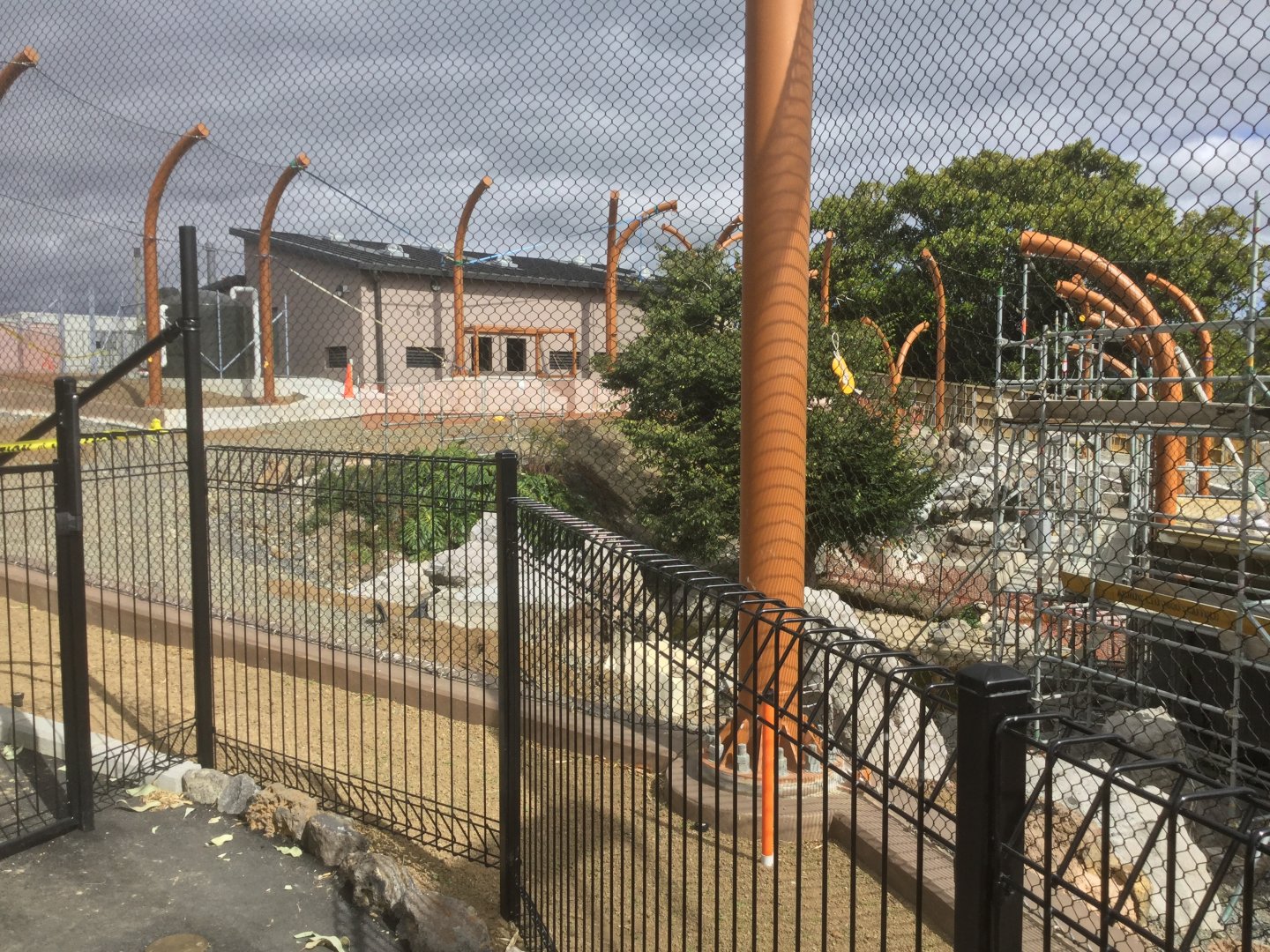
An update on the tropical dome opening in 2022 for Sunda gharials, Asian species of tortoises, turtles and fish. The roof (an ETFE covering) has now been added over the curved steel structure allowing for the dome to be a constant 28 degrees all year round. Inside the dome, a sprinkler system, pools and beach areas are now being created along with the installation of acrylic underwater viewing panels. The back-of-house area will also have a dedicated fish quarantine and breeding area. Also the zoo will have the capacity to house three Sunda gharials with the construction of a specialised training/management facility: Our swamp forest habitat is going to be hot! | Auckland Zoo

Edit: Also mentioned in the article is the construction of a boardwalk: “Linking the swamp forest habitat to the rest of our South East Asia Jungle Track is a boardwalk, now under construction as you can see from these photos, which will snake its way across the Zoo’s lake from the high canopy primate habitat. While the complex swamp forest habitat itself won’t be ready to open until a little later in 2022, visitors can look forward to being able to walk across the boardwalk over the lake to the new Sumatran tiger habitat by the end of this year!”
 
Last edited:
An update on New Zealand's last elephants moving to Australia. It has been confirmed that it's likely that they will both be leaving before the October holidays.

Full story and link: Move preparations enriching for inquisitive elephants | Auckland Zoo
Our elephant keepers are making great progress in preparing elephants Anjalee and Burma for their moves to their new homes in Australia later this year.

Anjalee and Burma will each travel in a purpose-built crate designed to be the perfect height, width, and length for their respective sizes and for their safety. You can see these in their habitat when you visit – and these July school holidays is a great time to come in, as while there’s still a lot to be worked through, they’ll likely be leaving us before the October holidays.

For the past few months, with their keepers - in whom they have incredible bonds and trust, Anjalee and Burma have been having a lot of fun exploring and familarising themselves with every aspect of these intriguing new additions in their environment.

Elephant team leader Andrew says all the training and conditioning he and his team are doing with these precious pachyderms is to enable them to feel super comfortable and secure in the crates so that these then become their safe havens when they do travel.

“It’s the trust we keepers have with the elephants that enables us to do this training. What’s been great is that from the get-go they’ve both been super inquisitive and eager to investigate their crates - even more than we expected. As visitors will see, we’ve fenced off the area where the crates are. This is just to make sure the elephants don’t have too much fun and potentially push them over when we’re not around. We’re finding that when the girls do then have access to the crates, they’re really keen to investigate them.


“Nothing is rushed, and it’s all based on us taking cues from the girls to when and what our next step will be. We provide them with security, support, and comfort through the relationship we each have with them, by our body positioning, and giving praise and food rewards. These all help with Anjalee and Burma being willing to give this new challenge a go,” says Andrew.

All of the Zoo’s Elephant team are involved in this training, and when it’s time for the elephants to move, will divide into two teams to share the roles of travelling with each elephant to their respective new homes, and staying on with them to fully settle them in.

If you are able to visit, as well as attending the 11:15am (daily) elephant encounter, you may also get to see Andrew and the team in action as they continue to familiarise Anjalee and Burma with their transport crates

We’ll continue to share updates on the elephants’ preparations and upcoming moves, so be sure to stay tuned.
 
And the news we’ve all been waiting for...

What‘s replacing the elephants?

According to replies to comments on Auckland Zoo’s social media, the area is planned to be redeveloped as an exhibit for Southern white rhinoceros.

I have to say, I’m underwhelmed. Since the zoo already has this species (and have done since 1980), you could arguably say that NOTHING is replacing the elephants. I was anticipating a world class Greater flamingo aviary; I was dreaming (with dreaming being the operative word) of Common hippopotami chilling in a revamped Hippo River; or an African rainforest featuring Pygmy hippopotamus, Mandrill and Western lowland gorilla.

It will be interesting to see what plans Auckland Zoo have for the current rhinoceros exhibit once they depart. Presumably the nyala will accompany them to their new exhibit, vacating the space that was merged with the old hippo exhibit a few years ago. There’s the opportunity to redevelop it into an impressive walk through flamingo aviary (in close proximity to the existing lovebird aviary); but my prediction is a slight expansion of the main savannah (giraffes, zebra etc) into the upper half of the exhibit; with the lower half (including the waterhole/old hippo pool) redeveloped for an average sized open air flamingo exhibit - an improvement on their current accomodation that they’ve now outgrown with the recent breeding success of the flock.
 
And the news we’ve all been waiting for...

What‘s replacing the elephants?

According to replies to comments on Auckland Zoo’s social media, the area is planned to be redeveloped as an exhibit for Southern white rhinoceros.

I have to say, I’m underwhelmed. Since the zoo already has this species (and have done since 1980), you could arguably say that NOTHING is replacing the elephants. I was anticipating a world class Greater flamingo aviary; I was dreaming (with dreaming being the operative word) of Common hippopotami chilling in a revamped Hippo River; or an African rainforest featuring Pygmy hippopotamus, Mandrill and Western lowland gorilla.

It will be interesting to see what plans Auckland Zoo have for the current rhinoceros exhibit once they depart. Presumably the nyala will accompany them to their new exhibit, vacating the space that was merged with the old hippo exhibit a few years ago. There’s the opportunity to redevelop it into an impressive walk through flamingo aviary (in close proximity to the existing lovebird aviary); but my prediction is a slight expansion of the main savannah (giraffes, zebra etc) into the upper half of the exhibit; with the lower half (including the waterhole/old hippo pool) redeveloped for an average sized open air flamingo exhibit - an improvement on their current accomodation that they’ve now outgrown with the recent breeding success of the flock.
What. WHAT. After extending the white rhino and nyala enclosure to the former hippo area, (which arguably is more space than the entire elephant complex), they decide to move the rhinos to the former elephant area anyways? That makes... ZERO sense!
 
What. WHAT. After extending the white rhino and nyala enclosure to the former hippo area, (which arguably is more space than the entire elephant complex), they decide to move the rhinos to the former elephant area anyways? That makes... ZERO sense!
Perhaps a cheap easy simple solution for them
 
Back
Top