Fossil elephant cranium reveals key adaptations that enabled its species to thrive as grasslands spread across eastern Africa
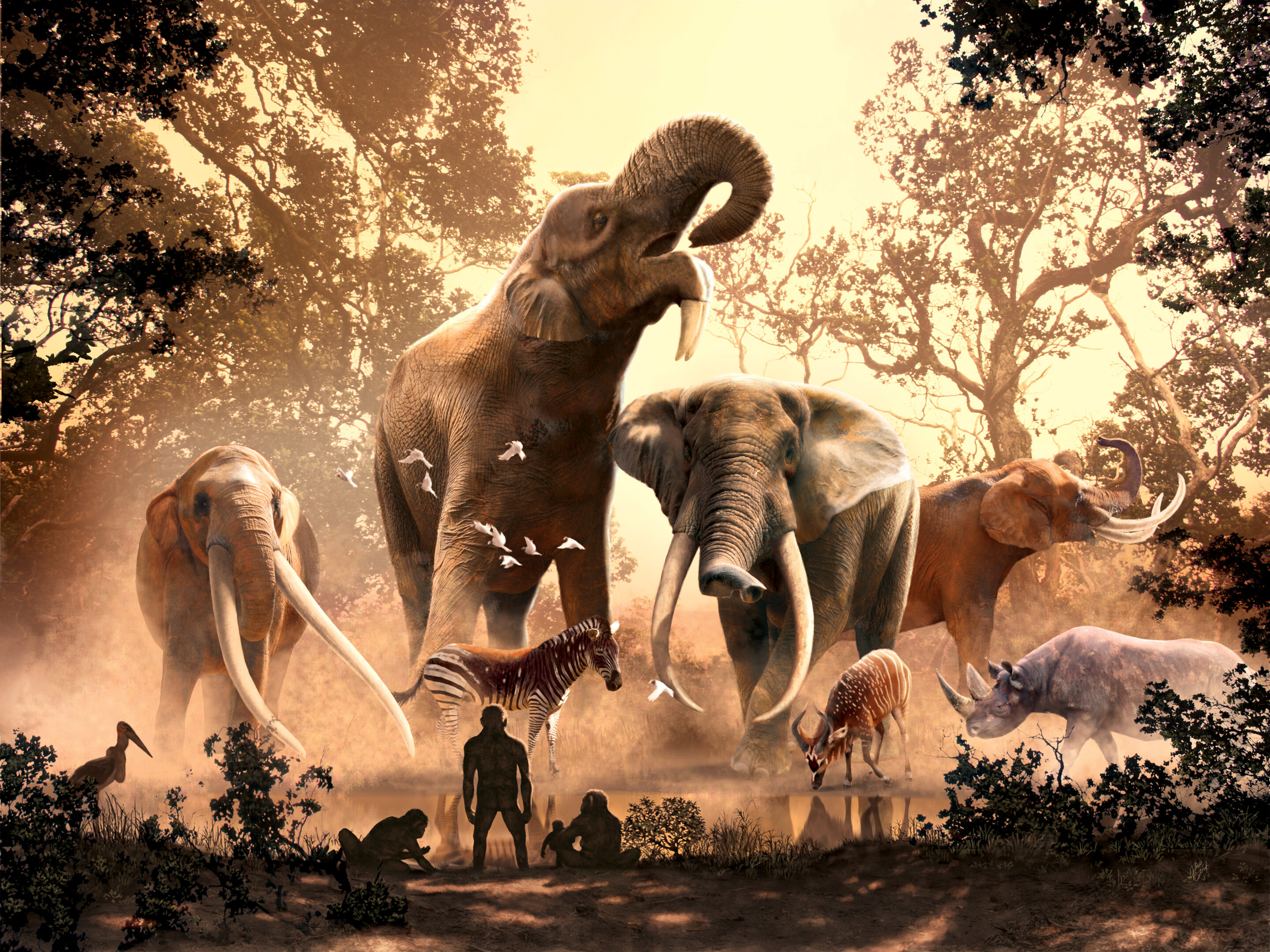
A remarkably well-preserved fossil elephant cranium from Kenya is helping scientists understand how its species became the dominant elephant in eastern Africa several million years ago, a time when a cooler, drier climate allowed grasslands to spread and when habitually bipedal human ancestors first appeared on the landscape.
Dated to 4.5 million years ago and recovered from a site on the northeast side of Lake Turkana, it is the only well-preserved elephant cranium—the portion of the skull that encloses the brain—from that time. It is about 85% intact and holds a wealth of previously unavailable anatomical detail, according to University of Michigan paleontologist William Sanders.
Known by its museum number, KNM-ER 63642, the roughly 2-ton cranium belonged to a massive adult male of the species Loxodonta adaurora, an extinct evolutionary cousin of modern African elephants but not a direct ancestor.
KNM-ER 63642 is both impressively immense and unexpectedly modern in aspect, displaying adaptations that likely gave L. adaurora an edge when competing with other large mammals for grasses, according to Sanders, lead author of a study published online Oct. 21 in the journal Palaeovertebrata. Co-authors include Meave and Louise Leakey, who led the recovery effort and who are best known for the discovery of early hominid specimens and artifacts from Lake Turkana and elsewhere.
The L. adaurora cranium is striking because it is raised and compressed from front to back, suggesting a novel alignment of chewing muscles well-suited for the efficient shearing of grasses. In addition, the animal’s molars are higher-crowned and had thicker coatings of cementum than other early elephants, making the teeth more resistant to the wear common in animals that feed on grasses close to the ground.
Fossil elephant cranium reveals key adaptations that enabled its species to thrive as grasslands spread across eastern Africa
A remarkably well-preserved fossil elephant cranium from Kenya is helping scientists understand how its species became the dominant elephant in eastern Africa several million years ago, a time when a cooler, drier climate allowed grasslands to spread and when habitually bipedal human ancestors first appeared on the landscape.
Dated to 4.5 million years ago and recovered from a site on the northeast side of Lake Turkana, it is the only well-preserved elephant cranium—the portion of the skull that encloses the brain—from that time. It is about 85% intact and holds a wealth of previously unavailable anatomical detail, according to University of Michigan paleontologist William Sanders.
Known by its museum number, KNM-ER 63642, the roughly 2-ton cranium belonged to a massive adult male of the species Loxodonta adaurora, an extinct evolutionary cousin of modern African elephants but not a direct ancestor.
KNM-ER 63642 is both impressively immense and unexpectedly modern in aspect, displaying adaptations that likely gave L. adaurora an edge when competing with other large mammals for grasses, according to Sanders, lead author of a study published online Oct. 21 in the journal Palaeovertebrata. Co-authors include Meave and Louise Leakey, who led the recovery effort and who are best known for the discovery of early hominid specimens and artifacts from Lake Turkana and elsewhere.
The L. adaurora cranium is striking because it is raised and compressed from front to back, suggesting a novel alignment of chewing muscles well-suited for the efficient shearing of grasses. In addition, the animal’s molars are higher-crowned and had thicker coatings of cementum than other early elephants, making the teeth more resistant to the wear common in animals that feed on grasses close to the ground.
Fossil elephant cranium reveals key adaptations that enabled its species to thrive as grasslands spread across eastern Africa
Last edited: