A Guidebook Library: TLD's year-long randomised walkthrough of zoo guides

Day 2 - Kano Zoological Gardens (c.1986) - Kano Zoo & Game Reserves


full


I stumbled across this little treasure (to my considerable surprise!) via Abebooks back in March 2021, being sold by an antiquarian bookstore associated with the University of London School of Oriental and African Studies, which as far as I could tell was primarily offloading books and other printed material which was being removed from the university library as outdated and/or no longer relevant. As was the case for the previous guide I discussed, I rather suspect that the seller had no idea that there was a market for an item such as this, as it only cost me a few pounds plus postage :eek:

As is visible from the cover image, this represents a guidebook for Kano Zoo in northwest Nigeria, printed (as far as I can tell from contextual evidence within the text) in either late 1986 or early 1987. Given how very "homespun" it looks, I strongly suspect it never saw a particularly large print run. Before coming across this item, I must admit that I had never even *heard* of the collection in question, as I rather suspect will be the case for the vast majority of those reading this post; there is precious little information available online about the collection, in point of fact, with mere smatterings here and there - primarily articles giving a potted history of the collection, whilst reporting on political pressure which has fallen on the zoo in recent years to relocate to another site in order to allow the residential sprawl to expand into the footprint of the current collection.

One such article, and probably the most informative overall, can be found at the following link:

Nigeria: A Vote Against Relocation of Kano Zoological Garden, Nigeria

These two passages from the opening of said article may be the most informative for those reading this post, in terms of putting the location and relevance of the collection into a wider context:

Kano is among the ancient and most historic cities in the entire African continent because of its strategic location, tradition, and commercial opportunities. Historically, it served as a transition ground between the people of the Sahara and vice versa and created a multifaceted relationship among the people of sub-Saharan Africa.

and

The Kano zoo is one of the three oldest zoos in the country, having the highest number of animal species. Moreover, it is the only zoo registered with PAAZA (Pan-African Association of Zoos and Aquaria) in Nigeria. Additionally, the zoo serves as the base of the Kano Bird Club.

This being a subject I know little to nothing about, it would be remiss of me to talk at too much length about Kano and its history, but from what I can gather the city has been a hub of cross-cultural trade and interaction in the Sahel for centuries prior to European colonisation, with substantial populations of various West African, Saharan and North African ethnic groups - as such I would very much like to learn more both about the city and its history at some point.

The zoo itself was founded in 1971 by Audo Bako, the first military governor of Kano State, who was installed in said position during the Nigerian Civil War of the 1960s and 1970s - as such, this guidebook represents a snapshot of the status-quo at the collection fifteen years later. It is laid out in a somewhat unusual format, comprising a single large sheet folded several times to form a total of 16 pages, with sections on the animal species held within the zoo (mammalian, avian and reptilian), the botanical species visible throughout the grounds, a map of the zoo, background information on the zoo and nearby nature reserves in Kano State.

There follows two example images from the guidebook, showing the (perhaps surprisingly) high-quality level of information provided on each of the species held at the collection, including discussion of the origins of certain specific individuals, and particular attention being paid to those species which have particular relevance to the culture and ecosystems of northwest Nigeria.

full


full


The back cover of the guidebook represents a rough map of the collection; I failed to scan the key to this map before the new year (as noted previously, I have prepared the images for the first three or four days of posts in advance, partially to ensure an interesting start to the thread and partially to cover reduced access to my scanner this weekend), but will add this and further images on Monday before posting the third guidebook of the thread, as on further reflection this is a collection which - given how unknown it is to the wider forum populace - merits the publication of as much information on Zoochat as possible.

full


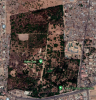
The following screenshot from Google Maps shows the collection in the present day:

upload_2022-1-2_16-50-47.png

Naturally, if anyone reading this happens to know anything further about the collection - or perchance has even visited the collection and can therefore give a more current insight into Kano Zoo - I would love to hear more! Otherwise, any other thoughts and insights would be valued.
 

Attachments

  • upload_2022-1-2_16-50-47.png
    upload_2022-1-2_16-50-47.png
    670.9 KB · Views: 75
There is a very small thread about the Kano zoo here: Kano Zoo News
Other than that there isn't a gallery created yet, and I'm not sure if anyone on zoochat has visited.
 
I'm a little late but this thread is already extremely exciting and I am looking forward to what will come over the course of the year.
 
There was no common name given other than "Kacatu" for that particular taxon, as it happens, but a locality of New Guinea was given and searching Cacatua cristata on Google suggested C. galerea as the relevant species - when checking the BOTW entry for this species, it then listed cristata as being a synonym for C. g. triton in the reference notes.
C. cristata is a junior synonym (Vieillot 1817) of Cacatua alba (original name being Psittacus albus of Muller 1766).

From the ICZN (https://www.iczn.org/assets/32eb31b32e/officialists.pdf):
albus, Psittacus, Müller, 1776, Des Ritters Carl von Linné Natursystems Supplements und Register Band , p. 76, senior subjective synonym of Cacatua cristata Vieillot, 1817, the type species of Cacatua Vieillot, 1817 (Aves, Psittaciformes).


What do the BoTW reference notes say?


Other:
Cacatua rosacea is an old synonym of Cacatua moluccensis (the Moluccan or Salmon-crested Cockatoo). Originally Psittacus rosaceus of Latham, modified to Cacatua rosacea by Vieillot. A quick look online shows the BoTW appears to be saying that is a synonym of C. sulphurea, which (if so) is also incorrect.
 
C. cristata is a junior synonym (Vieillot 1817) of Cacatua alba (original name being Psittacus albus of Muller 1766).

From the ICZN (https://www.iczn.org/assets/32eb31b32e/officialists.pdf):
albus, Psittacus, Müller, 1776, Des Ritters Carl von Linné Natursystems Supplements und Register Band , p. 76, senior subjective synonym of Cacatua cristata Vieillot, 1817, the type species of Cacatua Vieillot, 1817 (Aves, Psittaciformes).


What do the BoTW reference notes say?

Looking again, I think I've definitely misread something :P

upload_2022-1-3_6-14-11.png

Rather than giving a list of synonyms for the taxon in question it actually appears to be listing all proposed species within Cacatua - I've opened the entry for C. galerea triton, done a search for "cristata" and thus found it there.

I suspect Google picking up stray keywords, putting two and two together, and making five, is what led me to make the initial error for both Cacatua cristata and Cacatua rosacea - as noted I searched these names and followed the resulting BOTW links.

That's a handy IUCN link incidentally - thanks! I suspect I may need it in future.
 

Attachments

  • upload_2022-1-3_6-14-11.png
    upload_2022-1-3_6-14-11.png
    68.2 KB · Views: 78
As promised, I have now scanned in the remaining pages from the Kano Zoo guidebook, including the animal/botanical inventory and associated map key, discussion of various mammal, bird and reptile holdings, and information regarding nature reserves in the surrounding areas of Kano State. It will be noted that the first of the following images also serves as a general introduction to the zoo.

Mammal, reptile and plant inventory/key and introduction to Kano Zoo

full


Bird inventory/key and discussion of bird holdings at Kano Zoo

full


Further discussion of bird holdings at Kano Zoo, and discussion of nature reserves in Kano State

full


Discussion of miscellaneous mammal holdings at Kano Zoo

full


Discussion of reptile holdings at Kano Zoo, and discussion of botanic gardens/exhibits at Kano Zoo

full


---

Although I will shortly be posting the next daily guidebook discussion, I would still very much like to hear any thoughts/feedback which anyone may have on the information I have provided regarding this guidebook, and Kano Zoo as a whole. I strongly suspect that the information in this post and the preceding one - although several decades out of date - may well be the most detailed look at Kano Zoo anywhere online!
 
Although I will shortly be posting the next daily guidebook discussion, I would still very much like to hear any thoughts/feedback which anyone may have on the information I have provided regarding this guidebook, and Kano Zoo as a whole.

It certainly had a large and comprehensive regional African collection; some of the birds especially are relatively common and widespread on the continent, but not that well-represented in captivity. The real question is whether what was true decades ago is still true today...

@TeaLovingDave You can tell me if I'm getting too ahead of you here, but how many non-European guidebooks do you estimate you have in your collection? Are we going to get a lot more of these far-flung surprises like Kano or will they be once-in-a-long-while treats only?
 
As promised, I have now scanned in the remaining pages from the Kano Zoo guidebook, including the animal/botanical inventory and associated map key, discussion of various mammal, bird and reptile holdings, and information regarding nature reserves in the surrounding areas of Kano State. It will be noted that the first of the following images also serves as a general introduction to the zoo.

Mammal, reptile and plant inventory/key and introduction to Kano Zoo

full


Bird inventory/key and discussion of bird holdings at Kano Zoo

full


Further discussion of bird holdings at Kano Zoo, and discussion of nature reserves in Kano State

full


Discussion of miscellaneous mammal holdings at Kano Zoo

full


Discussion of reptile holdings at Kano Zoo, and discussion of botanic gardens/exhibits at Kano Zoo

full


---

Although I will shortly be posting the next daily guidebook discussion, I would still very much like to hear any thoughts/feedback which anyone may have on the information I have provided regarding this guidebook, and Kano Zoo as a whole. I strongly suspect that the information in this post and the preceding one - although several decades out of date - may well be the most detailed look at Kano Zoo anywhere online!
Having looked online at images taken at the zoo, it seems that the collection has dwindled from what appears in the guidebook you have shown.
 
Last edited:
@TeaLovingDave You can tell me if I'm getting too ahead of you here, but how many non-European guidebooks do you estimate you have in your collection? Are we going to get a lot more of these far-flung surprises like Kano or will they be once-in-a-long-while treats only?

This single guidebook from Nigeria is definitely the most *unusual* location in my guidebook collection, but I've definitely got a reasonable number of non-European guidebooks overall; checking my index now, I have items from the following countries outside Europe:

Australia - 18 guidebooks
Canada - 2 guidebooks
India - 1 guidebook
Japan - 1 guidebook
Nigeria - 1 guidebook
Singapore - 4 guidebooks
United States - 88 guidebooks

So there's a better than one-in-ten chance that any given post will be non-European!
 
This single guidebook from Nigeria is definitely the most *unusual* location in my guidebook collection, but I've definitely got a reasonable number of non-European guidebooks overall; checking my index now, I have items from the following countries outside Europe:

Australia - 18 guidebooks
Canada - 2 guidebooks
India - 1 guidebook
Japan - 1 guidebook
Nigeria - 1 guidebook
Singapore - 4 guidebooks
United States - 88 guidebooks

So there's a better than one-in-ten chance that any given post will be non-European!
I've never seen a single guidebook for a zoo in the US. I'm assuming these are all old? I don't think any zoos offer them nowadays.
 
I've never seen a single guidebook for a zoo in the US. I'm assuming these are all old? I don't think any zoos offer them nowadays.

My most recent guidebooks from the USA are from 2018, and were released by San Diego Zoo and San Diego Wild Animal Park respectively; I believe these two collections *have* released guidebooks in the last year, too!

Otherwise, my most recent guidebooks from the USA are from 2010 and 2011.... but I won't spoil the surprise as to whereabouts, just in case they come up in the random selection :P
 
Day 3 - Tierpark Berlin (1989) - African Elephant


full


full


First, a few key statistics per the request by @TinoPup upthread:

Page count: 112 (including index)
Photographs: 95 (24 in colour)
Illustrations/diagrams: 2 double-page images (one on bears held at the collection, one on elephants and the key differences between species)
Layout: Comprehensive walkthrough account of collection.
Map: Folded, loose within guidebook

This guidebook represents not only a highly significant point in the history of the zoological collection concerned, but also that of the city - and country - in which it is located, being the final guidebook issued at Tierpark Berlin prior to the fall of the Berlin Wall, the end of the Cold War and the resulting reunification of Germany. It is also the final guidebook written by - and released in the lifetime of - the first director of Tierpark Berlin, Heinrich Dathe, who held the post from 1954 until 1990, when the terms of the reunification agreement between East and West mandated that all public sector employees over the age of 60 would be required to retire; Dathe, at 80 years old and terminally ill with cancer, was forced to vacate the zoo and his on-site apartment, and died a mere handful of weeks later. In point of fact, had this post been uploaded three days later, it would have fallen on the anniversary of Dathe's passing.

As such, this guidebook provides a valuable look at the status quo at Tierpark Berlin in the final years of the Cold War, giving a glimpse at the houses and exhibits which were present there, the species inhabiting the collection, and overall represents a key historical document for anyone interested in zoo history as far as I am concerned; moreover, had events transpired differently this could so easily have been the final guidebook issued by the collection, as the continued survival of the collection beyond reunification was by no means certain. The fact that Tierpark Berlin was able to survive, build and rebuild, and continue growing and developing into the present day is very much due to the efforts of the recently-deceased second director of the collection, Bernhard Blaszkiewitz - but that is a story for another day. As for the story of Heinrich Dathe and his final years at Tierpark Berlin, there is probably no better English language source than The Zookeepers' War: An Incredible True Story from the Cold War (2019), a translation of the book Der Zoo der Anderen by J. W. Mohnhaupt which goes into great detail regarding the history of Zoo Berlin throughout the Second World War, the aftermath of the war and the growing tensions of the Cold War, the founding of Tierpark Berlin in East Berlin and the events of the following decades at both Berlin collections, culminating in a lengthy segment on the end of the Cold War.

full


All of the guidebooks released by Tierpark Berlin during the Cold War were extremely high-quality documents, regularly spanning more than 100 pages and being released on a regular (often annual) basis; given the high level of detail provided within, with extensive walkthrough accounts of the collection, copious photographic material and illustrations, it is perhaps little surprise that when I first obtained several Tierpark guidebooks at the Zoohistorica event at Bristol Zoo in 2013 I was immediately taken with them. My first visit to the collection several months later in April 2014 - of which I have written copiously in the past, and where I purchased a number of second-hand guidebooks - only deepened this interest in collecting guidebooks from Tierpark Berlin, particularly when I realised that they represented a comprehensive primary resource showing the development of a zoological collection under the political, geographical and economic constraints of the Eastern Bloc, and the impact that the end of the Cold War had on said collection. In other words, my growing desire to seek out and collect a complete set of Tierpark guidebooks probably owed more to my historian leanings than it did my zoo enthusiast leanings!

One of the aspects I like best about the Cold War era guidebooks from Tierpark Berlin - and one which was abandoned in subsequent editions, much to my regret - is the fact that alongside the walkthrough account of the collection, they generally contained several double-page colour or black/white illustrations showing the range of variation within a number of animal groups, scattered throughout the text at regular intervals. The following image showing drawings of the seven bear species held at the collection is fairly typical; it should, of course, be noted that many of these illustrations were carried over from edition to edition, and therefore they did not always represent the most up-to-date picture of the animal collection. However, the aesthetic and artistic merits of these images more than outweigh any such issues in my opinion!

full


Another wonderful aspect of the guidebooks issued at Tierpark Berlin during this era is most certainly the maps which were provided alongside them; these represent large posters which were inserted loosely within the guidebooks, and when removed and unfolded revealed brightly-coloured, often slightly abstract maps which (although labelled to some degree using cartoon animal images) are most certainly objects of art and appreciation first, and functional items for use finding one's way around the collection a distant second! Although their use as a map varied from design to design (with the style changing every few years) they were invariably beautiful items, and things to behold. Unfortunately, given the fact that as noted they were only inserted loosely within the guidebooks, many of my Tierpark guidebooks from this era lack the accompanying maps - either lost at some point before coming into my possession, or actively removed... possibly even now sitting in a frame on someone's wall in Friedrichsfelde, a stone's throw from the Tierpark!

However, I *do* possess the map which was provided alongside this particular guidebook..... although it is so large that, even when folded and scanned in two segments, it was fairly difficult to scan to my satisfaction :p as such, the following images partially omit the middle section of the map, and must be viewed sideways! Nonetheless, I think you will all agree with me that it is indeed a thing of beauty.

full

full


I'm pretty sure that there are questions aplenty that can be asked about this particular guidebook, given the vast array of possible avenues of discussion which I have only briefly touched upon - species held, exhibits discussed, highlights, negative aspects and so forth.

So, fire away folks!
 
Impressive collection @TeaLovingDave! Very, very, VERY dengerous thread! Tierpark Berlin guides are classic and I'm very curious to see more of them. Already have 1k natural history books and trying to be very selective. My zoo guides collection is very limited, tho and I'm afraid that you will show us some must-have stuff!

The Nigerian guide is quite curious edition, as probably any African zoo guide in English. Three species of Duikers and three Buffalo taxa! Imagine Monrovia zoo guide from the same time. Jentink's, Ogilby's, Bay, Zebra...
 
What an entertaining guide that is to The Kano Zoo,

'One vet was up to his armpits inside the constipated bowels of a very unhappy rhinoceros.'

That's not something you read every day! and the poor lion that was shot and buried 'for the man inside' (poor man too).

The opening hours (7:30 - 6:30) were also pretty impressive.
 
What an entertaining guide that is to The Kano Zoo,

'One vet was up to his armpits inside the constipated bowels of a very unhappy rhinoceros.'

That's not something you read every day! and the poor lion that was shot and buried 'for the man inside' (poor man too).

The opening hours (7:30 - 6:30) were also pretty impressive.
I wish more zoos had more opening hours like that! Until recently, Manitowoc Lincoln Park Zoo was open from 7 AM-7 PM every day.
 
The opening hours (7:30 - 6:30) were also pretty impressive.

I wish more zoos had more opening hours like that! Until recently, Manitowoc Lincoln Park Zoo was open from 7 AM-7 PM every day.

Per the Tierpark Berlin guidebook under discussion today, in 1989 the official opening hours of the collection were from 7am until sunset in the summer, and 8am until sunset in the winter - so at some points in the year you're talking up to 15 hours or thereabouts, and even in winter the opening hours would reach around 7 hours!
 
I've never seen a single guidebook for a zoo in the US. I'm assuming these are all old? I don't think any zoos offer them nowadays.

They're mostly older, I have some from USA zoos. But yeah, much less common now. US zoos tend to just let everyone look at their websites. Ripley's Aquarium of the Smokies has a true guidebook you can buy, and some places have book of a booklet/thick leaflet type thing.
 
Day 2 - Kano Zoological Gardens (c.1986) - Kano Zoo & Game Reserves


full


I stumbled across this little treasure (to my considerable surprise!) via Abebooks back in March 2021, being sold by an antiquarian bookstore associated with the University of London School of Oriental and African Studies, which as far as I could tell was primarily offloading books and other printed material which was being removed from the university library as outdated and/or no longer relevant. As was the case for the previous guide I discussed, I rather suspect that the seller had no idea that there was a market for an item such as this, as it only cost me a few pounds plus postage :eek:

As is visible from the cover image, this represents a guidebook for Kano Zoo in northwest Nigeria, printed (as far as I can tell from contextual evidence within the text) in either late 1986 or early 1987. Given how very "homespun" it looks, I strongly suspect it never saw a particularly large print run. Before coming across this item, I must admit that I had never even *heard* of the collection in question, as I rather suspect will be the case for the vast majority of those reading this post; there is precious little information available online about the collection, in point of fact, with mere smatterings here and there - primarily articles giving a potted history of the collection, whilst reporting on political pressure which has fallen on the zoo in recent years to relocate to another site in order to allow the residential sprawl to expand into the footprint of the current collection.

One such article, and probably the most informative overall, can be found at the following link:

Nigeria: A Vote Against Relocation of Kano Zoological Garden, Nigeria

These two passages from the opening of said article may be the most informative for those reading this post, in terms of putting the location and relevance of the collection into a wider context:

Kano is among the ancient and most historic cities in the entire African continent because of its strategic location, tradition, and commercial opportunities. Historically, it served as a transition ground between the people of the Sahara and vice versa and created a multifaceted relationship among the people of sub-Saharan Africa.

and

The Kano zoo is one of the three oldest zoos in the country, having the highest number of animal species. Moreover, it is the only zoo registered with PAAZA (Pan-African Association of Zoos and Aquaria) in Nigeria. Additionally, the zoo serves as the base of the Kano Bird Club.

This being a subject I know little to nothing about, it would be remiss of me to talk at too much length about Kano and its history, but from what I can gather the city has been a hub of cross-cultural trade and interaction in the Sahel for centuries prior to European colonisation, with substantial populations of various West African, Saharan and North African ethnic groups - as such I would very much like to learn more both about the city and its history at some point.

The zoo itself was founded in 1971 by Audo Bako, the first military governor of Kano State, who was installed in said position during the Nigerian Civil War of the 1960s and 1970s - as such, this guidebook represents a snapshot of the status-quo at the collection fifteen years later. It is laid out in a somewhat unusual format, comprising a single large sheet folded several times to form a total of 16 pages, with sections on the animal species held within the zoo (mammalian, avian and reptilian), the botanical species visible throughout the grounds, a map of the zoo, background information on the zoo and nearby nature reserves in Kano State.

There follows two example images from the guidebook, showing the (perhaps surprisingly) high-quality level of information provided on each of the species held at the collection, including discussion of the origins of certain specific individuals, and particular attention being paid to those species which have particular relevance to the culture and ecosystems of northwest Nigeria.

full


full


The back cover of the guidebook represents a rough map of the collection; I failed to scan the key to this map before the new year (as noted previously, I have prepared the images for the first three or four days of posts in advance, partially to ensure an interesting start to the thread and partially to cover reduced access to my scanner this weekend), but will add this and further images on Monday before posting the third guidebook of the thread, as on further reflection this is a collection which - given how unknown it is to the wider forum populace - merits the publication of as much information on Zoochat as possible.

full


The following screenshot from Google Maps shows the collection in the present day:

View attachment 524529

Naturally, if anyone reading this happens to know anything further about the collection - or perchance has even visited the collection and can therefore give a more current insight into Kano Zoo - I would love to hear more! Otherwise, any other thoughts and insights would be valued.

I could have lived without learning about that way of killing leopards, that is awful :(

This provides more info than I would have expected from a Nigerian zoo. I can't find any record in the studbook of them keeping cheetahs, which is astonishing given they're native.

The zoo is also called Audu Bako Zoo in a lot of places, and sometimes Gidan Zoo.
 
Day 3 - Tierpark Berlin (1989) - African Elephant


full


full


First, a few key statistics per the request by @TinoPup upthread:

Page count: 112 (including index)
Photographs: 95 (24 in colour)
Illustrations/diagrams: 2 double-page images (one on bears held at the collection, one on elephants and the key differences between species)
Layout: Comprehensive walkthrough account of collection.
Map: Folded, loose within guidebook

This guidebook represents not only a highly significant point in the history of the zoological collection concerned, but also that of the city - and country - in which it is located, being the final guidebook issued at Tierpark Berlin prior to the fall of the Berlin Wall, the end of the Cold War and the resulting reunification of Germany. It is also the final guidebook written by - and released in the lifetime of - the first director of Tierpark Berlin, Heinrich Dathe, who held the post from 1954 until 1990, when the terms of the reunification agreement between East and West mandated that all public sector employees over the age of 60 would be required to retire; Dathe, at 80 years old and terminally ill with cancer, was forced to vacate the zoo and his on-site apartment, and died a mere handful of weeks later. In point of fact, had this post been uploaded three days later, it would have fallen on the anniversary of Dathe's passing.

As such, this guidebook provides a valuable look at the status quo at Tierpark Berlin in the final years of the Cold War, giving a glimpse at the houses and exhibits which were present there, the species inhabiting the collection, and overall represents a key historical document for anyone interested in zoo history as far as I am concerned; moreover, had events transpired differently this could so easily have been the final guidebook issued by the collection, as the continued survival of the collection beyond reunification was by no means certain. The fact that Tierpark Berlin was able to survive, build and rebuild, and continue growing and developing into the present day is very much due to the efforts of the recently-deceased second director of the collection, Bernhard Blaszkiewitz - but that is a story for another day. As for the story of Heinrich Dathe and his final years at Tierpark Berlin, there is probably no better English language source than The Zookeepers' War: An Incredible True Story from the Cold War (2019), a translation of the book Der Zoo der Anderen by J. W. Mohnhaupt which goes into great detail regarding the history of Zoo Berlin throughout the Second World War, the aftermath of the war and the growing tensions of the Cold War, the founding of Tierpark Berlin in East Berlin and the events of the following decades at both Berlin collections, culminating in a lengthy segment on the end of the Cold War.

full


All of the guidebooks released by Tierpark Berlin during the Cold War were extremely high-quality documents, regularly spanning more than 100 pages and being released on a regular (often annual) basis; given the high level of detail provided within, with extensive walkthrough accounts of the collection, copious photographic material and illustrations, it is perhaps little surprise that when I first obtained several Tierpark guidebooks at the Zoohistorica event at Bristol Zoo in 2013 I was immediately taken with them. My first visit to the collection several months later in April 2014 - of which I have written copiously in the past, and where I purchased a number of second-hand guidebooks - only deepened this interest in collecting guidebooks from Tierpark Berlin, particularly when I realised that they represented a comprehensive primary resource showing the development of a zoological collection under the political, geographical and economic constraints of the Eastern Bloc, and the impact that the end of the Cold War had on said collection. In other words, my growing desire to seek out and collect a complete set of Tierpark guidebooks probably owed more to my historian leanings than it did my zoo enthusiast leanings!

One of the aspects I like best about the Cold War era guidebooks from Tierpark Berlin - and one which was abandoned in subsequent editions, much to my regret - is the fact that alongside the walkthrough account of the collection, they generally contained several double-page colour or black/white illustrations showing the range of variation within a number of animal groups, scattered throughout the text at regular intervals. The following image showing drawings of the seven bear species held at the collection is fairly typical; it should, of course, be noted that many of these illustrations were carried over from edition to edition, and therefore they did not always represent the most up-to-date picture of the animal collection. However, the aesthetic and artistic merits of these images more than outweigh any such issues in my opinion!

full


Another wonderful aspect of the guidebooks issued at Tierpark Berlin during this era is most certainly the maps which were provided alongside them; these represent large posters which were inserted loosely within the guidebooks, and when removed and unfolded revealed brightly-coloured, often slightly abstract maps which (although labelled to some degree using cartoon animal images) are most certainly objects of art and appreciation first, and functional items for use finding one's way around the collection a distant second! Although their use as a map varied from design to design (with the style changing every few years) they were invariably beautiful items, and things to behold. Unfortunately, given the fact that as noted they were only inserted loosely within the guidebooks, many of my Tierpark guidebooks from this era lack the accompanying maps - either lost at some point before coming into my possession, or actively removed... possibly even now sitting in a frame on someone's wall in Friedrichsfelde, a stone's throw from the Tierpark!

However, I *do* possess the map which was provided alongside this particular guidebook..... although it is so large that, even when folded and scanned in two segments, it was fairly difficult to scan to my satisfaction :p as such, the following images partially omit the middle section of the map, and must be viewed sideways! Nonetheless, I think you will all agree with me that it is indeed a thing of beauty.

full

full


I'm pretty sure that there are questions aplenty that can be asked about this particular guidebook, given the vast array of possible avenues of discussion which I have only briefly touched upon - species held, exhibits discussed, highlights, negative aspects and so forth.

So, fire away folks!
As a hoarder of animal and zoo related art, especially vintage, omfg do I want that map!!!!
 
Back
Top