Kakapo's Photographic Collection of Endangered Species

Kakapo

Well-Known Member
Dear Zoochat members,

With the begin of the new year I formed slowly in my mind the idea of making a thread like this, and now that I finally compiled what I needed I'm ready to start it.

First of all, my apologizes if this post doesn't go in the right section of the forum, if it break any rule I'm not aware of (many changes have been done to rules of the forum or specific sections of it recently) or if in any sense it doesn't fit with the purpose of this forum. I think and hope that none of these premises are true.

The purpose of this thread is to show to any reader my photos of endangered species alongside a few quick facts about them. Most zoochatters know a lot about certain iconic endangered species but most of the species tend to be neglected and for many species is a surprise to find their threat status. I will post if I can an animal daily and a plant every two days (because animal selection is more or less double than plants). Starting by the Extinct in the Wild ones and finishing with Vulnerable ones. Near Threatened category has not been considered for this thread. I only will post here my photos of alive specimens, not the taxidermy/preserved ones in museums. The selection will be enough large for make a long thread even without these last kind of pictures. Many of my photos are of horrible quality and I apologize for that, but the other idea that would solve this issue (using Zoochat Gallery photos of any author, like in the Zoochat Guides) would be muuuuch more tedious and long to finish, so better to keep this way.

I hope this thread can lead to learning about endangered species, taking conscience of their situation and maybe find ways to help the species populations diminishing the danger for each. Many zoos for example tend to neglect certain endangered species just because they are little known, and this small selection of species can provide info about what species can be tried to import and breed for keep a safe lifeguard captive population for example.

I will be pleased to read any suggestion about how to improve this thread.
 
Last edited:
Starting with EW (Extinct in the Wild) category:


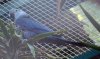
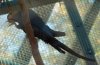
SPIX'S MACAW - Cyanopsitta spixii

Cyanopsitta spixii 2.jpg
Cyanopsitta spixii 4.jpg

Photos taken at: Pairi Daiza, Belgium

Short taxonomy: Aves > Psittaciformes > Psittacidae

Native range: Northeastern Brazil

Ex-situ frequence: Very rare

Danger factors: Burning, logging and grazing on their native habitat, colonization of potential nest sites by africanizes bees, illegal trapping for the pet trade.

Other comments: Last seen in the wild in 2000, after several attempts to make their last remnants grow again (including put eggs obtained from captivity in the nest shared by the last with male with a macaw of a different species), the last hopes for this species beging slightly to increase thanks to the efforts of captive breeding programs carried by several countries, overall by Al Wabra Wildlife Preservation Trust. Now some birds were already released to the wild.


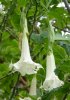
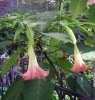
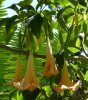
COMMON ANGEL'S TRUMPET - Brugmansia arborea

Brugmansia arborea 1.jpg

Photo taken at: Orotava Botanical Garden, Canary Islands, Spain

Short taxonomy: Magnoliopsida > Solanales > Solanaceae

Native range: Andes from Ecuador to Bolivia

Ex-situ frequence: Common

Danger factors: It's possible that the main threat is the erradication of the species from cultivated places due to fearing of its toxicity. Maybe the main factor that contributed to the extinction in the wild in the far past, was the disappareance of their specialized supposed pollinator.

Other comments: This genus is enigmatic because almost all its species were not found in the wild, there are not herbarium collections, and almost all supposed records of this species in the wild are mistakes with hybrids escaped from gardens or with species in similar genus Datura. The pure species is relatively rare in cultivation but hybrids obtained from it with several other species are common.
 

Attachments

  • Cyanopsitta spixii 2.jpg
    Cyanopsitta spixii 2.jpg
    336.9 KB · Views: 56
  • Cyanopsitta spixii 4.jpg
    Cyanopsitta spixii 4.jpg
    274.4 KB · Views: 68
  • Brugmansia arborea 1.jpg
    Brugmansia arborea 1.jpg
    91.1 KB · Views: 68
Last edited:

Dear Zoochat members,

With the begin of the new year I formed slowly in my mind the idea of making a thread like this, and now that I finally compiled what I needed I'm ready to start it.

First of all, my apologizes if this post doesn't go in the right section of the forum, if it break any rule I'm not aware of (many changes have been done to rules of the forum or specific sections of it recently) or if in any sense it doesn't fit with the purpose of this forum. I think and hope that none of these premises are true.

The purpose of this thread is to show to any reader my photos of endangered species alongside a few quick facts about them. Most zoochatters know a lot about certain iconic endangered species but most of the species tend to be neglected and for many species is a surprise to find their threat status. I will post if I can an animal daily and a plant every two days (because animal selection is more or less double than plants). Starting by the Extinct in the Wild ones and finishing with Vulnerable ones. Near Threatened category has not been considered for this thread. I only will post here my photos of alive specimens, not the taxidermy/preserved ones in museums. The selection will be enough large for make a long thread even without these last kind of pictures. Many of my photos are of horrible quality and I apologize for that, but the other idea that would solve this issue (using Zoochat Gallery photos of any author, like in the Zoochat Guides) would be muuuuch more tedious and long to finish, so better to keep this way.

I hope this thread can lead to learning about endangered species, taking conscience of their situation and maybe find ways to help the species populations diminishing the danger for each. Many zoos for example tend to neglect certain endangered species just because they are little known, and this small selection of species can provide info about what species can be tried to import and breed for keep a safe lifeguard captive population for example.

I will be pleased to read any suggestion about how to improve this thread.
Very interesting, quite excited for the future of this thread. Only question I have is about the Iconic species, (things like tigers or elephants) will or will not these species be mentioned in the thread?
 
SPIX'S MACAW - Cyanopsitta spixii

cyanopsitta-spixii-2-jpg.525476

cyanopsitta-spixii-4-jpg.525477


Photos taken at: Pairi Daiza, Belgium

Short taxonomy: Aves > Psittaciformes > Psittacidae

Native range: Northeastern Brazil

Ex-situ frequence: Very rare

Danger factors: Burning, logging and grazing on their native habitat, colonization of potential nest sites by africanizes bees, illegal trapping for the pet trade.

Other comments: Last seen in the wild in 2000, after several attempts to make their last remnants grow again (including put eggs obtained from captivity in the nest shared by the last with male with a macaw of a different species), the last hopes for this species beging slightly to increase thanks to the efforts of captive breeding programs carried by several countries, overall by Al Wabra Wildlife Preservation Trust. Now some birds were already released to the wild.

Great idea for a tread @Kakapo ! For the Spix macaw some aditional info and a small correction : The captive breeding succes-story of the species started in the Philippines. Here Antonio de Dios started a breeding-program which was very succesful and later all (?) his Spix macaws were send to Al Wabra. Here they were bred even in larger numbers and after the owner of Al Wabra past away the Spix's went to ACTP in Germany were again large numbers were bred - later also birds were send to Pairi Daiza and Singapore. From Germany around 50 macaws were send to a breeding/release site in Brazil. Here the species has been bred also already but afaik sofar no birds have been released yet but they should start to do so this year.
 
Many of my photos are of horrible quality and I apologize for that, but the other idea that would solve this issue (using Zoochat Gallery photos of any author, like in the Zoochat Guides) would be muuuuch more tedious and long to finish, so better to keep this way.

Look on the bright side, now we know to keep an eye on this thread for any photographs needing to be deleted from the gallery if you're going to be collecting all the horrible ones into a single location ;) :p
 
Thanks a lot for your kind replies! :)
@ParathePineapple the iconic species will be included as far as they're from vulnerable to extinct in the wild according to IUCN, and I have photos of them alive. Tiger and elephants fall in both categories.

@vogelcommando Thanks a lot for the info, I somewhat had the idea of them started to being released yet as I readed about a post-2000 record in the wild that was assumed to be from a liberated individual.

Next Extinct in the Wild species:

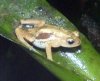
KIHANSI SPRAY TOAD - Nectophrynoides asperginis

Nectophrynoides asperginis (31-7-19 Bronx zoo).jpg

Photo taken at: Bronx zoo, New York, USA

Short taxonomy: Amphibia > Anura > Bufonidae

Native range: eastern Tanzania

Ex-situ frequence: Very rare

Danger factors: The construction of a dam up in the river that feeds the Kihansi Falls (the only place where this species was found) affected severely the water regime reducing the spray of the falls, especially in the dry season. The toad was unable to survive in these highly modified conditions. The few remnants of the species finally died by chytridiomycosis (fungal disease of amphibians) and contamination by pesticides.

Other comments: An artificial system of sprinkers that would mimic the previous spray regime of the falls was installed, but too late and also it failed after installed. Bronx Zoo in year 2000 collected nearly 500 individuals for lifeguard an ex-situ population of the species. Only three facilities in the world (Bronx and Toledo zoos and Dar es Salaam university) keep captive breeding programs for the species.
 

Attachments

  • Nectophrynoides asperginis (31-7-19 Bronx zoo).jpg
    Nectophrynoides asperginis (31-7-19 Bronx zoo).jpg
    263.4 KB · Views: 76
Thanks a lot for your kind replies! :)
@ParathePineapple the iconic species will be included as far as they're from vulnerable to extinct in the wild according to IUCN, and I have photos of them alive. Tiger and elephants fall in both categories.

@vogelcommando Thanks a lot for the info, I somewhat had the idea of them started to being released yet as I readed about a post-2000 record in the wild that was assumed to be from a liberated individual.

Next Extinct in the Wild species:

KIHANSI SPRAY TOAD - Nectophrynoides asperginis

View attachment 525609

Photo taken at: Bronx zoo, New York, USA

Short taxonomy: Amphibia > Anura > Bufonidae

Native range: eastern Tanzania

Ex-situ frequence: Very rare

Danger factors: The construction of a dam up in the river that feeds the Kihansi Falls (the only place where this species was found) affected severely the water regime reducing the spray of the falls, especially in the dry season. The toad was unable to survive in these highly modified conditions. The few remnants of the species finally died by chytridiomycosis (fungal disease of amphibians) and contamination by pesticides.

Other comments: An artificial system of sprinkers that would mimic the previous spray regime of the falls was installed, but too late and also it failed after installed. Bronx Zoo in year 2000 collected nearly 500 individuals for lifeguard an ex-situ population of the species. Only three facilities in the world (Bronx and Toledo zoos and Dar es Salaam university) keep captive breeding programs for the species.
Detroit actually breeds them as well.
 
I heard somewhere that the spray toads were also kept in Omaha HD as well. Idk if they still are in Omaha.
 
Thanks a lot for the additional info. This is the advantage of making this thread in a forum, where people can correct and add facts for the general public viewing, when the data I find in my info sources is outdated :) And by other hand I'm happy that more facilities than I tought are caring for lifeguard this species :)

Next Extinct in the Wild species:

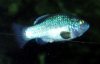
CHARCO LA PALMA PUPFISH - Cyprinodon longidorsalis

Cyprinodon longidorsalis LondonZoo.jpg

Photo taken at: London zoo, UK

Short taxonomy: Osteichthyes > Cyprinodontiformes > Cyprinodontidae

Native range: Nuevo Leon, Mexico

Ex-situ frequence: Rare

Danger factors: The small spring that fed the pool of Charco La Palma where it inhabited was desiccated due to underground water extraction for agricultural use

Other comments: The spring that fed the Charco La Palma pool, now disappeared, was also home of other 3 endemic species of pupfish (two extinct, one extinct in the wild) and one endemic species of crayfish (extinct). The small size of this pool make Cyprinodon longidorsalis to had the smallest native range of any vertebrate.


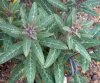
MINORCA LOOSESTRIFE - Lysimachia minoricensis

Lysimachia minoricensis.jpg

Photo taken at: Barcelona botanical garden, Spain

Short taxonomy: Magnoliopsida > Ericales > Primulaceae

Native range: Minorca island, Balearic Islands, Spain

Ex-situ frequence: Very rare

Danger factors: The causes of the extinction in the wild are not well understand. It's possible that the abandonement of traditional stockbreeding activities caused the overgrowth of competitive plants in the only locality where this species grew, a cliff in Sa Vall.

Other comments: This plant was cultivated in Barcelona botanical garden since 1926, but during Civil War the garden was abandoned and the species was believed to be completely extinct. Fortunately, following the garden's restoration it was found that a small colony have appeared from selfseeding behind some bushes. Barcelona botanical garden sent seeds to other European botanical gardens since then. The attempts to rewild it in it's original native range has been unsuccessful to date.
 

Attachments

  • Cyprinodon longidorsalis LondonZoo.jpg
    Cyprinodon longidorsalis LondonZoo.jpg
    17.6 KB · Views: 69
  • Lysimachia minoricensis.jpg
    Lysimachia minoricensis.jpg
    103.1 KB · Views: 72
Great idea for a tread @Kakapo ! For the Spix macaw some aditional info and a small correction : The captive breeding succes-story of the species started in the Philippines. Here Antonio de Dios started a breeding-program which was very succesful and later all (?) his Spix macaws were send to Al Wabra. Here they were bred even in larger numbers and after the owner of Al Wabra past away the Spix's went to ACTP in Germany were again large numbers were bred - later also birds were send to Pairi Daiza and Singapore. From Germany around 50 macaws were send to a breeding/release site in Brazil. Here the species has been bred also already but afaik sofar no birds have been released yet but they should start to do so this year.

Do you know if there are still Spix in private hands in Switzerland, and roughly how many?
 
Do you know if there are still Spix in private hands in Switzerland, and roughly how many?

As far as I knew there was one succesfull breeder in Switzerland but his birds ( number unknown to me ) should also have been send to Al Wabra ( and later thus to ACTP ) but rumours about more birds kept at Switzerland have been around althrough its already a long time ago ( end 1990s - beginning 2000s ) I've heared them.
 
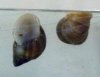
(one of the) POLYNESIAN TREE SNAIL - Partula nodosa

Partula nodosa (24-9-18 Artis).jpg

Photo taken at: Artis royal zoo, Netherlands

Short taxonomy: Gastropoda > Stylommatophora > Partulidae

Native range: Tahiti island, Polynesia

Ex-situ frequence: Very rare

Danger factors: The introduction of the South American carnivorous snail Euglandina rosea, that predates only in other snails, in Polynesia, depleted this species

Other comments: This genus had 72 species all of which were endemic to Polynesia. 47 of them has been already completely exterminated due to the introducition of the carnivorous snails. The remaining species are almost all extinct in the wild, critically endangered or at least endangered. Some species including P. nodosa are subject of programs of reintroduction in predator-free reserves.
 

Attachments

  • Partula nodosa (24-9-18 Artis).jpg
    Partula nodosa (24-9-18 Artis).jpg
    256.8 KB · Views: 72
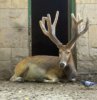
PERE DAVID'S DEER - Elaphurus davidianus

Elaphurus davidianus 2.jpg
Elaphurus davidianus (7-8-17 Zoo Wuppertal).jpg

Photos taken at: Barcelona Zoo, Spain and Wuppertal zoo, Germany

Short taxonomy: Synapsida > Artiodactyla > Cervidae

Native range: China

Ex-situ frequence: Common

Danger factors: Habitat loss and hunting extirpated the species from the wild until only one herd left in the emperor's palace gardens.

Other comments: A severe flood killed almost all the Imperial Palace herd in 1895, the remnants escaped and were hunted until during Boxer's Rebellion they were all hunted for food for the soldiers. Fortunately, before the flood, the emperor donated some individuals to the French ambassador after long diplomatic discussions and the species bred well in French parks.


BRAZIL'S ANGEL TRUMPET - Brugmansia suaveolens

Brugmansia suaveolens.jpg

Photo taken at: München, Germany

Short taxonomy: Magnoliopsida > Solanales > Solanaceae

Native range: South east Brazil

Ex-situ frequence: Common

Danger factors: It's possible that the main threat is the erradication of the species from cultivated places due to fearing of its toxicity. Maybe the main factor that contributed to the extinction in the wild in the far past, was the disappareance of their specialized supposed pollinator.

Other comments: This genus is enigmatic because almost all its species were not found in the wild, there are not herbarium collections, and almost all supposed records of this species in the wild are mistakes with hybrids escaped from gardens or with species in similar genus Datura. The pure species is relatively rare in cultivation but hybrids obtained from it with several other species are common.
 

Attachments

  • Elaphurus davidianus (7-8-17 Zoo Wuppertal).jpg
    Elaphurus davidianus (7-8-17 Zoo Wuppertal).jpg
    391.2 KB · Views: 71
  • Elaphurus davidianus 2.jpg
    Elaphurus davidianus 2.jpg
    54.9 KB · Views: 71
  • Brugmansia suaveolens.jpg
    Brugmansia suaveolens.jpg
    84.7 KB · Views: 70
PERE DAVID'S DEER - Elaphurus davidianus
Fortunately, before the flood, the emperor donated some individuals to the French ambassador after long diplomatic discussions and the species bred well in French parks.

.

They didn't breed very well in the European zoos, being a herd species. It was the Duke of Bedford collecting the remaining 16 or 18 individuals from European zoos and introducing them to Woburn Park in the UK that was instrumental in saving the species. A classic and well documented early conservation success.
 
PERE DAVID'S DEER - Elaphurus davidianus

View attachment 526276
View attachment 526275

Photos taken at: Barcelona Zoo, Spain and Wuppertal zoo, Germany

Short taxonomy: Synapsida > Artiodactyla > Cervidae

Native range: China

Ex-situ frequence: Common

Danger factors: Habitat loss and hunting extirpated the species from the wild until only one herd left in the emperor's palace gardens.

Other comments: A severe flood killed almost all the Imperial Palace herd in 1895, the remnants escaped and were hunted until during Boxer's Rebellion they were all hunted for food for the soldiers. Fortunately, before the flood, the emperor donated some individuals to the French ambassador after long diplomatic discussions and the species bred well in French parks.
One last important note about the deer, they were named after the French Missionary and Zoologist Armand David, who discovered the animal and sent an individual back to Europe.
 
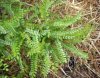
TOROMIRO - Sophora toromiro

Sophora toromiro.jpg

Photo taken at: Barcelona botanical garden, Spain

Short taxonomy: Magnoliopsida > Fabales > Fabaceae

Native range: Easter Island

Ex-situ frequence: Rare

Danger factors: Heavy deforestation in the whole Easter Island in the first half of 17th century leaded to the species disappearing completely from the wild in the 1960's.

Other comments: The Kew Royal Botanical Gardens and the Gothenburg Botanical Garden runs together a project of reintroduction of the species into the wild. Almost all individuals in cultivation in the world comes from the seeds of a single tree.

The individual pictured above is possibly not pure and hybridized with S. microphylla. These hybrids knowns as 'Titze' or false toromiros are recognizable by the greater number of leaflets per leaf and the curved standart in flowers, and was caused by the misnaming of Sophora microphylla sent as toromiro from Christchurch's botanical garden in New Zealand to some Chilean botanical gardens. The hybrids can pose a threat for the reintroduction programs.
 

Attachments

  • Sophora toromiro.jpg
    Sophora toromiro.jpg
    121.9 KB · Views: 64
Last edited:
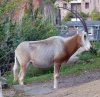
SCIMITAR-HORNED ORYX - Oryx dammah

Oryx dammah 2 (24-9-18 Artis).jpg

Photo taken at: Artis royal zoo, Netherlands

Short taxonomy: Synapsida > Artiodactyla > Bovidae

Native range: North Africa, mainly the southern part of Sahara desert

Ex-situ frequence: Common

Danger factors: The species was hunted heavily until total vanishing from the wild in 2000, and also was outcompeted by livestock

Other comments: The species is fairly frequent in zoos (and in Texas in ranches) and there are reintroduction programs on way both in Marocco and Tunisia


PEACH ANGEL'S TRUMPET - Brugmansia versicolor

Brugmansia versicolor.jpg

Photo taken at: Quail botanical gardens, California, USA

Short taxonomy: Magnoliopsida > Solanales > Solanaceae

Native range: Amazonian rainforest of Ecuador and northern Peru

Ex-situ frequence: Rare

Danger factors: The species was hunted heavily until total vanishing from the wild in 2000, and also was outcompeted by livestock

Danger factors: It's possible that the main threat is the erradication of the species from cultivated places due to fearing of its toxicity. Maybe the main factor that contributed to the extinction in the wild in the far past, was the disappareance of their specialized supposed pollinator.

Other comments: This genus is enigmatic because almost all its species were not found in the wild, there are not herbarium collections, and almost all supposed records of this species in the wild are mistakes with hybrids escaped from gardens or with species in similar genus Datura. The pure species is relatively rare in cultivation but hybrids obtained from it with several other species are common. Brugmansia versicolor is a parental of the hybrids Brugmansia x candida and Brugmansia x cubensis.
 

Attachments

  • Oryx dammah 2 (24-9-18 Artis).jpg
    Oryx dammah 2 (24-9-18 Artis).jpg
    300.9 KB · Views: 65
  • Brugmansia versicolor.jpg
    Brugmansia versicolor.jpg
    106.1 KB · Views: 64
Back
Top