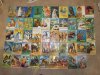
Day 10: Zoo Leipzig (2013) - Tiger (English-language)

Page count: 116 (including several pages of advertisements at the rear)
Photographs: c.170
Illustrations/diagrams: N/A
Layout: Walkthrough account of collection, followed by general information about history of zoo, conservational involvement, commercial functions/activities and zoo restaurants.
Map: Double-sided map provided at rear of guidebook, showing entirety of zoo and the Gondwanaland exhibit complex.
From one of the oldest guidebooks in my collection, to one of the newest guidebooks in my collection - in point of fact, this is the first guidebook to be covered in this thread which I purchased at the collection in question whilst it was the current guidebook, having visited Zoo Leipzig for the first time in April 2014, only around 9 months or so after this was published. It is also the first time we have discussed a guidebook for a German collection printed in English-language; it should be noted that I did also purchase the original German-language edition at the same time.
The first thing that must be said about the guidebook itself is that - like all of the guidebooks issued by Zoo Leipzig in recent years - it comprises a spiral ring-bound format, something which I have never been particularly fond of when it comes to guidebooks given the increased difficulty in storing and shelving them alongside more traditionally-bound items, and the fact that in my experience they are more prone to being damaged. However, the quality and production-value of the guidebook itself is rather high in my opinion, comprising - as is the case for many of the items I have discussed thus far - an exhibit-by-exhibit walkthrough account of the collection, followed by a brief history of the zoo and then discussion of more general aspects such as the various restaurants and cafes, the availability of the zoo for commercial and business functions and so forth, all presented in a clear format with copious photographic illustrations throughout.

Although - as I mentioned - I purchased this guidebook shortly after it was originally published, it should be noted that at the time of my visit to Zoo Leipzig it was already somewhat out-of-date, with a number of species and exhibits already no longer present - most notably, and infuriatingly, the Baikal Seal discussed in the above screenshot! However, this strikes me as an appropriate time to note that, in my opinion, the commonplace argument espoused both by some zoo enthusiasts and (more frustratingly) the management of zoological collections themselves that zoo guidebooks, being inherently prone to becoming out-of-date soon after publication if not beforehand, are an irrelevant thing of the past which can be abandoned to no loss, and are easily substituted by a mobile phone app or similar ephemeral media, is entirely wrong.
Quite apart from the fact that media of this sort is seldom accessible in retrospect, and only patchily-accessible at the time of release in many cases due to firmware and software issues, there is also the fact that they are just plain tacky, generally being low-effort content which provides the bare minimum of information and is entirely disposable. By comparison, when done well a guidebook represents a solid record of a zoological collection at the time it was published, and something which has lasting value and presence in the world - although knowing that some highlight or other mentioned in a guidebook is no longer present *can* sting a little, the fact that guidebooks become outdated and are ultimately replaced by later editions is not a detriment, but rather one of the key reasons those of us who collect them prize them so. To put it another way, a guidebook could be good or it could be bad, but it still *lasts*, whilst no matter how good an app is (and as noted they so seldom are) one will be hard-pushed to access it again more than a few months after one has visited the collection.
Rant over.

As both the previous image from the opening of the "zoo walkthrough" segment, and the above image from somewhat further into the guidebook show, the content of this section is attractive, laid out in a clear and appealing fashion, and does a pretty good job of striking a balance between being informative and keeping the attention of the casual reader. The exhibits and enclosures within the guidebook are discussed in an order presented as a suggested route throughout the collection, to the point of observing when and where an opportunity for food and drink is available in the middle of the overall text. As I will note again anon, this suggested route is also illustrated in the map at the end of the guidebook; overall, this is a very good idea when it comes to catering to the casual zoo visitor, and one which I think more collections should probably follow both in their guidebook and map provision.... even if, like many zoo enthusiasts, I am a little contrary and often defy the suggested route! It should also be noted here that although a total of seven pages are devoted to the Gondwanaland tropical house which forms one of the key points of the zoo, these are merely a highly-abridged form of a seperate guidebook which Zoo Leipzig publishes for Gondwanaland. I may well discuss one or more of the Gondwanaland guidebooks at greater length at a later point in this thread, but for now it is sufficient to state that this again demonstrates both the value of zoo guidebooks in general, and the quality of the guidebooks published even in the modern day in some German collections!
At the conclusion of the walkthrough segment, this guidebook moves onto a brief account of the history of Zoo Leipzig; something of this sort has, of course, been present in many of the guidebooks discussed, sometimes in much greater detail than is the case here. However, the format of this particular example is nonetheless worthy of note, with a handful of paragraphs introducing the historical segment being followed by a timeline of key dates and events, albeit one which is very much focused on the present day - although the timeline presented spans from 1878 to 2011, with a total of 26 key events listed, literally half of these occurred from 1991 onwards.

As such, this is very much a historical segment aimed at the everyday zoo visitor, rather than the enthusiast, with a definite eye to highlighting the construction of the exhibits and enclosures they would see on their day at the zoo - but this is no bad thing, per my above statements about the value of a zoo guidebook as a record of the here-and-now and an opportunity to provide a lasting memento of a given visit to a zoological collection. Similarly, the segments beyond this point go into some detail about commercial aspects of the zoo, such as the various animal sponsorships and encounters which could be booked, the availability of the zoo for private functions and events, the various restaurants and cafes throughout the collection, and so forth - although this is also the segment where discussion takes place regarding the conservation and captive breeding programmes that Zoo Leipzig is involved in, along with wider discussion of the value of zoological collections in such regards, and (similarly to the previously-discussed guidebook from Exmoor Zoo) discussion of the day-to-day routine of the zoo-keeping staff.
After this point, the guidebook concludes with an index listing all of the species cited in the text, along with page references, followed by the provision of a detailed and highly-attractive fold-out map to the zoo within the back cover of the guidebook itself; as noted, this includes a recommended route throughout the zoo, and is accompanied both by a numerical key listing the various animal exhibits and enclosures, and a more general key showing the various symbols for aspects such as restaurants, first-aid points, toilets and baby-changing facilities, and (I was particularly pleased and impressed by this aspect, as it is something many zoo maps omit) details of which exhibits have step-free wheelchair access.

On the reverse of this map - but still folded inwards and hidden from view when the guidebook is closed, due to the fact it is somewhat smaller and does not cross into the very back-cover itself - a second map of equal quality is present, depicting the contents of the Gondwanaland house and again presenting the recommended route throughout the building. The provision of these two maps, along with the aforementioned quality of the walkthrough account within the guidebook, certainly elevates this item to a position of some esteem in my eyes, despite my aforementioned dislike for ring-bound guidebooks tempering my appreciation somewhat.

As usual, any questions about the contents, particular species mentioned and so forth are more than welcome - and naturally, if one wishes for a more in-depth discussion of Zoo Leipzig at the time this was published, my (very) lengthy account of my 2014 visit can be found at the following link:
The German Adventures Of A Tea-Loving Dave - April 2014
Page count: 116 (including several pages of advertisements at the rear)
Photographs: c.170
Illustrations/diagrams: N/A
Layout: Walkthrough account of collection, followed by general information about history of zoo, conservational involvement, commercial functions/activities and zoo restaurants.
Map: Double-sided map provided at rear of guidebook, showing entirety of zoo and the Gondwanaland exhibit complex.
From one of the oldest guidebooks in my collection, to one of the newest guidebooks in my collection - in point of fact, this is the first guidebook to be covered in this thread which I purchased at the collection in question whilst it was the current guidebook, having visited Zoo Leipzig for the first time in April 2014, only around 9 months or so after this was published. It is also the first time we have discussed a guidebook for a German collection printed in English-language; it should be noted that I did also purchase the original German-language edition at the same time.
The first thing that must be said about the guidebook itself is that - like all of the guidebooks issued by Zoo Leipzig in recent years - it comprises a spiral ring-bound format, something which I have never been particularly fond of when it comes to guidebooks given the increased difficulty in storing and shelving them alongside more traditionally-bound items, and the fact that in my experience they are more prone to being damaged. However, the quality and production-value of the guidebook itself is rather high in my opinion, comprising - as is the case for many of the items I have discussed thus far - an exhibit-by-exhibit walkthrough account of the collection, followed by a brief history of the zoo and then discussion of more general aspects such as the various restaurants and cafes, the availability of the zoo for commercial and business functions and so forth, all presented in a clear format with copious photographic illustrations throughout.
Although - as I mentioned - I purchased this guidebook shortly after it was originally published, it should be noted that at the time of my visit to Zoo Leipzig it was already somewhat out-of-date, with a number of species and exhibits already no longer present - most notably, and infuriatingly, the Baikal Seal discussed in the above screenshot! However, this strikes me as an appropriate time to note that, in my opinion, the commonplace argument espoused both by some zoo enthusiasts and (more frustratingly) the management of zoological collections themselves that zoo guidebooks, being inherently prone to becoming out-of-date soon after publication if not beforehand, are an irrelevant thing of the past which can be abandoned to no loss, and are easily substituted by a mobile phone app or similar ephemeral media, is entirely wrong.
Quite apart from the fact that media of this sort is seldom accessible in retrospect, and only patchily-accessible at the time of release in many cases due to firmware and software issues, there is also the fact that they are just plain tacky, generally being low-effort content which provides the bare minimum of information and is entirely disposable. By comparison, when done well a guidebook represents a solid record of a zoological collection at the time it was published, and something which has lasting value and presence in the world - although knowing that some highlight or other mentioned in a guidebook is no longer present *can* sting a little, the fact that guidebooks become outdated and are ultimately replaced by later editions is not a detriment, but rather one of the key reasons those of us who collect them prize them so. To put it another way, a guidebook could be good or it could be bad, but it still *lasts*, whilst no matter how good an app is (and as noted they so seldom are) one will be hard-pushed to access it again more than a few months after one has visited the collection.
Rant over.
As both the previous image from the opening of the "zoo walkthrough" segment, and the above image from somewhat further into the guidebook show, the content of this section is attractive, laid out in a clear and appealing fashion, and does a pretty good job of striking a balance between being informative and keeping the attention of the casual reader. The exhibits and enclosures within the guidebook are discussed in an order presented as a suggested route throughout the collection, to the point of observing when and where an opportunity for food and drink is available in the middle of the overall text. As I will note again anon, this suggested route is also illustrated in the map at the end of the guidebook; overall, this is a very good idea when it comes to catering to the casual zoo visitor, and one which I think more collections should probably follow both in their guidebook and map provision.... even if, like many zoo enthusiasts, I am a little contrary and often defy the suggested route! It should also be noted here that although a total of seven pages are devoted to the Gondwanaland tropical house which forms one of the key points of the zoo, these are merely a highly-abridged form of a seperate guidebook which Zoo Leipzig publishes for Gondwanaland. I may well discuss one or more of the Gondwanaland guidebooks at greater length at a later point in this thread, but for now it is sufficient to state that this again demonstrates both the value of zoo guidebooks in general, and the quality of the guidebooks published even in the modern day in some German collections!
At the conclusion of the walkthrough segment, this guidebook moves onto a brief account of the history of Zoo Leipzig; something of this sort has, of course, been present in many of the guidebooks discussed, sometimes in much greater detail than is the case here. However, the format of this particular example is nonetheless worthy of note, with a handful of paragraphs introducing the historical segment being followed by a timeline of key dates and events, albeit one which is very much focused on the present day - although the timeline presented spans from 1878 to 2011, with a total of 26 key events listed, literally half of these occurred from 1991 onwards.
As such, this is very much a historical segment aimed at the everyday zoo visitor, rather than the enthusiast, with a definite eye to highlighting the construction of the exhibits and enclosures they would see on their day at the zoo - but this is no bad thing, per my above statements about the value of a zoo guidebook as a record of the here-and-now and an opportunity to provide a lasting memento of a given visit to a zoological collection. Similarly, the segments beyond this point go into some detail about commercial aspects of the zoo, such as the various animal sponsorships and encounters which could be booked, the availability of the zoo for private functions and events, the various restaurants and cafes throughout the collection, and so forth - although this is also the segment where discussion takes place regarding the conservation and captive breeding programmes that Zoo Leipzig is involved in, along with wider discussion of the value of zoological collections in such regards, and (similarly to the previously-discussed guidebook from Exmoor Zoo) discussion of the day-to-day routine of the zoo-keeping staff.
After this point, the guidebook concludes with an index listing all of the species cited in the text, along with page references, followed by the provision of a detailed and highly-attractive fold-out map to the zoo within the back cover of the guidebook itself; as noted, this includes a recommended route throughout the zoo, and is accompanied both by a numerical key listing the various animal exhibits and enclosures, and a more general key showing the various symbols for aspects such as restaurants, first-aid points, toilets and baby-changing facilities, and (I was particularly pleased and impressed by this aspect, as it is something many zoo maps omit) details of which exhibits have step-free wheelchair access.
On the reverse of this map - but still folded inwards and hidden from view when the guidebook is closed, due to the fact it is somewhat smaller and does not cross into the very back-cover itself - a second map of equal quality is present, depicting the contents of the Gondwanaland house and again presenting the recommended route throughout the building. The provision of these two maps, along with the aforementioned quality of the walkthrough account within the guidebook, certainly elevates this item to a position of some esteem in my eyes, despite my aforementioned dislike for ring-bound guidebooks tempering my appreciation somewhat.
As usual, any questions about the contents, particular species mentioned and so forth are more than welcome - and naturally, if one wishes for a more in-depth discussion of Zoo Leipzig at the time this was published, my (very) lengthy account of my 2014 visit can be found at the following link:
The German Adventures Of A Tea-Loving Dave - April 2014
Last edited:


 the other two being a 1906 Zoo Berlin and a 1990s Antwerp.

 but given you have mentioned your particular interest in birds, here are all of the bird species cited as being on-display within the Louise-Hal - although there appears to be mention made in several places that this list is nowhere near complete, and there's definitely a little repetition! I suspect I can make a very good guess at a lot of the species in question, or recognise them outright, but there are also more than a few where I wouldn't have anywhere as much success!