How many tropical or subtropical species are hardy in cold temperature?

StellarChaser

Well-Known Member
5+ year member
I know Spotted hyenas, and some tropical big cats like African lion, Sumatran tigers are quite hardy even when the temperature slightly drops below 0 Celcius. Some Russian zoos also have Maned wolves come outside during the snowy days. So how many tropical or subtropical species are hardy even when the temperature is between about 0 to -10 Celcius? I know the temperature of the African savanna can drop greatly at night but rarely below 4 Celcius.
 
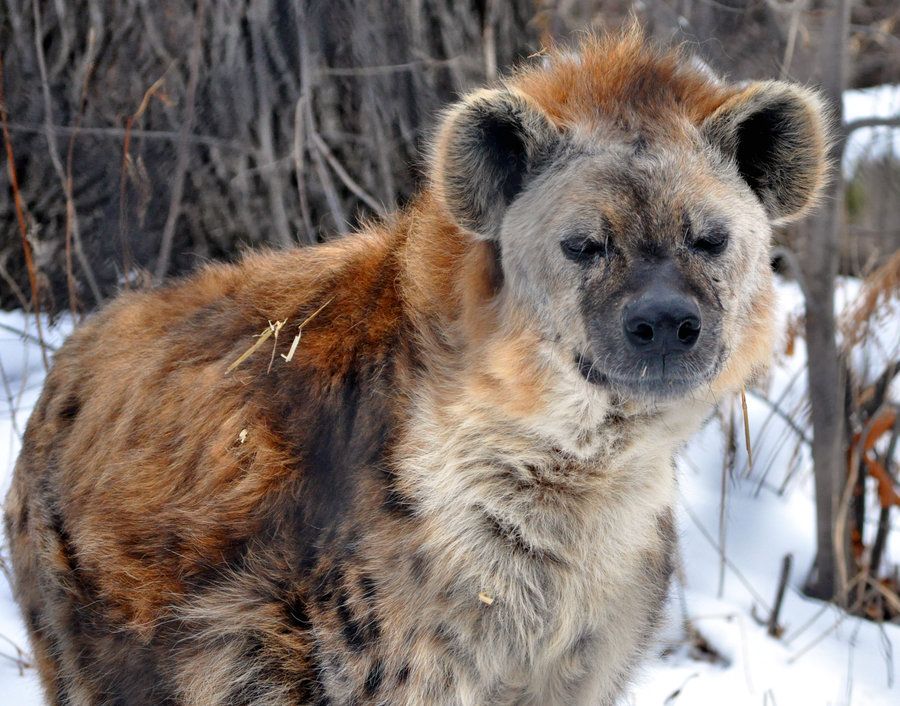
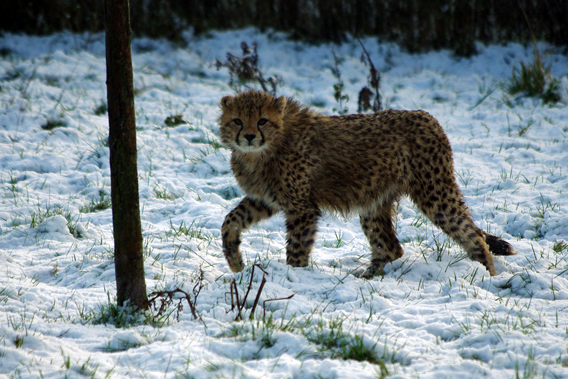
All of the species listed had (in case of tigers, still have) much broader range up into northern Eurasia and are thus still pre-adapted to endure climates more extreme than their current ranges. Lions, tigers (including tropical populations), leopards, jaguars, spotted hyenas, and the northwest African cheetah (but interestingly, none of the other African subspecies) can, when acclimated to northern zoos, all grow plush winter coats that exceed what they develop in their native ranges today.

Species that have never had ranges into the holarctic region cannot grow winter coats, and while they may be able to tolerate cold for short outings cannot be kept without access to heated shelter. A good examples of these types would be plains zebras.

09ccd4f7889ae159857618bb33803556.jpg


IMGP5963.cheetah.snow.568.jpg
lions-in-the-snow-at-blair-drummond-safari-park-as-the-cold-weather-M6DPWA.jpg
 
Is your question about animals that could survive colder regions or about zoo practices? Whether a zoo lets a subtropical animal outside during such temperatures often depends as much on the design of the enclosure (microclimates, blocked wind, etc.) and duration of the outdoor time as anything else. I know zoos that allowed lowland gorillas out at 0 C
 
Is your question about animals that could survive colder regions or about zoo practices? Whether a zoo lets a subtropical animal outside during such temperatures often depends as much on the design of the enclosure (microclimates, blocked wind, etc.) and duration of the outdoor time as anything else. I know zoos that allowed lowland gorillas out at 0 C

One of the most extreme examples I've seen (though as I noted at the time, I'm not sure the keepers intended this!):

Surprised-looking Spurred Tortoise, Blackbrook in the Snow, 03/01/10 - ZooChat
Spurred Tortoise on a winter excursion, Blackbrook in the Snow, 03/01/10 - ZooChat
 
Milwaukee Zoo keeps Cheetahs outside all year long.
Toronto Zoo also keeps Cheetahs outside for full year, I am more curious about are there any tropical or subtropical birds, hoofed mammals and primates that are hardy. I know Indian peacocks are totally fine under 0 Celcius.
 
Birds vary quite a bit, many are susceptible to frostbite on the toes. Many common tropical zoo species are not really hardy below 40-50 F, even with heat. American Flamingo is one that can be outdoors in fairly cold weather, Blue Cranes and kookaburra as well. Quite a few tropical waterfowl species can tolerate below freezing temps if they have access to open, moving water. Ostrich, rhea, and cassowary are somewhat tolerant, but their plumage tends to hold water and cause hypothermia. They also are prone to slipping on ice and cannot be allowed outdoor access in icy conditions. Given many bird parks are in colder locations (Sylvan Heights, Walsrode), some are definitely likely able to tolerate cold temperatures if acclimated well and provided heat.

Far as hoofstock, quite a few are tolerant of cold temperatures if acclimated and provided unrestricted access to heated shelter; Addax, African Buffalo, Common Eland, Gaur, Grant's Gazelle, Grevy's Zebra, Impala, Klipspringer, Nyala, Plains Zebra, Roan, Sable, Scimitar-horned Oryx, Sitatunga, Somali Wild Ass, Springbok, Thomson's Gazelle, and Waterbuck are among these. Obviously varying conditions such as ice, storms, and heavy snow complicate things, and both young and old individuals generally should not be allowed out in below/near freezing conditions.

Most subtropical/tropical primates are typically not cold hardy, there are occasional limited exposure/successes with appropriate holding and heating. Most primates are not recommended to be allowed any outdoor access below freezing; most species it is recommended to not allow them out under 50 F or so.
 
I've seen lots of neotropical migrant species that breed in temperate areas (such as Baltimore Orioles and Rose-breasted Grosbeaks) kept outdoors in winter if provided a heat lamp.
 
@Great Argus Very appreciated for your answer.

Again, since you mention about Rhea, that reminds me of another question, are these Andean or Patagonian species hardy in cold seasons? Such as Spectacled bear, Kudu deer, White-nosed coati, Mountain tapir, Patagonian mara. The elevation of Andean Yungas can reach 3000 meters, but they are tropical montane forests, may not as cold as the temperate mountains.
 
Again, since you mention about Rhea, that reminds me of another question, are these Andean or Patagonian species hardy in cold seasons?

Lesser Rhea is a bit hardier than Greater, being from higher elevations.

Kudu deer

Pudu are fairly tolerant of cold, but it is recommended that heated shelter be available below 40 F.

White-nosed coati

Coati are not particularly cold hardy, neither White-nosed or South American occurs in the high Andes or Patagonia. It is recommended that coatis not be exhibited in temperatures under 40 F, if they are they should have access to heated nest boxes and sleeping areas other than those boxes should be discouraged.

Patagonian mara

These are not cold weather animals either, it is recommended to provide heat when temperatures are under 40 F.

Spectacled bear
Mountain tapir

I'm not certain on these two, both are reasonably cold hardy I believe.
 
Spectacled bear
We can assume so because of the climate they live in. They have been successfully held in mild cold environments like New York and Ohio so it isn’t much of a stretch to assume they can handle colder temperatures with proper acclimation like many other bears and carnivores.
Mountain tapir,
In the wild mountain tapirs can withstand extremely cold Tempe and grow coats accordingly. However this species is more difficult because of little distribution in zoos. The coldest Zoo they are held at is in Colorado Springs (Cheyenne Mountain Zoo). In Colorado Springa it can get bellow freezing. The only other zoo is Los Angeles which only reaches the low 40s. To keep a Mountain Tapir in a colder zoo in practice would be difficult because of acclimation. All animals in captivity are used to warmer temperatures which could make moving them into colder zoos difficult. But in theory because of their ancestry they should be able to withstand the cold if acclimated properly with a warm barn.
 
So how many tropical or subtropical species are hardy even when the temperature is between about 0 to -10 Celcius? I know the temperature of the African savanna can drop greatly at night but rarely below 4 Celcius.

If you mean exhibit with unheated shelter, for example axis deer, rhesus or peacocks.

Light frost is regular in many subtropical deserts and savannas, not to mention highlands. Animals in zoos, however, must be sheltered from cold together with dampness and wind.

If you mean a heated building and walking some minutes outdoors in calm sunny weather below zero - even chimps and gorillas do it.
 
I've seen peafowl outside on a farm in temperatures well below zero. They were just pecking around the ground like they would on a warm day. It didn't seem to faze them at all.
 
Generally speaking, Lesser/Darwin's Rheas are a temperate species while Greater Rheas are probably better characterized as subtropical, but there is a large, well-established wild flock of Greater Rheas in northern Germany near Luebeck, the result of an escape from a private owner into a nearby natural reserve. They have thrived to the point that they have begun limiting the population by treating eggs. Also, I can tell you that back in the 20th Century the Rochester, NY, zoo kept a flock of rheas (don't remember which species) in a yard with access to only an unheated barn, and they also did just fine. That zoo also at various times had zebra, eland, and Arabian Camels with access to small heated barns and they all did fine, to my childhood memory spending far more time outside in winter than inside.
 
As someone who has worked with ostrich, emu, and rhea with only unheated barns, I really feel that the coldhardiness of those species is over-estimated. Their feathers offer pretty poor insulation, and the longer I've spent around them, the more I've felt that they deserve better accommodations for winter in many facilities. They'll survive almost anything that gets thrown at them, but they sure don't seem to like it or be comfortable in it.
 
Back
Top