Europe's 100 must see exhibits

Of course, following the thread with huge interest. Up until no.6, nothing too controversial. Hard to make a list like this, as there are so many possible factors to weigh.

I saw the Sichuan house in 2005, as one of the first zoo’s I’ve ever visited. As I was more mammal orientated at the time, I was slightly disappointed. I have only realised the uniqueness of the building since, and I bet it would be on many people’s list.

The desert house in Nurnberg was obvious, I didn’t know ROTRA was an improved version of the lauded Apenheul exhibit, but apparantly it is. In which case, logical inclusion.

I have to say, seeing Zurichs bear exhibit in winter was a slightly underwhelming experience. I have to give that another shot in more favourable conditions.

The gorillarium irks me. If inclusion on this list is based on “exhibitry”, then that would be the best possible trade-off between animal wellfare and visitor experience and I’m not convinced about the latter. And the fact the gorilla’s thrived isn’t enough for me. There are too many examples where animals thrived in seemingly poor conditions.

In that respect, I would much rather include Ouwehands Gorilla exhibit because that exhibit really got me thinking. At first sight, I didn’t like it at all, but the more I thought about it, the more I realised I didn’t know why… till the point my opinion tilted. I love the “marmite effect” that exhibit has :)

No critique though! Love reading about and love discussing zoos, especially subjective things like “best…”.

I need to make a list and see how many match your list. I had a quick go but got stuck on about 20 exhibits sofar :(

Honorable posthumous note on Emmens’ penguin exhibit :(
 
A *very* cool retooling for an ecologically important animal few people would normally show interest in... though I have to wonder what visitors think about the smell generated from those small piles of manure left for the beetles in that photo there :p


The long opening hours at European zoos never ceases to amaze me; I can't name a single American zoo that opens at 8 am, and it seems many zoos over there have much later closing times in the summer than ours do.


I'm glad you posted this comparison, because while I agree that the Howletts cages are an eyesore (despite being great for the gorillas), the Ouwehands interpretation actually looks very cool and seems easier for getting decent views of the animals.

Really enjoying this thread so far; the first post (Prague's Sichuan aviary) is still my favorite so far, but with 93 more to go I imagine there's still plenty of competition to go!
Manitowoc Lincoln Park Zoo has the excellent hours of 7 AM to 7 PM in the summer.
 
Eventough I defentivly agree that this design philosphy is superior. You can't deny that glad windows to make it much simpler to watch them would still make the exhibit better, like in Ouwehands
 
A *very* cool retooling for an ecologically important animal few people would normally show interest in... though I have to wonder what visitors think about the smell generated from those small piles of manure left for the beetles in that photo there :p

It is hoofstock manure, so it doesn't really smell, if they would put tiger droppings there, it would be a different question :p

The gorillarium irks me. If inclusion on this list is based on “exhibitry”, then that would be the best possible trade-off between animal wellfare and visitor experience and I’m not convinced about the latter. And the fact the gorilla’s thrived isn’t enough for me. There are too many examples where animals thrived in seemingly poor conditions.

I am glad you enjoy it, and I guess you are hoping the lion monstrosity from Doue is nowhere to be found :p

I have sadly not visited myself, but apart from breeding like rabbits for decades, it seems these are some of the most active and stimulated gorillas out there, according to people who have visited.

I personally think that it is fun to include exhibits as must-see if they range from both sides of the ideological extremes. An optimal exhibits might end up somewhere in the middle, though still tilted towards the animals. There will be an ape exhibit later here, which manages to do that in my opinion...

Honorable posthumous note on Emmens’ penguin exhibit :(

That one would certainly qualify, another posthumous note would go to the migratory birds aviary of Diergaarde Blijdorp...

Eventough I defentivly agree that this design philosphy is superior. You can't deny that glad windows to make it much simpler to watch them would still make the exhibit better, like in Ouwehands

I am not sure I think this design philosophy is superior myself, but it works very well. It is very much an ideological extreme.
 
I personally think that it is fun to include exhibits as must-see if they range from both sides of the ideological extremes. An optimal exhibits might end up somewhere in the middle, though still tilted towards the animals. There will be an ape exhibit later here, which manages to do that in my opinion...

That said, I very much doubt you'll be highlighting the horrific primate exhibits at the Welsh Ape/Monkey Sanctuary as a "must see", even on "how NOT to do it" grounds :p
 
7. Gorillarium
Howletts Wild Animal Park, Bekesbourne, UK
Opened: first cages approx. 1970
Size: Four cages 600-700 square metres each
Inhabitants: Western lowland gorilla


Most zoo exhibits are a trade-off between what is attractive for visitors and what works for the animals. The gorilla enclosures at Howletts only focus on what works for the gorillas and do so very successfully. They are highly unattractive cages without any attempt at creating a natural looking enclosure. The gorillas couldn't care less. There are closed roofs representing a rainforest canopy, so no issues of too much sunlight (which in England wouldn’t be a big problem anyway…). The cages offer a lot of vertical climbing space and the floor is covered in straw, to stimulate active foraging. The result is one of two zoos to revolutionise the keeping and breeding of gorillas in the 1970s and multiple troops of extremely active gorillas. The success of Howletts should be a reminder that what looks good is not always good for the animals. There are still too many zoos with gorillas on grassy lawns with mock rock, where lessons should be taken on how to transform them into something that also works for gorillas.

full

@MagpieGoose

A picture from 1981(!)
full

@gentle lemur , a thank you to him for finding the most likely opening date

full

@Chris79


Similar exhibits: Port lympne (naturally) and Ouwehands Dierenpark, Netherlands, which has a bachelor group from the Aspinall parks. This is a somewhat more modern interpretation of the Aspinall vision:

full

@lintworm

full

@Ned

full

@lintworm
Another exhibit I have seen, albeit over 20 years ago. In terms of animal welfare, a generation before it's time. However as others have pointed out, not attractive. I found it rather industrial, and certainly if the aim is just to breed gorillas appropriate. However I think the point in keeping these animals is to convince people that their habitat is worth keeping, and through that the species might be saved. There is nothing here that makes me feel habitat is important at all. (But of course that applies to the mock rock and turf enclosures as well, though)
 
Another exhibit I have seen, albeit over 20 years ago. In terms of animal welfare, a generation before it's time. However as others have pointed out, not attractive. I found it rather industrial, and certainly if the aim is just to breed gorillas appropriate. However I think the point in keeping these animals is to convince people that their habitat is worth keeping, and through that the species might be saved. There is nothing here that makes me feel habitat is important at all. (But of course that applies to the mock rock and turf enclosures as well, though)

Personally I am really a fan of exhibits that transform you to the native habitat of the species and that immerse you in that habitat. It is however a very hard kind of exhibit to do well as it makes showing the animals a whole lot harder. There are examples that this is done at a very high level that works for zoo nerds and regular visitors alike, but these are rarities. You have to wait a bit for the (imo) best example, as it sits at position 89 in this thread :p.

That said, zoos are also cultural institutions, with especially in Europe a large number of zoos that is over 100 years old (or 270...). I really enjoy seeing how the relationship between men and animal has developed over that time period and several zoos are perfect time capsules for a given age, e.g. Menagerie/Jardin des Plantes in Paris (and I want to show several time periods in this thread). I think for such zoos it is important that they let you think of human-animal relationships now and then, but some do a better job than others at that... Such zoos often do a poor job at recreating convincing habitats, but I am not sure whether that is essential. Even in a non-realistic setting one can get a love for animals and often the more "old-school" enclosures let one get up-close with the inhabitants, which can make lasting impressions. One could argue that instilling a love for the animal, will also get people more interested in their needs and they will learn themselves (via education in the zoo/internet) more about habitats and conservation.
 
I am glad you enjoy it, and I guess you are hoping the lion monstrosity from Doue is nowhere to be found :p

That one would certainly qualify, another posthumous note would go to the migratory birds aviary of Diergaarde Blijdorp....

I’m not hoping, I’m fully expecting the lion enclosure from Doue not to be anywhere near this list :p

Not 100% convinced about Blijdorps’ aviary. There are more zoos that have decent European aviaries. But since I’m still stuck at about 20-odd, it might have made my list.
 
8. Baltic Sea
Ozeaneum Stralsund, Germany
Opened: 2008
Size: 21 aquaria ranging from 150 to 120.000 litres
Inhabitants: Large array of fish species and invertebrates from the Baltic and some freshwater fish


European marine life might not be as colourful or diverse as in the tropics. That doesn’t mean it is to be sniffed at. The Baltic sea is a very particular sea, as it is only connected to other seas via a narrow strait, the Kattegat between Denmark and Sweden, meaning that salinity decreases as one goes north, adding to habitat diversity. The Baltic Sea aquaria of the Ozeaneum take their visitors on a journey from the Stralsund harbour, 100 metre from the aquarium, through a wide range of these habitats. Each aquarium has a specific theme (and location on which it is inspired). The Ozeaneum, which is also Germany’s largest aquarium, won the European museum of the year prize, so it is no surprise that education is of a high level. With for us zoo nerds information on technical details, including size and salinity, of each single tank. The larger aquaria are all attractively landscaped and for some of the smaller inhabitants there is a number of tiny tanks. European fish are definitely not boring and together with the North Sea and Atlantic areas, the Ozeaneum as a whole is well worth a visit too.


full

@lintworm


full

@lintworm

full

@lintworm

full

@lintworm (note education with loads of technical details, but the wrong heading used in English...)


Similar exhibits: there are a number of aquaria that do a very good job on showing European marine life, especially in Scandinavia. But I would like to highlight the Brittany pavilion of the Oceanopolis in Brest, France, which is of a similar level as the Ozeaneum, but focuses on fish of the Brittany coasts and Atlantic.

full

@lintworm

full

@lintworm
 
Last edited:
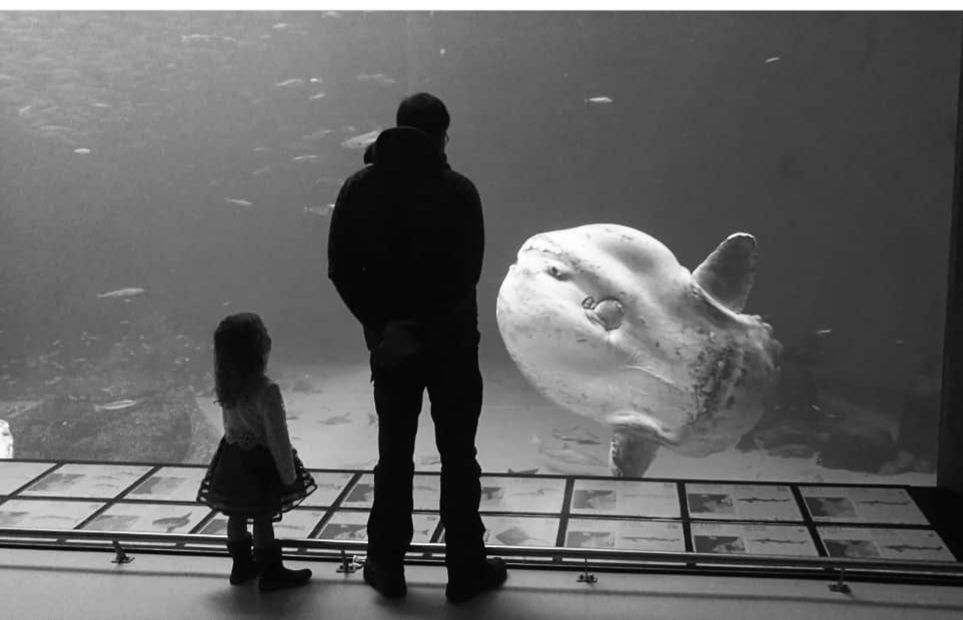
Stralsund is a nice town and the Ozeaneum is a nice public aquarium; I have very fond personal memories regarding both and the local Maritime Museum. However, I would rate the Nordsøen Oceanarium as the more impressive institution.

21704601.jpg


That said, Nordsoen's, big draw were their sunfishes, which currently aren't kept...
 
Sorry, didn't want to spoil anything.

That said, Nordsoen's, big draw were their sunfishes, which currently aren't kept...
Same situation in Stralsund since 2010. And with the death of Sand tiger shark "Niki" in 2020, their Atlantic ocean tank is quite devoid of any larger fish.
 
8. Baltic Sea
Ozeaneum Stralsund, Germany
Opened: 2008
Size: 21 aquaria ranging from 150 to 120.000 litres
Inhabitants: Large array of fish species and invertebrates from the Baltic and some freshwater fish


European marine life might not be as colourful or diverse as in the tropics. That doesn’t mean it is to be sniffed at. The Baltic sea is a very particular sea, as it is only connected to other seas via a narrow strait, the Kattegat between Denmark and Sweden, meaning that salinity decreases as one goes north, adding to habitat diversity. The Baltic Sea aquaria of the Ozeaneum take their visitors on a journey from the Stralsund harbour, 100 metre from the aquarium, through a wide range of these habitats. Each aquarium has a specific theme (and location on which it is inspired). The Ozeaneum, which is also Germany’s largest aquarium, won the European museum of the year prize, so it is no surprise that education is of a high level. With for us zoo nerds information on technical details, including size and salinity, of each single tank. The larger aquaria are all attractively landscaped and for some of the smaller inhabitants there is a number of tiny tanks. European fish are definitely not boring and together with the North Sea and Atlantic areas, the Ozeaneum as a whole is well worth a visit too.


full

@lintworm


full

@lintworm

full

@lintworm

full

@lintworm (note education with loads of technical details, but the wrong heading used in English...)


Similar exhibits: there are a number of aquaria that do a very good job on showing European marine life, especially in Scandinavia. But I would like to highlight the Brittany pavilion of the Oceanopolis in Brest, France, which is of a similar level as the Ozeaneum, but focuses on fish of the Brittany coasts and Atlantic.

full

@lintworm

full

@lintworm

Those are definitely some very impressive looking tanks. I also love the signs with the technical details - that is something I would love to see other aquariums take as an example to emulate.

I hadn't heard of ether of the mentioned facilities before, and am likely never going to visit them, but I'm definitely going to enjoy looking at more pictures of them in the galley.

Keep up the good work Lintworm, I really appreciate your posts and your work on this thread.
 
8. Baltic Sea
Ozeaneum Stralsund, Germany
Opened: 2008
Size: 21 aquaria ranging from 150 to 120.000 litres
Inhabitants: Large array of fish species and invertebrates from the Baltic and some freshwater fish

I visited this place for the first time last year; the whole place is really excellent. All the live fish displays are well-designed, specifically-themed, fantastically well-labelled and interestingly-stocked - I even actually quite liked the big Atlantic tank not having any really big species in. We visited right at the end of the day with hardly any other visitors there and honestly if it weren't for closing time I could have sat staring at that big tank with all the shoaling fish for a very long time indeed.

It was a place I was aware of before visiting but didn't really know what to expect - I was very impressed indeed. I would say if anyone is in the area to visit Rostock or Marlow then this place is an absolute must-see (in truth, rather more of a must-see than Marlow is..!).
 
Last edited:
In the gallery there is a photo of a brilliant tank in an aquarium that represents a canal somewhere in a European city with the native fishes in it. Overlooking the canal are the fronts of parked cars. Is this at the Amsterdam Zoo?
 
I visited this place for the first time last year
Two years earlier and you could have added WdG to that itineray.;) And Tierpark Greifswald, whose capybara exhibit is a nice example of what a small yet dedicated zoo can achieve. Maybe not enough to be a worthy candidate for the Top 100 list, but still worth mentioning.
I share your verdict regarding Marlow (I hope you tried the GDR-style soft served ice-cream on the way at Tribsees), but I think that the large tank could benefit from at least one large fish. And after many visits with my kids, the old-fashioned Maritime Museum at Stralsund with its tropical fish and sea turtle tanks has grown more on me than the Ozeaneum (which I visited just as often, partly due to occopational reasons, partly due to having an annual family ticket).
 
Two years earlier and you could have added WdG to that itineray.;) And Tierpark Greifswald, whose capybara exhibit is a nice example of what a small yet dedicated zoo can achieve. Maybe not enough to be a worthy candidate for the Top 100 list, but still worth mentioning.

It didn't escape our notice at the time! :D

We did in fact go to Tierpark Greifswald and were very much impressed there too - a really thoroughly enjoyable small zoo. We didn't really miss anything first time round, but still went round twice just because it felt like it deserved it! The capuchin enclosure was very nice as well. We visited Greifswald, Wolgast and Ueckermünde all in one day, and Greifswald was comfortably the nicest, though I think all three were better than we probably expected.

Unfortunately we missed out on the Maritime Museum as it was closed for refurbishment - we did wander down in the evening and have a look at it from the outside but that was our lot.

As an aside to the aside, Stralsund is a really very pretty town and would have been worth the visit on its own.
 
Those are definitely some very impressive looking tanks. I also love the signs with the technical details - that is something I would love to see other aquariums take as an example to emulate.

I hadn't heard of ether of the mentioned facilities before, and am likely never going to visit them, but I'm definitely going to enjoy looking at more pictures of them in the galley.

Keep up the good work Lintworm, I really appreciate your posts and your work on this thread.

Thank you for your kind words @KevinB . Never say never on what you will be able to visit, with some will a lot is possible.

I visited this place for the first time last year; the whole place is really excellent. All the live fish displays are well-designed, specifically-themed, fantastically well-labelled and interestingly-stocked - I even actually quite liked the big Atlantic tank not having any really big species in. We visited right at the end of the day with hardly any other visitors there and honestly if it weren't for closing time I could have sat staring at that big tank with all the shoaling fish for a very long time indeed.

It was a place I was aware of before visiting but didn't really know what to expect - I was very impressed indeed. I would say if anyone is in the area to visit Rostock or Marlow then this place is an absolute must-see (in truth, rather more of a must-see than Marlow is..!).

I was also impressed by what I saw at the Ozeaneum and I have good hopes the refurbished Meeresmuseum with its tropical displays will be very good too. I visited it just before it closed for renovations and most displays looked quite tired.

Overall I would say that Mecklenburg-Vorpommern might be one of the best zoo regions out there, with some very lovely zoos, though mostly unknown by outsiders. Rostock really is one of my favourite German zoos and nearby Schwerin is also very good, but rather small. With Marlow there is also a high quality bird park (though it still looked to be suffering from a past storm) and there is as you said a whole range of smaller good zoos. Overall quality is really high for such an overlooked region.

In the gallery there is a photo of a brilliant tank in an aquarium that represents a canal somewhere in a European city with the native fishes in it. Overlooking the canal are the fronts of parked cars. Is this at the Amsterdam Zoo?

That is indeed in Amsterdam. Unfortunately the aquarium is temporarily closed for major renovations.
full

@Trebaruna
 
Back
Top