
That's right! Its time to take a road trip with hornbills! I analyzed which collections within the AZA and its partners hold the various species and decided that if anyone would like to visit all the species currently in the US there ought to be a guide to which route would be the best to take to see the most species in a reasonable route. Here is what I came up with. This list is as of early December of last year but I think it's still good. I found out that all of the species can be visited in the South and Southwest so I hope this list makes sense. Some of these zoos hold the same species, I put them together in this order for driving route purposes.

Driving route via Google Maps.
1. The first stop is Memphis Zoo which holds the only pair of Yellow-Casqued Hornbills (Ceratogymna elata). they also hold Red-Billeds (Tockus erythrorhynchus) as well. Other stops in Memphis can include stopping to see Elvis Presley's Graceland mansion, the National Civil Rights Museum, the Rock n' Soul Museum and others depending upon what you want to see.
 Yellow-Casqued Hornbill exhibit by @Moebelle
2. Now we will be heading southwest to Texas to the Fort Worth Zoo where we will be viewing Abyssinian Ground (Bucorvus abyssinicus) and Wrinkled Hornbills (Rhabdotorrhinus corrugatus) before making our way east to Dallas. Other sites to visit can include the Fort Worth Stockyards, Texas Cowboy Hall of Fame, and Kimbell Art Museum.
 Abyssinian Ground Hornbills by @jbnbsn99
3. Traveling east to Dallas we stop at the Dallas World Aquarium where we can view the Eastern Yellow Billed (Tockus flavirostris), Rhinoceros (Buceros rhinoceros) & Blyth’s (Rhyticeros plicatus) hornbills.
 Photo of Blyth's Hornbill by @jayjds2
4. Make sure to also make time for the Dallas Zoo, which also has Wreathed Hornbills (Rhyticeros undulatus) to see as well as perhaps Six Flags Over Texas and the Sixth Floor Museum at Dealey Plaza.
 Wreathed Hornbill exhibit by @geomorph
5. Traveling several hours southeast, stop at the Houston Zoo where you can see both the Great Indian (Buceros bicornis) & Crowned Hornbill (Tockus alboterminatus). While in Houston be sure to check out the museum district with the Houston Museum of Natural Science as well as the Museum of Fine Arts Houston.
 Great Hornbill exhibit by @Baldur
6. Heading east leads us to Lamont, FL near Tallahassee where the North Florida Wildlife Center is located. At this private facility in which you'll need to schedule a tour you can see Black-Casqued Hornbills (Ceratogymna atrata) & the only White-Thighed Hornbill (Bycanistes albotibialis) left in America, a female named Matilda.
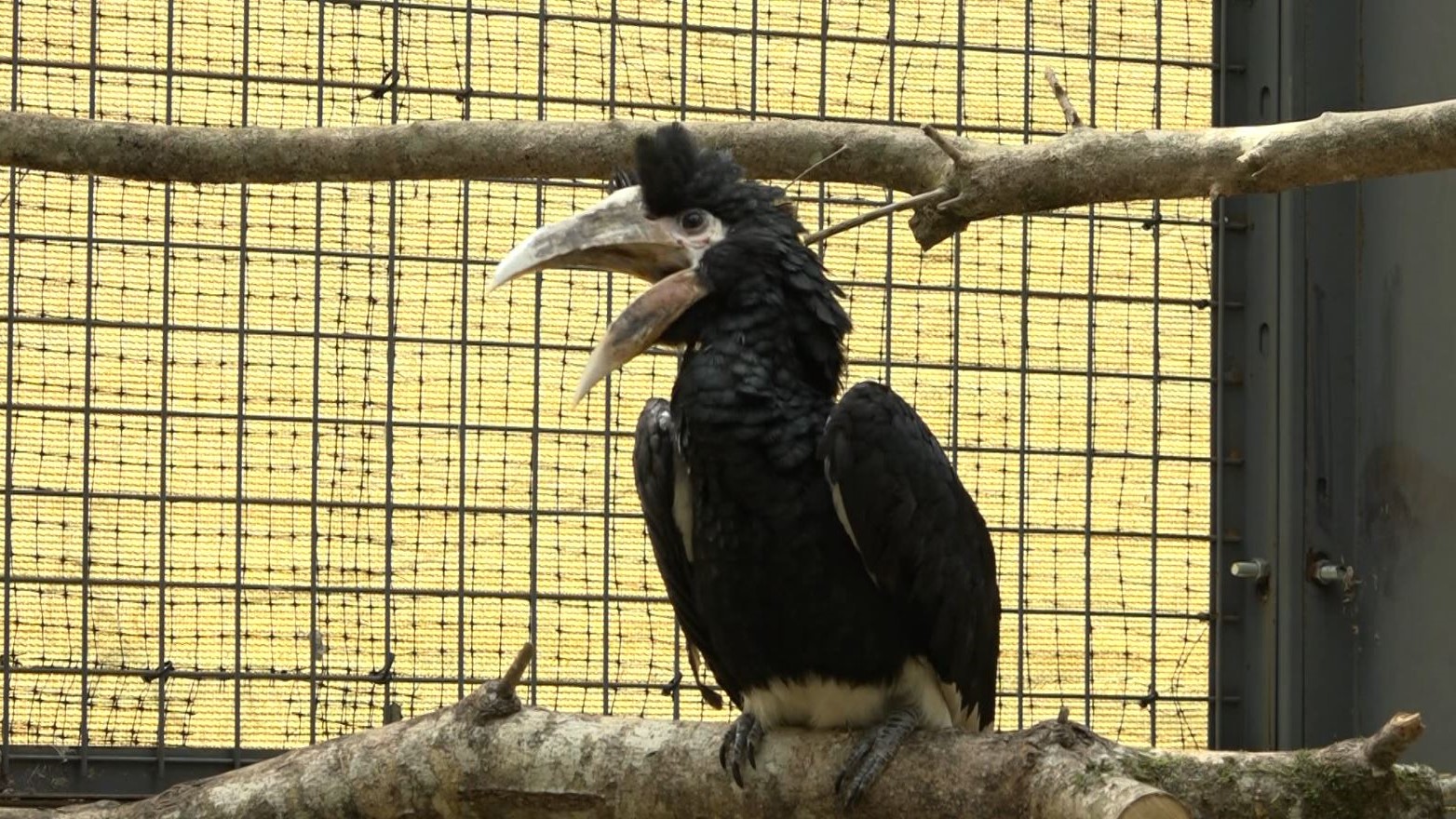
Photo of Matilda from here.
7. Now we drive east to the first coast where America's oldest city is. St. Augustine is renowned not only for its history, but also a special gem for fans of Crocodilians, the St. Augustine Alligator Farm Zoological Park. Located on Anastasia Island, it not only holds all the species of crocodilians, but also two rare hornbills in collections. These are the White-Crowned (Berenicornis comatus) & Knobbed (Rhyticeros cassidix) hornbills. They also have a world-renowned wading bird rookery that draws birders and photographers every nesting season. Make sure to also make time to stop by the Castillo de San Marcos or Pirate & Treasure Museum to fully enjoy St. Augustine's history.
 White Crowned Hornbill by @Sarus Crane
8. The last stop on the tour is Tampa to visit Zoo Tampa, where you can see Southern Ground (Bucorvus leadbeateri), Trumpeter (Bycanistes buccinator), Silvery Cheeked (Bycanistes brevis), Sulawesi (Rhabdotorrhinus exarhatus) and Von der Decken (Tockus deckeni) hornbills. Before heading out of Tampa make sure to stop by at Busch Gardens for a day or two and be sure to ride Iron Gwazi, Montu, Kumba, Sheikra and the rest of their great coaster collection.
 Sulawesi Hornbill by @zoo_enthusiast
Well that's it for the tour. I know I probably missed a species or two but since so many facilities have overlapping hornbill species in their collections I figured this order may be the best way to go.
Driving route via Google Maps.
1. The first stop is Memphis Zoo which holds the only pair of Yellow-Casqued Hornbills (Ceratogymna elata). they also hold Red-Billeds (Tockus erythrorhynchus) as well. Other stops in Memphis can include stopping to see Elvis Presley's Graceland mansion, the National Civil Rights Museum, the Rock n' Soul Museum and others depending upon what you want to see.
2. Now we will be heading southwest to Texas to the Fort Worth Zoo where we will be viewing Abyssinian Ground (Bucorvus abyssinicus) and Wrinkled Hornbills (Rhabdotorrhinus corrugatus) before making our way east to Dallas. Other sites to visit can include the Fort Worth Stockyards, Texas Cowboy Hall of Fame, and Kimbell Art Museum.
3. Traveling east to Dallas we stop at the Dallas World Aquarium where we can view the Eastern Yellow Billed (Tockus flavirostris), Rhinoceros (Buceros rhinoceros) & Blyth’s (Rhyticeros plicatus) hornbills.
4. Make sure to also make time for the Dallas Zoo, which also has Wreathed Hornbills (Rhyticeros undulatus) to see as well as perhaps Six Flags Over Texas and the Sixth Floor Museum at Dealey Plaza.
5. Traveling several hours southeast, stop at the Houston Zoo where you can see both the Great Indian (Buceros bicornis) & Crowned Hornbill (Tockus alboterminatus). While in Houston be sure to check out the museum district with the Houston Museum of Natural Science as well as the Museum of Fine Arts Houston.
6. Heading east leads us to Lamont, FL near Tallahassee where the North Florida Wildlife Center is located. At this private facility in which you'll need to schedule a tour you can see Black-Casqued Hornbills (Ceratogymna atrata) & the only White-Thighed Hornbill (Bycanistes albotibialis) left in America, a female named Matilda.
Photo of Matilda from here.
7. Now we drive east to the first coast where America's oldest city is. St. Augustine is renowned not only for its history, but also a special gem for fans of Crocodilians, the St. Augustine Alligator Farm Zoological Park. Located on Anastasia Island, it not only holds all the species of crocodilians, but also two rare hornbills in collections. These are the White-Crowned (Berenicornis comatus) & Knobbed (Rhyticeros cassidix) hornbills. They also have a world-renowned wading bird rookery that draws birders and photographers every nesting season. Make sure to also make time to stop by the Castillo de San Marcos or Pirate & Treasure Museum to fully enjoy St. Augustine's history.
8. The last stop on the tour is Tampa to visit Zoo Tampa, where you can see Southern Ground (Bucorvus leadbeateri), Trumpeter (Bycanistes buccinator), Silvery Cheeked (Bycanistes brevis), Sulawesi (Rhabdotorrhinus exarhatus) and Von der Decken (Tockus deckeni) hornbills. Before heading out of Tampa make sure to stop by at Busch Gardens for a day or two and be sure to ride Iron Gwazi, Montu, Kumba, Sheikra and the rest of their great coaster collection.
Well that's it for the tour. I know I probably missed a species or two but since so many facilities have overlapping hornbill species in their collections I figured this order may be the best way to go.
Attachments
Last edited:


