You are using an out of date browser. It may not display this or other websites correctly.
You should upgrade or use an alternative browser.
You should upgrade or use an alternative browser.
Zoochat Big Year 2022
- Thread starter Chlidonias
- Start date

Mammals:
7. Common Seal - Phoca vitulina
Is this a miscount or a missed species for #8?Mammals:
9. Brown Hare - Lepus europaeus
1. Eastern Grey Squirrel (Sciurus carolinensis)
2. Eastern Cottontail (Sylvilagus floridanus)
2. Fox Squirrel (Sciurus niger)
1. House Finch (Haemorhous mexicanus)
2. Downy Woodpecker (Picoides pubescens)
3. Canada Goose (Branta canadensis)
4. Blue Jay (Cyanocitta cristata)
5. American Crow (Corvus brachyrhynchos)
6. Dark-Eyed Junco (Junco hyemalis)
7. Mourning Dove (Zenaida macroura)
8. Common Grackle (Quiscalus quiscula)
9. Red-Tailed Hawk (Buteo jamaicensis)
10. Mallard (Anas platyrhynchos)
11. American Robin (Turdus migratorius)
12. Common/European Starling (Sturnus vulgaris)
13. Rock Pigeon (Columba livia)
14. Northern Cardinal (Cardinalis cardinalis)
15. Great Horned Owl (Bubo virginianus)
The numbering of your lists makes no sense. You might want to look at fixing that.6. Mourning Dove (Zenaida macroura)
7. Red-Tailed Hawk (Buteo jamaicensis)
8. Mallard (Anas platyrhynchos)
9. American Robin (Turdus migratorius)
10. European Starling (Sturnus vulgaris)
11. Rock Pigeon (Columba livia)
12. Northern Cardinal (Cardinalis cardinalis)
13. Great Horned Owl (Bubo virginianus)
14. Red Bellied Woodpecker (Melanerpes carolinus)
15. Bald Eagle (Haliaeetus leucocephalus)
16. American Tree Sparrow (Spizelloides arborea) (Lifer)
17. Carolina Wren (Thryothorus ludovicianus)
18. White-Breasted Nuthatch (Sitta carolinensis)
19. Red-Headed Woodpecker (Melanerpes erythrocephalus)
20. Red-Breasted Nuthatch (Sitta canadensis)
21. House Sparrow (Passer domesticus)
22. Northern Pintail (Anas acuta) (Lifer)

I can see I've messed up my numbering so I'll just post my full list here:The numbering of your lists makes no sense. You might want to look at fixing that.
Mammals:
1. Eastern Gray Squirrel (Sciurus carolinensis)
2. Eastern Cottontail (Sylvilagus floridanus)
3. Fox Squirrel (Sciurus niger)
Birds:
1. House Finch (Haemorhous mexicanus)
2. Downy Woodpecker (Picoides pubescens)
3. Canada Goose (Branta canadensis)
4. Blue Jay (Cyanocitta cristata)
5. American Crow (Corvus brachyrhynchos)
6. Dark-Eyed Junco (Junco hyemalis)
7. Mourning Dove (Zenaida macroura)
8. Red-Tailed Hawk (Buteo jamaicensis)
9. Mallard (Anas platyrhynchos)
10. American Robin (Turdus migratorius)
11. Common/European Starling (Sturnus vulgaris)
12. Rock Pigeon (Columba livia)
13. Northern Cardinal (Cardinalis cardinalis)
14. Great Horned Owl (Bubo virginianus)
15. Red Bellied Woodpecker (Melanerpes carolinus)
16. Bald Eagle (Haliaeetus leucocephalus)
17. American Tree Sparrow (Spizelloides arborea) (Lifer)
18. Carolina Wren (Thryothorus ludovicianus)
19. White-Breasted Nuthatch (Sitta carolinensis)
20. Red-Headed Woodpecker (Melanerpes erythrocephalus)
21. Red-Breasted Nuthatch (Sitta canadensis)
22. House Sparrow (Passer domesticus)
23. Northern Pintail (Anas acuta) (Lifer)
A cold and slow winter, but I still managed to get out and find my first two lifers.
Mammal:
3. Fox Squirrel (Sciurus niger)
Birds:
7. Mourning Dove (Zenaida macroura)
8. Red-Tailed Hawk (Buteo jamaicensis)
9. Mallard (Anas platyrhynchos)
10. American Robin (Turdus migratorius)
11. European Starling (Sturnus vulgaris)
12. Rock Pigeon (Columba livia)
13. Northern Cardinal (Cardinalis cardinalis)
14. Great Horned Owl (Bubo virginianus)
15. Red Bellied Woodpecker (Melanerpes carolinus)
16. Bald Eagle (Haliaeetus leucocephalus)
17. American Tree Sparrow (Spizelloides arborea) (Lifer)
18. Carolina Wren (Thryothorus ludovicianus)
19. White-Breasted Nuthatch (Sitta carolinensis)
20. Red-Headed Woodpecker (Melanerpes erythrocephalus)
21. Red-Breasted Nuthatch (Sitta canadensis)
22. House Sparrow (Passer domesticus)
23. Northern Pintail (Anas acuta) (Lifer)
Insect/invert:
1. Asian lady beetle (Harmonia axyridis)
2. SIlverfish (Lepisma saccharina)
Additions for this week:
Birds:
24. Great Blue Heron (Ardea herodias)
25. Belted kingfisher (Megaceryle alcyon)
Insect/invert:
3. House centipede (Scutigera coleoptrata)

Is this a miscount or a missed species for #8?
Ah yes - typo! 8 is correct for the hare.


Might as well add my hat into the ring, finally going on some long-delayed foreign holidays this year (hopefully).
Mammals
- Brown rat
- House mouse
- Grey squirrel
- Reeve's muntjac
- European rabbit
Birds
No reptiles or amphibians as yet.
- Reed bunting
- European goldfinch
- Common linnet
- European greenfinch
- Meadow pipit
- Pied wagtail
- House sparrow
- Dunnock
- European stonechat
- European robin
- Eurasian blackbird
- Redwing
- Song thrush
- Mistle thrush
- Common starling
- Eurasian blackcap
- Long-tailed tit
- Eurasian skylark
- Great tit
- Eurasian blue tit
- Carrion crow
- Eurasian jackdaw
- Common magpie
- Ring-necked parakeet
- Common kestrel
- Eurasian green woodpecker
- Great spotted woodpecker
- Common buzzard
- Great cormorant
- Herring gull
- Black-headed gull
- Eurasian coot
- Common moorhen
- Collared dove
- Common woodpigeon
- Tufted duck
- Mallard
- Egyptian goose
- Mute swan
- Eurasian nuthatch
- Goldcrest
- Coal tit
- Eurasian jay
- Stock dove
- Eurasian wren
- Greylag goose
- Lesser black-backed gull
- Common gull
- Red kite
- Great northern diver
- Great crested grebe
- Little grebe
- Common goldeneye
- Eurasian wigeon
- Gadwall
- Canada goose
- Grey wagtail
- Great black-backed gull
- Common chaffinch
- Common chiffchaff
- Pallas's warbler
- Common kingfisher
- Eurasian sparrowhawk
- Grey heron
- Common snipe
- Northern lapwing
- European golden plover
- Goosander
- Smew
- Common pochard
- Northern shoveller
- Little egret
- Common redshank
- Eurasian curlew
- Grey plover
- Eurasian oystercatcher
- Pied avocet
- Eurasian teal
- Common shelduck
- Brent goose
- Sanderling
- Ruddy turnstone
- Common firecrest
- Hume's leaf warbler
- Shorelark
- Peregrine falcon
Just two additions this weekend, having failed at seeing target Little Bunting and Brambling (ah well!). Fingers crossed for a black throated diver and some seals next weekend at Cliffe Pools RSPB.
Mammals
6. Red Fox
Birds
87. Water Rail

A trip down to the estuary got me a few more species, but I missed out on Spotted Redshank and Jack Snipe. Sure I'll get them this year however at some point.
54. Meadow Pipit (Anthus pratensis)
55. Eurasian Skylark (Alauda arvensis)
56. Red Knot (Calidris canutus)
57. Whimbrel (Numenius phaeopus)
58. Eurasian Collared-Dove (Streptopelia decaocto)
59. Rock Pigeon (Columba livia)
54. Meadow Pipit (Anthus pratensis)
55. Eurasian Skylark (Alauda arvensis)
56. Red Knot (Calidris canutus)
57. Whimbrel (Numenius phaeopus)
58. Eurasian Collared-Dove (Streptopelia decaocto)
59. Rock Pigeon (Columba livia)
Birds
76 Pink-footed Goose Anser brachyrhynchus
76 Pink-footed Goose Anser brachyrhynchus
I'm now convinced the birds are Abu-Dhabi-Grand-Prixing me on the 100 birds in January thing and managing themselves to guarantee an exciting climax. One day of birding to go and they have contrived to leave me one away and missing a fair number of quite common species (including things like jay and Mistle Thrush).
Meanwhile, mammals have snuck up the inside and with 24hr to go have given me my best January for UK mammals since I started counting (beating 2018's score of 9).
I started today by going back for another go at the Idle Valley American Wigeon - and this time it was present and correct and very nice it is too. I then went up to RSPB Old Moor, thinking at a minimum I would be able to get bullfinch (pretty much guaranteed on the feeders there). I did, but in the end that was all I managed new-year-bird-wise, but a rabbit outside one of the hides and gloriously showy weasel (Least Weasel at RSPB Old Moor, 30th January 2022 - ZooChat) were ample compensations.
Birds:
98. American Wigeon - Mareca americana
99. Eurasian Bullfinch - Pyrrhula pyrrhula
Mammals:
9. Least Weasel - Mustela nivalis
10. European Rabbit - Oryctolagus cuniculus
I'll be out and about again tomorrow.
Meanwhile, mammals have snuck up the inside and with 24hr to go have given me my best January for UK mammals since I started counting (beating 2018's score of 9).
I started today by going back for another go at the Idle Valley American Wigeon - and this time it was present and correct and very nice it is too. I then went up to RSPB Old Moor, thinking at a minimum I would be able to get bullfinch (pretty much guaranteed on the feeders there). I did, but in the end that was all I managed new-year-bird-wise, but a rabbit outside one of the hides and gloriously showy weasel (Least Weasel at RSPB Old Moor, 30th January 2022 - ZooChat) were ample compensations.
Birds:
98. American Wigeon - Mareca americana
99. Eurasian Bullfinch - Pyrrhula pyrrhula
Mammals:
9. Least Weasel - Mustela nivalis
10. European Rabbit - Oryctolagus cuniculus
I'll be out and about again tomorrow.

Went to Western Springs park, which is directly opposite of Auckland Zoo, yesterday. And whilst the lake setting was interesting for viewing the shags, coots and scaups most of it was just glorified duck ponds. Revolting to the nose, with swarms of mallard, feral pigeons and pukekos all over. Although seeing a shag colony on one of the trees was nice, also saw a really huge koi carp and I'm unsure whether they're wild/established so I won't count it on my total, also two birds till I hit 50(And it's only January)!Inverts
11. Leopard Slug (Limax maximus)
Birds
45. Little Shag (Phalacrocorax sulcirostris)
46. Australian Coot (Fulica atra)
47. Little Black Shag (Phalacrocorax sulcirostris)
48. Greylag Goose (Anser anser)
Fish
3. Longfin Eel (Anguilla dieffenbachii)

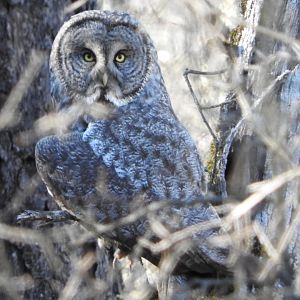
Well I'm still missing all five bird species I mentioned in my last update, but I've added three mammals and caught up with an elusive mega-rarity for a wild lifer!
Mammals:
3. Western Gray Squirrel (Sciurus griseus)
4. California Ground Squirrel (Otospermophilus beecheyi)
5. Botta’s Pocket Gopher (Thomomys bottae)
Birds:
56. Mourning Dove (Zenaida macroura)
57. Great Gray Owl (Strix nebulosa) - wild lifer
Invertebrates:
4. Bordered Plant Bug (Largus succinctus)
5. Common Bluebottle (Calliphora vomitoria)
5-57-2-0-0-5
Well another day another failed roadrunner attempt, my nemesis bird 7 years running (no pun intended
 ). Everyone else sees them, but they dislike me for some reason apparently (I swear I'm not a coyote!) Saving grace of the otherwise unworthwhile attempt was a Loggerhead Shrike posted up in a short tree, a species that has gotten harder to find in recent years.
A few other species from the last few days as well. Just missed a fish to some annoyance, and still missing several species I ought to have by now.
Mammals:
6. Brazilian Free-tailed Bat (Tadarida brasiliensis)
Birds:
58. Great Egret (Ardea alba)
59. Western Meadowlark (Sturnella neglecta)
60. Loggerhead Shrike (Lanius ludovicianus)
61.House Sparrow (Passer domesticus)
6-58-2-0-0-5

Saw a new bird in my backyard today:
20. Chipping Sparrow
1/30/22
21. Double-Crested Cormorant
22. Willet
23. Great Blue Heron
1/30/22
21. Double-Crested Cormorant
22. Willet
23. Great Blue Heron
Also forgot about this one:
1/30/22
24. Great Egret

Last weekend I saw that a Red-breasted Goose was seen not too far from where I live. It was a bit outside my usual area but as it is a species I am very fond of I couldn't resist to try to see it. Once on location I started scanning the flocks of geese and it didn't take long for me to find the bird I was looking for. The Red-breasted Goose showed very well indeed (they really are absurdly good-looking!) and I watched it for about an hour until the wind became so strong I could hardly keep my spotting scope steady. Really great sighting, one of the best so far this year!
Birds
116. Red-breasted Goose, Branta ruficollis
Birds
116. Red-breasted Goose, Branta ruficollis

Platypusboy
Well-Known Member
Birds
17. Greenfinch 31/1/22
17. Greenfinch 31/1/22

Birds
61. Pine Siskin Spinus pinus
Mammals
7. Meadow Vole Microtus pennsylvanicus
BirdsBirds
73. Horned Lark Eremophila alpestris
74. Iceland Gull Larus glaucoides
Mammals
8. American Mink Neogale vison
Forest of Dean today; always a pleasure. No luck on Wild Boar or goshawk this time (both are 50/50 in my experience) but a great day enough additions to see me safely past the January 100.
(I have one further photo ID to attempt so this may not be the last you hear of this day..!)
Birds:
100. Northern Raven - Corvus corax
101. European Hawfinch - Coccothraustes coccothraustes
102. European Jay - Garrulus glandarius
103. Common Crossbill - Loxia curvirostris
Mammals:
11. European Fallow Deer - Dama dama
(I have one further photo ID to attempt so this may not be the last you hear of this day..!)
Birds:
100. Northern Raven - Corvus corax
101. European Hawfinch - Coccothraustes coccothraustes
102. European Jay - Garrulus glandarius
103. Common Crossbill - Loxia curvirostris
Mammals:
11. European Fallow Deer - Dama dama

I'm very late and can also see I am very behind... 
I need to get out more, haven't had much chance to do anything yet, will try to update lists at the end of each month.
Mammals:
01. Eastern grey squirrel (Sciurus carolinensis)
Birds:
01. Eurasian magpie (Pica pica)
02. Common wood pigeon (Columba palumbus)
03. Eurasian coot (Fulica atra)
04. Great tit (Parus major)
05. Blue tit (Cyanistes caeruleus)
06. Mallard (Anas platyryhnchos)
07. Northern shoveler (Spatula clypeata)
08. Eurasian teal (Anas crecca)
09. Common pheasant (Phasianus colchius)
10. Common moorhen (Gallinula chloropus)
11. Greylag goose (Anser anser)
12. European robin (Erithacus rubecula)
13. European herring gull (Larus argentatus)
14. Common blackbird (Turdus merula)
15. Western jackdaw (Coloeus monedula)
16. Eurasian bullfinch (Pyrrhula pyrrhula)
17. Black-headed gull (Chroicocephalus ridibundus)
18. Pied wagtail (Motacilla alba)
19. Eurasian collared dove (Streptopelia decaocto)
20. Rock dove (Columba livia)
I need to get out more, haven't had much chance to do anything yet, will try to update lists at the end of each month.
Mammals:
01. Eastern grey squirrel (Sciurus carolinensis)
Birds:
01. Eurasian magpie (Pica pica)
02. Common wood pigeon (Columba palumbus)
03. Eurasian coot (Fulica atra)
04. Great tit (Parus major)
05. Blue tit (Cyanistes caeruleus)
06. Mallard (Anas platyryhnchos)
07. Northern shoveler (Spatula clypeata)
08. Eurasian teal (Anas crecca)
09. Common pheasant (Phasianus colchius)
10. Common moorhen (Gallinula chloropus)
11. Greylag goose (Anser anser)
12. European robin (Erithacus rubecula)
13. European herring gull (Larus argentatus)
14. Common blackbird (Turdus merula)
15. Western jackdaw (Coloeus monedula)
16. Eurasian bullfinch (Pyrrhula pyrrhula)
17. Black-headed gull (Chroicocephalus ridibundus)
18. Pied wagtail (Motacilla alba)
19. Eurasian collared dove (Streptopelia decaocto)
20. Rock dove (Columba livia)
63) Black Tern Chlidonias niger
64) Black-fronted Tern Chlidonias albostriatus
64) Black-fronted Tern Chlidonias albostriatus
The Black Tern went missing for a week after it had been seen in Waikanae, but fortunately for everyone who missed it there it was spotted again yesterday afternoon at the tern roost at Plimmerton. I headed up there early this morning before work to try my luck. It's an easier site to get to than the Waikanae beach. For Waikanae it is an hour's train ride, then wait for a bus which only comes around once an hour, and then walk along the beach for what seems like miles but is only about ten minutes to the roost (and then the blasted tern doesn't even show up!). For Plimmerton it is a half-hour train ride, and then the roost is only a few minutes walk from the train station. The tern, of course, was not at the Plimmerton roost. I checked from several angles in case it was hunkered down behind a rock, but it was just a matter of waiting because after about half an hour the Black Tern flew in, extremely obviously different to the bigger White-fronted Terns, with its grey plumage and fluttering flight. It's a lovely little bird - I hope it stays put and gets its breeding plumage. The tern was still being reported there in the afternoon so, seeing I had my binoculars anyway I went back to see it again after work. While I was there a Black-fronted Tern flew past, very fast and brief, and there was also an Eagle Ray Myliobatis tenuicaudatus just off the rocks. I don't keep a fish list, but that's the second ray I've seen this year, with the first being a Short-tailed Stingray Bathytoshia (Dasyatis) brevicaudata seen a couple of weeks ago on my way to work.Today, for the third time this month, I went north to the Waikanae Estuary. As I have mentioned before, I usually only go up there once or twice a year because it takes ages to get there. However, on Friday a Black Tern Chlidonias niger was spotted there amongst a roost of White-fronted Terns Sterna striata. The Black Tern is a Eurasian and American species for which this would be the first New Zealand record. I was working Friday and Saturday - quite a lot of people went up there on Saturday and saw it. I potentially could have made it up there after work on Saturday, but in the event it wasn't seen after 5pm on that day so I wouldn't have seen it even if I had gone.
Instead I went up on Sunday morning (today). There were a few other birders already there, but the tern flock was much reduced from yesterday and the Black Tern was not present. I stayed for about five hours before giving up on any hope that it would return to that spot today (and then it took me three hours to get home because of transport cancellations and hold-ups!). The tern didn't show up after I left thankfully - well, thankfully for me at least, perhaps not for the people who stayed longer.
I realised yesterday that all four Chlidonias species are actually in New Zealand right now, which may be the only time this has ever happened in a single country. Black-fronted Terns are obviously always in NZ because they are endemic here, and White-winged Black Terns probably are always here (they are officially summer migrants, but there are suspected to be a few permanent breeding pairs). Whiskered Terns are rare vagrants, with about a dozen records, and there is at least one here right now down by Invercargill (with a White-Winged Black Tern). And then the Black Tern makes four.There are only four species in the genus Chlidonias, and I have seen all the other three. The Black-fronted Tern C. albostriatus is endemic to New Zealand - I haven't seen one for years because I live in Wellington now where they are only seen rarely, but I used to see them regularly when I lived in the South Island. The Whiskered Tern C. hybridus and White-winged Black Tern C. leucopterus I have seen hundreds of in Asia, and I have also seen both species in New Zealand. My user-name is because the day before I joined Zoochat I had seen a Whiskered Tern in Christchurch, so it was just the first thing in my head when I had to choose a name.
However I have a feeling that at least one authority splits Eurasian and American Black Terns...