Ratites and Tinamous in North America

Update, Ostrich and Emu in spoilers due to large numbers.


Ostrich - Struthio


Common Ostrich (80 holders)

Abilene
African Lion Safari
Alligator Adventure
Binder Park
Birmingham
Boulder Ridge Wild Animal Park
Brevard
Bronx (australis)
Busch Gardens Tampa Bay (australis)
Calgary
Cincinnati
Cleveland
Columbus
Como Park
Dallas
Detroit
Dickerson Park
Discovery Wildlife Park
Disney’s Animal Kingdom
Fort Worth
Franklin Park
Fresno Chaffee
Glacier Ridge Animal Farm
Gladys Porter
Granby
Great Plains
Greater Vancouver
Hogle
Houston
Indian Creek
Indianapolis
Jacksonville (North African)
Kansas City
Lehigh Valley
Lincoln Park
Lion Country Safari
Living Desert
Los Angeles (1.0 camelus)
Magnetic Hill
Maryland
Memphis
Metro Richmond
Milwaukee
Nashville
Natural Ridge Wildlife Ranch
North Carolina
Oglebay’s Good
Oklahoma City
Omaha
Phoenix (massaicus)
Pittsburgh
Pueblo
Riverbanks
Roger Williams Park
Sacramento
Safari Lake Geneva
Safari Niagara
Safari North Wildlife Park
Safari West
San Diego Zoo Safari Park
San Francisco
Shalom Wildlife
St Louis
Summerfield
The Wilds
Toledo
Topeka
Toronto (australis?)
Utica
Virginia
Waccatee
Wild Georgia Animal Park
Wildlife Safari
Wildlife World
Wildwood Wildlife Park
Woodland Park
York’s Wild Kingdom
Zoo Atlanta
Zoo Miami
Zoo Tampa

Somali Ostrich (1 holder)

Los Angeles (0.2)


Rhea

Rhea

Greater Rhea (34-35 holders)

Abilene
Animal Haven
Assiniboine Park
Audubon
Beardsley
Birmingham Nature Center
Calgary
Detroit
Dickerson Park
Greenville
Idaho Falls
Lee Richardson
Lion Country Safari
Magnetic Hill
Miller Park
Milwaukee
National
Phoenix
Riverview
Safari Lake Geneva
Safari North Wildlife Park
Salisbury
San Francisco
Sequoia Park?
Shamba Safari
Shalom Wildlife
Staten Island
Special Memories
Timbavati Wildlife Park
Trevor
Virginia Safari Park
Wildlife Safari
Wildlife World
Wisconsin Rapids Municipal
Zoo Boise


Tinamou

Eudromia

Elegant Crested Tinamou (12 holders)

Birmingham
Bronx
Charles Paddock
Dallas World Aquarium
Fresno Chaffee
Idaho Falls
Roger Williams Park
San Diego Zoo Safari Park
Stone
St Louis
Sylvan Heights Bird Park
Toronto


Nothoprocta

Andean Tinamou (2 holders)

San Antonio
San Francisco


Crypturellus

Little Tinamou (1 holder)

Dallas World Aquarium

Tinamus

Great Tinamou (1 holder)

Dallas World Aquarium


Cassowaries, Emu

Casuarius

Southern Cassowary (32-33 holders)

Alexandria
Alligator Adventure
Baton Rouge
Birmingham
Blank Park
Brevard
Cassowary Conservation Project
Catoctin
Denver
Gladys Porter
Greensboro Science Center
Houston
Jacksonville
Los Angeles
Lousiana Purchase
Nashville
National?
Oklahoma City
Pinola Aviary
San Antonio
San Diego Zoo Safari Park
San Francisco
Sedgwick County
Shamba Safari
St Augustine Alligator Farm
Staten Island
Sylvan Heights Bird Park
Toledo
Virginia
White Oak Conservation Center
Wildlife World
York’s Wild Kingdom
Zoo Miami

Northern Cassowary (1 private holder)

Cassowary Conservation Project, (1.0 + hybrids)


Dromaius

Emu (87 holders)

ABQ Biopark
Action Wildlife
Alexandria
Animal Adventures
Animal Gardens Petting
Applegate Park
Audubon
Bear Den
Blank Park
Bluebird Gap Farm
Border City Petting
Boulder Ridge Wild Animal Park
Bramble Park
Brevard
Bronx
Brookfield
Busch Gardens Tampa
Capron Park
Charles Paddock
Cheyenne Mountain
Cincinnati
Cleveland
Columbus
Dallas
Denver
DeYoung Family
Dickerson Park
Doc’s
Emerald Forest Bird Gardens
Franklin Park
Fresno Chaffee
Glacier Ridge Animal Farm
Granby
Grant’s Farm
Greater Vancouver
High Park
Hollywild
Idaho Falls
Jacksonville
Kangaroo Creek
Kansas City
Lee Richardson
Lehigh Valley
Louisville
Lupa
Natural Ridge Wildlife Ranch
NEW
Oakland
Oglebay’s Good
Palm Beach
Pana’ewa Rainforest
Philadelphia
Pine Grove
Prospect Park
Pueblo
Racine
Riverview
Roger Williams Park
Roscommon
Sacramento
Safari Niagara
Safari North Wildlife Park
San Antonio
Santa Fe Teaching
Sedgwick County
Shamba Safari
Shalom Wildlife
Southwicks
Space Farms
Special Memories
Staten Island
Summerfield
Sylvan Heights Bird Park
The Creature Conservancy
Timbavati Wildlife Park
Trevor
Utica
Virginia
Virginia Safari Park
Wild Georgia Animal Park
Wilderness Walk
Wildlife Safari
Wildlife World
Wildwood Wildlife Park
Woodland Park
Zoo Tampa


Kiwi - Apteryx

Brown Kiwi (8 holders)

Bronx
Columbus
Franklin Park
Pinola Aviary
San Diego (offshow)
SDZSP (offshow)
Smithsonian Conservation Biology Institute
Toledo
 
San Francisco no longer has greater rheas and Andean tinamous.

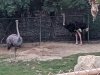
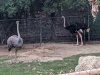
From my trip to the L.A. Zoo on November 10, 2021, I couldn't make out which ostrich subspecies they have on display (see photo attached). I'm assuming they are the Masai subspecies.

I automatically assume that all the ostriches I've seen so far are what I refer to as "Cape" ostriches (subspecies australis).
 

Attachments

  • PXL_20211111_005209102.jpg
    PXL_20211111_005209102.jpg
    186 KB · Views: 5
  • PXL_20211111_005207057.jpg
    PXL_20211111_005207057.jpg
    187.1 KB · Views: 5
Last I checked (which was some months ago), LA only had 1.1 ostrich left. The male is the North African "red-necked" subspecies, S. c. camelus, while the female should be a Somali Ostrich, S. molybdophanes. Their other Somali I think was sent to Dallas? Why the zoo is mixing the two species is beyond me, especially when the North African Ostrich is highly endangered and should have female available from Bush Gardens.

The only zoo I knew of which had Masai Ostrich was Riverbanks but I believe these birds have died. Quite a few of our birds are likely the South African subspecies, however there will undoubtedly be a lot of animals with unknown or mixed lineages as well.

~Thylo
 
Last I checked (which was some months ago), LA only had 1.1 ostrich left. The male is the North African "red-necked" subspecies, S. c. camelus, while the female should be a Somali Ostrich, S. molybdophanes. Their other Somali I think was sent to Dallas? Why the zoo is mixing the two species is beyond me, especially when the North African Ostrich is highly endangered and should have female available from Bush Gardens.

The only zoo I knew of which had Masai Ostrich was Riverbanks but I believe these birds have died. Quite a few of our birds are likely the South African subspecies, however there will undoubtedly be a lot of animals with unknown or mixed lineages as well.

~Thylo

Are we sure the female is a Somali? I'm looking at pictures of female Somali ostrich hens on Birds of the World and eBirds and the Somali females are a very rich, almost mud brown when compared to a common ostrich hen.

I share your frustration on zoos being rather indiscriminate on mixing what has been deemed separate species. The North African is "Critically Endangered" (according to signage I've seen at San Francisco Zoo talking about their commitment in helping the species) and the Somali is "Vulnerable".
 
Why the zoo is mixing the two species is beyond me, especially when the North African Ostrich is highly endangered and should have female available from Bush Gardens.

I share your frustration on zoos being rather indiscriminate on mixing what has been deemed separate species. The North African is "Critically Endangered" (according to signage I've seen at San Francisco Zoo talking about their commitment in helping the species) and the Somali is "Vulnerable"

Most zoos don't breed their ostriches though, they're easy enough to get from the private sector. Basically everywhere mixes Ostrich with some kind of hoofstock, problematic for a ground nester. A lot of places only have females due to the often aggressive temperament of males. The females are generally quite tractable and easy to work with, but males have to be worked in protected contact. Breeding them heightens aggression, which creates a problem for both staff and any exhibit mates.

I agree breeding both the North African and Somali would be a good thing, especially phasing out generic birds for those two, but getting it to happen would be difficult. Facilities would need to step up with set aside breeding enclosures and find places willing to deal with housing males. Which when the birds are available a dime a dozen from the private sector, some real commitment will need to happen if anything is to come from either taxa. Unfortunately from what we're seeing, it looks like that's not going to happen.
 
I have been told by a gentleman that raises ostriches and emus that the reason he keeps female ostriches is because they are easier to work with and that males would be very aggressive and out to kill me (I visited his property).

It really is unfortunate how in both the private sector and in zoos how there is indiscriminate cross-breeding between subspecies and hybridization between species. We need to do better in keeping species and subspecies pure :( This is almost as bad a problem as with tigers (but according to phylogenetic studies on tigers, the once many "subspecies" (Bengal, Siberian, South China, Indochinese, and Malayan) are just populations, and there are really two subspecies of tigers - the mainland tigers (Panthera tigris tigris) and the Sunda Island tigers (P. t. sondaica)). But I digress.

I will confirm that San Diego Safari Park does still have elegant-crested tinamous.

I thought I read somewhere that the AZA is trying to create a studbook for the Andean tinamou.
 
I have been told by a gentleman that raises ostriches and emus that the reason he keeps female ostriches is because they are easier to work with and that males would be very aggressive and out to kill me (I visited his property).

Yeah more or less the situation.

It really is unfortunate how in both the private sector and in zoos how there is indiscriminate cross-breeding between subspecies and hybridization between species. We need to do better in keeping species and subspecies pure

Yeah, it's problematic for many species. Sometimes it's been done to help preserve populations, but it's not ideal.

I will confirm that San Diego Safari Park does still have elegant-crested tinamous.

Excellent.

I thought I read somewhere that the AZA is trying to create a studbook for the Andean tinamou.

That would be interesting if so, as not very many of them are around and they're constantly coming and going from facilities.
 
This is almost as bad a problem as with tigers (but according to phylogenetic studies on tigers, the once many "subspecies" (Bengal, Siberian, South China, Indochinese, and Malayan) are just populations, and there are really two subspecies of tigers - the mainland tigers (Panthera tigris tigris) and the Sunda Island tigers (P. t. sondaica)). But I digress.

I don't think any zoo organizations hybridize tigers. Amur, Sumatran, and Malayan all have purebred ex-situ populations across Europe, Australia, and North America. There is organized breeding of tigers in Asian zoos as well, though I'm less familiar with these.

~Thylo
 
I don't think any zoo organizations hybridize tigers.

~Thylo

I'm sorry, I should've been a little more precise. I would hope that zoos don't hybridize tigers BUT the private sector and those "roadside zoos" are more likely to. There was a documentary called "American Tiger" that talked about that issue. In the documentary, they found out the majority of them were Bengals and Siberians with occasional Sumatrans. But, again, that's a digression, as this post is about ostriches and ratites.
 
Hi all, not sure if Frank Buck Zoo was still considered a holder of Lesser Rhea, they still claim to have them, both their website and the exhibit are labelled as such, but these do appear to be Greaters. Asked a few other people and they agreed.

65BB0B20-C053-492C-878C-CDDABA9BE4DF.jpg


F64C9DD2-5100-4C63-97F0-A8754DF9F674.jpg
 
Hi all, not sure if Frank Buck Zoo was still considered a holder of Lesser Rhea, they still claim to have them, both their website and the exhibit are labelled as such, but these do appear to be Greaters. Asked a few other people and they agreed.

65BB0B20-C053-492C-878C-CDDABA9BE4DF.jpg


F64C9DD2-5100-4C63-97F0-A8754DF9F674.jpg

Frank Buck has not been listed as a holder of Lesser Rhea here; and yes both birds photographed are Greater Rhea.
 
The second Somali ostrich from Los Angeles was transferred to Dallas a couple of years ago, where she still lives today.
 
Greater rhea are now at The Preserve at Animal Adventure and common ostrich is at GarLyn Zoo Wildlife Park
 
Back
Top