Europe's 100 must see exhibits

32. Burgers’ Desert
Burgers’ Zoo, Arnhem, the Netherlands
Opened: 1994
Size: 6000 square metres
Inhabitants: large variety of Sonoran/American desert mammals, birds and some ectotherms


After creating a rainforest replica, Burgers’ Zoo raised the bar and set out to recreate a desert. Designing an immersive environment that faithfully represents such an open landscape is challenging, but they largely succeeded in avoiding any cross-viewing (designers of Beauval should take note). Unsurprisingly the Desert has hardly been copied, given the difficulty of creating a large varied environment. Contrary to the Bush the Desert focuses on one specific location, the Sonora and Mojave desert of Northern Mexico and Southern USA. Apart from the high attention to detail in the landscaping, there is also a quite faithful representation in terms of animal species kept. Apart from a few exceptions, most animals are native to the represented ecosystem. Given the paucity of N-American animals in European collections, this naturally means that the Desert houses more zoo rarities than the majority of zoos on the continent (4 of the bird species kept are unique for European zoos). To maintain such a unique collection, several bird and mammal species are kept in larger numbers behind the scenes to maintain a breeding population, and there is close collaboration with dedicated private keepers. Now approaching it’s 30th birthday, the building has held up remarkably well and is still a unique sight in the European zoo landscape.

full

@Bosjesman

full

@lintworm

full

@Mr Gharial

full

@Goura

full

@Morgan

Similar exhibits: Dedicated desert houses are rather rare and in Eastern Europe are a pretext for stuffing a small building with small mammal and ecotherm exhibits as in Zoo Plzen, Czechia, and Zoo Wroclaw, Poland. Probably the closest is the Wuestenhaus next to Tiergarten Schoenbrunn, Vienna, Austria. At 1700 square metres it is far smaller and it houses desert species from around the world. But it does have some great exhibits and botanical collection.

full

@lintworm

full

@lintworm

full

@lintworm
 
Burgers desert is one of my favorite zoo exhibits.

I visited Burgers zoo before I saw real deserts of American West, and some mock rock seemed artificial to me. However, years later, when I visited real Joshua Tree National Park in real Mojawe Desert, I realized that the rock formations at the zoo were remarkably faithful to the real thing in their geometric shapes.

I can only say: why, oh why, so many zoo exhibits don't keep similar faithful replicas and avoiding cross-viewing as the 30-year-old Burgers desert?

One piece which failed are small 'caves' which look like Medieval prison dungeons or sensory deprivation chambers to animals kept there. But overall, after 30 years, it persists as one of the best zoo exhibits.
 
33. Chitwan
Zoo Ostrava, Czechia
Opened: 2011
Size: 13.500 square metres
Inhabitants: Asian black bear, Hanuman langur


It must have been quite a shock for the bears and langurs when they moved from their badly outdated enclosures to over one hectare of forest. The enclosure looks nothing like the Chitwan National Park in Nepal, after which the exhibit was named though, but that shouldn't really matter here. Zoo Ostrava made perfect use of the 100 hectares of forest that make up the zoo. In fact little more than just fencing out a part and creating some viewing platforms was needed to create one of the better bear enclosures in Europe. By adding a large group of Hanuman langurs, the enclosure actually offers something to see, as both bears were quite obese and not the most mobile of all. Again an enclosure where simplicity is key and keeping two attractive species together in a surprising mix is more than the sum of its parts.

full

@LaughingDove

full

@HOMIN96

full

@lintworm

Similar exhibits: Asian black bears are slowly disappearing from Europe and great exhibits are hard to find. Parc Animalier d' Auvergne in France might be the closest competitor. Monkey + bear mixes are not often seen, apart from spectacled bears. The only current example I can think of is the Indian sloth bear and rhesus monkey mix in Zoo Leipzig, Germany, which was one of the first enclosures in the huge modernization project of that zoo in the 21st century.

Zoo Leipzig:
full

@Swedish Zoo Fan
 
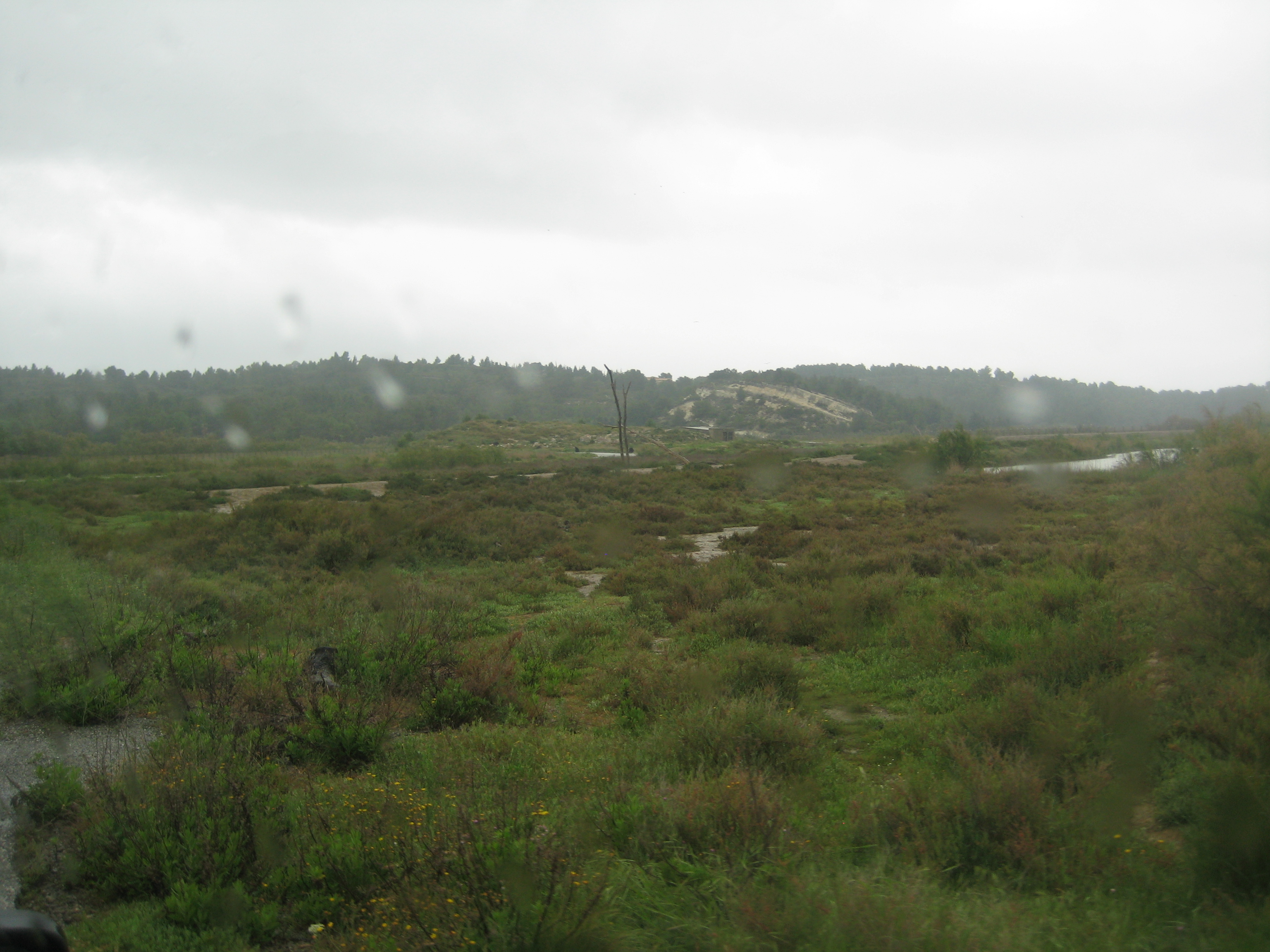
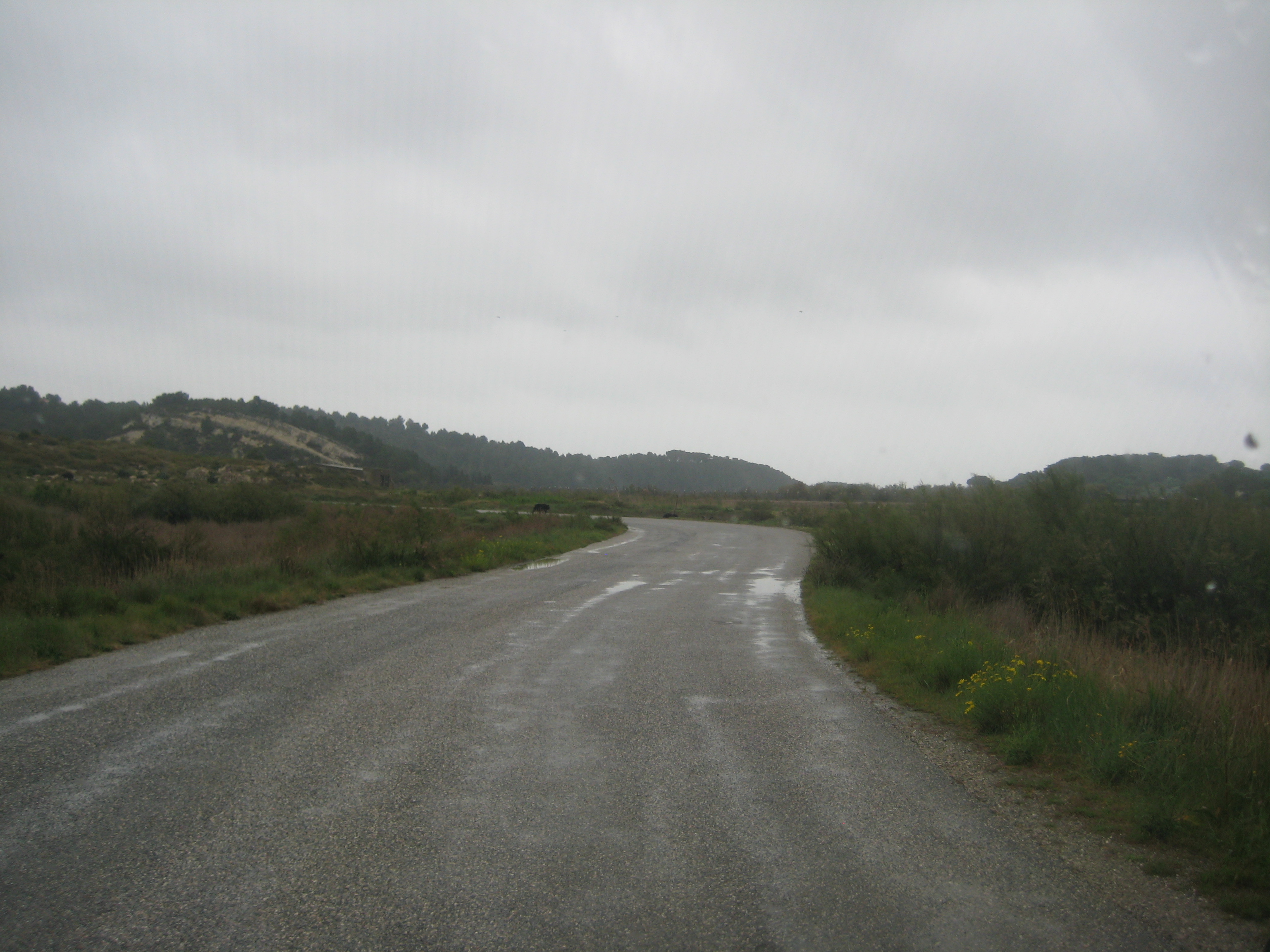
While differently landscaped (hardly any trees, just a lot of bushes and shrubs), the drive-through Asiatic black bear exhibit in Reserve Africaine de Sigean could also be considered a competitor. It may be the biggest for the species in Europe, though they don't share it with monkeys:
bF6X6pV.jpg

wMcEze1.jpg

(Not the best quality when taken through a car window when it's pouring down from dark-grey clouds)
 
When I was in Ostrava a few years ago, I didn't see any inhabitants of the bear/langur enclosure which was a pity. I would have loved to see this unique combination of species.

I believe there was also a freshwater tank with a few fishes in one of the observation huts.
 
When I was in Ostrava a few years ago, I didn't see any inhabitants of the bear/langur enclosure which was a pity. I would have loved to see this unique combination of species.

I believe there was also a freshwater tank with a few fishes in one of the observation huts.
Yup, I think there is also (much smaller) exhibit for otter and/or binturongs
 
33. Chitwan
Zoo Ostrava, Czechia
Opened: 2011
Size: 13.500 square metres
Inhabitants: Asian black bear, Hanuman langur


It must have been quite a shock for the bears and langurs when they moved from their badly outdated enclosures to over one hectare of forest. The enclosure looks nothing like the Chitwan National Park in Nepal, after which the exhibit was named though, but that shouldn't really matter here. Zoo Ostrava made perfect use of the 100 hectares of forest that make up the zoo. In fact little more than just fencing out a part and creating some viewing platforms was needed to create one of the better bear enclosures in Europe. By adding a large group of Hanuman langurs, the enclosure actually offers something to see, as both bears were quite obese and not the most mobile of all. Again an enclosure where simplicity is key and keeping two attractive species together in a surprising mix is more than the sum of its parts.

full

@LaughingDove

full

@HOMIN96

full

@lintworm

Similar exhibits: Asian black bears are slowly disappearing from Europe and great exhibits are hard to find. Parc Animalier d' Auvergne in France might be the closest competitor. Monkey + bear mixes are not often seen, apart from spectacled bears. The only current example I can think of is the Indian sloth bear and rhesus monkey mix in Zoo Leipzig, Germany, which was one of the first enclosures in the huge modernization project of that zoo in the 21st century.

Zoo Leipzig:
full

@Swedish Zoo Fan
Would the langur be constantly in stress though?
 
With only 1/3 of the thread completed this one has already more posts than its predecessor zoo thread. I am happy it provides ample scope for discussion, though I am disappointed in you my concrete posts don't get as much love as the other posts :p.


One piece which failed are small 'caves' which look like Medieval prison dungeons or sensory deprivation chambers to animals kept there. But overall, after 30 years, it persists as one of the best zoo exhibits.

Then you must dislike basically any indoor-only habitat that depends on artificial light. Compared to other zoos the enclosures in the Desert are much more spacious, with unsuitable species like burrowing owl, nine-banded armadillo, swift fox, rock squirrel and striped skunk faced out over the years.

I believe there was also a freshwater tank with a few fishes in one of the observation huts.

There is indeed one, which kept clown featherback and black pond turtle on my visit, as a smaller binturong and otter enclosure. But I left them out as they aren't part of the exhibit I wanted to highlight (which isn't 100% consistent with earlier entries, but well :p)

Would the langur be constantly in stress though?

The langurs are much faster than the bears and have full access to all the trees. So there is plenty of space to avoid conflict and the mix seemed to be doing fine.
 
33. Chitwan
Zoo Ostrava, Czechia
Opened: 2011
Size: 13.500 square metres
Inhabitants: Asian black bear, Hanuman langur


It must have been quite a shock for the bears and langurs when they moved from their badly outdated enclosures to over one hectare of forest. The enclosure looks nothing like the Chitwan National Park in Nepal, after which the exhibit was named though, but that shouldn't really matter here. Zoo Ostrava made perfect use of the 100 hectares of forest that make up the zoo. In fact little more than just fencing out a part and creating some viewing platforms was needed to create one of the better bear enclosures in Europe. By adding a large group of Hanuman langurs, the enclosure actually offers something to see, as both bears were quite obese and not the most mobile of all. Again an enclosure where simplicity is key and keeping two attractive species together in a surprising mix is more than the sum of its parts.

full

@LaughingDove

full

@HOMIN96

full

@lintworm

Similar exhibits: Asian black bears are slowly disappearing from Europe and great exhibits are hard to find. Parc Animalier d' Auvergne in France might be the closest competitor. Monkey + bear mixes are not often seen, apart from spectacled bears. The only current example I can think of is the Indian sloth bear and rhesus monkey mix in Zoo Leipzig, Germany, which was one of the first enclosures in the huge modernization project of that zoo in the 21st century.

Zoo Leipzig:
full

@Swedish Zoo Fan

A very, very good exhibit with a possibly slightly misleading name: most of the forest cover of Chitwan are broadleaf subtropical trees while this species of bear lives in deciduous forests which drop their leafs seasonally. So in that perspective, I think this exhibit is in line with the habitat the bears live in.
I'm not so sure if Asiatic black bears occur in Chitwan NP; grey langur does, but these are a highly adaptable species for a large number of habitats.
 
34. Camel paddocks
Tierpark Berlin, Germany
Opened: 1955
Size: 4.5 hectares
Inhabitants: Dromedary camel, Bactrian camel, alpaca, llama, vicuna, guanaco, flamingo


This open meadow is quite literally the centre piece of the forest of trees (and green fences) that is Tierpark Berlin. Whereas many of the earlier enclosures were functional only, the camel paddocks fit perfectly in the surrounding landscape. By using (dry) moats and a gentle curve it is in several places impossible to see where the enclosure ends, that is, until one sees visitors strolling on the other side. The paddocks also seem almost seamlessly connected, until one sees up-close that there is a moat in between. This really is a homage to simplicity and it is one of the more impressive sights in the Tierpark. But is also a place to calm down after the rarity onslaught that this zoo still is, though having 6 species of camelid next to each other is a rarity in itself.

full

@lintworm

full

@FunkyGibbon

full

@Maguari


full

@Shirokuma


Similar exhibits: Another German zoo is also great in creating simple, but very pleasant hoofstock exhibits. Tierpark Hellabrunn in München incorporates the riverine nature of its site, by having a large number of moated paddocks. The Mhor gazelle enclosure in particular is extremely pleasing to the eye:


full

@lintworm

full

@SimonBio
 
35. Elephant house
Zoo Budapest, Hungary
Opened: 1912
Size: 600 square metres
Inhabitants: Asian elephant, common hippo, yellow mongoose


After the original zoo company went bankrupt, the Budapest city council took over the zoo and closed it for three years for a complete make-over. The zoo that re-opened in 1912 is still in many ways the zoo of today, with what must be one of the most complete sets of historic zoo buildings anywhere. The highlight is the elephant house, formerly called pachyderm house. When seen from afar, the main drawing cards of this building in oriental style are its blue domes and tower. Though the tower was originally removed because it remembered people of a mosque. After extensive renovations it was put back in place in 2000. What makes this building even more special are all the intricate details, like the eosin glazed ornaments, decorative paintings and animal figures throughout the building. The renovated building even won a Europa Nostra award, which is a prize for cultural heritage across Europe. While the architecture of the building is amazing, it is less suited for its inhabitants, but the elephants do also have a more modern stable and should at some point move to the planned extension, if it ever opens…

full

@ralph

full

@Orycteropus

full

@lintworm

full

@lintworm

full

@lintworm

Similar exhibits: Tierpark Hellabrunn in München, Germany, also has a nice domed elephant house, which was completely renovated in 2016. It lacks most of the details that make the Budapest elephant house so special, but it is still an iconic building.

full

@Paul Kalisch

full

@twilighter

full

@SimonBio
 
Every zoo enthousiast should have seen this building at least once in his/her life.

I completely agree ;), I personally think it is one of the most beautiful pieces of zoo architecture period. Budapest in general is one of the top zoos in the world to see historic zoo architecture and I would put it right next to Antwerp, Vienna, Paris and Berlin. It might not be as good when it comes to incorporating modern husbandry into their old buildings and some buildings could do with some renovations, but given the financial differences this is maybe not surprising.
 
36. Etosha house
Zoo Basel, Switzerland
Opened: 2001
Size: 650 square metres (building only)
Inhabitants: 17 African dry country species including Cape ground squirrel, sociable weaver, slender-tailed meerkat and carmine bee-eater


Named after the Etosha National Park in Namibia, famous for its large concentrations of big game, the focus here is on smaller species. The goal of the house is to show the circle of life. Starting in a room with only plants, one passes locusts, several herbivores and insectivores before reaching the apex predator of the house: the slender-tailed meerkat. After that life goes downhill with a flower beetle display, showing detritivores. There is even a predator-prey display where honey bees live next to a colony of carmine bee-eaters. Even if the educational theme of the house is lost on you, this is still a wonderful little place, with high quality enclosures showing several more unknown species. The obvious highlight is the large exhibit which is dominated by a large sociable weaver colony, but also houses Cape ground squirrel, rock hyrax, lovebirds and red-billed hornbill. This exhibit alone would have been a worthy standalone inclusion on this list and the sociable weavers are the big stars here. With well over 50 birds there is always something going on here.

full

@lintworm

full

@lintworm

full

@Maguari

full

@lintworm

Similar exhibits: The most famous zoo building focusing on smaller African species must be the Africa Rocks! Complex in Zoo Prague, Czechia, but this building suffers from cramming too many species in one building and many of the tiny terraria are awkward to view. A more high-quality building was opened in the Walter Zoo in Gossau, Switzerland, here meerkats take centre-stage, but there are several smaller mammals, birds and reptiles to be found here too. Basel even has a second high quality Africa building from the same era: Gamgoas. This former carnivore house is now mostly education, but has two fascinating enclosures. One houses termites and the second is a mixed enclosure of nile crocodile, dwarf mongoose, several birds and cichlids.

Zoo Prague:
full

@vogelcommando

Walter Zoo Gossau:
full

@lintworm

full

@lintworm

full

@lintworm

full

@lintworm

Gamgoas, Zoo Basel:
full

@Maguari

full

@lintworm

full

@lintworm
 
Last edited:
Back
Top