Auckland Zoo Review (January 2022)
Introduction:
I visited Auckland Zoo on 04/01/2022 and to celebrate the year of their centenary (1922-2022), I thought I’d write a review of my visit.
I’ve visited Auckland Zoo many times and it remains my favourite New Zealand zoo due to its modern, world class exhibits; combined with it’s rich history.
I’ve read many first rate zoo reviews on ZooChat. Most recently the reviews of Taronga Zoo by @WhistlingKite24 and the National Zoo and Aquarium by @akasha, which inspired me to write this review.
As this wasn’t my first visit, I‘ve taken photos previously of some of the exhibits I mention, which I didn’t retake photos of on this visit. Therefore some of my photos are from previous visits and used merely to illustrate the exhibits described in the review. All photos are my own.
I’ll be posting this review across multiple posts, so stay tuned.
Entrance and First Exhibits:
The entrance to Auckland Zoo is a large courtyard containing the ticket office, information centre and gift shop. It really streamlines the entry process as annual pass holders can bypass the ticket office and enter via a seperate line at the entrance gate.
Due to Covid restrictions, Auckland Zoo was operating on a one way system on the day of my visit. This meant all visitors were funnelled past the playground to the otter and red panda exhibits. This is my preferred route if I arrive at opening time, as the majority of visitors head for the African precinct; but the one way system forced everyone to join me.
A Nepalese red panda was in the highest branches of the tree. It’s a fairly small and unimaginative exhibit, with signage boards informing visitors about conservation work in Nepal.
Next is the Asian small-clawed otter exhibit. The exhibit is set against the backdrop of a stony wall, that was part of the zoo’s original row of exhibits in 1922 - then housing Indian leopard, Bengal tiger and Puma. The zoo’s raft of otters consists of seven brothers born across three litters between May 2019 and September 2020. They make for a highly engaging exhibit and were very active on my visit. The otter exhibit features an underwater viewing window, which offers a decent view of them playing in the water.
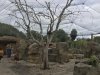
Adjacent to the otter exhibit is the Ring-tailed lemur exhibit. Built on the site of what was once a tiger exhibit in the 1920’s, it later housed Nepalese red panda from the 1990’s into the early 2000’s; and was then converted into a covered Sumatran tiger exhibit in 2006, retaining the original 1922 wall. Since the death of the last tiger in 2019, this exhibit has held Ring-tailed lemurs. The exhibit holds a fraction of the appeal it commanded during the time it housed tigers. Lemurs are a poor choice for this exhibit given the glare of the glass and the ample foliage cover. I couldn’t see them at a glance and quickly moved on.

Ring-tailed lemur exhibit (formerly held Sumatran tiger)
Te Puna Cafe:
Opposite the lemur and otter exhibits is the zoo’s cafe Te Puna, which opened in 2020. It serves up cuisine from Heaven and prices from Hell. The architecture of this building is truly stunning and well deserving of the Auckland Architectural Award it won in 2021. It’s exterior reminds me of the Casson Pavilion (one of my favourite pieces of architecture) and the verandah overlooking the zoo’s historic Central Lake is never more picturesque than when an orangutan is traversing the aerial pathway.

Te Puna at sunset

View from verandah of Te Puna
South East Asian Precinct (Lowlands and Lake/Wetlands):
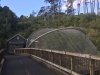
Containing down the path is the entrance to the next phase of the South East Asia precinct (Lowlands), which was well on track for completion on my visit. The tiger complex reminds me of London Zoo’s Tiger Territory, with mesh draped over the top of the exhibits; and sheltered viewing windows. It’s built on the site of what opened as a lion pit in 1922 and in its final three decades, housed Sumatran tiger.

Entrance to South East Asia precinct
The first tiger exhibit is the smallest (200 m2) and adjoins the night house; as does the largest exhibit (790 m2). These exhibits are connected to the medium sized exhibit (370 m2) via overhead tunnels. The night house is constructed from cinder blocks and features three day rooms and a cubbing den. I liked how the central viewing hut offers a view of the exhibits from multiple angles, maximising your chances of seeing the tigers. I also liked the sensory panels affixed to the viewing glass, which will allow the visitors to smell the tigers.

New Sumatran tiger exhibit (small) opening mid 2022

New Sumatran tiger exhibit (medium) opening mid 2022

New Sumatran tiger exhibit (large) opening mid 2022
You exit the tiger complex by walking past the new Asian small-clawed otter exhibit, which was still under construction on my visit. A stream running through the length of the sloping exhibit will be the main feature, with one of the tiger’s overhead tunnels passing over the otter exhibit. It’ll be interesting to see whether either of the two species pay attention to the other.
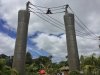
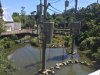
The South East Asian precinct continues onto the boardwalk which extends across Central Lake (Lake and Wetlands). It’d just opened up on my visit and it was exciting to see the aerial pathway and towers from this vantage point. The aerial pathway consists of 2km of ropes, which link to nine towers around 25m in height. Three of these towers have built in ladders, allowing the apes to climb up and down them. One of these is situated in the centre of the lake and Melur the orangutan, who’d just entered her third trimester, was seeking refuge from the sun inside it when I returned at midday.

Aerial pathway climbing towers (view from boardwalk)
The tropical dome, which is halfway along the boardwalk, is progressing nicely. It looks like an impressive building and I’m really looking forward to seeing False gharial in New Zealand for the first time.

Boardwalk now open

Tropical dome (opening late 2022)
In my next post, I’ll cover the remainder of the South East Asian precinct (High Canopy).
Introduction:
I visited Auckland Zoo on 04/01/2022 and to celebrate the year of their centenary (1922-2022), I thought I’d write a review of my visit.
I’ve visited Auckland Zoo many times and it remains my favourite New Zealand zoo due to its modern, world class exhibits; combined with it’s rich history.
I’ve read many first rate zoo reviews on ZooChat. Most recently the reviews of Taronga Zoo by @WhistlingKite24 and the National Zoo and Aquarium by @akasha, which inspired me to write this review.
As this wasn’t my first visit, I‘ve taken photos previously of some of the exhibits I mention, which I didn’t retake photos of on this visit. Therefore some of my photos are from previous visits and used merely to illustrate the exhibits described in the review. All photos are my own.
I’ll be posting this review across multiple posts, so stay tuned.
Entrance and First Exhibits:
The entrance to Auckland Zoo is a large courtyard containing the ticket office, information centre and gift shop. It really streamlines the entry process as annual pass holders can bypass the ticket office and enter via a seperate line at the entrance gate.
Due to Covid restrictions, Auckland Zoo was operating on a one way system on the day of my visit. This meant all visitors were funnelled past the playground to the otter and red panda exhibits. This is my preferred route if I arrive at opening time, as the majority of visitors head for the African precinct; but the one way system forced everyone to join me.
A Nepalese red panda was in the highest branches of the tree. It’s a fairly small and unimaginative exhibit, with signage boards informing visitors about conservation work in Nepal.
Next is the Asian small-clawed otter exhibit. The exhibit is set against the backdrop of a stony wall, that was part of the zoo’s original row of exhibits in 1922 - then housing Indian leopard, Bengal tiger and Puma. The zoo’s raft of otters consists of seven brothers born across three litters between May 2019 and September 2020. They make for a highly engaging exhibit and were very active on my visit. The otter exhibit features an underwater viewing window, which offers a decent view of them playing in the water.
Adjacent to the otter exhibit is the Ring-tailed lemur exhibit. Built on the site of what was once a tiger exhibit in the 1920’s, it later housed Nepalese red panda from the 1990’s into the early 2000’s; and was then converted into a covered Sumatran tiger exhibit in 2006, retaining the original 1922 wall. Since the death of the last tiger in 2019, this exhibit has held Ring-tailed lemurs. The exhibit holds a fraction of the appeal it commanded during the time it housed tigers. Lemurs are a poor choice for this exhibit given the glare of the glass and the ample foliage cover. I couldn’t see them at a glance and quickly moved on.
Ring-tailed lemur exhibit (formerly held Sumatran tiger)
Te Puna Cafe:
Opposite the lemur and otter exhibits is the zoo’s cafe Te Puna, which opened in 2020. It serves up cuisine from Heaven and prices from Hell. The architecture of this building is truly stunning and well deserving of the Auckland Architectural Award it won in 2021. It’s exterior reminds me of the Casson Pavilion (one of my favourite pieces of architecture) and the verandah overlooking the zoo’s historic Central Lake is never more picturesque than when an orangutan is traversing the aerial pathway.
Te Puna at sunset
View from verandah of Te Puna
South East Asian Precinct (Lowlands and Lake/Wetlands):
Containing down the path is the entrance to the next phase of the South East Asia precinct (Lowlands), which was well on track for completion on my visit. The tiger complex reminds me of London Zoo’s Tiger Territory, with mesh draped over the top of the exhibits; and sheltered viewing windows. It’s built on the site of what opened as a lion pit in 1922 and in its final three decades, housed Sumatran tiger.
Entrance to South East Asia precinct
The first tiger exhibit is the smallest (200 m2) and adjoins the night house; as does the largest exhibit (790 m2). These exhibits are connected to the medium sized exhibit (370 m2) via overhead tunnels. The night house is constructed from cinder blocks and features three day rooms and a cubbing den. I liked how the central viewing hut offers a view of the exhibits from multiple angles, maximising your chances of seeing the tigers. I also liked the sensory panels affixed to the viewing glass, which will allow the visitors to smell the tigers.
New Sumatran tiger exhibit (small) opening mid 2022
New Sumatran tiger exhibit (medium) opening mid 2022
New Sumatran tiger exhibit (large) opening mid 2022
You exit the tiger complex by walking past the new Asian small-clawed otter exhibit, which was still under construction on my visit. A stream running through the length of the sloping exhibit will be the main feature, with one of the tiger’s overhead tunnels passing over the otter exhibit. It’ll be interesting to see whether either of the two species pay attention to the other.
The South East Asian precinct continues onto the boardwalk which extends across Central Lake (Lake and Wetlands). It’d just opened up on my visit and it was exciting to see the aerial pathway and towers from this vantage point. The aerial pathway consists of 2km of ropes, which link to nine towers around 25m in height. Three of these towers have built in ladders, allowing the apes to climb up and down them. One of these is situated in the centre of the lake and Melur the orangutan, who’d just entered her third trimester, was seeking refuge from the sun inside it when I returned at midday.
Aerial pathway climbing towers (view from boardwalk)
The tropical dome, which is halfway along the boardwalk, is progressing nicely. It looks like an impressive building and I’m really looking forward to seeing False gharial in New Zealand for the first time.
Boardwalk now open
Tropical dome (opening late 2022)
In my next post, I’ll cover the remainder of the South East Asian precinct (High Canopy).
Attachments
-
 upload_2022-4-1_21-14-22.jpeg172.1 KB · Views: 60
 -
 upload_2022-4-1_21-16-23.jpeg85.9 KB · Views: 63
 -
 upload_2022-4-1_21-17-20.jpeg180.3 KB · Views: 65
 -
 upload_2022-4-1_21-18-33.png1.4 MB · Views: 66
 -
 upload_2022-4-1_21-19-34.png1.9 MB · Views: 63
 -
 upload_2022-4-1_21-20-33.png1.6 MB · Views: 66
 -
 upload_2022-4-1_21-21-31.png1.5 MB · Views: 65
 -
 upload_2022-4-1_21-24-18.jpeg189.3 KB · Views: 62
 -
 upload_2022-4-1_21-25-37.jpeg221.5 KB · Views: 61
 -
 upload_2022-4-1_22-5-46.jpeg143.1 KB · Views: 60