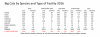
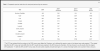
Since there does seem to be a discussion I would like to bring up this Theses and the most striking thing from said theses, which I thought might add something to the discussion (albeit I do not know if this source would be taken seriously by many and I could see why).
A Research Framework for the Geographic Study of Exotic Pet Mammals in the USA
from page 108 to until 109
"While researching this topic, I came across a quote by People for the Ethical Treatment of Animals (PETA): “There are over 20,000 tigers privately owned in the USA” (Newkirk, 2009). They did not state it outright, but certainly implied that this was in the form of current and “rescued” exotic pets. I was already involved in exotic pet research, and I could not credit this number with what my own experience had shown me. I asked people I knew who had tigers in sanctuaries or as pets, and they universally 109 agreed that this number could not be true. I did some more digging and found similar quotes. Similar, but not the same. “Zoos, farms, circuses, and private owners hold an estimated 15,000 to 20,000 tigers” by the National Geographic Magazine (Brown, 2008); “Thanks to mainly private adopters and a few zoo programs, there are an estimated 20,000 tigers living in captivity around the world” by the In-Site (In-Site, 2010); and “Up to 12,000 tigers are being kept as private pets in the USA” by the Association of Zoos and Aquariums (AZA) (AZA, 2007).
So where did this tiger census come from? And why did they all say something slightly different? In 2010, I asked several organizations how they came to their tiger estimates via email. Both PETA and National Geographic returned my inquiries and referenced the Humane Society of the United States (HSUS), a well-known animal-rights organization that opposes exotic pet ownership (HSUS, 2010). The HSUS told me they got some of their information from the USDA, and that it was also “common knowledge”. The USDA said that they did not come up with this number, and got what information they had on national captive tiger populations from the HSUS. The AZA never returned my email, nor did the In-Site.
To me, it was apparent that there was never a study undertaken to find this number of tigers, and no one really knew where this estimation of 20,000 tigers originated. It seems reasonable to conclude that it was something someone (most likely from the HSUS, since many fingers point that direction) said in an interview as an estimation. Since it sounded official and amazing and newsworthy, it was likely repeated and misquoted in many venues."