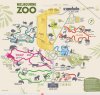
Melbourne Zoo Future of Melbourne Zoo 2022 (Speculation / Fantasy)

@Zoofan15 Its amazing how even with signage that Jaguars can still be assumed to be Leopards and melanistic considered to be a separate species (am certain quite a large number of people still believe a 'black panther' to be a species of felid rather than melanistic Leopards & Jaguars). Totally with Ali he was so popular still in the mid '90s would spend heaps of time out the front of his exhibit, possibly longer than the other big cats because he often took ages to spot (and sometimes didn't appear in view at all). As a young kid would have thought he was a separate species if not for a sign on his exhibit that had a lifelike drawing of a melanistic Jaguar next to a golden-coated one. That was how came to learn what melanism was, owe a lot of early knowledge gaining to the good signage at Taronga and Perth zoos in the '90s.

It seems like a lot of the zoos made an effort to house a melanistic Jaguar alongside a golden Jaguar primarily for the sake of a more interesting display; as well as the educational benefit you described.

The craze began with the import of two brothers from Rotterdam in 1979 - Ali went to Taronga Zoo; Branco went to Adelaide Zoo and were each in turn paired with golden females.

Ali’s youngest son (Maya) was transferred to Melbourne Zoo in 1989 and paired first with a middle aged female who died in 1995 and then with Muana, who was imported in 1997.

These zoos (and Auckland) had previously bred a succession of golden Jaguar, so the melanistic Jaguars would have been an exciting addition.
 
It seems like a lot of the zoos made an effort to house a melanistic Jaguar alongside a golden Jaguar primarily for the sake of a more interesting display; as well as the educational benefit you described.

The craze began with the import of two brothers from Rotterdam in 1979 - Ali went to Taronga Zoo; Branco went to Adelaide Zoo and were each in turn paired with golden females.

Ali’s youngest son (Maya) was transferred to Melbourne Zoo in 1989 and paired first with a middle aged female who died in 1995 and then with Muana, who was imported in 1997.

These zoos (and Auckland) had previously bred a succession of golden Jaguar, so the melanistic Jaguars would have been an exciting addition.
Sounds like not enough in the region to support the species in the long term
 
Sounds like not enough in the region to support the species in the long term

Interestingly, Auckland Zoo ceased breeding in 1979 because they couldn’t place the cubs that were being born. Their last two Jaguar were a pair of brothers, who’d been born at the zoo in 1976.

Taronga bred two litters (each containing a single cub) in 1984 and 1987. The first cub was donated to a wildlife park; the second transferred to Melbourne Zoo. They received a young female following the death of their breeding female, but chose not to breed her with Ali (the zoo were undergoing financial difficulties at the time) and she was transferred to Adelaide Zoo.

Melbourne Zoo were one of the main breeders, but also ceased breeding in the 1980’s and by the time they restarted with Maya and Muana, other holders had phased out or were on the verge of phasing out. The deaths of Maya and Muana were a huge loss to Melbourne Zoo and their many fans. In terms of engagement, they were to Melbourne what Shiva and Selatan were to Taronga.
 
Interestingly, Auckland Zoo ceased breeding in 1979 because they couldn’t place the cubs that were being born. Their last two Jaguar were a pair of brothers, who’d been born at the zoo in 1976.

Taronga bred two litters (each containing a single cub) in 1984 and 1987. The first cub was donated to a wildlife park; the second transferred to Melbourne Zoo. They received a young female following the death of their breeding female, but chose not to breed her with Ali (the zoo were undergoing financial difficulties at the time) and she was transferred to Adelaide Zoo.

Melbourne Zoo were one of the main breeders, but also ceased breeding in the 1980’s and by the time they restarted with Maya and Muana, other holders had phased out or were on the verge of phasing out. The deaths of Maya and Muana were a huge loss to Melbourne Zoo and their many fans. In terms of engagement, they were to Melbourne what Shiva and Selatan were to Taronga.
A tropical species well suited to Australian conditions also with the amount of regional zoos around now perhaps a good time to bring them back to the region
 
A tropical species well suited to Australian conditions also with the amount of regional zoos around now perhaps a good time to bring them back to the region

That would be a dream come true for myself. I did ask Melbourne Zoo if they’d consider importing them but they said as a CITES I species they’d need the support of a regional breeding programme to import them. Unfortunately it doesn’t look like any other zoos are interested, but what a phenomenal species to replace the elephants at Auckland, Melbourne and Perth!
 
That would be a dream come true for myself. I did ask Melbourne Zoo if they’d consider importing them but they said as a CITES I species they’d need the support of a regional breeding programme to import them. Unfortunately it doesn’t look like any other zoos are interested, but what a phenomenal species to replace the elephants at Auckland, Melbourne and Perth!
If there is a EEP for Jag’s perhaps our region could be attached to that like they are with the Sri Lankan leopards
 
If there is a EEP for Jag’s perhaps our region could be attached to that like they are with the Sri Lankan leopards

Even if Melbourne Zoo have no intention of doing so, I theoretically don’t foresee why that couldn’t be an option. It’d be nice to see a big cat from South America held within the region to compliment the many we have from Asia and Africa and offer visitors a chance to compare and contrast.

It would lend more credibility to the South American precincts our regional zoos have, which otherwise rely on a handful of monkey species, a few birds and if they’re lucky a Maned wolf.

With at least one zoo working towards a Brazilian tapir import, it’d be incredible to see a zoo (especially Melbourne) take on the challenge of creating a large scale Amazon trail - with Jaguar, Brazilian tapir, numerous monkeys, birds and reptiles.
 
Even if Melbourne Zoo have no intention of doing so, I theoretically don’t foresee why that couldn’t be an option. It’d be nice to see a big cat from South America held within the region to compliment the many we have from Asia and Africa and offer visitors a chance to compare and contrast.

It would lend more credibility to the South American precincts our regional zoos have, which otherwise rely on a handful of monkey species, a few birds and if they’re lucky a Maned wolf.

With at least one zoo working towards a Brazilian tapir import, it’d be incredible to see a zoo (especially Melbourne) take on the challenge of creating a large scale Amazon trail - with Jaguar, Brazilian tapir, numerous monkeys, birds and reptiles.
That would be a dream come true. Maybe add in some giant river otters, anteaters, maned wolves and some more coatis too! South American wildlife is underrated by so many in my opinion.
 
Last edited:
That would be a dream come true. Maybe add in some giant river otters, anteaters, maned wolves and some more coatis too! South American wildlife is underrated by so many in my opinion.

I think you’ve hit the nail on the head when you say South American wildlife is underrated by many. Since this includes the management of our region’s zoos, it could give Melbourne Zoo an exciting point of difference - not just nationally; but regionally.

It’s arguable that the visitor increase would be minimal (the average zoo visitor is happy to see a giraffe, a lion etc.), but surely some would appreciate seeing a more diverse range of species than what they’d see at other zoos if Melbourne are willing to put in the work to import.

The average zoo visitor isn’t gonna return to their home state and talk about how they went to Melbourne Zoo and saw a giraffe; but they would surely go back and talk about seeing otters that were six foot long and black panthers (melanistic Jaguar).
 
That would be a dream come true. Maybe add in some giant river otters, anteaters, maned wolves and some more coatis too! South American wildlife is underrated by so many in my opinion.
I agree animals like giant otters would be awesome in Australian zoos also well suited to a warm climate like ours. They would indeed add to a interesting and wonderful display for any South American theme,But with the reduction of the number of species being held by the Big 4 zoos very unlikely to ever happen the trend here is to exhibit less even if it means doubling up or tripling up on species already held within the zoo to fill the vacant spaces. The only saving grace from what I can see is a number of the smaller regional zoos that are trying to add some diversity in their collection’s something the major zoos should be taking note of.
 
I agree animals like giant otters would be awesome in Australian zoos also well suited to a warm climate like ours. They would indeed add to a interesting and wonderful display for any South American theme,But with the reduction of the number of species being held by the Big 4 zoos very unlikely to ever happen the trend here is to exhibit less even if it means doubling up or tripling up on species already held within the zoo to fill the vacant spaces. The only saving grace from what I can see is a number of the smaller regional zoos that are trying to add some diversity in their collection’s something the major zoos should be taking note of.

That is the trend, but every now and then there’s a surprise where a new species becomes the “in thing” and multiple zoos jump onboard. Recent examples include Sri Lankan leopard, Caracal and Nyala.

Giant otter are a CITES I species, which would make importing them more challenging than Caracal and Nyala though. Melbourne would need other zoos to commit to coming on board if it wasn’t possible to function as an extension to a breeding programme outside the region.

From a practical perspective, there’s easier (albeit less exciting) alternatives - though Jaguar and Giant river otter would be the cornerstone of a groundbreaking precinct.
 
That is the trend, but every now and then there’s a surprise where a new species becomes the “in thing” and multiple zoos jump onboard. Recent examples include Sri Lankan leopard, Caracal and Nyala.

Giant otter are a CITES I species, which would make importing them more challenging than Caracal and Nyala though. Melbourne would need other zoos to commit to coming on board if it wasn’t possible to function as an extension to a breeding programme outside the region.

From a practical perspective, there’s easier (albeit less exciting) alternatives - though Jaguar and Giant river otter would be the cornerstone of a groundbreaking precinct.
I don’t know about to many zoos hoping on the wagon with the importation of Sri Lankan leopards apart from the National zoo and a maybe from Adelaide and very few in regards to the importation of Caracals. How ever the Nyala did become the flavour of the month and knocked the bongo out of flavour from a few of our collections. I can’t really see a problem with being part of the EEP and SSP in regards to both jaguar and the giant otters as it now is with the Sri Lankan leopards
 
I don’t know about to many zoos hoping on the wagon with the importation of Sri Lankan leopards apart from the National zoo and a maybe from Adelaide and very few in regards to the importation of Caracals. How ever the Nyala did become the flavour of the month and knocked the bongo out of flavour from a few of our collections. I can’t really see a problem with being part of the EEP and SSP in regards to both jaguar and the giant otters as it now is with the Sri Lankan leopards

I can see Sri Lankan leopard really taking off within the next decade. Mogo Zoo are an obvious choice in replacement of their elderly Snow leopard, which would give the region a fourth holder along with Adelaide Zoo. Melbourne and Perth will of course be exploring options for replacing their elephants in a few years,

Aside from being well suited to the climate (especially the Australian climate), they’re an exciting addition to any South East Asian precinct. I hope some of the New Zealand zoos will consider them - they’d be perfect for Auckland Zoo; and Hamilton Zoo would be better off acquiring this species than building a third Sumatran tiger exhibit.
 
I can see Sri Lankan leopard really taking off within the next decade. Mogo Zoo are an obvious choice in replacement of their elderly Snow leopard, which would give the region a fourth holder along with Adelaide Zoo. Melbourne and Perth will of course be exploring options for replacing their elephants in a few years,

Aside from being well suited to the climate (especially the Australian climate), they’re an exciting addition to any South East Asian precinct. I hope some of the New Zealand zoos will consider them - they’d be perfect for Auckland Zoo; and Hamilton Zoo would be better off acquiring this species than building a third Sumatran tiger exhibit.
I agree but can’t see giant otters ever appearing in our zoos
 
@Zoofan15 @Zorro Would be so awesome to see Giant Otters for first time in our region just like it would be for lots of other cool species we've never had here..at the moment it kinda feels like an 'uphill' struggle just to try get previously here iconic species back in our region (Leopards, Clouded Leopards and Caracals come to mind straight away as recent examples, Clouded Leopards on a much lesser scale of course with the two at Wild Cat Conservation Centre being the sole duo in our region currently) I guess my point is the slow process of seeing returning species is being a long drawn out thing, forcing a lot of patience on everyone, let alone seeing new species arriving, though having said that the False Gharials coming to Auckland sounds like an assured thing very soon and possibly the Okapis at Taronga.

Imagine is Australia Zoo had managed to acquire the Sumatran Rhinos it aspired to back 17(ish) years ago (when Steve Irwin was still alive), last I heard Cincinnati Zoo the one zoo in the world with them and the successful baby birth had to end up sending their individuals back to a sanctuary in SE Asia.
 
@Zoofan15 @Zorro Would be so awesome to see Giant Otters for first time in our region just like it would be for lots of other cool species we've never had here..at the moment it kinda feels like an 'uphill' struggle just to try get previously here iconic species back in our region (Leopards, Clouded Leopards and Caracals come to mind straight away as recent examples, Clouded Leopards on a much lesser scale of course with the two at Wild Cat Conservation Centre being the sole duo in our region currently) I guess my point is the slow process of seeing returning species is being a long drawn out thing, forcing a lot of patience on everyone, let alone seeing new species arriving, though having said that the False Gharials coming to Auckland sounds like an assured thing very soon and possibly the Okapis at Taronga.

Imagine is Australia Zoo had managed to acquire the Sumatran Rhinos it aspired to back 17(ish) years ago (when Steve Irwin was still alive), last I heard Cincinnati Zoo the one zoo in the world with them and the successful baby birth had to end up sending their individuals back to a sanctuary in SE Asia.
I afraid the Sumatran rhino’s at AZ was a nice dream with a number of major zoo’s having problems keeping them much due to their proper diet. Cincinnati was outstanding in breeding a number of calf’s and since they could get no new unrelated rhinos from Indonesia decided to send what they had to a breeding centre in hope this would help the species recover. Okapi at Taronga if it ever happens won’t be anytime soon but if they do acquire some I would be surprised if we saw any in other collections within the region. The species you refer to about being a up hill battle to reintroduce back into the country is by and large is being done by the regional zoos with little interest from big zoos
 
Last edited:
Okapi at Taronga if it ever happens won’t be anytime soon but if they do acquire some I would be surprised if we saw any in other collections within the region

I was advised earlier this year that Taronga Zoo have not ruled out holding Okapi and were still exploring the possibility for their Congo precinct (as well as Eastern bongo and Pygmy hippopotamus) alongside the confirmed exhibits for Western lowland gorilla.

There were doubts expressed from people on here that the USA would be able to spare a female Okapi given the numbers they have, so Taronga may have to revise their initial intention of importing a breeding pair.

Whether it would be worth their while to import a surplus bull or two given the species only has a lifespan of 15-20 years I don’t know. If they could secure a bull under the age of five, that’d give them a decent shot at exhibiting them for a decade I suppose.
 
@Zoofan15 @Zorro Would be so awesome to see Giant Otters for first time in our region just like it would be for lots of other cool species we've never had here..at the moment it kinda feels like an 'uphill' struggle just to try get previously here iconic species back in our region (Leopards, Clouded Leopards and Caracals come to mind straight away as recent examples, Clouded Leopards on a much lesser scale of course with the two at Wild Cat Conservation Centre being the sole duo in our region currently) I guess my point is the slow process of seeing returning species is being a long drawn out thing, forcing a lot of patience on everyone, let alone seeing new species arriving, though having said that the False Gharials coming to Auckland sounds like an assured thing very soon and possibly the Okapis at Taronga.

Imagine is Australia Zoo had managed to acquire the Sumatran Rhinos it aspired to back 17(ish) years ago (when Steve Irwin was still alive), last I heard Cincinnati Zoo the one zoo in the world with them and the successful baby birth had to end up sending their individuals back to a sanctuary in SE Asia.

With regards to imports, I’d imagine a lot of the zoos will be focussing on the opportunities available to them now via the Bovid import review, with existing populations benefiting from long overdue imports to broaden genetic diversity.

Zoos really need to be proactive in importing what they can while they can. How many populations have become inbred or died out because nobody had the foresight to import while they could?

A degree of cooperation would also serve our zoos well, with sustainable breeding programmes only possible through the maintaining a decent sized population - which for most species requires multiple holders.
 
With regards to imports, I’d imagine a lot of the zoos will be focussing on the opportunities available to them now via the Bovid import review, with existing populations benefiting from long overdue imports to broaden genetic diversity.

Zoos really need to be proactive in importing what they can while they can. How many populations have become inbred or died out because nobody had the foresight to import while they could?

A degree of cooperation would also serve our zoos well, with sustainable breeding programmes only possible through the maintaining a decent sized population - which for most species requires multiple holders.
But really how hard is it for professionals in the zoo industry to know that a very limited population like bongos would run into inbreeding problems with such a small founder base and as you stated never had the foresight to see an inevitable problem. Why as you say not import while you have the window to do so?
 
upload_2022-5-15_17-21-52.jpeg
The following area will be an African savanna redevelopment/renovation, some light theaming would be required, platypuses might go but probably not as they aren’t realy around the giraffe.
Your journey would start with a new entrance around the girrafe area with some theaming, girrafes and zebras would greet you,(i belive the zoo used to have ostriches and would like to see them but the exhibit is to small) the nyala which were confirmed on the zoo map the nyala would be held in the old bongo exhibit and would be introduced to the zebra and girrafe, the baboons would remain with some new foliage added in the exhibit, the current area between the baboon and tapir would become an educational area talking about beads for wildlife which is one of there main campaigns the tapir and peccaries exhibit would be turned into a fennec fox and african crested porcupine enclosure kinda like a small desert area with a couple of small other desert creatures the meerkats would suit this area well but can’t see them getting moved.
I estimate this redevelopment to cost about 2 to 5 million dollars
 

Attachments

  • upload_2022-5-15_17-21-52.jpeg
    upload_2022-5-15_17-21-52.jpeg
    131.1 KB · Views: 14
Back
Top