Speculative Burger's zoo project

I'm going to need some help!

I'm taking a little break from my Seychelles birding project to give a proper redesign to Burgers' Wad, and I'm having trouble with the aquarium (again).

I want to keep the same basic ideas and tanks, but more naturalistic, and similar to Ocean. But now I'm having trouble with the entrance. I can't think of any naturalistic way to enter (or walk through) the aquarium, since the Netherlands, especially the Wadden area, doesn't have any natural caves or other ways to hide the entrance.

I'm really at the start of my zoo obsession, so I've only been able to visit very few aquariums (Burgers' Ocean, Blijdorp's Oceanium, and Ouwehands' pet shop viewing windows. Plus Wildlands' and Aquazoo's small scale tanks). So I really don't have much to go off.

The whole thing is getting a harbour theme, so I was thinking maybe a simple staircase down, metro-style. But I'm not sure. Help would be appreciated!

Also the general layout and such, but I'll be able to figure that out myself (somehow).

(Though I do kinda like the open concept similar to Ecomare, what do you guys think?)
You could use a simple entrance like Leipzig's one, just: "Aquarium", with nothing too fancy like signs or crazy decorations
 
You could use a simple entrance like Leipzig's one, just: "Aquarium", with nothing too fancy like signs or crazy decorations

I could, but it really doesn't fit with Burgers' zoo. And especially not with the Texel harbour theme I've got so far
 
I question if a harbor theme even is what would fit Burgers'...

If anything they would more likely go for a eb and flow thematic.. Similar to the Ocean
 
I question if a harbor theme even is what would fit Burgers'...

If anything they would more likely go for a eb and flow thematic.. Similar to the Ocean

That's... fair.

It's really just about harbour-style floor structures and coastal engineering recreations. Without it there really aren't a lot of ways to hide things like wave machines or filters and other necessary background machinery. Or even barriers
 
I'm going to need some help!

I'm taking a little break from my Seychelles birding project to give a proper redesign to Burgers' Wad, and I'm having trouble with the aquarium (again).

I want to keep the same basic ideas and tanks, but more naturalistic, and similar to Ocean. But now I'm having trouble with the entrance. I can't think of any naturalistic way to enter (or walk through) the aquarium, since the Netherlands, especially the Wadden area, doesn't have any natural caves or other ways to hide the entrance.

I'm really at the start of my zoo obsession, so I've only been able to visit very few aquariums (Burgers' Ocean, Blijdorp's Oceanium, and Ouwehands' pet shop viewing windows. Plus Wildlands' and Aquazoo's small scale tanks). So I really don't have much to go off.

The whole thing is getting a harbour theme, so I was thinking maybe a simple staircase down, metro-style. But I'm not sure. Help would be appreciated!

Also the general layout and such, but I'll be able to figure that out myself (somehow).

(Though I do kinda like the open concept similar to Ecomare, what do you guys think?)
I think a simple tunnel entrance going downwards with a sign over the front would fit, you could add murals of a harbour on the tunnel sides if you want that theme.
 
Burgers Wad V2:
Burgers Wad V2.png

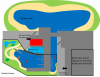
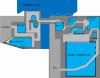
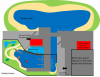
Version two of the Wadden sea area is styled more like a harbour, featuring wave machines (the light blue squiggly lines), and a lot of Dutch-coast-style theming. It will be designed in collaboration with Burgers' Zoo's neighbours: The open air museum!
001.png

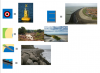
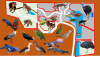
The large seabird aviary has a large array of different types of birds found in the typical Wadden saltflats and dunes.
Species list:
Eurasian spoonbill, Lesser kestrel, Brent goose, Barnacle goose, Common eider, Common merganser, European oystercatcher, Pied avocet, Eurasian curlew, Black-tailed godwit, Common ringed plover, Common tern, European herring gull, Northern gannet, Greater cormorant, Common murre.

You enter the seabird aviary in the harbour area, and exit in the dunes area. Which has a mixture of large grasses, heath and some scots pines.

The harbour seals are able to go underneath the bridge and into the canal in the middle as well. It's the same water as the area in the Seabird aviary, though it's separated of course.

The "open air basin" is a smaller saltwater area that can be viewed form above, holding a larger group of edible crabs, as well as some smaller fish

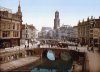
The entrance and exit of the North Sea Aquarium, as well as the lower area next to the canal are themed after the canals in Utrecht, and areas in the Aquarium similarly themed after the underground areas in Utrecht. Utrecht is, of course, not exactly a Wadden area, but still something typical Dutch.
000.jpg

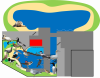
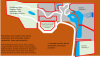
The red area will be a typical Dutch fish stand, which will second as a storage space for fish to be fed to the seabirds and harbour seals

Burgers Wad V2 (Commersial version).png
 

Attachments

  • Burgers Wad V2.png
    Burgers Wad V2.png
    365.1 KB · Views: 162
  • 000.jpg
    000.jpg
    119.7 KB · Views: 17
  • 001.png
    001.png
    219.4 KB · Views: 18
  • Burgers Wad V2 (Commersial version).png
    Burgers Wad V2 (Commersial version).png
    544.9 KB · Views: 161
Last edited:
Burgers Wad V2 - North Sea Aquarium
Burgers Wad V2 - North Sea Aquarium.png

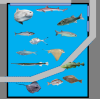
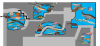
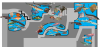
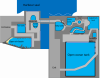
The North Sea aquarium includes 11 different tanks, all holding fish from the North and Wadden sea.

The first few tanks of the Aquarium are themed after the harbour, having typical underwater walls, shipwreck parts, barrels and other man-made objects as decoration.
The larger area of the Aquarium are more naturally themed. Having mainly rocks and underwater plants as decorations.

The crab and lobster tanks are rounded and open-topped, but tall enough to look into properly (An adult could look into the tank from above with ease, but won't have to crouch down too much to look into it from the side).

A glass-roofed corridor runs under the bridge in the harbour, meaning the visitors can view the seals swimming over their heads.

A downward staircase still runs along the kelp tank, meaning you can see the fish on top and the bottom.

The mussel reef is separated into a larger reef and a smaller reef, both holding mostly the same species, as well as a lot of mussels of course. A few species are unique to their side: the larger (bottom) tank holds Greater pipefish, Bogue and Common cuttlefish, while the smaller (top) tank holds Snake pipefish and Sand smelt. The rest of the species (mentioned later) are held in both tanks.

A giant viewing window, similar to the one in Ocean, allows great viewing into the giant Open ocean tank. Which includes large schools of schooling fish, as well as a few Ocean Sunfish as stars of the show. A long tunnel also allows you to walk among the fishes in the back of the tank. (Rockwork in the middle prevents cross-viewing).

The second viewing area into the seabottom tank is also a half-tunnel.

Exiting the aquarium will put you out next to the canal, allowing for great viewing into the aviary, as well as close viewing to the seals

Species lists:

Eel tank:
European eel, Asp, Longspine snipefish

Open air basin:
Edible crab, Flathead grey mullet, European eelpout

Crab tank:
European spiny lobster, North Sea Crab, Common dragonet

Lobster tank:
North Sea Lobster, European Spider Crab, Sand smelt

Kelp tank:
Tub gurnard, John dory, Boarfish, Pollack, Atlantic cod, Blackbelly rosefish, Greater weever, Thicklip grey mullet, Cuckoo wrasse, Conger eel, Atlantic brown trout, Pompano

Shark tank:
Nursehound, Garfish, Pouting, Conger eel, Atlantic brown trout, European sea sturgeon, Turbot, Wolffish

Seabottom tank:
Halibut, European plaice, European sea sturgeon, Asp, Tub gurnard, Small-spotted catshark, Thornback ray

Mussel reef:
Long-legged spider crab, Common marine hermit crab, Common starfish, Common mussel, Common sole, Lumpfish, Longspine snipefish. Snake pipefish, Sand smelt | Greater pipefish, Bogue, Common cuttlefish

Open ocean tank:
Ocean sunfish, Atlantic mackerel, Garfish, Common smooth-hound, Thicklip grey mullet, European seabass, Blackspot seabream, Common eagle ray, Pelagic stingray, Atlantic herring, Atlantic cod, Halibut, Pompano

Cuttlefish tank:
European Cuttlefish, Sand smelt, Longspine snipefish, Greater weever

Burgers Wad V2 - North Sea Aquarium (Commersial version) 1.png Burgers Wad V2 - North Sea Aquarium (Commersial version) 2.png Burgers Wad V2 - North Sea Aquarium (Commersial version) 3.png
 

Attachments

  • Burgers Wad V2 - North Sea Aquarium (Commersial version) 3.png
    Burgers Wad V2 - North Sea Aquarium (Commersial version) 3.png
    493.4 KB · Views: 158
  • Burgers Wad V2 - North Sea Aquarium.png
    Burgers Wad V2 - North Sea Aquarium.png
    359.1 KB · Views: 163
  • Burgers Wad V2 - North Sea Aquarium (Commersial version) 1.png
    Burgers Wad V2 - North Sea Aquarium (Commersial version) 1.png
    418 KB · Views: 167
  • Burgers Wad V2 - North Sea Aquarium (Commersial version) 2.png
    Burgers Wad V2 - North Sea Aquarium (Commersial version) 2.png
    402.1 KB · Views: 168
Last edited:
Burgers Wad V2:
View attachment 544329

Version two of the Wadden sea area is styled more like a harbour, featuring wave machines (the light blue squiggly lines), and a lot of Dutch-coast-style theming. It will be designed in collaboration with Burgers' Zoo's neighbours: The open air museum!
View attachment 544333

The large seabird aviary has a large array of different types of birds found in the typical Wadden saltflats and dunes.
Species list:
Eurasian spoonbill, Lesser kestrel, Brent goose, Barnacle goose, Common eider, Common merganser, European oystercatcher, Pied avocet, Eurasian curlew, Black-tailed godwit, Common ringed plover, Common tern, European herring gull, Northern gannet, Greater cormorant, Common murre.

You enter the seabird aviary in the harbour area, and exit in the dunes area. Which has a mixture of large grasses, heath and some scots pines.

The harbour seals are able to go underneath the bridge and into the canal in the middle as well. It's the same water as the area in the Seabird aviary, though it's separated of course.

The "open air basin" is a smaller saltwater area that can be viewed form above, holding a larger group of edible crabs, as well as some smaller fish

The entrance and exit of the North Sea Aquarium, as well as the lower area next to the canal are themed after the canals in Utrecht, and areas in the Aquarium similarly themed after the underground areas in Utrecht. Utrecht is, of course, not exactly a Wadden area, but still something typical Dutch.
View attachment 544332

The red area will be a typical Dutch fish stand, which will second as a storage space for fish to be fed to the seabirds and harbour seals

View attachment 544334
There's probably an error with the Lesser Kestrel.
It isn't a shorebird nor a native species of the Netherlands.
It lives mainly in warm, steppic environments of Southern and Eastern countries of Europe, at the breeding season.
 
There's probably an error with the Lesser Kestrel.
It isn't a shorebird nor a native species of the Netherlands.
It lives mainly in warm, steppic environments of Southern and Eastern countries of Europe, at the breeding season.

The plains and moors of the Wadden area are home to multiple birds of prey, but I didn't want to risk the other birds being preyed upon. So the Lesser kestrel represents the birds of prey while also being a safe option for a mixed aviary (as shown by Artis in their polder aviary).

Where do you find your animal pictures @Mr Gharial ?
They are really amazing and realistic.

All sorts of places, zoochat is sometimes used, as well as iNaturalist and WikiMedia. Though most of it simply comes from Google images. The real challenge is finding pictures that have the entire animal on them, and in the right condition. Especially a challenge for the Conger eel (Burgers Wad V1 had a conger on dry land, I didn't want to reuse that. So I looked for a while for a full-body shot but couldn't find one. Eventually the best one I could find was an American conger with its tail tucked. European conger will actually be used, of course).

I cut them out myself in powerpoint, which I also use to draw the overviews
 
The plains and moors of the Wadden area are home to multiple birds of prey, but I didn't want to risk the other birds being preyed upon. So the Lesser kestrel represents the birds of prey while also being a safe option for a mixed aviary (as shown by Artis in their polder aviary).


All sorts of places, zoochat is sometimes used, as well as iNaturalist and WikiMedia. Though most of it simply comes from Google images. The real challenge is finding pictures that have the entire animal on them, and in the right condition. Especially a challenge for the Conger eel (Burgers Wad V1 had a conger on dry land, I didn't want to reuse that. So I looked for a while for a full-body shot but couldn't find one. Eventually the best one I could find was an American conger with its tail tucked. European conger will actually be used, of course)
About the birds of prey, the Common Kestrel would be a better option, as it eats mainly small rodents, and isn't a threat for the other bird species displayed in the aviary.
Another option is to create one or two secondary aviaries with different species : I think spontaneoulsy to Marsh Harriers, Common / Rough-legged Buzzards, Merlins, Short-eared Owls or Barn Owls.
 
About the birds of prey, the Common Kestrel would be a better option, as it eats mainly small rodents, and isn't a threat for the other bird species displayed in the aviary.
Another option is to create one or two secondary aviaries with different species : I think spontaneoulsy to Marsh Harriers, Common / Rough-legged Buzzards, Merlins, Short-eared Owls or Barn Owls.

With Common kestrels I fear for the Safety of the Plovers, as they do hunt slightly larger birds. And I don't want to create more side aviaries, as this would disrupt the more open feel of the Wadden. I think the Lesser kestrel works well enough as a "representative species" (something Burgers' zoo often does)
 
Burgers Wad V2 - North Sea Aquarium
View attachment 544336

The North Sea aquarium includes 11 different tanks, all holding fish from the North and Wadden sea.

The first few tanks of the Aquarium are themed after the harbour, having typical underwater walls, shipwreck parts, barrels and other man-made objects as decoration.
The larger area of the Aquarium are more naturally themed. Having mainly rocks and underwater plants as decorations.

The crab and lobster tanks are rounded and open-topped, but tall enough to look into properly (An adult could look into the tank from above with ease, but won't have to crouch down too much to look into it from the side).

A glass-roofed corridor runs under the bridge in the harbour, meaning the visitors can view the seals swimming over their heads.

A downward staircase still runs along the kelp tank, meaning you can see the fish on top and the bottom.

The mussel reef is separated into a larger reef and a smaller reef, both holding mostly the same species, as well as a lot of mussels of course. A few species are unique to their side: the larger (bottom) tank holds Greater pipefish, Bogue and Common cuttlefish, while the smaller (top) tank holds Snake pipefish and Sand smelt. The rest of the species (mentioned later) are held in both tanks.

A giant viewing window, similar to the one in Ocean, allows great viewing into the giant Open ocean tank. Which includes large schools of schooling fish, as well as a few Ocean Sunfish as stars of the show. A long tunnel also allows you to walk among the fishes in the back of the tank. (Rockwork in the middle prevents cross-viewing).

The second viewing area into the seabottom tank is also a half-tunnel.

Exiting the aquarium will put you out next to the canal, allowing for great viewing into the aviary, as well as close viewing to the seals

Species lists:

Eel tank:
European eel, Asp, Longspine snipefish

Open air basin:
Edible crab, Flathead grey mullet, European eelpout

Crab tank:
European spiny lobster, North Sea Crab, Common dragonet

Lobster tank:
North Sea Lobster, European Spider Crab, Sand smelt

Kelp tank:
Tub gurnard, John dory, Boarfish, Pollack, Atlantic cod, Blackbelly rosefish, Greater weever, Thicklip grey mullet, Cuckoo wrasse, Conger eel, Atlantic brown trout, Pompano

Shark tank:
Nursehound, Garfish, Pouting, Conger eel, Atlantic brown trout, European sea sturgeon, Turbot, Wolffish

Seabottom tank:
Halibut, European plaice, European sea sturgeon, Asp, Tub gurnard, Small-spotted catshark, Thornback ray

Mussel reef:
Long-legged spider crab, Common marine hermit crab, Common starfish, Common mussel, Common sole, Lumpfish, Longspine snipefish. Snake pipefish, Sand smelt | Greater pipefish, Bogue, Common cuttlefish

Open ocean tank:
Ocean sunfish, Atlantic mackerel, Garfish, Common smooth-hound, Thicklip grey mullet, European seabass, Blackspot seabream, Common eagle ray, Pelagic stingray, Atlantic herring, Atlantic cod, Halibut, Pompano

Cuttlefish tank:
European Cuttlefish, Sand smelt, Longspine snipefish, Greater weever

View attachment 544337 View attachment 544338 View attachment 544335
Your aquarium designed for temperate sea species is a really interesting idea.
These species are too frequently neglected in favour of tropical fish and sealife.
It's also a great opportunity to display the seals (with submarine vision glass panels) with all these fish and marine invertebrates.
The list of species is interesting for other speculative zoos, including mine.
 
Your aquarium designed for temperate sea species is a really interesting idea.
These species are too frequently neglected in favour of tropical fish and sealife.
It's also a great opportunity to display the seals (with submarine vision glass panels) with all these fish and marine invertebrates.
The list of species is interesting for other speculative zoos, including mine.

Thank you! I'm actually very proud of it.

And, I agree! Temperate and open ocean fish species are very neglected in zoos. Sometimes they'll have a small area devoted to local species (Rotterdam, Wildlands and Berlin have this), but never a full aquarium. That's why I really love Ecomare, who have a (small-scale) aquarium with only North sea species. But it's sadly not shown on ZC (Something I hope to change somewhere this year).

I tried to fit as many species in as I could, as well as showing them in different environments. Though I would've liked it to showcase the smallspotted cat shark in a smaller, shallow aquarium. To allow for better viewing than in the seabottom tank, where it might get lost.
 
Note to self: Always wait a week or two before uploading a "final" version of a fantasy zoo. I added and changed some things!

Burgers Wad (main area):
Burgers Wad V2.png
I added a small "battle against the sea" museum, showcasing different dyke designs, as well as the history of the Delta works, and other examples of Dutch coastal engineering. Simultaneously as something to educate tourists from in and outside the Netherlands. As well as breaking up the large empty square.

Burgers Wad (North Sea Aquarium):
Burgers Wad V2 - North Sea Aquarium.png
I added a small touch pool-like, shallow aquarium for small-spotted catshark (among others) as I said. This "touch" pool holds:
Pelagic stingray, Small-spotted catshark, Spotted ray, European flounder, European seabass, Fivebeard rockling, Shorthorn sculpin, European shore crab

Named "touch" pool because it's shallow like a typical touch pool, but you can't actually touch the animals.

After the "touch" pool, an extra corridor was added, with murals and information boards on the North and Wadden sea, as well as the species that aren't held in aquaria (like the harbour porpoise, oarfish and greenland shark)

Also: Blonde ray was added to the seabottom tank
Burgers Wad V2 - North Sea Aquarium (Commersial version) 2.png
 

Attachments

  • Burgers Wad V2 - North Sea Aquarium (Commersial version) 2.png
    Burgers Wad V2 - North Sea Aquarium (Commersial version) 2.png
    412.8 KB · Views: 20
  • Burgers Wad V2.png
    Burgers Wad V2.png
    368.4 KB · Views: 21
  • Burgers Wad V2 - North Sea Aquarium.png
    Burgers Wad V2 - North Sea Aquarium.png
    344.5 KB · Views: 20
I'm currently working on a semi-hard reboot (similar to what I did with Woods) for the Outback area. The New Zealand and New Guinea houses will remain mostly the same, though with some added species.
The Australia area will be changed a whole lot! And a new Tasmanian area will be added (and this time it won't be terrible!)
 
Can anyone help me find available Australian freshwater fish species (besides rainbowfishes)? Especially for the Eastern area. It's a surprisingly difficult progress
 
Can anyone help me find available Australian freshwater fish species (besides rainbowfishes)? Especially for the Eastern area. It's a surprisingly difficult progress
National aquarium in Baltimore’s Australia exhibit has some species like Blue-salmon catfish, Silver cobbler, Barramundi, Toothless catfish, Sooty grunter, Australian lungfish, Mouth almighty and Spangled grunter
 
A first start to the new Outback area:

Burgers Outback - New Guinea house 2.0
Burgers Outback - New Guinea house 2.0.png
Though the design is mostly the same, the size increased with the removal of the Solomon islands house with an outside area for the Cassowaries (now in two rotational exhibits), as well as the increased size of the outside area for the tree kangaroo walkthrough.

The parrots and cockatoos have been released into the hall, and their aviary is now occupied by the Echidnas, with added Birds-of-paradise and Blue-faced parrotfinch.

A group of smaller fish and turtles have been released into the water of the cassowaries (where they can get to both exhibits, as well as a cassowary-free area), as well as into the new Crocodile monitor paludarium.

The rest of Outback will follow soon!

Burgers Outback - New Guinea house 2.0 (Commersial version).png
 

Attachments

  • Burgers Outback - New Guinea house 2.0 (Commersial version).png
    Burgers Outback - New Guinea house 2.0 (Commersial version).png
    695.9 KB · Views: 152
  • Burgers Outback - New Guinea house 2.0.png
    Burgers Outback - New Guinea house 2.0.png
    432.8 KB · Views: 151
Last edited:
Burgers Outback: New Zealand house 2.0
Burgers Outback - New Zealand house 2.0.png

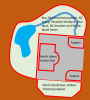
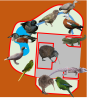
The inside of the NZ house has remained mostly the same, though there is no longer indoor viewing to the keas and parakeets, the kiwi enclosure has moved more to the back and the Geckos were sadly removed (Meaning the entire indoor area is now Nocturnal).

On the outside, a large NZ Wetland aviary has opened up, with waterfowl, Keas, Red-fronted parakeets and White-faced herons. As well as a smaller outside aviary for Kiwis and Yellow-fronted parakeets, similar to Avifauna's outside aviary. The kiwi's probably won't be very visible here, but hopefully they will do better with breeding.
Burgers Outback - New Zealand house 2.0 (Commersial version).png
 

Attachments

  • Burgers Outback - New Zealand house 2.0.png
    Burgers Outback - New Zealand house 2.0.png
    164.5 KB · Views: 150
  • Burgers Outback - New Zealand house 2.0 (Commersial version).png
    Burgers Outback - New Zealand house 2.0 (Commersial version).png
    641.6 KB · Views: 157
Back
Top