Speculative Burger's zoo project

This is wonderful, I was waiting for you to continue with this thread ;)

I'm very glad to hear it!

I'm actually very proud of this area (the small greenhouse, at least). As I think it's the first area I've made that's 100% realistic for a zoo to build. With no enclosures that are undersized in any way. Apart from maybe the cusimanse enclosure, which is still about half the size of the current Meerkat enclosure.

I'm hoping to continue this trend in my other remakes. Though some of them will still be over-the-top, of course (spoilers: Burgers polar will have a huge falklands hall with penguins and waterfowl)
 
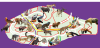
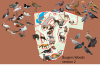
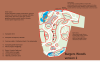
I'm incredibly happy with my new version of Burger's Congo. And though it's not finished, I want to show you what I have so far

View attachment 523264
Burgers Congo version 2 has four main features, as well as a few scattered exhibits in between.
A small greenhouse with outside enclosures for Bongos and Drills
A large ape island separated to a chimpanzee side and a gorilla side
A large mixed aviary with Congo buffaloes and Sitatungas, Okapis and Mantled guerezas
A large greenhouse with Outside enclosures for Okapis and Pygmy hippos, and indoor enclosures for Crocodiles, Hyraxes, Aardvarks and Pangolins

So far I only have the Small greenhouse completely finished
View attachment 523266

The enclosures are larger than they seem at first. The drill enclosure is as large as the sun bear enclosure. And the combined area of the indoor and outdoor Bongo enclosure is as large as the outside tiger enclosure, the dwarf croc enclosure is slightly larger than the caiman enclosure, etc.

Pretty straight-forward in design.
You enter at the bridge area and you can go either to the left or to the right. To the left is an enclosure for dwarf crocs, with a small underwater viewing area (straight to the left from the bridge is a staircase down, the path behind that is a slope)

There's an aviary-separated area with Grey parrots and Bearded barbets. As well as an enclosure for common cusimanses and Forest hingeback tortoises

All enclosures have a lot of lower foliage in it, the bongo enclosure also has some trees

All areas with no enclosures have a lot of foliage, similar to the bush

Fish, swimming in the whole river, including the crocodile enclosure, include:
Gabon tilapia (Oreochromis schwebischi)
Reticulated knifefish (
Papyrocranus afer)
African arowana (
Heterotis niloticus)
Congo tetra (
Phenacogrammus interruptus)
Calvus cichlid (
Altolamprologus calvus)
True big-scale tetra (
Brycinus macrolepidotus)
Purple cichlid (
Pelvicachromis pulcher)
Blackmouth Cameroon tilapia (
Coptodon camerunensis)
African moony (
Monodactylus sebae)
Senegal bichir (
Polypterus senegalus)

Free-roamers:
Red-headed quelea (A larger group in comparison to the rest of the birds, similar to the Blue-backed grassquits in Mangrove)
Snowy-crowned robin-chat
Western plantain-eater
Guinea turaco
Violet-backed starling
Collared sunbird
Olive pigeon
Tambourine dove
Blue-headed wood dove
African golden oriole
Aubrey’s flapshell turtle (though I expect these to stay near the empty corner underneath the Drill enclosure)

View attachment 523267

According to the mixed species thread, Cusimanses are very capable hunters and would kill the birds and the tortoises eventually. So I'm moving them to a bird-free area in the larger greenhouse.
I'm now adding the collared sunbird into the tortoise area of the small greenhouse. Does anyone know another species that could go with the tortoises, without forming a thread to the birds?
 
According to the mixed species thread, Cusimanses are very capable hunters and would kill the birds and the tortoises eventually. So I'm moving them to a bird-free area in the larger greenhouse.
I'm now adding the collared sunbird into the tortoise area of the small greenhouse. Does anyone know another species that could go with the tortoises, without forming a thread to the birds?
Duikers or some sort of smaller ungulate. If you want something else try an insectivorous species. You’ll still have a small predator in the exhibit without worrying about it hunting the tortoises or birds.
 
According to the mixed species thread, Cusimanses are very capable hunters and would kill the birds and the tortoises eventually. So I'm moving them to a bird-free area in the larger greenhouse.
I'm now adding the collared sunbird into the tortoise area of the small greenhouse. Does anyone know another species that could go with the tortoises, without forming a thread to the birds?

Alright, I'm taking out the parrots and adding in West African Rainbow lizards as free-roamers in that area
 
Duikers or some sort of smaller ungulate. If you want something else try an insectivorous species. You’ll still have a small predator in the exhibit without worrying about it hunting the tortoises or birds.

Duikers and birds is a bit questionable. Some sources say it might go fine, even with smaller birds (i.e. AZA ungulate mixed exhibits manual), but I've also read sources (like Grzimek) mentioning duikers actively preying on birds up to the size of pigeons.

So at the very least the birds should be able to easily espace the duikers. They should probably also be fed away from the duikers to prevent the duikers from helping themselves to bird food.
 
Duikers and birds is a bit questionable. Some sources say it might go fine, even with smaller birds (i.e. AZA ungulate mixed exhibits manual), but I've also read sources (like Grzimek) mentioning duikers actively preying on birds up to the size of pigeons.

So at the very least the birds should be able to easily espace the duikers. They should probably also be fed away from the duikers to prevent the duikers from helping themselves to bird food.
Really? That's interesting, is it only duikers or all small ungulates?
 
Really? That's interesting, is it only duikers or all small ungulates?

It was specifically about duikers, and even more specifically about a black-fronted duiker. Admittedly the Grzimek books are fairly old (1960's) and date from an age when housing and husbandry in zoos were rather different from today, but they still contain a lot of decent information.

I would have to check if the same type of behavior is mentioned for other small ungulates and I'm going to try to do that.

I don't distrust the AZA manual either (and it also mentions a duiker eating meat or prey items put out for larger bird species), so I'm just not sure. In a project I am doing myself right now I'm probably going to place duikers in an area that is not covered by an aviary.
 
It was specifically about duikers, and even more specifically about a black-fronted duiker. Admittedly the Grzimek books are fairly old (1960's) and date from an age when housing and husbandry in zoos were rather different from today, but they still contain a lot of decent information.

I would have to check if the same type of behavior is mentioned for other small ungulates and I'm going to try to do that.

I don't distrust the AZA manual either (and it also mentions a duiker eating meat or prey items put out for larger bird species), so I'm just not sure. In a project I am doing myself right now I'm probably going to place duikers in an area that is not covered by an aviary.
There is of course a difference between eating meat (something that many herbivores will do when given the opportunity, including bovines which are sucessfully kept with birds) and actively hunting it.
 
There is of course a difference between eating meat (something that many herbivores will do when given the opportunity, including bovines which are sucessfully kept with birds) and actively hunting it.
Well, Duikers, similar to Muntjacs are known to activily consume animals in theri diet, insects and carrion are consumed very often, but also activily hunt for smal mamals and birds. Becasue of that are they usually clasefied as omnivores
 
It was specifically about duikers, and even more specifically about a black-fronted duiker. Admittedly the Grzimek books are fairly old (1960's) and date from an age when housing and husbandry in zoos were rather different from today, but they still contain a lot of decent information.

I would have to check if the same type of behavior is mentioned for other small ungulates and I'm going to try to do that.

I don't distrust the AZA manual either (and it also mentions a duiker eating meat or prey items put out for larger bird species), so I'm just not sure. In a project I am doing myself right now I'm probably going to place duikers in an area that is not covered by an aviary.

First of all, I would like to offer a correction to this post: the animal Grzimek mentioned was a bay duiker, not a black-fronted duiker. Their Dutch names are however similar, hence my mistake.

There is of course a difference between eating meat (something that many herbivores will do when given the opportunity, including bovines which are sucessfully kept with birds) and actively hunting it.

Well, Duikers, similar to Muntjacs are known to activily consume animals in theri diet, insects and carrion are consumed very often, but also activily hunt for smal mamals and birds. Becasue of that are they usually clasefied as omnivores

I did a little bit more research, and the only other small African ungulate species for which active predation behavior was mentioned was the water chevrotain. Active predation behavior was not mentioned for dikdiks, oribi, klipspringer, steenbok or grysbok.

I did also look a little bit into hyrax, which are not ungulates, but are another species that one could consider housing with birds, and they might eat bird eggs or nestlings in given the chance - something that would probably be true for many ungulates.


Given this information, to me it would seem that duikers probably should not be housed with small birds, and that when mixing other species with birds the feeding and nesting areas for the birds should probably not be placed within the ungulate area.

The chance for nest predation of course also depends on the type of nests the bird species have - nestlings and eggs would likely not be accessible in nesting boxes with small holes, compared to open bowl nests or nesting boxes with open fronts.
 
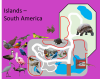
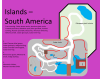
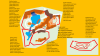
Finished a redesign on the South American islands house. Most of the layout might seem the same, but the whole greenhouse is bigger and I properly sorted out the free-roamers.

Burgers islands - Carribean and Galapagos.png

I already mentioned replacing the croc enclosure for a marshland area for spoonbills. I also gave the hutias the outside space instead of the rhinoceros iguanas and took out the slider/gar enclosure

Both the iguana enclosures are multi-tiered, to allow for some climbing opportunities. As well as having some shrubbery for the birds (Which are confined to the areas with netting, similar to the Bobcat enclosure in Desert).

The blue iguana enclosure still has a small viewing hut (for children... or the French) to view the iguanas on one of their higher ledges, which you can get to via an adventure path similar to those in the bush.
The Rhinoceros iguana enclosure also has an extra viewing area, having a rounded glass window, similarly accessible via an adventure path.

The marsh hut also hasn't changed, apart from the fact that the terrarium inside now also holds western bearded anoles, and the fact that I forgot to draw the bridge and am too lazy to change it now.

Burgers islands - Carribean and Galapagos (commersial version).png
 

Attachments

  • Burgers islands - Carribean and Galapagos (commersial version).png
    Burgers islands - Carribean and Galapagos (commersial version).png
    666.5 KB · Views: 187
  • Burgers islands - Carribean and Galapagos.png
    Burgers islands - Carribean and Galapagos.png
    586.1 KB · Views: 184
I'm currently busy with a whole bunch of things at once. Some of you may have noticed the distribution maps series I've been making in the Media section. I'm also still working on some Dutch zoo guides some of you may follow and expanding them to Belgian zoo guides. So I probably won't be upgrading another area in the Burgers' zoo Project for a while. I wanted to get the islands area out as I'm pretty proud of the new design.
 
Another redesign I did today: The aviaries of Safari!
Burgers Safari - Aviaries V2.png
Also I replaced the monkey islands with a bushland aviary

I think this would be a more realistic (species-wise) approach, as well as structure-wise (keeping smaller birds seperate).

The hyrax aviary acts as a non-breeding enclosure and is also used for holding surplus animals. The porcupines are in a seperated enclosure, in which the birds and hyraxes can still get in, but the porcupines can't get out (Same for the Dikdiks)

Some wonderful kopjes and other rockwork decorate and hide indoor holding for most of the birds. And wooden huts provide entry points as well as viewing points for people with aviphobia (also: bird flu)

The Wetland aviary has a large waterfall (dark blue), some larger streams/fast flowing water (Slightly less dark blue), and a shallow lake (Light blue) with lots of reeds. Water streams from here into the Swamp aviary

The Vulture and Hyrax aviaries are more grassland based, and provide some open viewing (you can also see the safari plains through the vulture aviary). While the Bushland, Wetland and kopje aviaries are all bushland, with lots of shrubs and smaller scots pines.

The swamp aviary is mainly reeds and thicker foliage, providing a slightly darker look

The wetland, bushland and hyrax aviaries are full walkthroughs, the swamp aviary is only a pier (which the birds can still get on), and the vulture aviary can be seen through a roofed-over terrace (similar to vulture rock in Blijdorp). The kopje aviary can only be viewed from outside.

The flamingos (that are currently in park) will move to the pelican enclosure and will slowly be phased out.


Burgers Safari - Aviaries V2 (Wetland).png

Burgers Safari - Aviaries v2 (Hyrax and Weaver).png

Burgers Safari - Aviaries V2 (Swamp and vultures).png

Burgers Safari - Aviaries V2 (Bushland).png
 

Attachments

  • Burgers Safari - Aviaries V2.png
    Burgers Safari - Aviaries V2.png
    406.5 KB · Views: 170
  • Burgers Safari - Aviaries V2 (Bushland).png
    Burgers Safari - Aviaries V2 (Bushland).png
    599.5 KB · Views: 173
  • Burgers Safari - Aviaries v2 (Hyrax and Weaver).png
    Burgers Safari - Aviaries v2 (Hyrax and Weaver).png
    881.1 KB · Views: 178
  • Burgers Safari - Aviaries V2 (Swamp and vultures).png
    Burgers Safari - Aviaries V2 (Swamp and vultures).png
    570.6 KB · Views: 171
  • Burgers Safari - Aviaries V2 (Wetland).png
    Burgers Safari - Aviaries V2 (Wetland).png
    768.2 KB · Views: 174
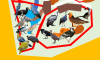
I know all of my Burgers' zoo project has been speculative, but this next one is honestly the only one I truly consider fantasy. This region is sort of a replacement for Congo, being placed above Safari (together with the new version of Polar, they both go in the top region)

Burgers' Peaks
Burgers Peaks.png

Burgers' Peaks is lowered into the ground to create a hilly environment and uses a LOT of rockwork, which makes sense for a Himalayan area. It is devided into four regions, the lower forests, the barren highland, the peaks and cliffs, and the Tibetan plateau. All areas have one main exhibit, One large aviary, and some smaller predator enclosures.

The lower forest main enclosure holds takins and red pandas, being planted with mainly bamboo and some Himalayan firs. You can walk over some areas to a better viewing platform.
The main aviary has some smaller waterfalls that lead to a main pool in the middle. The predator enclosures are fairly simple, having some smaller shrubbery and bamboo.

The highland consists of mainly lower shrubbery and succulents, as well as a good mixture of grass and rocks, The main enclosure being for Urials, and the main aviary for a mix of Pheasants and parakeets. The path starts winding around the rocks sticking out of the grass

The peaks and cliffs are now almost made out of exclusively rockwork, with a few grassy ledges. The Himalayan tahrs and Tajik markhors are separated on either sides of the main mountain, but the Rhesus macaques can get to both sides. The three snow leopard enclosures are separated with large rocky cliffs, similar to the bobcats in Desert. The main paths are easy enough to follow, but one might get lost in all the little adventure paths, which lead you to a high-up viewing platform to the main mountain. The vulture/buzzard aviary is very tall, and will hopefully encourage the birds to fly for a longer time than they usually would in zoos

The final area is the Tibetan plateau, which suddenly drops the rockwork and switches to a mix of stone floors a grassy meadows. You start out in a Nepalese village with a smaller aviary and an enclosure for Yaks and Kiangs. This enclosure is separated into a domesticated side and a "wild" side (A simple farmyard vs a larger, hilly grassland). The main aviary features no trees, but does have some boulders to replicate the natural behaviour of the Himalayan griffon vulture.
The final enclosure goes back into mountainous territory a little bit, having more rocks than the rest of the plateau. Bobak marmots are a replacement species, to represent the Himalayan marmots, which are not available (Burgers' zoo has done this before).
Burgers Peaks (Commersial version).png
 

Attachments

  • Burgers Peaks (Commersial version).png
    Burgers Peaks (Commersial version).png
    613.4 KB · Views: 166
  • Burgers Peaks.png
    Burgers Peaks.png
    337.7 KB · Views: 168
Burgers Woods V2

The other side of the new Congo version!
Burgers Woods V2.png
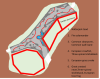
The new European area is two-tiered. The top tier, with the Alpine enclosures on top. And the lower tier with most of the other enclosures. The main feature of this is of course the cliff that provides extra height for some of the other enclosures.

You enter at the otters, which have a few waterfalls that stream in from the fallow deer enclosure. Two enclosures for European mink are also slightly hidden away, as well as a smaller path that provides a smaller viewing window into the red fox enclosure (The main viewing window is on the other side). There's also a small, wooded aviary for European red squirrels and wild hamsters.

The Alpine aviary has free-roaming Marmots, vultures and smaller birds. As well as a separated enclosure for Alpine ibex. The enclosure is decorated with rocky cliffs and has mainly lower shrubbery as foliage.
After that is an enclosure for European Wildcat, which is wooded again

The forest aviary holds mainly smaller birds, as well as an enclosure for Western roe deer, and two side aviaries for Great Bustard and Western Capercailies. The smaller birds can get into these, but the larger birds can't get out. This enclosure slowly slopes down to bring you back to the lower level.

There's a larger marsh for European pond turtles, as well as a grouping of outside "terrariums" for Fire salamanders, Natterjack toads and Common adders. Similar to the one in Terrazoo Rheinberg (Though on a much smaller scale)
European Adder Exhibit (fantastic!) - ZooChat

After this, the path splits into two routes:
The wader aviary, with a separated enclosure for European beavers

The Lynx enclosure and the Badger dens

The wader aviary is a bit of a mixture between Limburg-like swamps and Texel and Frysian wetlands. The beaver enclosure and first area is wooded, with many trees and dead logs, while the second area, with a shallow marsh, has mostly tall grass, cattails and reeds. It holds a mixture of wading birds and shorebirds.

The lynx enclosure is held against the cliffside, to provide them with some rock-climbing space (along with their regular climbing structures).

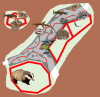
The badger den is partially decorated like a large fallen log. On the sides there are outside enclosures for West European hedgehogs and European garden dormice. Inside there are nocturnal indoor enclosures for the Hedgehogs, Dormice and Badgers, as well as terrariums for various Reptiles, amphibians and invertebrates

Burgers Woods V2 - badger dens.png

The indoor enclosures for Hedgehogs and Dormice are decorated as regular forests at night (With soft blue lighting). While the indoor badger enclosures are decorated as true dens, with mainly mock dirt and rockwork. The Dormice and Badgers are fully enclosed with glass, while the hedgehogs are partially open

The terrariums for Natterjack toads, Fire salamanders and Grass snakes are decorated with smaller plants and fake grass. The wall lizard and Slowworm enclosure also features some rockwork.

The newt vivarium has a lot of underwater plants, and small bushes on the land area.

The rest of the enclosures are fairly simple. The birds of prey aviaries have smaller viewing huts, and are build against the cliff. Some include smaller waterfalls, originating from the Alpine aviary.

The wild boar enclosure is heavily forested, to prevent it turning into a giant mudpit (as other wild boar enclosures sometimes do).

The two polecat enclosures are raised, to provide better viewing for the visitors

Burgers Woods V2 (Commersial version).png Burgers Woods V2 - Badger dens (Commersial version).png
 

Attachments

  • Burgers Woods V2 - Badger dens (Commersial version).png
    Burgers Woods V2 - Badger dens (Commersial version).png
    652.3 KB · Views: 168
  • Burgers Woods V2 - badger dens.png
    Burgers Woods V2 - badger dens.png
    656.8 KB · Views: 164
  • Burgers Woods V2 (Commersial version).png
    Burgers Woods V2 (Commersial version).png
    826.9 KB · Views: 168
  • Burgers Woods V2.png
    Burgers Woods V2.png
    399.1 KB · Views: 164
@Mr Gharial
Do you have any plan to expand the Mangrove part? I think American Flamingos, Roseate Spoonbills and Scarlet Ibis might be good fit

No expansion for the Mangrove, but a Carribean islands house Roseate spoonbill and American white ibis if you scroll up a bit!

Scarlet ibises don't occur in Belize (the very strict theme of Mangrove), and I wasn't able to fit the Carribean flamingos in
 
I'm going to need some help!

I'm taking a little break from my Seychelles birding project to give a proper redesign to Burgers' Wad, and I'm having trouble with the aquarium (again).

I want to keep the same basic ideas and tanks, but more naturalistic, and similar to Ocean. But now I'm having trouble with the entrance. I can't think of any naturalistic way to enter (or walk through) the aquarium, since the Netherlands, especially the Wadden area, doesn't have any natural caves or other ways to hide the entrance.

I'm really at the start of my zoo obsession, so I've only been able to visit very few aquariums (Burgers' Ocean, Blijdorp's Oceanium, and Ouwehands' pet shop viewing windows. Plus Wildlands' and Aquazoo's small scale tanks). So I really don't have much to go off.

The whole thing is getting a harbour theme, so I was thinking maybe a simple staircase down, metro-style. But I'm not sure. Help would be appreciated!

Also the general layout and such, but I'll be able to figure that out myself (somehow).

(Though I do kinda like the open concept similar to Ecomare, what do you guys think?)
 
Last edited:
Back
Top