Creating a realistic wild turns very difficult – proven by that the large majority failed. Zoos usually fail on fake rocks and cut grass. Is a tidy lawn needed for hygiene, or any other practical purpose?
Lewa in Zurich understands that nature is slightly untidy. Some deadfall and rocks serve as secondary barriers, other are just for the visuals.
From what little information I found on zoo history, successful design was usually done by trained artists. Burgers Desert in Arnhem was done by artists and art students, who created a look of Sonoran standstone, not a purchase from a local gardening centre. Surprisingly, some very good small animal exhibits in Frankfurt Zoo were created by a member of zoo staff – evidently a natural talent!
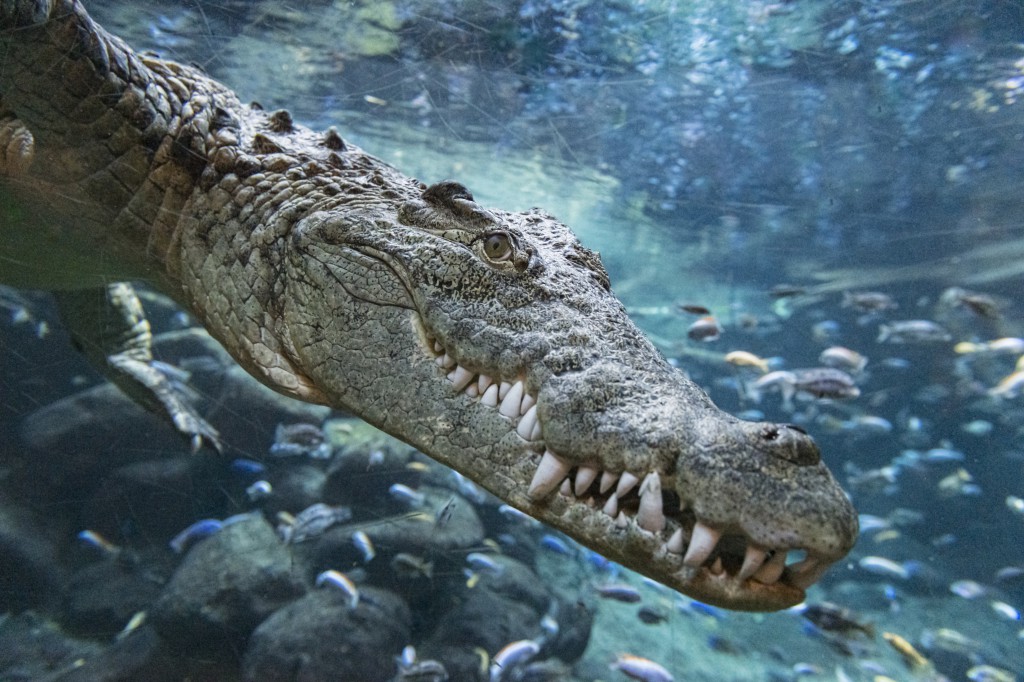
However, a good design needs no multi-million budget or a gigantic space. Gamgoas in Basel has a convincing African Rift aquascape for nile crocodiles. (Photo (c) Zoo Basel, I hope they don't mind extra advertisement. A similar photo on Zoochat has visible scratched glass).
Or a red panda in Warsaw:
Except that this is a rainforest species, not an arid country one, so it is not realistic...
Actually, white-crowned hornbill is indeed a rainforest species. However in many places e.g. in Ghana rainforest and open country mix, and one can easily see it perching or flying over a savanna-like habitat. I seen it myself.