A Guidebook Library: TLD's year-long randomised walkthrough of zoo guides

Day 109: Zoo Berlin (1914) - Zebra

full

full


Page count: 144 pages (including photographic plates)
Photographs: 33 black-and-white photographs
Illustrations/diagrams: 64 black-and-white drawings
Layout: Comprehensive walkthrough account of collection.
Map: Fold-out at rear of guidebook


One of the most satisfying things about collecting zoological guidebooks is the chance to make unexpected discoveries; sometimes, this may entail learning new and surprising things on reading a guidebook for the first time, whilst on other occasions the thrill lies in discovering a rare or unusual item for sale in an unexpected or unassuming location. However, accidentally uncovering the existence of an item which (as far as you know) has either been entirely forgotten or was never noticed in the first place is a greater discovery still. In a very roundabout way, this thread has proven responsible for precisely such a turn of events relating to the guidebook we shall be discussing today.

The existence of the 1914 edition of the Zoo Berlin guidebook has always been well-known, of course - it is not *quite* as scarce as some of the other editions I have discussed which were published during the opening years of the 20th century, and I know of several collectors who own this edition, but surviving copies are nonetheless not particularly commonplace. The copy I purchased in mid-2020 via an Italian antiquarian bookseller on AbeBooks proved to have been comprehensively and professionally repaired at some point - the entire guidebook had been rebound as a hardback, with the original cover cut off and glued onto the front of the new binding. However, the damage which it had presumably endured at some unknown point in the past had one lasting impact - the fold-out map which had been included within the back cover of the guidebook was absent. Given the intrinsic value which the map would have held as a historical record of the collection, this was a bit of a blow - but one which was somewhat balanced by the vastly-reduced fragility of the guidebook itself, and resulting ability to read it with greater ease. As such, this particular edition is the one I have taken to using most often to practice my ability to interpret the archaic typeface used within this era of Zoo Berlin guidebooks. Overall, I was happy to put the idea of seeking out an intact copy on the back-burner, and it remained there until March this year when - having completed my collection of 20th century guidebooks published by Zoo Berlin - I decided to look into the matter once again.

As chance would have it, I was fortunate enough to find an intact copy within a few weeks, and added it to my collection alongside the repaired copy, thinking that I would keep the latter for reading and reference - and this is where the story gets quite interesting. When I ran my random number generator last week to select the next handful of guidebooks for scanning and discussion, a Zoo Berlin guidebook was among those selected; given my decision to cover the guidebooks published by said collection chronologically, it naturally meant that the time had come to discuss the 1914 edition. I initially decided to scan from my repaired copy due to the greater ease in opening pages fully, and therefore only scan the collection map where the recently-obtained intact copy was concerned. However, something odd caught my eye during the scanning process.... the text on several pages did not entirely line-up across the two copies. A closer examination showed that this seemed to be a result of subtle differences in the typeface used, rather than additional content - although the ornate nature of the typeface means that I am still not entirely certain of this, given I cannot read the text with ease. The below images show the same passage from the history segment located at the start of the guidebook; the differences are subtle, but undeniable:

geschichte1.jpg

IMG_20220708_0032.jpg

The upshot is this; it appears that there were at least two distinct versions of the 1914 edition printed, with the only apparent difference being the precise typeface used. On tentatively enquiring elsewhere online in the hope others knew the circumstances, or had noticed this fact themselves, I was met with silence.... perhaps unsurprisingly, given the fact that it is unlikely many would have reason to look closely at multiple copies!

full


Considering the fact that the differences are extremely subtle, this post is intended to cover *both* versions of the 1914 guidebook; in the event, incidentally, I decided it would be best to select scans purely from the intact copy I recently obtained, lest I discover greater differences at a later date. As is well-established by this point within the "canon" of Zoo Berlin guidebooks published over the course of the early 20th century, the guidebook opens with a lengthy and detailed historical account relating the 70 years which had elapsed since the collection first opened in 1844. Despite my limited ability to parse the ornate typeface used within these early guidebooks - which is marginally easier to read in the repaired copy which entered my possession originally, but still presents distinct difficulties - it is obvious that this account has been extended and updated to cover the years which had elapsed since the previous edition of the guidebook, with perhaps an additional half-page of content discussing the recent opening of the Zoo-Aquarium close to the Elefantentor entrance to the collection. One will note, incidentally, that the title page once again credits the authorship of this guidebook solely to Ludwig Heck, the zoo director; by this point in time, his assistant Oskar Heinroth (previously credited as co-author) had become the Aquarium director, a role he would remain in for over 30 years until his death within the ruins of the aquarium building a few weeks after the end of WWII in Europe. My usual remarks about the great value of this historical account, and my desire to translate the various iterations published within these guidebooks for wider consumption, can be taken as read at this point!

full

full


The main body of this guidebook, like those which preceded it, comprises a detailed exhibit-by-exhibit walkthrough account of Zoo Berlin at the time of publication, with comprehensive lists of the various species located within the collection and numerous attractive illustrations accompanying the text. Although I cannot be entirely certain, at least until my ability to interpret the typeface used within this guidebook has improved, I suspect that the text itself has been entirely overhauled and updated beyond the small edits which have sometimes occurred between editions; not only would this make sense given the aforementioned fact that Ludwig Heck is once again credited as the sole author of the text, but moreover the length of the guidebook as a whole has increased by around a dozen pages in total. This increase could, of course, be partially attributed to the presence of additional segments relating to new houses and exhibits; perhaps the two most notable of these are those pertaining to the newly-constructed zebra house, and the aforementioned Zoo-Aquarium. Both of these structures, of course, survive at the zoo to this day - some of the few which remain over a century on from the publication of this guidebook.

Another noteworthy addition to this segment of the guidebook is the fact that the number of supplementary illustrations has increased noticeably when compared to prior editions; many of the illustrations are reproduced from earlier guidebooks, of course, but there are a surprising number of new images occurring throughout the text. Satisfyingly, many of these comprise general views of the zoo, or depictions of smaller and less notable exhibits - precisely the sort of information which it is easy to overlook, and which provide an incredibly valuable insight into the state of the collection at the time of publication.

full

full


As usual, the guidebook is littered with several advertisements for various goods, services and businesses operating within Berlin at the time of publication; however, it is perhaps a sign of the times, and the impending spectre of war, that there is a noticeable drop in the overall density of such material when compared to prior editions. Nonetheless, the presence of advertisement material of this sort - no matter how little - represents a valuable resource for those interested in the socio-economic history of Berlin during the early decades of the 20th century, as I have discussed at length previously.

The main body of the guidebook once again concludes with a series of photographic plates depicting a wide variety of the species held within the collection at the time of publication, followed by a comprehensive index of the species and exhibits cited within the text. Although several of these images have been recycled from previous editions of the guidebook, there are a surprising number of new additions to the roster; moreover, many of the species depicted here are noteworthy, either due to their scarcity in modern-day zoological collections, their current taxonomic status, or the fact they represent some of the first of their kind to be displayed in captivity. As can be seen above and below, I have scanned a handful of these photographic plates as representation of the whole, with my general selection criteria being aimed towards highlighting some of the most unusual taxa; it is particularly worth pointing out the fact that the subspecies of Black Rhinoceros depicted above is now extinct, that one of the plates below depicts both the Tsessebe and Tiang races of topi, and that (perhaps surprisingly given the husbandry standards one would expect at the time) the Long-beaked Echidna visible in the other plate below would survive until 1943, potentially being one of the losses inflicted by wartime bombing raids. Perhaps the most unusual photograph within the guidebook, however, is not included among these plates - on the interior rear cover, a photograph is provided of an elephant pulling a cartload of beer barrels through the streets of Berlin!

full

full


As previously discussed, the main reason I was driven to obtain a second copy of this guidebook was the fact that my original copy lacked the accompanying fold-out map of the collection; given my strong appreciation for the maps produced by Zoo Berlin during this timespan, both as documents of historical and zoological importance and as items of aesthetic and artistic merit, one can hardly blame me for this decision!

In general design and format, the map very much resembles those which preceded it; however it does differ in a number of regards, most notably the presence of the Zoo-Aquarium building, but with several other key differences visible with careful observation and attention. Given how high-quality and attractive the preceding maps were, of course, this is no bad thing.

full


To conclude; this is, as one may have learned to expect from the guidebooks published by Zoo Berlin throughout the early years of the 20th century, an extremely interesting, informative and high quality item which represents a valuable historical resource both for those interested in zoological history and those whose interests are somewhat less specialised. The print quality, format and other production standards are universally high - doubtless one reason why the guidebook is still in fantastic condition despite being over a century old at this point - and if I were to guess, the fact I have now established this edition saw at least two print runs strongly suggests that this edition in particular sold very well indeed. Perhaps one day I will discover more about the motivation behind the newly-discovered variant version of this guidebook.

One could make a fairly strong argument that considering the fact that the decades following the publication of this guidebook would be dominated by periods of financial hardship, hyperinflation and (after a brief resurgence in fortunes during the 1930s) utter destruction, this guidebook marks the final days of a golden age for Zoo Berlin..... quite literally the end of an Imperial phase, to steal a turn of phrase from the world of music! It is certainly an indisputable fact that this would be the final time for many decades that a Zoo Berlin guidebook would be quite this detailed, in-depth and lengthy, as we shall doubtless discuss in the fullness of time.

In the meantime, I open the floor up for feedback, questions and comments!

 

Attachments

  • geschichte1.jpg
    geschichte1.jpg
    73.1 KB · Views: 48
  • IMG_20220708_0032.jpg
    IMG_20220708_0032.jpg
    68.9 KB · Views: 46
After reading posts on guidebooks from closed British collections , I thought I would have a look at those I possess .
Amongst the less well-known collections I have guidebooks from - Barry (Cardiff) Zoo ( 2 from 1960's) ; Cardigan Wildlife Park (1980) ; Westbury-on-Trym ( ca 1974) ; Weyhill Wildlife Park ,now Hawk Conservancy,(1970's) ;Poole Park Zoo (1965) ; Sherwood Zoo (1970's) ; Bridgemere ( 1981) ; Midland Bird Garden (1980) ; Flamingo Gardens Olney(1975) .
Some of those are quite scarce! I visited Bridgemere and Midland (for its closing down auction), but didnt buy guides. I had the Midland auction catalogue for a while, but that is another casualty of time along with the Kelling Park one. I still have the original yellow Stagsden one I bought on the door (unfortunately now minus its price list) and those I bought at Thorney and Cromer Birdland. As an aside, the Kelling Park Aviaries guide I also managed to lose as a child, had a price list for 'ornamental' pheasants slipped into it. This detailed the birds bred at Kelling available that summer, and also those which 'could' be imported to order. I remember distinctly that the latter included Himalayan Blood Pheasant, Blyth's Tragopan and Crested Argus.
 
Hello, TLD. Apart from the long-beaked echidna, did the 1914 Berlin Zoo guide show any other rarities?
 
I visited regularly about this time, and remember the old bear cages shown centre-right, but these were always empty - the rest of the map looks exactly as I remember it.
It is interesting to see from the map that although there have been a few changes (including the additional land for the zebra paddock), the general path layout has remained similar and several enclosures remain in use for the original inhabitants or have been adapted for other species.
Examples
Porcupines (still porcupine)
Puma (Southern ground hornbill)
Octagonal wolf enclosure (now Ruppell's Vulture)
Smaller Lion cage (Snow Leopard)
Terrapin pond
Llama paddock (Aldabra tortoise)
Hornbill ( new aracari and turacao built on same footprint)
Owls
Parrots
Binturong (now mixed aviary)
The Tiger exhibit covers the area of the right hand lower paddock almost exactly.
2 bear cages remain standing (just) but haven't been used for animals in around 20years.
In the early years the zoo was basically an open field with few trees or bushes, the photo of the waterfowl pond with the hornbill aviaries behind illustrates this, that area is now filled with tall trees and fairly dark most of the time.
 
Quite a collection!

Have seen some second hand Cardigan Wildlife Park guides previously and think I have one at home (heron cover). I struggle to really grasp whether there was ever a "zoo" in any sense there though... Do you know please if there were captive mammals / birds there like WWT Slimbridge etc or was it more of a nature reserve?

Sorry to lead this thread off topic . The Cardigan Wildlife Park did have a captive collection , which I have some memories of . The Guide book map shows a number of enclosures on the map , species listed - Wolf , Wild Cat , Mink , Polecat , Przewalski's Horse , European Bison , 4 species of Deer , Wild Boar , Mouflon , some birds and a lot of domestics . Nearly all of the Guide Book relates to the wild side of the Reserve .
 
It is interesting to see from the map that although there have been a few changes (including the additional land for the zebra paddock), the general path layout has remained similar and several enclosures remain in use for the original inhabitants or have been adapted for other species.
Examples
Porcupines (still porcupine)
Puma (Southern ground hornbill)
Octagonal wolf enclosure (now Ruppell's Vulture)
Smaller Lion cage (Snow Leopard)
Terrapin pond
Llama paddock (Aldabra tortoise)
Hornbill ( new aracari and turacao built on same footprint)
Owls
Parrots
Binturong (now mixed aviary)
The Tiger exhibit covers the area of the right hand lower paddock almost exactly.
2 bear cages remain standing (just) but haven't been used for animals in around 20years.
In the early years the zoo was basically an open field with few trees or bushes, the photo of the waterfowl pond with the hornbill aviaries behind illustrates this, that area is now filled with tall trees and fairly dark most of the time.
I haven't been for many years, but from what I have been told, little has really changed.
I remember macaques of some sort in cages just in from the binturongs, toco toucans nearer the centre and the jungle cats along the boundary top left'ish - plus the wolves in the middle.
 
Hello, TLD. Apart from the long-beaked echidna, did the 1914 Berlin Zoo guide show any other rarities?

I have to admit, I'm somewhat surprised that you don't feel any of the other species I highlighted in those scans warrant the term "rarity" considering they included Forest Elephant, an extinct subspecies of Black Rhinoceros, Tsessebe, and Tiang :P other unusual taxa depicted within the photographic plates include Dwarf Cassowary, Kagu, Southern Horned Curassow and Golden Guenon.

Sorry to lead this thread off topic .

You haven't led it off-topic at all; I have repeatedly and actively encouraged people to discuss their own guidebook collections and wider subjects relating to zoological guidebooks throughout this thread... including the following words in the opening post:

explicit intention that the Zoochat community ask questions about the contents and context of the guidebooks highlighted, discuss their own guidebook collections where possible, discuss what makes a zoo guidebook or map particularly good, and in general use my posts as the backbone for a nice solid forum-uniting discussion

In other words, discuss away! :D
 
Day 110: Marineland Oceanarium & Aquarium (1964) - "Europe's first Oceanarium"

full

full


Page count: 32 pages
Photographs: A single aerial view of the Stone Jetty in Morecambe, annotated to show the location of the collection.
Illustrations/diagrams: 15 colour illustrations
Layout: Introduction, followed by general overview of collection and supplementary discussions.
Map: N/A


Per the request from @Skukuza to see further material from a closed UK collection, and to shake things up a little by providing immediate first impressions of a new addition to my personal collection of zoological guidebooks, we shall today take a look at a guidebook which arrived in the post fewer than 48 hours ago; given the fact I have not yet had the chance to fully read and absorb the guidebook in question, this post will be rather more "stream of consciousness" than is usually the case. I know relatively little about this collection - which was located on the Stone Jetty in Morecambe, Lancashire until 1990 - other than the occasional fragment of information; this will naturally also reduce the overall length of this post, but one hopes that some reading this thread may have insights, memories or remarks to share!

full


The guidebook opens with a general introduction detailing the events leading to the Marineland Oceanarium first opening, and discussing the various figures responsible; it is worth mentioning here that this guidebook was published shortly after the collection first opened in 1964, and as such provides an interesting look at the initial aims and aspirations of those behind Marineland. One of the first points which occurs to me is that fact it is mentioned that the collection was very much the brainchild of Robert Jackson, who had founded Welsh Mountain Zoo a year previously; this explains the rather overt presence of an advertisement for said collection on the back cover of this guidebook, one which (as a sidenote) uses the cover artwork for the second edition of the Welsh Mountain Zoo guidebook!

Although, as I have mentioned, I know very little about the history of Marineland Oceanarium, I know that it never quite met the lofty aspirations which are alluded to within the introduction - and referred to more explicitly throughout the main body of the text; from memory, only a year or two after the collection opened it was struggling financially, and ownership was soon transferred to the local council. I *think* this had already occurred by the time Jackson passed away in a freak accident in May 1969, but one does wonder if the collection would have developed and grown in the same fashion had he lived.

Beyond here, an interesting aerial photograph of the Stone Jetty and surrounding environs - annotated to show an illustration of Marineland at the base of the jetty - is provided; looking at modern-day satellite images of the area, several of the features visible here still exist now, even though the renovation of the jetty and installation of various coastal defence measures has entirely erased any trace of Marineland itself. Even those aspects which remain are substantially altered; for instance, the railway station visible on the map is now a live entertainment venue which retains much of the original exteror. As such, this image is perhaps one of the most valuable historical resources within the guidebook as a whole, providing as it does a key look at the Morecambe seafront during the 1960s.

full

full


The main body of the guidebook, broadly speaking, comprises a general overview of the various species either displayed at the collection at the time of publication, or which were anticipated to be on-display within the imminent future. This section opens by remarking that the intention was for the 24 tanks within the main hall of the collection to be divided into four rough sections; temperate freshwater, temperate marine, tropical freshwater, and tropical marine. It appears that these were accompanied by three supplementary interior exhibits - a penguin tank, a "crocodile beach" and a flamingo pool - and a pair of larger exterior tanks. These comprised a tank for seals and sealions, and a tank for dolphins, both of which would be used for regular shows.

Even by the standards of those mid-20th century aquarium guidebooks which I have encountered, many of which are fairly vague about the species held within their collections at the time of publication given the fact that they were often supplied by whatever species were available as bycatch from the local fishing industry, this guidebook seems to almost solely deal with generalities where these species accounts are concerned; although the aforementioned factor will doubtless play a part, I suspect that the primary reason for the format and content of this guidebook is much more simple. In short, this guidebook was almost certainly produced before Marineland opened to the public - and potentially before it had been fully constructed, considering the fact that the aforementioned photographic image of the seafront depicted the collection as a superimposed illustration - and therefore it is only able to refer to plans, and ambitions, and intentions. As such, it would probably be rather rash to fully rely on this guidebook as an indication of which species were located within the collection at the time it first opened.

However, as far as the presentation and aesthetics of the guidebook are concerned, this is actually quite an appealing and attractive item; moreover, the information presented about general subjects relating to the species within the collection is both detailed and informative. For instance, although one cannot take this as a definitive indication that Grey Seals were held within the collection when it first opened for the reasons I noted, a fairly substantial amount of information about the species, their presence throughout the British coastline and their breeding behaviour is presented within the segment of the guidebook relating to marine mammals. Similarly, there are a pair of relatively lengthy and in-depth sections discussing the species found within two key aquatic ecosystems located within northwest England, and which (given the intention to source stock from the local area) will have doubtless formed the bulk of the captive collection; the marine ecosystem of Morecambe Bay itself, and the native freshwater fish of the Lake District.

full


The guidebook concludes with a pair of shorter discussions; one relating to the importance of aquariums as tools for education and research, and another providing some of the behind-the-scenes technical and husbandry issues which Marineland (and by extension, other collections of this sort) was presented with. The latter of these is particularly interesting, providing as it does a valuable insight into the myriad requirements to successfully and correctly operate a zoological collection. As I have remarked previously, if more zoological guidebooks published information of this sort and hence made it available to the young and overenthusiastic cohort of our wider community, I suspect we would have significantly fewer rash and ill-informed posts to contend with on this forum - and perhaps a higher calibre of speculative zoo threads!

full


Overall, this is an interesting item from a collection which - as noted - I know far too little about; given my interest both in zoological collections and the wider realms of history, it is hardly surprising that I find learning about closed collections and the part they play in a wider historical and sociological picture particularly interesting. As a guidebook, it is well-produced and attractively-presented, with informative and interesting content where more general subjects are concerned - and the potential to mislead where more precise questions of zoological history are concerned, as I posited. However, some aspects which are indisputably valuable in this regard *are* present even so.

I hope that this slightly more freeform and stream-of-consciousness format has nonetheless been fairly accessible and easy-to-read; in order to prevent myself from over-polishing my thoughts and first impressions, this post has been dictated with a speech-to-text tool and has only undergone the bare minimum of editing to correct spelling, grammar and remove a few dozen instances of my stammer :p

Questions about the guidebook would be welcome as always.... but memories of the collection (if possible), the sharing of any other pertinent knowledge, and discussion of the wider points raised by this guidebook would be even more welcome!
 
Day 110: Marineland Oceanarium & Aquarium (1964) - "Europe's first Oceanarium"

full

full


Page count: 32 pages
Photographs: A single aerial view of the Stone Jetty in Morecambe, annotated to show the location of the collection.
Illustrations/diagrams: 15 colour illustrations
Layout: Introduction, followed by general overview of collection and supplementary discussions.
Map: N/A


Per the request from @Skukuza to see further material from a closed UK collection, and to shake things up a little by providing immediate first impressions of a new addition to my personal collection of zoological guidebooks, we shall today take a look at a guidebook which arrived in the post fewer than 48 hours ago; given the fact I have not yet had the chance to fully read and absorb the guidebook in question, this post will be rather more "stream of consciousness" than is usually the case. I know relatively little about this collection - which was located on the Stone Jetty in Morecambe, Lancashire until 1990 - other than the occasional fragment of information; this will naturally also reduce the overall length of this post, but one hopes that some reading this thread may have insights, memories or remarks to share!

full


The guidebook opens with a general introduction detailing the events leading to the Marineland Oceanarium first opening, and discussing the various figures responsible; it is worth mentioning here that this guidebook was published shortly after the collection first opened in 1964, and as such provides an interesting look at the initial aims and aspirations of those behind Marineland. One of the first points which occurs to me is that fact it is mentioned that the collection was very much the brainchild of Robert Jackson, who had founded Welsh Mountain Zoo a year previously; this explains the rather overt presence of an advertisement for said collection on the back cover of this guidebook, one which (as a sidenote) uses the cover artwork for the second edition of the Welsh Mountain Zoo guidebook!

Although, as I have mentioned, I know very little about the history of Marineland Oceanarium, I know that it never quite met the lofty aspirations which are alluded to within the introduction - and referred to more explicitly throughout the main body of the text; from memory, only a year or two after the collection opened it was struggling financially, and ownership was soon transferred to the local council. I *think* this had already occurred by the time Jackson passed away in a freak accident in May 1969, but one does wonder if the collection would have developed and grown in the same fashion had he lived.

Beyond here, an interesting aerial photograph of the Stone Jetty and surrounding environs - annotated to show an illustration of Marineland at the base of the jetty - is provided; looking at modern-day satellite images of the area, several of the features visible here still exist now, even though the renovation of the jetty and installation of various coastal defence measures has entirely erased any trace of Marineland itself. Even those aspects which remain are substantially altered; for instance, the railway station visible on the map is now a live entertainment venue which retains much of the original exteror. As such, this image is perhaps one of the most valuable historical resources within the guidebook as a whole, providing as it does a key look at the Morecambe seafront during the 1960s.

full

full


The main body of the guidebook, broadly speaking, comprises a general overview of the various species either displayed at the collection at the time of publication, or which were anticipated to be on-display within the imminent future. This section opens by remarking that the intention was for the 24 tanks within the main hall of the collection to be divided into four rough sections; temperate freshwater, temperate marine, tropical freshwater, and tropical marine. It appears that these were accompanied by three supplementary interior exhibits - a penguin tank, a "crocodile beach" and a flamingo pool - and a pair of larger exterior tanks. These comprised a tank for seals and sealions, and a tank for dolphins, both of which would be used for regular shows.

Even by the standards of those mid-20th century aquarium guidebooks which I have encountered, many of which are fairly vague about the species held within their collections at the time of publication given the fact that they were often supplied by whatever species were available as bycatch from the local fishing industry, this guidebook seems to almost solely deal with generalities where these species accounts are concerned; although the aforementioned factor will doubtless play a part, I suspect that the primary reason for the format and content of this guidebook is much more simple. In short, this guidebook was almost certainly produced before Marineland opened to the public - and potentially before it had been fully constructed, considering the fact that the aforementioned photographic image of the seafront depicted the collection as a superimposed illustration - and therefore it is only able to refer to plans, and ambitions, and intentions. As such, it would probably be rather rash to fully rely on this guidebook as an indication of which species were located within the collection at the time it first opened.

However, as far as the presentation and aesthetics of the guidebook are concerned, this is actually quite an appealing and attractive item; moreover, the information presented about general subjects relating to the species within the collection is both detailed and informative. For instance, although one cannot take this as a definitive indication that Grey Seals were held within the collection when it first opened for the reasons I noted, a fairly substantial amount of information about the species, their presence throughout the British coastline and their breeding behaviour is presented within the segment of the guidebook relating to marine mammals. Similarly, there are a pair of relatively lengthy and in-depth sections discussing the species found within two key aquatic ecosystems located within northwest England, and which (given the intention to source stock from the local area) will have doubtless formed the bulk of the captive collection; the marine ecosystem of Morecambe Bay itself, and the native freshwater fish of the Lake District.

full


The guidebook concludes with a pair of shorter discussions; one relating to the importance of aquariums as tools for education and research, and another providing some of the behind-the-scenes technical and husbandry issues which Marineland (and by extension, other collections of this sort) was presented with. The latter of these is particularly interesting, providing as it does a valuable insight into the myriad requirements to successfully and correctly operate a zoological collection. As I have remarked previously, if more zoological guidebooks published information of this sort and hence made it available to the young and overenthusiastic cohort of our wider community, I suspect we would have significantly fewer rash and ill-informed posts to contend with on this forum - and perhaps a higher calibre of speculative zoo threads!

full


Overall, this is an interesting item from a collection which - as noted - I know far too little about; given my interest both in zoological collections and the wider realms of history, it is hardly surprising that I find learning about closed collections and the part they play in a wider historical and sociological picture particularly interesting. As a guidebook, it is well-produced and attractively-presented, with informative and interesting content where more general subjects are concerned - and the potential to mislead where more precise questions of zoological history are concerned, as I posited. However, some aspects which are indisputably valuable in this regard *are* present even so.

I hope that this slightly more freeform and stream-of-consciousness format has nonetheless been fairly accessible and easy-to-read; in order to prevent myself from over-polishing my thoughts and first impressions, this post has been dictated with a speech-to-text tool and has only undergone the bare minimum of editing to correct spelling, grammar and remove a few dozen instances of my stammer :p

Questions about the guidebook would be welcome as always.... but memories of the collection (if possible), the sharing of any other pertinent knowledge, and discussion of the wider points raised by this guidebook would be even more welcome!
Nice addition to your collection!

don’t think this collection would be accepted as an “oceanarium” now a days, amazing how far we’ve come in such a short time.

That Welsh mountain advert is also used as a guide cover for the collection.

The crocodile exhibit I believe actually held alligators (possibly others) from comments on other websites. Rocky the dolphin was captured in Florida waters… perhaps he felt more at home with them :)

Quite topical, with current Aspinall actions/plans, to note that the last dolphin from the site at its closure was rewilded to the Caribbean with two other dolphins from Brighton. Released 91 no sightings by 92, a cautionary tale perhaps…

thanks TLD
 
Having never even heard of the town let alone the aquarium, I googled it to find out more. It closed during a period of time the town lost a number of attractions, including “Miss Great Britain”, and probably reflecting the decline in the English seaside resort more generally as travel to overseas destinations, such as Spain, became more accessible.
 
That Welsh mountain advert is also used as a guide cover for the collection.

Indeed; I actually remarked on that in the review itself. Funnily enough, a copy of the WMZ guidebook in question was just sold on eBay earlier this morning, although I was outbid for it :P

The crocodile exhibit I believe actually held alligators (possibly others) from comments on other websites. Rocky the dolphin was captured in Florida waters… perhaps he felt more at home with them :)

I am reliably informed by a former member of this site who sent me a message on the subject this morning that - at least at one point - the exhibit mixed American Alligator and American Crocodile, with the following image of a postcard from the collection as further evidence:

293589695_585904773048152_795901493062050465_n.jpg

It closed during a period of time the town lost a number of attractions, including “Miss Great Britain”, and probably reflecting the decline in the English seaside resort more generally as travel to overseas destinations, such as Spain, became more accessible.

I suspect that one of the final death-knells may well have been the flood of negative public opinion regarding dolphin shows (and a general anti-zoo atmosphere which was present throughout the UK during the late 1980s and early 1990s) - but even without this, the general decline of the English seaside resort would have definitely done the job on its own eventually. Offhand, I think that barring those which survived by being bought up by Sea Life or similar chains, the number of seafront zoological collections to survive this era can be numbered on a blind butcher's hand!
 

Attachments

  • 293589695_585904773048152_795901493062050465_n.jpg
    293589695_585904773048152_795901493062050465_n.jpg
    212.7 KB · Views: 44
Funnily enough, a copy of the WMZ guidebook in question was just sold on eBay earlier this morning, although I was outbid for it :p
I'm sure you will get another chance. They crop up quite often.

Offhand, I think that barring those which survived by being bought up by Sea Life or similar chains, the number of seafront zoological collections to survive this era can be numbered on a blind butcher's hand!
ummm... - Skegness, tick.
Is Mablethorpe still there/open...? ummm.....
maybe? - there used to be a Tropical House at Great Yarmouth, but I never went...
 
I'm sure you will get another chance. They crop up quite often.

Indeed, I wasn't trying hard at all to get it ;) I just happened to spot it when it had a few hours to go, having been talking about it mere hours earlier, and chucked my hat into the ring!

ummm... - Skegness, tick. Is Mablethorpe still there...? ummm.....

The ones I had in mind were Skegness Aquarium, Lake District Coast Aquarium, and Lyme Regis Aquarium :) I wasn't thinking about Skegness Natureland or Mablethorpe Seal Sanctuary as they strike me as not being located on the seafront of the town, but rather on the outskirts. It depends on whether you define seafront as the tourist hub only, or any area on the coastline I suppose - under the latter definition those two definitely qualify, and you could probably include Shaldon in the mix too.
 
The ones I had in mind were Skegness Aquarium, Lake District Coast Aquarium, and Lyme Regis Aquarium :) I wasn't thinking about Skegness Natureland or Mablethorpe Seal Sanctuary as they strike me as not being located on the seafront of the town, but rather on the outskirts. It depends on whether you define seafront as the tourist hub only, or any area on the coastline I suppose - under the latter definition those two definitely qualify, and you could probably include Shaldon in the mix too.

Natureland is 100% on the seafront of Skegness - albeit at the northernmost end. It's right next door to the Suncastle and bowling greens. It even has that slightly cheesy/tacky feel of a seafront attraction. :D

The Aquarium (which I've gone past many times and never yet gone in!) is pretty much at the southernmost end of the front, by contrast.
 
maybe? - there used to be a Tropical House at Great Yarmouth, but I never went...

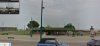
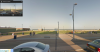
I believe that it closed in 2014 after a long period of stagnation and decline, and the structure has now been completely demolished; but yes, it did survive the early 1990s slump in seafront collections. Completely forgot about that one, never having visited anywhere in Norfolk or Suffolk.

Just as a point of interest, the following Google Streetview images were taken two years apart and show just how completely the site was cleared:

upload_2022-7-16_21-16-25.png

upload_2022-7-16_21-18-11.png

Natureland is 100% on the seafront of Skegness - albeit at the northernmost end. It's right next door to the Suncastle and bowling greens. It even has that slightly cheesy/tacky feel of a seafront attraction. :D

The Aquarium (which I've gone past many times and never yet gone in!) is pretty much at the southernmost end of the front, by contrast.

Lincolnshire is another of the big gaps in my UK zoological travels - I've never visited any of the collections there, but definitely should make the effort at some point!
 

Attachments

  • upload_2022-7-16_21-16-25.png
    upload_2022-7-16_21-16-25.png
    512.4 KB · Views: 51
  • upload_2022-7-16_21-18-11.png
    upload_2022-7-16_21-18-11.png
    584.9 KB · Views: 46
Next post is coming along much slower than I would like - not helped by the last 48 hours of extreme heat, given the fact I don't like hot temperatures at the best of times - so I've decided to post another of my occasional comprehensive photos showing a particular aspect of my collection to keep things flowing :)

full


In this case, the above image depicts my collection of guidebooks from the Aquarium at Zoo Berlin; it is nowhere near as comprehensive as my collection of guidebooks from the zoo itself, with at least a dozen other editions having been published which I am yet to obtain, but nonetheless represents a fairly decent chronological spread.

The oldest guidebook dates from between 1914 and 1918; although it is undated, the title page describes it as the "kriegsführer" or "war guide" for the collection. Interestingly, Zoo Berlin itself did not publish a guidebook during this timespan; as I have discussed somewhat recently, and shall do so again in the fullness of time, after the 1914 edition of the Zoo Berlin guidebook another would not be published until 1925.

The newest guidebook - and also the final one published by the collection prior to all printed material being axed by the "new" director - was released in 2013, and was purchased by myself during my first visit to the collection in 2014.
 
I wasn't thinking about Skegness Natureland or Mablethorpe Seal Sanctuary as they strike me as not being located on the seafront of the town, but rather on the outskirts. It depends on whether you define seafront as the tourist hub only, or any area on the coastline I suppose - under the latter definition those two definitely qualify, and you could probably include Shaldon in the mix too.

Skegness Natureland IS right on the sea-front between the skate park and the pier, next to the bowling green. That sounds typical historic English sea-side! It has a long history, involving George Cansdale ex-London.
Mablethorpe I just checked, as my memory is a bit vaguer. It is indeed on the sea-front but to the north of the main parade, set a little way back in the dunes. My memory is that it was owned by the same owners as Norton Bird Gardens (although not at the same time). Both had 'ornamental' brick circles in their gardens, like the one featured on the front of Norton's guide book.
Lincolnshire's zoos have never been major players on the UK zoo scene, sometimes to the point where one wonders if the standards required of the rest of the country ever got as far as that county...
Shaldon, although in a seaside town,is certainly not sea-front and indeed feels much more out-of-town. An old smugglers tunnel not too far away takes you down to the sea, I recall.
 
Day 111: Los Angeles Zoo (1968) - Snow Leopard

full

full


Page count: 96 pages
Photographs: 110 photographs (30 in colour)
Illustrations/diagrams: N/A
Layout: Introduction and visitor information, followed by general overview of animal collection divided by taxonomic group, concluding with discussion of the animal health centre, Los Angeles zoo association and assorted facts about the zoo.
Map: N/A


Today, we shall be looking at a guidebook recently requested by @pachyderm pro ; despite having been open for 110 years, Los Angeles Zoo has published very few guidebooks in total, with the master list maintained by the Bartlett Society noting that only four editions are known to exist. As such, it is perhaps not surprising that this particular guidebook is the only item from the zoo within my personal collection; I picked it up via eBay a year or two ago through a seller I have discussed previously who - although now once again resident in the UK - had lived in North America for some decades, and was selling a sizeable collection of guidebooks obtained whilst in the country. This particular edition is not terribly uncommon, and I have subsequently seen several copies on the secondary market - this leads me to suspect that it will have gone through multiple reprints and was quite possibly sold at the collection for several years. As I will hopefully demonstrate anon, it is certainly a rather well-produced and interesting guidebook with much to recommend it.

full


After a brief introduction to the collection, the guidebook opens with a section detailing various key items of information, such as opening hours, how to reach the collection by public or private transportation, visitor amenities and facilities, and emergency details. This is followed by a general overview of the taxonomic nomenclature and terminology used within the main body of the guidebook, along with a discussion of the various groupings within the animal kingdom and how they relate to one another.

The main body of the guidebook comprises a comprehensive walkthrough account of the various species displayed within the zoo at the time of publication, divided into three major taxonomic groups; mammals, birds and reptiles. However, these are preceded by the below discussion of the Children's Zoo located within the collection; one of the very few points within the guidebook as a whole where an exhibit complex or building within the zoo is actually discussed at any real length.

full

full


It is here worth noting that the guidebook as a whole is densely-illustrated with a large quantity of photographs, both in colour and black-and-white; as can be seen in the images above and below, taken from the introductions to each segment of the species walkthrough, many of the colour photographs comprise full-page images. Each segment opens with a general introduction to the taxonomic group in question, before discussing each of the major families and lineages within the group with particular reference being made to those taxa displayed within the collection at the time of publication. These accounts are presented in an interesting and easily-accessible format, providing a wide range of information about the various species discussed within the text. There are only two major failings of these accounts overall; firstly, none of the taxonomic binomials for the various species cited within the text are mentioned. This, however, is more than compensated-for later in the guidebook, as I shall discuss anon. Secondly, as alluded previously, there is little-to-no discussion of the exhibits, enclosures and houses within which the animal collection at Los Angeles Zoo was housed at the time of publication; this more or less means that although this guidebook is an excellent resource for those interested in the species held within the collection, it is rather lacklustre for those interested in zoo history, architecture and the way in which the collection may have physically changed over the decades. The fact that the guidebook also entirely lacks a map exacerbates this issue.

Here would be an appropriate point to list some of the most unusual and noteworthy taxa cited within these accounts, given the interest expressed by @pachyderm pro in hearing about the past species collection at Los Angeles; given the fact that I lack any first-hand familiarity with North American zoological collections, of course, it is entirely possible that I will overlook species which - although commonplace and not particularly worthy of note from my European perspective - are oddities for modern-day American zoo enthusiasts, or indeed cite species which are less unusual than I realise!

Among the mammalian oddities mentioned are:

  • Brown Hyena
  • Marbled Cat
  • Asian Golden Cat
  • Northern Elephant Seal
  • Mountain Tapir
  • Angolan Giraffe

Among the avian oddities mentioned are:

  • Jabiru
  • Horned Screamer
  • California Condor - one of the few in captivity at the time
  • Monkey-eating Eagle
  • Lear's Macaw
  • Resplendent Quetzal
  • Toucan Barvet
  • Bare-throated Bellbird
  • White-necked Picathartes

Naturally, these lists only scratch the surface where the full scope of the species collection at the time of publication is concerned, but nonetheless hopefully provide sufficient insight to be worthwhile.

full

full


Beyond here, the guidebook concludes with a handful of short discussions relating to a variety of subjects:

  • Discussion of the various guided tours, educational programmes and other such events available for school group bookings, similar programmes which were in place for the benefit of disabled children, and information on the training which the zoo docents delivering these programmes underwent; perhaps more than anything else, the most striking indication of the age of this guidebook can be found within this short account, given the rather offensive language used to refer to the disabled children who were the target audience for these programmes, and the explicit statement that training as a zoo docent was available specifically to women!
  • An account discussing the animal health centre and commissary; this segment contains a wide amount of interesting information relating not only to the veterinary acitivities undertaken within the centre, but also wider discussion of the nutritional needs of the various species held within the collection as a whole, and the average intake of food required for successful operation of the zoo.
  • Discussion of the activities undertaken by the Greater Los Angeles Zoo Association; this section also includes information on the various animal adoptions available at the zoo, how those reading the guidebook could join the GLAZA as members, and the benefits of membership.

The guidebook concludes with a comprehensive index, listing every single species mentioned within the main body of the text alongside their full taxonomic name - given the comprehensive nature of the species accounts within the guidebook, this serves a secondary purpose as a de-facto list of the species held within the collection at the time of publication. It must, of course, be noted that it is entirely possible that some of the species mentioned thus were cited as examples of their kind, rather than actual inhabitants of the zoological collection to which this guidebook pertains.

full


Overall, this is an interesting, attractive and well-presented guidebook; as I noted on a few occasions, I feel that the lack of any real information within the guidebook about what Los Angeles Zoo was actually *like* at the time of publication is a major flaw, but one which is somewhat offset by the sheer scope and detail of the species accounts located within. It goes without saying, of course, that I would be happy to provide further information about the contents of this guidebook on request.
 
That's an interesting mixed species exhibit in the children's zoo... Tapir (Brazilian it appears to me, light face) and Asian Elephant!

Interesting as you say about the index listing animals on exhibit and others also that aren't. would be some feat to hold 4 tapir species concurrently.

I had grand plans for a California zoo trip including a specific trip to LA for Mountain Tapir (and at the time Uakari) pre covid but doesn't look like it will be viable for some time sadly. One day.
 
Day 112: Detroit Zoo (1956) - Baby Gorilla

full

full


Page count: 54 pages (including interior front and rear covers)
Photographs: c. 105 black-and-white photographs
Illustrations/diagrams: N/A
Layout: Introduction, followed by various annotated photographic accounts of the zoo, discussion of behind-the-scenes activities, and brief accounts relating to other zoological collections in Detroit.
Map: Located within central pages


I was rather amused to notice a post from @birdsandbats noting the recent decline of Detroit Zoo yesterday; due to his expressing an interest in seeing reviews of guidebooks from collections in the Great Lakes region of North America some weeks ago, I picked out today's item for review with the specific hope that it would provide an avenue of discussion and feedback! With luck, then, this will be more successful than I had initially hoped!

This guidebook is a small, almost pocket-size item which I was fortunate enough to pick up several months ago via eBay; the master list of North American guidebooks found on the Bartlett Society website indicates that there are few copies known of this edition, but this is likely more a result of the fact that the majority of guidebook collections covered by this list will be in the possession of European collectors, rather than any genuine rarity. Nonetheless, this is one of only a handful of items from Detroit Zoo which I have encountered for sale on this side of the big puddle, and one of only three editions in my personal collection. As I hope to demonstrate within this review, this guidebook finds itself in the peculiar position of both being highly informative and interesting in some regards, yet curiously patchy in detail in others.

full


The guidebook opens with a potted history of Detroit Zoo, along with the associated zoological society which - at the time of publication - was also responsible for the nearby Belle Isle Aquarium and Belle Isle Children's Zoo. I have to admit to having been entirely unaware of the existence of the latter two collections prior to obtaining this guidebook; both closed to the public almost two decades ago, but whilst the aquarium (which, at the time of its closure in 2005, was the oldest continually-operating collection of its sort in North America) has subsequently re-opened under new management, the Children's Zoo has been reclaimed by the elements and is now an abandoned hodge-podge of vegetation and crumbling ruins. As I shall discuss anon, although this guidebook primarily deals with Detroit Zoo itself, it also serves as a guidebook for the two Belle Isle collections; as such, it represents a very interesting primary resource pertaining to the historical status of bygone collections.

This potted history is followed by a number of other supplementary segments and other introductory accounts, including the following:

  • A "manifesto" of sorts discussing the layout and presentation of Detroit Zoo and the overall intention of avoiding bars and achieving Hagenbeck-style panoramic views.
  • A list of primary office-holders and directors within the Detroit Zoological Soiciety.
  • A list of major donors to Detroit Zoo.
  • Discussion of the Detroit Zoological Park Railroad, including information relating to its operation, funding and technical specifications.
  • An assortment of annotated photographs showing various views of the gardens and other ornamental displays of vegetation throughout Detroit Zoo.

This lattermost item raises an important point about the content within the guidebook as a whole; rather than largely comprising text supplemented by photographic material, as has been the case for the majority of guidebooks discussed within this thread previously, the balance is very much tilted in the other direction. In many ways, the main body of this guidebook can be viewed fairly accurately as a photographic guide to the zoo, with short paragraphs of information labelling each of the four or five large black-and-white images located on each double-page spread of the guidebook.

full

full


Although this means that the level of written content within this guidebook is surprisingly low, considering the fact that (unlike many publications from this time) the photographic content is not limited to images of the animals held within the collection, with photographs showing exhibits, houses and general views across the zoo being given equal weight, the overall value of the guidebook as a source of primary information about what Detroit Zoo was actually *like* at the time of publication remains rather high. It does, of course, go without saying that the supplementary information provided alongside the photographs can be somewhat patchy in parts - for instance, I would have liked more information to be provided about the Bird House than two brief sentences - but overall the standard found here is pretty high; those species mentioned are cited both by common name and scientific name, and a wide range of information is provided about the behaviour, diet, habitat and other such details relating to the animals found within the collection.

Broadly speaking, the main body of the guidebook discusses the exhibits and species within Detroit Zoo by geographic zone - as far as I can tell, the collection was presented in a similar "Geo-Zoo" style to Tierpark Hellabrunn in Munich, at least at the time of publication - with a handful of exceptions; the ape exhibit and bird house appear to have been independent from this format, and towards the start of the guidebook the various attractions and visitor services provided throughout the zoo are discussed together.

https://www.zoochat.com/community/m...-accounts-apes-and-rhesus-macaque.594209/full
full


Beyond here, there are a a number of further discussions relating to subjects associated with Detroit Zoo, similar to those which preceded the photographic walkthrough account of the zoo; these are once again rather more densely-packed with text than is the case for the main body of the guidebook, and contain a fairly wide range of information:

  • Discussion of the "Nature Cabin" and associated displays of reptiles and amphibians native to the United States - and Michigan in particular - and the various educational activities for visitors and school groups which were held within.
  • A brief summary of the activities and responsibilities of the zoo veterinarians, and the diet and feeding schedule of the various species within the zoo.

These are followed by a pair of short photographic accounts - akin to those found within the main photographic walkthrough, and like these primarily comprising photographs depicting exhibits and species annotated with a sentence or two of text content - pertaining to the Belle Isle Aquarium and the Belle Isle Children's Zoo, which as noted were managed by the Detroit Zoological Society at the time of publication. Per my previous observations, these segments are particularly valuable as a primary historical resource and insight into the general "feel" and content of the collections at hand - something which, considering the fact one no longer exists whatsoever and the other has only recently re-opened under new ownership, is definitely a major bonus overall.

The guidebook concludes with a list of key visitor information pertaining to all three zoological collections discussed within, including their location, opening hours and advice relating to public and private transportation, amenities provided to visitors, animal feeding times, and emergency information; interestingly, all three collections appear to have been free entry at the time of publication!

full


The central pages of the guidebook contain the below rather-excellent map of Detroit Zoo; as one can readily see, it is well-labelled both with images of key species displayed within the collection and numbers corresponding to a detailed and comprehensive key, and moreover the general presentation and style of the map renders it easy to interpret and understand. As such, it not only represents an interesting historical document relating to Detroit Zoo at the time of publication, but also will have doubtless served its purpose as a map of the collection for use by visitors at the time very well indeed; something which will have been further facilitated by the fact that, as previously noted, the guidebook as a whole is somewhat smaller than many such publications and therefore can accurately be termed "pocket-friendly".

full


Overall, this is a very interesting and informative item which contains a wide range of information about the collections to which it pertains, and represents both a very good zoological guidebook in its own right and a valuable primary resource for the zoo historian; despite being somewhat lacking where in-depth or prolonged text content within the main body of the guidebook is concerned, this is more than compensated-for by the quality of the supplementary text accounts both before and after the photographic walkthrough of Detroit Zoo, and the wide range of photographic content provided within the walkthrough itself.

As usual, I would be very happy to answer any questions which those reading this thread may have, and if anyone would like to see further photographic content I would be happy to oblige here, too. Otherwise, any feedback or other remarks would be more than welcome!
 
Back
Top