Zoos in Decline

… including Pygmy hippos in their upcoming Madagascar habitat claiming that they’re from Madagascar, constant animal renaming).
Firstly, given that the SF Zoo has not made any public acknowledgment or announcement of their plans to acquire pygmy hippos, let alone any plans for their habitat or the messaging and signage surrounding it, I think it is a little premature to be accusing of them of “claiming pygmy hippos come from Madagascar”…

Secondly, you complain a lot about the renaming of animals; however, you do realize that in almost all of these circumstances the name the keepers call the animal is not changing, correct? An animal’s name can be a big way for a zoo to either raise funds or garner publicity, both of which are obviously very important for sustaining the zoo and fundraising for future projects. Just because a zoo auctions off the right to name an incoming animal that already has a name or an animal is renamed to reflect something in pop culture doesn’t mean that the keepers aren’t going to continue to call that animal their original name behind-the-scenes. I’ve seen it a half dozen times with giraffe I’ve worked with in the past — one of which had her public name changed twice. It’s really not that big of a deal, and most people would have no clue if an animal’s name is not it’s original name. Sometimes the animals aren’t even called names behind-the-scenes at all, depending on the species!
 
Firstly, given that the SF Zoo has not made any public acknowledgment or announcement of their plans to acquire pygmy hippos, let alone any plans for their habitat or the messaging and signage surrounding it, I think it is a little premature to be accusing of them of “claiming pygmy hippos come from Madagascar”…

Secondly, you complain a lot about the renaming of animals; however, you do realize that in almost all of these circumstances the name the keepers call the animal is not changing, correct? An animal’s name can be a big way for a zoo to either raise funds or garner publicity, both of which are obviously very important for sustaining the zoo and fundraising for future projects. Just because a zoo auctions off the right to name an incoming animal that already has a name or an animal is renamed to reflect something in pop culture doesn’t mean that the keepers aren’t going to continue to call that animal their original name behind-the-scenes. I’ve seen it a half dozen times with giraffe I’ve worked with in the past — one of which had her public name changed twice. It’s really not that big of a deal, and most people would have no clue if an animal’s name is not it’s original name. Sometimes the animals aren’t even called names behind-the-scenes at all, depending on the species!
Oops… I guess that’s what I get for parroting things I’ve heard from other people.
Thanks for the insight on animal names, though. I guess I’ll shut up about renames if they ultimately don’t matter as much as I thought.
 
Melbourne Zoo in Australia has to be a prime example of decline:

Species lost within the past 15 years:

- Jaguar
- Syrian Brown Bear
- Persian Leopard
- Binturong
- Maned Wolf
- Mandrills
- Serval
- Echidna
- Brazilian Tapir
- Caracal
- Golden Cat
- Fishing Cat
- Eastern Bongo
- Capuchins
- Ostrich
- Lion Tailed Macaque
- Mara

Just to name a few.

And to add to that, they've acquired ZERO prominent new species during this time.

Alongside this, the last 15 years has seen the construction of three horrible precincts:

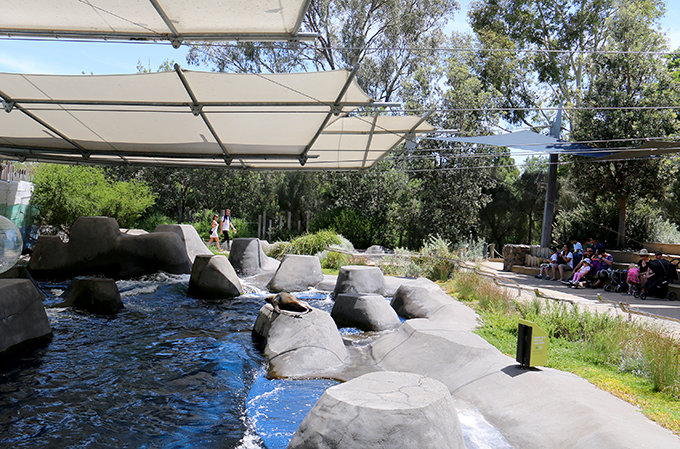
Wild Seas - Houses Seals and Little Penguins alongside some fish species. Why is it so bad? It's a concrete building. The Seal enclosure is very small and half of their enclosure is taken up by fake concrete rocks. It's incredibly uninspired.

Here's a photo of the seal enclosure from when it first opened (it's gotten much worse over the years):
Melbourne-Zoo-Seal-Enclosure.jpg


Then there's Growing Wild, a supposed children's precinct, which instead features three Meerkat enclosures, a large lawn for Giant Tortoises and that's about it. All over a massive space of land. The whole precinct is completely unnecessary; there's a carousel and playground elsewhere in the zoo for the kids, and also enclosures for Meerkat and Giant Tortoise elsewhere.

Finally, there's the Carnivores Precinct. This one frustrates me as they demolished the amazing Lion Park for this. And instead gave their Lions a small, uninspired enclosure half the size of their previous one. The trail is also full of double ups (Tasmanian Devil, Sumatran Tiger) all of which can be found elsewhere in the zoo.

Overall, Melbourne have disappointed me and everyone else within the last 15 years. Unnecessary and uninspired precincts, and they have phased out almost a third of their mammal species. Simply disappointing.
 
Melbourne Zoo in Australia has to be a prime example of decline:

Species lost within the past 15 years:

- Jaguar
- Syrian Brown Bear
- Persian Leopard
- Binturong
- Maned Wolf
- Mandrills
- Serval
- Echidna
- Brazilian Tapir
- Caracal
- Golden Cat
- Fishing Cat
- Eastern Bongo
- Capuchins
- Ostrich
- Lion Tailed Macaque
- Mara

Just to name a few.

And to add to that, they've acquired ZERO prominent new species during this time.

Alongside this, the last 15 years has seen the construction of three horrible precincts:

Wild Seas - Houses Seals and Little Penguins alongside some fish species. Why is it so bad? It's a concrete building. The Seal enclosure is very small and half of their enclosure is taken up by fake concrete rocks. It's incredibly uninspired.

Here's a photo of the seal enclosure from when it first opened (it's gotten much worse over the years):
Melbourne-Zoo-Seal-Enclosure.jpg


Then there's Growing Wild, a supposed children's precinct, which instead features three Meerkat enclosures, a large lawn for Giant Tortoises and that's about it. All over a massive space of land. The whole precinct is completely unnecessary; there's a carousel and playground elsewhere in the zoo for the kids, and also enclosures for Meerkat and Giant Tortoise elsewhere.

Finally, there's the Carnivores Precinct. This one frustrates me as they demolished the amazing Lion Park for this. And instead gave their Lions a small, uninspired enclosure half the size of their previous one. The trail is also full of double ups (Tasmanian Devil, Sumatran Tiger) all of which can be found elsewhere in the zoo.

Overall, Melbourne have disappointed me and everyone else within the last 15 years. Unnecessary and uninspired precincts, and they have phased out almost a third of their mammal species. Simply disappointing.
Another thing not in its favour would be gathering a new board of non savvy animal people that can't help matters one can assume those calling the shots in regard to this have little understanding of what's really needed in running a class zoo
 
Another thing not in its favour would be gathering a new board of non savvy animal people that can't help matters one can assume those calling the shots in regard to this have little understanding of what's really needed in running a class zoo

Oh, they know well enough I suspect. They just don't care.
 
I'm not sure if you can call this decline but the main Singapore Zoo hasn't added anything significant in several years, Night Safari has added a civet walkthrough and an enclosure wirh night monkeys and Brazilian porcupines, while Jurong added fricking northern cassowaries last year, yet the main zoo's last new things were fossas red-capped mangabeys and L'Hoest's monkeys. They've turned the old Frozen Tundra (polar bear habitat) into an eyesore animal playground which is a huge waste of space, it was supposed to become a new sea lion habitat :( The plans for a new Kidzworld and a new elephant habitat over the current Kidzworld seem to be going no where but I guess some other SG users might know better
Animal Playground - ZooChat
 
I would say that the Toronto Zoo has been in a bit of a decline. Over the last few years, species like Malayan Tapir, Snowy Owl, Arctic Fox and Lion-Tailed Macaque (they may still have a few of these bts but they aren't viewable) have all left the collection and been replaced with either nothing or species found elsewhere in the zoo. The Malayan Woods building - which is small but houses Clouded Leopards and a couple other things - has been closed since the pandemic started, and the Caves area that once held Bats and Naked Mole-Rats is also closed. There has also been a lack of significant developments, with the most recent project being Eurasia Wilds in 2014 (this made the Eurasian section smaller and limited many animals to be seen only by tram) to go along with the Giant Panda exhibit (temporary, now holds Tigers).

Things do finally seem to be turning around for the zoo, with an outdoor Orangutan exhibit opening shortly, but as of right now I'd say the zoo is easily worse than it was 5 years ago.

One other American collection that has dropped down the totem pole a bit is Woodland Park. Don't get wrong, Woodland Park is nowhere even remotely close to falling as far as Brookfield or Los Angeles, but progress has been slow in recent years and their last major development ended up being surprisingly second-rate. The non-mammal collection also took a huge hit with the loss of the day and night building. Luckily, this will be rectified with the upcoming forest house taking it's place, so things do seem to be turning around a bit.
While Woodland Park hasn't done a whole lot in the last decade or so, I don't see this as a real issue as there isn't really anything that needs to be changed. Unlike most zoos, Woodland Park doesn't really have any outdated or bad exhibits, as even their older exhibits for Gorillas and Orangutans hold up extremely well and the 2000's exhibits are similarly great.

Also, I'm probably in the minority on this but I thought Banyan Wilds was pretty solid. It's by no means one of the best areas of the zoo, but it was better than I expected. The Tiger exhibit is quite nice, the Sloth Bear area is decent and the mixed-species aviary is pleasant. I wish they added a few more species but overall it's a good complex.
 
I almost envy you guys, talking about the situation of your big zoos, while I'm stuck here in country where zoos are basically a joke:p
Well it's not just you where zoos are basically a joke :p

The smaller Dutch collections here definitely have their own few species that you will see at multiple facilities; corsac fox and the red-flanked variegated squirrel make good examples.
Two rarer small species (1 being more uncommon and the other quite rare) but are more common amongst the smaller facilities. Although a good few of our smaller facilities have a unique focus. For exampel Taman Indonesia specialises in Indonesian Species, Ettenleur de Eekhoorn Experience focusses on Eekhoorns, squirrels.
And ofcourse klein Costa Rica focusses on... not... Costa Rican stuff.. actually. I don't know what they are doing :p

But at several of the smaller collections; Taman Indonesia, Vogelpark Ruinen, Klein Costa Rica, Texel Zoo you can find some incredibly rare bird species not found elsewhere. So I'd say there's still the necessary variaty to encourage visiting them all.

Except Depaay... We don't visit that.
I mean, De paay have some interesting species, so your point is still valid, just the quality......... not the Best (not like Best is best I bet everyone expect me to say that)

I'm not sure if you can call this decline but the main Singapore Zoo hasn't added anything significant in several years, Night Safari has added a civet walkthrough and an enclosure wirh night monkeys and Brazilian porcupines, while Jurong added fricking northern cassowaries last year, yet the main zoo's last new things were fossas red-capped mangabeys and L'Hoest's monkeys. They've turned the old Frozen Tundra (polar bear habitat) into an eyesore animal playground which is a huge waste of space, it was supposed to become a new sea lion habitat :( The plans for a new Kidzworld and a new elephant habitat over the current Kidzworld seem to be going no where but I guess some other SG users might know better
Animal Playground - ZooChat
Yeah Singapore Zoo haven't do much but when the Mandai project is done there's probably not much need for the zoo part to upgrade, so can't say that's a decline.
 
Interesting topic, particularly as one of my local zoos, Marwell (which was briefly mentioned earlier on in this thread) was recently in decline for well over a decade. Every few months there would be a post in the UK section of this forum about more species going.

I would be interested to hear reasons for zoos going into decline and when they have turned the corner, the reasons for that too.

In the case of Marwell, I don't know the reasons, but the decline started around 2005, which corresponds with the zoo's founder, John Knowles leaving, so it looks to be to do with the change in management.

One positive thing though is that the decline does seem to have halted over the past few years.and when they have gone out of a species they have replaced it with another interesting one. For example, Amur leopards replaced by clouded leopards, sable antelope replaced by banteng and fossa replaced by binturong. I hope in the future to see signs of the decline being reversed. There are still empty enclosures in the zoo though and a number of places where enclosures have been removed. I do accept that this may take some time as zoos would have taken a substantial financial hit during the pandemic.
 
I’m surprised no one mentioned Tierpark Berlin yet.
It’s probably the zoo which collection shrunk the most in the last decade.

From 1034 species in 2005, down to 645 in 2021. The new management is to “blame” for that, but it is coherent with the era we live in.
 
In contrast, smaller zoos in Germany for example tend to have a much more standardised core of CE wild boar, CE red deer, Western roe deer etc.
As you've mentioned yourself in a later post, these are "Wildparks" - a certain subcategory of zoos focusing on European native species (mostly the aforementioned mammals), domestic animals and the occasional hardy exotic species.

So yeah, I actually can't think of a country in Europe with more variety between smaller collections (possibly the Netherlands, but at a stretch).
CZ?

I would add Loro Parque to the "declining zoo" list. A few years ago, the zoo was all over the place, TripAdvisor's "No.1 Zoo" etc. Now Pairi Daiza seems to be the new fave, and you hear hardly anything from LP.
 
Last edited:
I’m surprised no one mentioned Tierpark Berlin yet.
It’s probably the zoo which collection shrunk the most in the last decade.

From 1034 species in 2005, down to 645 in 2021. The new management is to “blame” for that, but it is coherent with the era we live in.
Given that the Tierpark sees increasing visitor numbers, I wouldn't speak of a "decline" - although I agree that the decrease of species kept, buildings closed for good, treatment of old staff etc. isn't optimal.
 
Last edited:
I’m surprised no one mentioned Tierpark Berlin yet.
It’s probably the zoo which collection shrunk the most in the last decade.

From 1034 species in 2005, down to 645 in 2021. The new management is to “blame” for that, but it is coherent with the era we live in.
I would not say Tierpark is in decline in the last few years from about 2018/2019 onwards... many of the old buildings are being refurbished now and it is still a very species-rich zoo. I feel like to say Tierpark is declining today is wrong.
 
I’m surprised no one mentioned Tierpark Berlin yet.
It’s probably the zoo which collection shrunk the most in the last decade.

From 1034 species in 2005, down to 645 in 2021. The new management is to “blame” for that, but it is coherent with the era we live in.

That is if you only look at the collection. From an economic and welfare standpoint one could easily argue that the zoo has improved and it is hard to deny the future outlook is much brighter than it was. It is however a huge shame that parts of the collection, especially the birds, have been so neglected.

Overall it seems that decline is interpreted by many here as a decline in the species collection. While, as I argued in this monster post: Europe's 100 must see exhibits maintaining a diverse collection is key for any modern zoo, it is hard to argue it is the main definition of a zoo in decline. It does however often go hand in hand, zoos that have financial issues often get rid of animals, just look at Edinburgh and Diergaarde Blijdorp as examples.

There seem to be three main reasons why zoos decline, some of which only apply to certain types of zoo
1) For city-owned zoos, support from the city is everything and a poor city or a less interested city means lack of investment and budget for upkeeping, even if good ideas and the right people for the zoo are still there. Wuppertal and Usti are prime examples, though multiple other city owned zoos in Germany and Czechia would also fit the description to a lesser degree. Even if things go well, construction takes ages in these places and flexibility is often lacking anyway.
2) Private zoos do often build more quickly and are far more flexible in general. Decline here often relates to a change of management. Too often the children of the founding people or other people that take over have far worse ideas than the founders. This is very apparent in Hagenbeck, but this type of mismanagement also made a zoo like Dierenpark Emmen decline in 20 years from the European top to closure.
3) And then there are the zoos that are managed by people lacking a zoological background or interest / bureaucrats. Such people understand dollar signs and paper truths. But they couldn't care less whether they turn a zoo into the McDonalds of zoos with fewer animals, nothing too exciting, decidedly bland, while still perfectly acceptable for most visitors. For connoisseurs as us that is a nightmare, look at Melbourne and the direction many US zoos seem to be taking in terms of management. Having people with a solid understanding of zoology and conservation high up in the organisation is key to remaining relevant as a zoo and to keep innovating and maintaining the diverse collections zoos will need in the future. Sadly this type of decline is wholly unnecessary.
 

Another interesting case, and again depends on the definition of a small zoo - I wouldn't, for example, count Olomouc or Usti as a small zoo, so smaller zoos in CZ would be around Bosovice or Dvorec size. In that case, there are definitely some lovely collections, and while a lot of them have an odd focus such as cobras, sand boas, chameleons, hanging parrots etc., CZ does have some serious breadth in terms of smaller zoos. Having said that, I'd suspect that the UK just has more breadth in terms of these smaller collections due to 1. the UK has just under twice as many zoos as CZ and 2. Czechia still does have a lot of places with the 'Wildpark' sort of core which tend to exhibit local wildlife. I'll probably do some further probing into it as it's an interesting discussion for sure :).
 
I've not visited since the change of management, but from everything I've seen, the Tierpark Berlin 'decline' is a perfect example of a 'rationalisation for long-term gain' in the way I mentioned for Chester - and the benefits are actually being seen rather more quickly than they were in Cheshire.

The cliff-edge drop in reptiles is a shame though, but I expect it will be at least partially reversed in time.
 
@Batto @Mayki @lintworm I agree with you all, but the thread was very species oriented so I thought Tierpark was a relevant example.

The more recent development are definitely making the Tierpark friendlier to the average visitor.
One very good example of overall decline in an area is the Pheasantry in Tierpark. It went from a species rich area with decently planted aviaries to last individuals of their species in somewhat abandoned aviaries.
 
Philadelphia, on the other hand, has seemingly dropped their plans for Zoo360 (HUGE shame), has phased out loads of animals and replaced them with species already within the zoo (such as replacing their Okapi/Giant Anteater/Bearded Pig area with an uninspired Australian exhibit), and their last exhibit (Water is Life) looks kind of clumsy and poorly-themed (in my opinion, anyways). Even their website is a shell of what it used to be. It used to have bios for individual animals of nearly every species they had and had loads of facts, now they clump all their lizards and snakes under one page and barely have any information on them.
TLDR; Detroit and Brookfield may have been in decline before, but at least they are attempting to turn things around. Not the case for Philadelphia.

There is an actual reason for this - a lot of it mainly boils down to funding and ticket sales, which took a MASSIVE nosedive because of COVID. The zoo apparently had plans to revamp Bear Country, along with potentially addressing the African Plains debacle. While the zoo does indeed have limited space, IMO Zoo360 is still a highly ingenious solution. Another plan they had (and still do, but it still depends on funding) is to create "node" habitats where you could see a big cat or a great ape at different times or the day.

Past that, while I've been extremely vocal about bringing certain animals back to Philly, (ahem - elephants and polar bears much?) and the sentiment behind that is still very much "never say never", ultimately I do hope that the zoo does form a plan that is as creative as Zoo360 itself, moving away from standard fare like kangaroo walkabouts, beer gardens, *unnecessary* playgrounds (THE ZOO'S GOT FOUR. FRIGGIN FOUR.) decorative monocultural lawns, etc.
 
This is my personal view but in opinion nrw including krefeld duisburg dortmund muenster wuopertal cologne and dusselfdorf used to have incredible outstanding collections among these many species kept very much only at that one institutions.

For some time it seemed to go rather just down, while east germanys zoos seemd to recieve total make overs. I do not mean they did not deserve the financial aid that enabled this, but that we all should have been applied equaly with support.

Now the cities seemed to have taken note of how far our institutions were about to fall behind and got to the decision that they too needed to invest.
 
This is my personal view but in opinion nrw including Krefeld, Duisburg, Dortmund, Münster, Wuppertal, Cologne and Düsseldorf used to have incredible outstanding collections among these many species kept very much only at that one institutions.

For some time it seemed to go rather just down, while east germanys zoos seemd to receive total make overs. I do not mean they did not deserve the financial aid that enabled this, but that we all should have been applied equaly with support.
NRW in general and the Ruhr area in particular has been in decline for decades, like other former heavy industry areas in the West. While the East German zoos have benefitted from the German solidarity tax since the German reunification and EU ecomic promotion projects. The zoos are just one among many signs of a general trend, to the point of poor West German communities asking to get rid of said tax.
 
Last edited:
Back
Top