Making African Sections More Unique

It would be nice to see some zoos experimenting with finding ways to exhibit African forest and savanna invertebrates alongside the megafauna to tell a more meaningful conservation story.

Dung beetles, Goliath beetles, and termites might be quite popular if they got featured prominently within an elephant or giraffe exhibit. San Diego Zoo kind of tried this with dung beetles in Elephant Odyssey, but that has been lost over time.

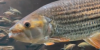
Goliath tiger fish seem like they might make a popular exhibit as part of a hippo or crocodile exhibit complex. Nobody has done much with trying to exhibit this species in the context of an African river exhibit except for the Singapore River park.
 
Re: Jackals - Canids have historically been pretty poorly represented in zoos compared to felids. Even today many zoos have at least a few species of large cat. Few have more than one large dog. Canids have a reputation of being more skittish, more prone to stereotypies in substandard enclosures, and having less appeal overall with the public. They also are much more prone to hiding. I like to say that wolves are one of those animals that people think they want to see, but seldom see when they come to the zoo, and are seldom actually impressed with (unless they are howling
Compared to their relative body size, canids, and wolves in particular, tend to also need larger habitats than felids, or at least that's the observation I've made at the zoos I have visited and research I have done.
 
Re: Penguin/Hyrax - I could see it working in an exhibit that has an extensive enough land area - and a gradual enough pool - to give the hyraxes plenty of space to roam without even being tempted to go near the water. Essentially, it would be a hyrax exhibit next to a penguin exhibit, just with no wall in between. I still wouldn't rule out trouble, though - penguins can be giant jerks, and hyraxes are plucky and will stand up for themselves (Joy Adamson wrote about her pet hyrax dominating the lion cubs she was rearing, including the famous Elsa).

I've heard about hornbills being killed by hyrax before, and seem to recall they've had squabbles with Klipspringer in some circumstances. I really don't think mixing the two aggressive species together is a great idea.

Goliath tiger fish seem like they might make a popular exhibit as part of a hippo or crocodile exhibit complex. Nobody has done much with trying to exhibit this species in the context of an African river exhibit except for the Singapore River park.

I'm surprised these aren't of more interest to zoos. Tigerfish have attained a fair bit of popularity with the general public (for aggression and purported man-eating status, but still) and likely would be a decent draw. They're available too, I've seen juvenile specimens of both Hydrocynus vittatus and H goliath in large aquarium stores before.

Compared to their relative body size, canids, and wolves in particular, tend to also need larger habitats than felids, or at least that's the observation I've made at the zoos I have visited and research I have done.

Canids are far more active than felids, and thus require a larger exhibit to suit their needs. Though too most canids are pack-living versus the solitary nature of most cats.
 
Compared to their relative body size, canids, and wolves in particular, tend to also need larger habitats than felids, or at least that's the observation I've made at the zoos I have visited and research I have done.
You're not wrong - they go crazy in small spaces, whereas big cats just sleep, worse case - pace. I've worked with both reds and grays, and which each species, every individual I've known I've felt this almost palpable nervousness and tension with them, like they just need to get more space between you and them. With smaller canids (my personal experience limited to fennec and Arctic foxes), it wasn't so dramatic.
 
I've heard about hornbills being killed by hyrax before, and seem to recall they've had squabbles with Klipspringer in some circumstances. I really don't think mixing the two aggressive species together is a great idea.


I'm surprised these aren't of more interest to zoos. Tigerfish have attained a fair bit of popularity with the general public (for aggression and purported man-eating status, but still) and likely would be a decent draw. They're available too, I've seen juvenile specimens of both Hydrocynus vittatus and H goliath in large aquarium stores before.


Canids are far more active than felids, and thus require a larger exhibit to suit their needs. Though too most canids are pack-living versus the solitary nature of most cats.
There used to be a tigerfish tank at Shedd, but the species is no longer exhibited there.
 
Thank you for the correction on the penguins, I didn't realise the penguins nested up among the vegetation itself which is really cool to see. Looking at photos and videos online, I wonder if anywhere has tried to exhibit African penguins and rock hyrax together, as they seem to occur in very close proximity at these coastal sites?
re brown hyenas, I was reading a paper recently that mentioned their historical distribution around Table Bay/Cape Peninsula, and assumed that would have been within the fynbos. I didn't realise the species was completely extirpated from the Cape Floristic Region now.

I have seen rock hyrax literally in a penguin colony in the Cape, so with enough space, that might actually work. Hyrax are kept in moated exhibits already, see for example Diergaarde Blijdorp, Rotterdam. I will have a look at which typical bird species would be available in Europe as well, there should be more than Cape weaver and speckled pigeon ;)
 
Goliath tiger fish seem like they might make a popular exhibit as part of a hippo or crocodile exhibit complex. Nobody has done much with trying to exhibit this species in the context of an African river exhibit except for the Singapore River park.

Rotterdam has had tigerfish (though not the goliath) in with the nile crocodiles for years now in a large exhibit. Wroclaw also displays tigerfish (including goliath), but I am not sure anymore which tank in the Afrykarium that was, probably in with the crocodiles too....

Dung beetles, Goliath beetles, and termites might be quite popular if they got featured prominently within an elephant or giraffe exhibit. San Diego Zoo kind of tried this with dung beetles in Elephant Odyssey, but that has been lost over time.

You might want to check out the Gamgoas house in Basel, which has termites next to a large crocodile pool and lion viewing. Nuremberg even has a whole house dedicated to dung beetles (along with other smaller N-African desert species).
 
If a zoo were so inclined, someone could potentially do a North African exhibit instead of the more familiar savanna and rainforest. Potential ungulates could include the three classic Sahelo-Saharan antelopes most often seen in zoos - addax, addra, and SHO - as well as wild ass, Grevy's zebra, ibex, and aoudad. Striped hyena would be the most appropriate large carnivore, though lion, cheetah, and leopard (Amur substitution) could also work, as well as sand cat and fennec fox. Hamadryas baboon would fill the monkey niche, since Barbary macaques are now essential extinct in North American collections. There are plenty of bird and herp possibilities - marbled teal, northern bald ibis, and a really good quality sulcata exhibit. There could be good conservation messaging on desertification, dating back to the time of the Romans. If you were feeling puckish and creative, you could always toss add a brown bear as a stand-in for the Atlas bear.
This would be a great idea. An ancient Egyptian theme could also be done.
I think that when developing an African section, a zoo could concentrate on a particular (national) park, as is often done with Asian sections, such as Kaziranga Forest Trail at Dublin Zoo, inspired by the Kaziranga National Park in India.
If zoos concentrate on only one section rather than whole Africa, fewer large species remain and consequently more small species. There are numerous national parks in Africa on which zoos can base their sections, not only on the world-famous parks such as Kruger National Park or Virunga National Park, but also on others such as Serengeti National Park, where "the great migration" takes place, something that can interest visitors. Virunga National Park, as mentioned earlier, also has many different small animal species (although this focuses on the rainforest).
I could go on and on, but I have mainly focused on the larger national parks to give everyone an idea of what I mean, but there are countless other national parks that could be used in a zoo section.
I love this idea. I actually had ideas about a national park themed zoo in the fantasy forum. I think I created a challenge with that. I think picking a few distinctly different habitats would be interesting.

If a zoo were so inclined, someone could potentially do a North African exhibit instead of the more familiar savanna and rainforest. Potential ungulates could include the three classic Sahelo-Saharan antelopes most often seen in zoos - addax, addra, and SHO - as well as wild ass, Grevy's zebra, ibex, and aoudad. Striped hyena would be the most appropriate large carnivore, though lion, cheetah, and leopard (Amur substitution) could also work, as well as sand cat and fennec fox. Hamadryas baboon would fill the monkey niche, since Barbary macaques are now essential extinct in North American collections. There are plenty of bird and herp possibilities - marbled teal, northern bald ibis, and a really good quality sulcata exhibit. There could be good conservation messaging on desertification, dating back to the time of the Romans. If you were feeling puckish and creative, you could always toss add a brown bear as a stand-in for the Atlas bear.
North Africa has so much potential. An ancient Egyptian theme could be fun.
I'd like to see more mixed-species enclosures than the bog-standard savannah collection. E.g., a rainforest exhibit with okapi, bushpigs, forest buffalo, maybe some African forest elephants, and the bird species to match. Plenty of trees and foliage in the enclosure.

Or Sahara exhibits. One for the relevant gazelle and antelope species, combined with desert warblers and pale crag martins. Plus, a section dedicated to showcasing the various desert rodent species - the exhibits wouldn't take up much space, and they'd have the 'cute factor' to bring visitors their way.
I'd love to see an African complex like that. Various habitats displayed. You could get some ABC and lesser known species.

Why are jackals so rare in US zoos? Seems like they're more in private hands and roadside zoos than AZA zoos.
I was in Kenya in July and saw jackals. I thought it was such a shame they aren't in US zoos.

As for my two cents, I think savanna exhibits are great, but to think outside the box zoos could pick other habitats that would still allow ABC species to be displayed. For example, a great Etosha National Park display could have lions, elephants, giraffes, and lesser known birds and reptiles, whereas a Zambezi display could have hippos, crocodiles, and bull sharks, or a Horn of Africa display could have Grevy's zebras, cheetahs, and gerenuks. There are so many ways zoos could be unique and still have the animals people want to see but teach more of a lesson. Sigh.
 
Personally, I would love to see a detailed display about the red-billed quelea - a large aviary with a few hundred of them would certainly make for a spectacular view.

It would be an added bonus if the aviary could be thematically linked to nearby exhibits for some of their many natural predators - smaller ones such as hornbills, egrets, rollers, egg-eating snakes, mambas, scorpions, armoured bush crickets, genets and mongooses would probably be best, but almost any predator up to and including lions and crocodiles would work.

It could also be linked to the passenger pigeon, which was heavily persecuted until it was extinct, but also show how the quelea is more resilient to the pressures that wiped out the pigeon. These super-flocks can change the environment around them, which I'm sure could be shown in a fun way - just like the passenger pigeon, flocks of quelea can break stout branches under their combined weight, and they affect the cover of grasses growing around their colonies by eating the seeds and pulling up grass blades for their nests.
 
This would be a great idea. An ancient Egyptian theme could also be done.

Or do a two-part exhibit pairing this with modern-day wildlife of Egypt. Look at some of the sacred animals of ancient Egypt, and point out how most of them have been extirpated from the region, many due to desertification. The "ancient" side of the habitat could have lions, west african crocodile, hamadrayas baboon, Hippopotamus, brown bears, sacred Ibis, etc, while the "modern" side could have striped hyena, sand cat, caracal, slender-horned gazelle, Egyptian fruit bats, and other extant species of Egypt today. Would be very interesting to have an exhibit like this as well to tie in Conservation messages about climate change, land use, etc.
 
Or do a two-part exhibit pairing this with modern-day wildlife of Egypt. Look at some of the sacred animals of ancient Egypt, and point out how most of them have been extirpated from the region, many due to desertification. The "ancient" side of the habitat could have lions, west african crocodile, hamadrayas baboon, Hippopotamus, brown bears, sacred Ibis, etc, while the "modern" side could have striped hyena, sand cat, caracal, slender-horned gazelle, Egyptian fruit bats, and other extant species of Egypt today. Would be very interesting to have an exhibit like this as well to tie in Conservation messages about climate change, land use, etc.
This would be a great exhibit. So many interesting possibilities besides the standard savanna exhibit that may not even be geographically accurate.
 
Or do a two-part exhibit pairing this with modern-day wildlife of Egypt. Look at some of the sacred animals of ancient Egypt, and point out how most of them have been extirpated from the region, many due to desertification. The "ancient" side of the habitat could have lions, west african crocodile, hamadrayas baboon, Hippopotamus, brown bears, sacred Ibis, etc, while the "modern" side could have striped hyena, sand cat, caracal, slender-horned gazelle, Egyptian fruit bats, and other extant species of Egypt today. Would be very interesting to have an exhibit like this as well to tie in Conservation messages about climate change, land use, etc.

Such an exhibit would be really good if it divided up the 'extinct' side into the different periods of Egyptian history. For instance:
- The spotted hyaena, plains and Grevy's zebras, warthog, sitatunga and African buffalo disappeared in the predynastic period (before the time of pharaohs)

- The archaic and Old Kingdom periods were when long-maned lions, rhinoceroses, giraffes, wild camels, eland, kob, Nile lechwe and gerenuk disappeared

- Between the end of the Old Kingdom and the end of the New Kingdom, the painted dog, short-maned lion, Persian fallow deer, beisa oryx, roan antelope and Soemmerring's gazelle all disappeared, although this was also the time that cheetahs were first recorded in Egypt

- The Greco-Roman and historical periods saw the disappearance of leopards, cheetahs, wild boar, hippopotamus, addax, scimitar-horned oryx, hartebeest and aurochs

- The only medium-large carnivores left now are the golden wolf, red fox and striped hyaena, while the only medium-large ungulates remaining are the dorcas and slender-horned gazelles, Nubian ibex and aoudad

That is just carnivores and ungulates - birds like the saddle-billed stork could fit in the predynastic period area, the hamadryas baboon and grivet were definitely present (possibly also the olive baboon and patas monkey) and West African crocodiles would have been more widespread than today.

This is a paper about the different extinction times of Egypt's large mammals (worked out from when they disappeared from artwork, rather than fossil finds):
https://www.pnas.org/doi/full/10.1073/pnas.1408471111

Information about the primates comes from here:
https://d1wqtxts1xzle7.cloudfront.n...17dfj97~2w__&Key-Pair-Id=APKAJLOHF5GGSLRBV4ZA
 
Such an exhibit would be really good if it divided up the 'extinct' side into the different periods of Egyptian history. For instance:
- The spotted hyaena, plains and Grevy's zebras, warthog, sitatunga and African buffalo disappeared in the predynastic period (before the time of pharaohs)

- The archaic and Old Kingdom periods were when long-maned lions, rhinoceroses, giraffes, wild camels, eland, kob, Nile lechwe and gerenuk disappeared

- Between the end of the Old Kingdom and the end of the New Kingdom, the painted dog, short-maned lion, Persian fallow deer, beisa oryx, roan antelope and Soemmerring's gazelle all disappeared, although this was also the time that cheetahs were first recorded in Egypt

- The Greco-Roman and historical periods saw the disappearance of leopards, cheetahs, wild boar, hippopotamus, addax, scimitar-horned oryx, hartebeest and aurochs

- The only medium-large carnivores left now are the golden wolf, red fox and striped hyaena, while the only medium-large ungulates remaining are the dorcas and slender-horned gazelles, Nubian ibex and aoudad

That is just carnivores and ungulates - birds like the saddle-billed stork could fit in the predynastic period area, the hamadryas baboon and grivet were definitely present (possibly also the olive baboon and patas monkey) and West African crocodiles would have been more widespread than today.

This is a paper about the different extinction times of Egypt's large mammals (worked out from when they disappeared from artwork, rather than fossil finds):
https://www.pnas.org/doi/full/10.1073/pnas.1408471111

Information about the primates comes from here:
https://d1wqtxts1xzle7.cloudfront.net/31110444/Masseti_JASs2009-libre.pdf?1392208281=&response-content-disposition=inline;+filename=The_primates_of_the_western_Palaearctic.pdf&Expires=1662045896&Signature=eNL3Nfp8gwotmm~4vrjDppr9JTt38hPWxKHXxHjfkw61cOutGwJzYQYLaSEWBfBmE8rEsLe9e5zy4Rx1t-eU9lLxX00pPrh8sSIOaT4io5JdCeqOsGOpGrMSxB7stAI3xkkPvt15hcdidB0XRA1Y4s7kkWI2PuWJvnlOk-BYdGEw-0dA~uCTTcrd10ytmUYU65K~VaoApxYaZsEL-oV0HIilsmSY8VdMZtOWEjL7Frj-8VcPqGin8Tnx~qLW5osXvp-3YVp3TxEl77SRWkUxXb4stSDH3TxAIrsraZuKcyibcvOTOdxzH5ueGLk8Dk0KUdybqJ7M~Ie517dfj97~2w__&Key-Pair-Id=APKAJLOHF5GGSLRBV4ZA
Send this to Memphis Zoo (the whole zoo is already ancient Egypt theme, they just don't have an Egyptian exhibit).
 
We need more nocturnal sections in African exhibits. It would give the smaller animals more spotlight (“spotdark?”), and it would give guests some much-needed relief from the elements outside.
Some potential species could include aardvarks, bats, bat-eared foxes, small cats, porcupines, galagos, and genets (among others).
Yes, I suggested this because it panders to my tastes, but it’s still a good idea, right?
 
Having created many zoo maps myself, I guess it can be hard to avoid certain clichés, but I feel that a potentially untapped African biome are the bamboo forests of Central and East Africa, which isn't what people usually think of. Bongos and guerezas are obvious choices, but chimpanzees, leopards, sitatungas, tree hyraxes, guenons, baboons, wild dogs, crocodiles... Even Western lowland gorillas could be there in representation of mountain gorillas! And of course, the amount of birds in this habitat is rather enviable too, with raptors, turacos, hornbills, starlings, cranes, storks, etc.
 
Back
Top