Are there any subspecies stand ins you've see that didn't "fit?"

elefante

Well-Known Member
15+ year member
Since only certain subspecies are bred in AZA and EAZA facilities this means those are used as stand ins for various exhibits. For example, Amur leopards are going to be in any exhibit in the US whether it's African or Asian themed. Has anyone ever seen a subspecies stand in that looks too different from the native species, for example a northern subspecies of gray wolf in an Indian exhibit? I haven't just curious if anyone else has.
 
Indian antelope is the biggest standout for me. I’ve seen them gracing numerous African Savannah exhibits in place of African antelopes. Not sure if they technically qualify as the general public usually believe they’re an African species - case in point, a friend of mine calls them African blackbuck.

Until 2016, Auckland Zoo held California sea lion in their New Zealand Coast exhibit (part of the native precinct), alongside New Zealand fur seals. The zoo had held California sea lions for decades and opened a new exhibit for them in 2001. They switched to native seals in 2005 (and rethemed the exhibit as the New Zealand Coast in 2011), but retained the sea lions until their deaths.
 
As already mentioned, Amur leopards (and to an extent tigers) are perhaps the best example of this. Although curiously I have really only seen this happen with these two in NA. In Europe, an example is dholes being in a Sunda/Indonesian area (all dholes in Europe are Chinese).

Someone already mentioned the wrong pinnipeds as well, this is also relatively common.
 
A couple I can think of.

Rhea substituting for emu in Woburn Safari Park's Australian exhibit.

Mackenzie Valley wolves at the New Forest Wildlife Park. The park specialises in European wildlife, otters and owls. For a long time the only non European species that wasn't an otter or owl was wallabys. On my last visit earlier this year the Eurasian wolves had been replaced by the Mackenzie Valley variety.
 
Sometimes, if being done with an endangered species or one in need of more holders in US Zoos, I think this could be a good thing. For instance, I read on the Ungulates TAG website that the AZA's Cervid TAG was trying to encourage facilities to replace North American Elk with the Bactrian Wapiti, even if technically not zoogeographically correct it is adding an SSP species in need of more holders and doesn't disrupt the "feel" of the exhibit.
 
I didn't know it was so common to have the wrong species in general. I was talking more about a different subspecies. An Amur tiger in an Indian themed area, an Amur leopard in an African themed area, that kind of thing. It seems strange to have the wrong species altogether. Does anyone think it makes a difference if is representing an extinct subspecies? For example, an exhibit using an Amur tiger for a Caspian tiger?
 
Full species stand ins are not as common but definitely not rare. The Afrykarium at Wroclaw has West Indian manatees as stand ins for Africans as an example
 
The line between what is a species versus a subspecies is so thin anyways that oftentimes a species stand-in can sometimes work as well or better than a subspecies stand-in. Particularly with Leopards and Tigers, the different "subspecies" are sometimes so genetically distinct that they probably warrant splits into multiple species. For an example of where species can be interchangeable sometimes more than subspecies, I have to ask, how many people on here can tell apart Hoffmann's and Linneaus' Two-toed Sloths? Compare that number to the number that can tell apart Amur and Malayan Tigers, or Amur and African Leopards.
 
The line between what is a species versus a subspecies is so thin anyways that oftentimes a species stand-in can sometimes work as well or better than a subspecies stand-in. Particularly with Leopards and Tigers, the different "subspecies" are sometimes so genetically distinct that they probably warrant splits into multiple species. For an example of where species can be interchangeable sometimes more than subspecies, I have to ask, how many people on here can tell apart Hoffmann's and Linneaus' Two-toed Sloths? Compare that number to the number that can tell apart Amur and Malayan Tigers, or Amur and African Leopards.

I am probably in the minority that can distinguish between the sloth species, but not the tiger species o_O

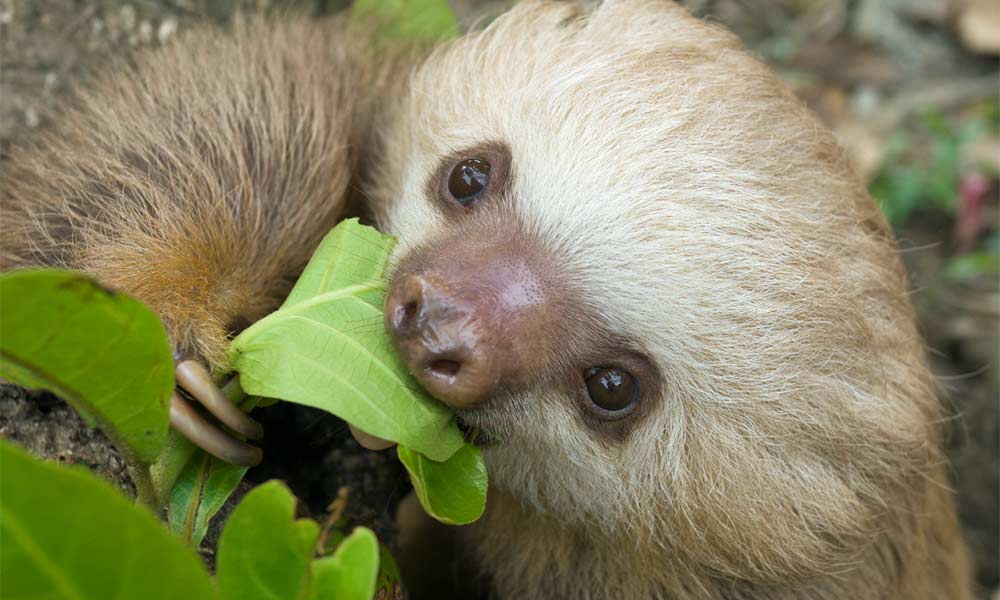
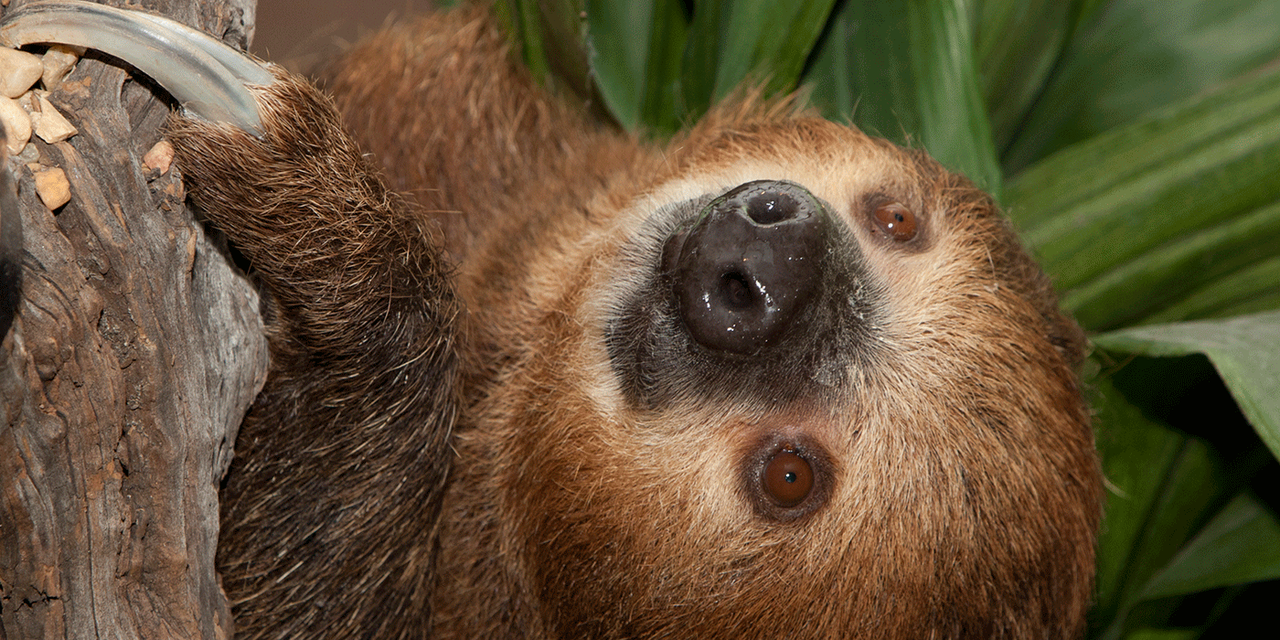
Hoffman's two-toed sloths usually have lighter tan/pinkish skin around their snout, hands, and feet. Linnaeus's two-toed sloths usually have much darker brown skin in those areas.

Hoffman's two-toed sloth with a light-brown colored snout:
2f5.jpg


Linnaeus's two-toed sloth with a very dark snout:
sloth-001.png
 
The line between what is a species versus a subspecies is so thin anyways that oftentimes a species stand-in can sometimes work as well or better than a subspecies stand-in. Particularly with Leopards and Tigers, the different "subspecies" are sometimes so genetically distinct that they probably warrant splits into multiple species. For an example of where species can be interchangeable sometimes more than subspecies, I have to ask, how many people on here can tell apart Hoffmann's and Linneaus' Two-toed Sloths? Compare that number to the number that can tell apart Amur and Malayan Tigers, or Amur and African Leopards.
While possibly more physically distinct in ways that are noticeable to Zoochatters, I can pretty much guarantee tiger and leopard subspecies are *not* more genetically distinct than Linne's and Hoffmann's two-toed sloths.
 
In Taman Safari Bogor, wreathed hornbills were used as substitute for the Blyth's hornbill in a New Guinea-themed exhibit, despite also keeping the latter. The eleonora subspecies of the sulphur-crested cockatoos were also used as substitute for the Australian subspecies in a Australia-themed exhibit.
 
Montgomery zoo has a mixed species savannah habitat with pigmy hippo, grants zebra and ostrich. Pigmy hippo being the stand in for common hippo. That's not a subspecies stand in, but it is odd.

The leopard stand in really annoys me, they do look different enough from Amur and a different African cat could be used as the species instead, maybe serval or caracal, heck even cheetah as they are becoming wildly common in NA zoos given the births at certain places.
 
Montgomery zoo has a mixed species savannah habitat with pigmy hippo, grants zebra and ostrich. Pigmy hippo being the stand in for common hippo. That's not a subspecies stand in, but it is odd.

The leopard stand in really annoys me, they do look different enough from Amur and a different African cat could be used as the species instead, maybe serval or caracal, heck even cheetah as they are becoming wildly common in NA zoos given the births at certain places.
Lots of thoughts on Amur leopards apparently.
 
With respect to those who have said their piece, I don't see the issue with using Amur Leopards as a stand-in for the tropical subspecies here in the States. I doubt few visitors will notice that it looks adapted to a colder climate, and even if they do the zoo can just put up signage explaining the stand-in and how Amurs are endangered. Using them makes more sense to me than replacing with a serval or cheetah - neither of which look like an African leopard or fill the same ecological niche - or replacing with a "pure" African leopard, which would just take up valuable space from the Amur program.
 
With respect to those who have said their piece, I don't see the issue with using Amur Leopards as a stand-in for the tropical subspecies here in the States. I doubt few visitors will notice that it looks adapted to a colder climate, and even if they do the zoo can just put up signage explaining the stand-in and how Amurs are endangered. Using them makes more sense to me than replacing with a serval or cheetah - neither of which look like an African leopard or fill the same ecological niche - or replacing with a "pure" African leopard, which would just take up valuable space from the Amur program.
What's wrong with putting African cats like servals, caracals, or cheetahs in an African exhibit? I'm confused.
 
What's wrong with putting African cats like servals, caracals, or cheetahs in an African exhibit? I'm confused.

Nothing wrong with it. What I meant was that I don't see why zoos should keep them in African exhibits instead of Amur Leopards, which I interpreted to be the suggestion outlined by @SwampDonkey (though I could have misinterpreted).
 
In most cases, I have not actually seen this, but possibly: I have always found it strange seeing the Orinoco crocodile in Brookfield's Swamp habitat - a beautiful species I've grown quite fond of, but the specific exhibit originally held American alligator and is quite temperate, so the crocodiles feel at times like they are invading Florida rather than in their natural habitat.
 
Nothing wrong with it. What I meant was that I don't see why zoos should keep them in African exhibits instead of Amur Leopards, which I interpreted to be the suggestion outlined by @SwampDonkey (though I could have misinterpreted).
You are correct, that was my thought. Going on the visitor idea, I cannot tell you how many times I have seen a visitor think a serval is a leopard, so I am not sure that they would really mind the swap out. While they do not fill the same ecological role as a top predator, they fill the geographic role better, IMO.

Basically I don't think a casual visitor will notice or care and I think the avid visitor would applaud the placement.
 
Asian leopards in an African area really seems an American problem. In Europe I can think of only three zoos that keep an Asian subspecies (Sri Lankan / Persian) in what is generally an African zone: Bioparc Valencia, CERZA Liseux and Safaripark Beekse Bergen and only in the first of these three is the area specifically labelled Africa. To the contrary there are plenty of zoos here which keep Asian subspecies in Asian themed zones from Diergaarde Blijdorp to Hannover etc. It also helps that geographical theming, which seems to be extremely common in AZA zoos is much less the standard in Europe.

I can't think of many other obvious subspecies mixes that don't work well. A zoo like ZOOM is full of them having an Alaskan zone with European moose, European & Kamchatka brown bears and Eurasian lynx. A bigger pet peeve is zoos which just put any tropical bird species in a rainforest walkthrough. This irks me especially with glossy starlings and superb starlings in particular. Superb starling are open country species occuring from savannahs to (semi-)arid scrub and have nothing what so ever to do with forest and even less with a rainforest.
 
Back
Top