Making room on the ark – can rare zoo animals replace common ones in Europe?

Don’t most of these holders overlap?

I didn't check. However, kangaroos are usually kept in groups and can be kept in mixed exhibits. Berlin kept 4 kangaroo species of different size in one moderately sized enclosure. So a zoo can even add a threatened kangaroo without giving up current kangaroo species.
 
Smaller mammals

There is an opinion that small mammals are not interesting for zoos and their visitors. It turns only partially true. Zoos do have space to maintain several endangered species, although not even a fraction of 1000s of small mammals. It seems sensible to divide small mammals into subgroups by their requirements in zoos rather than taxonomy.

22. Bats

Following forms are commonly kept:
Egyptian fruit bat (generic) - 116 holders

Egyptian Fruit Bat is surprisingly common in zoos. Following threatened fruit bats are possible replacements found in Europe: Comoro Flying Fox (critically endangered on IUCN red list), Rodriguez Flying Fox (endangered), Grey-headed, Lyle's and Malagasy Flying Foxes (vulnerable). Unfortunately, these are only a fraction of 72 threatened fruit bats, especially endemic to small Pacific islands. Vulnerable Loyalty and New Caledonia Ornate Flyying Foxes are kept in Noumea zoo in French New Caledonia. Some others are almost unknown.

Below: Critically endangered Livingstone's Fruit Bat or Comoro Flying Fox by Goura.

full

Livingstone's Fruit bat - ZooChat


Vulnerable Madagascar flying fox by Arek.

full

Madagascar Flying Fox (Pteropus rufus) - ZooChat


Vulnerable Ornate Flying Fox by Chlidonias.

full

ornate flying foxes (Pteropus ornatus) - ZooChat


23. Ground squirrels

Following not threatened forms are commonly kept:
Black-tailed Prairie Dog - 195 holders
Alpine Marmot - 63 holders

258 holders keep these two common species. Standing on two legs, round-faced and social, ground squirrels are popular, as are meerkats. More ambitious zoos could consider switching to endangered European ground squirrel. Even more ambitious would be obtaining some species not present in Europe currently, for example endangered Mexican or Utah prairie dogs or Mongolian Marmots.

Below: endangered European Ground Squirrel by TheoV

full

European ground squirrel [2017] - ZooChat

Endangered Mexican Prairie Dog by Giant Eland. Just as cute as the common Black-tailed one, and found in Mexican zoos.

full

Mexican prairie dog (Cynomys mexicanus) - ZooChat

Also endangered, Utah Prairie Dog by Giant Eland.

full

Utah prairie dog (Cynomys parvidens) - ZooChat


24. Porcupines

Following forms are commonly kept:
Indian Porcupine - 279 holders
North African porcupine - 128 holders
Cape Porcupine - 72 holders
North American Porcupine (generic) - 54 holders

533 holders keep these four common forms. Again, it is surprising that porcupines are among the most commonly kept zoo animals! Ambitious zoos could consider switching to vulnerable Philippine Porcupine. Otherwise, diverse other similar sized mammals, and some smaller carnivores could be replacements – coming next.

Below: vulnerable Philippine Porcupine by JigerofLemuria

full

Philippine porcupine - ZooChat
 
Last edited:
25. Small rodents

Following forms are commonly kept:
Eurasian harvest mouse - 125 holders
Domestic Chinchilla - 110 holders
Domestic House Mouse - 107 holders
Long-tailed Chinchilla - 89 holders
Mongolian Gerbil - 65 holders

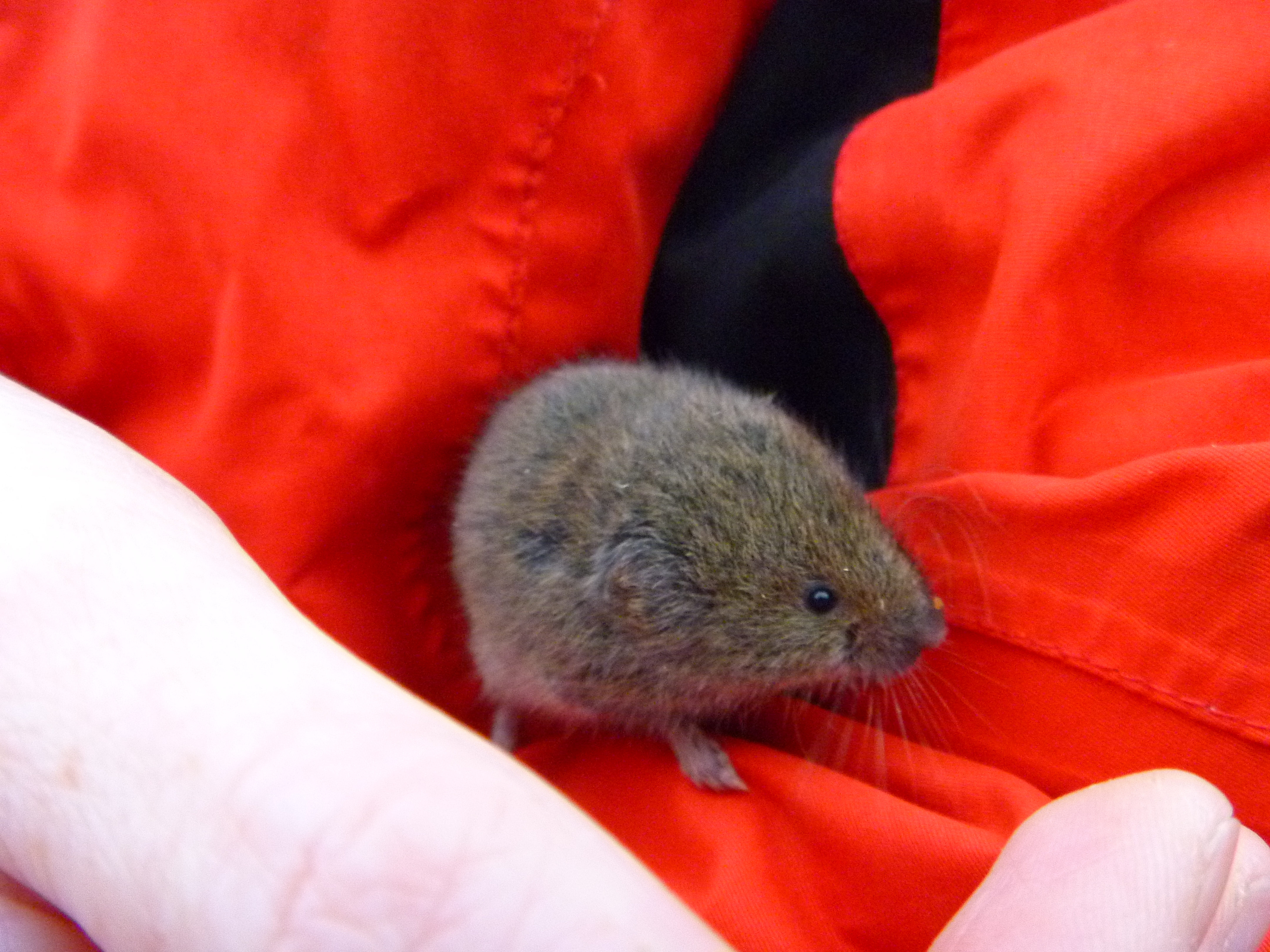
496 holders keep these common species. More ambitious zoos could switch to critically endangered Bavarian Pine Vole, endangered European Hamster or vulnerable Balkan Snow Vole.

Even small zoos and hobbyists can do much in discovery and protection of small mammals. Consider the example of the Bavarian Pine Vole. It was undiscovered right in the middle of Europe until 60 years ago. Then its only locality was destroyed by development. Only in the last years concrete steps were taken to study and protect it.

There are many more threatened small rodents not kept in zoos. As close as Central Europe and Caucasus there are small-range endemics: critically endangered Dahl's Jird, Hungarian Birch Mouse, Armenian Birch Mouse (Sicista armenica), engangered Kazbeg Birch Mouse and vulnerable Nordmann's Birch Mouse.

Below: critically endangered Bavarian pine vole by Nadja Hattinger, Creative Commons picture.
Bavarianpinevole.jpg

File:Bavarianpinevole.jpg - Wikimedia Commons

Endangered European Hamster by lintworm.

full

European hamster - Vienna - ZooChat

Vulnerable Balkan Snow Vole by LegoOwl.

full

Balkan snow vole (Dinaromys bogdanovi) - ZooChat
 
Last edited:
Smaller mammals

There is an opinion that small mammals are not interesting for zoos and their visitors. It turns only partially true. Zoos do have space to maintain several endangered species, although not even a fraction of 1000s of small mammals. It seems sensible to divide small mammals into subgroups by their requirements in zoos rather than taxonomy.

22. Bats

Following forms are commonly kept:
Egyptian fruit bat (generic) - 116 holders

Egyptian Fruit Bat is surprisingly common in zoos. Following threatened fruit bats are possible replacements found in Europe: Comoro Flying Fox (critically endangered on IUCN red list), Rodriguez Flying Fox (endangered), Grey-headed, Lyle's and Malagasy Flying Foxes (vulnerable). Unfortunately, these are only a fraction of 72 threatened fruit bats, especially endemic to small Pacific islands. Vulnerable Loyalty and New Caledonia Ornate Flyying Foxes are kept in Noumea zoo in French New Caledonia. Some others are almost unknown.

Below: Critically endangered Livingstone's Fruit Bat or Comoro Flying Fox by Goura.

full

Livingstone's Fruit bat - ZooChat


Vulnerable Madagascar flying fox by Arek.

full

Madagascar Flying Fox (Pteropus rufus) - ZooChat


Vulnerable Ornate Flying Fox by Chlidonias.

full

ornate flying foxes (Pteropus ornatus) - ZooChat


23. Ground squirrels

Following not threatened forms are commonly kept:
Black-tailed Prairie Dog - 195 holders
Alpine Marmot - 63 holders

258 holders keep these two common species. Standing on two legs, round-faced and social, ground squirrels are popular, as are meerkats. More ambitious zoos could consider switching to endangered European ground squirrel. Even more ambitious would be obtaining some species not present in Europe currently, for example endangered Mexican or Utah prairie dogs or Mongolian Marmots.

Below: endangered European Ground Squirrel by TheoV

full

European ground squirrel [2017] - ZooChat

Endangered Mexican Prairie Dog by Giant Eland. Just as cute as the common Black-tailed one, and found in Mexican zoos.

full

Mexican prairie dog (Cynomys mexicanus) - ZooChat

Also endangered, Utah Prairie Dog by Giant Eland.

full

Utah prairie dog (Cynomys parvidens) - ZooChat


24. Porcupines

Following forms are commonly kept:
Indian Porcupine - 279 holders
North African porcupine - 128 holders
Cape Porcupine - 72 holders
North American Porcupine (generic) - 54 holders

533 holders keep these four common forms. Again, it is surprising that porcupines are among the most commonly kept zoo animals! Ambitious zoos could consider switching to vulnerable Philippine Porcupine. Otherwise, diverse other similar sized mammals, and some smaller carnivores could be replacements – coming next.

Below: vulnerable Philippine Porcupine by JigerofLemuria

full

Philippine porcupine - ZooChat
Flying fox is not really a replacement for egyptian fruit bat. Size difference is huge!
 
I have a degree of sympathy for this position but I also can’t help but think about species like the passenger pigeon which went from being the most abundant bird in North America to becoming extinct.

Giraffes were assumed to be doing well whilst simultaneously undergoing a silent extinction. And the climate crisis means that no species can be taken for granted as being truly safe.

I also think that a species like the Alpine ibex has an important educational role in European zoos - most of us won’t see them in the wild - and they still have a compelling conservation narrative given that they were almost extinct in the natural range.
 
The question is – is the place to see interesting domestic animals a zoo? Is a funny domestic goat really more interesting for the public, educative or worth protecting than every endangered wild animal which could be kept on its space? I think not.

I think yes.

There's no objectively correct right or wrong way for a zoo to currate their collections.
Whatever they deem to be imported to keep and educate on, is up to their curatos and educational managers.

The education on domestic animals is more and more becoming important. Especially with their relation to food or even management of land and forests.
Domestic animals also have direct relations with humans, moreso then that rare white-lipped deer or the quirky desert mouse with 1 holder. It's important to have these relationships be known to the public and that we do need them, and their impact on climate and such because we need them.

Eulemur lemurs in real life are more active and interesting to visitors than the often lethargic ring-taileds.
Do you have a factual source saying that Eulemur members are more interesting to visitors? Or are they just more interesting to you. Else I will just trust you bro.

I quite frankly don't think anyone cares which lemur is shown, but ring-tailed lemurs are the most known through media and all that and just hit the spot for visitors. Similarly they carry the message of conservation really well as flagship species. At least that's what I think.
Top that off with how endangered they are and you just get a damn good species for display and education.
 
Whatever they deem to be imported to keep and educate
a fatal error I made and I just now see, ''imported'' should be ''important''
Normally I wouldn't double post but this change of words impacts the meaning of the sentence/context for better understanding
 
a fatal error I made and I just now see, ''imported'' should be ''important''
Normally I wouldn't double post but this change of words impacts the meaning of the sentence/context for better understanding

To be fair it kind of works even with imported :D
 
To be fair it kind of works even with imported :D

For most people it would, I reckon, however I personally do have a few opinions about import of new species that may not allign with what I say here :oops:
Although in the end it wouldn't be wrong :rolleyes:
 
I really hope this is a typo and you are not genuinely surprised by it.

I must say, I never paid much attention to porcupines and the public does not seem, either - so it is surprising so many zoos keep them.

The education on domestic animals is more and more becoming important. Especially with their relation to food or even management of land and forests.

Seems slightly counterproductive for a zoo. 'Grazing goats and cows destroys habitats in Africa - look at nice pygmy goats and zebu in our children farm'.

Do you have a factual source saying that Eulemur members are more interesting to visitors? Or are they just more interesting to you.

Actually, a director of a major zoo pointed it. Ring-tailed lemurs look good on photos with their contrasting pattern. But they are relatively inactive, and visitors in a zoo watch more active lemurs.
 
26. All other smaller mammals

Following forms are commonly kept:
Two-Toed Sloth - 132 holders
Azara agouti - 119 holders
Southern three-banded armadillo - 102 holders
Sugar Glider (generic) - 86 holders
White-bellied Hedgehog - 82 holders
Central European Red Squirrel - 80 holders
Chinese Striped Squirrel - 80 holders
Small hedgehog tenrec - 74 holders
Brown-haired armadillo - 72 holders
Six-banded Armadillo - 71 holders
Siberian chipmunk (generic) - 69 holders
Eurasian Red Squirrel (generic) - 55 holders
Prevost Squirrel (generic) - 52 holders
Northern Treeshrew - 49 holders
Short-eared elephant shrew - 48 holders

1171 holders keep these common species. I am surprised that the Two-toed Sloths and Azara Agoutis became so common in Europe. Surely, there is enough space to share with Hoffmann's Two-toed Sloth and other agoutis. However, more valuable would be threatened small mammals already present in Europe. They represent variety of sizes, habits and requirements, although not always simple replacement from a common to very similar endangered species. Some are also substitutes for small carnivores. There are endangered Tasmanian Devil, Eastern Quoll, Giant Jumping Rat and Panay Cloudrunner, and vulnerable Dusky Pademelon, Kowari and Bear Cuscus.

Below: endangered Tasmanian Devil by WhistlingKite24. Ground living, largish, not jumping although can climb, partially diurnal. In reality, its doglike qualities dominate over infernal ones.

full

Tasmanian Devil Having a Scratch - ZooChat

Endangered Eastern Quoll by Tim May. Nocturnal, climbing, small, carnivorous. Being a short-lived marsupial, it needs a sizable population to maintain itself in human care.

full

Eastern quoll; Linton; 15th September 2019 - ZooChat

Endangered Giant Jumping Rat by gentle lemur. Nocturnal, ground living, tropical, herbivore.

full

Giant jumping rat - ZooChat

Endangered Panay Cloudrunners by robmv. Nocturnal, tree living, tropical, herbivore.

full

Panay Cloud Rat (Crateromys heaneyi) at London Zoo - ZooChat

Vulnerable Dusky Pademelons by MagpieGoose. This little wallaby is an example of 'small mammal cute for the public but not boring to Zoochatters'?

full

Dusky Pademelons - ZooChat

Vulnerable Kowari by HOMIN96. Small, nocturnal, ground living, tropical carnivorous.

full

Kowari (Dasyuroides byrnei) - ZooChat

Vulnerable Bear Cuscuses by KevinB. Tree cuscuses mix features of sloths and lemurs: slow moving, vegetarian, round-headed, colorful and are sometimes kept as pets by locals. Although they also have powerful claws and are allegedly very stupid. Perhaps an alternative 'small mammal cute for the public but not boring to Zoochatters'?

full

Sulawesi bear cuscuses (Ailurops ursinus), 2022-06-28 - ZooChat

Unfortunately, there are more threatened small mammals than zoos can protect: IUCN lists 335 rodents, 77 insectivores, 24 lagomorphs etc. Here are some examples of ones not kept in Europe.

Critically endangered Black-spotted Cuscus by Vision. There are several other endangered or critically endangered cuscuses in Indonesia and Papua New Guinea: Blue-eyed Spotted Cuscus, Waigeo Cuscus, Telefomin Cuscus, Woodlark Cuscus, Gebe Cuscus, Talaud Bear Cuscus...

Black-spotted cuscus, Spilocuscus rufoniger - ZooChat
full


Critically endangered Mexican Agouti by carlos55. Similar to other agoutis but confined to a tiny area of Mexico and Cuba, and kept in Mexican zoos.

full

mexican agouti - ZooChat

Vulnerable Layard's Palm Squirrel from Sri Lanka by Chlidonias. Beautifully colored.

full

Flame-striped or Layard's Squirrel (Funambulus layardi) - ZooChat

Vulnerable Quokka by LaughingDove. It was successful in European zoos for some time, even used as a model animal in research on reproduction of kangaroos, but died out. This is a wild but habituated one in an island reserve in Australia. Another candidate 'small mammal cute for the public but not boring to Zoochatters'.

full

Friendly Quokka - Rottnest Island - ZooChat
 
I didn't check. However, kangaroos are usually kept in groups and can be kept in mixed exhibits. Berlin kept 4 kangaroo species of different size in one moderately sized enclosure. So a zoo can even add a threatened kangaroo without giving up current kangaroo species.


I don’t think I was able to explain my question properly. Don’t most zoos hold more than one animal in the lists you post? For example:

Köln zoo keeps the ones which I have bolded
Two-Toed Sloth - 132 holders
Azara agouti - 119 holders
Southern three-banded armadillo - 102 holders
Sugar Glider (generic) - 86 holders
White-bellied Hedgehog - 82 holders
Central European Red Squirrel - 80 holders
Chinese Striped Squirrel - 80 holders
Small hedgehog tenrec - 74 holders
Brown-haired armadillo - 72 holders
Six-banded Armadillo - 71 holders
Siberian chipmunk (generic) - 69 holders
Eurasian Red Squirrel (generic) - 55 holders
Prevost Squirrel (generic) - 52 holders
Northern Treeshrew - 49 holders
Short-eared elephant shrew - 48 holders

So you
1171 holders keep these common species.
while counting Köln 4 times. I don’t know which term to use, but to say there are more than 1000 holders of a select group of animals, while counting some facilities multiple times doesn’t show an accurate picture.
 
Actually, a director of a major zoo pointed it. Ring-tailed lemurs look good on photos with their contrasting pattern. But they are relatively inactive, and visitors in a zoo watch more active lemurs.

Would this however be a situation sketched based of their own zoo's lemurs and guests, or rather a zoo union wide observation?

I'm quite curious
 
I must say, I never paid much attention to porcupines and the public does not seem, either - so it is surprising so many zoos keep them.

Let's see...as far as "big" porcupines are concerned:

(Seemingly) Big animals? ✅
Eye-catching appearance? ✅
Cold hardy species? ✅
Something to draw visitors' attention? ✅ (The quill shooting myth)
Somewhat showy species? ✅

Absolutely perfect zoo animals.
 
counting Köln 4 times.

Actually, the question of this thread was 'how much space for threatened species can be made by replacing common animals'? It doesn't matter much whether 4 zoos replace 1 common animal each, or 1 zoo replaces 4 common animals. For this diverse group there are 7 possible replacements already present in European zoos, and many more outside Europe. So Cologne Zoo, if it chooses to replace 4 common species, it has only too many possible choices.

In an ideal world, I would have a dump from ZIMS database (Zoological Information Management System) and could count individual animals in zoos. This list would look slightly different then.

Would this however be a situation sketched based of their own zoo's lemurs and guests, or rather a zoo union wide observation?

I guess he based it from his observations in several zoos, and perhaps a handful of his colleagues.

Actually you touched an interesting point which I remarked before - zoos make multi-million decisions to choose some animals, build facilities, but have only a general feeling what visitors prefer. Did e.g. Zoo Basel made a good decision to have ring-tailed lemurs, or could it import crowned lemurs? Would the difference be compensated by adding one more children swing, or more?
 
Let's see...as far as "big" porcupines are concerned:

(Seemingly) Big animals? ✅
Eye-catching appearance? ✅
Cold hardy species? ✅
Something to draw visitors' attention? ✅ (The quill shooting myth)
Somewhat showy species? ✅

Absolutely perfect zoo animals.
I second this as someone who works with African crested porcupine. Visitors are fascinated by them, particularly when they’re interacting with them in keeper experiences or watching them in keeper talks. They’re a very useful ambassador animal. Also they’re quite easy to source and will happily mix with other species particularly meerkats.
 
I always have bad luck with porcupines - every time I see them [African Crested anyways] they are always hunched up in a dark corner asleep =S
No doubt when awake they are captivating
 
Summary of mammals:

Writing this thread, I considered practical aspects, and compared animals with similar requirements, but not always close taxonomically, and mostly already kept in European zoos.

Zoos have been exchanging common animals for threatened species for decades. Much can still be done here.

Zoos have sufficient skills and space to save all big cat species and subspecies of the world. From the perspective of breeding in human care, there is no need of engineered extinction and no form of big cat needs to die out or get hybridized out of existence. For primates, zoos can avoid planned extinction of many monkeys currently kept in European zoos.

Space exists to preserve all forms of zebras of the world. There is also space for many deer, caprids, wild cattle, lynxes, otters and lemurs. This is because public interest in these animals supports zoo spaces and expertise in their keeping and breeding is there. Giraffe, otters, cold-tolerant small carnivores, ground squirrels and smaller South American monkeys are groups where zoos have space to protect more threatened forms than currently, but none is available for European zoos because of diverse import restrictions.

To the opposite: wild asses, antelope, small tropical carnivores, nocturnal prosimians, large South American monkeys, gibbons, bats, small rodents, pinnipeds, cetaceans are groups where zoos lack space to keep all threatened species, although generally some room still exists to expand conservation breeding. If many of these will need saving, space would need to be created for them. More complex situation is with long-lived bears and apes, where space will be freed only slowly. Kangaroos lack big and climate-tolerant species which are threatened.

As I was writing this thread, the power of big numbers became obvious. Things not visible from the perspective of one zoo showed in a big picture. I was surprised, for example, that domestic animals collectively fill so much space, also in bigger zoos. This space could be used for threatened wild mammals, equally educative and attractive for the public.

Looking at zoos collectively, any future effort of changing to threatened species would together give significant help. The power of big numbers means that even if minority of zoos would change, this would make real difference. And the opposite: even occasional keeping of common species still eats much space, even in bigger zoos.

Little zoos and animal parks can contribute much by keeping e.g. threatened deer, wild sheep, wild goats and small mammals with similar requirements to common ones. Collectively, they have lots of space which big zoos lack for these groups. Perhaps, an interesting brainstorm could be make: what would need to be done practically, that small deer parks and suchlike take part in conservation plans? What if big zoos rent the animals and part-time experienced staff to small zoos located nearby?

A surprise for me was how common became some animals in European zoos. For example Alpine Ibex, Snow Leopard, Ring-tailed Lemur, Ruffed Lemur, Cotton-top Tamarin, Two-toed Sloth are surprisingly abundant. There are also others kept in fewer zoos but in large groups, like Egyptian Fruit Bat or Gelada.

I want to thank to all the photo authors which work I included, and for all the comments!

Looking at criticism, perhaps not all commenters read the introduction. First, I don't foresee that all zoos will change, so common species or domestics are not in danger of disappearing. Second, education can be done using threatened animals as well or better than common or domestic ones.

I am not sure if I have time to continue with birds and reptiles. Because photos turned popular, and lots of Zoochatters contributed wonderful photos, I plan making a photo portfolio of rare animals which need new holders in zoos.
 
The portfolio of threatened species which need more interest in zoos

Deer 1. Temperate deer.

Lookalikes of Red Deer, Sika Deer and Fallow Deer are staple of zoos and smaller parks have several endangered lookalikes, which could be kept instead. These Vietnamese Sika Deer Cervus nippon pseudaxis are even kept walkthrough in Overloon, the Netherlands. A similar walkthrough is in Nordhorn, Germany. Photo by Morgan.

full

the maidan walktrough exhibit - ZooChat

Vietnamese Sika Deer by Antoine. Extinct in the wild.

full

Réserve de la Haute-Touche - Vietnamese sika deers - ZooChat

Almost all deer share the same story. They are wiped by excess hunting, afterwards people get wiser and hunting gets regulated. Deer are reintroduced, but have to come from somewhere. Common Fallow Deer, only one tiny group in Termessos National Park, Turkey is native. All the millions of Fallow Deer in the wild and human care worldwide were at one point released by humans, starting in Neolithic times.

Mesopotamian or Persian Fallow Deer Dama mesopotamica by Giant Eland. Native to the Middle East, it shares an especially interesting story of international collaboration. It was rediscovered in Iran and reintroduced, among others, to Israel, despite all political differences.

full

2013: Shadow Nursery - ZooChat

Mesopotamian Fallow Deer female with calf by alexkant

full

Mesopotamian fallow deer/ Dama mesopotamica - ZooChat


Barbary Stag or Atlas Red Deer Cervus elaphus barbarus by Patrick87. This form of Red Deer from North Africa could also be introduced in prehistoric times from Corsica, where endangered Corsican Red Deer survives.

full

Barbary stag - ZooChat


Bactrian Deer or Bukhara Deer Cervus elaphus / hanglu bactrianus by gulogulogulo. Threatened in its range in river valleys of desert Central Asia.

full

Bukhara Deer 250815 - ZooChat


Sichuan Red Deer or Macneill's Red Deer Cervus canadensis macneilli by Deer Forest. Currently found only in Asia and in American collections.

full

Sichuan red deer (Cervus elaphus macneilli) - ZooChat


There are several further endangered subspecies of the Red Deer / Wapiti complex not present in Europe, like Hangul Cervus hanglu hanglu and Yarkand Red Deer Cervus hanglu yarkandensis.


White-lipped Deer Cervus albirostris / Przewalskium albirostris by gentle lemur. Vulnerable in its remote Tibet.

full

White-lipped deer - ZooChat

Source:
Masseti, M. & Mertzanidou, D. 2008. Dama dama. The IUCN Red List of Threatened Species 2008: e.T42188A10656554.
 
Back
Top