Australasian Asian Elephant Population 2022

Status
Not open for further replies.
This is some what puzzling, now that 2 cows are on or are near the borderline limit for any possible breeding then why a bull was not imported with any younger cows instead?.
My own view would have been bringing in 1 bull with the three cows from the start?.
Why bring in any females nearing the borderline age with no provision made for even housing a bull then or even now?. I can't follow this situation?

It's possible that they felt having the cows on site would strengthen their case for importing a bull and in the meantime give them non contact animals to work with. The cow facilities would have been simpler to construct than the facilities a bull would require, so they prioritised what could be done first and bring maximum benefit to their zoo.

I don't see not breeding from the two elder cows as a major issue. Asian elephants are breeding well in Australasia and we can hardly claim as a region to have maximised use of the founder cows we have. Two cows is likely what Australia Zoo can breed and accommodate calves from, with the other two merely providing support to them via a matriachal herd.
 
It's possible that they felt having the cows on site would strengthen their case for importing a bull and in the meantime give them non contact animals to work with. The cow facilities would have been simpler to construct than the facilities a bull would require, so they prioritised what could be done first and bring maximum benefit to their zoo.

I don't see not breeding from the two elder cows as a major issue. Asian elephants are breeding well in Australasia and we can hardly claim as a region to have maximised use of the founder cows we have. Two cows is likely what Australia Zoo can breed and accommodate calves from, with the other two merely providing support to them via a matriachal herd.
The way I see it is since AZ appears to holding only the Sumatran sub species I would say that every animal counts not to mention the sheer cost involved with the importation of 4. Even if breeding did take place with the 2 younger cows its hardly going to gain any long term benefits for this sub species
 
The way I see it is since AZ appears to holding only the Sumatran sub species I would say that every animal counts not to mention the sheer cost involved with the importation of 4. Even if breeding did take place with the 2 younger cows its hardly going to gain any long term benefits for this sub species

With only one holder and talk of only importing one bull, it was never going to be a sustainable herd long term. At a minimum, they'll need to import a second bull 10-15 years after importing the first to breed with the first generation cows.

Its be nice to see a purebred Sumatran herd, but cooperative breeding programmes are successful for a reason and Australia Zoo will likely have to participate in the one the region runs.
 
With only one holder and talk of only importing one bull, it was never going to be a sustainable herd long term. At a minimum, they'll need to import a second bull 10-15 years after importing the first to breed with the first generation cows.

Its be nice to see a purebred Sumatran herd, but cooperative breeding programmes are successful for a reason and Australia Zoo will likely have to participate in the one the region runs.
If it was never going to be non sustainable with all 4 cows breeding its going to be even less so even if they do end up breeding from the younger two cows.
 
I think it’s inevitable that Australia will eventually relinquish their far fetched dreams of holding a breeding herd of Sumatrans. Ever since the beginning such an idea was rather a major feat; something years of planning and logistics would take.

When the cows were first brought over I think most were shocked to see Australia do such a thing. After all, they haven’t really shown much initiative collection wise following Steve’s passing.

I do agree with some of the previous comments here in saying that these four girls may have just been brought over for display purposes, similar to the situation the former trio Australia had were in. Elephants are a major drawcard, especially as Australia manages them under free contact as well. I think breeding may have just been a throughout reason for why Australia imported them in the first place.

If they really wanted a bull, there was nothing stopping them from importing one alongside the cows. Managing Sumatrans on a sub species level would’ve proven incredibly difficult too. Transfers/imports would be required every few decades, and it would just be quite an ordeal.

The best course now is to breed from the two youngest cows. AI from Putra Mas would probably be best at this point; as they don’t have the facilities for a bull.
 
I think it’s inevitable that Australia will eventually relinquish their far fetched dreams of holding a breeding herd of Sumatrans. Ever since the beginning such an idea was rather a major feat; something years of planning and logistics would take.

When the cows were first brought over I think most were shocked to see Australia do such a thing. After all, they haven’t really shown much initiative collection wise following Steve’s passing.

I do agree with some of the previous comments here in saying that these four girls may have just been brought over for display purposes, similar to the situation the former trio Australia had were in. Elephants are a major drawcard, especially as Australia manages them under free contact as well. I think breeding may have just been a throughout reason for why Australia imported them in the first place.

If they really wanted a bull, there was nothing stopping them from importing one alongside the cows. Managing Sumatrans on a sub species level would’ve proven incredibly difficult too. Transfers/imports would be required every few decades, and it would just be quite an ordeal.

The best course now is to breed from the two youngest cows. AI from Putra Mas would probably be best at this point; as they don’t have the facilities for a bull.

Australia Zoo were in a similar boat to Sydney Zoo in that they wanted to acquire elephants, but there wasn't a sufficient surplus in the region.

Terri has a long standing relationship with Taman Safari (and was notable for being the first zoo in decades to to import Sumatran tigers from outside of Indonesia). It's therefore no surprise, she turned to them as an option for importing elephants. The fact she was able to secure females for free contact made them even more desirable for Australia Zoo, whose previous cows had been big draw cards.

Although AI remains an option, it will still require Australia Zoo to construct bull facilities if a male calf is born - which is fairly likely.

There's close to a decade before the younget cows are in their early 20's. With this in mind, I doubt we''ll see any action from Australia Zoo for at least five years. Their failure to import a bull by this time would be a reasonable indication they don't plan to.
 
Although AI remains an option, it will still require Australia Zoo to construct bull facilities if a male calf is born - which is fairly likely.

There's close to a decade before the younget cows are in their early 20's. With this in mind, I doubt we''ll see any action from Australia Zoo for at least five years. Their failure to import a bull by this time would be a reasonable indication they don't plan to.

That’s very true. Considering what the region needs is important. Australia could’ve easily became a bachelor facility which is something the region needs; but instead chose to hold cows (which could managed through free contact and potentially breed). Whilst we did have bulls surplus; we didn’t have the cows, hence the overseas import.

Australia not importing a bull already is quite an indication for me (although Covid has delayed a lot of plans). In saying that, an unrelated bull will do well for the region in the future. Male calves born at Australia Zoo may be used at Werribee and Dubbo down the line for breeding.
 
That’s very true. Considering what the region needs is important. Australia could’ve easily became a bachelor facility which is something the region needs; but instead chose to hold cows (which could managed through free contact and potentially breed). Whilst we did have bulls surplus; we didn’t have the cows, hence the overseas import.

Australia not importing a bull already is quite an indication for me (although Covid has delayed a lot of plans). In saying that, an unrelated bull will do well for the region in the future. Male calves born at Australia Zoo may be used at Werribee and Dubbo down the line for breeding.

When zoos consider only themselves on the individual level, it affects the breeding programme in the long run as then more imports are needed to support a population which is no longer sustainable.

Teamwork makes the dream work and there was no better example of cooperation than the import from Thailand and the subsequent AI of Porntip from Taronga with Bong Su from Melbourne; followed by AI using Perth’s bull at both facilities.

If Australia Zoo follow through with plans to import a bull, then it will be of immense benefit to the region. Dubbo and Werribee would have no qualms accepting a first generation Sumatran bull from Australia Zoo to breed with their cows; and it would create bloodlines in their herd that would be in demand overseas.
 
Europe has decided a while ago not to mix Sumatran or Borneo elephants with the mainland/Sri Lanka population anymore because they are too different genetically. I would not bet on Sumatran/Thai mix elephants being in high demand anywhere… but I dont think Australia Zoo will import a bull so no need to worry about that.
 
Europe has decided a while ago not to mix Sumatran or Borneo elephants with the mainland/Sri Lanka population anymore because they are too different genetically. I would not bet on Sumatran/Thai mix elephants being in high demand anywhere… but I dont think Australia Zoo will import a bull so no need to worry about that.

If Australia Zoo want to breed (with that being the unknown), this would potentially strengthen their resolve to import a Sumatran bull elephant:

1. The ZAA would be aware of Europe’s stance of not mixing Sumatrans with Mainland/Sri Lankans - and would presumably follow it too (they don’t want to be producing hybrids that have no value).

2. Dubbo and Werribee consequently wouldn’t be interested in receiving first generation hybrids from Australia Zoo (or they too would be breeding hybrids).

3. Australia Zoo have Sumatran cows (which wont change) but they’ll be aware by importing a Sumatran bull, they’ll be able to breed calves that are of value outside the region (bull calves could theoretically be exported). There’s also the chance Sydney Zoo would accept a pair long term in exchange for their Dublin bulls, which could be transferred to Dubbo or Werribee.
 
Interesting Article on Auckland Zoo’s Elephants

This lengthy article was published 10 months ago in November 2021, but had some pieces of interest with regards to the elephants:

Metro — ANJALEE & BURMA, the last of Auckland’s elephants.

Anjalee’s reproductive issues:

It’s detailed here that Anjalee has reproductive issues, which combined with her irregular cycles, was a challenge in undertaking AI with her. This be simplified by having a bull on site to cover her at a moment’s notice.

Ultrasounds have identified abnormalities in Anjalee’s reproductive tract. Andrew Coers, the leader of the elephant team, says that Anjalee delivering a calf will “basically reset” that aspect of her biology. The earlier she falls pregnant, the better for her health.

Burma’s personality:

Burma has been an Aucklander since arriving from a Myanmar logging camp in 1990. Her 30 years in Auckland have seen her mature from the skittish young thing Coers first remembers: an animal full of insecurities, quick to worry, who would flinch — Coers drops his shoulders in imitation — when a bird flew by too close. Now Burma is much more considered,

She began when Kashin was still in residence and Burma — then overshadowed by the people-pleasing older elephant — shied away from the socialising that came naturally to her companion. With Kashin’s death, “she had to learn to cope differently and grow up a lot”. And with Anjalee’s arrival, Burma “changed again … suddenly becoming the dominant animal, taking on this role of being the dominant animal and trying to be serious, which she just hadn’t had to do before”.

Relationship between Burma and Anjalee:

Their relationship was part of the justification of allowing them to go to seperate facilities when Dubbo advised they only wanted to take Anjalee:

The relationship between the two elephants — Burma hardly acknowledged the interloper when Anjalee first arrived — has strengthened over the years: at times during Anjalee’s menstrual cycle, Burma will refuse to leave the younger elephant’s side, and they come together when something worries them, like a helicopter buzzing overhead. But they are also happy to spend time alone, and often do. Neither animal has ever needed the other the way Burma did Kashin, and their impending separation, Sandy says, is just a recognition of “who they are as individuals and what they need as individuals”.
 
A question for those who may be more familiar with Australia zoos.

is Steve Irwin’s zoo, the Australia Zoo, cooperative with others in the terms of conservation and breeding recommendations or they just are riding the coattails of the fame of the Irwin family?

For what it is worth I really don’t watch the tv show.


It is clear that the Australian zoo has no interest in importing the bull and working with other zoos in the terms of elephant programs.

i believe the other Australian zoos will have enough elephants so they do not need any elephants from the Irwin’s zoo. What’s the point of creating hybrids if they do not contribute to conservation.

it’s great to be cooperative in the terms of the tigers though.
 
It is clear that the Australian zoo has no interest in importing the bull and working with other zoos in the terms of elephant programs.

i believe the other Australian zoos will have enough elephants so they do not need any elephants from the Irwin’s zoo. What’s the point of creating hybrids if they do not contribute to conservation.

it’s great to be cooperative in the terms of the tigers though.

The hybrid stance is the true game changer. It effectively means Australia Zoo have two options - import a Sumatran bull or don’t breed; and there’s a number of people who believe they’ll choose (or have chosen) the latter.

It’s a shame, as had they waited another three years (2022), they would have been happy to acquire Burma (1982) and Permai (1989) and provide them with a retirement home, while achieving their goal of holding free contact elephants. From their end, they’ll be happier with their four Sumatran cows, which will provide them with an exhibit for the next half a century (the youngest cow is eight).
 
It is clear that the Australian zoo has no interest in importing the bull and working with other zoos in the terms of elephant programs.

i believe the other Australian zoos will have enough elephants so they do not need any elephants from the Irwin’s zoo. What’s the point of creating hybrids if they do not contribute to conservation.

it’s great to be cooperative in the terms of the tigers though.
Have they sent that many tigers outside of their collection to other zoos?
 
It’s great to be cooperative in the terms of the tigers though.
Have they sent that many tigers outside of their collection to other zoos?

Yes. They’ve sent six tigers to other zoos; as well as a male they received from Taronga Zoo transferring back out to Ballarat.

From the 1.2 triplets they imported from Indonesia, 1.1 have been sent to other zoos:

1.0 Bashi (04/12/2007) Wellington
0.1 Maneki (04/12/2007) Ballarat DECEASED

Of the cubs bred at their zoo, 3.1 have been sent to other zoos:

1.0 Clarence (22/08/2013) Taronga
1.0 Scout (08/02/2016) Orana
0.1 Delilah (08/02/2016) Adelaide
1.0 Reggie (31/03/2016) Orana

It should be noted that four of the five eldest cubs bred at Australia Zoo have now been dispersed to other collections, with the fifth being removed from the breeding programme due to an eye condition. He will remain at Australia Zoo for life.

Their four youngest cubs (2.2 born 2019-2020) will presumably enter the breeding programme in the coming years - with one or two retained to continue Australia Zoo’s population (probably the females).
 
I have no idea but it looks like another poster provided the information.

Australia Zoo’s participation in the regional Sumatran tiger breeding programme has been very reciprocal. Through the breeding programme, they’ve received two males; and in turn have transferred out four tigers bred on site (as detailed above) - as well as two of the three founders they imported.

It’s been nice to see their willingness to share their tigers - especially their male founder (the most valuable male in the region) rather than just sitting on them. By retaining one founder (a female), they’ve been able to breed four litters from her - the most born to any female since the regional breeding programme began in 1992.
 
Planning for the Future

A summary of new information that’s come to light in the past month:

Australia Zoo will likely be operating independently:

First of all, the information that Europe are not breeding hybrids of the Sumatran subspecies with Indian and Sri Lankan elephants suggests that Australasia would be foolish to do so given the difficulty we’d have placing these bulls overseas and their lack of value to our breeding programme.

Australia Zoo will presumably import a Sumatran bull; or alternatively decide not to breed - but either way, the consequence is they’ll essentially be running their own breeding programme. Their elephants won’t be transferred out to other Australian zoos; nor their’s transferred in.

The configuration of Werribee’s complex has been partly explained:

There was some confusion over their exhibit set up - which at the genesis phase of the masterplan showed two large exhibits for the bulls and the cows, leaving us wondering how this would work regarding multiple bulls on site.

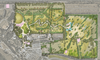
This map offers reassurance that the complex will indeed offer a myriad of exhibits, varying in size and offering a range of permutations in which the elephants can be displayed.

There appears to be a minimum of eight or nine exhibits ranging from holding yards suitable for introductions or retention over a short period; to the largest exhibit for the use of the matriarchal herd. Having multiple paddocks will allow for recovery/regeneration of paddocks between use.

upload_2022-9-24_19-6-55.png
 

Attachments

  • upload_2022-9-24_19-6-55.png
    upload_2022-9-24_19-6-55.png
    235.2 KB · Views: 20
Planning for the Future

A summary of new information that’s come to light in the past month:

Australia Zoo will likely be operating independently:

First of all, the information that Europe are not breeding hybrids of the Sumatran subspecies with Indian and Sri Lankan elephants suggests that Australasia would be foolish to do so given the difficulty we’d have placing these bulls overseas and their lack of value to our breeding programme.

Australia Zoo will presumably import a Sumatran bull; or alternatively decide not to breed - but either way, the consequence is they’ll essentially be running their own breeding programme. Their elephants won’t be transferred out to other Australian zoos; nor their’s transferred in.

The configuration of Werribee’s complex has been partly explained:

There was some confusion over their exhibit set up - which at the genesis phase of the masterplan showed two large exhibits for the bulls and the cows, leaving us wondering how this would work regarding multiple bulls on site.

This map offers reassurance that the complex will indeed offer a myriad of exhibits, varying in size and offering a range of permutations in which the elephants can be displayed.

There appears to be a minimum of eight or nine exhibits ranging from holding yards suitable for introductions or retention over a short period; to the largest exhibit for the use of the matriarchal herd. Having multiple paddocks will allow for recovery/regeneration of paddocks between use.

View attachment 576919
Werribee is set to become the main centre for the asian elephant within the region as far as I can tell they have ticked all the right boxes.
Having input from well known successful overseas zoos and managers was a smart move. I believe they have likely thought of everything needed ahead of time.
I really hope that the Dubbo herd does not full to far behind and have to bigger gaps between calf breedings.
I believe AZ zoos elephants will be likely just for display for the visitors, even if a bull was imported its really not going anywhere in the long term with so few animals.
 
Werribee is set to become the main centre for the asian elephant within the region as far as I can tell they have ticked all the right boxes.
Having input from well known successful overseas zoos and managers was a smart move. I believe they have likely thought of everything needed ahead of time.
I really hope that the Dubbo herd does not full to far behind and have to bigger gaps between calf breedings.
I believe AZ zoos elephants will be likely just for display for the visitors, even if a bull was imported its really not going anywhere in the long term with so few animals.

This is how I see the breeding programme playing out:

Taronga Western Plains Zoo:

Taronga Western Plains Zoo plan to open an expanded cow/calf facility, which will feature an additional holding yard and large barn capable of holding the entire matriarchal herd indoors for an extended period.

They currently have five paddocks and three barns, with one paddock designated as a recovery paddock.

The logical move is to transfer in Pak Boon and Tang Mo from Taronga and transfer out Pathi Harn and Sabai to take their place, with the former breeding with Thong Dee and Anjalee prior to their departure.

This would leave four paddocks vacant (one recovery), which would allow them to retain a further three bulls. Birth intervals will likely remain large e.g. eight years given they’d have four viable cows and a fifth juvenile cow.

Werribee Open Range Zoo:

Werribee appear to have around seven or eight exhibits and holding yards from the map. The largest will be occupied by the matriarchal herd; and another three by Luk Chai, Man Jai and in all likelihood, Putra Mas upon his transfer from Perth.

Allowing for a recovery paddock, Werribee could be left with up to three available paddocks to allow for the expansion of the herd. It’s unknown what gender ratio the upcoming cohort (or future cohorts) will contain, but bearing in mind juvenile/adolescent bulls can cohabit with each other until at least their early teens, they could afford to breed at five year intervals initially.

It would be advantageous if opportunities arose to transfer out bachelor bulls to Monarto in 10-15 years time, which could see them continue with five year birth intervals. If an option within or outside the region (i.e. exports) fails to present itself, I see birth intervals extending to eight years.
 
Status
Not open for further replies.
Back
Top