Sadly, yes.I presume the animal in question was pretty short-lived?
Sadly, yes.I presume the animal in question was pretty short-lived?


Does the guidebook happen to have any paintings of western capercaillie or the rock ptarmigan?


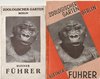
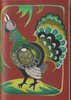
This is a guidebook that aim for both adults and children, which makes it very nice. It's like how "the best children movie is one that can be enjoyed by children and adults". By having both paintings and photos together it also give me a sort of "reality and imagination" vibes (not sure how to describe that), and it provide a great way for children to have both an accurate depiction of the animals and a more vibrant/artistic view.Day 135: Alpenzoo Innsbruck (2019) - Ibex (Kinderführer)

Page count: 48 pages
Photographs: 24 colour photographs
Illustrations/diagrams: 22 stylised animal paintings and 34 children's puzzles
Layout: Introduction, followed by general summary of notable species in collection and assorted puzzles.
Map: Located within main body of guidebook
Today, we shall take a look at an interesting little oddity which I picked up during my recent travels in Central Europe, and one which was purchased during a visit to the zoological collection to which it pertains. Although many zoological guidebooks are aimed towards children and families, it is somewhat rarer for Anglophone collections to produce both a full-length guidebook aimed towards an adult audience and a shorter guidebook specifically intended for children. However, in my experience this is more commonplace in German-language collections, although this is the first occasion that I have had occasion to discuss one fully within this thread. As I will hopefully demonstrate within this post, the quality of these dedicated "Kinderführern" tends to be rather higher than is the case within those English-language guidebooks which cater to a younger audience, containing a greater quantity of detailed content and aesthetic appeal.

The guidebook opens with a short introductory passage written by the director of the zoo, discussing the intended purpose of the guidebook as a source of information about key species displayed within Alpenzoo Innsbruck at the time of publication, and the hope that this would educate and inform the children reading the text; the introduction also provides information about the authorship of the guidebook - a member of the zoo education department - and the artist responsible for the various paintings present throughout.
This introductory passage is accompanied by a map of the collection, which has been derived directly from the stand-alone map which is distributed for free on entry to Alpenzoo without further edits; although the map is detailed, attractive and contains a wide variety of animal silhouettes depicting the various species present within the collection, and as an independent document is one of the better maps I have encountered during my continental travels, the accompanying numbered key has not been reproduced here. This unfortunately renders the comprehensive exhibit numbering visible on the map somewhat pointless - although the silhouettes go some way to clarifying the contents of most exhibits, some are less obvious. This is a distinct pity, given the high quality of the map in and of itself, but does not detract wholly from the value provided by its presence within this guidebook.

The main body of the guidebook comprises a series of double-page spreads highlighting some of the most noteworthy species displayed at Alpenzoo; each section contains a highly-attractive and aesthetically-appealing full-page painting of the species in question, rendered in a style which is stylised but not dumbed-down in any way, alongside a photograph of the species in question and a variety of information relating to their diet, habitat and behavior in the wild. This information is supplemented by a short paragraph in the lower left corner of each double-page spread, providing specific information about the individual animals held at Alpenzoo itself; for instance, in the four examples I have selected as illustration for this post, the reader is informed:
- that the brown trout in the aquarium display vivid breeding colouration during the winter months
- that the adders in the open-air terraria can generally be found underneath their heat lamps
- that it is possible to identify individual lynx at the collection by their spot pattern
- and that the aviary for wallcreepers allows them to display their wild climbing abilities.
Other than the larger-than-usual typeface, fairly simple and succinct wording and the use of brightly-coloured paintings as the main form of illustration, the only real indication that this guidebook is specifically intended for children is the presence of a small puzzle, colouring exercise or other activity at the foot of each double-page spread, and themed around the species discussed in that segment of the guidebook. The answers and solutions to these activities are provided on the final page, opposite the interior rear cover.


Along with the surprisingly large amount of detailed information about the species present at Alpenzoo, and the attractive and brightly-coloured paintings which illustrate each account, the other major strength of this guidebook - and something which further increases its value as a genuine guide to the zoo rather than a dumbed-down frivolity for children - is the fact that a genuinely wide range of species have been selected for discussion, with choices not merely restricted to a handful of immediately-recognisable taxa such as wolves, lynx and ibex, but also giving attention to the lesser-known species which (I would argue) are key to the charm of Alpenzoo, such as waldrapp, wallcreeper and mountain hare. As a result, the guidebook manages to provide a fairly comprehensive view of the collection, and hence the wide diversity of species native to the Alps themselves.
I have to admit to being particularly pleased with the inclusion of wallcreeper, the final species discussed within the guidebook, given both the rarity of the species in captive collections and the fact that - more than any other species at Alpenzoo - it sums up the unique nature of the collection in question. The painting used to depict the species is also, in my opinion, the most attractive of any in the guidebook.

Overall, this is an attractive and well-produced guidebook which, although intended for children, nonetheless provides a large amount of information about the species displayed at Alpenzoo Innsbruck at the time of publication in an interesting and accessible format, with only a small amount of content directly aimed at a younger audience. As such, I think that this guidebook contains much of merit for adult zoo enthusiasts, particularly those who - like myself - have a strong soft spot for Alpenzoo itself.
As usual, I welcome any and all questions, comments and feedback - and if anyone would like to see further paintings from the guidebook, I would be more than happy to oblige!

Day 136: Port Erin Aquarium (1951) - Guide to the Aquarium, and to the Natural History of Port Erin and its neighbourhood

Page count: 64 pages
Photographs: 3 black-and-white photographs
Illustrations/diagrams: 13 illustrated plates depicting typical species found in the aquarium
Layout: Introduction, followed by essays on the marine and geological history of Port Erin and the Irish Sea, the Manx fishing industry, and a general overview of the marine species typically found within the coastline of the Isle of Man, with particular focus on those taxa usually found in the aquarium.
Map: Five maps, depicting the following; physical geography of Port Erin and surrounding area; tidal patterns of the northern Irish Sea; Great Britain and Ireland during the formation of the Manx Slate; Great Britain and Ireland during the formation of the Manx Limestone; and Great Britain and Ireland immediately after the last glacial period.
One of the fringe benefits of collecting zoological guidebooks is that, on occasion, it leads to the discovery of material from a collection which you were hitherto entirely unaware of; the Kano Zoo guidebook which I discussed in the early days of this thread was perhaps the most notable example of this phenomenon, but the latest item selected for discussion is another rather interesting case. The Port Erin Marine Biological Station and Aquarium was located in the small village of the same name on the southwest coastline of the Isle of Man, and until I encountered this guidebook and purchased it several weeks ago, it was completely unknown to me. Given the fact that the zoological collection in question (as I shall discuss anon) appears to have closed to the general public not long after the publication of this guidebook, and the fact that after a half-century of subsequent private operation as a location for study and research undertaken by students of the University of Liverpool it ceased to exist in 2006, it is perhaps unsurprising that my knowledge of the collection is limited to the information contained within this guidebook, and what little scraps are available online.... the latter largely pertaining to the ultimate closure and partial demolition of the Biological Station, and news articles discussing various abortive plans for redevelopment of the remaining structures (which still stand today, albeit fire-damaged).

The guidebook opens with a short introduction discussing the history of the collection, the general format that the main body of the text would follow, and providing information about further publications available at the Marine Biological Station for those interested in learning more about marine biology. Given the scarcity of information online about the collection, I feel it is worth reproducing the first paragraph of the introduction verbatim below:
The Port Erin Marine Biological Station was built in 1892, when it was situated on the opposite side of the Bay, under the Belle Vue Hotel. It was, and still is, mainly intended for research into the natural history of marine animals and plants, and for the instruction of University students. At the present time, however, the buildings include a Hatchery where plaice and lobsters are bred and reared by arrangement with the Manx Government. They also include an Aquarium and a small Museum, which are open to visitors.
As far as I can tell, the aquarium ceased to be open to the general public at some point shortly after the publication of this guidebook; the master-list of guidebooks which is maintained by the Bartlett Society, and which includes material published in collections on the Isle of Man and Channel Islands as well as the United Kingdom and Ireland, suggests that this particular guidebook was the last issued by the collection. However, the Marine Biological Station remained open as a private facility managed by the University of Liverpool (which had taken ownership of the collection in 1919) until its eventual closure and demolition 55 years after the publication of this guidebook.

The main body of the guidebook can be divided into four main segments; the first three of these cover only a quarter of the total length of the guidebook, but are - in my opinion - the most interesting aspect of the whole. The first of these is a short essay on the marine geographic features present at the southernmost tip of the Isle of Man, where the Marine Biological Station was located; this goes into a large amount of detail about the variation in depth throughout the Irish Sea, and the fact that much of the area around Port Erin is relatively shallow and correspondingly rich in marine life. A companion essay occurs further into the guidebook, discussing the tidal cycle around Port Erin and throughout the Irish Sea as a whole; although it does not immediately follow the first essay, they are supplemented by a pair of excellent maps, which I have reproduced above and below. Given the fact that these maps occur in sequence, it seems right to discuss the two essays as a pair as I have done here.

The opening essay on marine geography is followed by a rather longer - but no less interesting - essay on the subject of the physical geological features present within the Isle of Man as a whole, their distribution and how to recognize them, and how these features were formed throughout prehistory; given the fact that I have a strong soft spot for paleontology and geology, when I first read through this guidebook I was very much taken with this segment of the guidebook. This section is supplemented by a total of three maps, which pertain to the following subjects:
- The formation of the Manx Shale deposits; although the map suggests these were formed during the Cambrian Period around 530 million years ago, more recent research has shown that this deposit, which can be found exposed in several parts of the Isle of Man, Cumbria and Wales, in fact originates from the later Ordovician Period of around 480 million years ago.
- The formation of the Manx Limestone deposits; these were formed around 330 million years ago, during the Carboniferous Period.
- The coastline of Great Britain and Ireland during the last glacial epoch, at which point in time both were connected to continental Europe and the Isle of Man was a region of highland between both.
I have attached the third of these maps below, along with the accompanying discussion relating to the impact that the glaciation at the peak of the Ice Age, along with the boulder-clays and other glacial deposits which remained in the aftermath, had on the Manx landscape.


The final of these short essays, which more or less leads directly into the main body of the guidebook, comprises a discussion of the Manx fishing industry and the wide variety of nets used within sea-fishing in the area; although relatively brief, this represents a fairly important primary record of sociological history, recording as it does the methodology, techniques and equipment used within an industry which was historically extremely important within the region.
This is followed by a lengthy and in-depth discussion of the fish, crustaceans, molluscs and other invertebrates native to the marine ecosystems found throughout the Manx coastline and surrounding areas of the Irish Sea; these discuss the diet and breeding behaviour of those species under discussion, with copious information provided on the relative fecundity of various groups of fish both in the wild and in captive situations (whether aquariums, fish farms or other managed environments). This section also highlights those species which were generally found within the captive collection in the Marine Biological Station itself, with the caveat that the stock within the aquarium was very variable due to often-limited captive husbandry knowledge and that therefore species would regularly come and go. These accounts are thoroughly illustrated by a series of eleven plates depicting some of the species most commonly held within the Marine Biological Station, each of which are labelled with the taxa in question.
Given the fact that the guidebook does not provide a full or accurate stocklist for the aquarium, it should only be taken as the roughest indication of the scope and depth of the species held within the collection at the time of publication; rather, the main value of this section is the information it provides about the diverse and highly-speciose marine ecosystems which the Biological Station studied and promoted awareness of, the educational merit inherent within the discussions relating to the breeding habits of the species within these ecosystems, and the accompanying information relating to the importance of these ecosystems to the economic and sociological landscape of Manx culture.


In conclusion, this is an interesting and highly-valuable resource on several grounds; as a primary record of zoo-history pertaining to a closed collection, and similarly as a primary record of socio-economic history; as a resource for those interested in the geological and palaeontological record of the Isle of Man and surrounding areas; and as a source of education about the marine natural history of the Irish Sea. As such, I am extremely glad to have stumbled across this guidebook, and that (despite not recognising the original source) I took a gamble and purchased it.
As always, I open the floor to any questions, feedback or criticisms - I feel like I have given the guidebook far less attention than it probably deserves, so any prompts for further information would be more than appreciated!
"convert the zoo into a Trust and otherwise extend the involvement of the collection in education and captive breeding programmes"Day 137: Guernsey Zoo (1976) - Flamingo and Asiatic Black Bear

Page count: 14 pages (including interior front and rear covers)
Photographs: 8 colour photographs
Illustrations/diagrams: 7 animal drawings
Layout: Introduction, followed by general overview of species held within collection, visitor information and details of annual food consumption.
Map: Two; map of collection located within introductory pages, and map of island showing location of the zoo on rear cover.
When one considers the fact that the last post dealt with a guidebook from the Isle of Man, it feels somewhat fitting that the random number generator has thrown up another guidebook from one of the three Crown Dependencies of the United Kingdom - and once again, we shall be discussing a zoological collection which has since closed down. This post will be rather shorter than the preceding one, however, both because of the brevity of the guidebook and my relative lack of knowledge about the collection in question. This said, given the fact that the eventual closure of Guernsey Zoo in 1991 resulted in many of the animal inhabitants being sent to the newly-opened Hamerton Zoo - which, as I have discussed in a previous guidebook post, provided a significant boost to the fledgling collection - I feel that there is a definite element of interest in looking at material from Guernsey Zoo during its heyday.

The guidebook opens with a general introduction to the collection, discussing plans to convert the zoo into a Trust and otherwise extend the involvement of the collection in education and captive breeding programmes, and the increase in finances that these plans would require; given my general lack of knowledge about Guernsey Zoo and its history, I do not know whether any of these plans were successful in the short term. Certainly the collection survived for 15 years beyond the publication of this guidebook, and therefore I can only assume that if the zoo encountered financial difficulties as a result of these plans this came some time later. One minor point which is worth mentioning about this introductory segment is the fact that - doubtless due to the fact that Guernsey is located only around 30 miles from the coastline of Normandy, and therefore it can be reasonably assumed the zoo experienced a relatively high number of visitors from France - it is entirely reproduced in French-language, although this is not continued throughout the main body of the guidebook.
The introduction is accompanied by a small and fairly simple map of the collection at the time of publication, with an accompanying numbered key listing the various exhibits and their inhabitants; as can be seen above, a rather larger and more detailed map of Guernsey itself, showing the location of the zoo in relation to the major settlements and roads throughout the island, is provided on the rear cover of the guidebook.

The main body of the guidebook comprises a broad discussion of the animal collection located at Guernsey Zoo, divided into rough taxonomic groups; although these accounts are well-illustrated with a combination of attractive colour photographs and line drawings depicting various of the species held within the collection at the time of publication, they are fairly sparse on actual information about these species. Rather, the accounts tend to discuss the taxonomic groups in question in more general terms, describing their diet, range and behaviour whilst not citing which species were held within Guernsey Zoo itself; even when specific taxa are mentioned by name, they are often species which were certainly *not* held at the collection at the time of publication nor any other time - such as Kaka and Emperor Penguin!
As a result, although I do not doubt that most - if not all - of the rough taxonomic groups highlighted were indeed present within the animal collection at Guernsey Zoo, the precise taxa concerned are very unclear, with the only direct references to animals at Guernsey itself being a mention that a colony of Parma Wallaby was planned for the future, and that the bird collection ranged from "tiny seed-eating Finches, through the Glossy Starlings from Africa and Mynahs of India to some of the more exotic species of Jays, Crows and Pies".

However, the guidebook does contain a few points of more specific interest, and which provide a valuable insight both into Guernsey Zoo itself and the natural setting within which it was located, as follows:
- A segment, visible above, relating to the approximate quantity of animal feed which Guernsey Zoo used on an annual basis, discussing the variety of food, vitamins and fodder given to the animals within the zoo and the rough cost of this feed.
- A short discussion about the wildlife found on the island of Guernsey itself, paying particular attention to the most significant reptile, amphibian and insect inhabitants, and the endemic Guernsey Vole (a subspecies of Microtus arvalis).
- A variety of visitor information within the interior rear cover, discussing the opening times during summer and winter, public transport links to the zoo, and general rules and guidelines for admission. This section contains the noteworthy observation that at the time of publication, the zoo was staffed only by the owner James Thomas and one other individual!

In conclusion, although the species accounts leave something to be desired - being well-written and interesting, but providing little specific information about Guernsey Zoo itself - this is an interesting and attractively-illustrated guidebook to a closed collection which I suspect few on the forum now remember from direct experience.... although I would love it if anyone reading this thread who *did* visit the collection was able to provide their insights, feedback and memories!

Day 131: Stanley Zoo (c.1970) - Animal Coat Pattern

Page count: 6 pages (including interior front and rear covers)
Photographs: 1 black-and-white photograph
Illustrations/diagrams: 1 advertisement
Layout: Introduction and news, followed by feeding times, visitor amenities, admission prices and other general information
Map: Two; map of the collection within central pages, and map showing location of the zoo on rear cover.
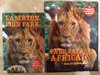
There are currently a few randomly-selected guidebooks sat in the queue for discussion within this thread; however, as my mental energy and "spoons" have been running pretty low over the past few days I've been finding it quite hard to get anything written for them! However, one of the most recent additions to my personal collection of guidebooks - having arrived only yesterday - is both extremely unusual and also very brief, and therefore I feel it is well-worth presenting in its entirety within this thread. This will serve three important tasks; to preserve the information found within for posterity, given the fact that it is highly likely very few copies of this guidebook survive; to hopefully provoke some level of discussion and feedback; and finally to keep the thread flowing and prevent things coming to a halt entirely!
Stanley Zoo was a rather short-lived zoological collection located within County Durham in the north-east of England, with strong ties to several other zoological collections within this region; all of which (with the exception of Flamingo Park Zoo, now Flamingoland) have long since closed down. Given how long ago the collection closed down, and how briefly it was open in the first place, it is perhaps unsurprising that there is precious little information available online regarding Stanley Zoo; we were lucky enough to have the former manager of the collection Ian Gibb amongst our number on ZooChat for several years, posting under the username @mukisi , before he passed away in 2016. As such, I will open this post with a handful of odds and ends shared by him elsewhere on the forum:
In terms of our current membership, I have found posts by both @dean and @NigeW indicating that they visited the collection; I would be very interested to hear anything they have to say - either about Stanley Zoo or this guidebook!

Given the fact that I am presenting the contents of this guidebook entirely verbatim, supplemented by the above recollections of the former manager of Stanley Zoo, it seems somewhat superfluous to provide too much commentary from myself. As such, I will merely observe here that despite the brevity of this guidebook, there is a surprisingly large amount of interesting information provided within; for instance, although the map located within the central pages has been defaced by a previous owner - or, more likely, the child of a previous owner - it is nonetheless detailed and thoroughly-labelled with the species displayed within the collection at the time of publication.


One interesting point which I *can* make is that the map makes no mention of otters within the collection; although the guidebook contains no explicit dates beyond a mention on the map that a Pets Corner was due to open in May 1970, the lack of this species provides a further data point for estimating when this guidebook was published, as (per a book in my possession published by the Natural History Society of Northumbria, on the subject of mammal, reptile and amphibian species found within the northeast) a pair of the sindica race of Smooth-coated Otter escaped from Stanley Zoo in 1968 and were last sighted in the River Team six miles to the east.
The guidebook also, it should be noted, contains a wide range of other information useful to a zoo historian; the admission prices, feeding times and daily events listed all give a valuable insight into this long-closed zoological collection.

In conclusion, despite its brevity and simple format, this guidebook is extremely interesting; not only does it carry a great deal of value on zoo-historical grounds, but it is also a valuable primary source for those interested in the socio-economic and cultural history of the area in which I live and grew up. Considering how fragile this guidebook is, and how obscure the collection to which it pertains has become, I would not be surprised if very few copies survive.

Day 137: Guernsey Zoo (1976) - Flamingo and Asiatic Black Bear
Page count: 14 pages (including interior front and rear covers)
Photographs: 8 colour photographs
Illustrations/diagrams: 7 animal drawings
Layout: Introduction, followed by general overview of species held within collection, visitor information and details of annual food consumption.
Map: Two; map of collection located within introductory pages, and map of island showing location of the zoo on rear cover.
When one considers the fact that the last post dealt with a guidebook from the Isle of Man, it feels somewhat fitting that the random number generator has thrown up another guidebook from one of the three Crown Dependencies of the United Kingdom - and once again, we shall be discussing a zoological collection which has since closed down. This post will be rather shorter than the preceding one, however, both because of the brevity of the guidebook and my relative lack of knowledge about the collection in question. This said, given the fact that the eventual closure of Guernsey Zoo in 1991 resulted in many of the animal inhabitants being sent to the newly-opened Hamerton Zoo - which, as I have discussed in a previous guidebook post, provided a significant boost to the fledgling collection - I feel that there is a definite element of interest in looking at material from Guernsey Zoo during its heyday.
The guidebook opens with a general introduction to the collection, discussing plans to convert the zoo into a Trust and otherwise extend the involvement of the collection in education and captive breeding programmes, and the increase in finances that these plans would require; given my general lack of knowledge about Guernsey Zoo and its history, I do not know whether any of these plans were successful in the short term. Certainly the collection survived for 15 years beyond the publication of this guidebook, and therefore I can only assume that if the zoo encountered financial difficulties as a result of these plans this came some time later. One minor point which is worth mentioning about this introductory segment is the fact that - doubtless due to the fact that Guernsey is located only around 30 miles from the coastline of Normandy, and therefore it can be reasonably assumed the zoo experienced a relatively high number of visitors from France - it is entirely reproduced in French-language, although this is not continued throughout the main body of the guidebook.
The introduction is accompanied by a small and fairly simple map of the collection at the time of publication, with an accompanying numbered key listing the various exhibits and their inhabitants; as can be seen above, a rather larger and more detailed map of Guernsey itself, showing the location of the zoo in relation to the major settlements and roads throughout the island, is provided on the rear cover of the guidebook.
The main body of the guidebook comprises a broad discussion of the animal collection located at Guernsey Zoo, divided into rough taxonomic groups; although these accounts are well-illustrated with a combination of attractive colour photographs and line drawings depicting various of the species held within the collection at the time of publication, they are fairly sparse on actual information about these species. Rather, the accounts tend to discuss the taxonomic groups in question in more general terms, describing their diet, range and behaviour whilst not citing which species were held within Guernsey Zoo itself; even when specific taxa are mentioned by name, they are often species which were certainly *not* held at the collection at the time of publication nor any other time - such as Kaka and Emperor Penguin!
As a result, although I do not doubt that most - if not all - of the rough taxonomic groups highlighted were indeed present within the animal collection at Guernsey Zoo, the precise taxa concerned are very unclear, with the only direct references to animals at Guernsey itself being a mention that a colony of Parma Wallaby was planned for the future, and that the bird collection ranged from "tiny seed-eating Finches, through the Glossy Starlings from Africa and Mynahs of India to some of the more exotic species of Jays, Crows and Pies".
However, the guidebook does contain a few points of more specific interest, and which provide a valuable insight both into Guernsey Zoo itself and the natural setting within which it was located, as follows:
- A segment, visible above, relating to the approximate quantity of animal feed which Guernsey Zoo used on an annual basis, discussing the variety of food, vitamins and fodder given to the animals within the zoo and the rough cost of this feed.
- A short discussion about the wildlife found on the island of Guernsey itself, paying particular attention to the most significant reptile, amphibian and insect inhabitants, and the endemic Guernsey Vole (a subspecies of Microtus arvalis).
- A variety of visitor information within the interior rear cover, discussing the opening times during summer and winter, public transport links to the zoo, and general rules and guidelines for admission. This section contains the noteworthy observation that at the time of publication, the zoo was staffed only by the owner James Thomas and one other individual!
In conclusion, although the species accounts leave something to be desired - being well-written and interesting, but providing little specific information about Guernsey Zoo itself - this is an interesting and attractively-illustrated guidebook to a closed collection which I suspect few on the forum now remember from direct experience.... although I would love it if anyone reading this thread who *did* visit the collection was able to provide their insights, feedback and memories!

I've visited this safari park three times in the last few years, and most recently in 2021, when the only photos in the gallery were taken.As always, I would be very interested in any feedback and comments which those more familiar with the modern-day collection may be able to provide; I know from the gallery that @TheGerenuk has visited relatively recently, but perhaps @snowleopard or @TZDugong might have useful insights too?

Given the number of guidebooks I own from collections located in the USA, it may surprise some reading this thread to learn that my personal collection of zoological guidebooks contains very little material from Canada, with only three other zoological collections from the country being represented in total; for whatever reason, guidebooks from the country are significantly more scarce on the secondary market than is the case for its neighbour to the south.
general information and safety advice for visitors driving through the lion and baboon reserves.


That's generally a standard feature of safari parks, yes.Did they let visitors drive their own cars through the lion enclosure?
Day 138: Parc Safari Hemmingford (1972) - Lion Head

I've learned so much from the this post @TeaLovingDave, its astonishing to me that Stanley had a guidebook at all, and I think its miraculous that one had survived. Who knew that Lambton Lion Park had actually caused its closure. I kind of assumed that one had led to the other but only indirectly.
In fairness, Canada has far fewer zoos than the USA does also.
Did they let visitors drive their own cars through the lion enclosure?

That's generally a standard feature of safari parks, yes.
This would never be allowed in the US. I knew some foreign collections did it but I had no idea it was a common practice anywhere.Indeed; a very commonplace thing in the various Chipperfield collections, and safari parks in general!