Yes, I am aware. However, Maryland keeping 100 (which is great for both the zoo and the birds) doesn't account for the whole picture of 1,000 in the United States. Some of these zoos keeping African Penguins can, (and in my opinion should) switch to a different penguin species, and it would not negatively impact the sustainability of the SSP.Maryland keeps 100. Their large colony size is important for learning about wild birds, because in the wild they live in huge groups. Small groups in the wild aren't sustainable, they're much less likely to breed, can't find enough food, etc. Having the big group let them do things like testing out different man-made nests to see how the birds responded.
You are using an out of date browser. It may not display this or other websites correctly.
You should upgrade or use an alternative browser.
You should upgrade or use an alternative browser.
Zoo/Aquarium Hot Takes
- Thread starter pachyderm pro
- Start date

Honestly, seeing that Africans are more endangered than the other species you mentioned, why not keep large sustainable population in zoos that can hopefully ensure genetic diversity for a long time to come? I don’t think most guests would honestly be able to tell the difference between a Humboldt and an African penguin. By having a large population in captivity it can be an assurance that if any potential disaster were to strike, such as the HPAI currently happening, we have more than enough penguins in the program we can protect from being sick or die from such events. Us as Zoochatters certainly can appreciate more species than the average zoo visitor but we are in the minority after all. As much as I love seeing different species/subspecies of animals when possible, I do understand that it could just be easier and beneficial to be part of an established SSP that is flourishingYes, I am aware. However, Maryland keeping 100 (which is great for both the zoo and the birds) doesn't account for the whole picture of 1,000 in the United States. Some of these zoos keeping African Penguins can, (and in my opinion should) switch to a different penguin species, and it would not negatively impact the sustainability of the SSP.

My concern with this is that Conservation status is not permanent. Just because the African Penguins are most endangered today, doesn't mean they will always be that way. I'd hate to see the African population take up significantly more space than necessary to be sustainable, if it's at the cost of another program, when in reality it's important to have assurance populations of those other species as well.Honestly, seeing that Africans are more endangered than the other species you mentioned, why not keep large sustainable population in zoos that can hopefully ensure genetic diversity for a long time to come? I don’t think most guests would honestly be able to tell the difference between a Humboldt and an African penguin. By having a large population in captivity it can be an assurance that if any potential disaster were to strike, such as the HPAI currently happening, we have more than enough penguins in the program we can protect from being sick or die from such events. Us as Zoochatters certainly can appreciate more species than the average zoo visitor but we are in the minority after all. As much as I love seeing different species/subspecies of animals when possible, I do understand that it could just be easier and beneficial to be part of an established SSP that is flourishing

Corangurilla
Well-Known Member
Night Hunters is great, y'all are just mean.
But seriously, I had no idea that Night Hunters was unpopular until I joined this website. Do I think the small cats should have outdoor access? Yes. Has the species diversity in there seen better days? Yes. Are there better nocturnal houses in the US (and even in Ohio)? Yes. But do I care? Nope!
I remember watching the hell out of the Night Hunters preview video back in 2011. At the time, it was one of the coolest things I had ever seen. When I visited Cincinnati in 2019, Night Hunters was the only part of the zoo I visited more than once, mostly because of the ultra-rare Aardwolves that I will probably never see again unless I go to Europe. Beyond animals, I love the lighting inside. Those cool blues really set the mood and made things feel more "nocturnal", as opposed to the red lights in most nocturnal exhibits that make it look like the animals are inside a giant toaster oven.
I don't love Night Hunters because it's a masterpiece, I love it because of who I am as a person. I love weirdo nocturnal mammals, and Night Hunters delivers on that front.
But seriously, I had no idea that Night Hunters was unpopular until I joined this website. Do I think the small cats should have outdoor access? Yes. Has the species diversity in there seen better days? Yes. Are there better nocturnal houses in the US (and even in Ohio)? Yes. But do I care? Nope!
I remember watching the hell out of the Night Hunters preview video back in 2011. At the time, it was one of the coolest things I had ever seen. When I visited Cincinnati in 2019, Night Hunters was the only part of the zoo I visited more than once, mostly because of the ultra-rare Aardwolves that I will probably never see again unless I go to Europe. Beyond animals, I love the lighting inside. Those cool blues really set the mood and made things feel more "nocturnal", as opposed to the red lights in most nocturnal exhibits that make it look like the animals are inside a giant toaster oven.
I don't love Night Hunters because it's a masterpiece, I love it because of who I am as a person. I love weirdo nocturnal mammals, and Night Hunters delivers on that front.

Pleistocene891
Well-Known Member
I mean Night Hunters has a great collection, but based on @Moebelle ’s video, the quality of those exhibits is absolutely pathetic. It’s comparable to a roadside zoo.Night Hunters is great, y'all are just mean.
But seriously, I had no idea that Night Hunters was unpopular until I joined this website. Do I think the small cats should have outdoor access? Yes. Has the species diversity in there seen better days? Yes. Are there better nocturnal houses in the US (and even in Ohio)? Yes. But do I care? Nope!
I remember watching the hell out of the Night Hunters preview video back in 2011. At the time, it was one of the coolest things I had ever seen. When I visited Cincinnati in 2019, Night Hunters was the only part of the zoo I visited more than once, mostly because of the ultra-rare Aardwolves that I will probably never see again unless I go to Europe. Beyond animals, I love the lighting inside. Those cool blues really set the mood and made things feel more "nocturnal", as opposed to the red lights in most nocturnal exhibits that make it look like the animals are inside a giant toaster oven.
I don't love Night Hunters because it's a masterpiece, I love it because of who I am as a person. I love weirdo nocturnal mammals, and Night Hunters delivers on that front.
Corangurilla
Well-Known Member
Roadside quality seems like a slight exaggeration. If the cats had outdoor access, the current exhibits wouldn't be as egregious.I mean Night Hunters has a great collection, but based on @Moebelle ’s video, the quality of those exhibits is absolutely pathetic. It’s comparable to a roadside zoo.
I've seen the same video, and I don't see anything in the video that appears to be roadside zoo quality. I haven't seen the exhibit in person, so maybe I'd feel differently if I did, but from the video the Night Hunters exhibit seems on par to the exhibits I'd expect for those species at any AZA zoo. Sure, they meet expectations, not exceed expectations, but I don't understand what makes you think they are roadside zoo quality. At a roadside zoo, those habitats would have tigers and lions in them! Furthermore, I'll make just a few points that can apply to plenty of exhibits, including this one:I mean Night Hunters has a great collection, but based on @Moebelle ’s video, the quality of those exhibits is absolutely pathetic. It’s comparable to a roadside zoo.
1. Enrichment matters as much, if not more than, the size of the exhibit. I don't know much about Cincy's Enrichment programs, but a robust Enrichment program is able to compensate for exhibits smaller than what would otherwise be acceptable (within reason- Im not saying put animals in tiny cages with a bunch of Enrichment, they still need the space necessary to display natural behaviors). But the kind of environment, and the amount of novelty/Enrichment in the environment, are truly the key to a strong animal welfare.
2. I don't buy the arguments made about animals needing outdoor access, within reason. @Corangurilla mentioned thinking small cats need outdoor access, but I'm asking in return- why do you think this is a necessity? Especially in zoos with colder climates, I'd rather see a great indoor exhibit than an equal-quality outdoor habitat only usable half the year, paired with a mediocre winter holding. For most species, equally good welfare can be achieved in entirely indoor exhibits, when designed correctly. A better argument would be a need for natural sunlight- which I think is more important for a wider array of species, but can be achieved in an indoor exhibit (ex. special windows, geodesic domes, etc.)
Corangurilla
Well-Known Member
Huh. Guess I was wrong about the outdoor access stuff. However, I don't think natural sunlight would fit an exhibit called Night Hunters.2. I don't buy the arguments made about animals needing outdoor access, within reason. @Corangurilla mentioned thinking small cats need outdoor access, but I'm asking in return- why do you think this is a necessity? Especially in zoos with colder climates, I'd rather see a great indoor exhibit than an equal-quality outdoor habitat only usable half the year, paired with a mediocre winter holding. For most species, equally good welfare can be achieved in entirely indoor exhibits, when designed correctly. A better argument would be a need for natural sunlight- which I think is more important for a wider array of species, but can be achieved in an indoor exhibit (ex. special windows, geodesic domes, etc.)
Funny story: once upon a time, the building that would eventually become Night Hunters kept Snow Leopards and Jaguars in those very same exhibits!At a roadside zoo, those habitats would have tigers and lions in them!
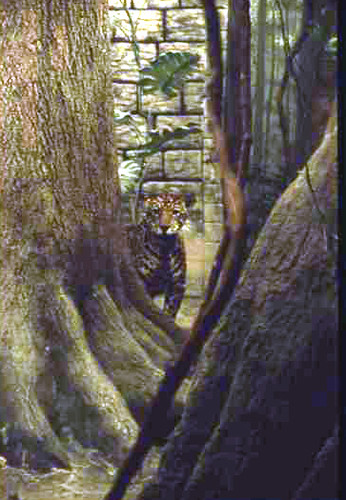
That doesn't surprise me. Especially when you get a very historic Zoo, oftentimes you'll see repurposed that are hard to imagine with the original residents, due to how much standards have changed for the better. If you know, I'm curious, what year did the big cats leave this building? My best guess (and I could be way off) is somewhere in the 1980's?Funny story: once upon a time, the building that would eventually become Night Hunters kept Snow Leopards and Jaguars in those very same exhibits!
Correct, and Nocturnal animals wouldn't be the ones that normally get a lot of benefit from natural sunlight- as oftentimes during the day (when the sun is out) nocturnal wildlife is hidden under ground, in caves, the forest floor, or other places where sunlight isn't common. There are exceptions to this of course (Leaf-tailed Geckos have been known to benefit from UVB, and sunlight can be a benefit for fennec foxes with certain types of skin issues), but as a general rule I wouldn't be too concerned about sunlight for nocturnal species. The big species I want to see kept with natural lighting more often are a lot of Primates when kept indoors (especially lion tamarins), along with a number of different reptile species which benefit from the sun's UVB.Huh. Guess I was wrong about the outdoor access stuff. However, I don't think natural sunlight would fit an exhibit called Night Hunters.

Most of the exhibits you see today were built in the mid 80's (the building in the 50's), and displayed a few big cats, including a Persian leopard. The remaining Snow leopard, and later additional Snow leopards were moved to a better outdoor enclosure in 2012. A mountain lion was displayed in the Aardwolf habitat some time in the early 2000's.That doesn't surprise me. Especially when you get a very historic Zoo, oftentimes you'll see repurposed that are hard to imagine with the original residents, due to how much standards have changed for the better. If you know, I'm curious, what year did the big cats leave this building? My best guess (and I could be way off) is somewhere in the 1980's?
Corangurilla
Well-Known Member
That pic with the snow leopard was taken in 2009….That doesn't surprise me. Especially when you get a very historic Zoo, oftentimes you'll see repurposed that are hard to imagine with the original residents, due to how much standards have changed for the better. If you know, I'm curious, what year did the big cats leave this building? My best guess (and I could be way off) is somewhere in the 1980's?
Edit: Dang, I’m too slow.
Wow, 2012 is later than I would've expected by far. I'm glad the snow Leopards have a better habitat now.Most of the exhibits you see today were built in the mid 80's (the building in the 50's), and displayed a few big cats, including a Persian leopard. The remaining Snow leopard, and later additional Snow leopards were moved outdoors in 2012. A mountain lion was displayed in the Aardwolf habitat some time in the early 2000's.

Night Hunters is great, y'all are just mean.
But seriously, I had no idea that Night Hunters was unpopular until I joined this website. Do I think the small cats should have outdoor access? Yes. Has the species diversity in there seen better days? Yes. Are there better nocturnal houses in the US (and even in Ohio)? Yes. But do I care? Nope!
I remember watching the hell out of the Night Hunters preview video back in 2011. At the time, it was one of the coolest things I had ever seen. When I visited Cincinnati in 2019, Night Hunters was the only part of the zoo I visited more than once, mostly because of the ultra-rare Aardwolves that I will probably never see again unless I go to Europe. Beyond animals, I love the lighting inside. Those cool blues really set the mood and made things feel more "nocturnal", as opposed to the red lights in most nocturnal exhibits that make it look like the animals are inside a giant toaster oven.
I don't love Night Hunters because it's a masterpiece, I love it because of who I am as a person. I love weirdo nocturnal mammals, and Night Hunters delivers on that front.
I think a lot of it is the dwindling species. In the past, even the recent past, the building has held extremely rare carnivores, and a different species in each exhibit. Now the aardwolf is the only remaining species with that kind of rarity. Instead of trying to bring in more/new incredible species, they've been giving the same species multiple exhibits*, and adding primates and other non-predators. If you don't know the building's history, it's still pretty fantastic. But compared to what it was...
*I didn't mind most of these, as I hadn't seen a genet before and had only barely seen a Pallas's cat once, so 2/3 opportunities to see them was great, I just had to push out of my mind what could be there instead.
I mean Night Hunters has a great collection, but based on @Moebelle ’s video, the quality of those exhibits is absolutely pathetic. It’s comparable to a roadside zoo.
As someone who went to Cincinnati for the first time this year, and who has been to a lot of roadside zoos, they aren't remotely comparable. A roadside would have Pallas's cats outside in a small corncrib or something.

Which roadside zoo would you compare NH to? Or are you just calling it a roadside zoo because you don't like NH ? How many roadside zoos have you visited?I mean Night Hunters has a great collection, but based on @Moebelle ’s video, the quality of those exhibits is absolutely pathetic. It’s comparable to a roadside zoo.
Pleistocene891
Well-Known Member
I haven’t been to any but I’ve seen pictures.Which roadside zoo would you compare NH to? Or are you just calling it a roadside zoo because you don't like NH ? How many roadside zoos have you visited?
I haven’t been to any but I’ve seen pictures.
So which one of these is a bat exhibit at Cincinnati, and which is a bat exhibit at a roadside zoo?


Attachments

Pleistocene891
Well-Known Member
I was mainly talking about the cat exhibits at night hunters.So which one of these is a bat exhibit at Cincinnati, and which is a bat exhibit at a roadside zoo?
View attachment 590099
View attachment 590100






There is a difference between outdated and roadside zoo quality. Even if NH doesn't age well today, it would be silly to put it into the same category as the places TinoPup posted, when NH would have been modern around the time it was first built.I was mainly talking about the cat exhibits at night hunters.