There & Back Again: Brooks to Key Largo to Kachemak Bay

Departure: Watson Lake, Yukon Territory. 0723 hours.
Light / Weather: Approaching nautical twilight. Clear. -38F. Distance road nearest ocean - Pacific Ocean. 234 miles west. Elevation: 2255 feet.

With this temperature? Let’s see if a battery bought in Florida lasted the night. I’m two days from home.
 
Departure: Watson Lake, Yukon Territory. 0723 hours.
Light / Weather: Approaching nautical twilight. Clear. -38F. Distance road nearest ocean - Pacific Ocean. 234 miles west. Elevation: 2255 feet.

With this temperature? Let’s see if a battery bought in Florida lasted the night. I’m two days from home.

Wow that's cold.
 
I'll admit I'm a total wimp when it comes to the cold, but even if I wasn't, there is no way visiting a zoo in negative 38 degrees is a good idea. I don't even think it's reasonable to visit in negative temperatures in general. Why would you do that to yourself? :p
 
I'm more surprised when they close at those temperatures, assuming they're zoos that stay open in the winter.

How regularly does it get that cold in the winter in your part of the country? Winters may be milder where I am, in the Northeast. Here a winter day with temps below -30 would be seen as extreme and unusual, which may cause zoos to react to it differently.
 
I’ve been to the Alaska Zoo in temps in the -20F range. I did experience (in much milder conditions the joy of visiting Pittsburg Zoo, Brookfield Zoo, Montana Zoo, Minnesota Zoo, and Edmonton Zoo on chilly, frigid, or snowy days. Lighter crowds and more active animals.
 
How regularly does it get that cold in the winter in your part of the country? Winters may be milder where I am, in the Northeast. Here a winter day with temps below -30 would be seen as extreme and unusual, which may cause zoos to react to it differently.
A few (usually 2-3) days every winter in my area.
 
Ok. Today we get to Alaska.

Departure: Whitehorse, Yukon Territory. 0819. Light / Weather: Dark with light snow. 1F. Distance to nearest ocean - the Pacific 87 miles south east. Elevation - 2200 feet.

Yesterday was an adventure. The absolute cold in the more interior village of Watson Lake killed my car. At about 1100 we got it warmed sufficiently to start. At about 5 miles the engine temperature began to fluctuate as the non-electronic mechanical parts of the engine knocked of the cold. About 20 minutes later everything kicked into gear and I arrived in Whitehorse at about 1800.

A snowfall moved in over night and raised the temps to a balmy 1F and the car started right up.

I did not see any Wildlife yesterday but for some Ravens. I did see about 25 horses in a meadow right near a Caribou crossing sign. The horses were not fenced and there was no habitation nearby…apparently there are bands of wild, feral, or semi-feral horses in the Yukon. Periodically rounded up by the government and sold or euthanized. I think the motivation is that the horses present traffic hazards from what I read (tell that to the hundreds of Wood Bison up here). Speculation is that the Yukon Horse may have survived up until about 5,000 years ago. In that case (aside from their domestic background) I personally would not consider them in general to be invasive. Were I the Lord King of the Canadian Empire (a mythological all powerful King of the North) I would have sent the Wood Bison to Russia and gotten Przewalski Horses in return and attempted a genuine reintroduction.

Anyway it looks like these animals were “wild” to some extent. Let’s just imagine that by the time the Europeans were in the Yukon and encountered horses they assumed that the First Nations people had received horses from tribes further south (the horse expanded across the west much faster than the Europeans did). The Europeans further assumed that the First Nations folks then finding the horse unsuitable as domestic animal in the boreal forests let them run free. The Europeans did recognize that these animals the encounter along the trails were the last remnants of the native Yukon Horse and as European horses were turned loose or went feral they interbreed with the native horse and the somewhat unique genetic codes were then corrupted by the mix when DNA testing began 250 years later.analyzed 200 years later…my understanding is that genetic testing of Yukon Horse remains reveal a close affinity with Eurasian Horses anyway.

So it appears that I rediscovered the Yukon Horse on this trip. Pretty cool. Most of you are smarter than I am…so based on my hypothesis please write up the paper for submission to the appropriate scientific journal and ensure the horses are names after me. My recommendation would be Black’s Pleistohorse. But you know….that’s just ego.

;-)

I’m waiting for daylight and the Yukon Wildlife Preserve opens at 1130…I may visit before heading out…but I might just have to visit it next summer when I Roadtrip The “Klondike” loop from Palmer to Haines to Skagway to Whitehorse to Dawson City to Chicken to Fairbanks to Wasilla. I’ll be visiting a couple museums on the way as well.

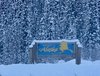
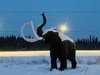
I will drive over to the Yukon Berengia Interpretive Center and get some pictures of the Mammoths and Giant Beaver statues on the grounds. And a view of the sign and exterior of the building.

Wish me luck. Alaska today and Home tomorrow.
 
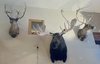
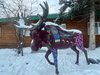
087A4A8D-FCDD-4FBB-8F97-72F6494415B7.jpeg 4406F7E4-F8D9-4549-97A3-2CA8C80B6867.jpeg 7D0D9717-BE30-497A-BFA1-E3F6A4E67725.jpeg Departure: Glennallen, Alaska. 0957 hours. Light / Weather - Partly Cloudy. -6F. Elevation - 1434 feet.

Three hours to home. Made it from Whitehorse to Glennallen last night. Saw mostly Ravens, a couple Canada Jays and a few groups of songbirds. The only mammals were two moose.

Yukon Wildlife Preserve will need to wait until summer.
 

Attachments

  • 087A4A8D-FCDD-4FBB-8F97-72F6494415B7.jpeg
    087A4A8D-FCDD-4FBB-8F97-72F6494415B7.jpeg
    65.5 KB · Views: 20
  • 4406F7E4-F8D9-4549-97A3-2CA8C80B6867.jpeg
    4406F7E4-F8D9-4549-97A3-2CA8C80B6867.jpeg
    188.6 KB · Views: 19
  • 7D0D9717-BE30-497A-BFA1-E3F6A4E67725.jpeg
    7D0D9717-BE30-497A-BFA1-E3F6A4E67725.jpeg
    115.1 KB · Views: 19
Arrival: Knik, Alaska. 1630 hours. Light / Weather: Nightfall. Partly cloudy. 13F. Distance from nearest ocean: 1000 meters due east. The Knik Arm of the Cook Inlet of the Pacific Ocean. Elevation: 50 feet.

Spotted one Moose, well over a dozen Ravens, a possible Gyrfalcon, three Magpies, six Mallards, and one Northern Hawk Owl. ED8748E2-CAF7-4704-8319-5F9949758D35.jpeg
 

Attachments

  • ED8748E2-CAF7-4704-8319-5F9949758D35.jpeg
    ED8748E2-CAF7-4704-8319-5F9949758D35.jpeg
    75.2 KB · Views: 18
FCF653B5-FD56-4E13-8D82-E7BF55A3331C.jpeg So I’ve been back in Alaska for about three days. Work resumes tomorrow and over the course of the next two weeks I’ll get my 24 Zoo Reviews done. Here on this page I’ll also rank them and throw out a little collected trivia and data regarding those facilities.

I visited 24 Zoos (or Zoo equivalents) and four Natural History Museums of Note. I had 10 near misses (I.e. zoos that at one point or another were on the radar for a visit), with two of those the decision to visit or not was made the very morning I intended to visit. The first was Blank Park Zoo because of the sheer percentage of exhibits and animals that were closed or not on view. The second was the Yukon Wildlife Preserve…that visit in the end was called off (literally five miles and 30 minutes from opening) due to a vehicle performing poorly in extreme cold and the deteriorating weather conditions and pending gloom of night as I finished my drive through Canada. That I made Whitehorse to Glennallen that day was at least predicated on not visiting the YWP and that decision saved me some potential tight spots had I reached certain points on that journey in darkness.

Facilities visited in order of visit: (with a quick grade)
Gulf Breeze Zoo (A-)
Gulfarium Marine Adventure Park (C-)
Tallahassee Museum (A-)
Homossassa Springs Wildlife Park (A+)
Busch Gardens Tampa (B)
Zoo Tampa (B+)
Zoo Miami (A)
Brevard Zoo (B)
St. Augustine Alligator Farm and Zoological Park (B-)
Jacksonville Zoo (B)
Oatland Island Wildlife Center (B)
Charles Towne Landing State Park (B-)
North Carolina Zoo (A+)
Mill Mountain Zoo (C+)
Virginia Wildlife Park (B)
Pittsburgh Zoo (B+)
Brookfield Zoo (A-)
Minnesota Zoo (A)
Henry Doorly Zoo (A+)
Lee G. Simmon’s Wildlife Safari Park (A)
Denver Zoo (A)
Zoo Montana (B+)
Calgary Zoo (A)
Edmonton Zoo (B+)

I was admittedly allowed to handpick which facilities I’d aim for. The only out and out unexpected visit was to the Gulfarium. I was visiting with my nieces so it was the perfect time for me to really look the place over. Like most of Florida’s Zoos they could exhibit Alligators, Caimans, and Crocodiles very well. Everything else seemed to me to be basically functional…tank + water + plus aquatic / semi-aquatic creature = exhibit. They obviously do great work with Sea Turtle Rehab. I believe they had at least three species undergoing rehabilitation during our visits. Definitely room for improvement overall.

I did not, but should maybe include the Navarre Beach Sea Turtle facility (think Nature Center with a Sea Turtle on show) and the Palm Bay Bass Pro Shop (which in addition to the live local native fish aquarium inside the store) also exhibited a pair of Feral Hogs and a half dozen mature American Alligators in adjoining outdoor exhibits that would have made fine additions to any of the Florida Themed Exhibits at any of the other zoos I visited.

Calgary Zoo might just ease into a solid A+ once I have the opportunity to view The Canadian Wilds in all its glory.
 

Attachments

  • FCF653B5-FD56-4E13-8D82-E7BF55A3331C.jpeg
    FCF653B5-FD56-4E13-8D82-E7BF55A3331C.jpeg
    122 KB · Views: 20
Last edited:
Back
Top