"Was I born in the wrong generation to enjoy biodiversity?"

dillotest0

Well-Known Member
5+ year member
The title sums up a thought I have been having in my head recently -
I believe that I am younger than a fair chunk of the members here - part of the 21st-century chunk of the Z-Generation.
I find that, in the wake of the well-known zoo directors of yesteryear dying off, several collections in my proximity have become, as they are often described, 'shadows of their previous selves' - John Aspinall and Knowles, Gerald Durell have all since gone to meet each other at the gracious dinner party in the clouds ... and their respective collections [Howletts+Port Lympne, Marwell, and Jersey] have all seemingly dropped their former diversity in favour of pandering to the less-animal inclined generation of social media and mommy blogs - Marwell had two playgrounds in 2005 - now it has seven. Jersey Zoo is not the 'treasure trove' it once was under Durell's reigns, and the son of John Aspinall, Damian, I feel lacks the need for further elucidation on this forum. In my opinion, anyways.
And so, with this inclination to the biggest denominator, I find myself having to rather 'diversify' my options - find myself at places like Wildkatzenzentrum Felidae or Zoo Berlin - both very nice places to be in my opinion, though I can't help but wonder whether the need was there 20 years ago. There is, amongst said big denominator, little need for zoos to start holding X more species of small carnivore or Y more species of antelope - if you can charge for it and it is legal, people will come and pay. And, in Damian's case, if you have relations with political figures, then your elephant death-sentence will be applauded by tabloid stations nationwide! The same tabloids that would have you believe that there is some black panther or other lurking every county of Britain.
I also hope, perhaps, to visit the 'wild' some day, to see various species of animals I have made it my life-dreams to see. But, in the wake of rapid habitat destruction and ever-ongoing indifference by those in power to do much of anything, I worry that when I am able to see the wild, I will be met with the cry of 'if only you had came here 20 years before!' I also am of the belief that zoos and other such institutions are at a position of power to control public perception of biodiversity - yet few zoos actually speak up, they are drowned out by the less-informed.
The general public, in my eyes, does not care about biodiversity. Advertising campaigns will have them care strongly for big-name species such as orangutans or polar bears - which I appreciate are species in need of assistance in their natural situation - but, as for everything else? Not quite so much. Greenpeace campaigns help people care about large whales - but never the thousands of other species in the ocean in need of efforts of preservation. And so, here again - zoos are able to play a role in assisting public perception! I have seen, at Marwell, children reading the signs at the Desert antelope house about the threats Addax face in the wild - and being distressed that the beautiful animals in front of them, in the wild, are being killed! You would be lucky to ever see an addax star in a television campaign! But, again, zoos tend to be inclined towards the 'attraction' route as opposed to being 2-fifths attraction and 3-fifths biodiversity library. If the general public cared about biodiversity, in my eyes, there would be a strong backlash against pet big cats portrayed as 'wholesome' on social media. I recall a while back there was a campaign against elephant-based activities being flaunted on social media, the public naturally followed - but, if there were no campaign, I feel a few more elephants would be in a stagnant position.
I feel, that in a world where cats and dogs are the most abundant animals on the internet, the general public has much been hushed about the 'everything else'. Zoos do some degree of effort to show the 'everything else', but I feel, not quite enough. I worry, that had I been born some decades ago, I could relish in some more zoological treasures than I am able to today.
I hope my rambling was tolerable....
 
One could also argue that you're born in the right generation if you enjoy biodiversity- as in the right generation to turn your passion for biodiversity into a way to make a real difference. With the sixth (or seventh, depending on who you talk to) mass extinction crisis underway, we need more people with an interest in and desire to preserve biodiversity, so I applaud you for taking this up as an interest even if it may be difficult seeing the directions some facilities have taken. I also may add that, while individual zoos overall are keeping less species now than they did prior, this is to provide more space to the species they do keep in order to improve their welfare. It's a trade-off, between the number of species a zoo can keep and how much space they can dedicate to them, and frankly I think it's a good thing that zoos are improving the welfare for their inhabitants, even if that means keeping less overall species.
 
Now I can't talk about wild habitats but for species diversity in zoos I am not sure if I was "born in the wrong generation", so to speak. I say this since I have friends and acquaintances around my age who were able to go to grand collections such as the Cincinatti Zoo or the Philadelphia Zoo during a time I can best refer as the "beginning of the end" of diversity in zoos. Heck, My older cousins probably went to the Bronx zoo back when it had Sumatran rhinoceros. However, I can say that I happened to grow up in the wrong place during the "beginning of the end era" in a town really far away from a proper zoo where people could learn and appreciate animals which happens to be in a country not so well versed with animals. To be honest I also have made decisions that may have hampered my chances to see most of these species before it was too late.

Edit: and while I have been lucky enough to see many of them in summer last year, which I am thankful for, I always feel like it could have been better (e.g. I could have seen them sooner or I could have seen more.

I sometimes see a few older users talk about the fact that they were able to see cool things such as pacaranas and the such without leaving their homeland and that does make me think to myself "wow, what a lucky devil" even though I am well aware that conditions back then were less than satisfactory. But I do wish that I was alive during those days even if it means throwing my conciousness away for a moment. Alas that same mindset not only would hurt the animals but also the zoos in question whichis why I understand that "sacrifices have to be made" in order for zoos and the animals within them to prosper.

I guess the best thing I can do now is to do my best to be a good steward of this planet so my kids (if I am lucky enough to have any) could enjoy the nice things on Earth like the houseflies and the aye-ayes, the chimps and the shrimps, and the bluegills and the hornbills.
 
Last edited:
No, biodiversity is not a popular issue right now. People are too focused on the survival of humanity -- indeed, when you look at climate change discussion, there are some individuals who focus so much on the survival of humanity in that situation they overlook how our actions will affect the planet even if humanity's future is assured. You also notice how the idea of preserving the Amazon rainforest has sometimes been marketed based on the idea unknown plants may provide cures to ailments. Discussion of spending for wildlife conservation is sometimes met with questioning as to why the money is not being used to help disadvantaged people instead, as if those issues are in direct competition.

That said, that is not the same thing as the wrong generation to appreciate biodiversity. While I will forever be upset that I will never have the chance to see a Sumatran rhinoceros as I once dreamed, it is entirely possible generations from now, children may wonder what a black rhinoceros, a tiger, an orangutan, or a vaquita had once looked like, thinking of them just as we think of thylacine and passenger pigeon. In addtion, advancements in genetics and cladistics are allowing us to appreciate biodiversity in ways that were not available twenty or thirty years ago - we are still learning so much even in this day and age. We certainly know more than we did in the eighties when biodiversity was a somewhat more marketable issue... so perhaps we may turn out to be luckier than we thought.
 
While I will forever be upset that I will never have the chance to see a Sumatran rhinoceros as I once dreamed,
It is still possible, if one is so inclined, to actually see a Sumatran Rhino, to my knowledge - albeit following a bit of time, money, and paperwork. I certainly would like to !
Though I do certainly envy others who have seen the species at a time when it was somewhat more possible and feasible to do so ... and perhaps zoogoers of the 80s thought the same of those who had seen Javan Rhinoceros in captivity.
 
The title sums up a thought I have been having in my head recently -
I believe that I am younger than a fair chunk of the members here - part of the 21st-century chunk of the Z-Generation.
I find that, in the wake of the well-known zoo directors of yesteryear dying off, several collections in my proximity have become, as they are often described, 'shadows of their previous selves' - John Aspinall and Knowles, Gerald Durell have all since gone to meet each other at the gracious dinner party in the clouds ... and their respective collections [Howletts+Port Lympne, Marwell, and Jersey] have all seemingly dropped their former diversity in favour of pandering to the less-animal inclined generation of social media and mommy blogs - Marwell had two playgrounds in 2005 - now it has seven. Jersey Zoo is not the 'treasure trove' it once was under Durell's reigns, and the son of John Aspinall, Damian, I feel lacks the need for further elucidation on this forum. In my opinion, anyways.
And so, with this inclination to the biggest denominator, I find myself having to rather 'diversify' my options - find myself at places like Wildkatzenzentrum Felidae or Zoo Berlin - both very nice places to be in my opinion, though I can't help but wonder whether the need was there 20 years ago. There is, amongst said big denominator, little need for zoos to start holding X more species of small carnivore or Y more species of antelope - if you can charge for it and it is legal, people will come and pay. And, in Damian's case, if you have relations with political figures, then your elephant death-sentence will be applauded by tabloid stations nationwide! The same tabloids that would have you believe that there is some black panther or other lurking every county of Britain.
I also hope, perhaps, to visit the 'wild' some day, to see various species of animals I have made it my life-dreams to see. But, in the wake of rapid habitat destruction and ever-ongoing indifference by those in power to do much of anything, I worry that when I am able to see the wild, I will be met with the cry of 'if only you had came here 20 years before!' I also am of the belief that zoos and other such institutions are at a position of power to control public perception of biodiversity - yet few zoos actually speak up, they are drowned out by the less-informed.
The general public, in my eyes, does not care about biodiversity. Advertising campaigns will have them care strongly for big-name species such as orangutans or polar bears - which I appreciate are species in need of assistance in their natural situation - but, as for everything else? Not quite so much. Greenpeace campaigns help people care about large whales - but never the thousands of other species in the ocean in need of efforts of preservation. And so, here again - zoos are able to play a role in assisting public perception! I have seen, at Marwell, children reading the signs at the Desert antelope house about the threats Addax face in the wild - and being distressed that the beautiful animals in front of them, in the wild, are being killed! You would be lucky to ever see an addax star in a television campaign! But, again, zoos tend to be inclined towards the 'attraction' route as opposed to being 2-fifths attraction and 3-fifths biodiversity library. If the general public cared about biodiversity, in my eyes, there would be a strong backlash against pet big cats portrayed as 'wholesome' on social media. I recall a while back there was a campaign against elephant-based activities being flaunted on social media, the public naturally followed - but, if there were no campaign, I feel a few more elephants would be in a stagnant position.
I feel, that in a world where cats and dogs are the most abundant animals on the internet, the general public has much been hushed about the 'everything else'. Zoos do some degree of effort to show the 'everything else', but I feel, not quite enough. I worry, that had I been born some decades ago, I could relish in some more zoological treasures than I am able to today.
I hope my rambling was tolerable....
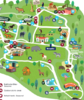
Marwell had two playgrounds in 2005 - now it has seven
Marwell does not have seven playgrounds.
 
View attachment 601691
Fairly played, it has 5 - though that is still an addition of 3 since 2005 !
Correct, although I cannot see how the number of playgrounds has any impact on the biodiversity/ or lack of biodiversity, at Marwell, nor almost any other zoo. With the exception of the Okapi playground, which was relocated to this better site from the other side of the road, all the other play areas were created as part of new or refurbished animal exhibits; each is aimed at different age-groups or abilities and most with educational play themes linked to those animal exhibits. They have a purpose and are very heavily used. I am sure most zoos would rather not have play equipment if they could avoid doing so as it is not cheap, high on maintenance, and under constant health and safety monitoring. But as long as zoos consider families are their core market there will be a need to provide areas for children to 'let off steam'.
 
Yes, the extinction of animal species in zoos in Western Europe and the USA is sad.

But there are positives: You can easily travel to zoos in Eastern Europe or East Asia, which have more interesting species. You can travel across the world, where wild animals are more accessible than ever, often even for a young person on a budget.
What I discourage you is to get lost in fake animations, internet simulations etc.

And, who knows? Maybe the trend of Western zoos '5 playgrounds, 0 small mammals' will be reversed some years to the future? Even general public can get bored of seeing meerkats and zebras.
 
I wouldn't say you were born in the wrong generation. To the contrary there are arguments to say that you were born in a lucky generation even.

Never before have we had such a good understanding of biodiversity as now. There is still plenty to discover, but we know more about species and ecosystems than ever before. And never has that information been so easily accessible too. Good books are published continually and with the internet you have a treasure trove of information in your pocket. As others have noted travelling has also become more easy. It is true that habitat degradation is making many areas less pristine/wild, but there is still so much to enjoy that will blow your mind away and will not be destroyed anytime soon.

Zoos in general have also steadily improved, though the UK and your region in particular has some zoos whose golden age lies in the past for now. But across the continent many zoos have never been better. While species diversity has decreased, that is not necessarily a bad thing. With new insights in animal behaviour and welfare, what is a house with 10 monkey species in small cages worth against half of those species in enclosures that actually fulfil their needs? Animal species are not tick boxes, but a unique evolutionary path with an equally unique story to tell. You might have seen more species previously, but would not have been able to appreciate the stories these species can tell.

With all that knowledge, we also know very well what we are destroying and that is saddening and should be changed. But even politically there is more awareness of that something should happen. Whether that will be quick enough and whether there will be real leaders that forget about the short short term is something different. But there is still hope.
 
If you want to see biodiversity, aquariums tend to keep more species than zoos, and many of them make an effort to display (and breed) local fish, and they often rely on different supply chains to obtain exotic fish. Visiting aquariums in different parts of a country can yield a lot of new lifer species.

When I visit zoos, I'd probably only get to see 2-3 new species (somewhat more if there's a reptile house or large bird collection, but no more than 20), whereas I have gotten over 100 new species from a single aquarium before.
 
It is still possible, if one is so inclined, to actually see a Sumatran Rhino, to my knowledge - albeit following a bit of time, money, and paperwork. I certainly would like to !
Though I do certainly envy others who have seen the species at a time when it was somewhat more possible and feasible to do so ... and perhaps zoogoers of the 80s thought the same of those who had seen Javan Rhinoceros in captivity.

I asked a tour guide the other day about visiting Way Kambas, who told me that the rhino conservation centre is currently closed to visitors but is planned to open again 'at some point in the near future'. So hope for us all!
 
Back
Top