Burgers' Zoo Burgers' Zoo news 2023

lintworm

Well-Known Member
15+ year member
In 2022 Burgers' received 951.246 visitors, which is a near 60% increase compared to 2021. But still 200.000 visitors less then the pre-pandemic level. Whereas German and Czech zoos see record attendances, all Dutch zoos that have reported attendance levels so far are still 100.000-200.000 visitors behind a pre-pandemic year. One wonders why that is, my only suggestion would be that forced online booking kept visitor levels somewhat down, as that is something not seen on a large scale in Germany...

Some notes from the latest ZieZoo:
- Both the roan antelope and helmeted guineafowls have left the collection. The roan antelope left because of male-male agression with the beisa oryx, the guineafowls due to ongoing avian influenza restrictions which led to welfare issues as they had to be kept inside. With the departure of the roan antelope the zoo is now down to a pityful 3 antelope species: beisa (3 individuals), white-bearded gnu (7 individuals) and ellipsen waterbuck (6 individuals), which is the lowest tally in at least 50 years. The Safari zone is becoming ever more empty with smaller groups of less species. Only 15 years ago Burgers' Zoo had 10 antelope species, but little is left of that now....

- Recent births include 7 African penguin and multiple Eld's and hog deer.

- Two new fish species (or in the first case back again) that weren't mentioned yet are longnose hawkfish (in the small coral tank) and barcheek unicornfish.
 
I was not aware the Savannah once hold up to 10 species. What were they ? How did it go ? Maybe with higher concentration, all species get used to others and are less aggressive. I have heard similar things about intra-specific competition in takin group for example.
 
I was not aware the Savannah once hold up to 10 species. What were they ? How did it go ? Maybe with higher concentration, all species get used to others and are less aggressive. I have heard similar things about intra-specific competition in takin group for example.

The Savanna back then had 5 species (greater kudu, red hartebeest, roan antelope, white-bearded gnu and ellipsen waterbuck)w + Thomson gazelle which were never successfully mixed. The other antelope were kirk's dikdik in a side exhibit on the Safari and red duiker, blue duiker and bongo in the old zoo. In a preliminary plan I once saw (of which I don't know how serious it was) impala, sitatunga and red duiker were also planned for safari, with the latter two in the current pelican exhibit.

A downside of the current savanna is that all antelope + zebra use the same stables, so at the end of the day all species are in the same funnel, so that is a limiting factor.
 
To be fair many Savanna's have the same issue with co-housing the mostly basically everything but the giraffes and rhinos. I do enjoy the hole Savanna trend in general but I think to many zoos participate, which can be problematic when certain individuals cause problems. I think there is a serious lack of individual enclosures for antelopes and ostriches. Which will lead to issues further down the road for breeding programs. That being said I think Burgers has one of the best savannas out there with at least multiple separation options.
 
Burgers' zoo has a small group of young horseshoe crabs, set to be released into the mudflats of the Mangrove when they're grown.


Quite odd, since I'm pretty sure the Horseshoe crabs died after digging into the concrete and poisoning themselves. I thought the habitat was deemed unfit for horseshoe crabs

The original group has been in the exhibit for years. I hadn't heard your story before, but that certainly didn't cause the demise of the whole group. Glad to see a new generation of them.
 
Finally managed to visit BZ again after a particularly busy school period. Some generally small news, but still some notable ones.

Bush:
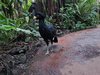
A zookeeper mentioned that the Great Curassow was on a sort of trial basis. BZ is (one of) the first zoo to have curassows free-roaming like these. The Curassows are surprisingly bold and they weren't sure if it was going to work like that. I only saw the male on my visit, hanging out on the bridge near the Capybara. First sitting on the low-hanging bridge, on eye level even! He was a surprisingly good climber and I later saw him very high in the same tree!

Took some good photos of him, as he seemed interested more than anything.
20230117_164158.jpg


Desert:
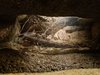
Interestingly, the desert hairy scorpions are back! Though now in the old tarantula enclosure (the first of the bug terrariums) it's really quite odd that they switched places, and the scorpion is a lot less visible in the new enclosure.
20230117_165521.jpg

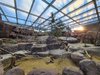
The PPP enclosure has some large coniferous trees, which I assume to be old Christmas trees. They add wonderful greenery to the enclosure, a keeper mentioned that they're not permanent, but they are in water so they'll be green for a little while.
20230117_152013.jpg

Mangrove:
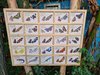
The butterfly sign has been replaced by a new one, with a few new species too. The old one was placed by the exit
20230117_153816.jpg

Park:
Some very minor work was started on the reindeer enclosure, in the barn

The trumpeter birds are back in the peasantry! Together with the kookaburras
 

Attachments

  • 20230117_152013.jpg
    20230117_152013.jpg
    243.7 KB · Views: 25
  • 20230117_153816.jpg
    20230117_153816.jpg
    219.2 KB · Views: 24
  • 20230117_165521.jpg
    20230117_165521.jpg
    150.2 KB · Views: 24
  • 20230117_164158.jpg
    20230117_164158.jpg
    267.4 KB · Views: 27
The PPP enclosure has some large coniferous trees, which I assume to be old Christmas trees. They add wonderful greenery to the enclosure, a keeper mentioned that they're not permanent, but they are in water so they'll be green for a little while.
What is a PPP?
 
Recently, Burgers' Zoo set up a behind-the-scenes dating centre for the screaming piha. The female could fly around in the middle section, which bordered several enclosures with males. This allowed the female to choose which male she preferred the most. Meanwhile, a new pair has been formed thanks to this method. The zoo hopes it may lead to chicks in the future.

Source: Instagram Burgers' Zoo
 
The plastic soup display at the entrance of the Ocean has been transformed in a sea nettle display!

The large tank displays two large specimens while a smaller grow-out tank houses about 10 smaller specimens.

Furthermore, the small clownfish tank in across the lionfish tank is currently being prepared for a new (unknown) species.
 
On my last visit the Roan Antelope was still on the safari, doess anyone know if their departure was cancelled?

Not likely. The message was that by the time annual pass holders would have received their ZieZoo magazine the roan antelope would have just left or almost left. By November they only held 1.2 roans (down from 1.4 + offspring) and recently Port Lympne received a male from Burgers', which very possibly was the remaining male. So the last remnants of the original group are probably still leaving in the immediate future.
 
Some updates from today, mostly concerning new arrivals in the Ocean:
- The new sea nettles are Chrysaora pacifica and small imdividuals are present in the small and large jellyfish tank.
- Moray eels are back in the reef canyon tank, not sure about the species, but the 2 individuals looked like young laced moray eels to me, but could certainly be wrong.
- In a large separation area, a Queensland/Giant grouper is currently acclimatized to join the shark tank.
- In the quarantine tank next to the main tank, which can currently be seen with behind the scenes tours there was a large group of small golden trevally and Indian threadfish. Not sure where they will go, but the schooling tank with the barracuda seems a logical choice..

- There is currently only 1 hornbill left in the Bush, the second one is awaiting transport and can be seen in the quarantine building behind Mangrove.
- The single trumpeter has already left the pheasantry and is not on show currently.
 
Yellow-banded pipefish (Dunckerocampus pessuliferus) are being raised behind the scenes of the Ocean and will be getting their own enclosure pretty soon

I assumed they will inhabit the currently empty clownfish aquarium opposite the equally empty lionfish tank
 
Yellow-banded pipefish (Dunckerocampus pessuliferus) are being raised behind the scenes of the Ocean and will be getting their own enclosure pretty soon

I assumed they will inhabit the currently empty clownfish aquarium opposite the equally empty lionfish tank

The lionfish tank is inhabited since quite a few weeks, the pipefish tank is filled with water, so would assume that the pipefish will be put on show within a few weeks.

Some other notes from todays visit:
-A pair of superb fruit doves + offspring is now kept in the caiman area in the Bush
- A number of barcheek unicornfish was released in the large coral reef.
-According to a guide some small horseshoe crabs were released in the Mangrove, bit I did not see any.
-Kea are temporarily behind the scenes.
-Construction work for the new hog deer enclosure is finally showing some results. Looks aa of they try to get it done before easter. I still find it a somewhat dull replacement of the reindeer and hope it will at least be a mixed enclosure. Having hog deer and babirusa (deer hog) mixed would be fun from a linguistic perspective (and I think they are very cool animals in need of more holders).
 
Back
Top