Best Indoor Housing for Great Apes

zoogoer92

Well-Known Member
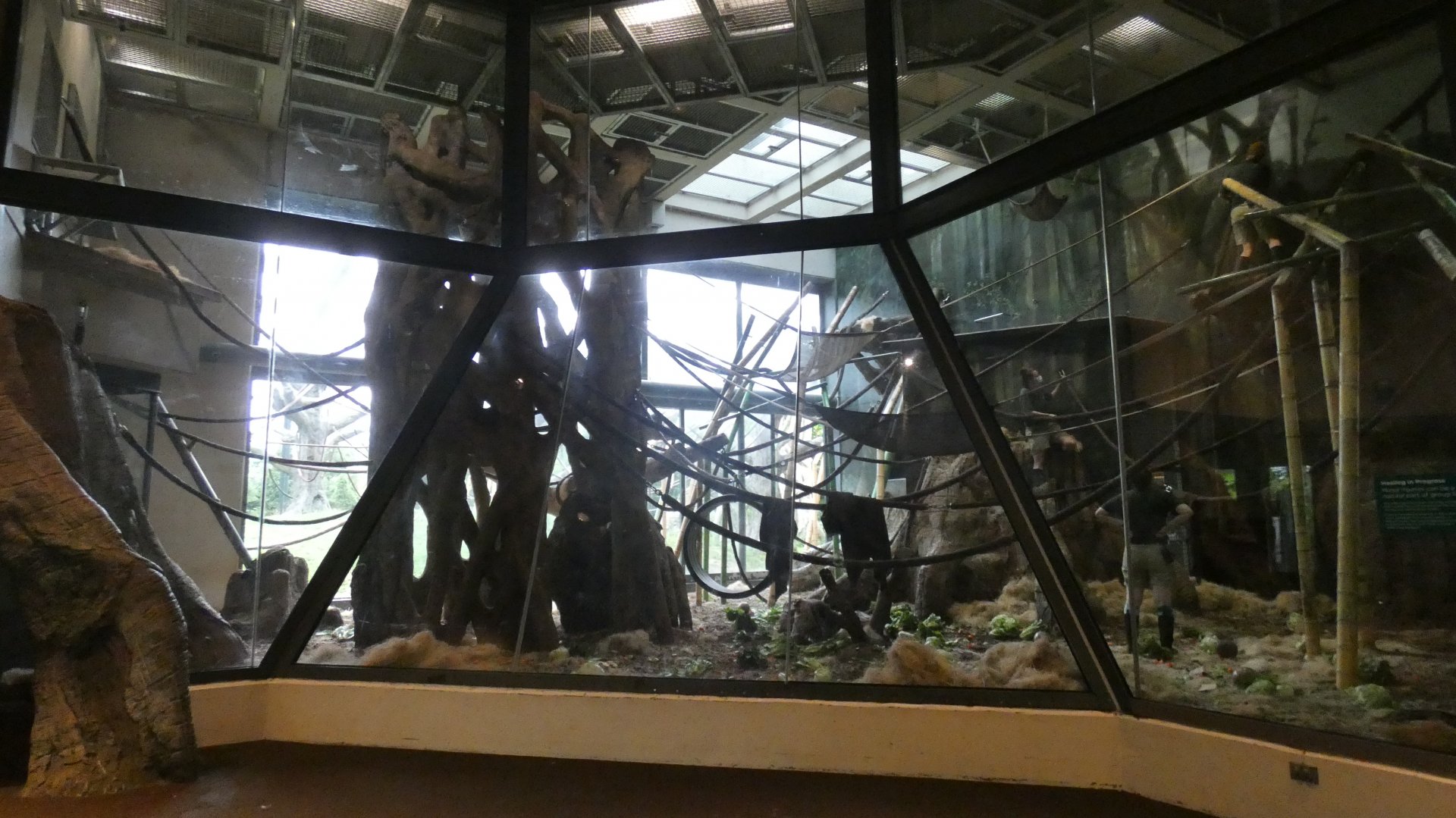
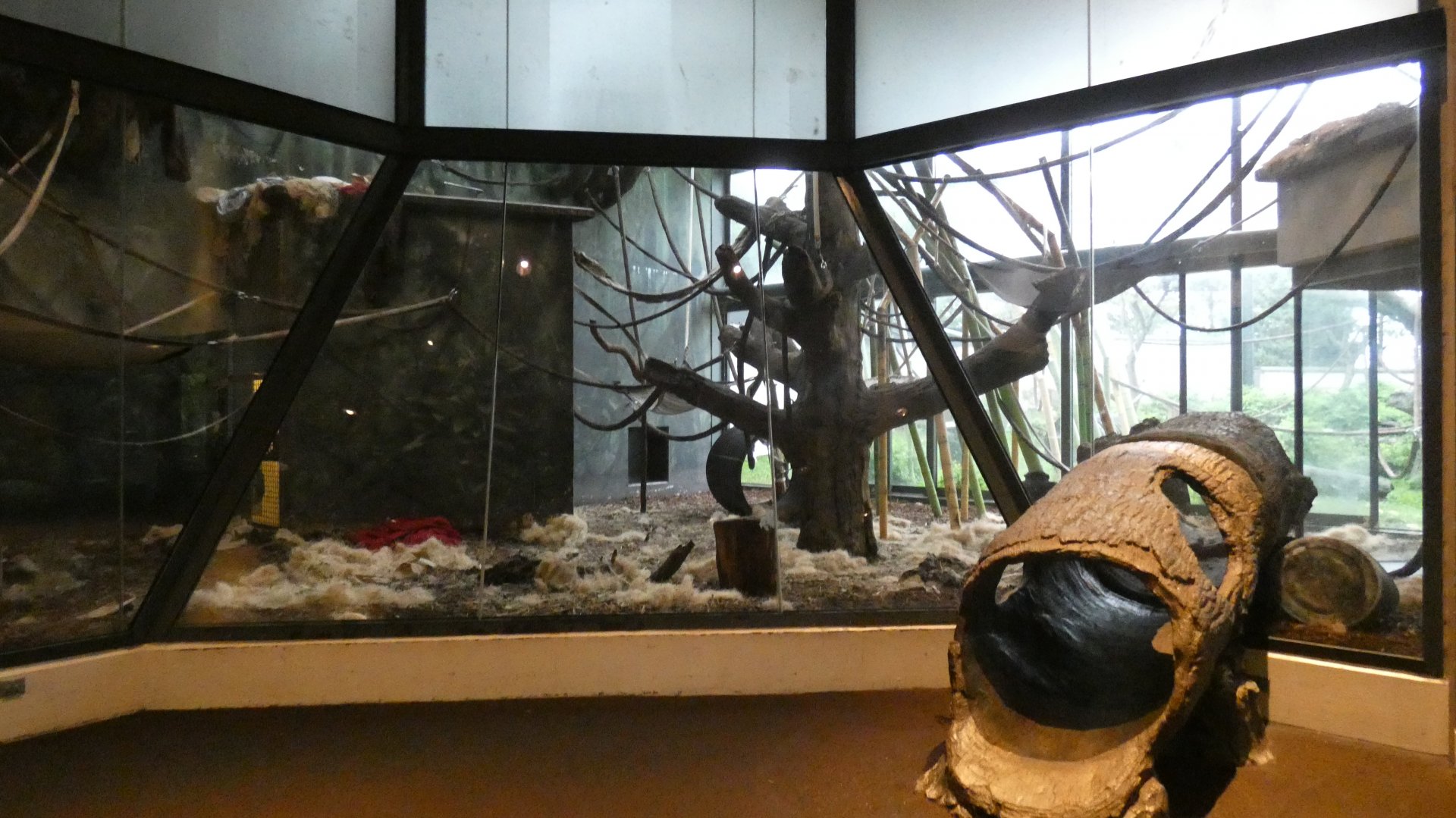
I know AZA-accredited zoos meet high criteria for animal welfare - however ape houses I've been to always look quite grim (National Zoo, Maryland Zoo, John Ball Zoo are some examples).

Are there any facilities with indoor exhibits that are a bit more natural? I know that natural doesn't necessarily indicate welfare. A lot of zoos have indoor 'rainforest' exhibits. it's a shame that great ape exhibits don't try to emulate something like those (albeit it would have to be done in such a way where protected contact is still enforced).
 
I've always liked the indoor gorilla exhibit at Franklin Park Zoo. While the recent addition of an outdoor area does improve the exhibit (by giving the gorillas more space and choices/freedom), I've always felt the exhibit was really good even without the outdoor access.
 
I know AZA-accredited zoos meet high criteria for animal welfare - however ape houses I've been to always look quite grim (National Zoo, Maryland Zoo, John Ball Zoo are some examples).

Are there any facilities with indoor exhibits that are a bit more natural? I know that natural doesn't necessarily indicate welfare. A lot of zoos have indoor 'rainforest' exhibits. it's a shame that great ape exhibits don't try to emulate something like those (albeit it would have to be done in such a way where protected contact is still enforced).

Making them look more "natural" makes them harder to clean and costs a lot more $. It also takes up more space. I've seen a few that try to do lots of fake rockwork, etc indoors - fort worth and pittsburgh come to mind - and they look awful, imo. The animals do not care, as long as they have plenty to climb on and hide under.
 
I second TinoPup. Here at St. Louis, the Jungle of the Apes portion of the Fragile Forest isn’t nearly as naturally pleasing as the outdoors area of the exhibit, but it is just as stimulating for the animals as it would be in comparison to outside.
And while I do think visitor appeal is important, the aesthetic of the exhibit usually isn’t a factor if they have other space (typically outside when it comes to great apes) that looks ten times more naturally appealing.
 
I think it's important to note that apes wreck vegetation at a staggering rate. So It's very difficult to work with life plants. I'm not super familiar with American zoos but in my opinion the best indoor housing for great apes I've seen is the Bonobo house at Planckendael Belgium, for Bonobo's but also in general. Ouwehands in the Netherlands for gorillas, Antwerp Belgium for Chimpanzees and either Chester UK, or Planckendael Belgium for Orangutans. Although the best orangutan enclosure from a welfare standpoint is Apenheul in the Netherlands.
It's important to know that great apes live in fission fusion society's with different levels of socialization. So the amount of rooms is really important. Each room should have multiple entrances and exits. You should have separation possibilities. Modern enclosures shouldn't consist of mostly hard surfaces anymore, living layers of bark are better for the health of the hands as well in general. So be critical size isn't everything, some enclosures aren't aesthetically pleasing or look great but are just the best welfare wise.
 
I've always liked the indoor gorilla exhibit at Franklin Park Zoo. While the recent addition of an outdoor area does improve the exhibit (by giving the gorillas more space and choices/freedom), I've always felt the exhibit was really good even without the outdoor access.
Realized I was thinking only of gorillas and didn't mention another indoor great ape exhibit I really like: Cleveland Metroparks Zoo's Orangutan exhibit. This exhibit, while the footprint is small, has a lot of climbing opportunities, and is the only place where I've seen orangutans really taking advantage of the vertical space in their habitat. This is a really great exhibit that I think could serve as a really good model for other zoos designing indoor orangutan exhibits.
 
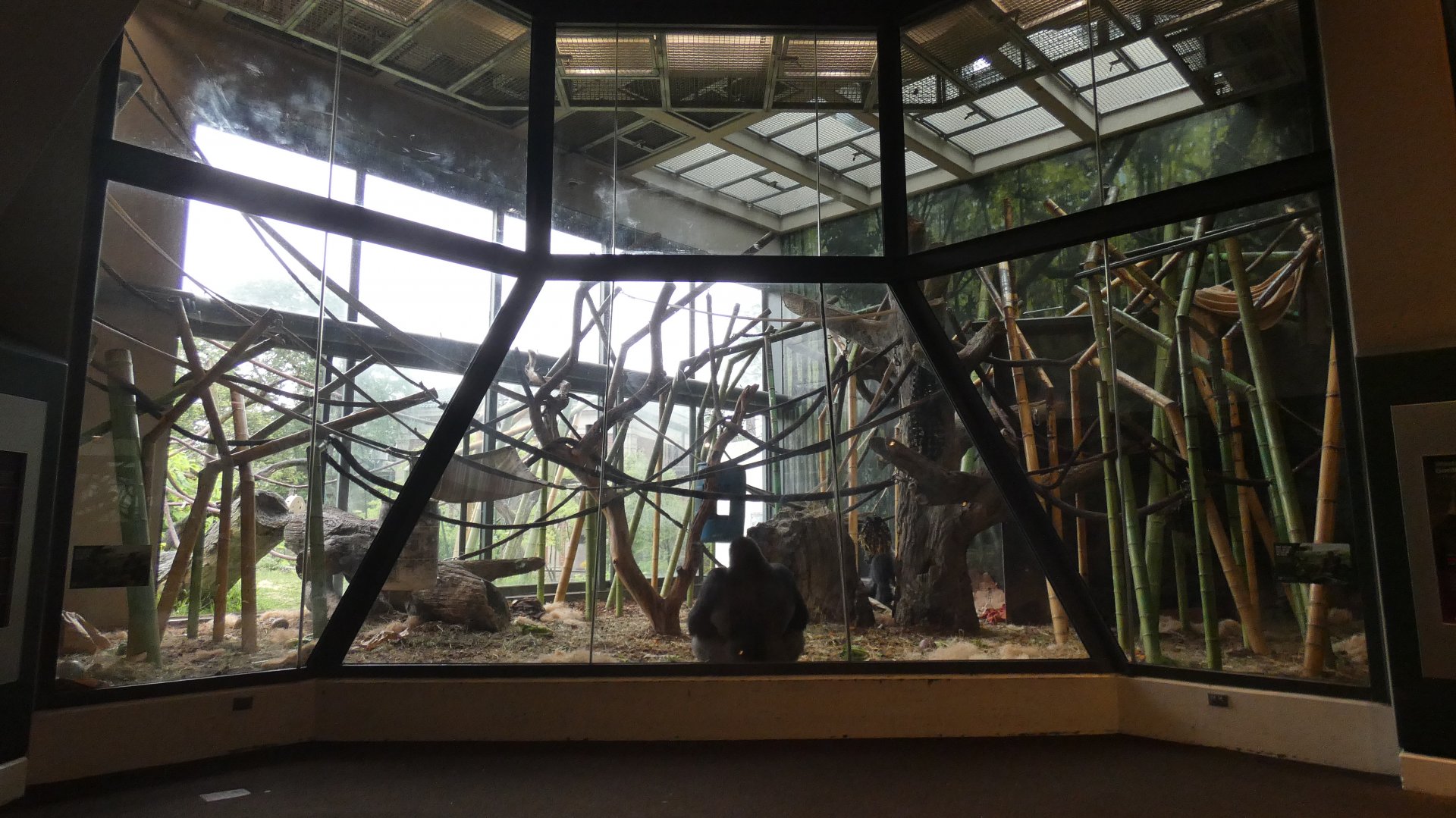
I think Lincoln Park Zoo's indoor exhibits hit a nice middle-ground, personally.


The ground is softer and not concrete, which is enough for the animals welfare, the large windows provide natural sunlight whether outdoor access is allowed or not, and while each enclosure has a couple unnatural enrichment items like hammocks, the trees and bamboo are dense enough to convey a sense of a rainforest setting while being sturdy enough to offer a lot of climbing opportunities and not being as obviously artificial as some other enclosures I have seen. There are the traditional rainforest murals as well.

There is merit to other approaches -- Denver's indoor habitats are less naturalistic but seem to offer endless enrichment, which particularly impressed me with the zoo's orangutans.

Overall though, indoor rainforests for primates have, in my experience, been almost impossible to render effectively. You can build a beautiful indoor rainforest for birds using real plants or realistic artificial if needed, but primates are strong and destructive -- and in some cases, they are prone to eating the plants as well. There's no guarantee the plants could reach full-size before being destroyed, and once they are destroyed it not replaced, you end up with a big empty field that these arboreal and/or forest-dwelling animals cannot enjoy. So unfortunately artificial trees that double as climbing structures are almost unavoidable even though to the guest they will almost always be aesthetically substandard.

And while I do think visitor appeal is important, the aesthetic of the exhibit usually isn’t a factor if they have other space (typically outside when it comes to great apes) that looks ten times more naturally appealing.
This is something I've been thinking a lot about lately as well.
 
I think Lincoln Park Zoo's indoor exhibits hit a nice middle-ground, personally.


The ground is softer and not concrete, which is enough for the animals welfare, the large windows provide natural sunlight whether outdoor access is allowed or not, and while each enclosure has a couple unnatural enrichment items like hammocks, the trees and bamboo are dense enough to convey a sense of a rainforest setting while being sturdy enough to offer a lot of climbing opportunities and not being as obviously artificial as some other enclosures I have seen. There are the traditional rainforest murals as well.

There is merit to other approaches -- Denver's indoor habitats are less naturalistic but seem to offer endless enrichment, which particularly impressed me with the zoo's orangutans.

Overall though, indoor rainforests for primates have, in my experience, been almost impossible to render effectively. You can build a beautiful indoor rainforest for birds using real plants or realistic artificial if needed, but primates are strong and destructive -- and in some cases, they are prone to eating the plants as well. There's no guarantee the plants could reach full-size before being destroyed, and once they are destroyed it not replaced, you end up with a big empty field that these arboreal and/or forest-dwelling animals cannot enjoy. So unfortunately artificial trees that double as climbing structures are almost unavoidable even though to the guest they will almost always be aesthetically substandard.


This is something I've been thinking a lot about lately as well.
I mostly agree with your post, however there's a few stipulations I'd like to add:

Firstly, rather than indoor rainforests for primates, I'd specify that indoor primates for apes haven't been rendered effectively. Callitrichids, titis, and other smaller primates have been held successfully in many indoor rainforests that I would argue are rendered quite well. For example:
- This (Amazonia - The Rainforest - ZooChat) picture by @red river hog shows Smithsonian National Zoo's Amazonia exhibit, which contains, among other animals, free-ranging emperor tamarins and titi monkeys.
- This (Faces of the Rainforest - Golden Lion Tamarin - ZooChat) picture by @Andrew_NZP shows golden lion tamarins in Roger Williams Park Zoo's Faces of the Rainforest Building.
- This (Free range saki - ZooChat) image by @Zooplantman shows a free-ranging white-faced saki at Moody Gardens.

Secondly, I'd question why they haven't been rendered successfully. I think it's less so do to the impossibility of such an exhibit, and more so due to the emphasis (for better or for worse) of outdoor ape exhibits in recent decades. So many of the new ape exhibits have been primarily outdoors, and there have been zoos who have successfully built lush, jungle-like ape exhibits in an outdoor setting. For two examples built in the 1990's/early 2000's, look at Bronx Zoo's Congo Gorilla Forest and Disney's Animal Kingdom's Gorilla Falls Exploration Trail. Someone who is an expert in zoo horticulture (@Zooplantman) may prove me wrong, but I don't see any reason why Congo Gorilla Forest, or any of the other excellent planted outdoor ape exhibits wouldn't be able to thrive under a geodesic dome, if an indoor exhibit is what a zoo would rather build. Obviously though building such a dome would be a costly endeavor, so a lot of zoos would rather just build the exhibit outdoors if they are able to.
 
I mostly agree with your post, however there's a few stipulations I'd like to add:

Firstly, rather than indoor rainforests for primates, I'd specify that indoor primates for apes haven't been rendered effectively. Callitrichids, titis, and other smaller primates have been held successfully in many indoor rainforests that I would argue are rendered quite well. For example:
- This (Amazonia - The Rainforest - ZooChat) picture by @red river hog shows Smithsonian National Zoo's Amazonia exhibit, which contains, among other animals, free-ranging emperor tamarins and titi monkeys.
- This (Faces of the Rainforest - Golden Lion Tamarin - ZooChat) picture by @Andrew_NZP shows golden lion tamarins in Roger Williams Park Zoo's Faces of the Rainforest Building.
- This (Free range saki - ZooChat) image by @Zooplantman shows a free-ranging white-faced saki at Moody Gardens.

Secondly, I'd question why they haven't been rendered successfully. I think it's less so do to the impossibility of such an exhibit, and more so due to the emphasis (for better or for worse) of outdoor ape exhibits in recent decades. So many of the new ape exhibits have been primarily outdoors, and there have been zoos who have successfully built lush, jungle-like ape exhibits in an outdoor setting. For two examples built in the 1990's/early 2000's, look at Bronx Zoo's Congo Gorilla Forest and Disney's Animal Kingdom's Gorilla Falls Exploration Trail. Someone who is an expert in zoo horticulture (@Zooplantman) may prove me wrong, but I don't see any reason why Congo Gorilla Forest, or any of the other excellent planted outdoor ape exhibits wouldn't be able to thrive under a geodesic dome, if an indoor exhibit is what a zoo would rather build. Obviously though building such a dome would be a costly endeavor, so a lot of zoos would rather just build the exhibit outdoors if they are able to.

It's an easy answer - callitrichids, titis, etc are a tad smaller than apes. They aren't a threat to human life, their social requirements aren't as complex. It's a lot easier to make safe spaces for them to hide because of their size. Places that have outdoor/indoor gorilla complexes, like Bronx and Franklin Park, have to have a whole series of indoor areas in order to create sufficient space that is hidden from view (and to be able to separate animals as needed). Look at the size of Franklin Park's exhibit! It's great for gorillas and gorilla lovers, but that amount of space could have been used for so many more species that *need* indoor habitats, too.
 
The Indianapolis Zoo's orangutan center is amazing and will probably be my favorite great ape complex ever. My thinking in this ignores the incredible cable and beam system that allows the orangutans to do brachiation outside the building.

However, the first facility I thought of was the one at the Lincoln Park Zoo. I was foolish to not enter the building when I was there last summer, and only remember it from when I was six or seven years old (around the time that it opened) and even then, I was impressed. I remember watching a gorilla use a computer screen where he could play games, which I thought was so cool, but I guess that isn't all that uncommon.
 
  • Like
Reactions: JVM
I mostly agree with your post, however there's a few stipulations I'd like to add:

Firstly, rather than indoor rainforests for primates, I'd specify that indoor primates for apes haven't been rendered effectively. Callitrichids, titis, and other smaller primates have been held successfully in many indoor rainforests that I would argue are rendered quite well. For example:
- This (Amazonia - The Rainforest - ZooChat) picture by @red river hog shows Smithsonian National Zoo's Amazonia exhibit, which contains, among other animals, free-ranging emperor tamarins and titi monkeys.
- This (Faces of the Rainforest - Golden Lion Tamarin - ZooChat) picture by @Andrew_NZP shows golden lion tamarins in Roger Williams Park Zoo's Faces of the Rainforest Building.
- This (Free range saki - ZooChat) image by @Zooplantman shows a free-ranging white-faced saki at Moody Gardens.
Those are completely valid stipulations; my use of "almost" was awareness it has sometimes been done. I viewed callitrichids and saki as more exception than rule, in the sense that out of a much larger group, it seemed only a handful succeeded enough to generalize the whole group.

That said, I was unaware that titi had been held in this kind of enclosure, and I'd honestly been completely unaware of the Moody Gardens exhibit here, which looks like a really fun experience.

Secondly, I'd question why they haven't been rendered successfully. I think it's less so do to the impossibility of such an exhibit, and more so due to the emphasis (for better or for worse) of outdoor ape exhibits in recent decades. So many of the new ape exhibits have been primarily outdoors, and there have been zoos who have successfully built lush, jungle-like ape exhibits in an outdoor setting. For two examples built in the 1990's/early 2000's, look at Bronx Zoo's Congo Gorilla Forest and Disney's Animal Kingdom's Gorilla Falls Exploration Trail. Someone who is an expert in zoo horticulture (@Zooplantman) may prove me wrong, but I don't see any reason why Congo Gorilla Forest, or any of the other excellent planted outdoor ape exhibits wouldn't be able to thrive under a geodesic dome, if an indoor exhibit is what a zoo would rather build. Obviously though building such a dome would be a costly endeavor, so a lot of zoos would rather just build the exhibit outdoors if they are able to.
I've been wondering on this, and I do think there is a secondary motive here: I think a lot of zoos are trying to trend away from any kind of 'indoor only' exhibits for mammals right now, at least larger ones. I don't really know if the average zoo visitor sees any difference between a geodesic dome and animals being indoors all day, and it could therefore be easy for Certain Groups to portray animals in dome exhibits as being kept in doors. I know that sounds ludicrous to a lot of us, but I'm not sure you can sell to the uninformed the difference. After all, if you have the option to display an animal outdoors why bother with an indoor exhibit? (I have my own arguments why, but they are not informed opinions.) Just a theory, not a fact, it's very possible you or another user may understand this situation better than me.

I could look for the quote but I have a vague memory of an employee at a zoo once saying that a naturalistic outdoor primate habitat was 'more for visitors than for the animals' suggesting the animals were content as long as they had enrichment.
 
When talking about welfare it's important all monkey species get an outdoor option just for sunlight. Their are some exceptions, with hall constructions(with special cushions) and special lighting but most countries are also starting to put in legislation to have an outside enclosure as a must. So in the future I would think most would need an outside enclosure as well regardless if it will be used often.
 
When talking about welfare it's important all monkey species get an outdoor option just for sunlight. Their are some exceptions, with hall constructions(with special cushions) and special lighting but most countries are also starting to put in legislation to have an outside enclosure as a must. So in the future I would think most would need an outside enclosure as well regardless if it will be used often.
I agree with the need for sunlight, however an outdoor exhibit isn't a necessity to achieve these sunlight requirements. Depending on the type of glass, enough windows can be just as good as an outdoor exhibit- if not better when in places where climate control is necessary at least part of the year.

I'm not aware of anything being done legislatively to require outdoor enclosures, and am skeptical of it being "most" countries, but I'd consider any such bill a terrible idea. A lot of the more timid, nocturnal species (e.g. night monkeys, aye-aye, mouse lemurs, loris) oftentimes do best in dark, indoor exhibits, such as those found in nocturnal houses), and at least when it comes to callitrichids a lot of the best exhibits I've ever seen are large, spacious indoor rainforest buildings.

I'm sure climate has something to do with my perspective as well. Someone from Florida might very much see outdoor exhibits as the gold standard, however being that I live in somewhere that weather is prohibitive of outdoor access half the year, zoos oftentimes build indoor exhibits as a necessity, some of which are quite impressive.
 
  • Like
Reactions: JVM
My favorites are Cincinnati Zoo (Gorilla, not Bonobo), Henry Doorly Zoo, Indianapolis, Oregon (Chimp), and Franklin Park Zoo. Cincinnati and Henry Doorly earn their spots for the natural sublate, size, climbing opportunities, and constant provisioning of enrichment. Bonus points to Omaha for the mixed-species component. Oregon gets a mention for the size and vertical space. Franklin Park primarily for the size, light, and sightliness out of the exhibit.

My biggest disappointment with indoor areas is the inability for apes to escape public view. National Zoo, Hogle Zoo, St Louis Zoo, Cleveland (Gorillas), Cheyenne Mountain Zoo, and Riverbanks Zoo are particularly poor in this regard. St Louis has made some modest adjustments by spray painting bamboo on some of the glass paneling.

If we truly believe animals’ needs should be at the forefront of everything zoos do, then our insistence on enclosures looking “natural” must be abandoned. That’s not to say that floors should be concrete and habitats should be full of basketballs and plastic kids' toys for enrichment. But I am infuriated when zoos prioritize the visual aesthetic of a habitat over its functional use. Seeing luscious plantings carefully hot-wired to prevent use by the inhabitants with no other climbing structures in the enclosures is very disappointing. (I’m looking at you ABQ Biopark, Memphis (Gorillas), Pittsburgh, San Fransico (Gorillas), and ZooMiami).

I also think “indoor housing” includes more than just indoor exhibits, but also takes into account bedrooms, transfer chutes, and off-view dayrooms. I’m not as familiar with all the back-of-house spaces, but I feel Houston is far and away the best (and one of the newest), with Bronx (Gorilla), Cincinnati (Gorilla), and Phoenix deserving recognition too.

I think it's also important to note that only newly built facilities are required to meet AZA recommendations in terms of space and complexity. Existing facilities simply need to meet the AZA standards which are much broader. That's part of the reason some of those ape houses (National, Brookfield, Cheyenne Mountain, Cleveland) feel so grim. They quite simply don't meet current standards. Glad to know that 3 of those 4 facilities are in the process of being replaced!
 
Zoo Osnabrück (Germany) has a really nice planted indoor enclosure. In the summer it looks really beutiful and lush since the apes spend most of their time outdoors. In the winter many plants get destroyed but it still looks nice.
full
 
Back
Top