
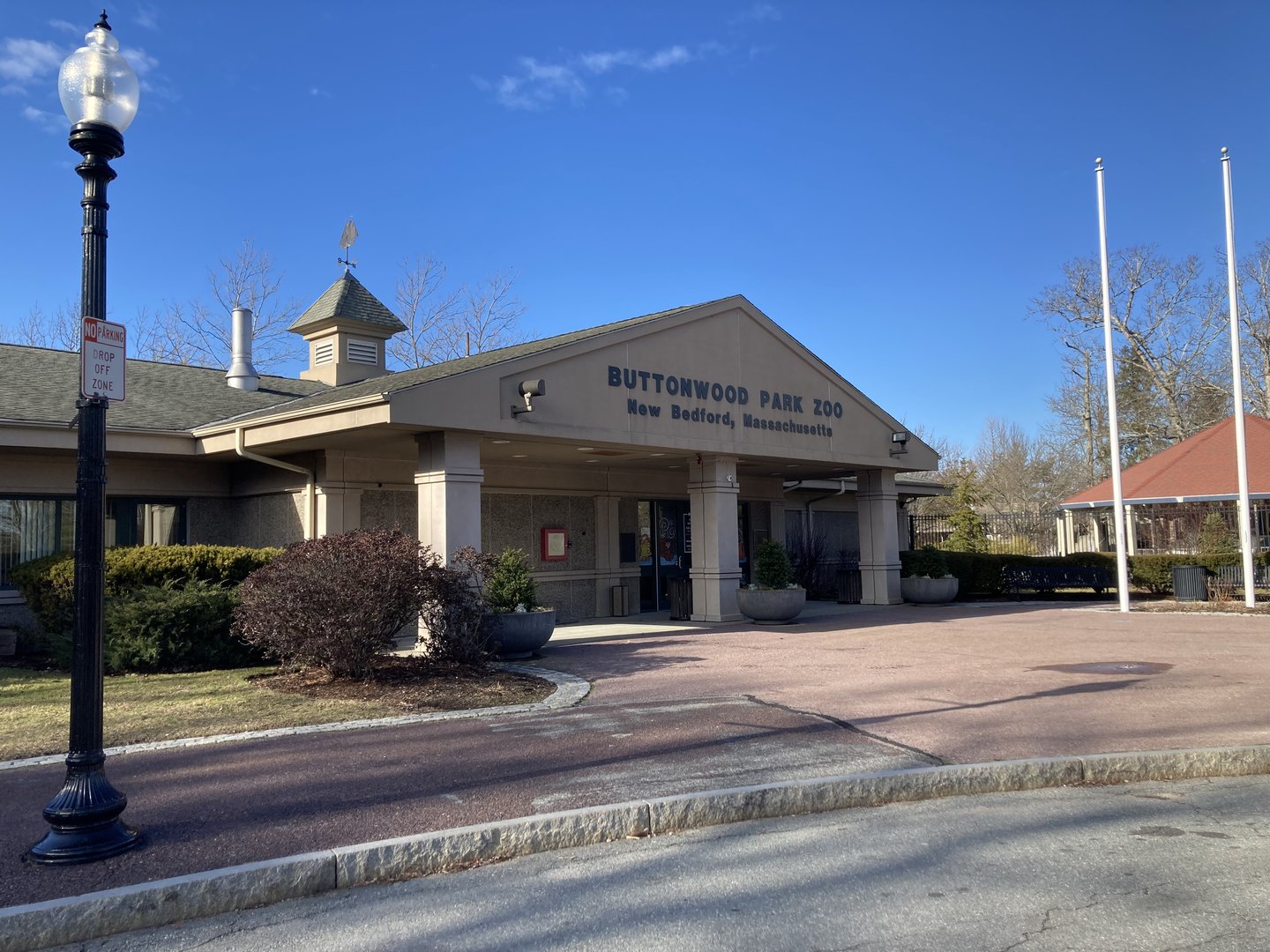
The Buttonwood Park Zoo is a 7-acre zoo located on the outskirts of New Bedford, Massachusetts. The zoo and the park in which it resides are both named after Buttonwood Brook—a body of water that runs through both places. It takes around 2 hours to experience the zoo, but there’s more than just captive animals to see here; the zoo’s foliage and the stream both attract local wildlife like frogs and birds (and this includes hawks and an enormous flock of over 20 black vultures) that I have seen between my two visits. This zoo is also one of only 6 AZA accredited “zoos” in Massachusetts, and it is one of my personal favorites in the commonwealth. I have been here twice; for the first time in January and for the second time last week.
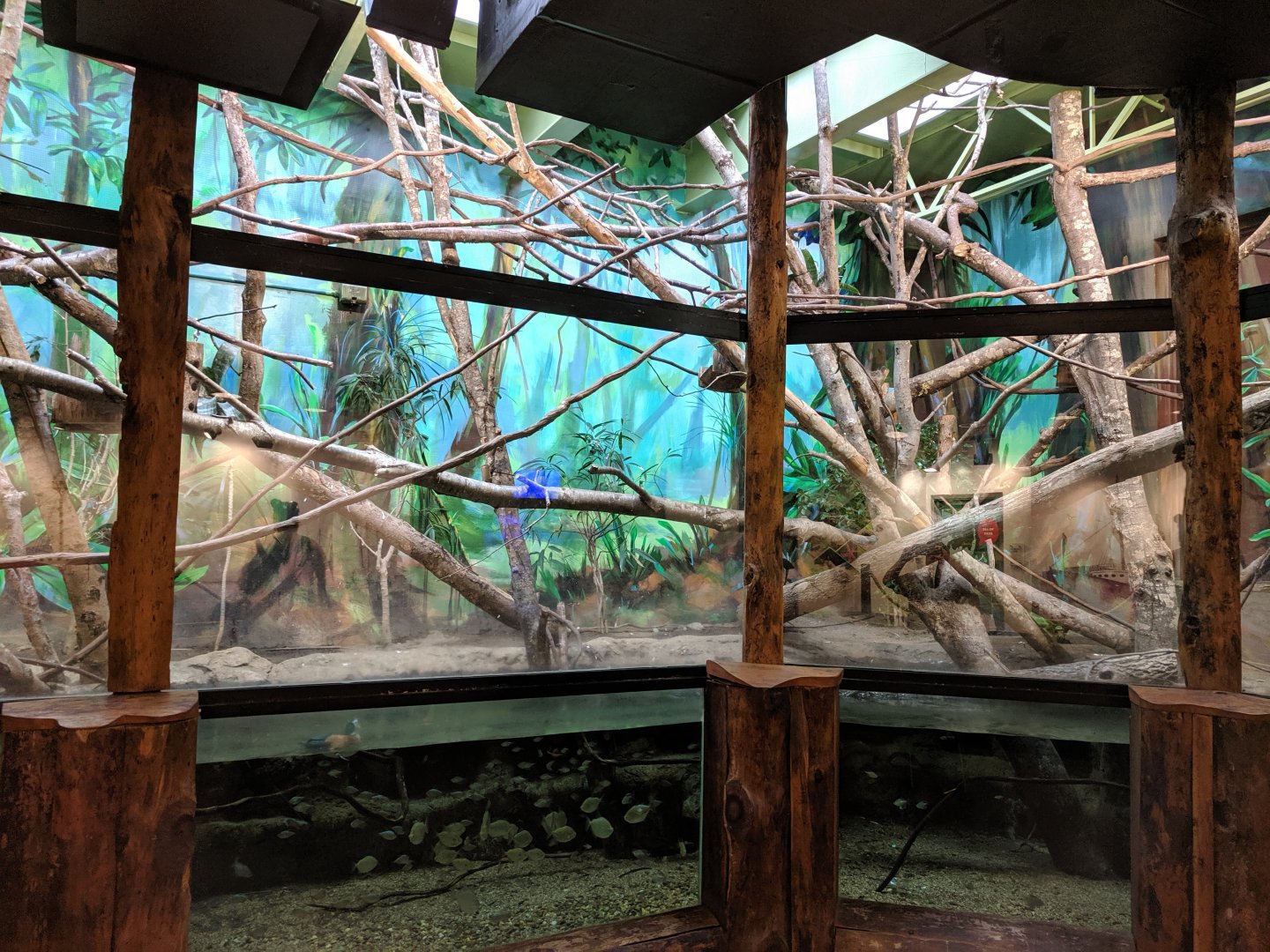
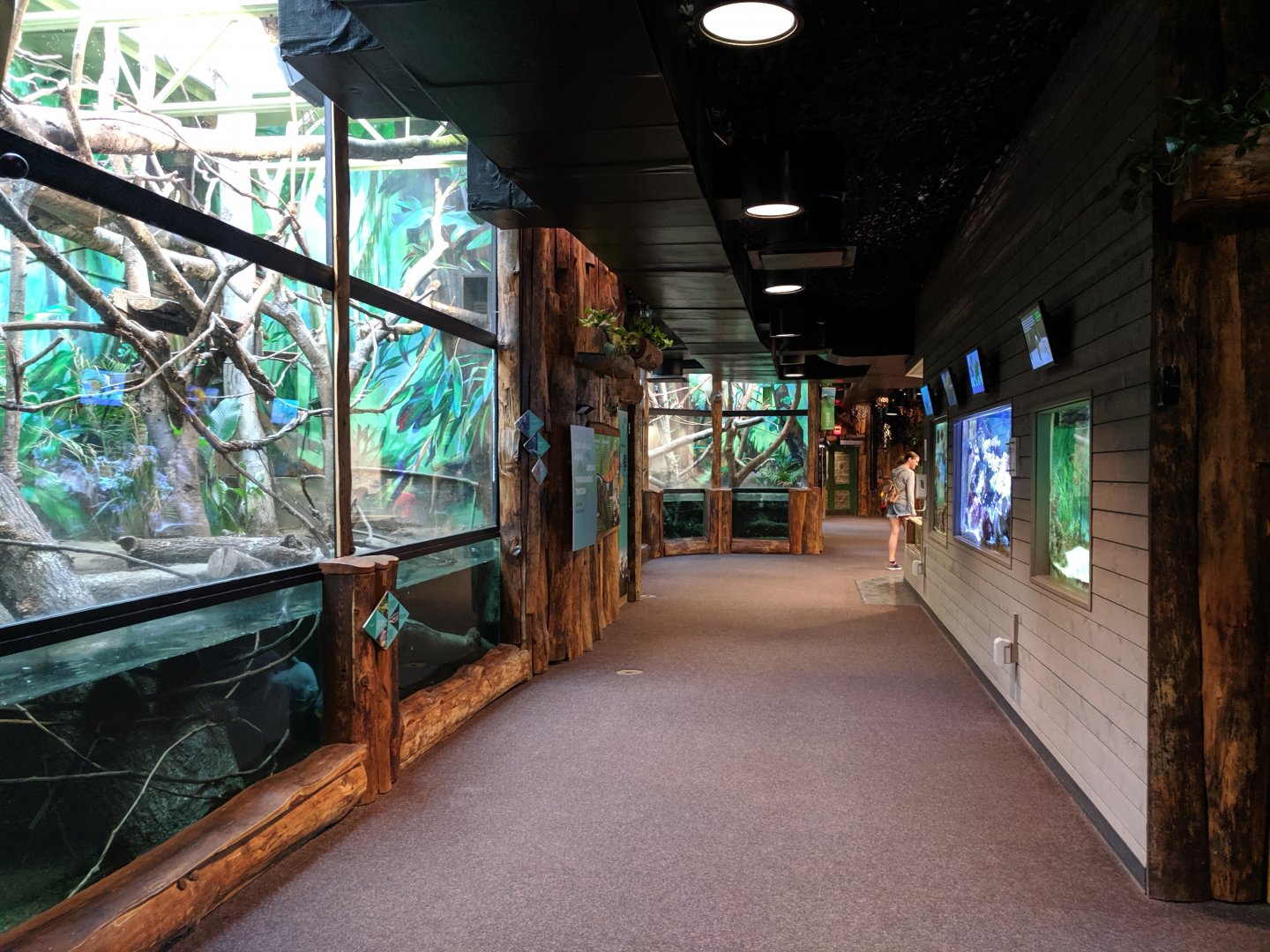
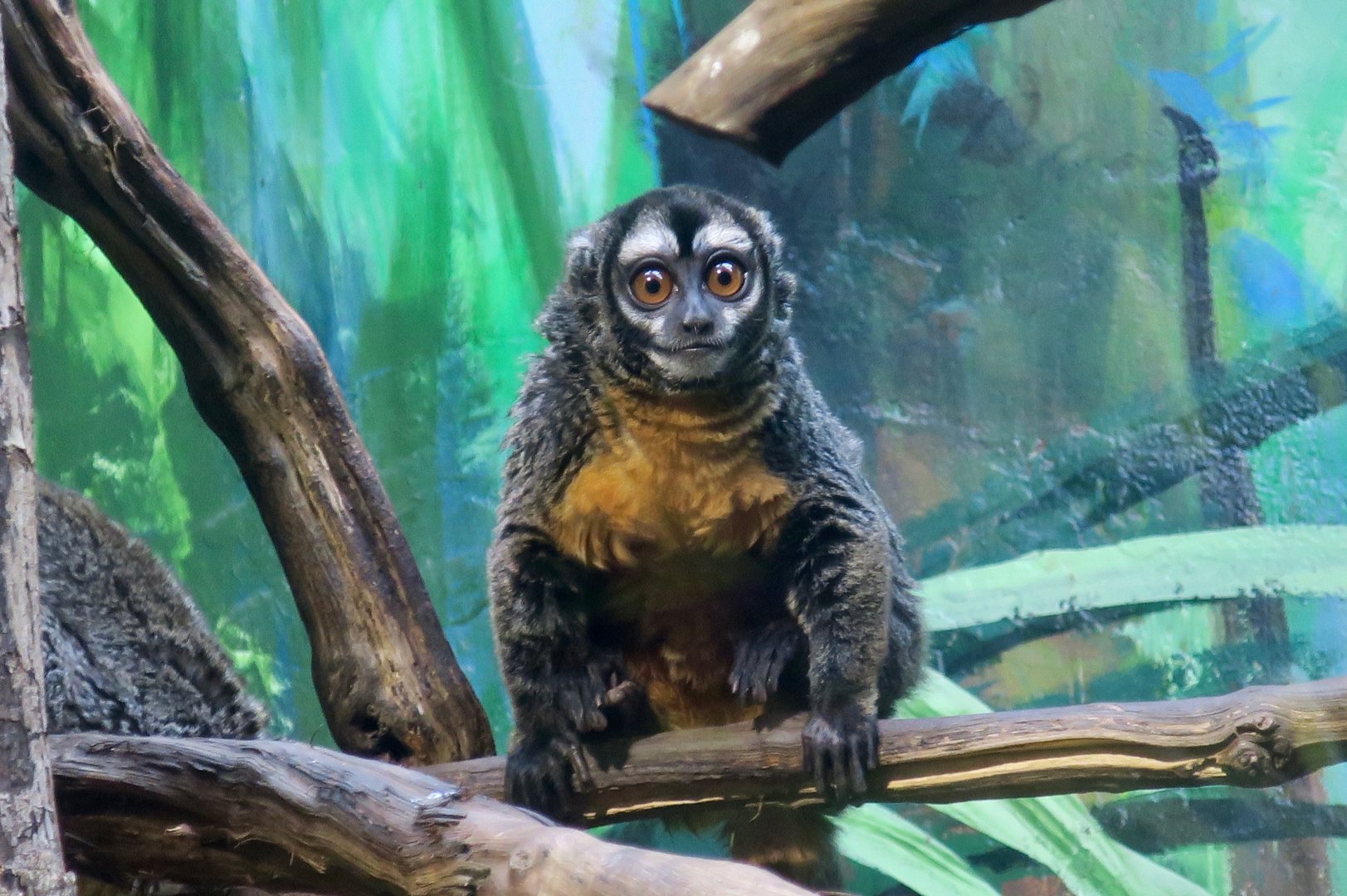
One of the best exhibits at Buttonwood is also one of the newest, and it is a tropic house called “Rainforests, Rivers & Reefs” that opened in 2017. This complex has several saltwater aquariums for tropical and local fish, as well as an interactive touch tank experience, but the most unique element of the building is the set of 4 mixed-species enclosures where South American primates live in dynamic spaces with birds, fish, and reptiles. For example, on my last visit one enclosure held Nancy Ma’s Night Monkey, Golden Headed Lion Tamarin, Guira Cuckoo, Sun Conure, Hoffman’s Two-Toed Sloth, Yellow-Spotted Amazon River Turtle, Pacu, Plecos, and two other fish taxa, all living together. Another enclosure had Goeldi’s Monkeys, Caiman Lizards, more Hoffman’s Sloths, un-zoogeographic African Pygmy Geese, Silver Dollar Fish, more Plecos, Tetras, River Stingrays, and two large Mata Mata. These enclosures are tall and all have skylights, and they do a great job of showing the different layers of the rainforest: we can see the fish in the “river,” reptiles and some waterfowl on the ground layer, and the arboreal primates and more birds dwelling in the branches above. Having so many diverse types of animals in the same enclosures makes for a fascinating experience, and some of the taxa exhibited here (like the Night Monkeys, which are one of my favorites) are rare in the United States as well. This complex also has two outdoor bird enclosures that the primates and some reptiles have access to in the summer, and signage explains that a lengthy system of Zoo-360-style chutes exists behind the scenes to enrich the monkeys’ lives by rotating them throughout the complex. This building is not perfect— zoogeography has taken a backseat here, the visitor areas and the murals on the exhibit walls are not the most immersive or naturalistic, some of the saltwater fish tanks (like for lionfish) are a tad too crowded, and some other zoochatters have noted that the species list has dwindled over the years (although I have not been visiting for long enough to notice this for myself). But the unique usage of mixed species enclosures and the strong collection with 7 types of platyrrhines (Goeldi’s Monkey, Pygmy Marmoset, Titi Monkey, Emperor Tamarin, Cotton Top Tamarin, Golden Headed Lion Tamarin, and Nancy Ma’s Night Monkey) makes Rainforests Rivers and Reefs an enormous highlight. At a time when many zoos are downsizing their primate collections or are only keeping Golden Lion Tamarins and Cotton Tops for callitrichids, this complex was a beautiful breath of fresh air.
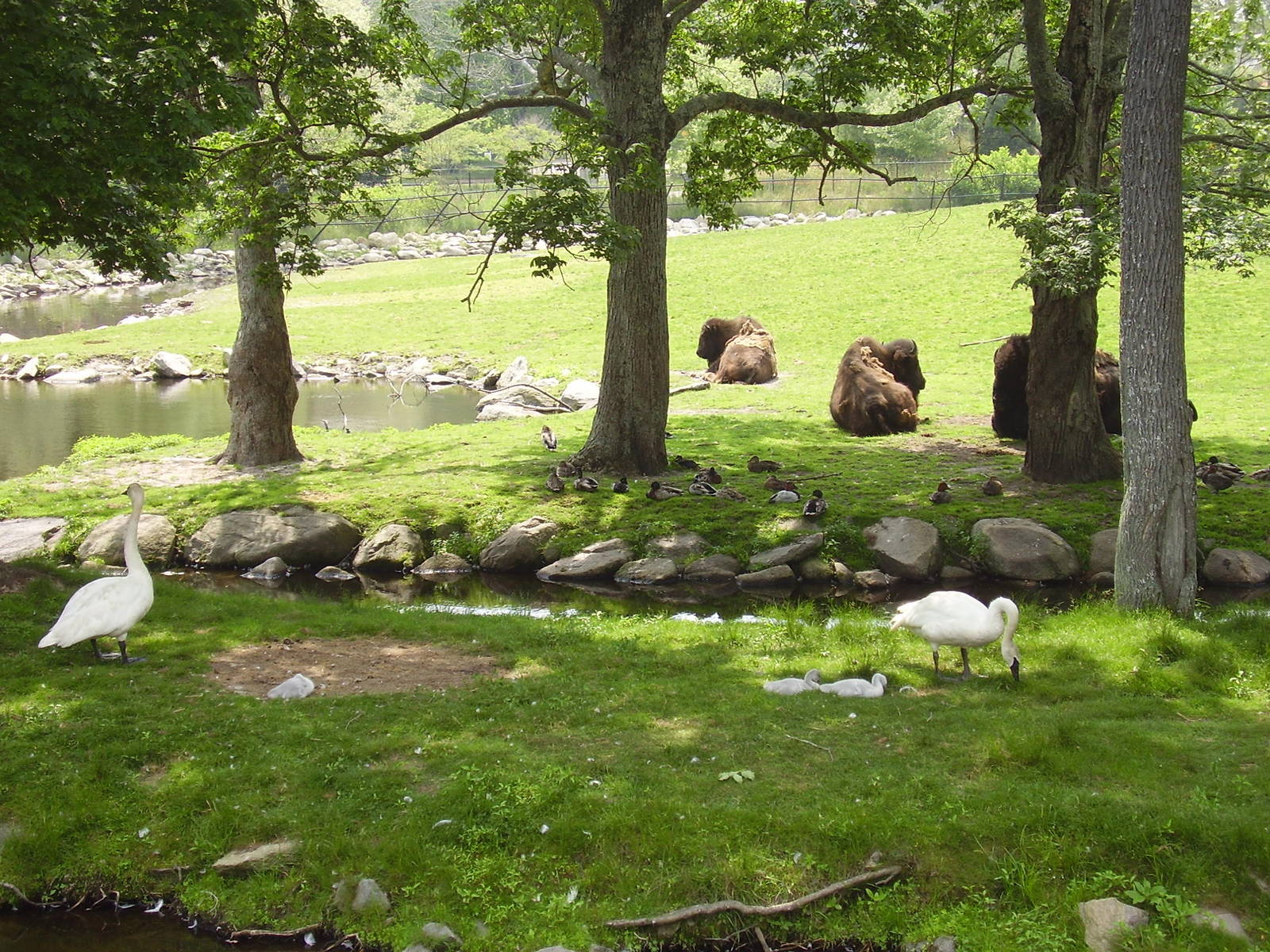
Before the construction of Rainforests Rivers and Reefs, Buttonwood held mostly North American species, and native animals are still the main focus of most of the rest of the zoo. A ~1.5-acre Bison exhibit is the biggest highlight of the North American section, and the Buttonwood Brook runs through the exhibit and makes for a beautiful water feature. The bison usually share their enclosure with White-Tailed Deer, Sandhill Crane, and a bunch of waterfowl species including (but not limited to) Emperor Goose, Ross’s Goose, Pink-footed Goose, Redhead, Coscoroba Swan, and Mallard that I saw last week. Unfortunately, the bison currently at the zoo are new arrivals, and so on my recent visit, they were sectioned off as they are still being introduced to the enclosure and to their future exhibit mates. But the exhibit is a very nice one, with lots of grass, a section with many trees for shade, and of course the nice brook.
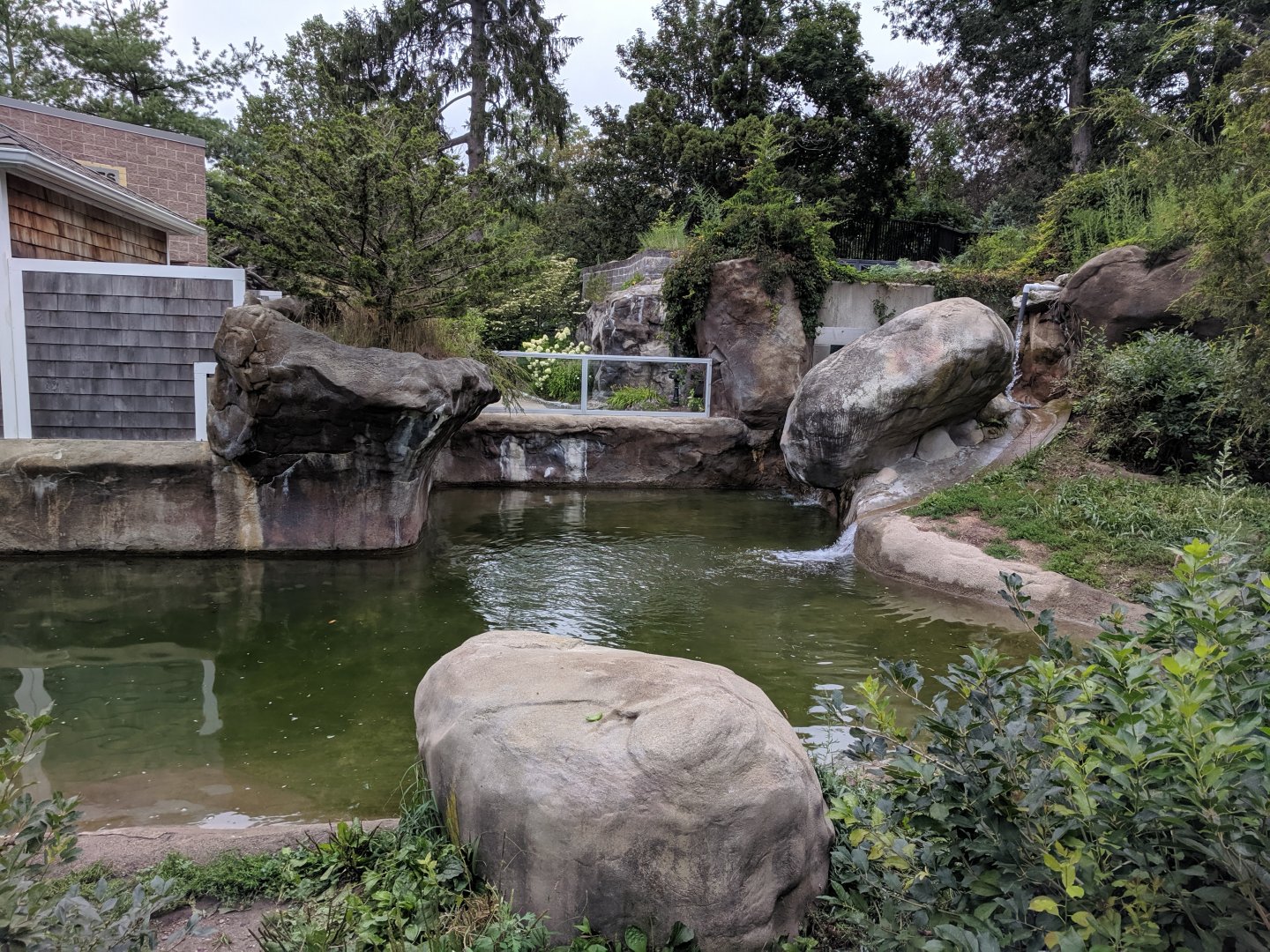
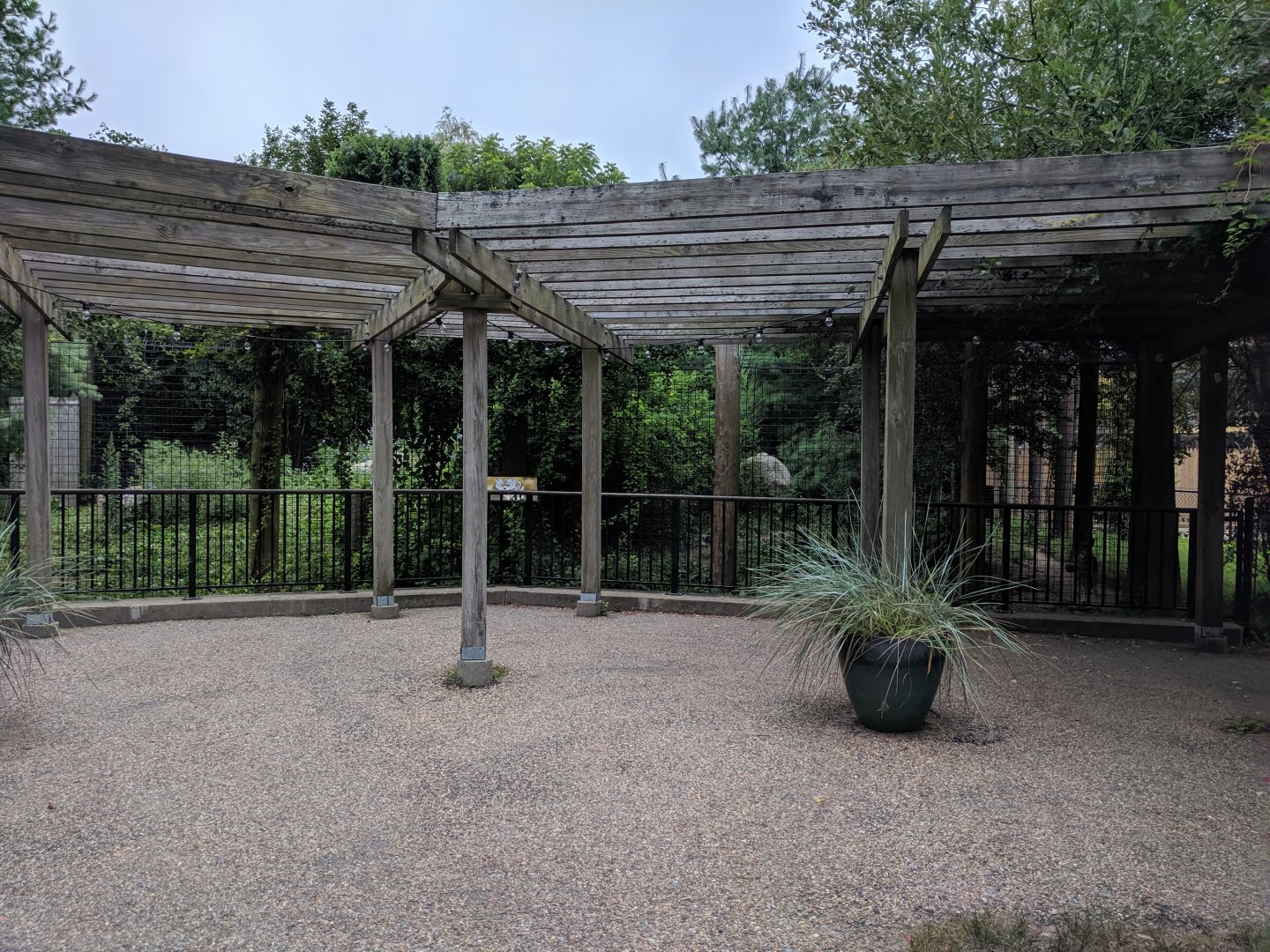
Outside of the bison exhibit, most of the other native species' enclosures are more forgettable and average. There are smallish mesh exhibits for Bobcats, Lynx, Mountain Lions, Coyotes, and birds of prey, and these habitats have bad sightlines but are well planted and the felids still get lots of climbing opportunities. There is also an aquatic section with Harbor Seals in a brutalist concrete enclosure, Beavers in an exhibit that resembles a riverbank and is shared with more waterfowl (this zoo has a pretty good waterfowl collection), and river otters in a nicely planted enclosure with a good pool and underwater viewing. Lastly is the enclosure for the zoo’s mascot, the North American Black Bear, although this exhibit has been empty for a while now and we do not yet know when bears will return to the collection (although it has been rumored that their return will take place in a brand new exhibit).
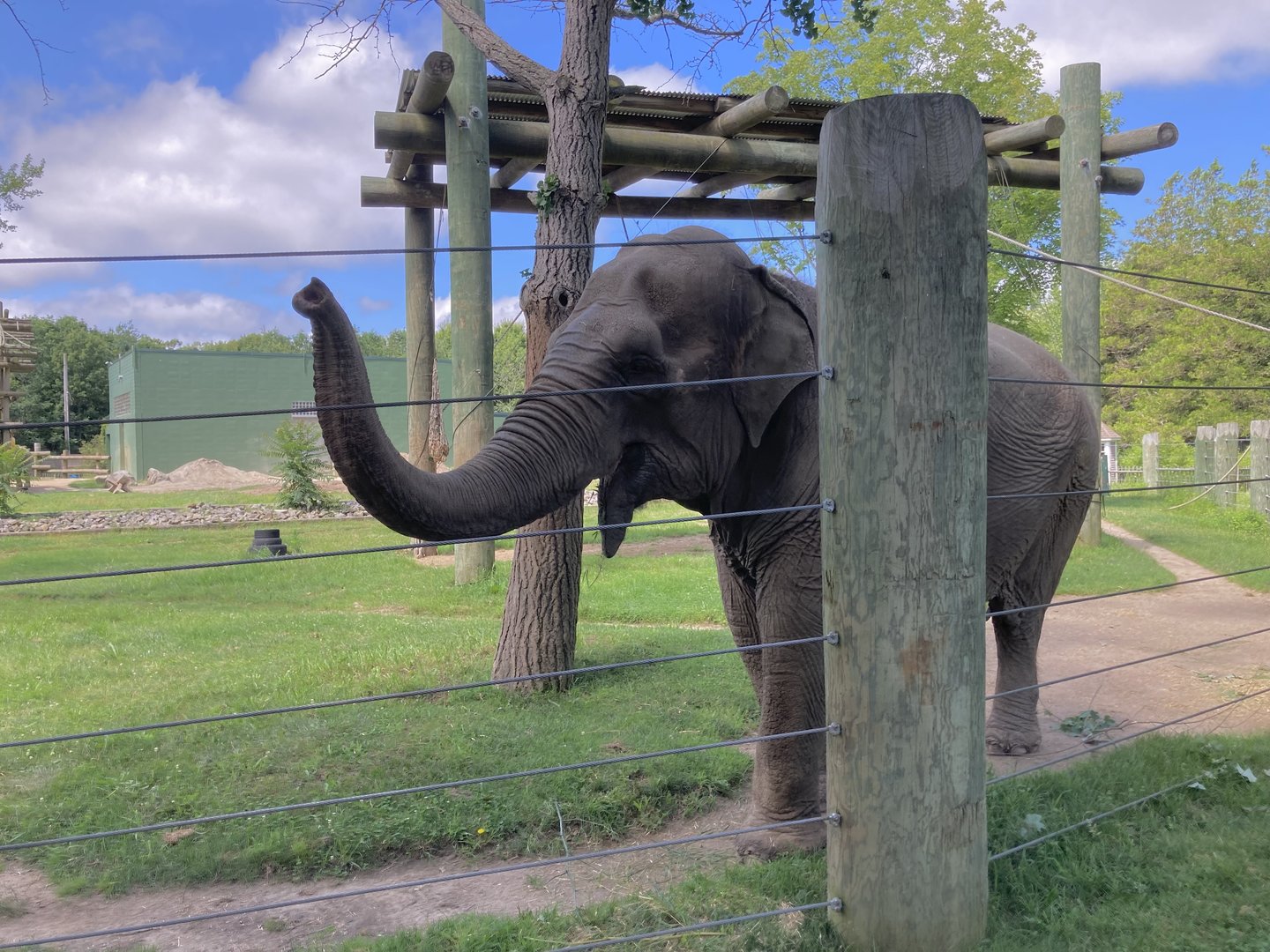
The historic exception to Buttonwood’s native-species focus has long been Asian Elephants. The zoo has a pair of geriatric females, named Ruth (64 years old) and Emily (58 years old) who have lived here for decades. Their exhibit has two yards, but they are both small (they combine to be around an acre in size, and that includes the barn). The zoo has faced a lot of criticism from animal rights activists who want them to send their elephants away due to the New England climate and the tiny exhibit size, although the current plan is to phase them out when they pass and to then reuse the exhibit for rhinos. I think this plan makes sense, and I will say that even though the exhibit is small, it has some positives. One of the yards is grassy and has several full-grown unprotected trees, which is something that I wish was more common in elephant exhibits in the US. I also saw zero head bobbing or swaying on both my visits, which was a positive. And even though the barn is tiny, the elephants are allowed to go outside even in winter (I saw both spend time outdoors, with the barn door open, when I visited in January). The zoo also seems to have a strong enrichment program for the elephants, and there are several entertaining viral videos of Emily using sound-based enrichment online.
It makes sense for Buttonwood to phase elephants out once Ruth and Emily pass away, but the current elephant exhibit might be ok for the two geriatric females, and I will definitely miss them when they are gone. Greater Boston is a place where it is hard to see elephants regularly, and so being in the presence of these huge animals has been a rare treat for me on my visits to the South Coast. Elephants have a power and a beauty that is hard to describe and hard to look away from, and I have seen pedestrians outside Buttonwood stop in their tracks when they are surprised to spot an elephant standing just 30 feet away across the zoo’s perimeter fence. It must be a thrilling experience for these unassuming park-goers to accidentally stumble across one of the world’s largest land mammals while they are going about their daily business in New Bedford.
Beyond the rainforest, the native species, and the elephants, only a few tidbits remain. One of these is “Buttonwood Farm,” which has paddocks for horses, cows, and pigs, plus a play area, although this zone is unfortunately a big waste of space as the domestics are devoted more room than the entire elephant complex (I am not diametrically opposed to farms in zoos, but Buttonwood’s is just too big for a zoo of this size). In another area there is also a café, although they are only open for a few hours a day and the food selection is even more limited than at most zoos I have been to. There is also a gift shop by the zoo exit/entrance, although in my opinion the items for sale here are also disappointing, and none of the magnets currently in stock were worthy enough to add to my collection (why can’t they have a magnet with a picture of their elephants on it? Or with the night monkeys? Or even just the zoo’s logo?). The last two things in the zoo are exhibits for red pandas and Southern Pudu that I did not mention earlier. I usually skip the red pandas to make a bee-line for the elephant exhibit, but the Southern Pudu are a species that zoo nerds might be more interested in, and their exhibit is nice with lots of foliage.
So, that is my review of the Buttonwood Park Zoo. I am a big fan of primates and pachyderms, so this is one of my favorite zoos in Massachusetts, and while some of its exhibits are average or forgettable, the highs are very high and there probably isn’t anything here that badly needs to be torn down for ethical purposes. The zoo’s main faults are probably its issues with zoogeography, its oversized farm area, its food selection, and the fact that many of the exhibits have bad sightlines due to mesh barriers and unnaturalistic shelters or backdrops. But those issues are outshined by Buttonwood’s strong waterfowl collection, its nice bison exhibit, and of course Rainforests Rivers and Reefs. I sang my praises for that complex earlier, but it really feels special and unique and I remember how pleasantly surprised I was on my first visit to Buttonwood, as before seeing the zoo’s primate exhibits with my own eyes I had no idea they even existed. I have only been to 30 zoos that have primates, but I have never before seen mixed-species monkey exhibits similar to these ones, and I am curious if anything similar exists elsewhere in the United States. The inclusion of rare animals, the strong primate collection, and the dynamic mixed-species enclosures make this complex a thing to behold, and it is one of the newest additions to the zoo and so I hope that whatever is built next will be of similar quality. Before the complex was built Buttonwood did reveal a beautiful masterplan, although unfortunately the zoo’s director has changed in intervening years. If future developments are as successful as Rainforests Rivers and Reefs was, then Buttonwood could become the best “zoo” in Massachusetts (and possibly New England?), although it remains to be seen whether the new director will be able to bring the zoo to such high heights.
- - -
Epilogue
As I mentioned at the beginning of my review, the Buttonwood Park Zoo only takes a couple of hours to see, but after seeing everything I would advise against immediately leaving town. New Bedford was once the world capital of the whaling industry, and a 10-minute drive away from the zoo is the historic New Bedford Whaling Museum. The place takes up an entire city block, takes another two hours to see, and claims to be the largest whaling museum in the world (although whaling museums seem like such niche places that I wonder how much competition this one has for the #1 spot ). The artifact collection includes things like complete whale skeletons and preserved whale body parts, whale products and harpoons, giant replica ships, whalebone carvings, and other art. There are also displays on the relationships between whales and indigenous peoples, as well as information on Right Whale conservation. The rooftop of the museum gives a great panoramic view of the large New Bedford harbor, and a couple blocks away there are a few buildings that are so old that they were actually featured in Moby Dick (and that famous book was written in 1850). Compared to where the zoo is located, this part of New Bedford is much less residential and much more historic, and the streets are cobblestone rather than paved. Nearby is also the “Buzzards Bay Nature Center” which seems to have a small collection of live sea creatures (but unfortunately this place closed early on the day I stopped by, so I will have to try to check it out another time). Until 2015 there was also the New Bedford Oceanarium, but that mini-aquarium was open for less than a decade until it closed down and their animals were moved to Buttonwood permanently.
One of the best exhibits at Buttonwood is also one of the newest, and it is a tropic house called “Rainforests, Rivers & Reefs” that opened in 2017. This complex has several saltwater aquariums for tropical and local fish, as well as an interactive touch tank experience, but the most unique element of the building is the set of 4 mixed-species enclosures where South American primates live in dynamic spaces with birds, fish, and reptiles. For example, on my last visit one enclosure held Nancy Ma’s Night Monkey, Golden Headed Lion Tamarin, Guira Cuckoo, Sun Conure, Hoffman’s Two-Toed Sloth, Yellow-Spotted Amazon River Turtle, Pacu, Plecos, and two other fish taxa, all living together. Another enclosure had Goeldi’s Monkeys, Caiman Lizards, more Hoffman’s Sloths, un-zoogeographic African Pygmy Geese, Silver Dollar Fish, more Plecos, Tetras, River Stingrays, and two large Mata Mata. These enclosures are tall and all have skylights, and they do a great job of showing the different layers of the rainforest: we can see the fish in the “river,” reptiles and some waterfowl on the ground layer, and the arboreal primates and more birds dwelling in the branches above. Having so many diverse types of animals in the same enclosures makes for a fascinating experience, and some of the taxa exhibited here (like the Night Monkeys, which are one of my favorites) are rare in the United States as well. This complex also has two outdoor bird enclosures that the primates and some reptiles have access to in the summer, and signage explains that a lengthy system of Zoo-360-style chutes exists behind the scenes to enrich the monkeys’ lives by rotating them throughout the complex. This building is not perfect— zoogeography has taken a backseat here, the visitor areas and the murals on the exhibit walls are not the most immersive or naturalistic, some of the saltwater fish tanks (like for lionfish) are a tad too crowded, and some other zoochatters have noted that the species list has dwindled over the years (although I have not been visiting for long enough to notice this for myself). But the unique usage of mixed species enclosures and the strong collection with 7 types of platyrrhines (Goeldi’s Monkey, Pygmy Marmoset, Titi Monkey, Emperor Tamarin, Cotton Top Tamarin, Golden Headed Lion Tamarin, and Nancy Ma’s Night Monkey) makes Rainforests Rivers and Reefs an enormous highlight. At a time when many zoos are downsizing their primate collections or are only keeping Golden Lion Tamarins and Cotton Tops for callitrichids, this complex was a beautiful breath of fresh air.
Before the construction of Rainforests Rivers and Reefs, Buttonwood held mostly North American species, and native animals are still the main focus of most of the rest of the zoo. A ~1.5-acre Bison exhibit is the biggest highlight of the North American section, and the Buttonwood Brook runs through the exhibit and makes for a beautiful water feature. The bison usually share their enclosure with White-Tailed Deer, Sandhill Crane, and a bunch of waterfowl species including (but not limited to) Emperor Goose, Ross’s Goose, Pink-footed Goose, Redhead, Coscoroba Swan, and Mallard that I saw last week. Unfortunately, the bison currently at the zoo are new arrivals, and so on my recent visit, they were sectioned off as they are still being introduced to the enclosure and to their future exhibit mates. But the exhibit is a very nice one, with lots of grass, a section with many trees for shade, and of course the nice brook.
Outside of the bison exhibit, most of the other native species' enclosures are more forgettable and average. There are smallish mesh exhibits for Bobcats, Lynx, Mountain Lions, Coyotes, and birds of prey, and these habitats have bad sightlines but are well planted and the felids still get lots of climbing opportunities. There is also an aquatic section with Harbor Seals in a brutalist concrete enclosure, Beavers in an exhibit that resembles a riverbank and is shared with more waterfowl (this zoo has a pretty good waterfowl collection), and river otters in a nicely planted enclosure with a good pool and underwater viewing. Lastly is the enclosure for the zoo’s mascot, the North American Black Bear, although this exhibit has been empty for a while now and we do not yet know when bears will return to the collection (although it has been rumored that their return will take place in a brand new exhibit).
The historic exception to Buttonwood’s native-species focus has long been Asian Elephants. The zoo has a pair of geriatric females, named Ruth (64 years old) and Emily (58 years old) who have lived here for decades. Their exhibit has two yards, but they are both small (they combine to be around an acre in size, and that includes the barn). The zoo has faced a lot of criticism from animal rights activists who want them to send their elephants away due to the New England climate and the tiny exhibit size, although the current plan is to phase them out when they pass and to then reuse the exhibit for rhinos. I think this plan makes sense, and I will say that even though the exhibit is small, it has some positives. One of the yards is grassy and has several full-grown unprotected trees, which is something that I wish was more common in elephant exhibits in the US. I also saw zero head bobbing or swaying on both my visits, which was a positive. And even though the barn is tiny, the elephants are allowed to go outside even in winter (I saw both spend time outdoors, with the barn door open, when I visited in January). The zoo also seems to have a strong enrichment program for the elephants, and there are several entertaining viral videos of Emily using sound-based enrichment online.
It makes sense for Buttonwood to phase elephants out once Ruth and Emily pass away, but the current elephant exhibit might be ok for the two geriatric females, and I will definitely miss them when they are gone. Greater Boston is a place where it is hard to see elephants regularly, and so being in the presence of these huge animals has been a rare treat for me on my visits to the South Coast. Elephants have a power and a beauty that is hard to describe and hard to look away from, and I have seen pedestrians outside Buttonwood stop in their tracks when they are surprised to spot an elephant standing just 30 feet away across the zoo’s perimeter fence. It must be a thrilling experience for these unassuming park-goers to accidentally stumble across one of the world’s largest land mammals while they are going about their daily business in New Bedford.
Beyond the rainforest, the native species, and the elephants, only a few tidbits remain. One of these is “Buttonwood Farm,” which has paddocks for horses, cows, and pigs, plus a play area, although this zone is unfortunately a big waste of space as the domestics are devoted more room than the entire elephant complex (I am not diametrically opposed to farms in zoos, but Buttonwood’s is just too big for a zoo of this size). In another area there is also a café, although they are only open for a few hours a day and the food selection is even more limited than at most zoos I have been to. There is also a gift shop by the zoo exit/entrance, although in my opinion the items for sale here are also disappointing, and none of the magnets currently in stock were worthy enough to add to my collection (why can’t they have a magnet with a picture of their elephants on it? Or with the night monkeys? Or even just the zoo’s logo?). The last two things in the zoo are exhibits for red pandas and Southern Pudu that I did not mention earlier. I usually skip the red pandas to make a bee-line for the elephant exhibit, but the Southern Pudu are a species that zoo nerds might be more interested in, and their exhibit is nice with lots of foliage.
So, that is my review of the Buttonwood Park Zoo. I am a big fan of primates and pachyderms, so this is one of my favorite zoos in Massachusetts, and while some of its exhibits are average or forgettable, the highs are very high and there probably isn’t anything here that badly needs to be torn down for ethical purposes. The zoo’s main faults are probably its issues with zoogeography, its oversized farm area, its food selection, and the fact that many of the exhibits have bad sightlines due to mesh barriers and unnaturalistic shelters or backdrops. But those issues are outshined by Buttonwood’s strong waterfowl collection, its nice bison exhibit, and of course Rainforests Rivers and Reefs. I sang my praises for that complex earlier, but it really feels special and unique and I remember how pleasantly surprised I was on my first visit to Buttonwood, as before seeing the zoo’s primate exhibits with my own eyes I had no idea they even existed. I have only been to 30 zoos that have primates, but I have never before seen mixed-species monkey exhibits similar to these ones, and I am curious if anything similar exists elsewhere in the United States. The inclusion of rare animals, the strong primate collection, and the dynamic mixed-species enclosures make this complex a thing to behold, and it is one of the newest additions to the zoo and so I hope that whatever is built next will be of similar quality. Before the complex was built Buttonwood did reveal a beautiful masterplan, although unfortunately the zoo’s director has changed in intervening years. If future developments are as successful as Rainforests Rivers and Reefs was, then Buttonwood could become the best “zoo” in Massachusetts (and possibly New England?), although it remains to be seen whether the new director will be able to bring the zoo to such high heights.
- - -
Epilogue
As I mentioned at the beginning of my review, the Buttonwood Park Zoo only takes a couple of hours to see, but after seeing everything I would advise against immediately leaving town. New Bedford was once the world capital of the whaling industry, and a 10-minute drive away from the zoo is the historic New Bedford Whaling Museum. The place takes up an entire city block, takes another two hours to see, and claims to be the largest whaling museum in the world (although whaling museums seem like such niche places that I wonder how much competition this one has for the #1 spot
). The artifact collection includes things like complete whale skeletons and preserved whale body parts, whale products and harpoons, giant replica ships, whalebone carvings, and other art. There are also displays on the relationships between whales and indigenous peoples, as well as information on Right Whale conservation. The rooftop of the museum gives a great panoramic view of the large New Bedford harbor, and a couple blocks away there are a few buildings that are so old that they were actually featured in Moby Dick (and that famous book was written in 1850). Compared to where the zoo is located, this part of New Bedford is much less residential and much more historic, and the streets are cobblestone rather than paved. Nearby is also the “Buzzards Bay Nature Center” which seems to have a small collection of live sea creatures (but unfortunately this place closed early on the day I stopped by, so I will have to try to check it out another time). Until 2015 there was also the New Bedford Oceanarium, but that mini-aquarium was open for less than a decade until it closed down and their animals were moved to Buttonwood permanently.