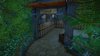
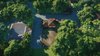
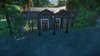
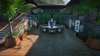
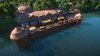
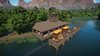
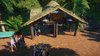
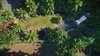
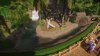
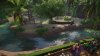
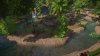
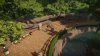
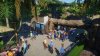
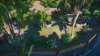
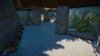
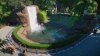
Planet Zoo MGolka's Zoological Gardens (Planet Zoo)

MGolka

Well-Known Member
5+ year member
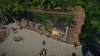
Alrighty all, here will be the thread of the virtual tour of my every species zoo! I will start this off with the entrance areas and go from there. As of this post, I've got just over 760 hours into this game, not this particular zoo, but as noted before, it's been in the works for quite some time. I have been playing the game since about a month after release as I searched for the perfect laptop because I never really wanted to piece out smaller zoos and not include everything. I got frustrated with this in Planet Coaster on my older laptop, that any big park I wanted to create was out of reach.

I'm going to start out with posting my logo I created that I fully intended to put on one of the screens in the zoo, but I wasn't satisfied with the brightness the game puts on them and it looked off, so I just went with the big letters that are with the scenery in the game, so here you go. Some of the backstory for my zoo is that this is the flagship zoo for the GZS (Golka Zoological Society), and that I built the headquarters in the staff area of this zoo.

01 GZG.png

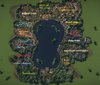
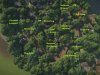
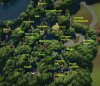
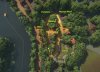
Now, in the big Planet Zoo thread I posted the map of the zoo without any text, but here is an overview map that shows off the names of the 16 zones of the zoo. Each of these 16 are only accessible from the main path loop around the lagoon, similar to how some zoos are now building exhibits off a main path forcing you back to the main path. Think Omaha's Asian Highlands for this as the perfect example, there is only one way in and out of the exhibit, having guests do a complete loop so that you don't pass exhibits or have to backtrack to see them.

I did this intentionally as I liked to create gateways into the "lands" like you would see at Disney, however, they have multiple ways in or out of their sections and I wanted to limit the amounts of dual theming the entrances so I located them only at one spot. I also like to put themed music around my park in amenity areas or the gateways, and when you have an entrance from one to the other, there would be two sets of music going on which to me ruins the illusion. So when I get to the posts that detail out my 16 different lands, I will also post the song that plays throughout the area if you want to listen along by searching for it on Youtube or whatever.

Anyway, here are the 16 different areas that are in my zoo (going clockwise):
  • Tapir Trek (on both sides of entrance area, not labeled on map)
  • Monsoon Mangrove
  • Asian Altitude
  • Secrets of Tibet
  • Kingdom of Amanpur
  • Australian Outback
  • Islands of Mystery
  • Kidani Trail
  • Heart of the Congo
  • Hatari Safari
  • Desert's Edge
  • European Harborside
  • Polar Pointe
  • American Adventure
  • Ancient Americas
  • Expedition: Amazon
02 GZG Map Text.jpg

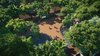
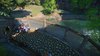
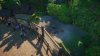
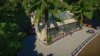
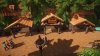
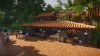
But before we get to the excitement of each of the lands, first you have to enter the zoo! The entrance plaza features ticketing lines, lockers, a lost and found, and stroller rentals and operate out of one building that joins all together and also serves as the zoo's administration center.

03 Front Entrance.jpg

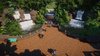
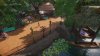
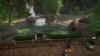
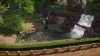
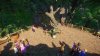
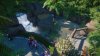
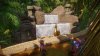
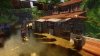
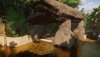
This entrance plaza also features two distinct waterfalls on either side of the plaza, with glass walls around the pools and one could then use your imagination with various freshwater fish species and aquatic turtles in these pools if you so wish. I put vista points at each of these to draw visitors to look at them as if they did hold some sort of freshwater species.

04 Entrance Waterfalls.jpg

Also, I do have the hours of the zoo set from 7 AM to Midnight, so I did take the time to detail out lighting throughout the zoo. Here is a shot of the waterfall lighting, which changes the dynamic quite a bit.

05 Entrance Waterfalls Night.jpg

Here is a shot of the ticketing lines looking toward the lost and found/stroller rental wing of the entrance building. I was really happy they added some sort of queue barrier to use in open pathways as I couldn't use the queue path type here.

06 Entrance Tickets Gates.jpg

Also, anyone need a locker to hold any excess bags for the day?

07 Lockers.jpg

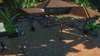
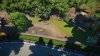
After showing off this front area before entering the zoo, I want to give a quick overview of the backstage facilities at the entrance before going into the zoo proper. Here is a quick overview that has all of the staff buildings that were what I needed to at least get the zoo running off the bat, but they also serve as the staff facilities for the Tapir Trek area at the front of the zoo. The empty yard at the back of the building is my main Vet Center with a rehab/quarantine yard if you will.

08 Entrance Facilities.jpg

Just outside of the rehab yard is where you will find my headquarters for the GZS, taking inspiration from more 70s style architecture (which is more evident inside).

09 GZS HQ.jpg

And of course I had to detail the inside of this building just for kicks, so I added a nice fountain area, plenty of artwork, and offices staggered on the two levels of the building. I have actually observed some of my staff members wander in here over time, despite there not being any staff facilities themselves in here, it strictly is a decoration so to speak.

10 GZS HQ.jpg

That does it for the outside of the zoo areas, the next post will focus on the entry plaza area that I have more or less called "Adventure Outpost" on various wayfinding signs around the zoo. So stay tuned for more to come!
 

Attachments

  • 01 GZG.png
    01 GZG.png
    353.4 KB · Views: 335
  • 02 GZG Map Text.jpg
    02 GZG Map Text.jpg
    154.5 KB · Views: 331
  • 03 Front Entrance.jpg
    03 Front Entrance.jpg
    195 KB · Views: 332
  • 04 Entrance Waterfalls.jpg
    04 Entrance Waterfalls.jpg
    148.5 KB · Views: 341
  • 05 Entrance Waterfalls Night.jpg
    05 Entrance Waterfalls Night.jpg
    92.8 KB · Views: 334
  • 06 Entrance Tickets Gates.jpg
    06 Entrance Tickets Gates.jpg
    145.7 KB · Views: 327
  • 07 Lockers.jpg
    07 Lockers.jpg
    133.7 KB · Views: 335
  • 08 Entrance Facilities.jpg
    08 Entrance Facilities.jpg
    159.5 KB · Views: 336
  • 09 GZS HQ.jpg
    09 GZS HQ.jpg
    132.6 KB · Views: 326
  • 10 GZS HQ.jpg
    10 GZS HQ.jpg
    138.6 KB · Views: 336
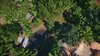
Continuing on into the zoo itself, we will begin with the entrance plaza that features all of the amenities one would expect to find at the front of a park. Restrooms, shops, restaurants, information kiosks, and ATMs. My front entrance plaza is bisected by a bridge that connects the two sides of Tapir Trek, thus making guests feel like they are in a bustling marketplace and places to explore by seeing people on upper levels of this plaza.

As people enter into the entry plaza areas, they will be welcomed by the soothing tones of song "Jurassic Style" from Rollercoaster Tycoon 2 for those of you who want to listen to the track.

11 Inner Entrance.jpg

In this first half of the plaza, there are restrooms immediately to the right and left of the entrance, as well as an information outpost to the upper right of this photo, and a sweets shop to the upper left that also has a smoothie shop on the upper deck for folks to sit on the deck and people watch from the upper level.

Here is a shot of one of the restrooms to the immediate right of the entrance.

12 Inner Entrance Restrooms.jpg

For any adventurer, one needs to stop at the information outpost to get a map or one of the audio headsets.

14 Outpost Info.jpg

Or stop by the sweet shop and get some ice cream or other treats. You can see a glimpse of the smoothie shop on the upper level of the Outpost Creamery as well as the bridge that connects the two halves of Tapir Trek (that will be coming in a post soon). This bridge makes it feel like this little plaza is contained and is essentially the gateway to the larger lagoon area, and to the various "lands" of the zoo.

13 Inner Entrance Sweet Shop.jpg

Once you pass under the bridge, you find yourself in the outer plaza, featuring a restaurant to the right in the picture below, and another snack shack to the left, with a gift shop next to that. The big building on the lagoon is the main station for the River Charting Company, for quick access to other parts of the zoo. I will have a post that shows off this transport ride in more detail.

15 Outer Entrance.jpg

Located throughout the zoo at the entrances to each of the zones, there are wayfinding signs that point to the nearest three lands in each direction. One can be seen in the middle of the picture below.

16 Outer Entrance Waypoint.jpg

Before setting off into the big zoo, guests can stop at the Outpost General Store to stock up on goods.

17 Outpost General Store.jpg

Or hit the ATMs to ensure one has enough cash at the start of the day. The adjacent bottled water kiosk next to the ATMs gets a lot of business here.

18 Outpost ATM.jpg

For those that want to relax and enjoy a meal, they can stop by the Outpost Cantina and watch the boats come in to the main station or catch a glimpse of Baird's Tapirs roaming their habitat from across the path.

19 Outpost Cantina.jpg

And finally, don't forget to stop by the Outpost Traders shop to get any gifts before one exits the park. Or start your day off browsing the fare and the day's wares.

20 Outpost Traders.jpg

Next up will be a post showcasing the River Charting Company, then we will finally get to the first exhibits of the zoo!
 

Attachments

  • 11 Inner Entrance.jpg
    11 Inner Entrance.jpg
    187.4 KB · Views: 341
  • 12 Inner Entrance Restrooms.jpg
    12 Inner Entrance Restrooms.jpg
    149.5 KB · Views: 330
  • 14 Outpost Info.jpg
    14 Outpost Info.jpg
    157.3 KB · Views: 325
  • 13 Inner Entrance Sweet Shop.jpg
    13 Inner Entrance Sweet Shop.jpg
    161.1 KB · Views: 333
  • 15 Outer Entrance.jpg
    15 Outer Entrance.jpg
    166.2 KB · Views: 331
  • 16 Outer Entrance Waypoint.jpg

    16 Outer Entrance Waypoint.jpg
    142.9 KB · Views: 329
  • 17 Outpost General Store.jpg
    17 Outpost General Store.jpg
    154.2 KB · Views: 332
  • 18 Outpost ATM.jpg
    18 Outpost ATM.jpg
    157.2 KB · Views: 328
  • 19 Outpost Cantina.jpg
    19 Outpost Cantina.jpg
    168.3 KB · Views: 330
  • 20 Outpost Traders.jpg
    20 Outpost Traders.jpg
    154.6 KB · Views: 329
Finishing off the guest amenities near the entrance of the zoo before we get to some animal exhibits, wanted to show off the boat transport stations around the lagoon first so I don't have to include them in later posts.

The River Charting Company takes guests around the lake and stops at four places:
  • Adventure Outpost (Entrance Plaza)
  • Kingdom of Amanpur
  • African Village
  • American Adventure (Fort Robinson Dock)
Here is a look at the main dock near the entrance.

21 River Charting Co.jpg

This station has the largest building of all of them, something I later modified on my docks around the lagoon.

22 River Charting Co.jpg

As you relax on your trip around the lake, if you noticed in the overview map in the first post, there are five islands scattered around the body of water, and each of these islands features some theming from the adjacent lands around the zoo. These were added to give guests a closer view of the decorations as they traverse the lagoon as there are no animal exhibits that you can see from the boat easily.

Here is an example of one of the islands featuring some theming from Monsoon Mangrove and Asian Altitude.

23 River Charting Island Example.jpg

As the boats go clockwise around the lagoon, the first stop is at the Kingdom of Amanpur, which resembles an Indian City, which we will go into greater detail later.

24 River Charting Amanpur Dock.jpg

The second stop along the ride is at the farthest end of the zoo and is at the edge of the African Village hub that accesses the three African themed areas, Kidani Trail, Heart of the Congo, and Hatari Safari.

25 River Charting Africa Dock.jpg

Each of the docks are decorated as if these are actual ports that deal with trade on a daily basis.

26 River Charting Africa Dock.jpg

And the last stop around the lagoon is at Fort Robinson, which is the entrance point to the American Adventure exhibits.

27 River Charting America Dock.jpg
 

Attachments

  • 21 River Charting Co.jpg
    21 River Charting Co.jpg
    151.8 KB · Views: 334
  • 22 River Charting Co.jpg
    22 River Charting Co.jpg
    118.8 KB · Views: 334
  • 23 River Charting Island Example.jpg
    23 River Charting Island Example.jpg
    95.5 KB · Views: 327
  • 24 River Charting Amanpur Dock.jpg
    24 River Charting Amanpur Dock.jpg
    153 KB · Views: 325
  • 25 River Charting Africa Dock.jpg
    25 River Charting Africa Dock.jpg
    165.7 KB · Views: 330
  • 26 River Charting Africa Dock.jpg
    26 River Charting Africa Dock.jpg
    116.3 KB · Views: 331
  • 27 River Charting America Dock.jpg
    27 River Charting America Dock.jpg
    131.9 KB · Views: 329
Now that we got all the amenities that had to be built laying the foundation for the zoo, we can dive into the first couple of exhibits, the pair of tapir exhibits that forms Tapir Trek!

30 Tapir Trek Entrance.jpg

This area frames both sides of the Adventure Outpost and the entryways play the Jungle Style track from Rollercoaster Tycoon. With tapirs being my favorite animals, the two species in the game were always going to be the focal points near the front of the zoo.

If you look at the map view in the first post, notice that the Asian exhibits are to the left of the entrance, while the South American exhibits are to the right. This was intentional and likewise, the Malayan Tapir exhibit is found on the Asian side of the entrance and is next to the Monsoon Mangrove, while the Baird's Tapir exhibit borders Expedition: Amazon on the South American side.

These two habitats' viewing areas are also connected by the bridge that cuts across the Adventure Outpost, such that you will get back to the main path no matter which one you choose to begin with.

I will start with the Malayan Tapir habitat as it was the first one that was built. This habitat features a good amount of "lawn" area and native foliage as well as a decent pool for these semi-aquatic mammals to go for a swim or cool down.

31 Malayan Tapir Exhibit.jpg

There is a side path near this exhibit that goes down to the water's edge to give guests a partial underwater viewing of the tapirs as they go for a swim. It more or less puts the guests at eye level with wading tapirs.

32 Malayan Tapir Water Viewing.jpg

If you go to the South American side of the entrance, you will enter through a similar entrance as the screenshot above and find the Baird's Tapir habitat. This habitat is across the path from the Oasis Cantina restaurant allowing those sitting in the seating area to perhaps get a view of the inhabitants in the exhibit.

This exhibit is similar to the Malayan Tapir exhibit with a good amount of land area shrouded in live foliage, but a massive pool and cascading waterfall.

34 Baird's Tapir Exhibit.jpg

From a lower angle, you can see that part of the exhibit is "pinched" in the middle which simulates a foraging path to the water's edge, while at the same time allows visitors to get a closer view of these tapirs. On the right edge of the screenshot below, you can see some of the restaurant seating on the edge of the visitor path.

35 Baird's Tapir Exhibit View.jpg

The next post will probably feature Expedition: Amazon as it was the next area built. I will probably post in the order I finished them rather than one specific direction around the lake. I more or less focused on one area at a time and hopped back and forth from the entrance to keep the amount of exhibits each direction from the entrance balanced as the zoo was built out.
 

Attachments

  • 30 Tapir Trek Entrance.jpg
    30 Tapir Trek Entrance.jpg
    159.8 KB · Views: 328
  • 31 Malayan Tapir Exhibit.jpg
    31 Malayan Tapir Exhibit.jpg
    172.4 KB · Views: 332
  • 32 Malayan Tapir Water Viewing.jpg
    32 Malayan Tapir Water Viewing.jpg
    139.4 KB · Views: 325
  • 34 Baird's Tapir Exhibit.jpg
    34 Baird's Tapir Exhibit.jpg
    188.2 KB · Views: 326
  • 35 Baird's Tapir Exhibit View.jpg
    35 Baird's Tapir Exhibit View.jpg
    148.6 KB · Views: 327
Just to update this as it’s been a bit since I posted the next part, but the DLC and Collared Peccary is making me update some stuff.

I was going to do the Amazon section next, but I was preparing for hopefully a South American DLC, whoops. So I expanded Expedition: Amazon a bit, and got caught with needing to expand Asian Altitude and European Harborside. So my next update will instead probably be Monsoon Mangrove as I tweak some things in my Amazon section to “hide” the future expansion areas.
 
Alrighty then, back at it with a tour of officially the third area that was built, but second one we will show off after Tapir Trek. This post will feature animals found in southeast Asia and is called:

MONSOON MANGROVE

Found along the Asia side of the entrance, next to the Malayan Tapir habitat, this section blends seamlessly from the entrance from the tapir to animals that are found in the same area. To give an overview map of the area, see this figure below.

40 Monsoon Mangrove Overview Text.jpg

As you can see, the species list for this section of the zoo is as follows: Siamang, Proboscis Monkey, North Sulawesi Babirusa, Lar Gibbon, Bornean Orangutan, Sun Bear, Clouded Leopard, Giant Malaysian Leaf Insect, Binturong, and Komodo Dragon.

As this was one of the earlier lands built, there were some modifications along the way to account for later released DLCs that I will describe in more detail later. As you will see on future posts, all of my maps show where that area's gift shop, restaurant, or restrooms (RR on the map) are located in relation to the habitats.

As you enter the Monsoon Mangrove, you are greeted by a southeast Asian fishing village and various twisted trees/logs with the entrance sign, accompanied by the music of "Deep Jungle" from the Congo Motion Picture Soundtrack. The Monsoon Mementos Gift Shop is also intertwined with the entrance.

41 Monsoon Mangrove Entrance.jpg

Speaking of gift shops, in my mind, each of the gift shops found in each respective land sells merchandise only related to that specific land. So in essence you would have items branded for Monsoon Mangrove or southeast Asian influenced. I was fascinated by the early years of Disneyland and Disney World that had this concept scattered about their parks, which sadly has turned into a lot of their gift shops selling the same merchandise almost everywhere. World showcase at EPCOT on the other hand still does this in each of their pavilions for the most part, which has been a huge influence on the layout of my zoo.

42 Monsoon Mementos Gift Shop.jpg

The first exhibit that guests will find their way past is one that can be viewed from the circulating main pathway around the central lagoon, one for Siamang. Originally this exhibit held Saltwater Crocodile, but when the Conservation Pack was added, I needed a spot for the Siamang and I figured that with some modifications, this species would be better near the front of the zoo due to their vocal nature and that they are highly active. Saltwater crocs would be moved to the Australian Outback section that will be covered later. I obviously had to add a bunch of climbing structures and expand the land area a little, but the water moat served perfect to converting the former croc exhibit into a primate peninsula.

44 Siamang Exhibit.jpg

The next exhibit encountered will be an "island" for Proboscis Monkeys does allow these semi-aquatic monkeys access to the surrounding water-filled moat and they can frequently be seen swimming around or climbing the natural vegetation as well. This habitat, along with the Bornean Orangutan exhibit on the backside of this exhibit, does feature indoor viewing of the night quarters for each species, the entrance to the indoor portion (which features some climbing frames inside) is found near the Malaysian Leaf Insect exhibit on the map.

45 Proboscis Monkey Exhibit.jpg

Each of my sections of the zoo only feature one access point to the land and are meant to be viewed in a loop (with the exception of Expedition: Amazon, but you will see later). I have set up education points that guide visitors around each loop in the way I intend them to help visitor flow. In this instance, the next exhibit along the loop is for North Sulawesi Babirusa. Originally this exhibit encompassed both their current exhibit and the space dedicated for the adjacent Lar Gibbon, but after seeing how large the exhibit was for the babirusa I had in there, as well as needing for find a place for Lar Gibbon when they were added in the Tropical pack, I decided to half the exhibit. As you can see in the photo below, the babirusa love their mud wallow.

46 Babirusa Exhibit.jpg

As the original babirusa habitat was halved to make way for the addition of Lar Gibbon, I had to add a moat and another primate peninsula to make this exhibit. At first I was thinking that maybe I didn't have enough land area, but after seeing these primates in the game and how small they were, I was satisfied with the result. The gibbons have access to multiple climbing structures as well as the trees found inside the exhibit as well.

47 Lar Gibbon Exhibit.jpg

Continuing on, one will come to the largest exhibit in this area of the park and one that allows many different viewing angles, the Bornean Orangutan island. This exhibit provides a lot of climbing opportunities, both frames and natural vegetation. I did come back and add in some of the pieces that allow for these great apes to brachiate through the taller trees at the tops of the original climbing frames.

48 Bornean Orangutan Exhibit.jpg

Another angle of this island shows more of the area and how the climbing frames connect via overhead logs that allow for brachiation.

49 Bornean Orangutan Exhibit.jpg

As I was building this exhibit, the seating areas for educational presentations were added to the game, so I figured I would incorporate that into one of the boundaries of this portion and blend it into the rock face. Behind this rock wall is staff access areas and behind the scenes facilities. I took inspiration from rock faces I became enamored with in the southern end of Missouri here is the states but also the protruding rocks on the south of Thailand out of the numerous bays and jungles.

50 Orangutan Educational Seating.jpg

With that, that is the end of part 1, of Monsoon Mangrove, will upload part 2 shortly that finishes showing off this section of the zoo.
 

Attachments

  • 40 Monsoon Mangrove Overview Text.jpg
    40 Monsoon Mangrove Overview Text.jpg
    178.7 KB · Views: 257
  • 41 Monsoon Mangrove Entrance.jpg
    41 Monsoon Mangrove Entrance.jpg
    135.9 KB · Views: 259
  • 42 Monsoon Mementos Gift Shop.jpg
    42 Monsoon Mementos Gift Shop.jpg
    150.7 KB · Views: 251
  • 44 Siamang Exhibit.jpg
    44 Siamang Exhibit.jpg
    147.6 KB · Views: 260
  • 45 Proboscis Monkey Exhibit.jpg
    45 Proboscis Monkey Exhibit.jpg
    141.7 KB · Views: 253
  • 46 Babirusa Exhibit.jpg
    46 Babirusa Exhibit.jpg
    147.1 KB · Views: 254
  • 47 Lar Gibbon Exhibit.jpg
    47 Lar Gibbon Exhibit.jpg
    149.6 KB · Views: 260
  • 48 Bornean Orangutan Exhibit.jpg
    48 Bornean Orangutan Exhibit.jpg
    137.6 KB · Views: 254
  • 49 Bornean Orangutan Exhibit.jpg
    49 Bornean Orangutan Exhibit.jpg
    129.6 KB · Views: 249
  • 50 Orangutan Educational Seating.jpg
    50 Orangutan Educational Seating.jpg
    155 KB · Views: 254
It would be cool if you could add an O-Line connecting the orangutan, siamang, and gibbon exhibits to add mixed species opportunities and bonus enrichment opportunities for the inhabitants. It would also be cool if you could save space/add more species by making each habitat its own mixed species area as well. For example:
- Your Siamang habitat was originally how to Salt Water Crocs, and its an entrance exhibit, so it be cool if you could imitate Singapore's entrance Siamang exhibit which cohabitate the space with tomistoma, hence it be cool if tomistoma could live with the Siamang considering the space was made for crocodilians anyways (you could also use gharials instead, considering they're essentially fish eaters)
- Have the Binturong move into the orang habitat along the orangs
- Add ASC Otters to the Gibbon habitat
- Have the Babirusa move into the Malayan Tapir habitat to make room for new inhabitants in the Binturong and Babirusa habitats
 
Monsoon Mangrove, Part 2

Last we left off, we were essentially at the mid point of the land, and right after the orangutan exhibit, there is a long and narrow Sun Bear exhibit that features three different viewing points. The first features a lowland area that gives guests a "treetop" view into the climbing net enrichment item, the middle is a portion that features a shallow stream (with a bridge for keeper access to the other side of the exhibit, too bad keepers can't walk in shallow water) and a pool.

51 Sun Bear Exhibit.jpg

And the third viewing area has another pool and a tree that allows for climbing.

52 Sun Bear Exhibit.jpg

After the sun bear exhibit, guests find themselves at the Palawan Patio restaurant. This restaurant features viewing of the orangutan exhibit across a moat and plenty of shade. This was made prior to the restaurant feature, so it consists of a food and a drink kiosk instead. Throughout the zoo I vary kiosk/restaurant service.

53 Palawan Patio Restaurant.jpg

On the path behind the Palawan Patio restaurant, you would continue the main route and pass by the heavily shaded Clouded Leopard exhibit that is also one that is long and narrow. Unlike the other exhibits to this point, this exhibit features glass viewing and rockwork that acts as a climb proof barrier.

54 Clouded Leopard Exhibit.jpg

For the clouded leopards, I went with more natural looking climbing than the normal frame pieces, and one of my main wishes the game would add would be a lot more "natural" looking climbing items featuring more faux tree options. I use the other climbing pieces for primates since that is the main purpose, but those items look a little out of place for other animals. Later on in the zoo, I start to use a lot more of the foliage less trees to simulate faux trees you would find in real zoos.

55 Clouded Leopard Exhibit.jpg

After the clouded leopard exhibit, guests would find themselves at the base of another rock wall that extends up the backside of Asian Altitude, the adjacent section of the zoo, and find a restroom, and then the Binturong exhibit. Similarly, this exhibit features glass viewing with rock around the top of the glass to not only provide shade in the exhibit, but to cut back on glare on the glass.

56 Binturong Exhibit.jpg

One of the things I added to the top of this exhibit, since the trees were shorter here than in the clouded leopard exhibit, was a netting to see how it looked. Might be a little tough to make out in the photo below, but you can see it if you click on the photo to enlarge it. This will become something I experimented with throughout the rest of the zoo you will see later on.

57 Binturong Exhibit.jpg

Across the path from the binturong exhibit one would find the terrarium for the Malaysian Leaf Insect. My goal with almost all of the exhibits were to blend them into the rest of the habitats to make them seem like natural features. Sometimes that isn't the case, but for the most part, most are not found inside buildings. On each of all the exhibits though, I allow for at a minimum two sides of viewing glass to help guests spot the inhabitants since these terrariums are quite large for most of the animals in them.

58 Malaysian Leaf Insect Exhibit.jpg

The final exhibit one will come across before passing by the Proboscis Monkey exhibit and the Monsoon Mementos gift shop will be the Komodo Dragon exhibit. This exhibit was influenced in part by the Komodo exhibit at the Audubon Zoo in New Orleans. I really liked it in the sense that it was fairly simple, but well maintained. My exhibit is set up to simulate a dry river bed, and my Komodo Dragons like to hang out in the sandy low lying area, not just because their feeding tray is down there. Notice I didn't cover the glass with a rocky top like the clouded leopards or binturongs. Since the Komodos can't climb, I didn't add that here, so depending on the time of day, you might catch some glare here, but for over 75% of the day, it isn't a problem with the tall trees on the surrounding sides of the habitat.

59 Komodo Dragon Exhibit.jpg

So that does it for the Monsoon Mangrove! Will move on to the Expedition: Amazon section next.
 

Attachments

  • 51 Sun Bear Exhibit.jpg
    51 Sun Bear Exhibit.jpg
    132.9 KB · Views: 237
  • 52 Sun Bear Exhibit.jpg
    52 Sun Bear Exhibit.jpg
    138.6 KB · Views: 241
  • 53 Palawan Patio Restaurant.jpg
    53 Palawan Patio Restaurant.jpg
    149.3 KB · Views: 241
  • 54 Clouded Leopard Exhibit.jpg
    54 Clouded Leopard Exhibit.jpg
    93.6 KB · Views: 237
  • 55 Clouded Leopard Exhibit.jpg
    55 Clouded Leopard Exhibit.jpg
    105.9 KB · Views: 234
  • 56 Binturong Exhibit.jpg
    56 Binturong Exhibit.jpg
    96 KB · Views: 232
  • 57 Binturong Exhibit.jpg
    57 Binturong Exhibit.jpg
    142.3 KB · Views: 239
  • 58 Malaysian Leaf Insect Exhibit.jpg
    58 Malaysian Leaf Insect Exhibit.jpg
    154.1 KB · Views: 242
  • 59 Komodo Dragon Exhibit.jpg
    59 Komodo Dragon Exhibit.jpg
    136.5 KB · Views: 238
It would be cool if you could add an O-Line connecting the orangutan, siamang, and gibbon exhibits to add mixed species opportunities and bonus enrichment opportunities for the inhabitants. It would also be cool if you could save space/add more species by making each habitat its own mixed species area as well. For example:
- Your Siamang habitat was originally how to Salt Water Crocs, and its an entrance exhibit, so it be cool if you could imitate Singapore's entrance Siamang exhibit which cohabitate the space with tomistoma, hence it be cool if tomistoma could live with the Siamang considering the space was made for crocodilians anyways (you could also use gharials instead, considering they're essentially fish eaters)
- Have the Binturong move into the orang habitat along the orangs
- Add ASC Otters to the Gibbon habitat
- Have the Babirusa move into the Malayan Tapir habitat to make room for new inhabitants in the Binturong and Babirusa habitats

While I appreciate the thoughts, and these would be ideas that many real zoos would consider, I suppose I should have posted my exhibit design philosophy before diving into the tour of my zoo.

I mentioned it in the main Planet Zoo thread on here, but I intentionally created an exhibit for every species and I do not intend to have mixed species habitats. I find it more fun to create individual places for each species that is suited to them, and them only. I also like each species to be the focus of their habitats. While I understand the benefits of mixed species exhibits in real life, both from an animal welfare perspective and a zoo managing its space to the best of its abilities, in this game I don't have either issue. I have all the space I want, and part of the fun now is how I can renovate an area to add more species. One of my bigger pet peeves at a zoo is at a multi-species habitat, there are many inhabitants that get completely overlooked by a more gregarious species or those that get misidentified because the nearest sign often misinforms guests who are not actually inclined to be correct on what they are looking at, so in my personal playground of Planet Zoo, I don't make mixed species habitats.

While yes, making mixed species habitats would dramatically cut down on the size of my zoo, I kind of don't want to as you get quite a bit of space to build a sandbox in this game, so why not use it? While most of my habitats are close to, if not above the recommended size requirement (I do have some that are not above the requirements for the small animals, because frankly I find them way too big for tiny animals), and even having an exhibit for each individual species I used only about half the map. And that includes a massive lake in the middle!
 
I do not intend to have mixed species habitats. I find it more fun to create individual places for each species that is suited to them, and them only
I'll be interested then in seeing single-species habitats for species that are normally standard parts of mixed-species exhibits only, such as ostriches, some of the smaller African ungulates, etc. This is not the approach I'd take, but it's an interesting one regardless!
 
I'll be interested then in seeing single-species habitats for species that are normally standard parts of mixed-species exhibits only, such as ostriches, some of the smaller African ungulates, etc. This is not the approach I'd take, but it's an interesting one regardless!
For sure, and I completely understand it may be a unique one. I will say though, that making exhibits for all the ungulates could get tedious and boring for most as they seemingly would be copy paste, and would maybe take people back to the Horn and Hoof Mesa days. But two things for me though, I love hoofstock so making each their exhibit I found fun and I tried to vary terrain and shapes of exhibits/incorporated some next to some carnivores. I did try to spread them out so it wasn't just long row of ungulate paddock after another, except one place I found it unavoidable at the time and ended up with 5 in a row.
 
Coming back at you with the second fully themed area of the zoo (actually first one built after entrance and tapir exhibits):

Expedition: Amazon

Now this section, while named for the Amazon, does include some species from around the rain forest area, namely some of the pampas regions. Over time it essentially became a conglomeration of a lot of the South American species as it was a lot easier to expand this area of the zoo rather than expand the adjacent Ancient Americas section (we'll cover this area next).

This area consists of a couple different zones, a dense jungle area, a couple caves for exhibit animals, and a pampas area. You will see on the map below that I do have a future expansion area designated as I had anticipated the last DLC to focus on more South American species, which then threw a wrench into my plan. Nonetheless, still there to finish if that does occur. As I am still expecting some South American representation, I am not fully done with the pampas area (which on the map below is the area with the sloth and Collared Peccary). Here is the overview map of the area:

60 - Expedition Amazon Text.jpg

This part of the zoo has by far the most extensive species list due to the amount of exhibit animals. The full species list here: Amazonian Giant Centipede, Boa Constrictor, Brazilian Salmon Pink Tarantula, Brazilian Wandering Spider, Brown Throated Sloth, Capybara, Cloudless Sulphur, Collared Peccary, Colombian White Faced Capuchin, Cuvier's Dwarf Caiman, European Peacock Butterfly, Giant Anteater, Goliath Bird eater, Green Iguana, Jaguar, Lehmann's Poison Frog, Menelaus Blue Morpho, Monarch Butterfly, Old World Swallowtail, Spectacled Caiman, Titan Beetle, Yellow Anaconda.

Yes, I do realize most of those butterfly species are not from South America, but I'm not too hung up on that. I used to have that building in the Islands of Mystery section, but I moved it here after converting that butterfly house into holding for Spectacled Flying Fox.

The entrance of this area features some ruins one may encounter deeper into the jungle and various new world pictograms with some of the species one may come across. The music to this area is "Dennis Steals the Embryo" from the Jurassic Park soundtrack. Has a very deep jungle, creepy vibe to it.

61 - Expedition Amazon Entrance.jpg

I do need to mention, there are two things that do lie outside of the entrance to Expedition: Amazon. First, there is a restroom which would be to the right of this entrance, while to the left, I created an aviary that houses some South American bird species. This aviary essentially used up a small area of dead space that would have been there. I figured putting an animal "exhibit" here would be better than just filling in with vegetation. This aviary is home to Toco Toucan, Southern Screamer, and Great Curassow. Can thank the workshop for the bird models.

62 South American Aviary.jpg

Now it is time to enter into the actual land itself. Once inside the entryway, you will come face to face with the Colombian White Headed Capuchin island. This gives the land a very dynamic species right off the bat.

63 Colombian White Headed Capuchin Exhibit.jpg

The way the tour guides are set up, the story would continue to the left of this exhibit, which first takes you by this area's souvenir shop, the Amazon Trading Post. You will see the gift shops I build after this are way more elaborate with actual displays. Since this was pretty much the first one I built, I didn't know how I would later go into more detail yet.

64 Amazon Trading Post.jpg

As one continues the pathway, you would come to a nice large, grassy Giant Anteater exhibit that lies at the base of the cliffs from the Ancient America section. This exhibit has the naturalistic termite mounds and plenty of natural substrate to dig into.

65 Giant Anteater Exhibit.jpg

The next stop along the way for any jungle traveler is a small restaurant to gather supplies before continuing along the trek. This would be the cozy Amazon Lounge.

66 Amazon Lounge Restaurant.jpg

It is then at the next point that you would come to a crossroads. A guest must decide if they want to head directly deeper into the jungle (to the right) or to head for more open "pasture" to the pampas area (to the left). This is a byproduct of later DLC since this was the first area built, it preceded almost all of the later DLC. Instead of rebuilding the entire section of the zoo, I felt I had way too much infrastructure and scenery built to start over. So I decided to punch through the back of the underwater viewing for Giant Otter to create an outer loop so to speak.

67 Crossroads.jpg

I will continue this post in Part 2, which will take us through the original layout first, before going over the added section of the Pampas exhibits.
 

Attachments

  • 60 - Expedition Amazon Text.jpg
    60 - Expedition Amazon Text.jpg
    192.6 KB · Views: 173
  • 61 - Expedition Amazon Entrance.jpg
    61 - Expedition Amazon Entrance.jpg
    163.5 KB · Views: 177
  • 62 South American Aviary.jpg
    62 South American Aviary.jpg
    156.9 KB · Views: 179
  • 63 Colombian White Headed Capuchin Exhibit.jpg
    63 Colombian White Headed Capuchin Exhibit.jpg
    147.3 KB · Views: 178
  • 64 Amazon Trading Post.jpg
    64 Amazon Trading Post.jpg
    145.3 KB · Views: 178
  • 65 Giant Anteater Exhibit.jpg
    65 Giant Anteater Exhibit.jpg
    141.2 KB · Views: 183
  • 66 Amazon Lounge Restaurant.jpg
    66 Amazon Lounge Restaurant.jpg
    144.9 KB · Views: 177
  • 67 Crossroads.jpg
    67 Crossroads.jpg
    156.9 KB · Views: 179
Expedition: Amazon, Part 2

Continuing on, if one takes the right hand path in the last photo of the previous post, it takes you deeper into the rain forest and through the original path of this area of the zoo before expansion occurred.

Located directly at this crossroads is a large exhibit for a trio of Giant Otter that features a large deep pool, but also quite a bit of land area for them to wander.

68 Giant Otter Exhibit.jpg

I did fill the pool with some logs and what not for added enrichment in the pool, but I do quite like the land portion of this exhibit as well letting the otters lay out on a beach or rummage through a grassed area.

69 Giant Otter Exhibit 2.jpg

As you round the otter exhibit, you come to the first cave on this loop, the wet cave. This cave features overgrown vines hanging through the opening in the roof and has Lehmann's Poison Frog and a couple of the spider species.

70 Overgrown Cave.jpg

After this cave, the pampas loop catches back up to you right next to the Jaguar Exhibit. This exhibit features a large area for the cats to explore with some ruins to backdrop the area. It also features a pool that they love to hang out in with unobstructed viewing (yes I do have a melanistic jaguar in there!).

71 Jaguar Exhibit Pool.jpg

Along the land portion of the exhibit, visitors can get up close viewing through the glass windows that run the length of the exhibit.

72 Jaguar Exhibit.jpg

Across the path from the jaguar exhibit is the second cave of exhibits, the dry cave. This cave doesn't have the same overgrowth the first cave does, and has exhibits for Boa Constrictor, the giant centipede, and the other invertebrates.

73 Dry Cave.jpg

Rounding the corner after the cave and the jaguar exhibit, you come to a pond with a couple waterfalls, one of which falls into the moat around the capuchin island, making it seem like the pond directly feeds this moat. This was originally the dwarf caiman exhibit, but I recently switched that up to be home to my Spectacled Caiman.

74 Spectacled Caiman Exhibit.jpg

The last group of exhibits one comes across as you get back to the entrance of the land is a pair of exhibits for Yellow Anaconda and Green Iguana. These were placed near the front as these are a pair of species that are crowd pleasers and with the various branches in the land, might not be seen if in one of the caves. These are across the path from the spectacled caiman exhibit.

75 Yellow Anaconda, Green Iguana Exhibits.jpg

I will finish off this section of the zoo in part 3!
 

Attachments

  • 68 Giant Otter Exhibit.jpg
    68 Giant Otter Exhibit.jpg
    163.6 KB · Views: 175
  • 69 Giant Otter Exhibit 2.jpg
    69 Giant Otter Exhibit 2.jpg
    140 KB · Views: 176
  • 70 Overgrown Cave.jpg
    70 Overgrown Cave.jpg
    95.2 KB · Views: 180
  • 71 Jaguar Exhibit Pool.jpg
    71 Jaguar Exhibit Pool.jpg
    137.2 KB · Views: 179
  • 72 Jaguar Exhibit.jpg
    72 Jaguar Exhibit.jpg
    102.4 KB · Views: 177
  • 73 Dry Cave.jpg
    73 Dry Cave.jpg
    97.5 KB · Views: 179
  • 74 Spectacled Caiman Exhibit.jpg
    74 Spectacled Caiman Exhibit.jpg
    143.8 KB · Views: 179
  • 75 Yellow Anaconda, Green Iguana Exhibits.jpg
    75 Yellow Anaconda, Green Iguana Exhibits.jpg
    115.7 KB · Views: 177
Expedition: Amazon, Part 3

To finish off this part of the zoo, this post will focus on the expanded area of Expedition: Amazon after later DLC added some species from South America. As noted in part 1, when you come to the crossroads at the Giant Otter exhibit, if you go left along the underwater viewing, it will take you on a path to some other exhibits featuring species mostly from the outskirts of the Amazon.

The first exhibit you would come across is the Collared Peccary exhibit that essentially starts the unofficial pampas area. This exhibit is obviously more desert-like in its appearance, but features a lot of sand and mud for its inhabitants.

76 Collared Peccary Exhibit.jpg

Near this habitat is a walkthrough Brown Throated Sloth exhibit, that also allows guests to see into if they do not want to enter.

77 Three Toed Sloth Exhibit.jpg

Located adjacent to the sloth walkthrough is the Butterfly House. I modified the architecture from the Islands of Mystery area which gave off the classic greenhouse look to make it look more like ancient ruins with modern glass allowing the morning sun to pour into the building. Notice I do have some empty areas on the edge of the path, these will be filled in over time as this part of the zoo adds more species (hopefully). Otherwise they will get filled in with scenery if we do not get more South American animals.

78 Butterfly House.jpg

After guests visit this area, you would go past the sloth house and make a left and that would bring you to an area with more restrooms and vending machines, as well as the original spectacled caiman exhibit, now home to the zoo's Cuvier Dwarf Caimans. I thought this exhibit suited the diminutive crocodilians more than the other exhibit. This exhibit does feature an area with some underwater viewing as seen on the right lower corner of the photo.

79 Dwarf Caiman Exhibit.jpg

The final habitat in this area before rejoining the main path at the jaguar pool is the Capybara exhibit. This exhibit features a shallow pool and grazing areas for the inhabitants.

79b Capybara Exhibit.jpg

That does it for the Expedition: Amazon section. As mentioned, it is not quite in a finished state at the moment as I am still holding out hope for some additional species to be added. But will later add photos of the finished area once complete.

The next area that will be featured is the Ancient Americas section which focuses on Latin American species as well as those found in the high Andes!
 

Attachments

  • 76 Collared Peccary Exhibit.jpg
    76 Collared Peccary Exhibit.jpg
    139.6 KB · Views: 182
  • 77 Three Toed Sloth Exhibit.jpg
    77 Three Toed Sloth Exhibit.jpg
    153.5 KB · Views: 177
  • 78 Butterfly House.jpg
    78 Butterfly House.jpg
    146.3 KB · Views: 177
  • 79 Dwarf Caiman Exhibit.jpg
    79 Dwarf Caiman Exhibit.jpg
    147.9 KB · Views: 173
  • 79b Capybara Exhibit.jpg
    79b Capybara Exhibit.jpg
    151 KB · Views: 180
Ancient Americas

The next section of the zoo to be featured is one set in the foothills and high Andes, even though most of the species can be found at lower elevations. While the overall theme here is mainly higher altitude South American animals and those found in Central America, I went with a more Incan theme for the guest amenities.

The species list for this section: Llama, Maned Wolf, Axolotl, Mexican Red Knee Tarantula, Red Eyed Green Tree Frog, and Golden Poison Frog.

80 Ancient Americas Overview w Text.jpg

This is the first land that I really started to like my unique architecture that makes this section stand out. While not the biggest section of the zoo, I like how intimate it feels, and the elevation change throughout this section makes you feel like everything is on top of each other. The entrance features stone walls with terra cotta roofing, and you hear the flute-fused music of "Winter Dance" by Utarra-Kuru.

81 Ancient Americas Entrance.jpg

Adjacent to the entrance to the land is the Treasures of America gift shop, featuring Central American inspired fare.

82 Treasures of America Shop.jpg

As you go through the gates into the small village, one of the first sights you will see is the Golden Llama falls. The local villagers worship the llama as their way of life, providing food and clothing, similar to how Native Americans treated Plains Bison. This serves as a cool focal point, and lets visitors get a first glimpse of the terrain change they can expect as the falls cascade down the cliff face.

83 Llama Falls.jpg

Also part of the entrance village here is a small restaurant named Authentic American which features Central American dishes. I was pretty happy with how this little dive turned out. Gives off a grog grotto little watering hole feel. I also liked chaining the flags between buildings in this area to really give off the "local village" vibe.

84 Authentic American Restaurant.jpg

As one starts to head out of the village, the desired direction around this land is to start up the side with the cave exhibits featuring the frog species and axolotl in one cave with Mexican Red Knee Tarantula in another across the path. The first cave featuring the frog species started out with only the two, and I later added in the axolotl exhibit when that DLC came out.

85 Cave Exhibits.jpg

As mentioned, directly across the path is the tarantula exhibit.

86 Mexican Red Knee Tarantula Exhibit.jpg

As you continue up into the mountains, visitors come to the Maned Wolf exhibit. This exhibit started out originally as the melanistic jaguar exhibit (so I had two jaguar exhibits for a long while). But when the Maned Wolves came out in a DLC, I moved the jaguar to Expedition: Amazon and am holding the Maned Wolves here kind of temporarily. Ideally, if Andean Bears are added in a DLC, this is where I will put them, but the maned wolves are hanging out here in the meantime.

87 Maned Wolf Exhibit.jpg

The Maned Wolf exhibit also features cave viewing just behind the waterfall on the right of the picture above.

88 Maned Wolf Exhibit Cave.jpg

Between the maned wolf and llama exhibit at the top of the hill is a restroom facility and ATM that features move of the architecture found in the entrance village to this section.

The Llama exhibit itself features a plateau area that overlooks the Giant Anteater habitat below in Expedition: Amazon, making it look like the llamas can scale down the wall to the exhibit below. This seemingly open area is near the hanging browse feeder near the right edge of the picture below. This is the highest point in this section before you trek down the slope back to the entrance village and Golden Llama Falls.

89 Llama Exhibit.jpg

While this area isn't as high on the species count list, it does feature two fairly popular species, the axolotl and maned wolf. In real life, while most people may skip this section of the park, that means it would also be one of the quieter sections of the zoo for those that would want some time away from the crowds, which makes the quaint restaurant in this section the perfect little resting spot.

Next up will be one that recently went through an expansion with the Eurasian Animal Pack DLC and one I was just putting the finishing touches to, Asian Altitude!
 

Attachments

  • 80 Ancient Americas Overview w Text.jpg
    80 Ancient Americas Overview w Text.jpg
    163.7 KB · Views: 148
  • 81 Ancient Americas Entrance.jpg
    81 Ancient Americas Entrance.jpg
    154.9 KB · Views: 143
  • 82 Treasures of America Shop.jpg
    82 Treasures of America Shop.jpg
    149.2 KB · Views: 143
  • 83 Llama Falls.jpg
    83 Llama Falls.jpg
    129.3 KB · Views: 145
  • 84 Authentic American Restaurant.jpg
    84 Authentic American Restaurant.jpg
    133.4 KB · Views: 145
  • 85 Cave Exhibits.jpg
    85 Cave Exhibits.jpg
    102.8 KB · Views: 146
  • 86 Mexican Red Knee Tarantula Exhibit.jpg
    86 Mexican Red Knee Tarantula Exhibit.jpg
    118.1 KB · Views: 140
  • 87 Maned Wolf Exhibit.jpg
    87 Maned Wolf Exhibit.jpg
    120.1 KB · Views: 144
  • 88 Maned Wolf Exhibit Cave.jpg
    88 Maned Wolf Exhibit Cave.jpg
    103.4 KB · Views: 145
  • 89 Llama Exhibit.jpg
    89 Llama Exhibit.jpg
    148.9 KB · Views: 144
Really gorgeous section, I'm loving the entire zoo so far! I've been working on designing my own Andes themed exhibit for my spec zoo (not Planet Zoo) which would include a Peruvian themed winery, Andean bears, Andean condors, mountain lions, guanacos, and maybe capuchin monkeys, as well as a walk-through vineyard to educate guests about Peruvian agriculture and farming, and how farmers could co-exist with the natural wild life.
 
Back
Top