
Hello Everyone! I am back again with another museum species list, this time covering the North Carolina Museum of Natural Sciences, located in downtown Raleigh. Unlike the previous NC facilities I have done lists for, this one is NOT AZA-accredited, but nevertheless, it is quality facility and one that I have visited frequently.
The museum itself consists of 2 buildings in downtown Raleigh; the Nature Exploration Center and the Nature Research Center. Both buildings are connected by a bridge on the 2nd/3rd floors. The museum also operates several satellite facilities elsewhere in NC, including Prairie Ridge Ecostation, an outdoor park and preserve in west Raleigh, 2 facilities in Greenville and Whiteville, and an outdoor classroom and trails in Grifton, NC. My list will only cover the downtown facilities.
This list is based on my most recent visit on 02/21/2023. As with my other lists, it includes all animals signed and/or observed on public display and excludes off-show/ambassador-only animals. Only live animals are documented. Also, some species could not be cataloged due to ongoing exhibit closures/construction. I also compiled a list on iNaturalist which you can find here -> North Carolina Museum of Natural Sciences Species List.
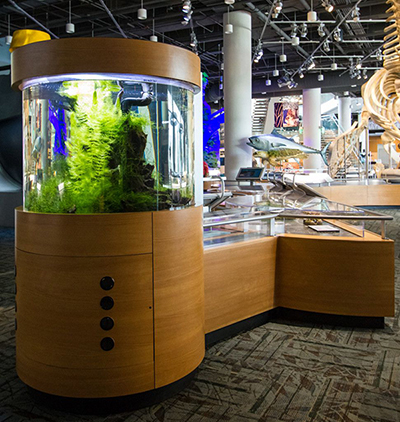
Nature Exploration Center
Notes - This building contains the bulk of the exhibits and live animals, and is more of a traditional museum compared to the research and lab-focused Nature Research Center.
1st Floor - Coastal North Carolina
Notes - This is the only exhibit with live animals on the first floor. Animals are grouped by exhibit.
Notes - This exhibit can be viewed from an overlook on the third floor. Animals are grouped by exhibit.
Notes - This exhibit is thematically connected to the Mountains to the Sea exhibit on the 2nd floor, but is otherwise a distinct gallery. All animals listed here are in separate habitats.
Notes - All animals listed here are in separate habitats.
Notes - The poison dart frog exhibit has been closed and covered up since at least the start of the pandemic, although the cover is just transparent enough that you can just barely see that exhibit is still furnished. The signage is also still present, but the species are not on display. I have no idea when they plan reopen this exhibit. Animals are grouped by exhibit.
Notes - This exhibit has been closed since the start of the pandemic and is not reopening until late May 2023. It is a walkthough exhibit and while closed, the animals are still on exhibit and you can see into the exhibit from the outside. This room contains free-flying butterflies, but they will be excluded because I have no reference for them. The others are partially from memory + what I am able to see. Animals are grouped by exhibit.
Notes - Unfortunately, the signage in this gallery is very poor and inconsistent. Species are not always specified, so what I have below is what was signed. All animals listed here are in separate habitats.
Notes - This building is connected to the Nature Exploration Center via a bridge accessed from the 2nd and 3rd floors. This building mainly focuses on research, and contains exhibits about how reserach is conducted, as well as labs that viewers can look into. The first floor is closed due to construction of the Dueling Dinosaurs exhibit, and this also resulted in the temporary closure of some hands-on exhibits, such as the Naturalist Center. For now, only the 2nd floor contains live animals. The first floor has a saltwater aquarium and at least one viviarium that are currently inaccessible. All animals listed here are in separate habitats with the exception of the millipede and snail.
The museum itself consists of 2 buildings in downtown Raleigh; the Nature Exploration Center and the Nature Research Center. Both buildings are connected by a bridge on the 2nd/3rd floors. The museum also operates several satellite facilities elsewhere in NC, including Prairie Ridge Ecostation, an outdoor park and preserve in west Raleigh, 2 facilities in Greenville and Whiteville, and an outdoor classroom and trails in Grifton, NC. My list will only cover the downtown facilities.
This list is based on my most recent visit on 02/21/2023. As with my other lists, it includes all animals signed and/or observed on public display and excludes off-show/ambassador-only animals. Only live animals are documented. Also, some species could not be cataloged due to ongoing exhibit closures/construction. I also compiled a list on iNaturalist which you can find here -> North Carolina Museum of Natural Sciences Species List.
Nature Exploration Center
Notes - This building contains the bulk of the exhibits and live animals, and is more of a traditional museum compared to the research and lab-focused Nature Research Center.
1st Floor - Coastal North Carolina
Notes - This is the only exhibit with live animals on the first floor. Animals are grouped by exhibit.
- Northern Brown Shrimp (Penaeus aztecus)
- Sailfin Molly (Poecilia latipinna)
- Striped Killifish (Fundulus majalis)
- Diamondback Terrapin (Malaclemys terrapin)
- Lookdown (Selene vomer)
- Spot Croaker (Leiostomus xanthurus)
- Spotfin Mojarra (Eucinostomus argenteus) (Signed as Silver Mojarra)
- Blackcheek Tonguefish (Symphurus plagiusa)
- Northern Seahorse (Hippocampus erectus) (Signed as Lined Seahorse)
- True Tulip (Fasciolaria tulipa)
- Belted Sandfish (Serranus subligarius)
- Brazilian Ocean Surgeonfish (Acanthurus bahianus)
- Fringed Filefish (Monacanthus ciliatus)
- Reef Butterflyfish (Chaetodon sedentarius)
Notes - This exhibit can be viewed from an overlook on the third floor. Animals are grouped by exhibit.
- Greater Siren (Siren lacertina)
- Least Killifish (Heterandria formosa)
- Bluegill (Lepomis macrochirus)
- Longnose Gar (Lepisosteus osseus)
- Warmouth (Lepomis gulosus)
- Common Snapping Turtle (Chelydra serpentina)
- Cope's Gray Treefrog (Hyla chrysoscelis) (Unsigned)
- Pine Woods Tree Frog (Hyla femoralis)
- Southern Toad (Anaxyrus terrestris)
- Squirrel Treefrog (Hyla squirella)
- Eastern Glass Lizard (Ophisaurus ventralis)
- Broken-striped Newt (Notophthalmus viridescens)
- Banded Sunfish (Enneacanthus obesus)
- Black-banded Sunfish (Enneacanthus chaetodon)
- Blue-spotted Sunfish (Enneacanthus gloriosus)
- Dusky Shiner (Notropis cummingsae)
- Cape Fear Shiner (Notropis mekistocholas)
- Fantail Darter (Etheostoma flabellare)
- Roanoke Darter (Percina roanoka)
- Speckled Killifish (Fundulus rathbuni)
- Tessellated Darter (Etheostoma olmstedi)
- Pumpkinseed (Lepomis gibbosus)
- Redbreast Sunfish (Lepomis auritus)
- Redear Sunfish (Lepomis microlophus)
- Mountain Redbelly Dace (Chrosomus oreas)
- Redlip Shiner (Notropis chiliticus)
- Rosyside Dace (Clinostomus funduloides)
- Western Blacknose Dace (Rhinichthys obtusus)
Notes - This exhibit is thematically connected to the Mountains to the Sea exhibit on the 2nd floor, but is otherwise a distinct gallery. All animals listed here are in separate habitats.
- Black-bellied Salamander (Desmognathus quadramaculatus) (Not recognized by iNaturalist)
- Bog Turtle (Glyptemys muhlenbergii)
- Hellbender (Cryptobranchus alleganiensis)
- Red Salamander (Pseudotriton ruber)
- Red-cheeked Salamander (Plethodon jordani) (Signed as Jordan's Salamander)
- Seal Salamander (Desmognathus monticola)
- Stripe-necked Musk Turtle (Sternotherus peltifer) (Signed as Sternotherus minor peltifer)
Notes - All animals listed here are in separate habitats.
- Carolina Pygmy Rattlesnake (Sistrurus miliarius)
- Corn Snake (Pantherophis guttatus) (Signed as Elaphe guttata)
- Eastern Copperhead (Agkistrodon contortrix)
- Eastern Diamondback Rattlesnake (Crotalus adamanteus)
- Eastern Hognose Snake (Heterodon platirhinos)
- Eastern Kingsnake (Lampropeltis getula)
- Eastern Ratsnake (Pantherophis alleghaniensis) (Signed as Elaphe Obsoleta)
- Northern Cottonmouth (Agkistrodon piscivorus)
- Northern Pine Snake (Pituophis melanoleucus)
- Plain-bellied Watersnake (Nerodia erythrogaster) (Signed as Red-bellied Watersnake)
- Rough Greensnake (Opheodrys aestivus)
- Timber Rattlesnake (Crotalus horridus)
Notes - The poison dart frog exhibit has been closed and covered up since at least the start of the pandemic, although the cover is just transparent enough that you can just barely see that exhibit is still furnished. The signage is also still present, but the species are not on display. I have no idea when they plan reopen this exhibit. Animals are grouped by exhibit.
- Golden Poison Dart Frog (Phyllobates terribilis)
- Imitating Poison Frog (Ranitomeya imitator) (Signed as Mimic Poison Frog)
- Yellow-headed Poison Dart Frog (Dendrobates leucomelas)
- Emerald Tree Boa (Corallus caninus)
- Amazonian Mata Mata (Chelus fimbriata) (Signed as Matamata Turtle)
- Acacia Ant (Pseudomyrmex ferrugineus)
Notes - This exhibit has been closed since the start of the pandemic and is not reopening until late May 2023. It is a walkthough exhibit and while closed, the animals are still on exhibit and you can see into the exhibit from the outside. This room contains free-flying butterflies, but they will be excluded because I have no reference for them. The others are partially from memory + what I am able to see. Animals are grouped by exhibit.
- South American Cichlid (Family Cichlidae) (Species not specified)
- Central American Wood Turtle (Rhinoclemmys pulcherrima) (Signed as Ornate Wood Turtle)
- Brazilian Black Tarantula (Grammostola pulchra) (Species not specified, listed only as Tarantula, but guides have specifically referred to it as such in the past).
- Central American Milksnake (Lampropeltis abnorma) (Signed as Milksnake, Lampropeltis triangulum. However, exhibit guides have confirmed it to be a Stuart's Milksnake in the past).
- Linnaeus's Two-toed Sloth (Choloepus didactylus)
Notes - Unfortunately, the signage in this gallery is very poor and inconsistent. Species are not always specified, so what I have below is what was signed. All animals listed here are in separate habitats.
- American Lobster (Homarus americanus) (Signed as Maine Lobster)
- Unspecified Cambarid Crayfish (Cambaridae)
- Caribbean Land Hermit Crab (Coenobita clypeatus) (Signed as Hermit Crab)
- Cecropia Moth (Hyalophora cecropia)
- Unspecified Cobweb Spider (Theridiidae) (Signed as Black Widow)
- Common Emperor Scorpion (Pandinus imperator)
- Dark Fishing Spider (Dolomedes tenebrosus)
- Unspecified Darkling Beetle (Tenebrionidae)
- Desert Ironclad Beetle (Asbolus verrucosus) (Signed as Blue Death Feigning Beetle)
- Eastern Hercules Beetle (Dynastes tityus)
- Giant Cave Cockroach (Blaberus giganteus)
- Giant Leaf Insect (Pulchriphyllium giganteum) (Signed as Phyllium giganteum)
- Giant Mealworm Beetle (Zophobas atratus) (Signed as Darkling Beetle)
- Greenhouse Camel Cricket (Tachycines asynamorus) (Signed as Asian Camel Cricket)
- House Centipede (Scutigera coleoptrata)
- Large Milkweed Bug (Oncopeltus fasciatus)
- Madagascar Hissing Cockroach (Gromphadorhina portentosa)
- Unspecified Millipede (Diplopoda)
- Unspecified Millipede (Sigmoria)
- Unspecified Periodical Cicada (Magicicada)
- Red Imported Fire Ant (Solenopsis invicta)
- Smoky Brown Cockroach (Periplaneta fuliginosa)
- Southern Two-striped Walkingstick (Anisomorpha buprestoides)
- Spicebush Swallowtail (Papilio troilus)
- Spiny Leaf insect (Extatosoma tiaratum) (Signed as Australian Stick Insect)
- Unspecified Tarantula (Theraphosidae)
Notes - This building is connected to the Nature Exploration Center via a bridge accessed from the 2nd and 3rd floors. This building mainly focuses on research, and contains exhibits about how reserach is conducted, as well as labs that viewers can look into. The first floor is closed due to construction of the Dueling Dinosaurs exhibit, and this also resulted in the temporary closure of some hands-on exhibits, such as the Naturalist Center. For now, only the 2nd floor contains live animals. The first floor has a saltwater aquarium and at least one viviarium that are currently inaccessible. All animals listed here are in separate habitats with the exception of the millipede and snail.
- McCord's box turtle (Cuora mccordi)
- Unspecified Millipede (Sigmoria)
- Unspecified Snail (Stylommatophora)
- Black Milksnake (Lampropeltis triangulum gaigeae) (Unrecognized by iNaturalist)
- Eastern Milksnake (Lampropeltis triangulum) (Signed as Lampropeltis triangulum triangulum)
- Red Milksnake (Lampropeltis triangulum syspila) (Unrecognized by iNaturalist)
- Scarlet Kingsnake (Lampropeltis elapsoides)
- Tamaulipan Milksnake (Lampropeltis annulata) (Signed as Mexican Milksnake, Lampropeltis triangulum annulata)
- Zebra Danio (Danio rerio) (Signed as Zebrafish)
- Unspecified Freshwater Mussel (Unionida)
- Fish - 33
- Reptiles - 27
- Insects - 17
- Amphibians - 14
- Arachnids - 5
- Centipedes and Millipedes - 4
- Crustaceans - 4
- Mollusks - 3
- Mammals - 1
Last edited:

 ). It's definitely staying on my possibilities list for the future.


 Pretty interesting to see that they have batesii as opposed to caninus - the latter is imported regularly at a few hundred dollars a piece, while the former has been closed to export for quite some time and runs $5,000+ for captive-bred individuals. With a trio of adult basins, they've got an easy $20,000 sitting in that display