Future of Zoos SA zoos (Speculation)

Add in some of the smaller cat species fishing cats ect

Yep, Fishing cat was in my list (as well as Clouded leopard). My personal preference would be Temminck’s golden cat, but I have to accept they’re gone and they’re never coming back to Australasian zoos.

With Hamilton Zoo planning to acquire Clouded leopard, it appears there’s regional interest in this species beyond the exisiting holder. Fishing cat are breeding poorly, but this could be assisted through off display exhibits such as those used at Melbourne Zoo. Perhaps a couple of breeding hubs, which disperse non-breeding Fishing cats to other regional holders.
 
Wow, 500 ha‽ Is it all one exhibit?

Wild Africa will have exhibits representing four national parks - Samburu, Chobe, Amboseli and Etosha. It’ll house multiple species including Southern white rhinoceros, Common hippopotamus, Cheetah and Spotted hyena.

https://www.zoossa.com.au/wp-content/uploads/2023/03/MSP_masterplan_addendum_2023.pdf

Some species e.g. Common hippopotamus will have to be held seperate; but I for one am excited for the potential of mixed species exhibits. Rhino and Cheetah would be an exciting combination and to my knowledge, only Hamilton Zoo have discussed this combination in the past.
 
Wild Africa will have exhibits representing four national parks - Samburu, Chobe, Amboseli and Etosha. It’ll house multiple species including Southern white rhinoceros, Common hippopotamus, Cheetah and Spotted hyena.

https://www.zoossa.com.au/wp-content/uploads/2023/03/MSP_masterplan_addendum_2023.pdf

Some species e.g. Common hippopotamus will have to be held seperate; but I for one am excited for the potential of mixed species exhibits. Rhino and Cheetah would be an exciting combination and to my knowledge, only Hamilton Zoo have discussed this combination in the past.
Interesting that they plan to mix Spotted Hyena too!

I can't wait to see how the Rhino/Cheetah mix pans out, although I'm sure both species will keep fair distance away from one another (the huge space they have will certainly help).

There's the potential to hold Common Hippo with hoofstock (like Nyala or Waterbuck); I'm not sure if that's something they would want to trial.
 
Interesting that they plan to mix Spotted Hyena too!

I can't wait to see how the Rhino/Cheetah mix pans out, although I'm sure both species will keep fair distance away from one another (the huge space they have will certainly help).

There's the potential to hold Common Hippo with hoofstock (like Nyala or Waterbuck); I'm not sure if that's something they would want to trial.

It’d be interesting to see if a Common hippopotamus/hoofstock mix could be achieved and while my instinct is to say no, it’s worth noting the exhibit will be larger than anything seen in the region to date.

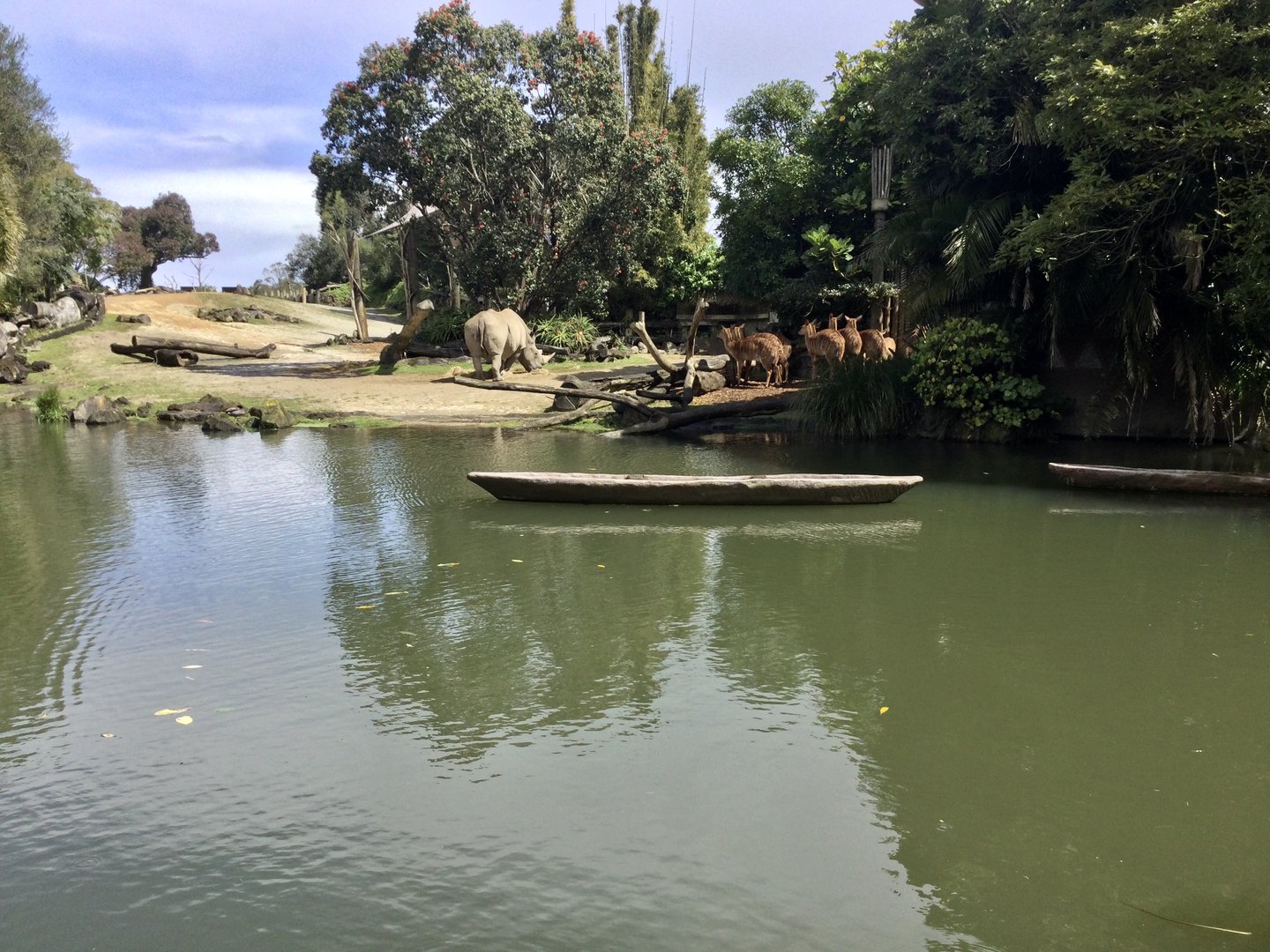
An interesting thing I’ve noticed on my last few visits to Auckland Zoo is the reluctance of the nyala to share space with the rhinos. On all of my recent visits, they’ve been huddled together away from the rhinos. With the birth of the latest calf, the rhinos have been substantially more active, running around the exhibit etc. which may have contributed to this.

If Monarto were to attempt it, filter gates would surely be advisable.

 
An interesting thing I’ve noticed on my last few visits to Auckland Zoo is the reluctance of the nyala to share space with the rhinos. On all of my recent visits, they’ve been huddled together away from the rhinos. With the birth of the latest calf, the rhinos have been substantially more active, running around the exhibit etc. which may have contributed to this.

If Monarto were to attempt it, filter gates would surely be advisable.

Sydney Zoo allows their Nyala to go between three exhibits: one with the rhino, one with the zebras and giraffes and a third exhibit in between the two which only nyala can access. This third exhibit is where they are the majority of the time.
 
Sydney Zoo allows their Nyala to go between three exhibits: one with the rhino, one with the zebras and giraffes and a third exhibit in between the two which only nyala can access. This third exhibit is where they are the majority of the time.

That’s a good set up where they have the choice of three exhibits. It appears the larger ungulates make them uncomfortable (unsurprising), so in the context of a larger exhibit, I’d expect to see them congregate at one end.

With the expansion of Auckland’s rhino herd to four rhinos, their nyala’s options are becoming increasingly limited as to where they can go to avoid them.
 
Let's not forget that the areas at the new Wild Africa are far far bigger than any city zoo paddocks so mixing animal species is going to be far greater chance of success than in any city zoo. :cool:
 
Expansion of Lion Facilities

One of the items in the masterplan that’s received little discussion is the expansion of the lion holding facilities. It appears this refers to an expansion of the off display dens; which although won’t be viewable by the public, represent an exciting development as the expansion of the pride is restricted by the capacity of the dens (noted by @Swanson02 to currently be 18-20 lions).

Monarto have two young male lions living in bachelor pair, who will likely transfer out next year; as well as the main pride, which numbers ten adults and a new litter of cubs. With plans to breed from Makena (a genetically valuable, but unrepresented lioness), this will take them close to that capacity.

I’m hopeful a multigenerational pride can be established long term. This depends on the personalities of the lions involved and regretfully wasn’t achievable with the arrival of the new males. In any case, there’s still potential to breed from the incumbent lionesses and generate a larger cohort of second generation offspring.
 
Common Hippopotamus Breeding

I’m hopeful we’ll hear news soon on the transfer of Brindabella (1990) and Pansy (2013) from Werribee. They were reportedly supposed to arrive in October, though that would be dependent on whether their facilities are up and running (which we’ve yet to hear confirmation of).

While the Hippopotamus IRA is long awaited, it’s interesting to note Monarto will benefit from its delay. Soon, they’ll have the only breeding bull in Australasia and without the ability to import more bulls, any male calves bred at Monarto will be lapped up by the other holders.

Once the IRA is finalised, demand for male offspring will dry up overnight and Monarto will likely have to accomodate their own surplus. Monarto would have surely considered this and will be making provisions to house surplus; but in the meantime, they can enjoy breeding a succession of calves with female calves building up numbers in the main pod. It’d be exciting to see a large pod considering the pairs and trios we’re used to seeing across the region’s zoos.
 
Common Hippopotamus Breeding

I’m hopeful we’ll hear news soon on the transfer of Brindabella (1990) and Pansy (2013) from Werribee. They were reportedly supposed to arrive in October, though that would be dependent on whether their facilities are up and running (which we’ve yet to hear confirmation of).

While the Hippopotamus IRA is long awaited, it’s interesting to note Monarto will benefit from its delay. Soon, they’ll have the only breeding bull in Australasia and without the ability to import more bulls, any male calves bred at Monarto will be lapped up by the other holders.

Once the IRA is finalised, demand for male offspring will dry up overnight and Monarto will likely have to accomodate their own surplus. Monarto would have surely considered this and will be making provisions to house surplus; but in the meantime, they can enjoy breeding a succession of calves with female calves building up numbers in the main pod. It’d be exciting to see a large pod considering the pairs and trios we’re used to seeing across the region’s zoos.
I am not so sure that any interest may dry up since there are now numerous regional zoos spread across the region. Remember the new Sydney zoo wanted them right from the beginning but none appeared available. Altina had also mentioned an interest in them on their own website. I also believe one zoo in the Northern Territory had expressed an interest as well. I also believe if there were calfs actually available there's possibly a handful that could potentially snap them up even the Australia zoo which already have large established dams near its African section and possibly even the National zoo might want to expand its African display with a hippo or two.
 
I am not so sure that any interest may dry up since there are now numerous regional zoos spread across the region. Remember the new Sydney zoo wanted them right from the beginning but none appeared available. Altina had also mentioned an interest in them on their own website. I also believe one zoo in the Northern Territory had expressed an interest as well. I also believe if there were calfs actually available there's possibly a handful that could potentially snap them up even the Australia zoo which already have large established dams near its African section and possibly even the National zoo might want to expand its African display with a hippo or two.

I think at most, we’ll see 1-2 additional holders come onboard over the next decade. Crocodylus had expressed an interest back in the 2000’s; but Altina Wildlife Park and Australia Zoo are stronger possibilities imo. Sydney Zoo no longer have the room to accomodate them based on their current layout; and the site of their planned exhibit would be shockingly small by current standards.

With regards to demand for Monarto calves, this will surely be reduced if Werribee/Dubbo undertake imports:

It wouldn’t surprise me to see Dubbo transfer out Cuddles, Kibibi and Kendi to one of these aforementioned additional holders if Dubbo are able to undertake an import of an unrelated pair. This would free up Dubbo to breed (genetically valuable) calves and provide a new holder with a cohesive grouping of three hippos (an exciting exhibit). It’s a win-win that makes even more sense (i.e. putting them in a non-breeding situation) when you consider Kani is extensively representing this particular line at Monarto.
 
I think at most, we’ll see 1-2 additional holders come onboard over the next decade. Crocodylus had expressed an interest back in the 2000’s; but Altina Wildlife Park and Australia Zoo are stronger possibilities imo. Sydney Zoo no longer have the room to accomodate them based on their current layout; and the site of their planned exhibit would be shockingly small by current standards.

With regards to demand for Monarto calves, this will surely be reduced if Werribee/Dubbo undertake imports:

It wouldn’t surprise me to see Dubbo transfer out Cuddles, Kibibi and Kendi to one of these aforementioned additional holders if Dubbo are able to undertake an import of an unrelated pair. This would free up Dubbo to breed (genetically valuable) calves and provide a new holder with a cohesive grouping of three hippos (an exciting exhibit). It’s a win-win that makes even more sense (i.e. putting them in a non-breeding situation) when you consider Kani is extensively representing this particular line at Monarto.
The win will come when the Importation of Hippos are allowed, then all holders can move forward.
There might just be more interest there with hippos than expected but because of the dismal picture within the region at this current time signs of interest are pointless.
 
The win will come when the Importation of Hippos are allowed, then all holders can move forward.
There might just be more interest there with hippos than expected but because of the dismal picture within the region at this current time signs of interest are pointless.

Importation will be for the good of the region genetically, but for now, the principal issue is supply. If zoos like Werribee had a mature bull on site, they could breed calves to supply additional holders. Whether those calves are inbred is besides the point (though my preference is to see imports undertaken).

With that in mind, regular breeding at Monarto could theoretically supply all zoos depending on the ambitions of the ZAA to import unrelated bloodlines. It’s presumably the goal (given the Hippopotamus IRA), but it wouldn’t surprise me to see receiving zoos take the easy route and acquire inbred stock from Monarto. Visitors will neither know or care whether the hippopotami they see are inbred.
 
For the people managing the regions Hippo population the genetics here on out is important in the long term for management of the species, As we all know currently only one bull is available in a inbred population, I am sure the people managing the hippos future are putting the future of them first as far as the genetics are concerned with getting new genes into the population first than supplying other potential holders with inbred stock.
 
For the people managing the regions Hippo population the genetics here on out is important in the long term for management of the species, As we all know currently only one bull is available in a inbred population, I am sure the people managing the hippos future are putting the future of them first as far as the genetics are concerned with getting new genes into the population first than supplying other potential holders with inbred stock.

I don’t disagree, but there’s still the matter of what to do with the existing inbred stock. Kibibi (2014) and Kendi (2017) could potentially live another 40 years. By transferring them (and their mother) to a new holder, that would free up space at Dubbo, who could then undertake an import from overseas. This would enable breeding from unrelated lines and improving the genetic diversity of the region.

New holders frequently acquire non-breeding surplus from within the region and if Dubbo undertake the import of new founders, they’d understandably want to benefit from that (i.e. breed). If the new holders receive hippos (albeit inbred surplus) at a fraction of the cost, they’d be doing the region a favour and gaining a new species. Everyone wins.
 
A couple of notes with regards to the 2023 master plan:

We now have confirmation Adelaide Zoo will be continuing with Giant pandas, with a new pair arriving after Wang Wang and Funi’s return to China (anticipated to be later this year). This confirms this exhibit will remain in place as per the masterplan.

The inclusion of Malayan tapir (and sun bears for that matter) was always a source of intrigue given they have one elderly animal and the species are poorly suited to the Australian climate. As reported this week in the Melbourne news thread, Adelaide Zoo are now planning to import a pair of Brazilian tapir.
 
The inclusion of Malayan tapir (and sun bears for that matter) was always a source of intrigue given they have one elderly animal and the species are poorly suited to the Australian climate.
If not Sun Bears you'd hope they'd at least consider another bear species like Sloth Bear.

Regionally, the Sun Bear population isn't looking in the best shape and there's nothing to suggest this won't change in years to come.

At least with Sloth Bears there's a sure surplus that could be provided from overseas, and they're still an Asian bear species that fits the conservation theming.
 
If not Sun Bears you'd hope they'd at least consider another bear species like Sloth Bear.

Regionally, the Sun Bear population isn't looking in the best shape and there's nothing to suggest this won't change in years to come.

At least with Sloth Bears there's a sure surplus that could be provided from overseas, and they're still an Asian bear species that fits the conservation theming.

I fully agree we’ve exhausted all available avenues for importing more sun bears and that long term, there’s little hope for establishing a viable population.

Potentially, Europe may be able to spare surplus females (given their unbalanced gender ratio); but with that we need to consider whether there’s any point if there’s little to no hope of sourcing males. Females can potentially live together, so having more females in Europe is by no means an issue for them.
 
Theoretically couldn't we get more sun bears the same way we got some of the current/past ones? From private farms in Asia. There could also be a decent number that we're rescued from farms and put in rehab/sanctuaries that surely they could draw from.

Tho I vaguely rember Steve saying that the region was working on it, so there is probably a lot more at play as to what the region wants and what will happen in the future. While sloth bears are a good alternative and the shaggy Coates may make them more interesting to visitors.
 
Back
Top