Brookfield Zoo Master Plan Discussion and Speculation

Regarding useable space, there may be a little more than meets the eye. If what I've been hearing is correct, the inhabitants of the current macropod yards are all being relocated to the North side of the Australia building as part of the upcoming revamp. That will free up those enclosures for development. Additionally, that area North of Habitat Africa: The Forest can absolutely be used for this project as well. If the zoo is developing forested areas on the furthest west side of the property for a new Asia exhibit down the line, there's clearly nothing stopping them for utilizing that forested space for this project.

Also, an earlier commenter mentioned that they wouldn't be surprised if few or no antelope were to be included in the exhibit. Rest assured there will absolutely be at least several antelope present. At minimum I definitely think the nyala will be sticking around considering how rapidly the herd has grown recently. Others I'm anticipating it will all be species do well in mixed habitats: kudu, impala, waterbuck, springbok, etc, all seem like good candidates. My personal hope would be wildebeest.

I think the most effective use of space would be to create several mixed-species savanna enclosures instead of just one big one, which I hope the zoo plans on doing. That gives more flexibility if certain inhabitants don't get along with others and in general means more species can be included comfortably.
 
I left the space above The Forest open because I think the wooded aspect of that exhibit needs to be preserved, which will limit how much spsce can be used, and because I hope if the area is used it is put towards a forest species. It is definitely useable though!

From that list, I'd say 4-5 acres for elephants is what's to be expected. However, the same can't be said for giraffes, hippos and/or rhinos. Personally, I'd love something like Cheyenne's Water's Edge: Africa for hippos, but that's completely different in size to a hippoquarium type exhibit. Toledo, Columbus and Cincinnati all have "savannas" but are all wildly different sizes with different arrays of species.

So the best comparison for the zoo's current ambition that I could find would probably be Birmingham's Trails of Africa which comes in at 14 acres (609,840sqft.) I think a more harmonious exhibit like this (or Denver's Elephant Passage but with an African twist) should be the goal.
Elephant Passage with a twist is what I would want - indeed when I saw the exhibit, my first modern elephant complex, I was almost overwhelmed by the thought Brookfield could pull off the sane thing. Rotating species is also a great strategy, imo, and one I'd like Brookfield to borrow from Denver.

I'm reluctant to engage in any further speculation about pachyderms though. I think I was overly optimistic in my previous posts.

Thank you and Persephone both for analyzing the acreage. I had no idea you could finf thst out in Maps.

Regarding useable space, there may be a little more than meets the eye. If what I've been hearing is correct, the inhabitants of the current macropod yards are all being relocated to the North side of the Australia building as part of the upcoming revamp. That will free up those enclosures for development. Additionally, that area North of Habitat Africa: The Forest can absolutely be used for this project as well. If the zoo is developing forested areas on the furthest west side of the property for a new Asia exhibit down the line, there's clearly nothing stopping them for utilizing that forested space for this project.

Also, an earlier commenter mentioned that they wouldn't be surprised if few or no antelope were to be included in the exhibit. Rest assured there will absolutely be at least several antelope present. At minimum I definitely think the nyala will be sticking around considering how rapidly the herd has grown recently. Others I'm anticipating it will all be species do well in mixed habitats: kudu, impala, waterbuck, springbok, etc, all seem like good candidates. My personal hope would be wildebeest.

I think the most effective use of space would be to create several mixed-species savanna enclosures instead of just one big one, which I hope the zoo plans on doing. That gives more flexibility if certain inhabitants don't get along with others and in general means more species can be included comfortably.
That's interesting if they want to move everything north of Australia and that really opens up the space for Africa to be neater and more organized, although given the entrances to the building are on the north it does feel complicated and reduces the available area for that development.

I would love to see any of those hoofstock!

I agree on creating multiple mixed and/or rotating spaces for sure. Milwaukee has maintained two mixed Africa exhibits for many years on a small footprint. Combine that with modern, rotating Denver's Passage and Predators complexes and I think you can already see a lot of options, before we even look to major Savanna complexes... the potential is there!
 
I've attached the MyMaps view of the same 13.5 acres (588,060sqft). I don't see any reason why they couldn't stretch this area north of Habitat Africa! The Forest, but I decided to just stick with the paths in place now, as I'm assuming @Persephone did.

I tried finding the sizes of modern exhibits for the megafauna being discussed, specifically elephants. Some of these exhibits in include other species and visitor spaces, so it's very hard to narrow down what space the elephants specifically have without drawing maps all day.
  • Cincinnati's new Elephant Trek will be 5 acres (217,800sqft)
  • San Diego's Elephant Odyssey is listed as 3 acres of indoor/outdoor for elephants (130,680sqft)
  • Cleveland's Elephant Crossing is listed as 5 acres (217,800sqft)
  • Henry Doorly's Elephant Habitat is listed as 4 acres outdoor plus ~.5 acres indoor (196,020sqft total).
From that list, I'd say 4-5 acres for elephants is what's to be expected. However, the same can't be said for giraffes, hippos and/or rhinos. Personally, I'd love something like Cheyenne's Water's Edge: Africa for hippos, but that's completely different in size to a hippoquarium type exhibit. Toledo, Columbus and Cincinnati all have "savannas" but are all wildly different sizes with different arrays of species.

So the best comparison for the zoo's current ambition that I could find would probably be Birmingham's Trails of Africa which comes in at 14 acres (609,840sqft.) I think a more harmonious exhibit like this (or Denver's Elephant Passage but with an African twist) should be the goal.
What app did you use to draw that? That looks really cool
 
What app did you use to draw that? That looks really cool

There’s an application in Google Drive called MyMaps. It lets you measure / draw things over Google Maps, including the satellite view map. I use a map to keep track of my zoo progress since I can visualize where all the pins are on one map that can be endlessly and easily altered.
 
I have no worries about the possible savannah expansion whatsoever. Although some worries about the Grevy’s Zebra are definitely warranted due to the animal’s usual temperament. Maybe seclude them to their own personal section while the other species can can coexist can easily be mixed.

Hippo and elephant wise, they’ll have to be creative and engaging with the space so both species enjoy their time there. If carefully planned or done correctly so they can do better than the past. Go big or go home. Other zoos proven that it is possible. The underwater viewing for the hippos has to be good while given them the large enough swimming space. The elephants definitely need to be accommodated for a decent herd as they are very social and got quite the appetite. Not like the embarrassingly small space in the past. We can only see whenever the public master plan goes live.
 
I have no worries about the possible savannah expansion whatsoever. Although some worries about the Grevy’s Zebra are definitely warranted due to the animal’s usual temperament. Maybe seclude them to their own personal section while the other species can can coexist can easily be mixed.

Hippo and elephant wise, they’ll have to be creative and engaging with the space so both species enjoy their time there. If carefully planned or done correctly so they can do better than the past. Go big or go home. Other zoos proven that it is possible. The underwater viewing for the hippos has to be good while given them the large enough swimming space. The elephants definitely need to be accommodated for a decent herd as they are very social and got quite the appetite. Not like the embarrassingly small space in the past. We can only see whenever the public master plan goes live.
I really, really hope they don't take the Hippoquarium route. None of those exhibits are really particularly popular or well-done; Cincinnati and Milwaukee recieve more flack for them than the exhibits they replaced. I would rather Brookfield phase them out entirely than make such a foolish move. I'm softening on my previous support for bringing back large pachyderms.
 
I really, really hope they don't take the Hippoquarium route. None of those exhibits are really particularly popular or well-done; Cincinnati and Milwaukee recieve more flack for them than the exhibits they replaced. I would rather Brookfield phase them out entirely than make such a foolish move. I'm softening on my previous support for bringing back large pachyderms.
Cincinnati maybe - but Milwaukee's new exhibit is obviously much better than what was there before. Sure, people can complain there isn't enough land space (and they're right), but despite that Milwaukee still made a huge improvement.
 
Cincinnati maybe - but Milwaukee's new exhibit is obviously much better than what was there before. Sure, people can complain there isn't enough land space (and they're right), but despite that Milwaukee still made a huge improvement.
This is the first I'm hearing of it as an improvement. I never heard complaining about the old hippo habitat.
 
September has arrived and if what we’ve been hearing is true, by the end of the month we should finally know everything planned for the future of Brookfield Zoo as part of the Next Century Campaign Master Plan.
Yeah, about that...

Obviously September came and went and alas, the master plan is still locked away in the BZ vault. Now pegged for release in early 2024, we are no more than two to three months away from finally getting a full look at what the future holds, maybe as early as next month if we're being optimistic. Before the hype train reaches its final destination, I want to ask one last speculative question regarding the zoo's future. One of the biggest surprises that has been revealed so far is that the zoo will be expanding westward to create new exhibits on an undeveloped portion of property. There are limitless possibilities for the space, but one has already been confirmed: a new Asia exhibit.

"Instead of looking at a tiger and a leopard in the grottoes like we currently have, you're looking at a tiger and a leopard out in the middle of a forest that would be very similar to how you might see them in their natural regions."

That's what Dr. Mike had to say about the new area and I for one am very interested. If a majority of this undeveloped land goes towards this new Asia exhibit area, it could be a potentially massive undertaking. I sincerely hope they'll put effort into blending the existing forest into the new cat enclosures, rivaling some of the best in the country like Bronx and Minnesota. Perhaps the sloth bears will also move down here. Additional hoostock will probably come in as well; Takin seem like the obvious choice and would be terrific, but any additional mountain ungulates would be even more wonderful. Markhor and goral seem like the most realistic possibilities and could both be mixed with takin if the space is large enough. It would also make sense to reacquire red pandas and place them here. My wishlist item would probably be a new exhibit for the zoos Chinese giant salamanders. They are in need of a new exhibit area after outgrowing their previous accommodation and would add further biodiversity to the complex. A pavilion like Prague would be amazing and could similarly include a few other Asian reptile species. I don't think it's likely, but certainly not impossible.

Beyond Asia, having this undeveloped land available is a complete game-changer when it comes to envisioning the zoo's future. When looking at the current site and theorizing what could go where, I thought something was gonna have to give. It seemed all too likely that the tapirs and capybara would be forced out of the collection once the pachyderm house was renovated, but maybe they can move out here to a new South American exhibit area. Maybe a Madagascar exhibit can be added and the zoo can expand their collection of lemurs, or perhaps a large walkthrough aviary can stretch over a massive amount of space. It's a completely clean slate and utilizing the forest area to its fullest potential could make for a brilliant experience.

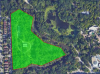
So I'd like to ask the community; how do you want to see this land utilized? Any ideas for what this Asia exhibit will become? To provide a better visual I outlined the potential area for development below (approx. 12 acres)

Screen Shot 2023-12-08 at 10.57.24 PM.png
 

Attachments

  • Screen Shot 2023-12-08 at 10.57.24 PM.png
    Screen Shot 2023-12-08 at 10.57.24 PM.png
    622.2 KB · Views: 147
Pachy's outlined some tantalizing possibilities already!

The Asia Steppe region is a great choice for the zoo and plays into both the strengths of the area and something discussed in the older master plan. A new exhibit for Chinese salamanders in the area is a really smart choice, and I think another 'biodiversity' building with some smaller species would make a good anchor. I'll mostly avoid tropical species, but I think Komodo Dragon would still be a worthy choice, and maybe they could become involved with a rarer Asian pit viper species. An aviary with red-crowned crane would also add to the area and is realistic as well. I personally think Japanese macaque would be a really great inclusion - the zoo could use another primate habitat and they would add another winter-hardy and active species that fits the general region. If Siberian Ibex weren't virtually gone from the US, I'd suggest including them, since the zoo had such a long breeding history, but I recognize the ship has sailed there.

Of course, Asia is such a massive region it's tempting to suggest devoting the entire space towards it - a Gobi exhibit or more animals from southern Asia would also be very appealing. The latter is almost certainly too ambitious, although I could see a small Gobi setup similar to Denver still working out without taking a great deal of space, especially if the zoo uses the existing hoofstock areas in the upcoming Africa expansion.

Since the northern area - where the hoofstock yards stretch close to the wilderness section - will possibly connect to the Africa expansion, it could be used for an additional, smaller Africa exhibit as a bridge between sections. My dream exhibit has often been a new African desert exhibit, but I would love to see a new Madagascar exhibit as suggested either! The zoo's lemur collection has shrank considerably over the years but they're very charming animals with many species in need of holders. Even a small building with chameleon, boa, and a couple lemurs would be much appreciated.

I'm hesitant to think too much about South America, but with South American Marketplace in the southeast it would make a lot of sense to explore it in that area. Even a single mixed exhibit with tapir and capybara, and perhaps rhea, would be welcome, and another fairly simple option would be new, large aviaries for toucans, sereima, macaws and Harpy Eagle (which are already in the collection but not on display) - although the zoo has invested in these species recently, this would be a chance to give them naturalistic display homes. I'm tempted to imagine a complex beyond that but perhaps it's best not to get too ambitious as I often do.
 
I know there have been rumors about the return of elephants in this masterplan, I wonder if given that a large Asian complex is in the works they'll be Asian elephants instead of African. The latter would likely be easier to acquire, but if Asia is a new direction the zoo is taking they may very well opt for the former.

That said, if tiger/leopard/snow leopard/sloth bear all move to Asia, then I'd hope the lions also move to Africa so their old grottoes can be repurposed for small carnivores. Bush dogs would be awesome (but require an import), but really any smaller species would be neat to highlight.
 
I've never been to the Brookfield Zoo, but some of these ideas caught my eye.

1. Isn't the Taxonomic Advisory Group recommending a decrease in size of the Sichuan takin program? Gorals also seem kind of unrealistic given that the population isn't fairing to well. Perhaps one or two large Asian deer species could be incorporated amongst the more popular Asian animals instead.
2. Indian rhinoceroses might not be the best choice when the zoo already has black rhinoceroses, the species that more zoos need to be focusing on as of late. Two species isn't really necessary, especially if elephants are being considered. I think @Neil chace's idea about Asian elephants is fantastic given the problems with the current population, but those reasons for holding Asian elephants could also be seen as reasons to not do so.
3. Could the capybaras be worked into Tropic World? I know there is (or was) an anteater living in that building.
 
Capybara’s are very easy to keep, they could find space for them anywhere in the zoo.
They’re also not a needle mover with the public; most institutions could lose them with little notice.
 
maybe they could become involved with a rarer Asian pit viper species.
Not exactly super rare, but Mangshan mountain vipers are among my most desired reptiles I want to see at the zoo. I'd love if they could get featured here one way or another, or in the one of the reptile/bird houses.
I know there have been rumors about the return of elephants in this masterplan, I wonder if given that a large Asian complex is in the works they'll be Asian elephants instead of African. The latter would likely be easier to acquire, but if Asia is a new direction the zoo is taking they may very well opt for the former.
That would be quite a shocker, but in theory it's possible. Utilizing all that forest for elephants could make for an incredible exhibit complex. I think it all depends on how much of the space is being devoted to Asia and not to other potential exhibit areas.
Capybara’s are very easy to keep, they could find space for them anywhere in the zoo.
They’re also not a needle mover with the public; most institutions could lose them with little notice.
3. Could the capybaras be worked into Tropic World? I know there is (or was) an anteater living in that building.
Considering the zoo is moving away from keeping large terrestrial mammals indoors permanently, I can't see them moving a species which is already displayed outdoors into Tropic World. Theoretically they could be placed in various areas in the zoo, but options were limited before realizing the possibility of undeveloped land. With Asia being built elsewhere, maybe a South American area can be built where the current big cat grottos are and they could move there.
Harpy Eagle (which are already in the collection but not on display)
Is this still the case? The only thing I can find is this discussion from 2022 containing a picture from 2015.
Harpy eagles were only held from 2015-2016 as part of the Festival of Flight bird show. Most if not all the birds used in the show were owned by Natural Encounters Inc. and returned to them once the show stopped running.
 
One other thing I want to mention regarding elephants: do keep in mind that a potential elephant complex is still several years down the line at least. It's true that Asian elephants have bred better better over the last few years, but the US African elephant population is in the midst of a pretty significant upswing right now. Chances are there will be additional individuals available by the time the zoo is preparing to begin development of a new complex, so I wouldn't read into that as indication they'll be going with one or the other.
 
Anything can happen but I'm doubtful we will see the western end of the zoo that is currently mostly forested developed into exhibits to the extent that folks on here are discussing. Full disclosure I work for the Forest Preserves of Cook County which owns all of the land the zoo is on. I'm the ecologist for this region and I would normally be consulted about developments in the "natural areas" within the zoo grounds. For example I advised when MWRD needed access to sewer lines for repairs in this western section of the zoo. I also advised when Riverside Brookfield High School wanted to convert a section of the zoo grounds in the far south east to a baseball field. We and the zoo rejected the plan because it would have obliterated a nice remnant oak woodland.

As far as I know the zoo has not approached the Forest Preserves about any sort of development in this area. Much of this land is floodplain, that regularly floods and would be problematic for exhibits and public access and amenities. If it was built up it would increase cost and lead to compensatory storage issues and need approval from the US Army Corps of Engineers. To the extent the zoo uses wooded areas on the west I would expect it to be in areas east of Salt Creek perhaps by Swan Lake and Dragonfly Marsh.

My dream exhibit would be a recreation of the Amur River region which is home to Amur tigers and leopards. I would love to see a large outdoor naturalist emersion exhibit that includes those two species as well as prey species like wild boar, red deer, moose, sika deer, musk deer, etc. and perhaps other predator species like Asiatic brown and black bears.
 
Back
Top