Philippine eagle spotted above the Alpes

Philipine eagle

Well-Known Member
15+ year member
Premium Member
For the first time in ages a monkey-eating eagle, searching for bearded dragons, suricates and red-necked wallaby, has been seen flying over some Alpine countries. Observers said it looked well-fed. It is unknown where the bird came from.
 
For the first time in ages a monkey-eating eagle, searching for bearded dragons, suricates and red-necked wallaby, has been seen flying over some Alpine countries. Observers said it looked well-fed. It is unknown where the bird came from.

In other words, you're having a Swiss and Austrian trip around some zoos :p
 
After my 2022 zoo trip thoughout southern Germany, I continued travelling this year in that area and decided to visit a few Alpine countries.

17 days, 44 animal locations and 5 art museums: that was the objective. Sounds like madness for many people (including my friends and family). Perhaps a too busy schedule for many of you too, but in reality this is pretty ok. It's mainly a matter of being able to start in the morning on time, but during the day there is enough margin. Travelling alone definitely has its advantages in that respect. And on the few really busy days, good preparation pays off: on such days I never waste much time on suricates, domesticated animals or lorikeet walk throughs.

To avoid the summer heat waves, I decided to make the trip in September. That was seriously disappointing: over 38° in Vienna
 
Day 1 #1 Tierpark Stadt Haag


After an 1150-km drive while listening to Kraftwork's 'Autobahn' and the almost incantatory 'It's a fast-driving rave up with the Dandy Warhols', I arrived on a sunny morning at the first stop of this trip: this relatively unknown zoo is located in the rolling countryside near the tiny medieval town of Haag.

Even on a Thursday afternoon in september, there were quite a few cars in the car park. I later understood that summer holidays in some Austrian regions lasted until 10 september.
upload_2023-12-12_8-24-31.png

There are big cats and another 75 native and domestic animal species in this 14-hectare zoo that opened its doors in 1973 on the grounds of Salaberg Castle.


The zoo lies in a valley with steep forested hills on both sides. Each hill has a circular walk with all the cats on one side and mountain goats, deer and exotic zebras on the other.

There's a small monkey house with Barbary macaques and Hamadryan baboons.
upload_2023-12-12_8-47-24.png
Monkeyhouse

The zoo has good enclosures for African lion, pine marten and lot’s of ungulates. The cages for leopards, mountain lion and Siberian tiger are rather spacious and well equipped, I espcially liked the fact that each feline species has multiple (at least 2) enclosures, so separation between sexes for these solitary animals is possible.
upload_2023-12-12_8-28-9.png
North Chinese Leopard
upload_2023-12-12_8-49-53.png
Siberian tiger

The multi-species enclosures for European brown bear and wolves are as recent as 2023 and are very good. The old bear pit has been integraded in the extended enclosures on the lower slopes of the hillside. These enclosures are well vegetated an provide everything the animals need.

upload_2023-12-12_8-42-10.png
Brown bear and Eurasian wolves

Heat-sensitive species are rare here: zebra, crowned crane, meerkat, nilgai, flamingo and to some extent lion. All other species can easily tolerate cold weather.


Many of the enclosures have a vantage point on top of the animals' night quarters. It is an efficient and cost-friendly way of building.

upload_2023-12-12_8-41-1.png
Lion building & viewing point

Birds are not a strong point here: a few owls and ducks, apart from the grey-crowned cranes and emus.

I thought Tierpark Stadt Haag was an excellent start for a zoo tour and it gave me instant happiness after 12 hrs driving. It has good quality enclosures, lies in a wonderful countryside setting and it has some interesting species, like the North Chinese leopard, which seems to me slowly become rarer nowadays.


An hour and a half away lies a completely different, really crazy place.
 

Attachments

  • upload_2023-12-12_8-24-31.png
    upload_2023-12-12_8-24-31.png
    1.7 MB · Views: 508
  • upload_2023-12-12_8-28-9.png
    upload_2023-12-12_8-28-9.png
    1.7 MB · Views: 506
  • MixCollage-08-Nov-2023-04-55-PM-6636.jpg
    MixCollage-08-Nov-2023-04-55-PM-6636.jpg
    225.3 KB · Views: 16
  • upload_2023-12-12_8-41-1.png
    upload_2023-12-12_8-41-1.png
    1.4 MB · Views: 511
  • upload_2023-12-12_8-42-10.png
    upload_2023-12-12_8-42-10.png
    1.8 MB · Views: 508
  • upload_2023-12-12_8-47-24.png
    upload_2023-12-12_8-47-24.png
    1 MB · Views: 506
  • upload_2023-12-12_8-49-53.png
    upload_2023-12-12_8-49-53.png
    1.6 MB · Views: 499
Day 1 #2 Weisser Zoo und Kameltheater – Kernhof

This is such a weird place.

While travelling, I never have the aspiration to necessarily see all the wildparks in the area or to visit the weirdest locations as well. The consideration is always whether there is something to see that interests me. These can be species, rare or not, but also brand new enclosures or just very old ones. Shows or circus rides certainly don't do it for me.

The name of this place in the Gutenstein Alps certainly did not appeal to me. However, the emphasis for the white theme here is still somewhat on animals that are naturally white (tigers excepted): snow leopards, alpacas, snowy owls and black and white varis. In addition, the collection as a whole is quite interesting: lots of small carnivores, some lemurs, even Chinese dholes and African civet cats, and that was what finally persuaded me.

The zoo is hidden behind a row of houses along the only road in this village. I arrived only an hour before closing time and together with some other visitors we were sternly reminded that the zoo is open until 4pm and not a minute later. And that no one should even think about paying by bank card.

I was dreading a Rockhausen 2 scenario but it certainly wasn't that bad.

This zoo is a collection of ideas, finds at flea markets, statements on signs, etc. You know the drill: everywhere there are ethnic objects that want to point out to the ignorant visitor where the animal lives, and the result is an cacophonous mix of warning signs, arrows, prohibitions and commandments.

upload_2023-12-13_18-16-22.png

They have a camel theatre here, which is what the name says: a show with camels doing tricks, to accompanying music and fireworks. And there is equally a bear theatre with mechanical toy bear figurines spinning all sorts of rounds, also to accompanying music. I'm really not making it up. Of course, I did not attend these shows - they did not take place during the week, by the way - but small children might like this.

On site, I found that most of the enclosures were passable. Many of the enclosures are spacious, well structured and equipped with everything the animal needs (snow leopard, lynx, serval, ibex), even if the constructions are sometimes very bizarre (tayra) or there are too many of them (caracal). The cages for the clouded leopards and North China leopards are far too small and can be seen from all sides, but I do appreciate that the animals have climbing opportunities. With the weasel cats, giant anteaters and lemurs, among others, it is really below par.

upload_2023-12-13_18-23-44.jpeg

upload_2023-12-13_18-16-57.png
Clouded leopard enclosure

You often have to use your imagination to look through the clutter and determine that it is just not as bad as the first sight suggests. In any case, it often looks like a real roadside zoo here, I think @snowleopard would adore this place.

But it’s the so-called theming and constant warnings that getting my irritation started. This place has completely lost it. It has a Belize Casa with South-American specialities, El Castilllo del tayras, a Little Tibet, Karakal Lodge, a Republic der Affen (barbary macaque), Cloudy-Land (clouded leopard), Himalaya-Show, a Little America (coatis) and ‘Das Reich der weissen Tiger. There’s even a ‘Welt der Steine’, which is in fact just a sandbox with stones from all over the world.

upload_2023-12-13_18-17-51.png
Snowleopard enclosure, Little Tibet and Himalaya-Show

I mean, if you do over-theming, do it ‘good’: In Pairi Daiza, with its over-themed fairy tale worlds, you can still see an idea no matter how absurd it was in Eric Domb's mind, in Kernhof you only see gathering instincts in all sorts of way.

The zoo is packed with the strangest structures, with climbing towers for tyaras and clouded leopards, with peculiar roof structures for leopards or weasel cats. With Buddist temples and native American totem poles.

upload_2023-12-13_18-18-51.png
Tayra tower

To love Der Weissen Zoo, you have to be able to see through the kitsch and clutter (or just love it, of course). It all depends on the purpose of your visit, but both species hunters and visitors with children can have a nice afternoon here. All in all, it looks more like a hobby garden that has got out of hand. In fact, it is just ugly here, but the views to the surroundings are beautiful. Good points: I didn't immediately see any unhealthy animals and all the enclosures were clean and provided by all essentials to the animal natural behavior: climbing structures, hiding places, running water, etc
 

Attachments

  • upload_2023-12-13_18-16-22.png
    upload_2023-12-13_18-16-22.png
    986.8 KB · Views: 477
  • upload_2023-12-13_18-16-57.png
    upload_2023-12-13_18-16-57.png
    1 MB · Views: 467
  • upload_2023-12-13_18-17-51.png
    upload_2023-12-13_18-17-51.png
    1.5 MB · Views: 489
  • upload_2023-12-13_18-18-51.png
    upload_2023-12-13_18-18-51.png
    1.1 MB · Views: 475
  • upload_2023-12-13_18-23-44.jpeg
    upload_2023-12-13_18-23-44.jpeg
    326.7 KB · Views: 459
Kernhof is by far the weirdest zoo in Austria. I'm glad to see a review here, which i can fully understand.

If you would have stayed longer, you would have seen some other strange things. Like putting a coati out of the exhibit, so that all children can lift it up one time.

One more thing about the zoo. It is also well known for allowing sponsers and people who adopt animals to pet tiger or leopard cubs.
 
I'm really enjoying this thread and I'm eagerly awaiting each new zoo review. The Tayra Tower and Camel Theater at the last little zoo are interesting and hilarious. Keep the great reviews coming!
 
I ended a long but wonderful first day at the Kunsthistorisches Museum in Vienna, which has a late-night opening on Thursdays. Besides animals and zoos, I have a few other interests that I try to take with me on trips as much as possible: visiting old football grounds and art museums. There are only 42 known paintings by Pieter Bruegel the Elder in the world, and 12 of them hang in this museum. Somehow I have the aspiration to see all the paintings by this phenomenal Flemish painter in my lifetime, which is not entirey impossible (as only 1 is in private possession). Also here are some fantastic paintings by Arcimboldo, an Italian Renaissance painter known for his portraits with vegetables, fruit and fish, and the masterpiece 'Portrait of Cardinal Albergati' by the Flemish Primitive Jan Van Eyck.


Day 2 # 3 Schönbrunn Tiergarten


No need to introduce Schönbrunn Tiergarten here.
It’s were the birth of the modern zoo took place, in 1752. The Scala of Milane had to be built, and so was the Brandenburger tor, the White House, the Arc de Triomphe and Shiraz’ Arg of Karim Kahn. However, it took until 1788 before ‘properly dressed visitors’ were allowed to visit the zoo.


This place is packed with atmosphere. It has a large collection but like any other zoo it has also some weak points: tropical bovids and small felines are absent, while the collection of big cats and primates isn’t exceptional. And if you don't like tropical songbirds, you might also find the bird collection only mediocre.
But with koala, giant panda, elephant, lions & tigers, rhino, polar bear there’re a lot of ABC animals here, what explains the nr. 1 ranking in Sheridan’s listings It’s also good on bats but these creatures arn’t the best visible.

I wonder how visitors who are not so interested in the historical context experience this zoo. There’re for many species far better and larger enclosures in more modern zoos than here.

The baroque core of the zoo is a few steps from the main entrance.. In a geometric pattern, 12 (not coincidentally the same number as the zodiac) buildings and enclosures are arranged in a circle around the Kaiserspavillion. This graceful octagonal building, which has served as a restaurant since 1949, was completed in 1759 and was used as a breakfast and relaxation pavilion for the imperial family. It symbolises the emperor's omnipotence over humans and animals. This is the most formal part of the zoo, with stately avenues and flowerbeds. Behind this core are other buildings, connected by stately squares, from the same period, giving this entire western part of the zoo an exceptional architectural appearance.


I will not discuss the entire zoo here, everyone here knows this zoo and some a lot better than I do. In addition, the zoo has a fantastic website where, via an interactive map or simply by building or animal group, you can consult a species list of each location.

A few highlights:

The Baroque core is an absolute eye-catcher with all the buildings having been meticulously renovated and sometimes extended in a way invisible from the Emperor's Pavilion. The 2017 modern winter stable for giraffes, with its glass roof with photovoltaic cells (which store heat under the floor and is gradually released at night) is the perfect example of this.

Apart from the aquarium and reptile house, which I didn't find all that fantastic, this western corner of the zoo houses most of the bird collection. The eye-catcher here is the Bird House, which with its 2 themed halls (African savannah and South American rainforest) will delight the bird lovers among us. Except for the two jassana species (unfortunately deceased in late 2022), I was able to see all species, including the very active blue-backed manakins. The building has no outdoor cages, but there are modern annexes where sliding doors that can be opened in warm weather. I’ve spent a whole hour in both rooms. Outside are 2 stately aviaries for waldrapp ibis and Egyptian vultures.
upload_2023-12-18_16-25-35.jpeg

The elephant house cannot stand comparison with more recent elephant enclosures in other European zoos. But it is only a few steps to a beautiful historic building, the Monkey House that dates back to 1841. After the departure of the great apes, it was brilliantly restored: inside, large light-rich enclosures for no more than six species were created, with great respect for the historical architectural heritage. The latter also has a downside: while the outdoor cages fit nicely with the building, they could have been larger. Inside, on the first floor we find an elegant mezzanine used as an exhibition space. The stars of this building are the western colobus monkeys, which have a winter enclosure and an outdoor cage next to the indoor enclosure.

upload_2023-12-18_16-27-1.jpeg

The visitor trail then leads steeply up a wooded hill past Arctic wolves, fairy aviaries for owls and ravens and past Euro-Asian lynxes to the Tirolerhof. Romantic visitors will find a nice spot here for coffee and cake in the artisanal farm shop. A beautiful tree and nature learning path with stunning views over the lower garden and parts of Vienna, leads past open-air terrariums and aquariums to a series of buildings that make it clear that Schonbrunn is not only locked in its rich history.


The 1100 sq m Rainforest house is built against the hill and depicts a Southeast Asian mountain rainforest. The lower section is currently not accessible due to long-term renovation work. Upstairs, a terraced gallery runs the full width of the building. It gives an excellent view of the canopy and the animals that live there: kalongs, pigeons, oriental spectacled birds, blue-crowned parrot, beautiful fruit dove, white-breasted wood swallow, etc. Too bad I could not visit the ground floor, in view of the pheasant dove and blue-winged pitta. But even having seen only half of the building, I found it to be one of the better rainforest halls : the elegant roof structure that falls down from the hill, as it were, the depth effect from the upper terraces, the focus on reptiles and insects and the wonderful collection of birds make this building, which was created on the occasion of the zoo's 250th anniversary, a wonderful place.
upload_2023-12-18_16-28-7.jpeg

Next to the rainforest house is a series of buildings focused on animals that live in or around the sea: polar bears, penguins, maned seals. The Franz Joseph Land opened in 2014: it is beautiful and exciting, there are viewing points and underwater vistas everywhere, and at the visitor centre, the Polardome, interested visitors can learn more about protecting these animals. The Polarium displays Arctic penguins, obviously underwater and again from different angles. Opposite to these buildings is the spectacled bear's enclosure: it cannot match that of Zurich or Duisburg, but it is densely vegetated, richly structured and the coatis, as co-inhabitants, certainly provide entertainment.

upload_2023-12-18_16-29-36.jpeg

The rest of the lower garden is dominated by 2 large mixed species enclosures. The Indian rhinos live in a tremendous series of interconnected enclosures that have ample water pools, shade and shelter for the rhinos and their fellow inhabitants (deer and antelope). The pampa is a South American habitat for capybaras, giant anteaters and vicunhas, among others. Although it is elongated and accessible to visitors on all sides, it is built so that no other visitors can be seen in the lines of sight. I loved it: it's green, hilly, with lots of water and there was a large family of capybara actively running around.

upload_2023-12-18_16-30-27.jpeg

In the predator section, the lion enclosure stands out in particular: built like a gorge landscape, it allows the animals to explore the wide area high up on the rocks. The other cats are in the historic predator enclosure, where visitors can visit several former cages. Historically, I think this is a very interesting section, but much more needs to be done to put the tigers and amur leopards in really good enclosures. A fun anecdote: the first emperor did not like predators at all: their smell and behaviour were contrary to his vision of the zoo as a peaceful paradise of eden. But that soon changed.


I spent more than eight hours in this wonderful zoo, including a lot of time in the monkey house, the rainforest and the bird house. Especially in the latter two, I thoroughly enjoyed myself as a passerine lover. This is an urban zoo with many visitable buildings in a unique historical setting, like few zoos have.
 

Attachments

  • upload_2023-12-18_16-25-35.jpeg
    upload_2023-12-18_16-25-35.jpeg
    131.6 KB · Views: 408
  • upload_2023-12-18_16-27-1.jpeg
    upload_2023-12-18_16-27-1.jpeg
    197.5 KB · Views: 409
  • upload_2023-12-18_16-28-7.jpeg
    upload_2023-12-18_16-28-7.jpeg
    201.4 KB · Views: 423
  • upload_2023-12-18_16-29-36.jpeg
    upload_2023-12-18_16-29-36.jpeg
    267.3 KB · Views: 420
  • upload_2023-12-18_16-30-27.jpeg
    upload_2023-12-18_16-30-27.jpeg
    277.4 KB · Views: 420
Day 3 # 4 Wüstenhaus

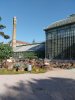
The Wüstenhaus or Desert House consists of 3 interconnected conservatories in jurgendstill-style where the imposing cast-iron arch arms supporting the glass are particularly striking. It opened its doors in 1908 and until 1989 it served mainly as a winter greenhouse for the plant collections placed outside in the castle park in summer. After serving as a butterfly garden for a decade, it reopened in 2003 as a desert house. Certainly the main conservatory is very impressive. It’s part of the zoo but lies outside the zoo grounds.

upload_2023-12-20_13-4-15.jpeg
Cold greenhouse and heating room

It depicts life in the deserts of Central America, Africa and Madagascar. Landscape and flora dominate, animals are scarcer.

The visitor tour is short but attractively structured: it starts in an underground tunnel where light falls down here and there through shafts between the rocks. Displayed here include black-tailed rattlesnake, Zagros olm and naked mole-rat. The rear conservatory acts as a cold greenhouse and has a large enclosure for radiated tortoises. One of the interesting things here is a series of displays showing mirror plants: plants that look very similar, yet are not.


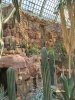
The eye-catcher is the large hall depicting a Central American desert with impressive rocky landscapes and tall cacti. It is the classic image many of us (in Europe) have of the southwestern US, an image co-shaped by westerns.. Between the rocks there are vistas with impressive panoramic photos. Siesels can be seen here and also round-eared elephant shrews in what must be the largest enclosure in the world for this species.

upload_2023-12-20_13-4-38.jpeg
Main conservatory

upload_2023-12-20_13-5-58.jpeg
Round-eared elephant shrew enclosure

Even without animals, this place is worth visiting: the old greenhouses with their cast-iron support structures are impressive and look a bit more industrial than their counterpart, opposite the entrance, the equally imposing and elegant Palmenhaus. In addition, the entire tour is provided with excellent information, using an impressive ‘Survivalists of the extreme’ as guiding principle.


Unfortunately, there are few birds to be seen, only in the entrance conservatory I saw amethyst starling and indian white-eyes.
 

Attachments

  • upload_2023-12-20_13-4-15.jpeg
    upload_2023-12-20_13-4-15.jpeg
    133.7 KB · Views: 396
  • upload_2023-12-20_13-4-38.jpeg
    upload_2023-12-20_13-4-38.jpeg
    167.2 KB · Views: 405
  • upload_2023-12-20_13-5-58.jpeg
    upload_2023-12-20_13-5-58.jpeg
    192.2 KB · Views: 403
Day 3 # 5 Schmetterlingshaus

The building has more historical significance than for the animals. It is in the middle of the beautiful Habsburg Vienna, with its palaces, squares and museums. The collection is not very extensive, just butterflies, a quail and some fish. Architecturally, the building has a lot to offer, but the visitor path is narrow and there are hardly any resting points, so large streams of visitors make it impossible to stand still and look around anywhere.

upload_2023-12-20_13-10-9.jpeg
Palmenhaus in the Burggartens - The left part is the butterfly garden
 

Attachments

  • upload_2023-12-20_13-10-9.jpeg
    upload_2023-12-20_13-10-9.jpeg
    118.9 KB · Views: 404
Day 3 # 6 Haus des Meeres

This brutalist building is certainly one of the most remarkable locations in Europe to find a zoo.

It has an extraordinary history and has its origins in World War II.

Between 1942 and 1945, six tall concrete bunkers were built in Vienna. Known as Flakturms (FLugAbwehrKanone), they can be found in Berlin and Hamburg in addition to Vienna. These towers had shelters, anti-aircraft guns and were equipped with radar technology. They were built in pairs (one combat and one radar tower each) to defend the city centre. The roof was made of metre-thick concrete and could withstand the heaviest Allied bombs. Besides their military function, they were also used at the time as temporary hospitals and radio stations. After the war, they were not removed because it was not possible at the time without damaging the surrounding houses. Meanwhile, they were listed and given a new function.

The traffic (radar) tower in Esterhazy park has 11 floors and is 47m high. It towers over the surrounding houses. Since 1958, it has been home to the Haus des Meeres, which bought the building from the city of Vienna in 2015 for a symbolic euro. The underground shelters used to house a youth hostel; today it is a torture museum.

It is a bit difficult to navigate around the building, but the panoramic lift already allows you to enjoy a stunning 360° view of Vienna on the top floor.

On the ninth floor, tall enclosures for ring-tailed lemurs (together with black lemurs, giant tortoises and narrow-striped mongoose) and komodo dragon (Sunda zebra finches, tiger finches and bank myna) stand out: the lemurs can also enjoy the outdoors on 1 of the terraces.

More spectacular is the glass skywalk that takes visitors through the Australien Erlebniswelt, a narrow Australian landscape across 3 sides of the tower. Along the way, free-living parakeets skim between visitors and aquariums with lungfish and rainbow fish can be seen. Very special are the hanging aviaries at 2 of the building's corner points.

upload_2023-12-20_13-13-55.jpeg
'hanging' aviaries on the 9th floor

Inside is a beautiful Congo paludarium above which Senegal galagos can scurry around in the vegetation.

upload_2023-12-20_13-14-12.jpeg
Avoiding noisy visitors


The highlight on the 7th floor is without a doubt the 360° Haibecken, opened in 2021, an oval 4.5m-high reef aquarium with an Indopacifist theme where visitors can walk all the way around. Even for a building that already had very solid foundations from its origins as a bunker, this 500-tonne aquarium on the 7th floor is an engineering feat. A special technique was needed to get the plexiglass without visible seams and they succeeded well in this. That does not hide the fact that the sightlines in this aquarium are not ideal: you will always see a visitor standing on the other side of the aquarium. Among the 1,000 fish are white-tip and black-tip sharks, gitar fish, blue-spotted stingrays, a beautiful school of 13 Orbicular batfish (Platax orbicularis), surgeonfish, cleaner fish, etc. The smaller fish can get into a calmer area through small holes in the coral wall, outside the reach of the big fish. I found this aquarium not so thunderously decorated, much nicer coral reef aquariums can be found in zoos, but the large swimming area where the batfish and sharks spin endlessly makes up for a lot here. The rock pylons in the aquarium are in rather boring predictable places, but probably they have an construction function.

upload_2023-12-20_13-14-32.jpeg
Orbicular batfish

On floor 4, a spectacular descent of the 3-storey and 15-metre-high Tropenhaus begins. If you are afraid of heights, this suspended Amazon forest may require some caution (purely imagined, it is steep but of course there are no dangerous points). Besides the familiar white-bearded saki and goeldi’s monkeys, we also find the rarer silvery marmosets and Spix’s saddle-back tamarins here. Birds are also on hand such as blue-throated piping-guan and Brazilian tanagers, I also saw a pigeon species (possibly a red-necked zebra pigeon) and a rail which I think is a grey-necked woodrail. Downstairs, there is also a spacious aquarium for ciclids. Those descending here should remember to also stop on floor 3 where there is an extensive collection of tropical marine animals, coral fish and jellyfish.

upload_2023-12-20_13-15-21.jpeg
The 3-storey Amazon rainforest

On the 2nd floor, we first find the piranhas and a number of aquariums focusing on the Mediterranean. The top attraction here, however, is the Crocodile Park. Like the Tropenhaus, it sticks to the building as it were and consists of a glass atrium that extends to just above the entrance. False gharial can be seen in this enclosure along with a range of African bird species: bearded barbet, Amethyst starling, common bulbul, emerald starling, white-crested turaco, superb and purple glossy starlings and red-winged starlings. Inside the building, there are terrariums for insects and aquaria for tropical freshwater fish.

upload_2023-12-20_13-15-41.jpeg
Krokipark - False gharial, white-crested turaco and superb starling

On the lower floors, there are large enclosures for boids, a room full of venomous snakes, another with spiders and insects, a walk-through Atlantic tank and a large outback terrarium.

Those who find the aquarium and reptile house at Schonbrunn Zoo a bit disappointing may find the reason in the excellent Haus des Meeres. It has large collections of freshwater and saltwater fish and herpetofauna. But fans of birds and mammals are sure to get their money's worth here too with a number of not so widespread species. And although the architecture is miles away from what we expect in a zoo, the building itself is still intriguing and also offers the best view of Vienna. In any case, I enjoyed it immensely.
 

Attachments

  • upload_2023-12-20_13-13-55.jpeg
    upload_2023-12-20_13-13-55.jpeg
    211.5 KB · Views: 404
  • upload_2023-12-20_13-14-12.jpeg
    upload_2023-12-20_13-14-12.jpeg
    169.4 KB · Views: 410
  • upload_2023-12-20_13-14-32.jpeg
    upload_2023-12-20_13-14-32.jpeg
    70.1 KB · Views: 404
  • upload_2023-12-20_13-15-21.jpeg
    upload_2023-12-20_13-15-21.jpeg
    147.5 KB · Views: 396
  • upload_2023-12-20_13-15-41.jpeg
    upload_2023-12-20_13-15-41.jpeg
    165.6 KB · Views: 398
Day 4 # 7 Lainzer Tiergarten

The Lainzer Tiergarten is a just under 25 km² (2,500 ha) 'zoo' in the south-west of Vienna. It is entirely walled in and was established as a hunting preserve in 1561. It is largely wooded with large open areas of grassland here and there. Between 1919-1940 and from 1955 it was open to the general public, although an entrance ticket had to be paid until 1973.

It’s not a real zoo, but the park is home to around 80 red deer, 700 mouflons, 200-250 fallow deer and just under 1,000 wild boars.

It could be in fact a full’s day out. Go for a long walk in the morning and enjoy woodland birds and close encounters with deer and wild boar.

upload_2023-12-20_13-25-9.jpeg
 

Attachments

  • upload_2023-12-20_13-25-9.jpeg
    upload_2023-12-20_13-25-9.jpeg
    211.7 KB · Views: 401
Day 4 # Blumengärten Hirschstetten

To the east of the city, across the Danube in the Donaustadt district, lies a site that originally had a very different purpose from the one it serves today. The Blumengärten in Hirschstetten were acquired in the 19th century as a plant nursery.

There were greenhouses, flower beds and, from 1904, also a Palmenhaus in which potted plants used for urban events were kept. It also provided a winter home for water birds kept on the city ponds of the city parks.

After World War II, Hirschstetten soon became the main location for growing plants. Especially after 1950, it gained importance because from then on much more attention was paid to the beautification of the urban landscape and parks. Hirschstetten's flower gardens thus became a household name.


However, developments continued unabated and, as more and more was purchased from private growers, this breeding centre gradually lost importance. In the early 2000s, it was therefore decided to reclassify it as a recreational area and it was completely redesigned. Next to the Palmenhuis, a Floralium was created with several themed (world) gardens, a petting zoo, an insectarium, etc. They are open from April to October (in winter, only the Palmenhuis is open). Only a small part still has the function of a plant nursery.

upload_2023-12-20_13-27-18.jpeg
Right after the entrance

I had a really good time there. The more than 100-year-old Palm House is a dark, fairytale conservatory with century-old trees, among which terrariums for reptiles and insects are set up and a dozen tropical bird species fly around. It's a hidden gem with more than 100 years of mature vegetation among which to look for red-crested turaco, oriental white-eye, Cuban grassquit and others.

upload_2023-12-20_13-26-54.jpeg
Birdwatching platform

Near the hospitality point is an aviary for native songbirds and at the back of the garden is a large breeding centre for European tortoises and aviaries for European wild cats, Ural owls and pygmy owls.

upload_2023-12-20_13-28-19.jpeg
Enclosure for European pond turtle - 1 out of 7 enclosures for European tortoises
 

Attachments

  • upload_2023-12-20_13-26-54.jpeg
    upload_2023-12-20_13-26-54.jpeg
    205.2 KB · Views: 399
  • upload_2023-12-20_13-27-18.jpeg
    upload_2023-12-20_13-27-18.jpeg
    242.4 KB · Views: 406
  • upload_2023-12-20_13-28-19.jpeg
    upload_2023-12-20_13-28-19.jpeg
    170.7 KB · Views: 405
Day 4 # Blumengärten Hirschstetten

To the east of the city, across the Danube in the Donaustadt district, lies a site that originally had a very different purpose from the one it serves today. The Blumengärten in Hirschstetten were acquired in the 19th century as a plant nursery.

There were greenhouses, flower beds and, from 1904, also a Palmenhaus in which potted plants used for urban events were kept. It also provided a winter home for water birds kept on the city ponds of the city parks.

After World War II, Hirschstetten soon became the main location for growing plants. Especially after 1950, it gained importance because from then on much more attention was paid to the beautification of the urban landscape and parks. Hirschstetten's flower gardens thus became a household name.


However, developments continued unabated and, as more and more was purchased from private growers, this breeding centre gradually lost importance. In the early 2000s, it was therefore decided to reclassify it as a recreational area and it was completely redesigned. Next to the Palmenhuis, a Floralium was created with several themed (world) gardens, a petting zoo, an insectarium, etc. They are open from April to October (in winter, only the Palmenhuis is open). Only a small part still has the function of a plant nursery.

View attachment 673406
Right after the entrance

I had a really good time there. The more than 100-year-old Palm House is a dark, fairytale conservatory with century-old trees, among which terrariums for reptiles and insects are set up and a dozen tropical bird species fly around. It's a hidden gem with more than 100 years of mature vegetation among which to look for red-crested turaco, oriental white-eye, Cuban grassquit and others.

View attachment 673405
Birdwatching platform

Near the hospitality point is an aviary for native songbirds and at the back of the garden is a large breeding centre for European tortoises and aviaries for European wild cats, Ural owls and pygmy owls.

View attachment 673407
Enclosure for European pond turtle - 1 out of 7 enclosures for European tortoises

I really liked this small garden when I visited, though due to COVID the palm house was unfortunately closed. The garden has a free-ranging souslik colony too and when I was there it also had several terraria for native herps in the centre of the garden, where those gone?

Day 3 # 6 Haus des Meeres

This brutalist building is certainly one of the most remarkable locations in Europe to find a zoo.

It has an extraordinary history and has its origins in World War II.

Between 1942 and 1945, six tall concrete bunkers were built in Vienna. Known as Flakturms (FLugAbwehrKanone), they can be found in Berlin and Hamburg in addition to Vienna. These towers had shelters, anti-aircraft guns and were equipped with radar technology. They were built in pairs (one combat and one radar tower each) to defend the city centre. The roof was made of metre-thick concrete and could withstand the heaviest Allied bombs. Besides their military function, they were also used at the time as temporary hospitals and radio stations. After the war, they were not removed because it was not possible at the time without damaging the surrounding houses. Meanwhile, they were listed and given a new function.

The traffic (radar) tower in Esterhazy park has 11 floors and is 47m high. It towers over the surrounding houses. Since 1958, it has been home to the Haus des Meeres, which bought the building from the city of Vienna in 2015 for a symbolic euro. The underground shelters used to house a youth hostel; today it is a torture museum.

It is a bit difficult to navigate around the building, but the panoramic lift already allows you to enjoy a stunning 360° view of Vienna on the top floor.

On the ninth floor, tall enclosures for ring-tailed lemurs (together with black lemurs, giant tortoises and narrow-striped mongoose) and komodo dragon (Sunda zebra finches, tiger finches and bank myna) stand out: the lemurs can also enjoy the outdoors on 1 of the terraces.

More spectacular is the glass skywalk that takes visitors through the Australien Erlebniswelt, a narrow Australian landscape across 3 sides of the tower. Along the way, free-living parakeets skim between visitors and aquariums with lungfish and rainbow fish can be seen. Very special are the hanging aviaries at 2 of the building's corner points.

View attachment 673399
'hanging' aviaries on the 9th floor

Inside is a beautiful Congo paludarium above which Senegal galagos can scurry around in the vegetation.

View attachment 673400
Avoiding noisy visitors


The highlight on the 7th floor is without a doubt the 360° Haibecken, opened in 2021, an oval 4.5m-high reef aquarium with an Indopacifist theme where visitors can walk all the way around. Even for a building that already had very solid foundations from its origins as a bunker, this 500-tonne aquarium on the 7th floor is an engineering feat. A special technique was needed to get the plexiglass without visible seams and they succeeded well in this. That does not hide the fact that the sightlines in this aquarium are not ideal: you will always see a visitor standing on the other side of the aquarium. Among the 1,000 fish are white-tip and black-tip sharks, gitar fish, blue-spotted stingrays, a beautiful school of 13 Orbicular batfish (Platax orbicularis), surgeonfish, cleaner fish, etc. The smaller fish can get into a calmer area through small holes in the coral wall, outside the reach of the big fish. I found this aquarium not so thunderously decorated, much nicer coral reef aquariums can be found in zoos, but the large swimming area where the batfish and sharks spin endlessly makes up for a lot here. The rock pylons in the aquarium are in rather boring predictable places, but probably they have an construction function.

View attachment 673401
Orbicular batfish

On floor 4, a spectacular descent of the 3-storey and 15-metre-high Tropenhaus begins. If you are afraid of heights, this suspended Amazon forest may require some caution (purely imagined, it is steep but of course there are no dangerous points). Besides the familiar white-bearded saki and goeldi’s monkeys, we also find the rarer silvery marmosets and Spix’s saddle-back tamarins here. Birds are also on hand such as blue-throated piping-guan and Brazilian tanagers, I also saw a pigeon species (possibly a red-necked zebra pigeon) and a rail which I think is a grey-necked woodrail. Downstairs, there is also a spacious aquarium for ciclids. Those descending here should remember to also stop on floor 3 where there is an extensive collection of tropical marine animals, coral fish and jellyfish.

View attachment 673402
The 3-storey Amazon rainforest

On the 2nd floor, we first find the piranhas and a number of aquariums focusing on the Mediterranean. The top attraction here, however, is the Crocodile Park. Like the Tropenhaus, it sticks to the building as it were and consists of a glass atrium that extends to just above the entrance. False gharial can be seen in this enclosure along with a range of African bird species: bearded barbet, Amethyst starling, common bulbul, emerald starling, white-crested turaco, superb and purple glossy starlings and red-winged starlings. Inside the building, there are terrariums for insects and aquaria for tropical freshwater fish.

View attachment 673403
Krokipark - False gharial, white-crested turaco and superb starling

On the lower floors, there are large enclosures for boids, a room full of venomous snakes, another with spiders and insects, a walk-through Atlantic tank and a large outback terrarium.

Those who find the aquarium and reptile house at Schonbrunn Zoo a bit disappointing may find the reason in the excellent Haus des Meeres. It has large collections of freshwater and saltwater fish and herpetofauna. But fans of birds and mammals are sure to get their money's worth here too with a number of not so widespread species. And although the architecture is miles away from what we expect in a zoo, the building itself is still intriguing and also offers the best view of Vienna. In any case, I enjoyed it immensely.

This really is a strange beast and it is somewhat incomprehensible how they can keep on adding large aquaria so high above the ground. Based on the lay-out it is certainly the weirdest aquarium I have ever visited.

I wonder how visitors who are not so interested in the historical context experience this zoo. There’re for many species far better and larger enclosures in more modern zoos than here.

Most people don't visit a lot of zoos and they are often very bad at judging whether enclosures are appropriate anyway... It seems most seem to care about seeing many animals, preferably close by, Schoennbrunn certainly delivers that ;). Whether it can hold on to all those ABC-species in the future is something of a question mark though for me.... But once the elephants relocate to an extension of the upper part of the zoo, some prime real estate will come free again.

Keep the reviews coming!
 
I really liked this small garden when I visited, though due to COVID the palm house was unfortunately closed. The garden has a free-ranging souslik colony too and when I was there it also had several terraria for native herps in the centre of the garden, where those gone?

Keep the reviews coming!


Thank you. I must have missed these terraria (which are not mentioned on their map).
I walked in a straight line from the greenhouse for native birds beyond the water lily pond to the turtle garden.
 
After 4 wonderful days in Vienna, it was time to take a look elsewhere in the country. I stayed with a farmer-brewer in rural Styria in what would turn out to be the best room of the trip.

Day 5 # 9 Tierwelt Herberstein

East of Graz, in the middle of Styria's changing agricultural landscape, lies Tierwelt Herberstein, a quirky zoo that traces its origins back to the 17th century when the steeper wooded mountain ridges proved unsuitable for agriculture and it was decided to keep fallow deer there. In the late 1960s, the private park was opened to the public and immediately attracted exotic animals. It already gained fame then for its use of a prey simulator for cheetahs, something that is still in use anno 2023.

The zoo is located in an area with deep valleys and steep wooded hills. At times, it is a tough climb and descent for visitors. It has animals from all continents, but the emphasis is on Africa and America

None of the animal enclosures stand out, but that is not really necessary when, as here, the surrounding landscape provides the icing on the cake. On the other hand, there are no real weak points either. It’s African loop is probably the most interesting although in number of species the South American section is bigger.

Those wanting to visit all the attractions need a full day here: after all, the admission price includes not only the zoo, but also the castle gardens, a castle tour, the biodiversity museum and a nature walk through the Feistritz gorge valley.

The African loop has felines (lion and cheetah), 2 really great monkey enclosures (gelada and mandrill/green guenon), an intimate aviary, while zebra and vari are found elsewhere in the zoo.

upload_2023-12-21_14-8-29.jpeg
Gelada baboon enclosure

upload_2023-12-21_14-9-12.jpeg
Snacking and dreaming

I especially enjoyed the walk-through aviary. It consists of 2 sections, respectively for songbirds and pigeons, and for parrots (grey parrot and Lilian lovebird). Most songbirds are not that common in European zoos: African silverbill, common waxbill, orange-breasted waxbill, red-cheeked cordon-blue and southern red bishop, all accompanied by namaqua doves. It is always a great pleasure to witness the comings and goings at the feeding tables of these little birds.

upload_2023-12-21_14-7-10.jpeg
Grey parrot and Lilian's lovebird aviary

On the way to the biodiversity museum, you pass an enclosure for (a lot of) emus and a good aviary for kookaburra. The museum itself is located in a beautifully restored barn and tells about the richness of life through numerous modern interactive exhibits. A beautiful aquarium with East African ciclids tells the story of evolution, elsewhere it talks about the development of new apple varieties or how many insects stick to your windscreen when driving (spoiler: there are less than half compared to 30 years ago). I thought it was an excellent museum: just big enough to hang around for an hour and not too big so that children lose interest.

Perhaps the best-known image of this zoo is seen when you descend from the zoo restaurant into the formal castle gardens, past the elegant pavilion for black-and-white ruffed lemurs. Surrounded by ancient walls, the gardens are an ideal resting point and offer a first glimpse of the imposing castle nestled deep in the gorge valley. The lemurs have 2 densely planted islands and can get from one side to the other via a passage above the heads of visitors.

upload_2023-12-21_14-10-33.jpeg
Black & White ruffed lemur pavillion and formal gardens

The uprising path then go through dense woodland along Eurasian lynx and wolverine to the largest tierwelt in Herbestein: the Americas. It has a very large collection of animals from this continent, albeit without any really big surprises or specialities, and all in decent enclosures: mountain lion, vicunha, 3 species of wolves, maned wolf, lowland tapir, spectacled bear, callithrids, macaws, capybara, mara, wolverine and American buffalo.

Even for most tropical animals today, it was already too hot to do much more than wait quietly in the shade for cooler moments, something a few dogs (who are allowed in the zoo) thought otherwise and put up a fight, to the amazement of their owners and irritation of the vicunhas. I don't have a direct opinion on it, but as an owner, you should have the common sense to know your dog and not take a dog that is naturally more restless to a zoo. But of course that is easy for a cat man to say

One of the few walkable buildings in the zoo is the South America House, where there are lowland tapirs, coatis, armadillos, mara’s, capybaras and military macaws. It seemed a bit small to me, especially for the tapirs and capybaras but the building is bigger than the part open to visitors. It is surrounded by large generously shaded enclosures with good swimming opportunities for all its inhabitants.

upload_2023-12-21_14-14-33.jpeg
South America House

upload_2023-12-21_14-12-6.jpeg
Spectacled bear enclosure

Right in the middle of the zoo is a large Asian plain with blackbuck, Pere David’s deer and nilgai, which could perfectly use a wild donkey or wild bovine.

Herberstein is a charming zoo with a clear layout, good enclosures visually upgraded by the beautiful surroundings and with a focus on mammals.
I spent more time than anticipated at the zoo, which is always a good sign.The zoo excels in its monkey enclosures, with baboons and vervet monkeys in the African section, lemurs in the castle garden, but equally with the dense island for cotton-top tamarins and the vari islands.


I then had a long scenic drive ahead of me, straight through the Eastern Alps back to the epicentre of the Austrian zoological world.
 

Attachments

  • upload_2023-12-21_14-7-10.jpeg
    upload_2023-12-21_14-7-10.jpeg
    187.6 KB · Views: 376
  • upload_2023-12-21_14-8-29.jpeg
    upload_2023-12-21_14-8-29.jpeg
    162.1 KB · Views: 377
  • upload_2023-12-21_14-9-12.jpeg
    upload_2023-12-21_14-9-12.jpeg
    180 KB · Views: 371
  • upload_2023-12-21_14-10-33.jpeg
    upload_2023-12-21_14-10-33.jpeg
    133.9 KB · Views: 373
  • upload_2023-12-21_14-12-6.jpeg
    upload_2023-12-21_14-12-6.jpeg
    212.5 KB · Views: 376
  • upload_2023-12-21_14-14-33.jpeg
    upload_2023-12-21_14-14-33.jpeg
    192.7 KB · Views: 370
Day 5 # 10 Zoo Linz

I have few rules and principles during my zoo trips, but this one exists and I follow it meticulously: never skip a location with a turaco or hornbill.

The Linzer zoo is located in a suburb of the city, high above the Danube, although you notice very little of that in the garden. It is a place without outliers and with basically hardly any crowd-pleasers. Unlike some other zoos in the area, there have never been elephants, tigers, lions or great apes.

In contrast, all our familiar zoo friends are present: Bennett, suricate, katta, coati, rhea, white-eared brush, budgerigar, cockatiel and my personal favourite, the bearded dragon.

The zoo has 2 indoor facilities, a large number of avaries and a few larger species.

Like all zoos in Austria, this place was extremely neat and tidy.

It starts very good with an appealing entrance building, a new enclosure for suricate en descent ones for ostriches and zebras.

The Tropenhaus is a small building with only 1 room: on one side is a full-length mixed enclosure for spectacled caimans, red piranha and white tufted-ear marmoset. Needless to say, there is plenty of play space for the little monkeys, always keeping an eye on their not entirely harmless sub-dwellers. Opposite this exhibit are four large terrariums housing green iguanas, Timorpythons, pygmy marmosets, plumed basilisk and boa constrictor. No matter how small they are, I always enjoy visiting such buildings.

upload_2023-12-22_12-3-43.jpeg
Tropenhaus - Main exhibit

A little further starts a row of mediocre aviaries. The better ones are at the beginning, housing large parrots and owl. The others certainly need an upgrade and housing a variety of bird (Australian finches, amazon parrots), the unevitable coatis, cotton-top tamarins and tortoises.

upload_2023-12-22_12-4-0.jpeg
Lane with aviaries

The Haus der Artenvielfalt is the zoo’s second visible building. Good intentions abound here (the exhibits are very nicely decorated and there is a good selection of species), but the building itself is unsuitable for hosting visitors: the floor plan is very small, most enclosures are on a mezzanine floor or along the stairs.
On the first floor are mixed species exhibits like for crested partridge, Indian star tortoise and Swinhoe’s striped squirrel, or for rhinoceros hornbill and Australian zebra finches.
upload_2023-12-22_12-4-58.jpeg
Haus der Artenvielfalt - Mixed species exhibits

Upstairs are 2 small rooms. The first one has a couple of bird spider exhibits and some lizards, while the second functions as the zoo school and has a terrarium for yellow-spotted monitors and another one for green and black poison dart frogs.

upload_2023-12-22_12-4-15.jpeg
Haus der Artenvielfalt - Zooschool

A rocky footpath leads around an enclosure for many (and I mean really many!) Patagonian mara and greater rhea (kudos to the zoo for not calling this enclosure a 'pampa') and leads to a narrow cave where the night quarters for the ring-tailed lemurs are hidden. It was a nice and unexpected feature. They also have a good outdoor enclosure, next to that of the Nepalese red panda and the striped skunk.

upload_2023-12-22_12-4-28.jpeg
Katta Cave

The most attractive enclosure is probably that of the nyala, an antelope widespread but not so common in European zoo settings and a nice extra in a small zoo like this one.

upload_2023-12-22_12-4-44.jpeg
Nyala enclosure

I found the Linzer tiergarten a very pleasant, quiet and cosy place. Not for the last time during this trip, I was a bit bothered by the mishmash of species in the parrot aviaries.

The rest of the zoo consists of enclosures for domestic species, but I decided to leave as I could not be late on my last stop of the day.
 

Attachments

  • upload_2023-12-22_12-3-43.jpeg
    upload_2023-12-22_12-3-43.jpeg
    207.5 KB · Views: 366
  • upload_2023-12-22_12-4-0.jpeg
    upload_2023-12-22_12-4-0.jpeg
    154.1 KB · Views: 346
  • upload_2023-12-22_12-4-15.jpeg
    upload_2023-12-22_12-4-15.jpeg
    92.2 KB · Views: 356
  • upload_2023-12-22_12-4-28.jpeg
    upload_2023-12-22_12-4-28.jpeg
    195.1 KB · Views: 360
  • upload_2023-12-22_12-4-44.jpeg
    upload_2023-12-22_12-4-44.jpeg
    170.2 KB · Views: 356
  • upload_2023-12-22_12-4-58.jpeg
    upload_2023-12-22_12-4-58.jpeg
    219.8 KB · Views: 364
I have few rules and principles during my zoo trips, but this one exists and I follow it meticulously: never skip a location with a turaco or hornbill.

I fully expect a review of Tiergarten Wels in that case ;)
 
Day 5 #11 Tiergarten & Reiterhof Walding

There are no lions on a farm. My 11yr old godson is very formally on that.

A mere 20 minutes away from Linz, on a hilltop just outside the hamlet of Walding, lies a small zoo that began as a sanctuary for exotic animals in 1973. Talk about a glorious past: it was home to elephants until 2014. Here, someone has a well-developed marketing instinct because the first signpost is literally a few hundred metres from the zoo in Linz.

The zoo actually just consists of an old farmhouse, the Dreiseithof, where exotic and native animals are kept in the gardens and estates around.

The entrance is a gate in the square farm building and leads to a courtyard. My arrival clearly led to some confusion: although the garden was still open for an hour, the young lady at the counter (which was the farmhouse's kitchen) seemed unimpressed that another visitor was arriving at this hour. She was busy conferring with an older woman who was cooking and I was already starting to think of how to explain in German the reason for my visit. It felt like I was opening a door that was unlocked but should be. The woman told me that the lions were already in their indoor enclosure (there goes my photographic evidence) and so I could choose what I paid for. Little did she know that I actually came for the parrots.

It’s basically a farmhouse with lions. And some other exotic animals, amongst them the rare red-fronted macaws which are housed in a dark aviary on the courdyard.

upload_2023-12-22_13-34-19.jpeg
Red-fronted macaw (Ara rubrogenys)

The former elephant barn also had my interests. It was very tiny, even for the Scottisch highland cattle.

upload_2023-12-22_13-34-32.jpeg
former Elephant house

upload_2023-12-22_13-38-22.jpeg
Former Elephant stable

Outside the courtyard there’s descent cage for lar gibbon and acceptable (for this place) enclosures for african lion and serval.

upload_2023-12-22_13-39-12.jpeg
Lar cage

upload_2023-12-22_13-39-50.jpeg
Lion enclosure


A pleasant path brings the visitor to the back of the farm where a couple of aviaries for parrots appears. Clearly these were rescued or surplus birds.

At the other side are large meadows for Chapman zebra and Bactrian camel.

upload_2023-12-22_13-40-31.jpeg

I have no doubt the owners lovingly run their zoo. The place was meticulously maintained and all the enclosures were equipped with the necessary for the animals. They are slowly converting the garden into a petting zoo and equestrian centre. This makes sense because the influx of exotic animals from private individuals is gradually drying up, and unless this kind of zoo can specialise in taking care of surplus animals from eaza gardens, a future as a zoo no longer seems in order.
 

Attachments

  • upload_2023-12-22_13-34-19.jpeg
    upload_2023-12-22_13-34-19.jpeg
    160.3 KB · Views: 351
  • upload_2023-12-22_13-34-32.jpeg
    upload_2023-12-22_13-34-32.jpeg
    162.4 KB · Views: 359
  • upload_2023-12-22_13-38-22.jpeg
    upload_2023-12-22_13-38-22.jpeg
    124.9 KB · Views: 356
  • upload_2023-12-22_13-39-12.jpeg
    upload_2023-12-22_13-39-12.jpeg
    183.4 KB · Views: 357
  • upload_2023-12-22_13-39-50.jpeg
    upload_2023-12-22_13-39-50.jpeg
    218.3 KB · Views: 356
  • upload_2023-12-22_13-40-31.jpeg
    upload_2023-12-22_13-40-31.jpeg
    141 KB · Views: 357
Last edited:
Back
Top